Annotating & Analysing
Poetry
Annotating Poetry
Requires you to think critically about a text
It involves:
Writing on the page
Questioning
Clarifying main points
It is writing notes on your interpretation of what the author has written.
 If your notes are within the context of the poem, you can NEVER be wrong.
Use: post-it notes, highlighters and a pencil
What to look out for:
Imagery
Rhyme schemes
Sound devices – alliteration, repetition, rhythm, off-
rhyme, assonance, onomatopoeia, consonance
Figurative language
Symbols
Annotating Poetry: What to do
As you read, highlight key information
As your read, make notes in the margin
Analysing a poem
Analysis is the breaking up of a topic to make it easier to understand
It consists of facts and commentaries
It is NOT a summary of the text or your annotations, it is NOT a listing
of facts and it is NOT random, unsubstantiated conjecture
(proposition/statement)
Annotations are important when to comes to writing analysis.
Your annotations are the evidence that you use to support your
statements
Poetry Annotation Activity
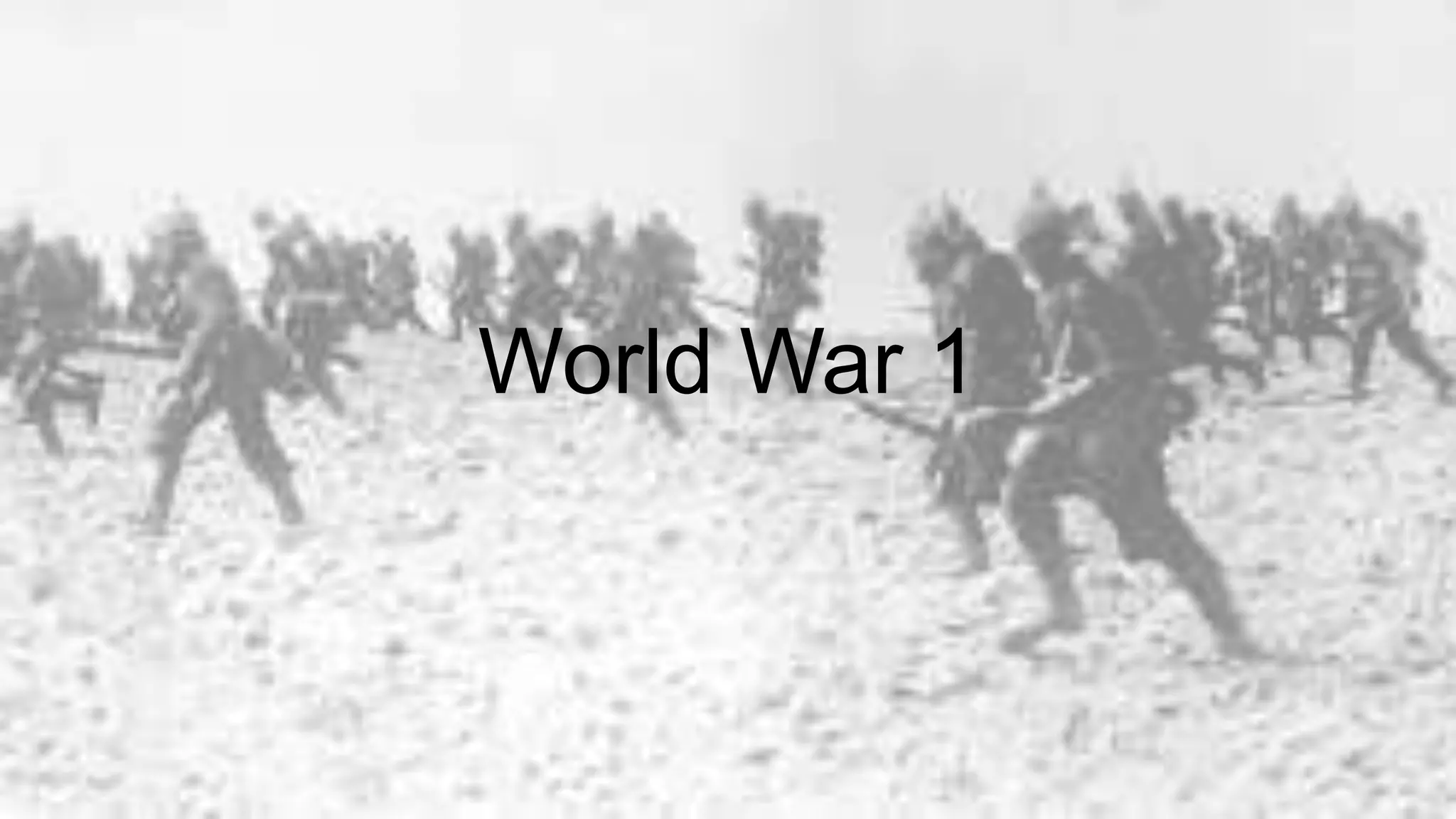
World War 1
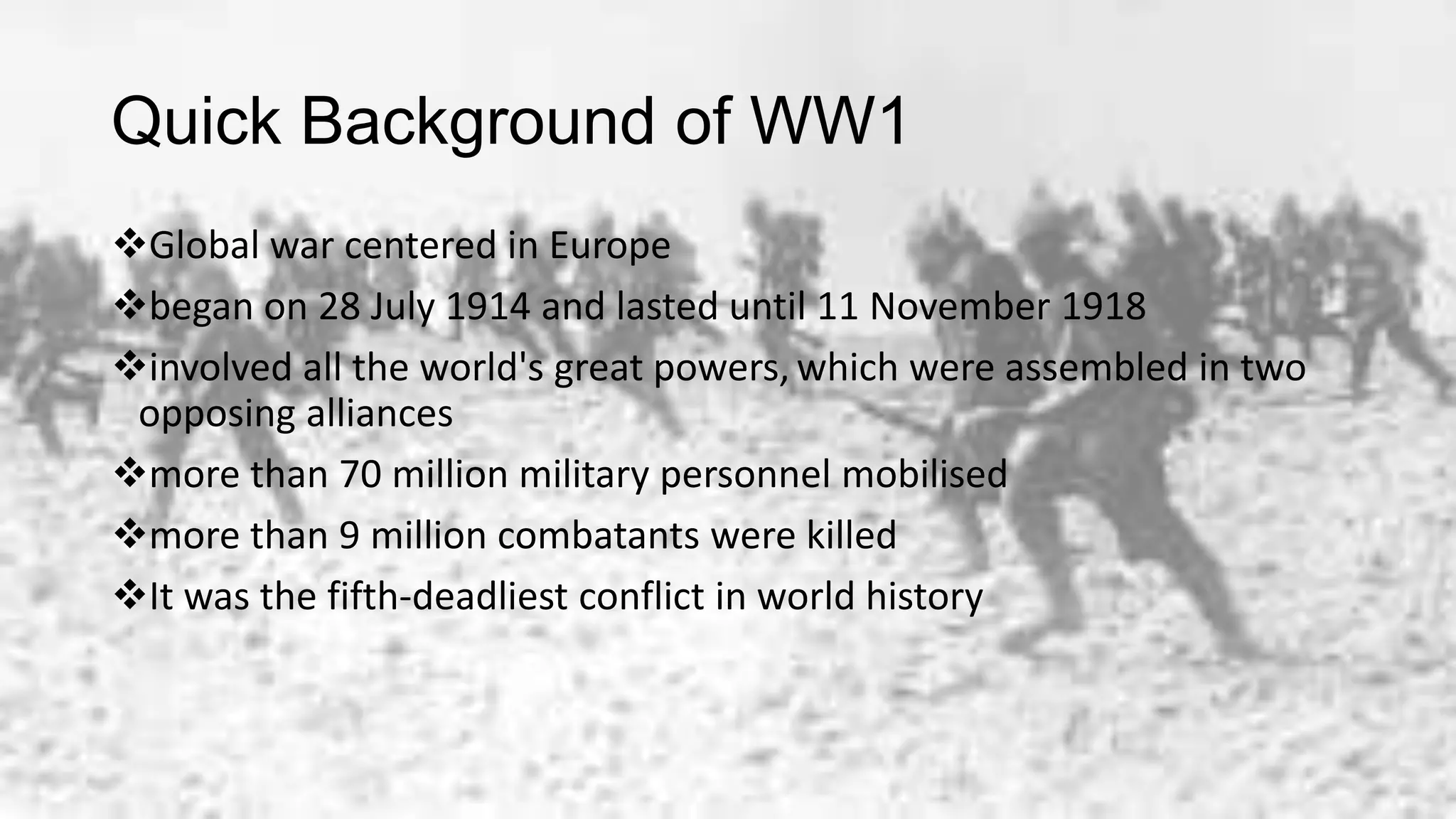
Quick Background of WW1
Global war centered in Europe
began on 28 July 1914 and lasted until 11 November 1918
involved all the world's great powers, which were assembled in two
opposing alliances
more than 70 million military personnel mobilised
more than 9 million combatants were killed
It was the fifth-deadliest conflict in world history
Literature during the War
includes poems, novels, drama, diaries, letters, and memoirs
over two thousand published poets wrote about and during the war
A common subject for fiction in the 1920s and 1930s was the effect
of the war, including shell shock and the huge social changes caused
by the war
WW1 Video
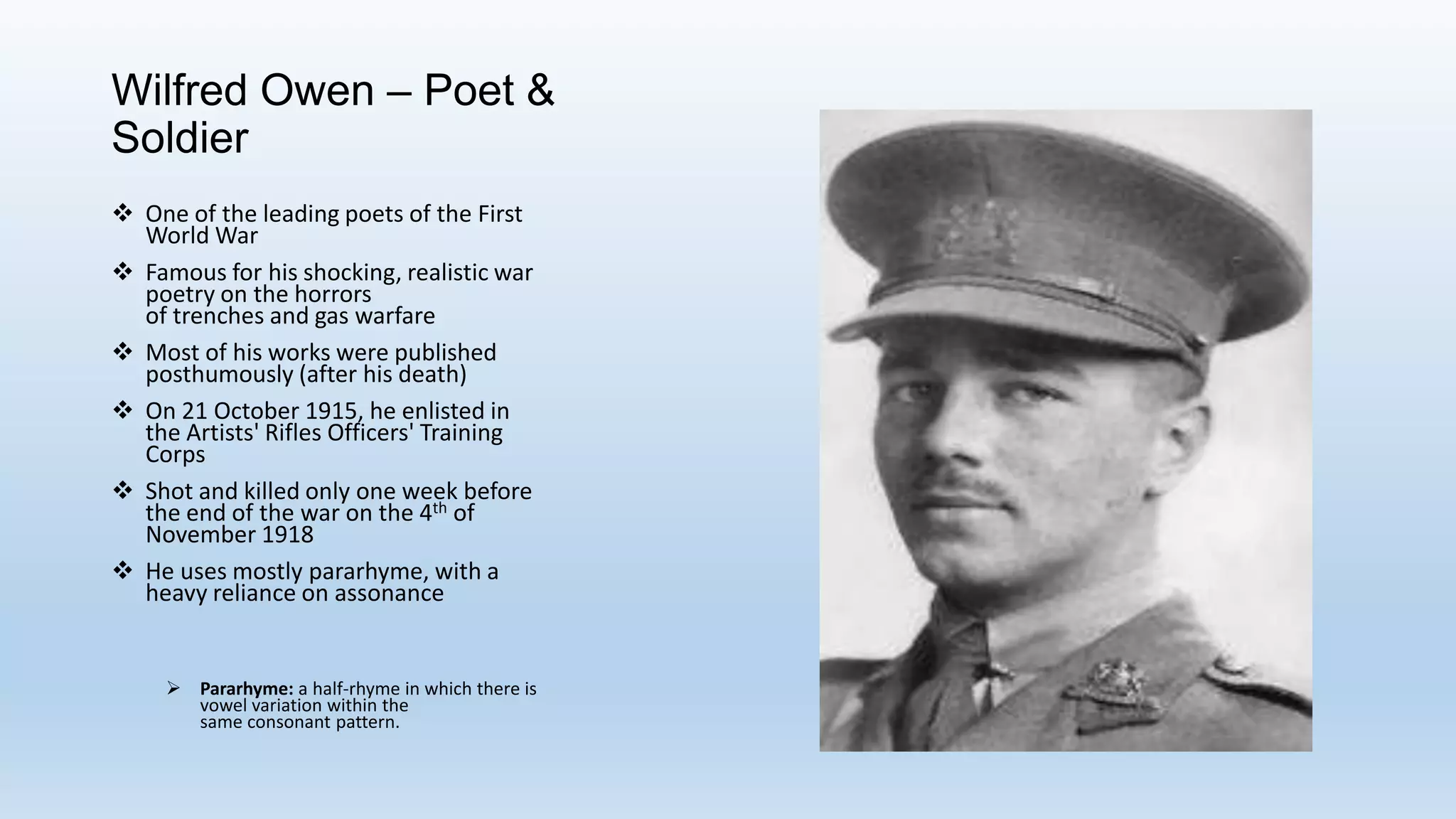
Wilfred Owen – Poet &
Soldier
 One of the leading poets of the First
World War
 Famous for his shocking, realistic war
poetry on the horrors
of trenches and gas warfare
 Most of his works were published
posthumously (after his death)
 On 21 October 1915, he enlisted in
the Artists' Rifles Officers' Training
Corps
 Shot and killed only one week before
the end of the war on the 4th of
November 1918
 He uses mostly pararhyme, with a
heavy reliance on assonance
 Pararhyme: a half-rhyme in which there is
vowel variation within the
same consonant pattern.

Annotating & analysing poetry + ww1 + wilfred owen

  • 1.
  • 2.
    Annotating Poetry Requires youto think critically about a text It involves: Writing on the page Questioning Clarifying main points It is writing notes on your interpretation of what the author has written.  If your notes are within the context of the poem, you can NEVER be wrong. Use: post-it notes, highlighters and a pencil
  • 3.
    What to lookout for: Imagery Rhyme schemes Sound devices – alliteration, repetition, rhythm, off- rhyme, assonance, onomatopoeia, consonance Figurative language Symbols
  • 4.
    Annotating Poetry: Whatto do As you read, highlight key information As your read, make notes in the margin
  • 5.
    Analysing a poem Analysisis the breaking up of a topic to make it easier to understand It consists of facts and commentaries It is NOT a summary of the text or your annotations, it is NOT a listing of facts and it is NOT random, unsubstantiated conjecture (proposition/statement) Annotations are important when to comes to writing analysis. Your annotations are the evidence that you use to support your statements
  • 6.
  • 7.
  • 8.
    Quick Background ofWW1 Global war centered in Europe began on 28 July 1914 and lasted until 11 November 1918 involved all the world's great powers, which were assembled in two opposing alliances more than 70 million military personnel mobilised more than 9 million combatants were killed It was the fifth-deadliest conflict in world history
  • 9.
    Literature during theWar includes poems, novels, drama, diaries, letters, and memoirs over two thousand published poets wrote about and during the war A common subject for fiction in the 1920s and 1930s was the effect of the war, including shell shock and the huge social changes caused by the war
  • 10.
  • 11.
    Wilfred Owen –Poet & Soldier  One of the leading poets of the First World War  Famous for his shocking, realistic war poetry on the horrors of trenches and gas warfare  Most of his works were published posthumously (after his death)  On 21 October 1915, he enlisted in the Artists' Rifles Officers' Training Corps  Shot and killed only one week before the end of the war on the 4th of November 1918  He uses mostly pararhyme, with a heavy reliance on assonance  Pararhyme: a half-rhyme in which there is vowel variation within the same consonant pattern.