Tracking systems for VET graduates
Methodology and tools
Webinar 25/6/2020
Natassa Kazantzidou, Orestis Ntagiantas IDEC
TRACKING LEARNING AND CAREER
PATHS OF VET GRADUATES TO
IMPROVE QUALITY OF VET PROVISION
What we
talked
about
• Tracking VET graduates - general overview
• VET tracking at VET institute level
• Benefits for VET providers
• Presentation of the On Track approach,
methodology and tools
• How you can benefit from On Track
• Questions and answers
https://www.youtube.com/watch?v=E0o4b7hXcJQ
• Tracking VET graduates at VET institute level
– Methodology
– On Track methodology
– On Track tools
• How to join
• Questions and answers
What are we going to talk about
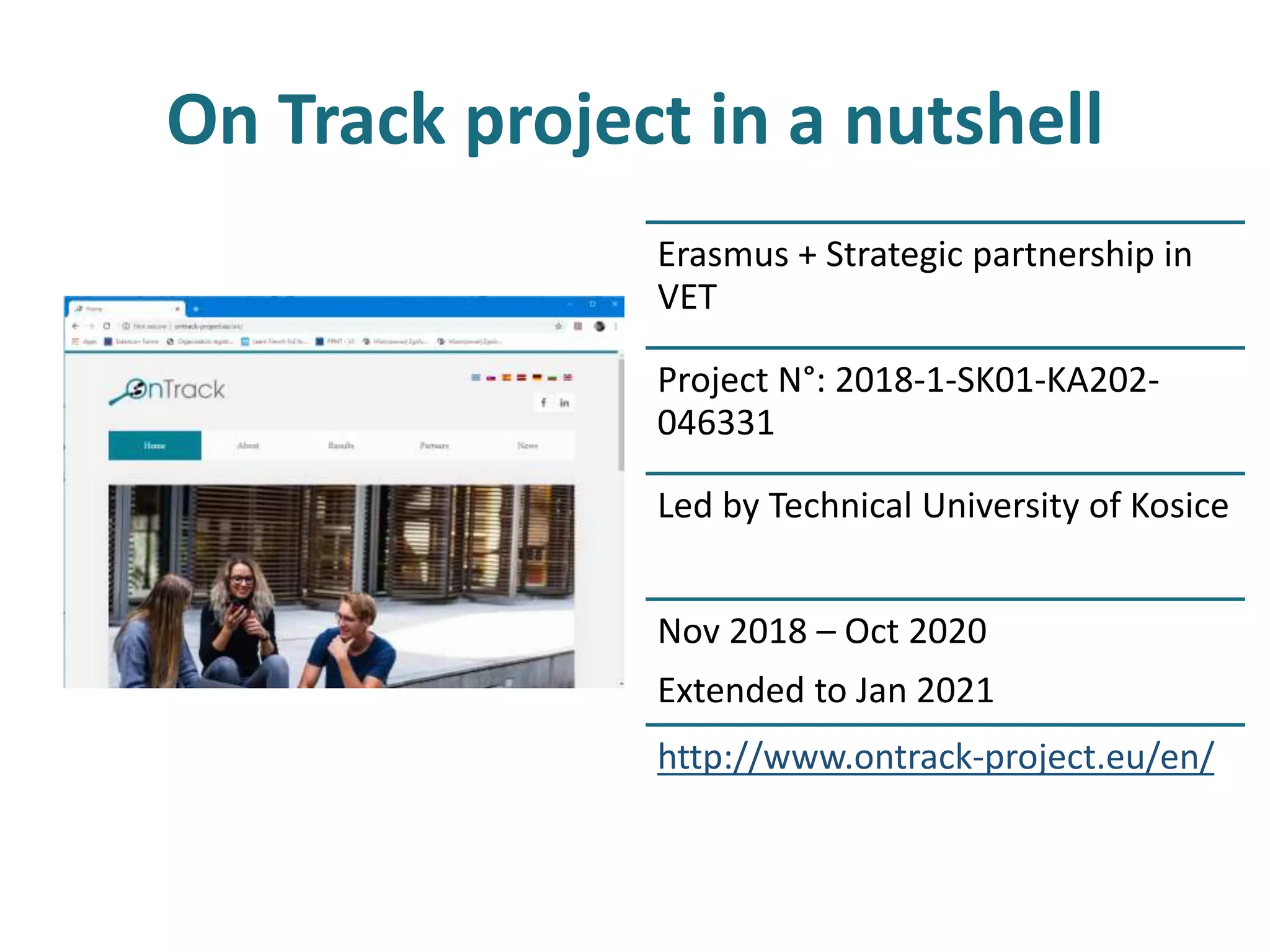
On Track project in a nutshell
Erasmus + Strategic partnership in
VET
Project N°: 2018-1-SK01-KA202-
046331
Led by Technical University of Kosice
Nov 2018 – Oct 2020
Extended to Jan 2021
http://www.ontrack-project.eu/en/
VET
GRADUATES
TRACKING
Methodology
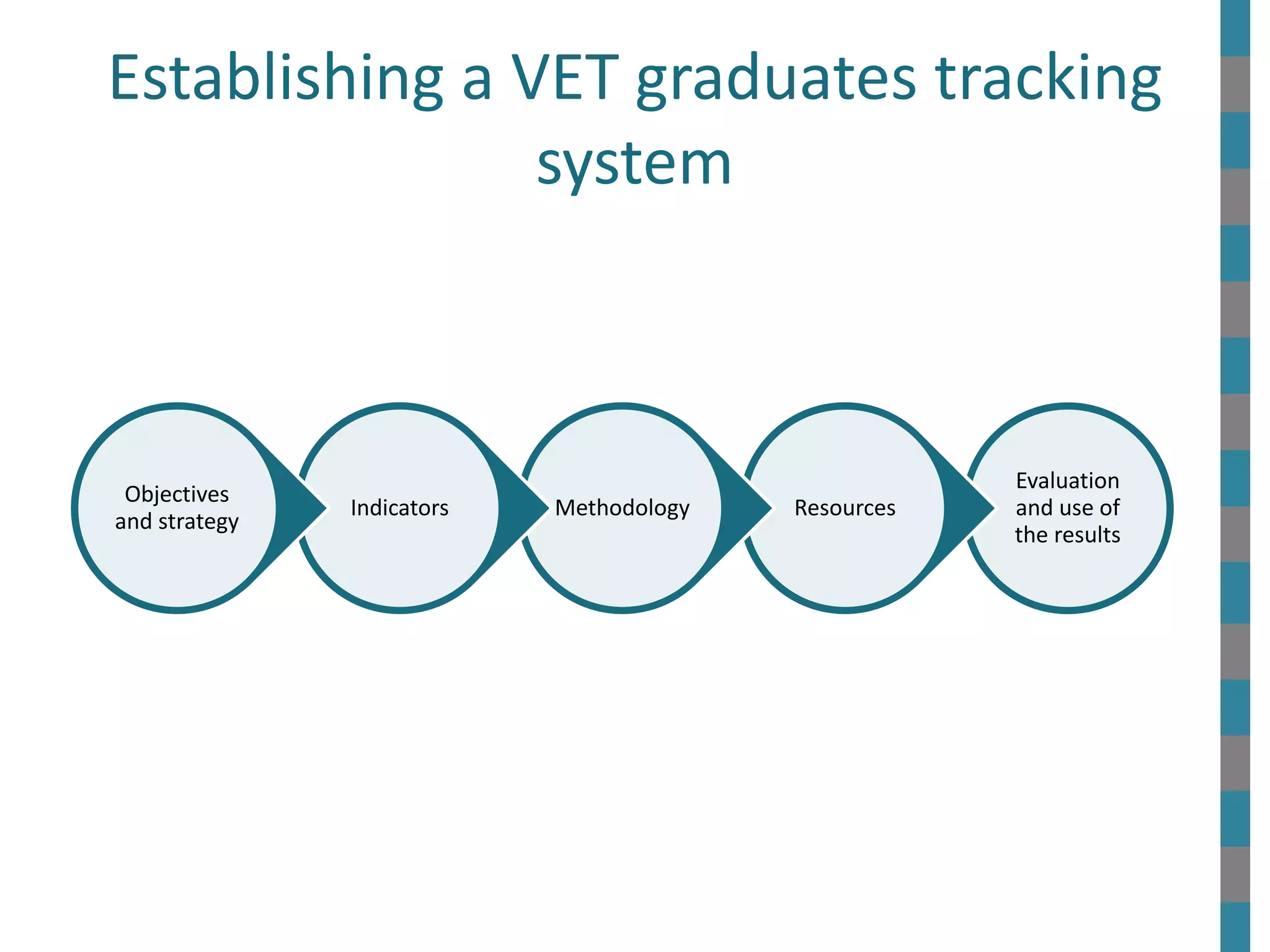
Establishing a VET graduates tracking
system
Evaluation
and use of
the results
ResourcesMethodologyIndicators
Objectives
and strategy
Objectives
Why do you want
to establish a
graduate tracking
system?
What is the need
that you want to
address?
What you will do
with the
information?
Strategy
• How often the tracking will take
place?
• How comprehensive it will be,
• What methodology will be
followed?
• Sample survey or a population
survey?
• What resources are you willing
to put in place?
• How the results of the tracking
system will be used?
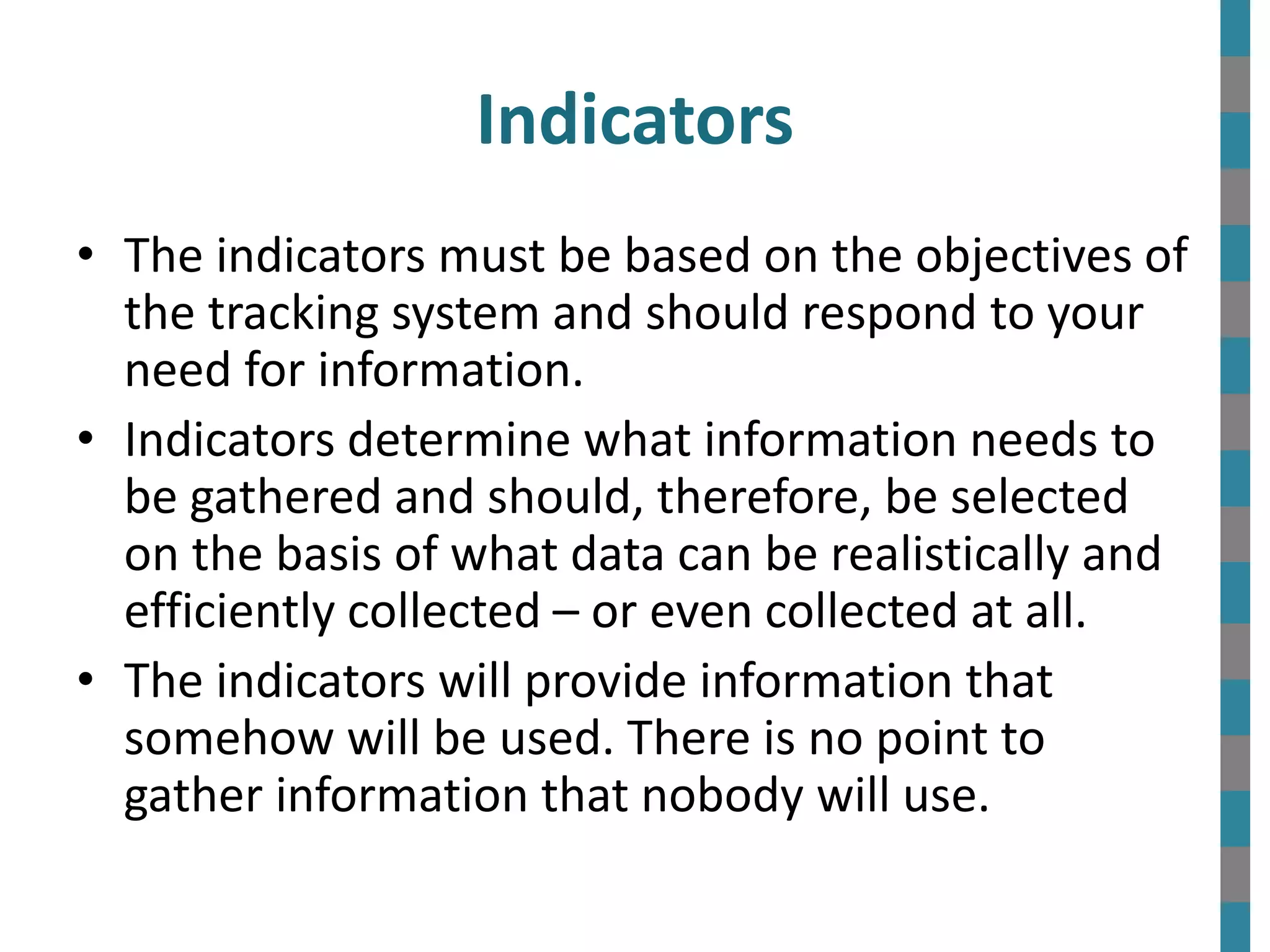
• The indicators must be based on the objectives of
the tracking system and should respond to your
need for information.
• Indicators determine what information needs to
be gathered and should, therefore, be selected
on the basis of what data can be realistically and
efficiently collected – or even collected at all.
• The indicators will provide information that
somehow will be used. There is no point to
gather information that nobody will use.
Indicators
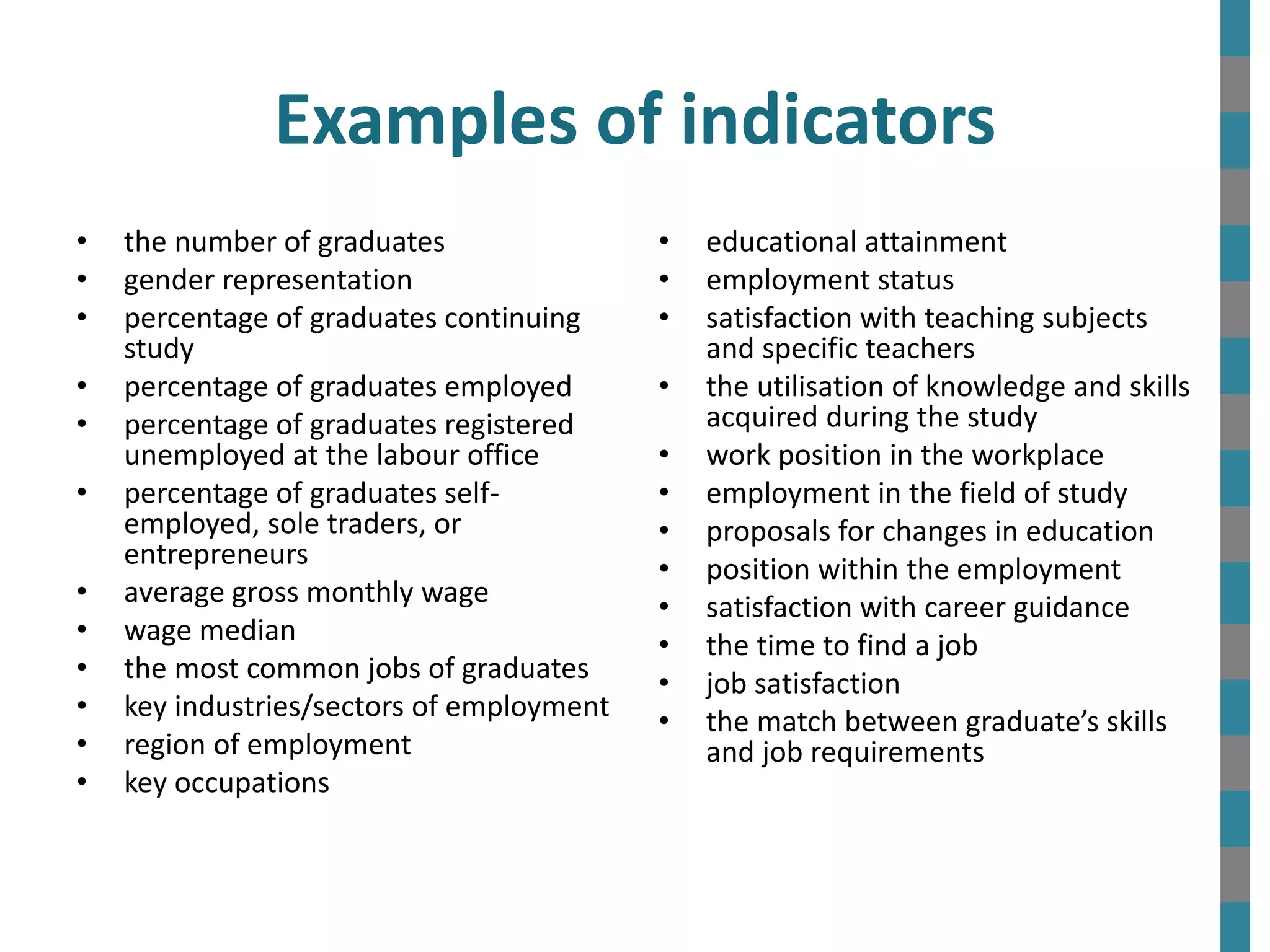
Examples of indicators
• the number of graduates
• gender representation
• percentage of graduates continuing
study
• percentage of graduates employed
• percentage of graduates registered
unemployed at the labour office
• percentage of graduates self-
employed, sole traders, or
entrepreneurs
• average gross monthly wage
• wage median
• the most common jobs of graduates
• key industries/sectors of employment
• region of employment
• key occupations
• educational attainment
• employment status
• satisfaction with teaching subjects
and specific teachers
• the utilisation of knowledge and skills
acquired during the study
• work position in the workplace
• employment in the field of study
• proposals for changes in education
• position within the employment
• satisfaction with career guidance
• the time to find a job
• job satisfaction
• the match between graduate’s skills
and job requirements
Data collection
• Data collection methods
• Primary data
• Questionnaire
• Interview
• Focus group
• Secondary data
• Administrative data
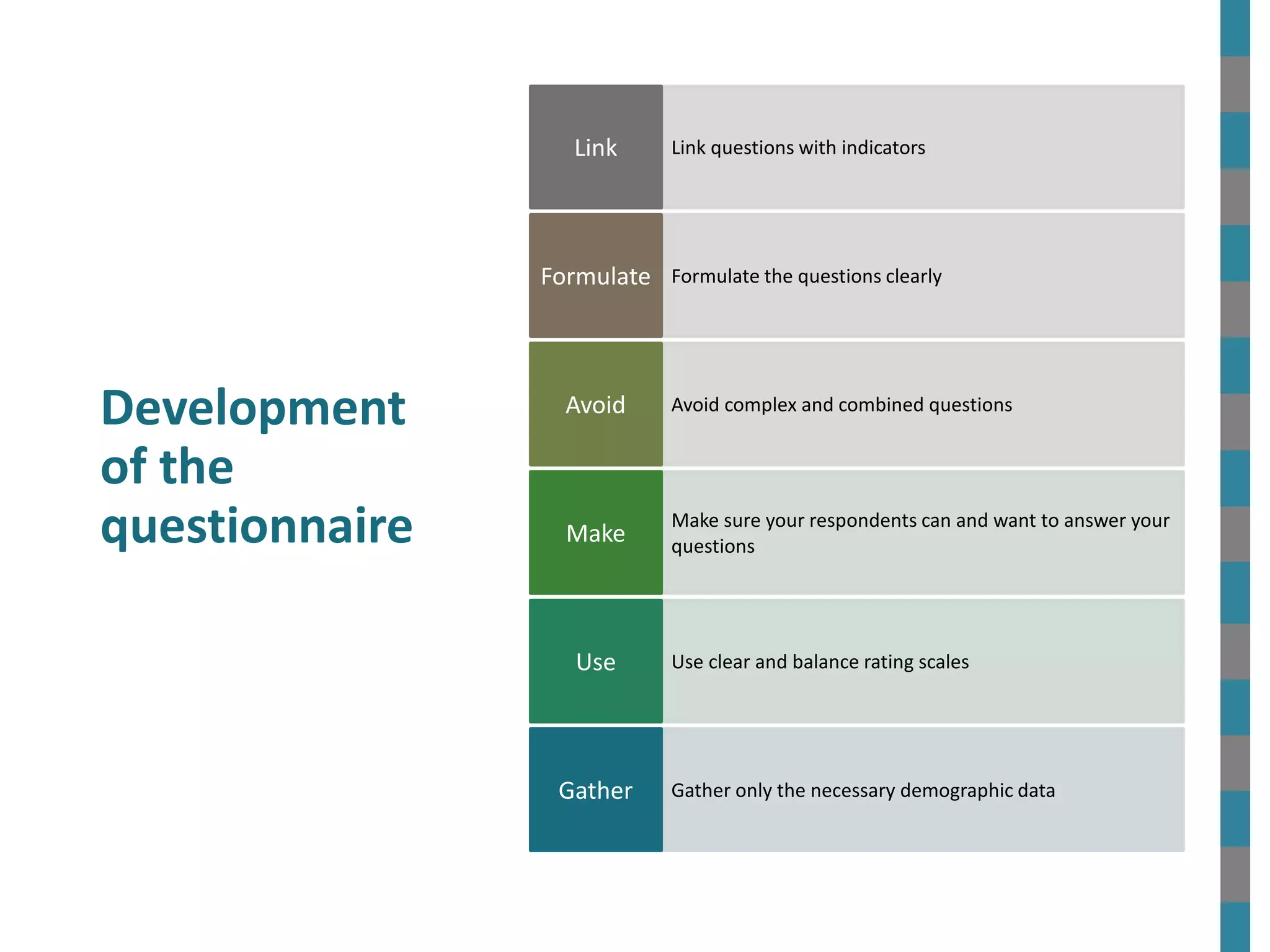
Development
of the
questionnaire
Link questions with indicatorsLink
Formulate the questions clearlyFormulate
Avoid complex and combined questionsAvoid
Make sure your respondents can and want to answer your
questions
Make
Use clear and balance rating scalesUse
Gather only the necessary demographic dataGather
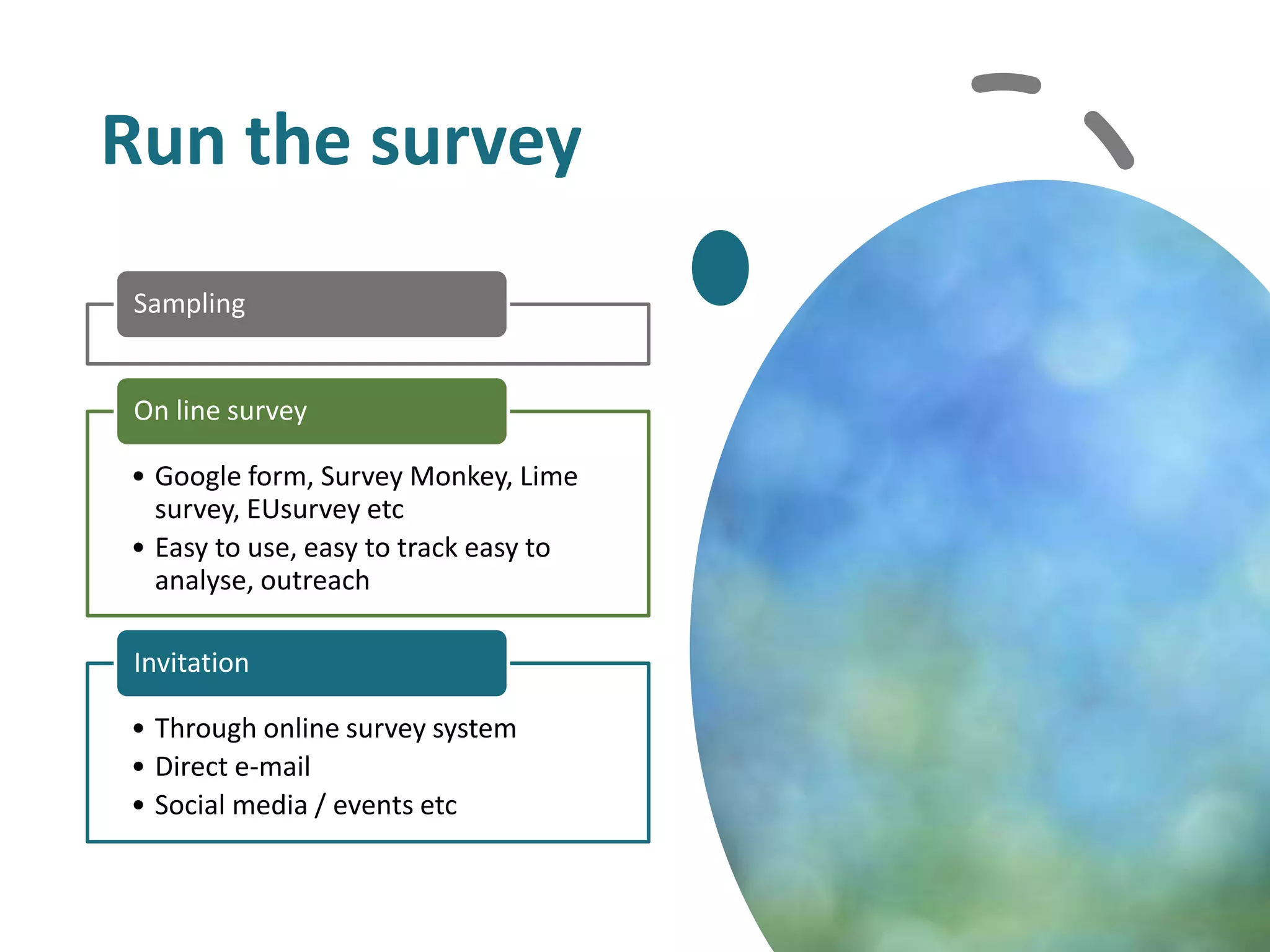
Run the survey
Sampling
• Google form, Survey Monkey, Lime
survey, EUsurvey etc
• Easy to use, easy to track easy to
analyse, outreach
On line survey
• Through online survey system
• Direct e-mail
• Social media / events etc
Invitation
Cultivate a feedback culture
• Try different methods to approach your
recipients and see what works best.
• Provide a good reason to fill in the
survey
• Keep open channels with your
graduates through other activities
• Use the feedback – communicate it.
• Remember that participation rate will
increase every year with consistent
efforts. It takes time and continuous
effort to change behaviour of people, if
you want to incorporate tracking
graduates in your processes, design
your tracking system and
• Do not give up! be patient and
persistent.
Resources
• Staff
• Team leader
• Administrator
• Technician
• Analyst
• Training
• Time
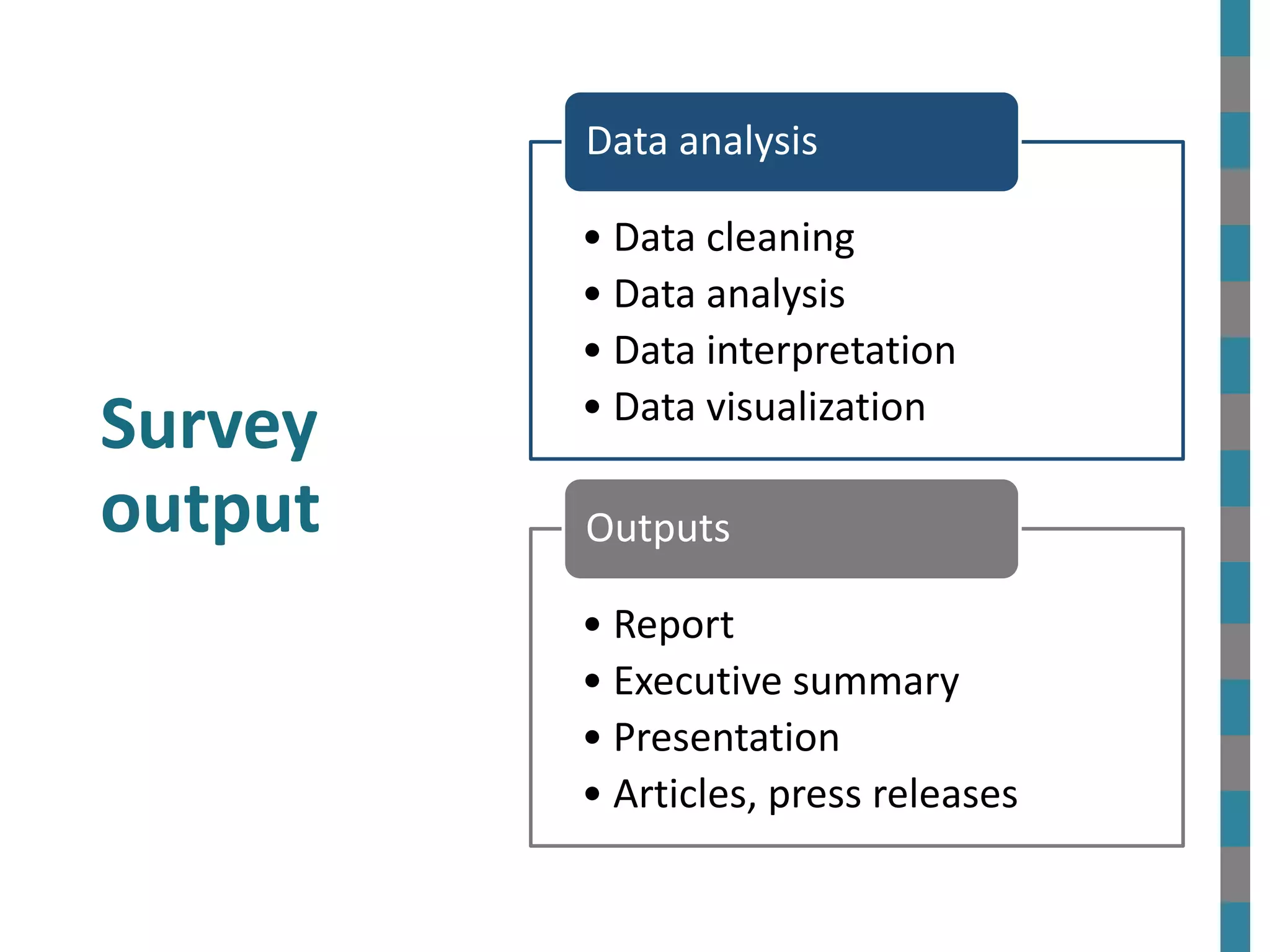
Survey
output
• Data cleaning
• Data analysis
• Data interpretation
• Data visualization
Data analysis
• Report
• Executive summary
• Presentation
• Articles, press releases
Outputs
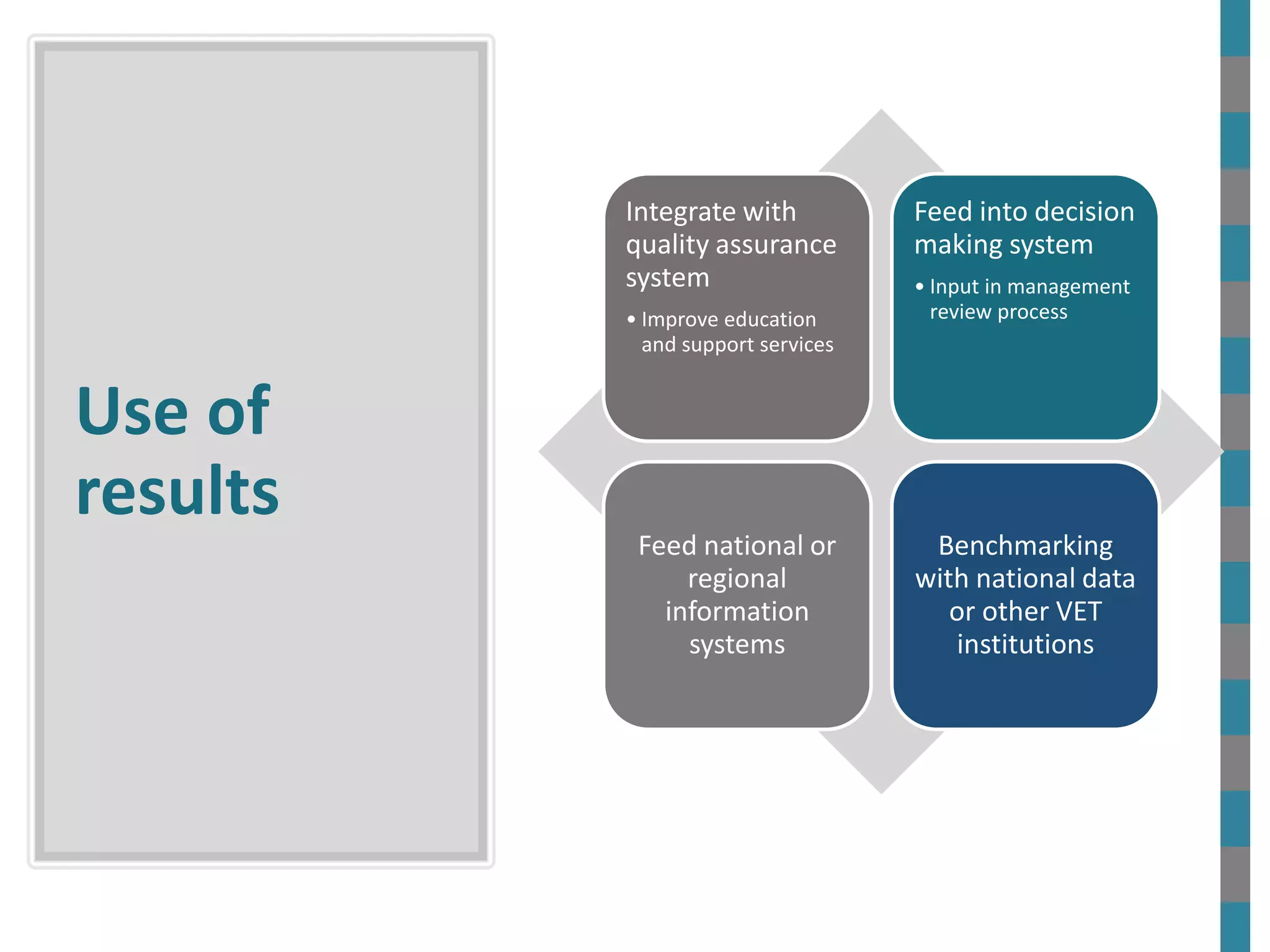
Use of
results
Integrate with
quality assurance
system
• Improve education
and support services
Feed into decision
making system
• Input in management
review process
Feed national or
regional
information
systems
Benchmarking
with national data
or other VET
institutions
ON TRACK
METHODOLOGY AND
TOOLS
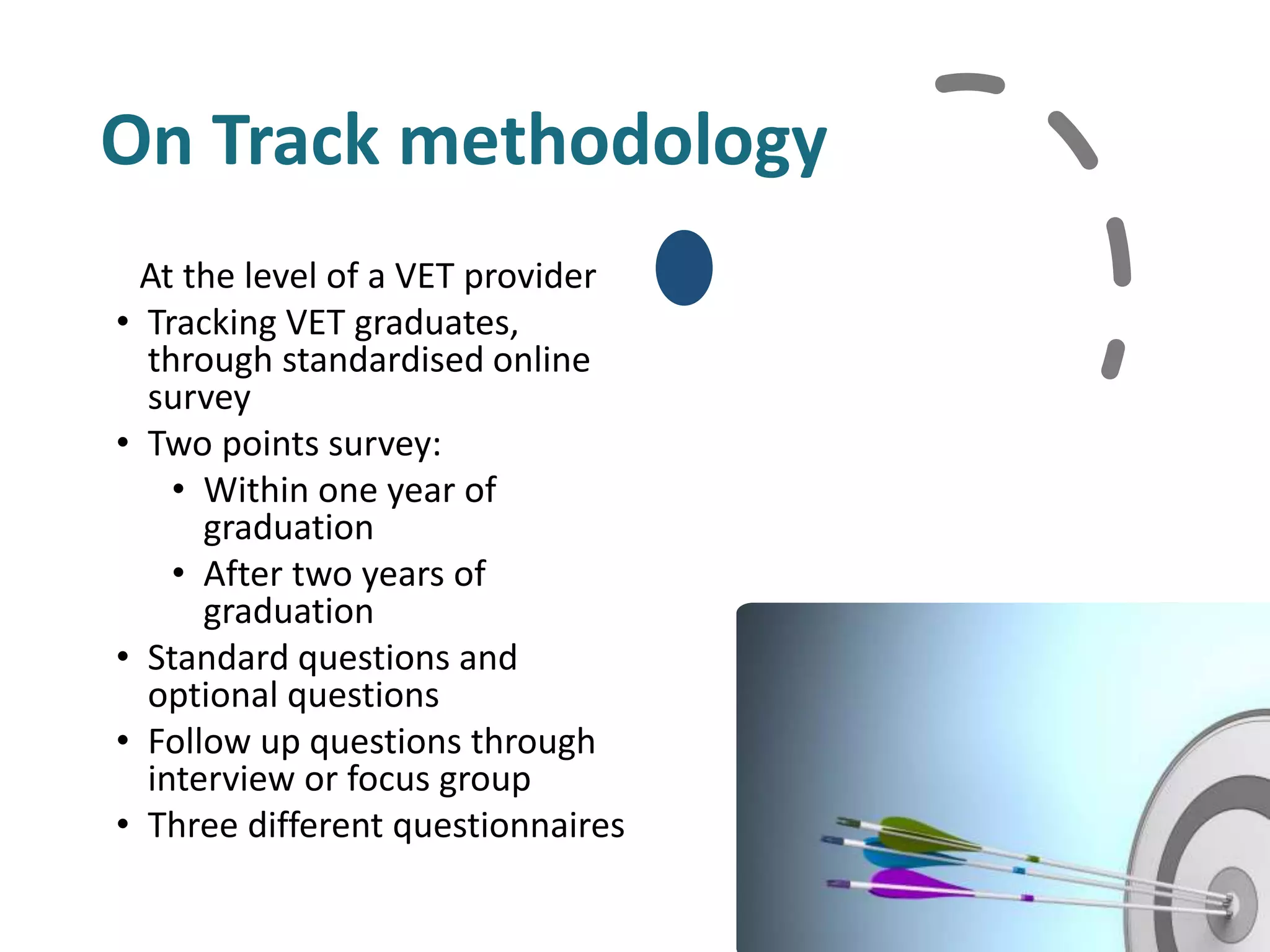
On Track methodology
At the level of a VET provider
• Tracking VET graduates,
through standardised online
survey
• Two points survey:
• Within one year of
graduation
• After two years of
graduation
• Standard questions and
optional questions
• Follow up questions through
interview or focus group
• Three different questionnaires
Indicators
• Measuring a set of 9 indicators
1. Employment Status
2. Status in further education
3. Interlinkage between the received education and current employment
4. Simplicity or difficulty to find a job
5. Leading position
6. First salary after graduation
7. Current salary
8. Interlinkage between a further education track and received education
9. Probability of obtaining the same education again
On Track tools
• Three different questionnaires / tools
– EQF level 2-3
– EQF level 4-5
– EQF level 6-7
• Two different technical solutions
– Google form
– Limesurvey
• Seven languages
– EN, BG, DE, EL, ES, LT, SK
On Track surveys (google form)
• EQF level 2-3
• https://forms.gle/cJnUga7gr48w7ES3A
• EQF level 4-5
• https://forms.gle/wd2KRoU2SKo14e3j6
• EQF level 6-7
• https://forms.gle/eJ25wgYfVr8sdxft9
• EQF level 2-3
https://survey.ontrack-project.eu/index.php/635521?lang=en
• EQF level 4-5
https://survey.ontrack-project.eu/index.php/219361?lang=en
• EQF level 6-7
https://survey.ontrack-project.eu/index.php/368814?lang=en
On Track surveys (Limesurvey)
Participate in
the pilots
• Get in contact with one of the
partners
• Fill in the pre-evaluation form
• Adapt the questionnaire; set up the
online survey; set up contact details
• Run the survey; analyse results
• Fill in the post-evaluation form
Q&A
Stay in contact
3rd Webinar – September
Tracking VET graduates, experiences from the pilots, how to
establish a permanent tracking mechanism
Workshops for VET providers – to be announced by each
partner
Website http://www.ontrack-project.eu/
Facebook https://www.facebook.com/On-Track-402265277256618
Reply to the survey
This Photo by Unknown Author is licensed under CC BY-SA

Tracking systems for VET graduates- methodology and tools

  • 1.
    Tracking systems forVET graduates Methodology and tools Webinar 25/6/2020 Natassa Kazantzidou, Orestis Ntagiantas IDEC TRACKING LEARNING AND CAREER PATHS OF VET GRADUATES TO IMPROVE QUALITY OF VET PROVISION
  • 2.
    What we talked about • TrackingVET graduates - general overview • VET tracking at VET institute level • Benefits for VET providers • Presentation of the On Track approach, methodology and tools • How you can benefit from On Track • Questions and answers https://www.youtube.com/watch?v=E0o4b7hXcJQ
  • 3.
    • Tracking VETgraduates at VET institute level – Methodology – On Track methodology – On Track tools • How to join • Questions and answers What are we going to talk about
  • 4.
    On Track projectin a nutshell Erasmus + Strategic partnership in VET Project N°: 2018-1-SK01-KA202- 046331 Led by Technical University of Kosice Nov 2018 – Oct 2020 Extended to Jan 2021 http://www.ontrack-project.eu/en/
  • 6.
  • 7.
    Establishing a VETgraduates tracking system Evaluation and use of the results ResourcesMethodologyIndicators Objectives and strategy
  • 8.
    Objectives Why do youwant to establish a graduate tracking system? What is the need that you want to address? What you will do with the information?
  • 9.
    Strategy • How oftenthe tracking will take place? • How comprehensive it will be, • What methodology will be followed? • Sample survey or a population survey? • What resources are you willing to put in place? • How the results of the tracking system will be used?
  • 10.
    • The indicatorsmust be based on the objectives of the tracking system and should respond to your need for information. • Indicators determine what information needs to be gathered and should, therefore, be selected on the basis of what data can be realistically and efficiently collected – or even collected at all. • The indicators will provide information that somehow will be used. There is no point to gather information that nobody will use. Indicators
  • 11.
    Examples of indicators •the number of graduates • gender representation • percentage of graduates continuing study • percentage of graduates employed • percentage of graduates registered unemployed at the labour office • percentage of graduates self- employed, sole traders, or entrepreneurs • average gross monthly wage • wage median • the most common jobs of graduates • key industries/sectors of employment • region of employment • key occupations • educational attainment • employment status • satisfaction with teaching subjects and specific teachers • the utilisation of knowledge and skills acquired during the study • work position in the workplace • employment in the field of study • proposals for changes in education • position within the employment • satisfaction with career guidance • the time to find a job • job satisfaction • the match between graduate’s skills and job requirements
  • 12.
    Data collection • Datacollection methods • Primary data • Questionnaire • Interview • Focus group • Secondary data • Administrative data
  • 13.
    Development of the questionnaire Link questionswith indicatorsLink Formulate the questions clearlyFormulate Avoid complex and combined questionsAvoid Make sure your respondents can and want to answer your questions Make Use clear and balance rating scalesUse Gather only the necessary demographic dataGather
  • 14.
    Run the survey Sampling •Google form, Survey Monkey, Lime survey, EUsurvey etc • Easy to use, easy to track easy to analyse, outreach On line survey • Through online survey system • Direct e-mail • Social media / events etc Invitation
  • 15.
    Cultivate a feedbackculture • Try different methods to approach your recipients and see what works best. • Provide a good reason to fill in the survey • Keep open channels with your graduates through other activities • Use the feedback – communicate it. • Remember that participation rate will increase every year with consistent efforts. It takes time and continuous effort to change behaviour of people, if you want to incorporate tracking graduates in your processes, design your tracking system and • Do not give up! be patient and persistent.
  • 16.
    Resources • Staff • Teamleader • Administrator • Technician • Analyst • Training • Time
  • 17.
    Survey output • Data cleaning •Data analysis • Data interpretation • Data visualization Data analysis • Report • Executive summary • Presentation • Articles, press releases Outputs
  • 18.
    Use of results Integrate with qualityassurance system • Improve education and support services Feed into decision making system • Input in management review process Feed national or regional information systems Benchmarking with national data or other VET institutions
  • 19.
  • 20.
    On Track methodology Atthe level of a VET provider • Tracking VET graduates, through standardised online survey • Two points survey: • Within one year of graduation • After two years of graduation • Standard questions and optional questions • Follow up questions through interview or focus group • Three different questionnaires
  • 21.
    Indicators • Measuring aset of 9 indicators 1. Employment Status 2. Status in further education 3. Interlinkage between the received education and current employment 4. Simplicity or difficulty to find a job 5. Leading position 6. First salary after graduation 7. Current salary 8. Interlinkage between a further education track and received education 9. Probability of obtaining the same education again
  • 22.
    On Track tools •Three different questionnaires / tools – EQF level 2-3 – EQF level 4-5 – EQF level 6-7 • Two different technical solutions – Google form – Limesurvey • Seven languages – EN, BG, DE, EL, ES, LT, SK
  • 23.
    On Track surveys(google form) • EQF level 2-3 • https://forms.gle/cJnUga7gr48w7ES3A • EQF level 4-5 • https://forms.gle/wd2KRoU2SKo14e3j6 • EQF level 6-7 • https://forms.gle/eJ25wgYfVr8sdxft9
  • 24.
    • EQF level2-3 https://survey.ontrack-project.eu/index.php/635521?lang=en • EQF level 4-5 https://survey.ontrack-project.eu/index.php/219361?lang=en • EQF level 6-7 https://survey.ontrack-project.eu/index.php/368814?lang=en On Track surveys (Limesurvey)
  • 25.
    Participate in the pilots •Get in contact with one of the partners • Fill in the pre-evaluation form • Adapt the questionnaire; set up the online survey; set up contact details • Run the survey; analyse results • Fill in the post-evaluation form
  • 26.
  • 27.
    Stay in contact 3rdWebinar – September Tracking VET graduates, experiences from the pilots, how to establish a permanent tracking mechanism Workshops for VET providers – to be announced by each partner Website http://www.ontrack-project.eu/ Facebook https://www.facebook.com/On-Track-402265277256618 Reply to the survey
  • 28.
    This Photo byUnknown Author is licensed under CC BY-SA