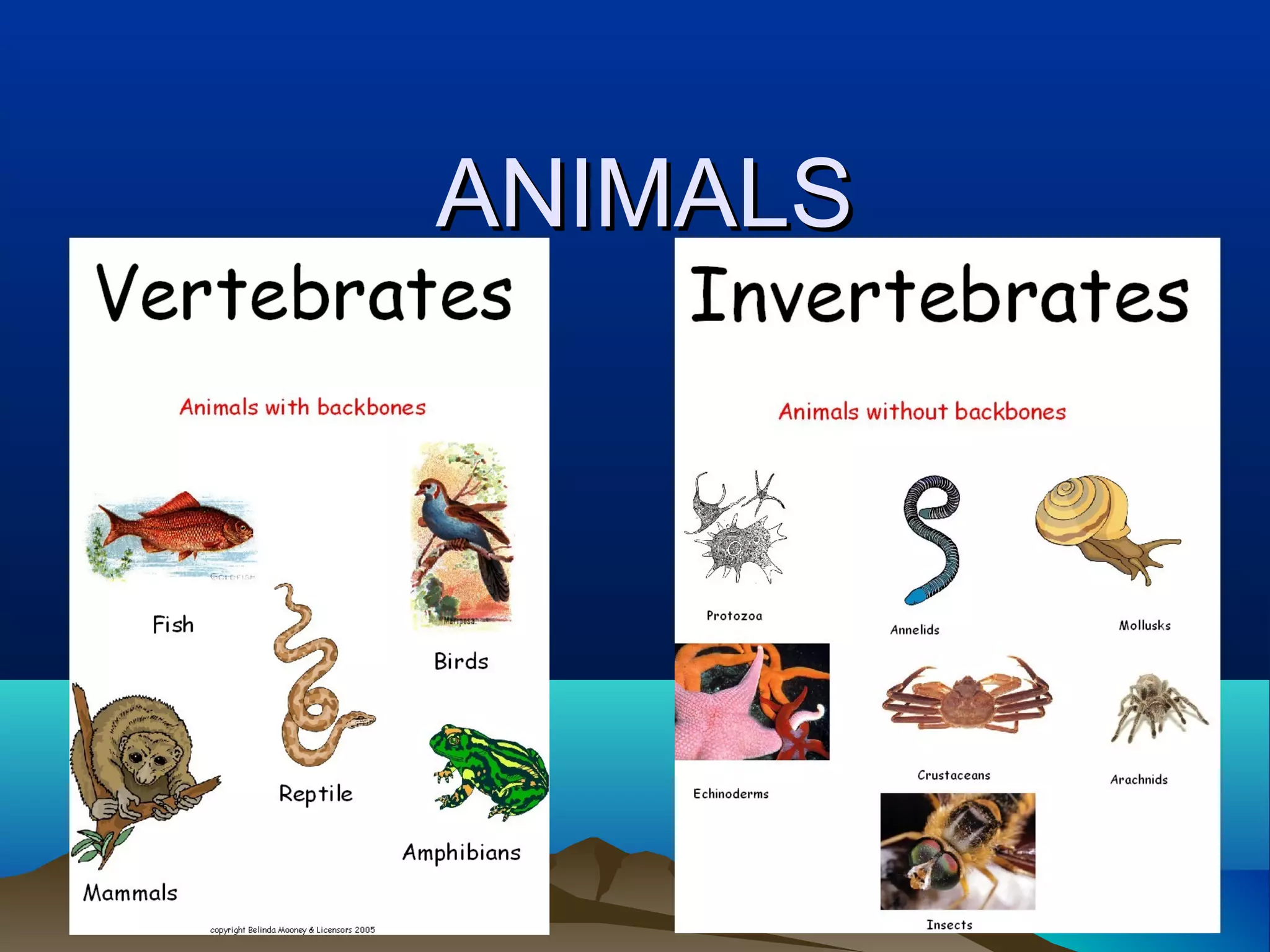
ANIMALS
Hedgehogs
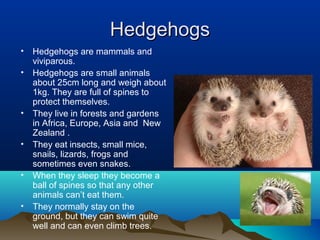
•   Hedgehogs are mammals and
    viviparous.
•   Hedgehogs are small animals
    about 25cm long and weigh about
    1kg. They are full of spines to
    protect themselves.
•   They live in forests and gardens
    in Africa, Europe, Asia and New
    Zealand .
•   They eat insects, small mice,
    snails, lizards, frogs and
    sometimes even snakes.
•   When they sleep they become a
    ball of spines so that any other
    animals can’t eat them.
•   They normally stay on the
    ground, but they can swim quite
    well and can even climb trees.
Alligator
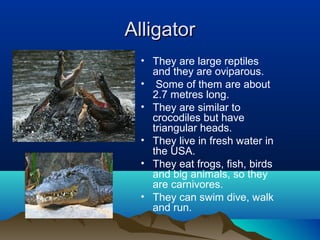
  • They are large reptiles
    and they are oviparous.
  • Some of them are about
    2.7 metres long.
  • They are similar to
    crocodiles but have
    triangular heads.
  • They live in fresh water in
    the USA.
  • They eat frogs, fish, birds
    and big animals, so they
    are carnivores.
  • They can swim dive, walk
    and run.
The snowy owl
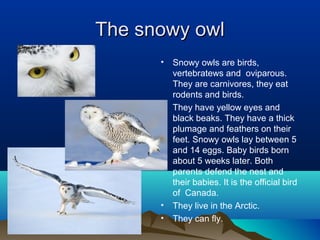
      •   Snowy owls are birds,
          vertebratews and oviparous.
          They are carnivores, they eat
          rodents and birds.
      •   They have yellow eyes and
          black beaks. They have a thick
          plumage and feathers on their
          feet. Snowy owls lay between 5
          and 14 eggs. Baby birds born
          about 5 weeks later. Both
          parents defend the nest and
          their babies. It is the official bird
          of Canada.
      •   They live in the Arctic.
      •   They can fly.
TARANTULA
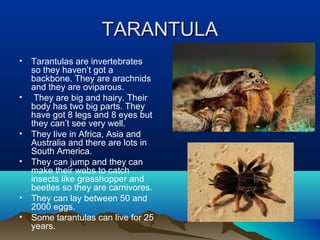
•   Tarantulas are invertebrates
    so they haven’t got a
    backbone. They are arachnids
    and they are oviparous.
•    They are big and hairy. Their
    body has two big parts. They
    have got 8 legs and 8 eyes but
    they can’t see very well.
•   They live in Africa, Asia and
    Australia and there are lots in
    South America.
•   They can jump and they can
    make their webs to catch
    insects like grasshopper and
    beetles so they are carnivores.
•   They can lay between 50 and
    2000 eggs.
•   Some tarantulas can live for 25
    years.
Dragonflies
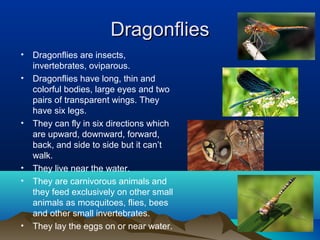
• Dragonflies are insects,
  invertebrates, oviparous.
• Dragonflies have long, thin and
  colorful bodies, large eyes and two
  pairs of transparent wings. They
  have six legs.
• They can fly in six directions which
  are upward, downward, forward,
  back, and side to side but it can’t
  walk.
• They live near the water.
• They are carnivorous animals and
  they feed exclusively on other small
  animals as mosquitoes, flies, bees
  and other small invertebrates.
• They lay the eggs on or near water.
Choose an animal to make an
          oral exposition.
•   Find information about:
•   1. which kind of animals are they?
•   2. Phisical description.
•   3. What do they eat?
•   4. Where do they live?
•   5. What can they do?
•   6. Other information and PICTURES
You need white paper, coloured paper, glue, scissors, pictures.
• Animals sliceshare
• http://www.slideshare.net/Thankful2BCath
  olic/animals-4940105
• Animals in danger
• http://www.slideshare.net/jsmamolar/anim
  als-in-danger5a-7268872

Animals

  • 1.
  • 2.
    Hedgehogs • Hedgehogs are mammals and viviparous. • Hedgehogs are small animals about 25cm long and weigh about 1kg. They are full of spines to protect themselves. • They live in forests and gardens in Africa, Europe, Asia and New Zealand . • They eat insects, small mice, snails, lizards, frogs and sometimes even snakes. • When they sleep they become a ball of spines so that any other animals can’t eat them. • They normally stay on the ground, but they can swim quite well and can even climb trees.
  • 3.
    Alligator •They are large reptiles and they are oviparous. • Some of them are about 2.7 metres long. • They are similar to crocodiles but have triangular heads. • They live in fresh water in the USA. • They eat frogs, fish, birds and big animals, so they are carnivores. • They can swim dive, walk and run.
  • 4.
    The snowy owl • Snowy owls are birds, vertebratews and oviparous. They are carnivores, they eat rodents and birds. • They have yellow eyes and black beaks. They have a thick plumage and feathers on their feet. Snowy owls lay between 5 and 14 eggs. Baby birds born about 5 weeks later. Both parents defend the nest and their babies. It is the official bird of Canada. • They live in the Arctic. • They can fly.
  • 5.
    TARANTULA • Tarantulas are invertebrates so they haven’t got a backbone. They are arachnids and they are oviparous. • They are big and hairy. Their body has two big parts. They have got 8 legs and 8 eyes but they can’t see very well. • They live in Africa, Asia and Australia and there are lots in South America. • They can jump and they can make their webs to catch insects like grasshopper and beetles so they are carnivores. • They can lay between 50 and 2000 eggs. • Some tarantulas can live for 25 years.
  • 6.
    Dragonflies • Dragonflies areinsects, invertebrates, oviparous. • Dragonflies have long, thin and colorful bodies, large eyes and two pairs of transparent wings. They have six legs. • They can fly in six directions which are upward, downward, forward, back, and side to side but it can’t walk. • They live near the water. • They are carnivorous animals and they feed exclusively on other small animals as mosquitoes, flies, bees and other small invertebrates. • They lay the eggs on or near water.
  • 7.
    Choose an animalto make an oral exposition. • Find information about: • 1. which kind of animals are they? • 2. Phisical description. • 3. What do they eat? • 4. Where do they live? • 5. What can they do? • 6. Other information and PICTURES You need white paper, coloured paper, glue, scissors, pictures.
  • 8.
    • Animals sliceshare •http://www.slideshare.net/Thankful2BCath olic/animals-4940105 • Animals in danger • http://www.slideshare.net/jsmamolar/anim als-in-danger5a-7268872