Anesthesiology
Anum sajid ID #25735
Definition
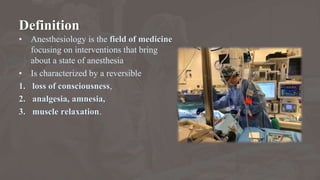
• Anesthesiology is the field of medicine
focusing on interventions that bring
about a state of anesthesia
• Is characterized by a reversible
1. loss of consciousness,
2. analgesia, amnesia,
3. muscle relaxation.
State of anesthesia
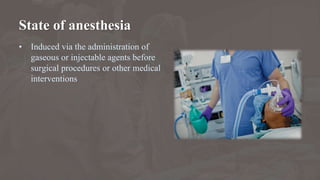
• Induced via the administration of
gaseous or injectable agents before
surgical procedures or other medical
interventions
Effects:
loss of
awareness
and/or memory
of pain
/experience
Amnesia
temporary
unconsciousness
or the absence
of anxiety.
Hypnosis
adequate muscle
relaxation
Paralysis
relief from pain
or the
prevention of
pain
Analgesia
What do anesthesiologist do?
 The anesthesiologist provides pain relief before, during and after surgery.
 They also fulfill a number of other important roles.
Types of anesthesia
The functions they need to monitor include:
 heart rate and rhythm
 breathing
 blood pressure
 body temperature
 fluid balance
Preoperative Evaluation
• Risk stratification is an important part of preoperative planning.
• Low-risk individuals can be evaluated immediately before anesthesia on
the day of the procedure.
Postoperative Care
• Monitoring and control of hypothermia and hyperthermia
• Pain control
• Reassurance, reorientation, and potential drug reversal for delayed
emergence (failure to return to a conscious state within 60 minutes of
anesthesia cessation)
• Recovery assessment
1st Qtr
58%
2nd Qtr
23%
3rd Qtr
10%
4th Qtr
9%
SALES
Critical and emergency care and other roles
• They assess patients, make diagnoses, provide support for breathing and circulation
• help to ensure that infection is prevented.
• providing airway and cardiac resuscitation and support and advanced life support, as
well as pain control
Specializations
• cardiac anesthesia, for heart surgery
• pediatric anesthesia, for pain management
and anesthetics in children
• neurasthenia, related to surgery for the
nervous system, brain, and spinal cord
• obstetrics, offering pain relief during labor
and delivery
Thank You

Anesthesiology

  • 1.
  • 2.
    Definition • Anesthesiology isthe field of medicine focusing on interventions that bring about a state of anesthesia • Is characterized by a reversible 1. loss of consciousness, 2. analgesia, amnesia, 3. muscle relaxation.
  • 3.
    State of anesthesia •Induced via the administration of gaseous or injectable agents before surgical procedures or other medical interventions
  • 4.
    Effects: loss of awareness and/or memory ofpain /experience Amnesia temporary unconsciousness or the absence of anxiety. Hypnosis adequate muscle relaxation Paralysis relief from pain or the prevention of pain Analgesia
  • 5.
    What do anesthesiologistdo?  The anesthesiologist provides pain relief before, during and after surgery.  They also fulfill a number of other important roles.
  • 6.
  • 7.
    The functions theyneed to monitor include:  heart rate and rhythm  breathing  blood pressure  body temperature  fluid balance
  • 8.
    Preoperative Evaluation • Riskstratification is an important part of preoperative planning. • Low-risk individuals can be evaluated immediately before anesthesia on the day of the procedure.
  • 10.
    Postoperative Care • Monitoringand control of hypothermia and hyperthermia • Pain control • Reassurance, reorientation, and potential drug reversal for delayed emergence (failure to return to a conscious state within 60 minutes of anesthesia cessation) • Recovery assessment
  • 11.
    1st Qtr 58% 2nd Qtr 23% 3rdQtr 10% 4th Qtr 9% SALES
  • 12.
    Critical and emergencycare and other roles • They assess patients, make diagnoses, provide support for breathing and circulation • help to ensure that infection is prevented. • providing airway and cardiac resuscitation and support and advanced life support, as well as pain control
  • 13.
    Specializations • cardiac anesthesia,for heart surgery • pediatric anesthesia, for pain management and anesthetics in children • neurasthenia, related to surgery for the nervous system, brain, and spinal cord • obstetrics, offering pain relief during labor and delivery
  • 14.