Anchor
                                                       Activities

                                      “ In this class we are never finished. Learning is a process that never ends.”
                                                                   Carol Ann Tomlinson


 What are anchor activities?


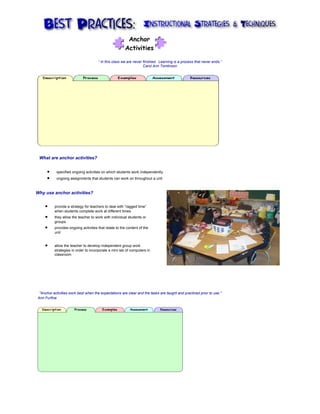
     •     specified ongoing activities on which students work independently
     •     ongoing assignments that students can work on throughout a unit


Why use anchor activities?


    •     provide a strategy for teachers to deal with “ragged time”
          when students complete work at different times
    •     they allow the teacher to work with individual students or
          groups
    •     provides ongoing activities that relate to the content of the
          unit


    •     allow the teacher to develop independent group work
          strategies in order to incorporate a mini lab of computers in
          classroom


 "Anchor activities work best when the expectations are clear and the tasks are taught and practiced prior to use."
Ann Furfine
When are anchor activities used?
                                                      to begin the day
                               when students complete an assignment
                          when students are stuck and waiting for help


Types of anchor activities
   DEAR Time - Silent Reading
   Journal Writing or Learning Logs
   Vocabulary Work
   Math “Problem of the Day”
   Learning Centre
   Spelling Practice
   Portfolio Management
   Agenda notes


                       How do I get started?


                                                              Anchor
                                                             Activities


 "Ragged time" is a reality in a differentiated classroom. It is not your goal to have everyone finish all tasks at the same time....." Carol Ann Tomlinson


In many classrooms, students work on routine activities like journal writing, vocabulary activities and spelling. These types of activities can used as
"Anchor Activities" that are options for students after assigned work is complete. The goal is to have students moving independently from one
assignment to another without needing teacher direction.


Anchor activities can be posted within the classroom in a variety of ways. Simply listing the activities on a chart or chalkboard is one method. Below are
additional methods of presentation used by teachers. More photos.
Ragged time" is a reality in a differentiated classroom. It is not your goal to have everyone finish all tasks at the same time....." Carol Ann Tomlinson


In many classrooms, students work on routine activities like journal writing, vocabulary activities and spelling. These types of activities can used as
"Anchor Activities" that are options for students after assigned work is complete. The goal is to have students moving independently from one
assignment to another without needing teacher direction.


Anchor activities can be posted within the classroom in a variety of ways. Simply listing the activities on a chart or chalkboard is one method. Below are
additional methods of presentation used by teachers. More photos.


                                          Anchor Activities - Getting Started
How Do I Get Started?
1. Teach the whole group to work on an anchor activity independently and quietly. The teacher is not a contact person at this time.

2. Progress to one group on anchor activity and another group on another activity - then flip flop groups. This may be done later in the day or in back-
to-back time slots.

Example - One group may be working with the teacher on math manipulatives while the other group works independently on anchor activities.

3. Progress to 1/3 of the class on anchor activities, 1/3 involved in a teacher directed activity and 1/3 working at mini lab on a curriculum related unit.

4. Move to the next stages only when your students are ready. Length of time can be increased at the second stage before moving on to the third
stage.


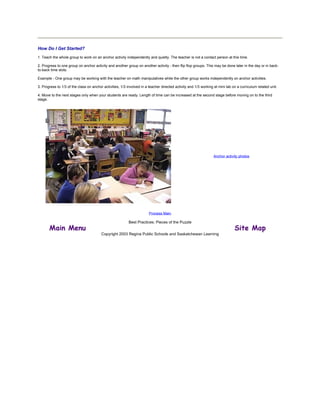
                                                                                                                 Anchor activity photos


                                                                        Process Main

                                                          Best Practices: Pieces of the Puzzle


                                         Copyright 2003 Regina Public Schools and Saskatchewan Learning
"A teacher who understand the need for teaching and learning to be a good match for students looks for every opportunity to know her students
better." Carol Ann Tomlinson


How can I assess anchor activities?

Help students to take responsibility for their roles in classroom routines. Clear expectations, rationale for expectations and student self evaluation are
integral to developing classroom procedures and student ownership within the learning environment.


How can I assess individual anchor activity work?


   Ongoing anecdotal records and checklists
   Student conferences for evaluation and goal setting
   Learning journals
   Student portfolios
   Rubrics
   Random checks
   Peer review


                                                               Anchor
                                                              Activities


  "Acknowledging that students learn at different speeds....teachers can create a "user-friendly" environment, one in which they flexibly adapt pacing,
         approaches to learning, and channels for expressing learning in response to their students' differing needs. " Carol Ann Tomlinson
Special Thanks to:
Heather Loewenhardt, Heather Thomas, Andra Donbrook, Regina Public School teachers

Internet Resources
Using Anchor Activities - Rapid Robin The "Dreaded Early Finisher"


Anchor Activities - a list of sample activities in different subject areas; although American, can provide ideas


Differentiation Strategies - Instructional Strategies to use in Differentiating Curriculum


Communicating in the Literacy Classroom - sample of how a Gr. 3 teacher uses anchor activities


Vocabulary Anchor Activities - a sample daily anchor activity


Text Resources by Carol Ann Tomlinson
The Differentiated Classroom - Responding to the Needs of All Learners, Association for Curriculum and Development. Virginia, 1999.

How to Differentiate in Mixed Ability Classrooms - Association for Curriculum and Development. Virginia, 2001

Anchoring activities.1.3.2011

  • 1.
    Anchor Activities “ In this class we are never finished. Learning is a process that never ends.” Carol Ann Tomlinson What are anchor activities? • specified ongoing activities on which students work independently • ongoing assignments that students can work on throughout a unit Why use anchor activities? • provide a strategy for teachers to deal with “ragged time” when students complete work at different times • they allow the teacher to work with individual students or groups • provides ongoing activities that relate to the content of the unit • allow the teacher to develop independent group work strategies in order to incorporate a mini lab of computers in classroom "Anchor activities work best when the expectations are clear and the tasks are taught and practiced prior to use." Ann Furfine
  • 2.
    When are anchoractivities used? to begin the day when students complete an assignment when students are stuck and waiting for help Types of anchor activities DEAR Time - Silent Reading Journal Writing or Learning Logs Vocabulary Work Math “Problem of the Day” Learning Centre Spelling Practice Portfolio Management Agenda notes How do I get started? Anchor Activities "Ragged time" is a reality in a differentiated classroom. It is not your goal to have everyone finish all tasks at the same time....." Carol Ann Tomlinson In many classrooms, students work on routine activities like journal writing, vocabulary activities and spelling. These types of activities can used as "Anchor Activities" that are options for students after assigned work is complete. The goal is to have students moving independently from one assignment to another without needing teacher direction. Anchor activities can be posted within the classroom in a variety of ways. Simply listing the activities on a chart or chalkboard is one method. Below are additional methods of presentation used by teachers. More photos.
  • 3.
    Ragged time" isa reality in a differentiated classroom. It is not your goal to have everyone finish all tasks at the same time....." Carol Ann Tomlinson In many classrooms, students work on routine activities like journal writing, vocabulary activities and spelling. These types of activities can used as "Anchor Activities" that are options for students after assigned work is complete. The goal is to have students moving independently from one assignment to another without needing teacher direction. Anchor activities can be posted within the classroom in a variety of ways. Simply listing the activities on a chart or chalkboard is one method. Below are additional methods of presentation used by teachers. More photos. Anchor Activities - Getting Started
  • 4.
    How Do IGet Started? 1. Teach the whole group to work on an anchor activity independently and quietly. The teacher is not a contact person at this time. 2. Progress to one group on anchor activity and another group on another activity - then flip flop groups. This may be done later in the day or in back- to-back time slots. Example - One group may be working with the teacher on math manipulatives while the other group works independently on anchor activities. 3. Progress to 1/3 of the class on anchor activities, 1/3 involved in a teacher directed activity and 1/3 working at mini lab on a curriculum related unit. 4. Move to the next stages only when your students are ready. Length of time can be increased at the second stage before moving on to the third stage. Anchor activity photos Process Main Best Practices: Pieces of the Puzzle Copyright 2003 Regina Public Schools and Saskatchewan Learning
  • 5.
    "A teacher whounderstand the need for teaching and learning to be a good match for students looks for every opportunity to know her students better." Carol Ann Tomlinson How can I assess anchor activities? Help students to take responsibility for their roles in classroom routines. Clear expectations, rationale for expectations and student self evaluation are integral to developing classroom procedures and student ownership within the learning environment. How can I assess individual anchor activity work? Ongoing anecdotal records and checklists Student conferences for evaluation and goal setting Learning journals Student portfolios Rubrics Random checks Peer review Anchor Activities "Acknowledging that students learn at different speeds....teachers can create a "user-friendly" environment, one in which they flexibly adapt pacing, approaches to learning, and channels for expressing learning in response to their students' differing needs. " Carol Ann Tomlinson
  • 6.
    Special Thanks to: HeatherLoewenhardt, Heather Thomas, Andra Donbrook, Regina Public School teachers Internet Resources Using Anchor Activities - Rapid Robin The "Dreaded Early Finisher" Anchor Activities - a list of sample activities in different subject areas; although American, can provide ideas Differentiation Strategies - Instructional Strategies to use in Differentiating Curriculum Communicating in the Literacy Classroom - sample of how a Gr. 3 teacher uses anchor activities Vocabulary Anchor Activities - a sample daily anchor activity Text Resources by Carol Ann Tomlinson The Differentiated Classroom - Responding to the Needs of All Learners, Association for Curriculum and Development. Virginia, 1999. How to Differentiate in Mixed Ability Classrooms - Association for Curriculum and Development. Virginia, 2001