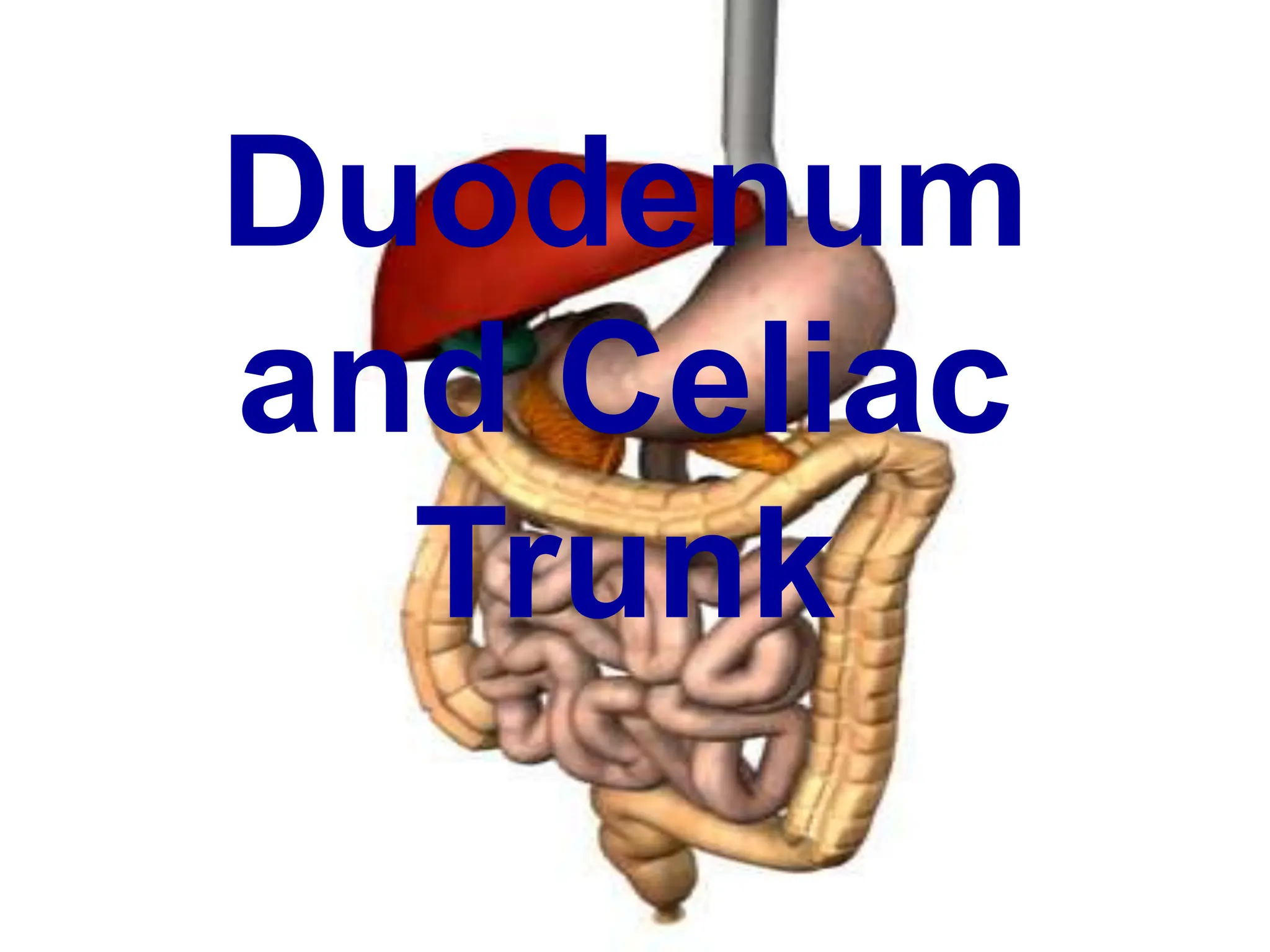
Duodenum
and Celiac
Trunk
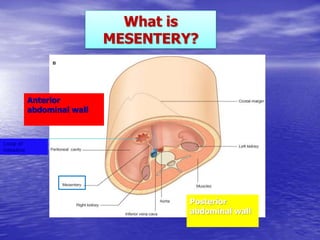
Posterior
abdominal wall
Anterior
abdominal wall
What is
MESENTERY?
Loop of
intestine
1 2
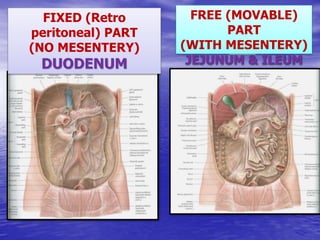
FIXED (Retro
peritoneal) PART
(NO MESENTERY)
DUODENUM
FREE (MOVABLE)
PART
(WITH MESENTERY)
JEJUNUM & ILEUM
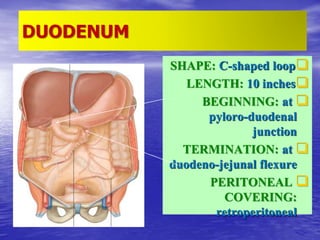
DUODENUM

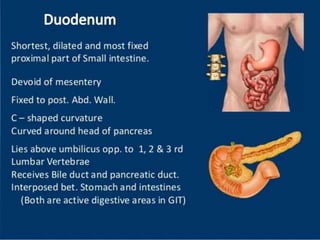
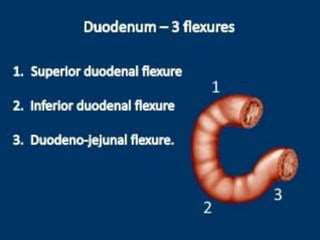
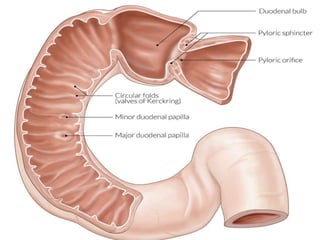
SHAPE: C-shaped loop

LENGTH: 10 inches

BEGINNING: at
pyloro-duodenal
junction

TERMINATION: at
duodeno-jejunal flexure

PERITONEAL
COVERING:
retroperitoneal
Dr W@el
Dr W@el
Dr W@el
Dr W@el
Dr W@el
Dr W@el
Dr W@el
Dr W@el
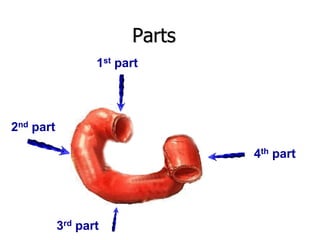
Parts
1st part
2nd part
3rd part
4th part
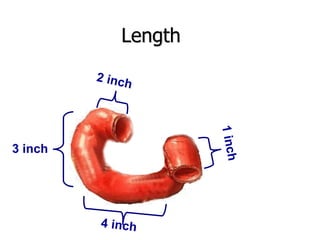
Length
3 inch
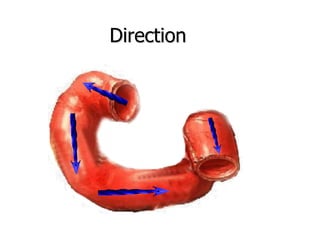
Direction
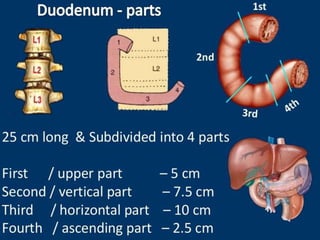
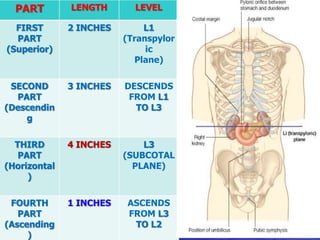
PART LENGTH LEVEL
FIRST
PART
(Superior)
2 INCHES L1
(Transpylor
ic
Plane)
SECOND
PART
(Descendin
g
3 INCHES DESCENDS
FROM L1
TO L3
THIRD
PART
(Horizontal
)
4 INCHES L3
(SUBCOTAL
PLANE)
FOURTH
PART
(Ascending
)
1 INCHES ASCENDS
FROM L3
TO L2
Dr W@el
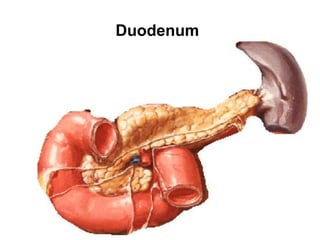
Duodenum
Dr W@el
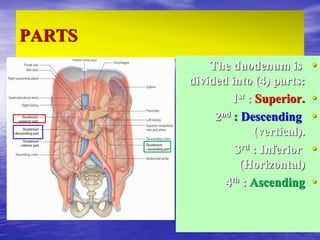
PARTS
•
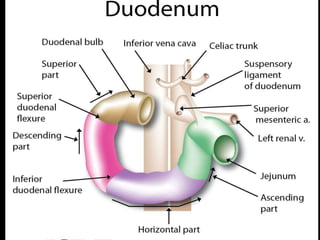
The duodenum is
divided into (4) parts:
•
1st : Superior.
•
2nd : Descending
(vertical).
•
3rd : Inferior
(Horizontal)
•
4th : Ascending
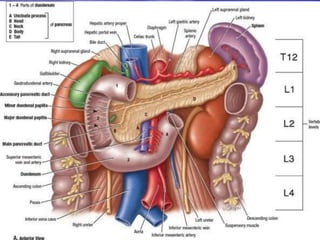
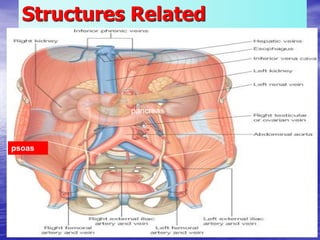
Structures Related
psoas
pancreas
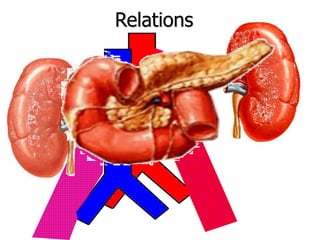
Relations
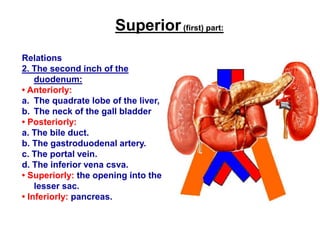
Superior(first) part:
Relations
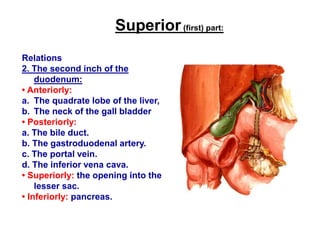
2. The second inch of the
duodenum:
• Anteriorly:
a. The quadrate lobe of the liver,
b. The neck of the gall bladder
• Posteriorly:
a. The bile duct.
b. The gastroduodenal artery.
c. The portal vein.
d. The inferior vena csva.
• Superiorly: the opening into the
lesser sac.
• Inferiorly: pancreas.
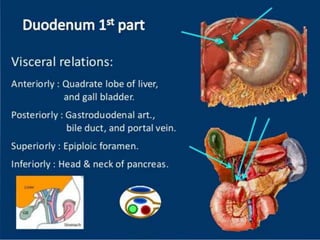
Superior(first) part:
Relations
2. The second inch of the
duodenum:
• Anteriorly:
a. The quadrate lobe of the liver,
b. The neck of the gall bladder
• Posteriorly:
a. The bile duct.
b. The gastroduodenal artery.
c. The portal vein.
d. The inferior vena cava.
• Superiorly: the opening into the
lesser sac.
• Inferiorly: pancreas.
Dr W@el
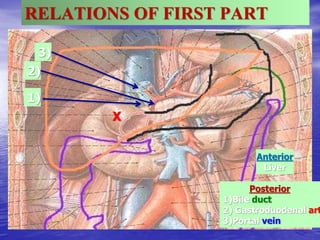
RELATIONS OF FIRST PART
X
Anterior
Liver
1)
2)
3)
X
Posterior
1)Bile duct
2) Gastroduodenal art
3)Portal vein
Secondpart:
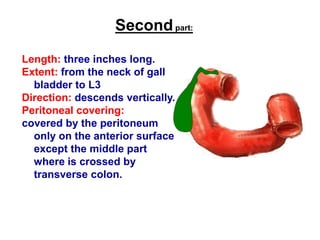
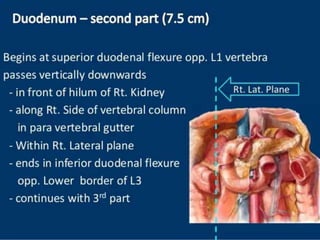
Length: three inches long.
Extent: from the neck of gall
bladder to L3
Direction: descends vertically.
Peritoneal covering:
covered by the peritoneum
only on the anterior surface
except the middle part
where is crossed by
transverse colon.
Secondpart:
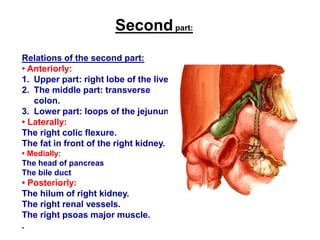
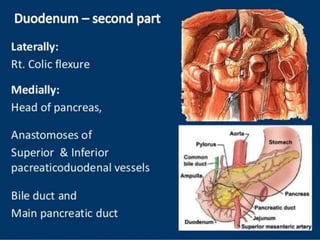
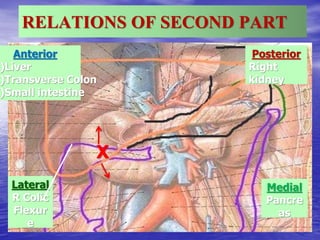
Relations of the second part:
• Anteriorly:
1. Upper part: right lobe of the liver.
2. The middle part: transverse
colon.
3. Lower part: loops of the jejunum.
• Laterally:
The right colic flexure.
The fat in front of the right kidney.
• Medially:
The head of pancreas
The bile duct
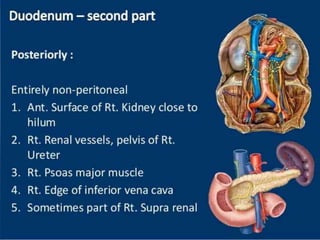
• Posteriorly:
The hilum of right kidney.
The right renal vessels.
The right psoas major muscle.
.
Secondpart:
Relations of the second part:
• Anteriorly:
1. Upper part: right lobe of the liver.
2. The middle part: transverse
colon.
3. Lower part: loops of the jejunum.
• Laterally:
The right colic flexure.
The fat in front of the right kidney.
•Medially:
The head of pancreas
The bile duct
• Posteriorly:
The hilum of right kidney.
The right renal vessels.
The right psoas major muscle.
.
Dr W@el
Dr W@el
Dr W@el
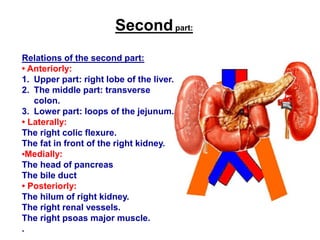
RELATIONS OF SECOND PART
X
Anterior
)Liver
)Transverse Colon
)Small intestine
Posterior
Right
kidney
Lateral
R Colic
Flexur
e
Medial
Pancre
as
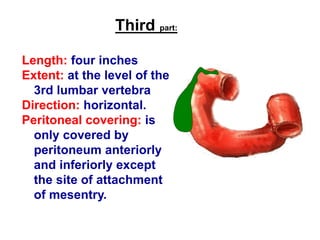
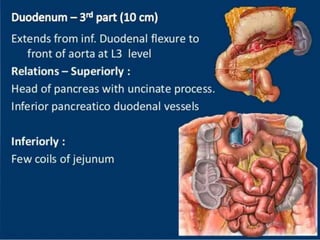
Third part:
Length: four inches
Extent: at the level of the
3rd lumbar vertebra
Direction: horizontal.
Peritoneal covering: is
only covered by
peritoneum anteriorly
and inferiorly except
the site of attachment
of mesentry.
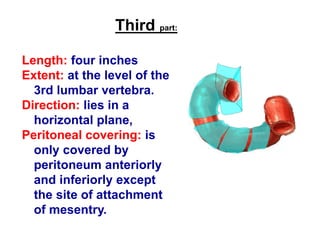
Third part:
Length: four inches
Extent: at the level of the
3rd lumbar vertebra.
Direction: lies in a
horizontal plane,
Peritoneal covering: is
only covered by
peritoneum anteriorly
and inferiorly except
the site of attachment
of mesentry.
Third part:
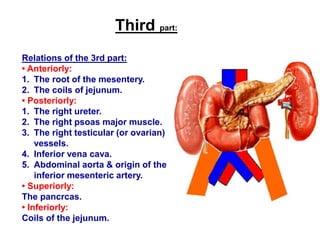
Relations of the 3rd part:
• Anteriorly:
1. The root of the mesentery.
2. The coils of jejunum.
• Posteriorly:
1. The right ureter.
2. The right psoas major muscle.
3. The right testicular (or ovarian)
vessels.
4. Inferior vena cava.
5. Abdominal aorta & origin of the
inferior mesenteric artery.
• Superiorly:
The pancrcas.
• Inferiorly:
Coils of the jejunum.
Dr W@el
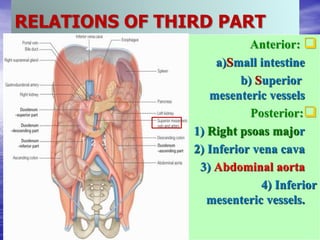
RELATIONS OF THIRD PART

Anterior:
a)Small intestine
b) Superior
mesenteric vessels

Posterior:
1) Right psoas major
2) Inferior vena cava
3) Abdominal aorta
4) Inferior
mesenteric vessels.
1 2 3
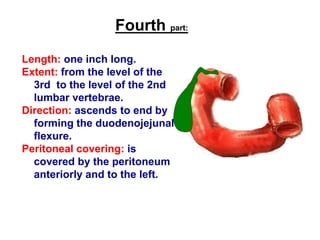
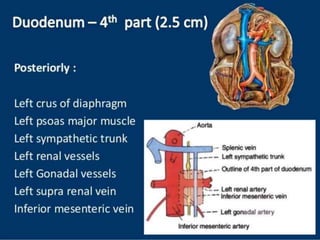
Fourth part:
Length: one inch long.
Extent: from the level of the
3rd to the level of the 2nd
lumbar vertebrae.
Direction: ascends to end by
forming the duodenojejunal
flexure.
Peritoneal covering: is
covered by the peritoneum
anteriorly and to the left.
Fourth part:
Length: one inch long.
Extent: from the leve] of the
3rd to the level of the 2nd
lumbar vertebrae.
Direction: ascends to end by
forming the duodenojejunal
flexure.
Peritoneal covering: is
covered by the peritoneum
anteriorly and to the left.
Fourth part:
Length: one inch long.
Extent: from the leve] of the
3rd to the level of the 2nd
lumbar vertebrae.
Direction: ascends to end by
forming the duodenojejunal
flexure.
Peritoneal covering: is
covered by the peritoneum
anteriorly and to the left.
Dr W@el
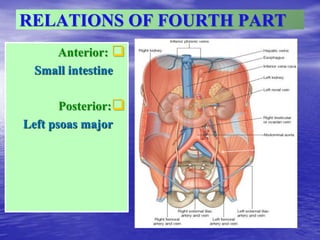
RELATIONS OF FOURTH PART

Anterior:
Small intestine

Posterior:
Left psoas major
psoas
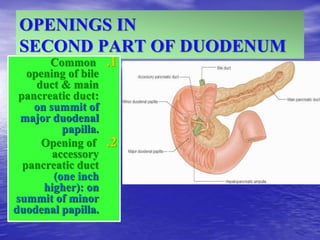
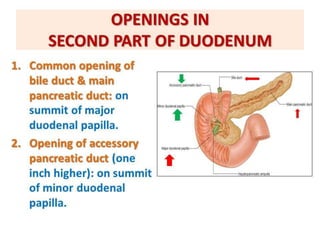
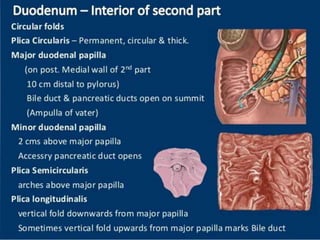
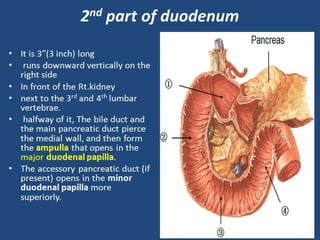
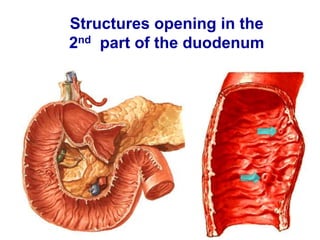
OPENINGS IN
SECOND PART OF DUODENUM
.1
Common
opening of bile
duct & main
pancreatic duct:
on summit of
major duodenal
papilla.
.2
Opening of
accessory
pancreatic duct
(one inch
higher): on
summit of minor
duodenal papilla.
Dr W@el
Dr W@el
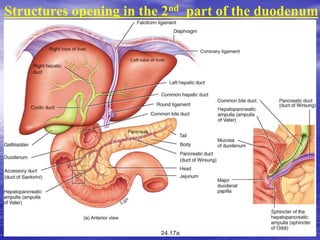
Structures opening in the 2nd part of the duodenum
Structures opening in the
2nd part of the duodenum
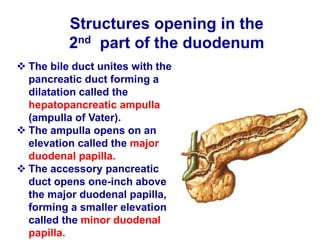
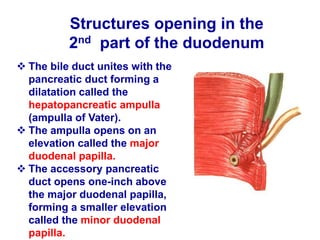
 The bile duct unites with the
pancreatic duct forming a
dilatation called the
hepatopancreatic ampulla
(ampulla of Vater).
 The ampulla opens on an
elevation called the major
duodenal papilla.
 The accessory pancreatic
duct opens one-inch above
the major duodenal papilla,
forming a smaller elevation
called the minor duodenal
papilla.
Structures opening in the
2nd part of the duodenum
 The bile duct unites with the
pancreatic duct forming a
dilatation called the
hepatopancreatic ampulla
(ampulla of Vater).
 The ampulla opens on an
elevation called the major
duodenal papilla.
 The accessory pancreatic
duct opens one-inch above
the major duodenal papilla,
forming a smaller elevation
called the minor duodenal
papilla.
Dr W@el
Structures opening in the
2nd part of the duodenum
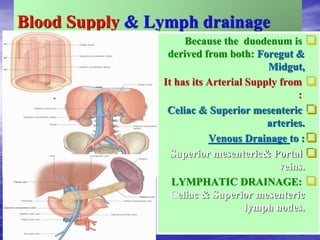
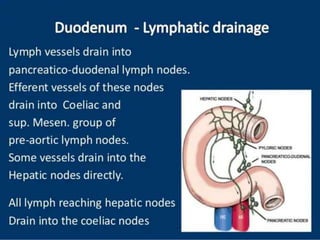
Blood Supply & Lymph drainage

Because the duodenum is
derived from both: Foregut &
Midgut,

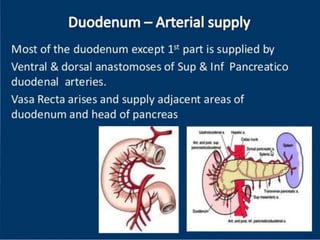
It has its Arterial Supply from
:

Celiac & Superior mesenteric
arteries.

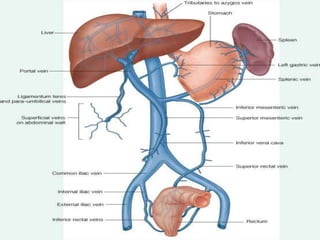
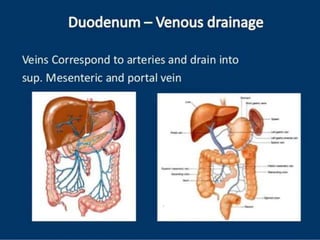
Venous Drainage to :

Superior mesenteric& Portal
veins.

LYMPHATIC DRAINAGE:
Celiac & Superior mesenteric
lymph nodes.
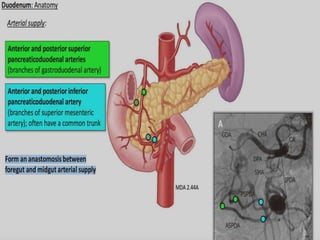
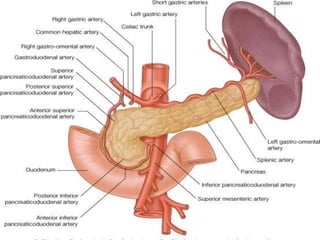
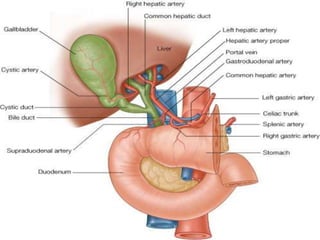
• Blood supply of the duodenum
• The superior pancreaticoduodenal
artery arises from the
gastroduodenal artery
• inferior pacreaticoduodenal artery
originates as the first branch of the
superior mesenteric artery.
• These vessels both lie in the curve
between the duodenum and the head
of the pancreas,
Dr W@el
Dr W@el
Dr W@el
Dr W@el
Dr W@el
Coeliac Trunk
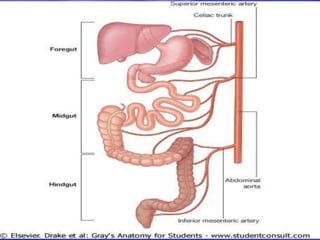
•The primitive gut tube can be
divided into foregut, midgut, and
hindgut regions.
•The foregut is supplied by the
celiac trunk.
•The midgut is supplied by the
superior mesenteric artery .
•The hindgut is supplied by the
inferior mesenteric artery .
•The three anterior branches
supply the gastrointestinal
viscera:
•the celiac trunk
•superior mesenteric artey
•inferior mesenteric artery
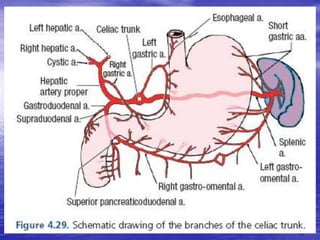
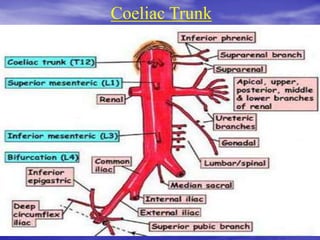
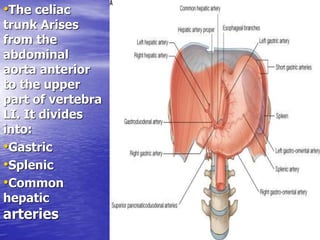
•The celiac
trunk Arises
from the
abdominal
aorta anterior
to the upper
part of vertebra
LI. It divides
into:
•Gastric
•Splenic
•Common
hepatic
arteries
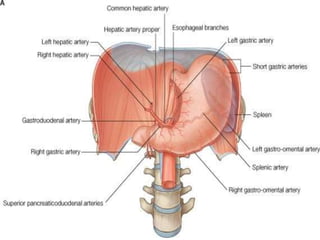
• The common hepatic artery divides
into its two terminal branches,
• the hepatic artery proper and divides
into the i.right hepatic artery
ii.left hepatic artery
• gastroduodenal artery:
• right gastro-epiploic(omental
)artery
• superior pancreaticoduodenal artery
• The splenic artery takes a tortuous
course to the left along the superior
border of the pancreas .
• The splenic artery gives off
• short gastric arteries
• left gastro-epiploic artery
•The left gastric artery :
•The left gastric artery supplies the
lesser curvature of the stomach and
anastomoses with the right gastric
artery.
•eophageal branches (anastomose
with esophageal branches from the
thoracic aorta).
Dr W@el
Dr W@el
Dr W@el
Dr W@el
Dr W@el
Dr W@el
Dr W@el
Dr W@el
Dr W@el
Dr W@el
Dr W@el
Dr W@el

ANATOMICAL AND FUNCTIONAL VARIATIONS OF DUODENUM.ppt

  • 1.
  • 2.
  • 3.
    1 2 FIXED (Retro peritoneal)PART (NO MESENTERY) DUODENUM FREE (MOVABLE) PART (WITH MESENTERY) JEJUNUM & ILEUM
  • 4.
    DUODENUM  SHAPE: C-shaped loop  LENGTH:10 inches  BEGINNING: at pyloro-duodenal junction  TERMINATION: at duodeno-jejunal flexure  PERITONEAL COVERING: retroperitoneal
  • 5.
  • 6.
  • 7.
  • 8.
  • 9.
  • 11.
  • 12.
  • 13.
  • 14.
  • 15.
  • 16.
  • 17.
    PART LENGTH LEVEL FIRST PART (Superior) 2INCHES L1 (Transpylor ic Plane) SECOND PART (Descendin g 3 INCHES DESCENDS FROM L1 TO L3 THIRD PART (Horizontal ) 4 INCHES L3 (SUBCOTAL PLANE) FOURTH PART (Ascending ) 1 INCHES ASCENDS FROM L3 TO L2
  • 18.
  • 19.
  • 20.
    PARTS • The duodenum is dividedinto (4) parts: • 1st : Superior. • 2nd : Descending (vertical). • 3rd : Inferior (Horizontal) • 4th : Ascending
  • 22.
  • 23.
  • 24.
    Superior(first) part: Relations 2. Thesecond inch of the duodenum: • Anteriorly: a. The quadrate lobe of the liver, b. The neck of the gall bladder • Posteriorly: a. The bile duct. b. The gastroduodenal artery. c. The portal vein. d. The inferior vena csva. • Superiorly: the opening into the lesser sac. • Inferiorly: pancreas.
  • 25.
    Superior(first) part: Relations 2. Thesecond inch of the duodenum: • Anteriorly: a. The quadrate lobe of the liver, b. The neck of the gall bladder • Posteriorly: a. The bile duct. b. The gastroduodenal artery. c. The portal vein. d. The inferior vena cava. • Superiorly: the opening into the lesser sac. • Inferiorly: pancreas.
  • 26.
  • 27.
    RELATIONS OF FIRSTPART X Anterior Liver 1) 2) 3) X Posterior 1)Bile duct 2) Gastroduodenal art 3)Portal vein
  • 28.
    Secondpart: Length: three incheslong. Extent: from the neck of gall bladder to L3 Direction: descends vertically. Peritoneal covering: covered by the peritoneum only on the anterior surface except the middle part where is crossed by transverse colon.
  • 29.
    Secondpart: Relations of thesecond part: • Anteriorly: 1. Upper part: right lobe of the liver. 2. The middle part: transverse colon. 3. Lower part: loops of the jejunum. • Laterally: The right colic flexure. The fat in front of the right kidney. • Medially: The head of pancreas The bile duct • Posteriorly: The hilum of right kidney. The right renal vessels. The right psoas major muscle. .
  • 30.
    Secondpart: Relations of thesecond part: • Anteriorly: 1. Upper part: right lobe of the liver. 2. The middle part: transverse colon. 3. Lower part: loops of the jejunum. • Laterally: The right colic flexure. The fat in front of the right kidney. •Medially: The head of pancreas The bile duct • Posteriorly: The hilum of right kidney. The right renal vessels. The right psoas major muscle. .
  • 31.
  • 32.
  • 33.
  • 34.
    RELATIONS OF SECONDPART X Anterior )Liver )Transverse Colon )Small intestine Posterior Right kidney Lateral R Colic Flexur e Medial Pancre as
  • 35.
    Third part: Length: fourinches Extent: at the level of the 3rd lumbar vertebra Direction: horizontal. Peritoneal covering: is only covered by peritoneum anteriorly and inferiorly except the site of attachment of mesentry.
  • 36.
    Third part: Length: fourinches Extent: at the level of the 3rd lumbar vertebra. Direction: lies in a horizontal plane, Peritoneal covering: is only covered by peritoneum anteriorly and inferiorly except the site of attachment of mesentry.
  • 37.
    Third part: Relations ofthe 3rd part: • Anteriorly: 1. The root of the mesentery. 2. The coils of jejunum. • Posteriorly: 1. The right ureter. 2. The right psoas major muscle. 3. The right testicular (or ovarian) vessels. 4. Inferior vena cava. 5. Abdominal aorta & origin of the inferior mesenteric artery. • Superiorly: The pancrcas. • Inferiorly: Coils of the jejunum.

  • 38.
  • 39.
    RELATIONS OF THIRDPART  Anterior: a)Small intestine b) Superior mesenteric vessels  Posterior: 1) Right psoas major 2) Inferior vena cava 3) Abdominal aorta 4) Inferior mesenteric vessels. 1 2 3
  • 40.
    Fourth part: Length: oneinch long. Extent: from the level of the 3rd to the level of the 2nd lumbar vertebrae. Direction: ascends to end by forming the duodenojejunal flexure. Peritoneal covering: is covered by the peritoneum anteriorly and to the left.
  • 41.
    Fourth part: Length: oneinch long. Extent: from the leve] of the 3rd to the level of the 2nd lumbar vertebrae. Direction: ascends to end by forming the duodenojejunal flexure. Peritoneal covering: is covered by the peritoneum anteriorly and to the left.
  • 42.
    Fourth part: Length: oneinch long. Extent: from the leve] of the 3rd to the level of the 2nd lumbar vertebrae. Direction: ascends to end by forming the duodenojejunal flexure. Peritoneal covering: is covered by the peritoneum anteriorly and to the left.
  • 43.
  • 44.
    RELATIONS OF FOURTHPART  Anterior: Small intestine  Posterior: Left psoas major psoas
  • 45.
    OPENINGS IN SECOND PARTOF DUODENUM .1 Common opening of bile duct & main pancreatic duct: on summit of major duodenal papilla. .2 Opening of accessory pancreatic duct (one inch higher): on summit of minor duodenal papilla.
  • 46.
  • 47.
  • 48.
    Structures opening inthe 2nd part of the duodenum
  • 49.
    Structures opening inthe 2nd part of the duodenum  The bile duct unites with the pancreatic duct forming a dilatation called the hepatopancreatic ampulla (ampulla of Vater).  The ampulla opens on an elevation called the major duodenal papilla.  The accessory pancreatic duct opens one-inch above the major duodenal papilla, forming a smaller elevation called the minor duodenal papilla.
  • 50.
    Structures opening inthe 2nd part of the duodenum  The bile duct unites with the pancreatic duct forming a dilatation called the hepatopancreatic ampulla (ampulla of Vater).  The ampulla opens on an elevation called the major duodenal papilla.  The accessory pancreatic duct opens one-inch above the major duodenal papilla, forming a smaller elevation called the minor duodenal papilla.
  • 51.
  • 52.
    Structures opening inthe 2nd part of the duodenum
  • 54.
    Blood Supply &Lymph drainage  Because the duodenum is derived from both: Foregut & Midgut,  It has its Arterial Supply from :  Celiac & Superior mesenteric arteries.  Venous Drainage to :  Superior mesenteric& Portal veins.  LYMPHATIC DRAINAGE: Celiac & Superior mesenteric lymph nodes.
  • 55.
    • Blood supplyof the duodenum • The superior pancreaticoduodenal artery arises from the gastroduodenal artery • inferior pacreaticoduodenal artery originates as the first branch of the superior mesenteric artery. • These vessels both lie in the curve between the duodenum and the head of the pancreas,
  • 58.
  • 63.
  • 64.
  • 65.
  • 66.
  • 68.
  • 69.
    •The primitive guttube can be divided into foregut, midgut, and hindgut regions. •The foregut is supplied by the celiac trunk. •The midgut is supplied by the superior mesenteric artery . •The hindgut is supplied by the inferior mesenteric artery .
  • 70.
    •The three anteriorbranches supply the gastrointestinal viscera: •the celiac trunk •superior mesenteric artey •inferior mesenteric artery
  • 71.
    •The celiac trunk Arises fromthe abdominal aorta anterior to the upper part of vertebra LI. It divides into: •Gastric •Splenic •Common hepatic arteries
  • 72.
    • The commonhepatic artery divides into its two terminal branches, • the hepatic artery proper and divides into the i.right hepatic artery ii.left hepatic artery • gastroduodenal artery: • right gastro-epiploic(omental )artery • superior pancreaticoduodenal artery
  • 73.
    • The splenicartery takes a tortuous course to the left along the superior border of the pancreas . • The splenic artery gives off • short gastric arteries • left gastro-epiploic artery
  • 74.
    •The left gastricartery : •The left gastric artery supplies the lesser curvature of the stomach and anastomoses with the right gastric artery. •eophageal branches (anastomose with esophageal branches from the thoracic aorta).
  • 75.
  • 76.
  • 77.
  • 78.
  • 79.
  • 80.
  • 81.
  • 82.
  • 83.
  • 84.
  • 85.
  • 86.