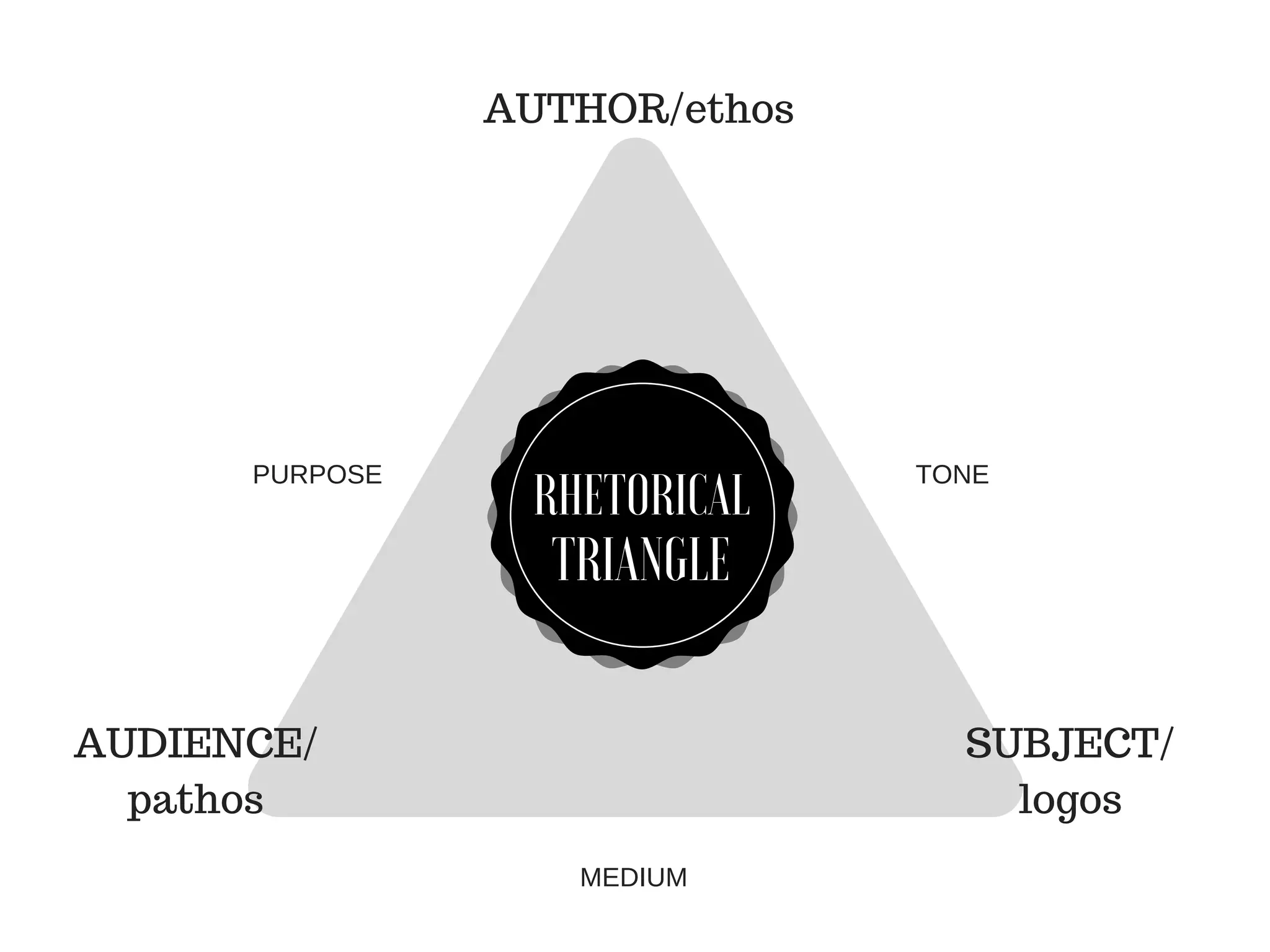
The document discusses the components of persuasion defined by Aristotle: ethos, pathos, and logos. Ethos is establishing credibility or trust with the audience. Pathos involves appealing to the audience's emotions. Logos means making reasonable arguments backed by evidence. These elements, along with purpose, tone, and medium, form the rhetorical triangle which is a tool for analyzing persuasive texts. The rhetorical triangle connects these elements to the author, audience, and subject of the text.