ANALYSIS OF ‘ROCKY
BALBOA’
INTRODUCTION
 ‘Rocky Balboa’ was filmed in 2006, so it is a lot
more up-to-date than ‘Rocky’, which was
filmed in 1976.
 This film is a hybrid of four different genres;
action, drama, romance and sport.
The film begins by displaying the production
company’s logos and the film rating. This is a
convention pretty much all films follow, I plan to do
the same as it will make my film look more
professional and real.
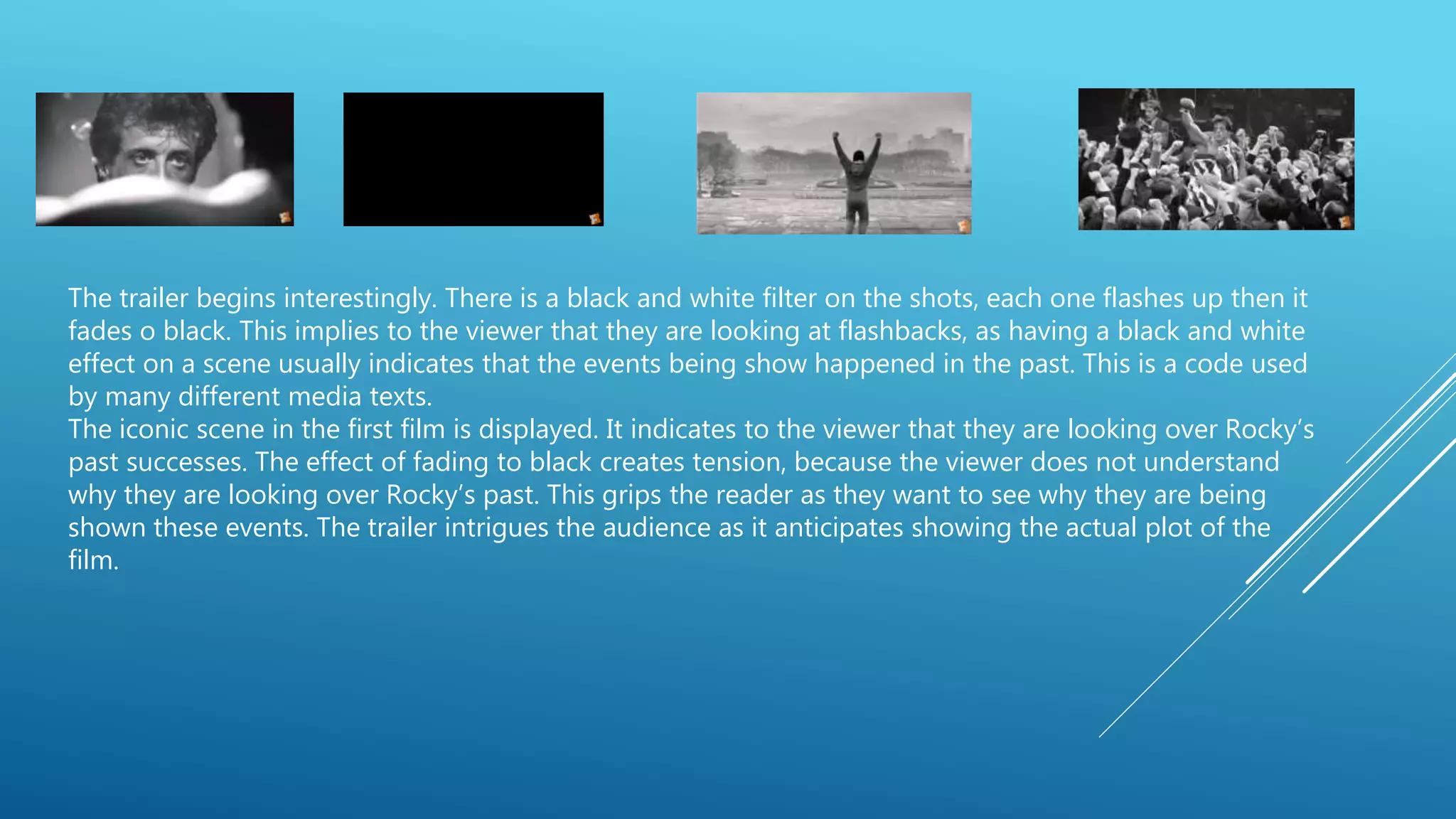
The trailer begins interestingly. There is a black and white filter on the shots, each one flashes up then it
fades o black. This implies to the viewer that they are looking at flashbacks, as having a black and white
effect on a scene usually indicates that the events being show happened in the past. This is a code used
by many different media texts.
The iconic scene in the first film is displayed. It indicates to the viewer that they are looking over Rocky’s
past successes. The effect of fading to black creates tension, because the viewer does not understand
why they are looking over Rocky’s past. This grips the reader as they want to see why they are being
shown these events. The trailer intrigues the audience as it anticipates showing the actual plot of the
film.
In contrast to the first Rocky film, the lighting is
very vibrant and light in ‘Rocky Balboa’. This
indicates to the audience that rocky has now
‘made it’ and does not live in poverty any more.
Almost straight away the ‘bad guy’ is displayed to the viewer. Camera
angle is used effectively to portray the new character. The two-shot of
Rocky and his friend is shown looking up at the world's reigning
heavyweight champion, Mason "the Line" Dixon. This gives the impression
to the viewer that Mason is more dominant and strong than Rocky.
I could try to use this effect in my movie when my character is in the same
scene as the person they will eventually fight, as it gives the impression to
the audience that it would be a challenge to take this individual on for the
protagonist, encouraging them to want to see the story progress.
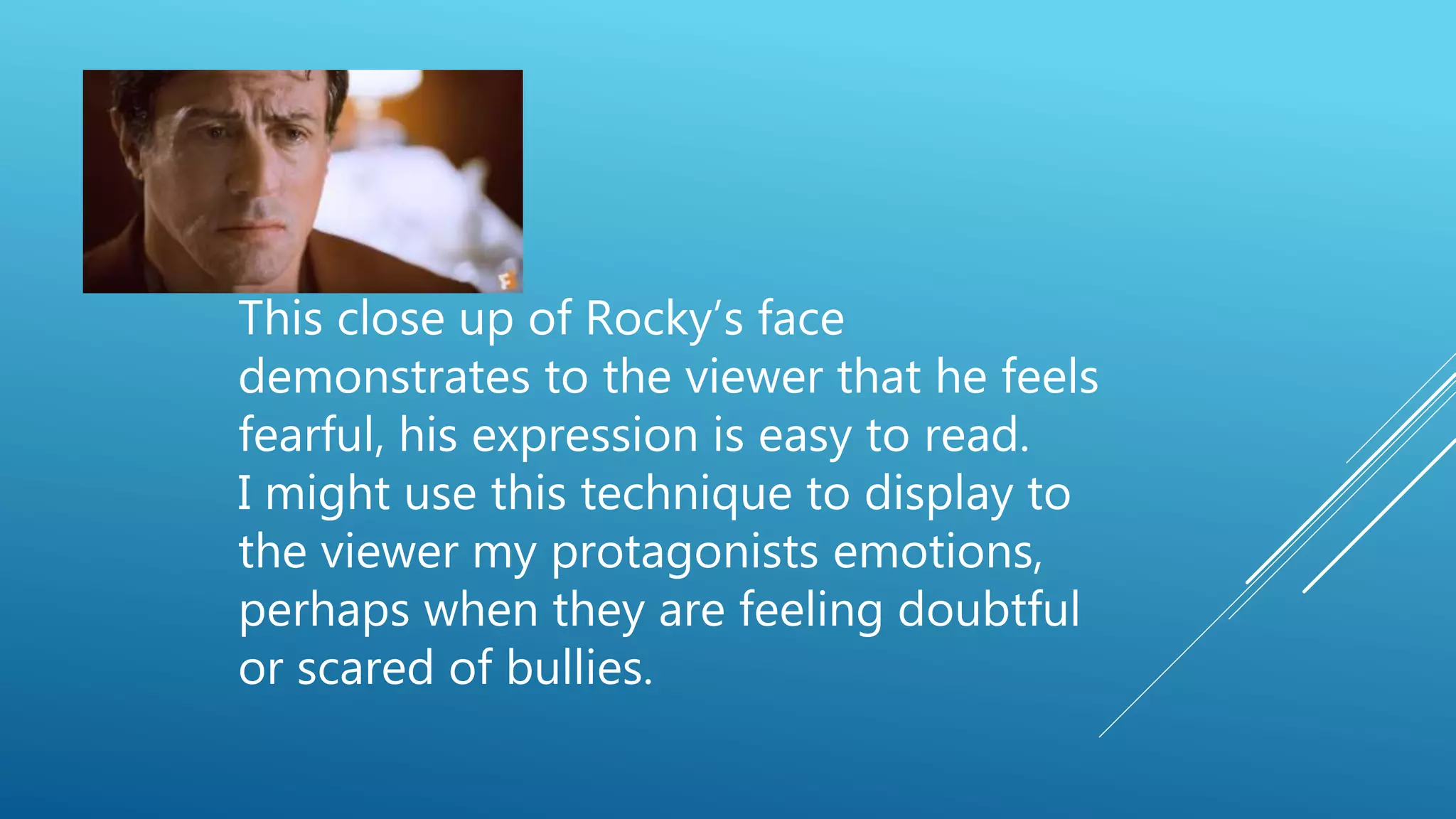
This close up of Rocky’s face
demonstrates to the viewer that he feels
fearful, his expression is easy to read.
I might use this technique to display to
the viewer my protagonists emotions,
perhaps when they are feeling doubtful
or scared of bullies.
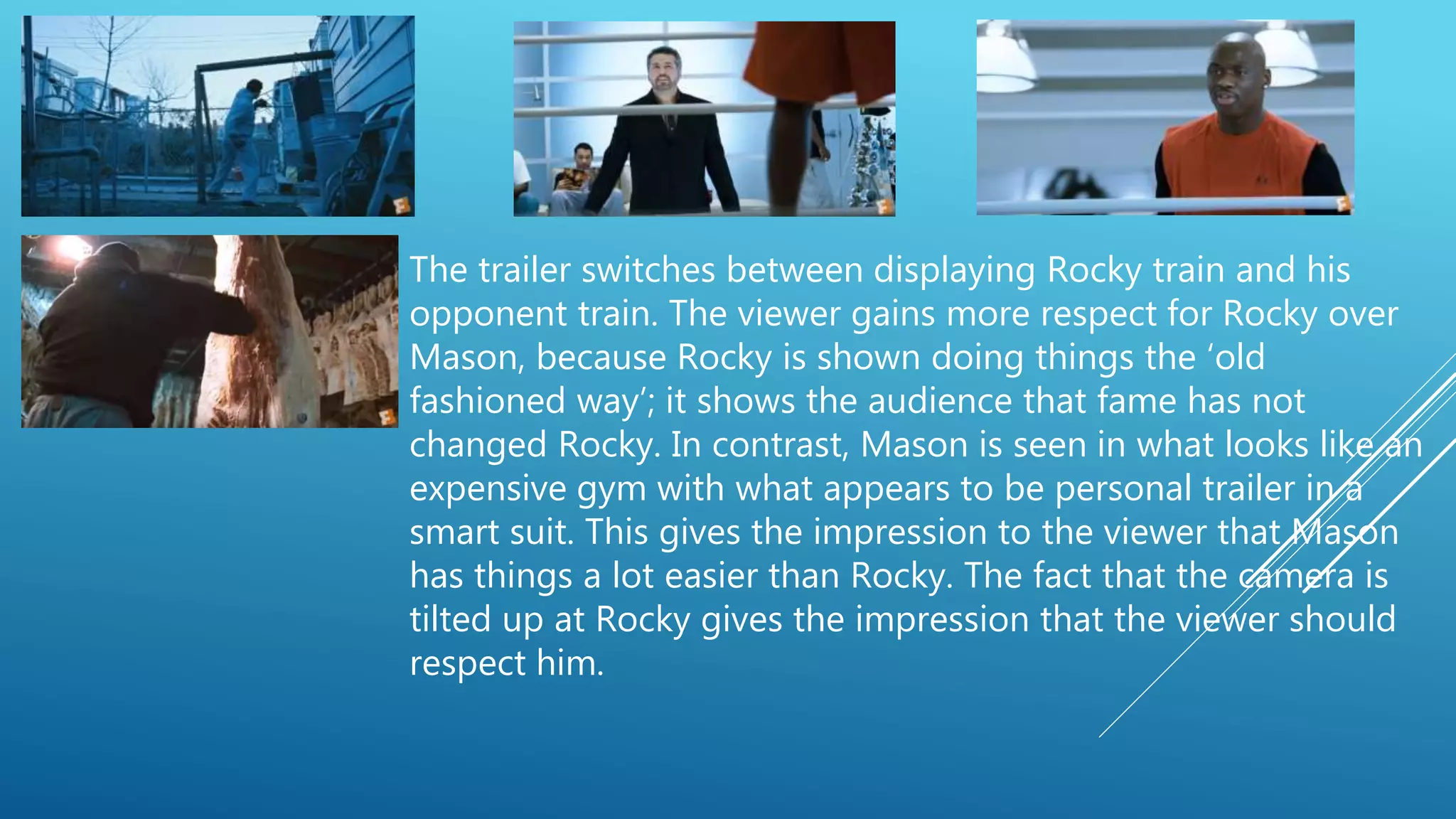
The trailer switches between displaying Rocky train and his
opponent train. The viewer gains more respect for Rocky over
Mason, because Rocky is shown doing things the ‘old
fashioned way’; it shows the audience that fame has not
changed Rocky. In contrast, Mason is seen in what looks like an
expensive gym with what appears to be personal trailer in a
smart suit. This gives the impression to the viewer that Mason
has things a lot easier than Rocky. The fact that the camera is
tilted up at Rocky gives the impression that the viewer should
respect him.
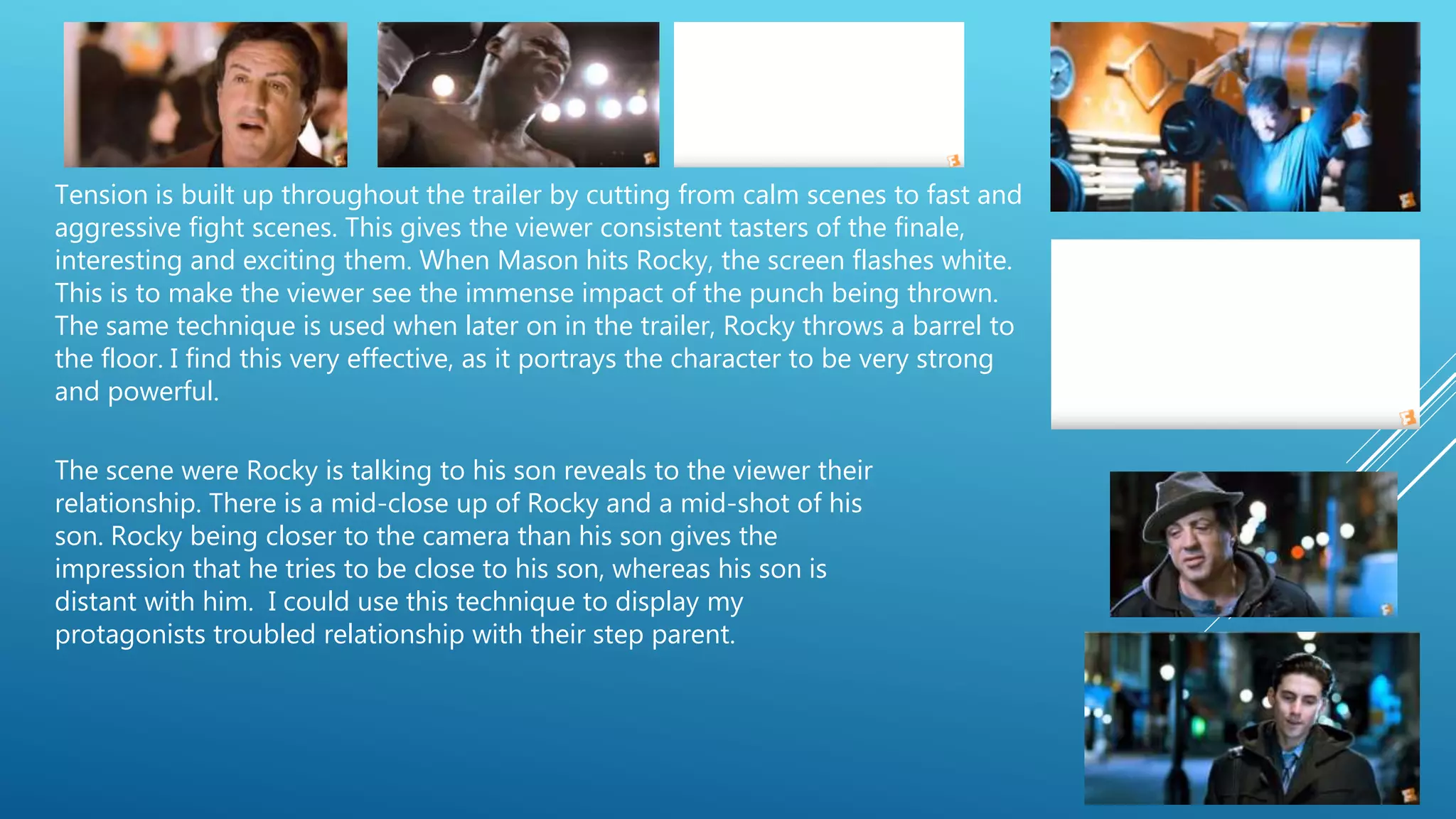
Tension is built up throughout the trailer by cutting from calm scenes to fast and
aggressive fight scenes. This gives the viewer consistent tasters of the finale,
interesting and exciting them. When Mason hits Rocky, the screen flashes white.
This is to make the viewer see the immense impact of the punch being thrown.
The same technique is used when later on in the trailer, Rocky throws a barrel to
the floor. I find this very effective, as it portrays the character to be very strong
and powerful.
The scene were Rocky is talking to his son reveals to the viewer their
relationship. There is a mid-close up of Rocky and a mid-shot of his
son. Rocky being closer to the camera than his son gives the
impression that he tries to be close to his son, whereas his son is
distant with him. I could use this technique to display my
protagonists troubled relationship with their step parent.
The trailer cuts between the two main characters
training to fight. This differs from the first film’s
trailer, which only shows the viewer Rocky
training, not his opponent. In my film, I will only
show my protagonist training, because the bully
won’t feel the need to prepare themselves to
fight as they won’t feel threatened by the main
character.
In this scene, there are not many people around Rocky, whereas
Mason is surrounded by people on his side. Mason is shown
laughing and joking, whereas Rocky is shown by himself looking
defeated. This conveys Rocky to be more modest than his
opponent and this makes the viewer feel sympathy for him .
I could use this effect in my film, as I also want to make the
audience feel sorry for my protagonist.
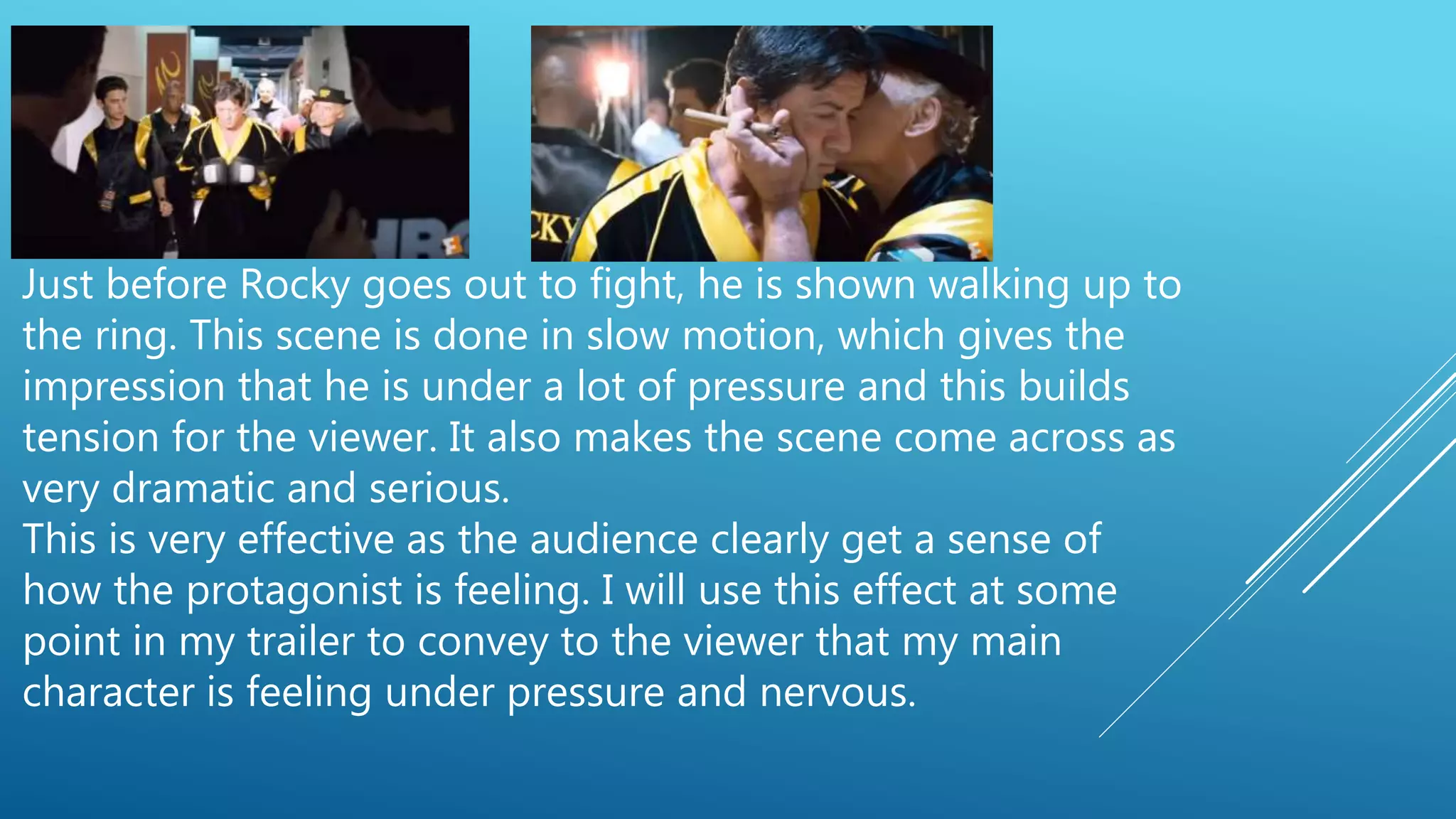
Just before Rocky goes out to fight, he is shown walking up to
the ring. This scene is done in slow motion, which gives the
impression that he is under a lot of pressure and this builds
tension for the viewer. It also makes the scene come across as
very dramatic and serious.
This is very effective as the audience clearly get a sense of
how the protagonist is feeling. I will use this effect at some
point in my trailer to convey to the viewer that my main
character is feeling under pressure and nervous.
I really like how whilst the news reporters
are talking, it flashes to a white screen to
give the impression to the audience that
pictures are being taken. I could use this
if characters took pictures of my
protagonist whilst she is being bullied, as
it speeds up the pace of the trailer.
Some very interesting camera effects are used
whilst the fight is taking place. For a start, it is
indicated to the audience which character is
winning by the camera focusing on them. When
punches are thrown, the scene suddenly flashes
black and white. This is to imply to the character
that Rocky is being punched really hard. I’d like
to experiment with this effect in my trailer as I
find it interesting and exciting to watch.
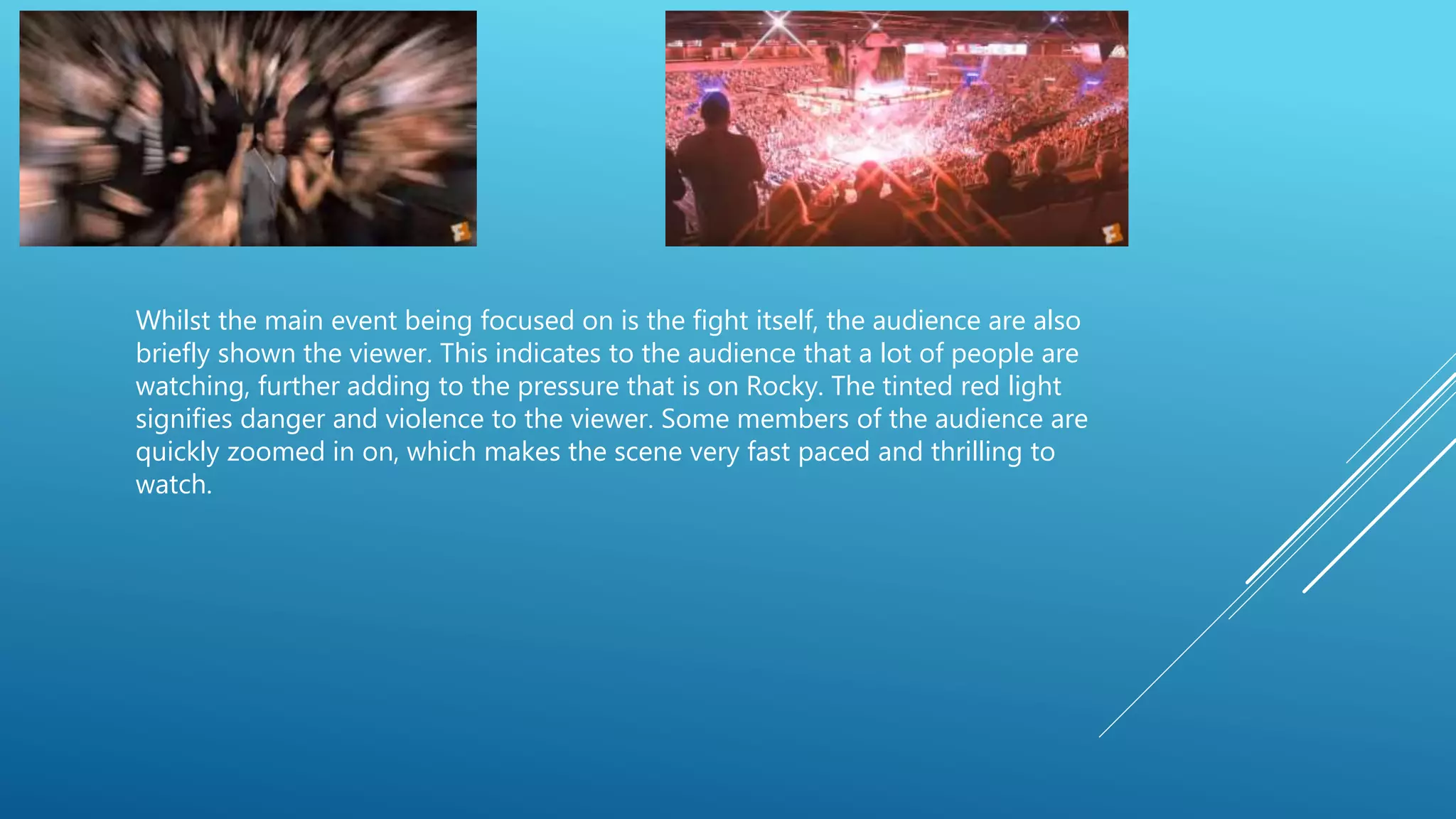
Whilst the main event being focused on is the fight itself, the audience are also
briefly shown the viewer. This indicates to the audience that a lot of people are
watching, further adding to the pressure that is on Rocky. The tinted red light
signifies danger and violence to the viewer. Some members of the audience are
quickly zoomed in on, which makes the scene very fast paced and thrilling to
watch.
Just as the title of the film is displayed, indicating to the viewer that
the trailer is over, it suddenly cuts back to a close up of Rocky
looking angry, then getting up and attacking his opponent. All the
shots of the fight before hand were of Rocky being beaten, however
this last intense teaser restores the viewer’s hope in Rocky.
At the moment I am only planning to show the build up to the final
fight in my trailer, however I could still try to use this effect to show
that my character will finally retaliate to the bullies.

Analysis of ‘Rocky Balboa’

  • 1.
  • 2.
    INTRODUCTION  ‘Rocky Balboa’was filmed in 2006, so it is a lot more up-to-date than ‘Rocky’, which was filmed in 1976.  This film is a hybrid of four different genres; action, drama, romance and sport.
  • 3.
    The film beginsby displaying the production company’s logos and the film rating. This is a convention pretty much all films follow, I plan to do the same as it will make my film look more professional and real.
  • 4.
    The trailer beginsinterestingly. There is a black and white filter on the shots, each one flashes up then it fades o black. This implies to the viewer that they are looking at flashbacks, as having a black and white effect on a scene usually indicates that the events being show happened in the past. This is a code used by many different media texts. The iconic scene in the first film is displayed. It indicates to the viewer that they are looking over Rocky’s past successes. The effect of fading to black creates tension, because the viewer does not understand why they are looking over Rocky’s past. This grips the reader as they want to see why they are being shown these events. The trailer intrigues the audience as it anticipates showing the actual plot of the film.
  • 5.
    In contrast tothe first Rocky film, the lighting is very vibrant and light in ‘Rocky Balboa’. This indicates to the audience that rocky has now ‘made it’ and does not live in poverty any more. Almost straight away the ‘bad guy’ is displayed to the viewer. Camera angle is used effectively to portray the new character. The two-shot of Rocky and his friend is shown looking up at the world's reigning heavyweight champion, Mason "the Line" Dixon. This gives the impression to the viewer that Mason is more dominant and strong than Rocky. I could try to use this effect in my movie when my character is in the same scene as the person they will eventually fight, as it gives the impression to the audience that it would be a challenge to take this individual on for the protagonist, encouraging them to want to see the story progress.
  • 6.
    This close upof Rocky’s face demonstrates to the viewer that he feels fearful, his expression is easy to read. I might use this technique to display to the viewer my protagonists emotions, perhaps when they are feeling doubtful or scared of bullies.
  • 7.
    The trailer switchesbetween displaying Rocky train and his opponent train. The viewer gains more respect for Rocky over Mason, because Rocky is shown doing things the ‘old fashioned way’; it shows the audience that fame has not changed Rocky. In contrast, Mason is seen in what looks like an expensive gym with what appears to be personal trailer in a smart suit. This gives the impression to the viewer that Mason has things a lot easier than Rocky. The fact that the camera is tilted up at Rocky gives the impression that the viewer should respect him.
  • 8.
    Tension is builtup throughout the trailer by cutting from calm scenes to fast and aggressive fight scenes. This gives the viewer consistent tasters of the finale, interesting and exciting them. When Mason hits Rocky, the screen flashes white. This is to make the viewer see the immense impact of the punch being thrown. The same technique is used when later on in the trailer, Rocky throws a barrel to the floor. I find this very effective, as it portrays the character to be very strong and powerful. The scene were Rocky is talking to his son reveals to the viewer their relationship. There is a mid-close up of Rocky and a mid-shot of his son. Rocky being closer to the camera than his son gives the impression that he tries to be close to his son, whereas his son is distant with him. I could use this technique to display my protagonists troubled relationship with their step parent.
  • 9.
    The trailer cutsbetween the two main characters training to fight. This differs from the first film’s trailer, which only shows the viewer Rocky training, not his opponent. In my film, I will only show my protagonist training, because the bully won’t feel the need to prepare themselves to fight as they won’t feel threatened by the main character.
  • 10.
    In this scene,there are not many people around Rocky, whereas Mason is surrounded by people on his side. Mason is shown laughing and joking, whereas Rocky is shown by himself looking defeated. This conveys Rocky to be more modest than his opponent and this makes the viewer feel sympathy for him . I could use this effect in my film, as I also want to make the audience feel sorry for my protagonist.
  • 11.
    Just before Rockygoes out to fight, he is shown walking up to the ring. This scene is done in slow motion, which gives the impression that he is under a lot of pressure and this builds tension for the viewer. It also makes the scene come across as very dramatic and serious. This is very effective as the audience clearly get a sense of how the protagonist is feeling. I will use this effect at some point in my trailer to convey to the viewer that my main character is feeling under pressure and nervous.
  • 12.
    I really likehow whilst the news reporters are talking, it flashes to a white screen to give the impression to the audience that pictures are being taken. I could use this if characters took pictures of my protagonist whilst she is being bullied, as it speeds up the pace of the trailer.
  • 13.
    Some very interestingcamera effects are used whilst the fight is taking place. For a start, it is indicated to the audience which character is winning by the camera focusing on them. When punches are thrown, the scene suddenly flashes black and white. This is to imply to the character that Rocky is being punched really hard. I’d like to experiment with this effect in my trailer as I find it interesting and exciting to watch.
  • 14.
    Whilst the mainevent being focused on is the fight itself, the audience are also briefly shown the viewer. This indicates to the audience that a lot of people are watching, further adding to the pressure that is on Rocky. The tinted red light signifies danger and violence to the viewer. Some members of the audience are quickly zoomed in on, which makes the scene very fast paced and thrilling to watch.
  • 15.
    Just as thetitle of the film is displayed, indicating to the viewer that the trailer is over, it suddenly cuts back to a close up of Rocky looking angry, then getting up and attacking his opponent. All the shots of the fight before hand were of Rocky being beaten, however this last intense teaser restores the viewer’s hope in Rocky. At the moment I am only planning to show the build up to the final fight in my trailer, however I could still try to use this effect to show that my character will finally retaliate to the bullies.