Analysis of Bioethical Issues
Marie Angela Nee
Bioethics
 branch of applied ethics that studies
the philosophical, social, and legal
issues arising in medicine and the life
sciences. It is chiefly concerned with
human life and well-being, though it
sometimes also treats ethical
questions relating to the nonhuman
biological environment
Bioethical Issues
 Areas of health sciences that are the
subject of published, peer-reviewed
bioethical analysis
- Abortion
- Cloning
- Confidentiality
- Euthanasia
- Assisted suicide
Ethical Method
 draws upon ethical theory to apply,
extrapolate, and critique rules and
principles and to evolve ethical codes
into useful and relevant guidelines to
which the standards of validity,
relevance, and comparability may be
applied
Ethical Issues
 Authority
- On what basis is ethical authority
bestowed or should an ethical
decision or recommendation be
made?
 Meaning
- What is meant by terms such as
“good” and “bad”, and other
components of the language of ethics
in the context of the decision at hand?
 Norms
-What are the pertinent ethical
norms—the rules, principles, and
implicit and explicit codes of behavior
that govern, or that ought to govern,
human behavior—and how are they to
be applied?
 Justification and Validation
On what basis may these ideas be
validated, justified, or criticized? How
can one be sure they are right, or at
least defensible? Are there reliable
tests to judge the validity and
relevance of ethical rules, principles,
and decisions?
 Consistency
-As a matter of justice, are morally
similar circumstances handled in
morally similar manners?
 Decision Making
- By what process should ethical
decisions be undertaken?
Policy
- How should ethical considerations
influence matters of institutional and
social policy?
Standards in Ethical
Methodology
 concerned in distinguishing things that
are morally obligated or permitted
from those things that are morally
prohibited
 arguments marshaled to make these
distinctions must meet certain
standards
Standards in Ethical
Methodology
 Impartiality/objectivity
 Fairness/ consistency
 Material comprehensiveness
 Universality
Deontological Methods
John Paul B. Aparece
Deontology
- 'deon' comes from the Greek word deon,
which means 'duty'.
-Duty-based ethics teaches that some acts
are right or wrong because of the sorts of
things they are, and people have a duty to
act accordingly, regardless of the good or
bad consequences that may be produced.
 Someone who follows Duty-based
ethics should do the right thing, even
if that produces more harm (or less
good) than doing the wrong thing:
 People have a duty to do the right
thing, even if it produces a bad
result.
Example
It would be wrong to tell a lie in
order to save a friend from a
murderer.
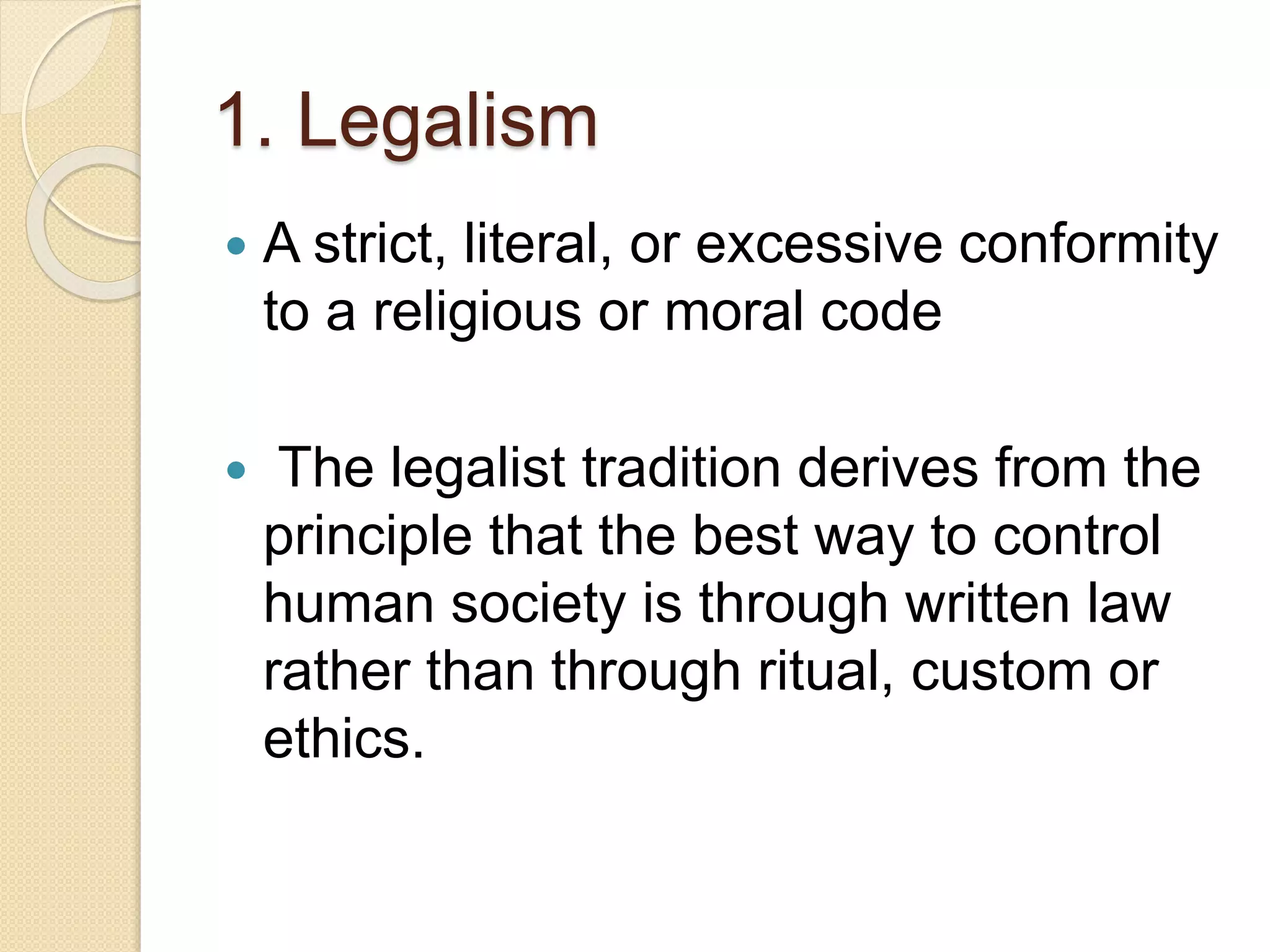
1. Legalism
 A strict, literal, or excessive conformity
to a religious or moral code
 The legalist tradition derives from the
principle that the best way to control
human society is through written law
rather than through ritual, custom or
ethics.
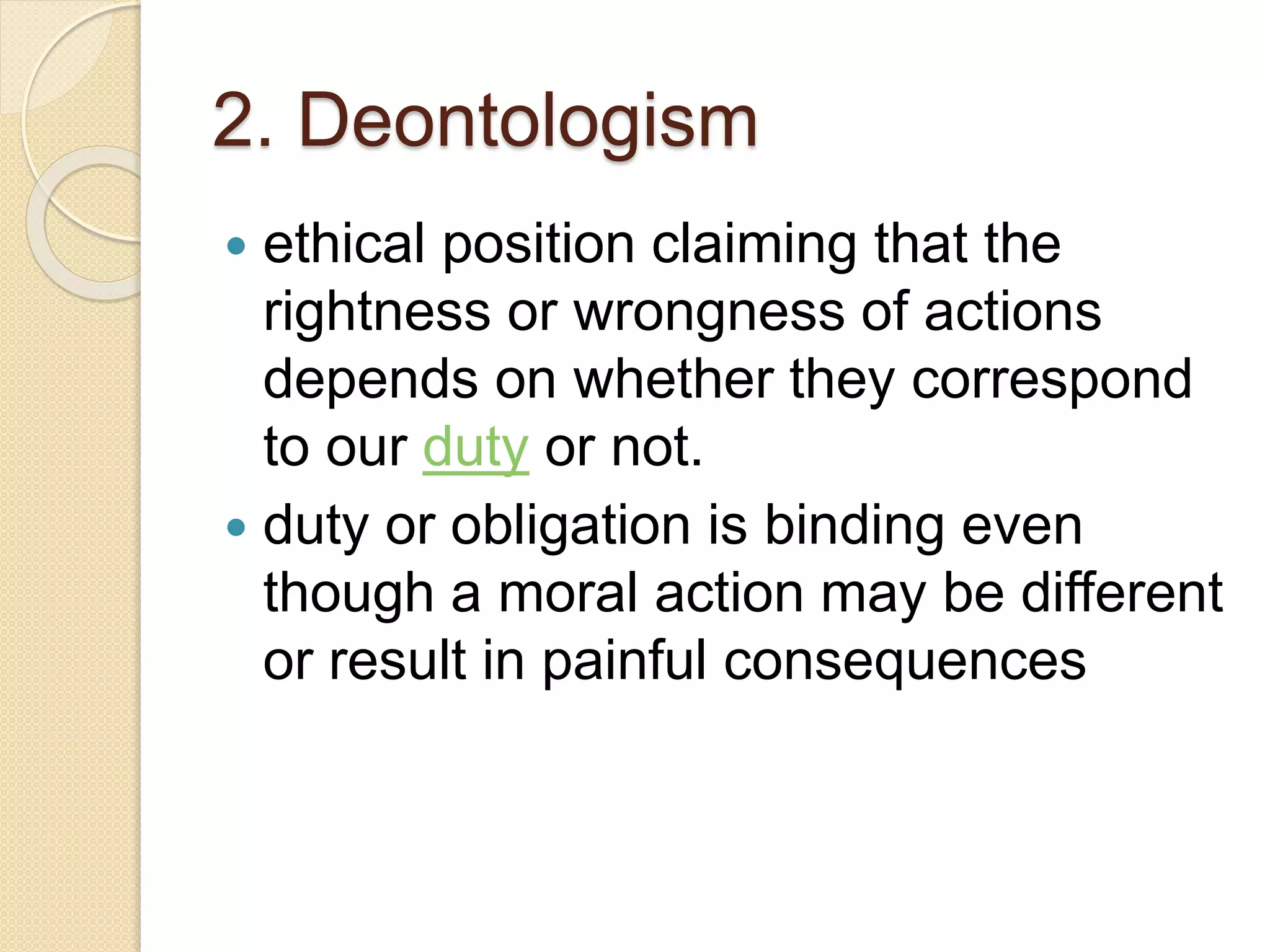
2. Deontologism
 ethical position claiming that the
rightness or wrongness of actions
depends on whether they correspond
to our duty or not.
 duty or obligation is binding even
though a moral action may be different
or result in painful consequences
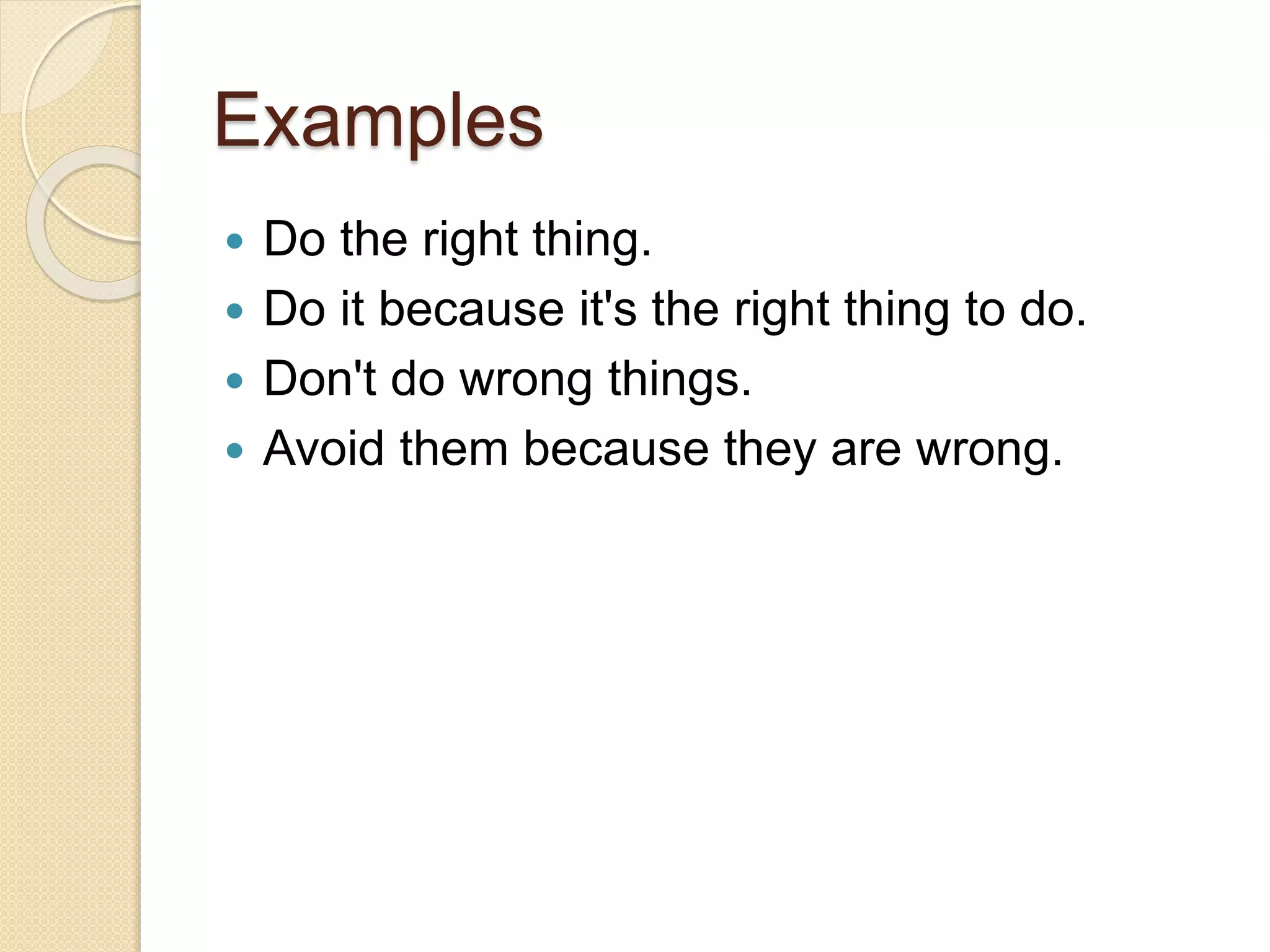
Examples
 Do the right thing.
 Do it because it's the right thing to do.
 Don't do wrong things.
 Avoid them because they are wrong.
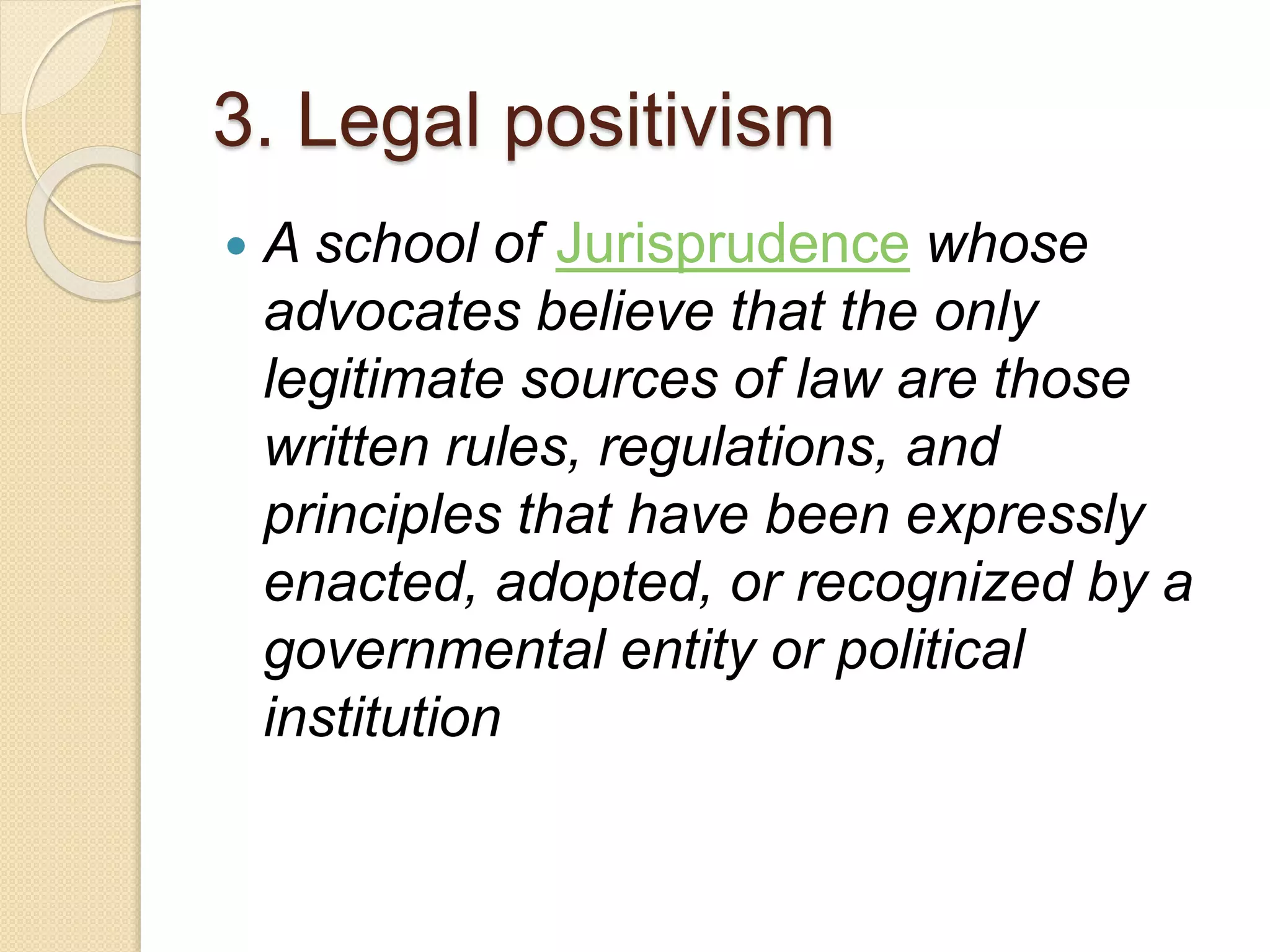
3. Legal positivism
 A school of Jurisprudence whose
advocates believe that the only
legitimate sources of law are those
written rules, regulations, and
principles that have been expressly
enacted, adopted, or recognized by a
governmental entity or political
institution
What is law?
 written decisions made by
governmental bodies that are
endowed with the legal power to
regulate particular areas of society
and human conduct
therefore
 If a principle, rule, regulation,
decision, judgment, or other law is
recognized by a duly authorized
governmental body or official, then it
will qualify as law,

Analysis of bioethical issues

  • 1.
    Analysis of BioethicalIssues Marie Angela Nee
  • 2.
    Bioethics  branch ofapplied ethics that studies the philosophical, social, and legal issues arising in medicine and the life sciences. It is chiefly concerned with human life and well-being, though it sometimes also treats ethical questions relating to the nonhuman biological environment
  • 3.
    Bioethical Issues  Areasof health sciences that are the subject of published, peer-reviewed bioethical analysis
  • 4.
    - Abortion - Cloning -Confidentiality - Euthanasia - Assisted suicide
  • 5.
    Ethical Method  drawsupon ethical theory to apply, extrapolate, and critique rules and principles and to evolve ethical codes into useful and relevant guidelines to which the standards of validity, relevance, and comparability may be applied
  • 6.
    Ethical Issues  Authority -On what basis is ethical authority bestowed or should an ethical decision or recommendation be made?
  • 7.
     Meaning - Whatis meant by terms such as “good” and “bad”, and other components of the language of ethics in the context of the decision at hand?  Norms -What are the pertinent ethical norms—the rules, principles, and implicit and explicit codes of behavior that govern, or that ought to govern, human behavior—and how are they to be applied?
  • 8.
     Justification andValidation On what basis may these ideas be validated, justified, or criticized? How can one be sure they are right, or at least defensible? Are there reliable tests to judge the validity and relevance of ethical rules, principles, and decisions?
  • 9.
     Consistency -As amatter of justice, are morally similar circumstances handled in morally similar manners?  Decision Making - By what process should ethical decisions be undertaken?
  • 10.
    Policy - How shouldethical considerations influence matters of institutional and social policy?
  • 11.
    Standards in Ethical Methodology concerned in distinguishing things that are morally obligated or permitted from those things that are morally prohibited  arguments marshaled to make these distinctions must meet certain standards
  • 12.
    Standards in Ethical Methodology Impartiality/objectivity  Fairness/ consistency  Material comprehensiveness  Universality
  • 13.
  • 14.
    Deontology - 'deon' comesfrom the Greek word deon, which means 'duty'. -Duty-based ethics teaches that some acts are right or wrong because of the sorts of things they are, and people have a duty to act accordingly, regardless of the good or bad consequences that may be produced.
  • 15.
     Someone whofollows Duty-based ethics should do the right thing, even if that produces more harm (or less good) than doing the wrong thing:  People have a duty to do the right thing, even if it produces a bad result.
  • 16.
    Example It would bewrong to tell a lie in order to save a friend from a murderer.
  • 17.
    1. Legalism  Astrict, literal, or excessive conformity to a religious or moral code  The legalist tradition derives from the principle that the best way to control human society is through written law rather than through ritual, custom or ethics.
  • 18.
    2. Deontologism  ethicalposition claiming that the rightness or wrongness of actions depends on whether they correspond to our duty or not.  duty or obligation is binding even though a moral action may be different or result in painful consequences
  • 19.
    Examples  Do theright thing.  Do it because it's the right thing to do.  Don't do wrong things.  Avoid them because they are wrong.
  • 20.
    3. Legal positivism A school of Jurisprudence whose advocates believe that the only legitimate sources of law are those written rules, regulations, and principles that have been expressly enacted, adopted, or recognized by a governmental entity or political institution
  • 21.
    What is law? written decisions made by governmental bodies that are endowed with the legal power to regulate particular areas of society and human conduct
  • 22.
    therefore  If aprinciple, rule, regulation, decision, judgment, or other law is recognized by a duly authorized governmental body or official, then it will qualify as law,