The ISD Process A  systematic approach  for designing, developing and delivering strategic instruction  focused on improving the learners' performance   and the  elimination of performance gaps  that are the result of a training problem.
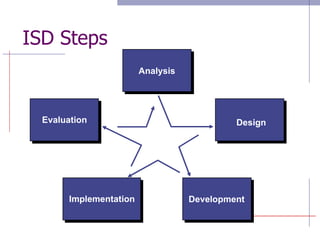
ISD Steps Analysis Development Implementation Evaluation Design
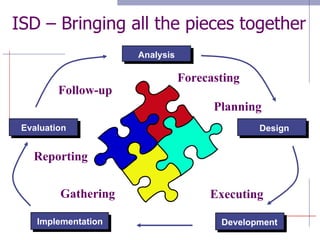
ISD – Bringing all the pieces together Forecasting Planning Executing Gathering Reporting Follow-up Analysis Development Implementation Evaluation Design
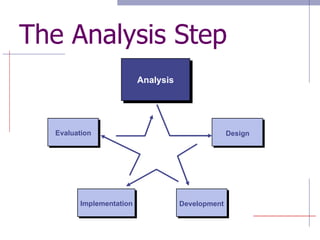
The Analysis Step Analysis Development Implementation Evaluation Design
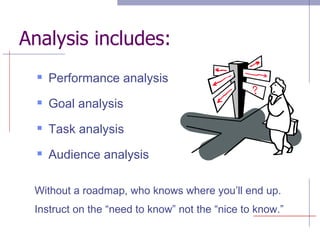
Analysis includes: Performance analysis Goal analysis Task analysis Audience analysis Without a roadmap, who knows where you’ll end up. Instruct on the “need to know” not the “nice to know.”
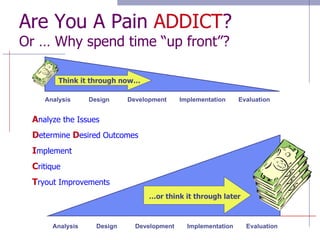
Are You A Pain  ADDICT ? Or … Why spend time “up front”? A nalyze   the Issues D etermine   D esired   Outcomes I mplement C ritique T ryout   Improvements Analysis Development Implementation Evaluation Design … or think it through later Analysis Development Implementation Evaluation Design Think it through now…
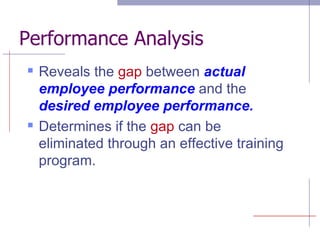
Performance Analysis Reveals the  gap  between  actual employee performance  and the  desired employee performance. Determines if the  gap  can be eliminated through an effective training program.
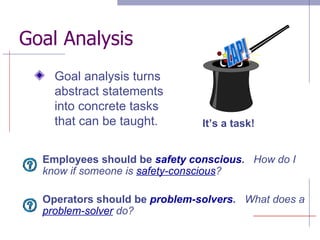
Goal Analysis Employees should be  safety conscious .  How do I know if someone is  safety-conscious ? Operators should be  problem-solvers .  What does a  problem-solver  do? Goal analysis turns abstract statements into concrete tasks that can be taught. ZAP! It’s a task!
Task Analysis A sequenced description (or flowchart) of: the step by step actions; the tools, equipment, materials, and supplies; any associated safety concerns; required prerequisite knowledge; acceptable standards of performance; and key points  required to complete a task. A task analysis ensures the  need to know  information is taught.
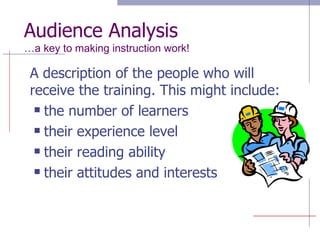
Audience Analysis …a key to making instruction work! A description of the people who will receive the training. This might include: the number of learners their experience level their reading ability their attitudes and interests

Analysis for Courseware Documentation

  • 1.
    The ISD ProcessA systematic approach for designing, developing and delivering strategic instruction focused on improving the learners' performance and the elimination of performance gaps that are the result of a training problem.
  • 2.
    ISD Steps AnalysisDevelopment Implementation Evaluation Design
  • 3.
    ISD – Bringingall the pieces together Forecasting Planning Executing Gathering Reporting Follow-up Analysis Development Implementation Evaluation Design
  • 4.
    The Analysis StepAnalysis Development Implementation Evaluation Design
  • 5.
    Analysis includes: Performanceanalysis Goal analysis Task analysis Audience analysis Without a roadmap, who knows where you’ll end up. Instruct on the “need to know” not the “nice to know.”
  • 6.
    Are You APain ADDICT ? Or … Why spend time “up front”? A nalyze the Issues D etermine D esired Outcomes I mplement C ritique T ryout Improvements Analysis Development Implementation Evaluation Design … or think it through later Analysis Development Implementation Evaluation Design Think it through now…
  • 7.
    Performance Analysis Revealsthe gap between actual employee performance and the desired employee performance. Determines if the gap can be eliminated through an effective training program.
  • 8.
    Goal Analysis Employeesshould be safety conscious . How do I know if someone is safety-conscious ? Operators should be problem-solvers . What does a problem-solver do? Goal analysis turns abstract statements into concrete tasks that can be taught. ZAP! It’s a task!
  • 9.
    Task Analysis Asequenced description (or flowchart) of: the step by step actions; the tools, equipment, materials, and supplies; any associated safety concerns; required prerequisite knowledge; acceptable standards of performance; and key points required to complete a task. A task analysis ensures the need to know information is taught.
  • 10.
    Audience Analysis …akey to making instruction work! A description of the people who will receive the training. This might include: the number of learners their experience level their reading ability their attitudes and interests