






An optical liquid level sensor based 
on polarization-maintaining fiber 
modal interferometer 
By: Sasicha Pornlert 6/6 No.5 
Advisor: Kitisak Boonkham 
1 
Huaping G., Haifeng S., Sulei Z., Kai N., & Xinyong D. 
SEMINAR
Outline 
• Introduction 
– Polarization 
– Polarization-maintaining fiber (PMF) 
• Experiment & Principle 
– Diagram of experiment 
– Theory 
• Result & Discussion 
• Conclusion 
• Reference 
• Acknowledgement 
2
INTRODUCTION 
3
Introduction 
Industry 
Household 
Chemical Agriculture 
4
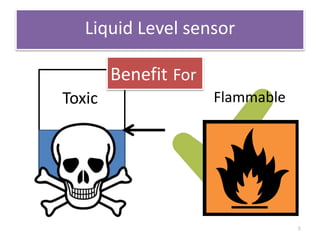
Liquid Level sensor 
Benefit For 
Toxic Flammable 
5
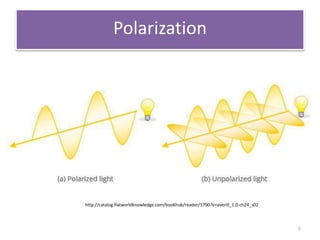
Polarization 
6 
http://catalog.flatworldknowledge.com/bookhub/reader/1790?e=averill_1.0-ch24_s02
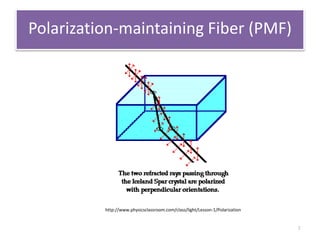
Polarization-maintaining Fiber (PMF) 
7 
http://www.physicsclassroom.com/class/light/Lesson-1/Polarization
An Polarization-maintaining Fiber 
Modal Interferometer 
• Prevent electromagnetic interference 
• High sensitivity 
• Small size 
• Easy to fabricate 
• Robustness 
• Cheaper 
8
9
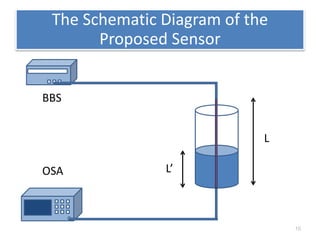
The Schematic Diagram of the 
Proposed Sensor 
10 
L 
L’ 
BBS 
OSA
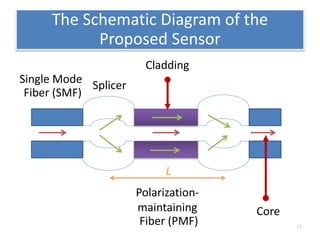
The Schematic Diagram of the 
Proposed Sensor 
11 
Cladding 
Core 
Single Mode 
Fiber (SMF) 
Polarization-maintaining 
Fiber (PMF) 
Splicer 
L
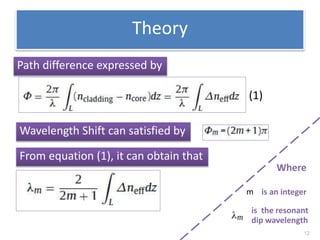
Theory 
Where 
m is an integer 
12 
Path difference expressed by 
Wavelength Shift can satisfied by 
(1) 
From equation (1), it can obtain that 
is the resonant 
dip wavelength
Theory 
13 
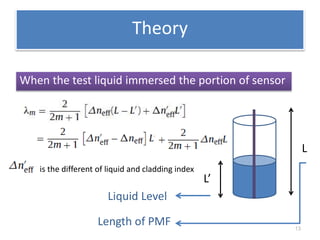
When the test liquid immersed the portion of sensor 
L 
L’ 
is the different of liquid and cladding index 
Liquid Level 
Length of PMF
RESULT & DISCUSSION 
14
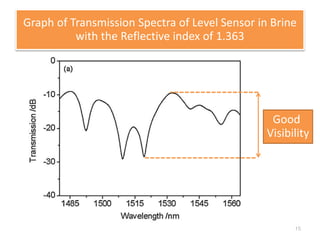
Graph of Transmission Spectra of Level Sensor in Brine 
with the Reflective index of 1.363 
Good 
Visibility 
15
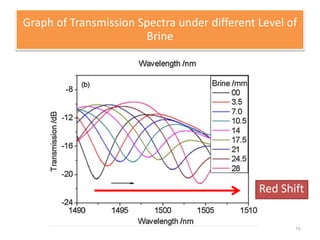
Graph of Transmission Spectra under different Level of 
Brine 
Red Shift 
16
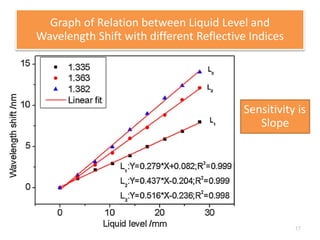
Graph of Relation between Liquid Level and 
Wavelength Shift with different Reflective Indices 
Sensitivity is 
17 
Slope
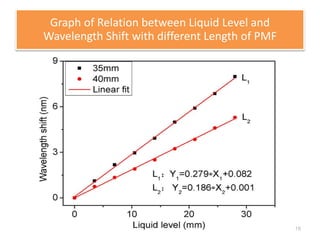
Graph of Relation between Liquid Level and 
Wavelength Shift with different Length of PMF 
18
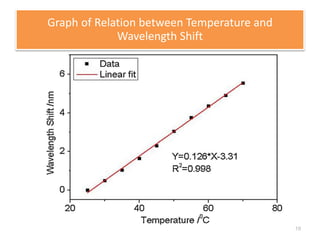
Graph of Relation between Temperature and 
Wavelength Shift 
19
CONCLUSION 
20
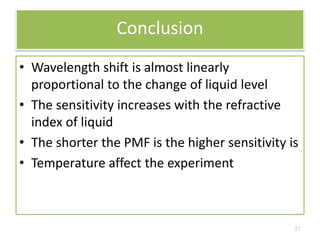
Conclusion 
• Wavelength shift is almost linearly 
proportional to the change of liquid level 
• The sensitivity increases with the refractive 
index of liquid 
• The shorter the PMF is the higher sensitivity is 
• Temperature affect the experiment 
21
An optical liquid level sensor based on polarization-maintaining 
fiber modal interferometer 
• Easy fabricate 
• Structural stability 
• High sensitivity 
22 
Another interesting way 
for measuring liquid level
Reference 
Huaping, G., Haifeng, S., Sulei, Z., Kai, N., & Xinyong, D. (2013). An optical 
liquid level sensor based on polarization-maintaining fiber modal 
interferometer. Eslevier, 205 (2014), 204-207 
Li, L. C., Xia, L., Xie, Z. H., & Liu, D. M., All-fiber Mach–Zehnder interferometers 
for sensing applications, Opt. Expr. 20 (2012), 11109–11120. 
Antonio-Lopez, J. E., Sanchez-Mondragon, J. J., LiKamWa, P., & May-Arrioja, D. 
A., Fiber-optic sensor for liquid level measurement, Opt. Lett. 36 (2011), 
3425–3427. 
Geng, Y. F., Li, X. J., Tan, X. L., Deng, Y. L., & Yu, Y. Q. High-sensitivity Mach– 
Zehnder interferometric temperature fiber sensor based on a waist-enlarged 
fusion bitaper, IEEE Sens. J. 11 (2011), 2891–2894. 
Fusion splicing. Retrieved April 14, 2013 from the Wikipedia: 
http://en.wikipedia.org/wiki/Fusion_splicing 
23
Reference 
Level sensor. Retrieved May 20, 2014 from the Wikipedia: 
http://en.wikipedia.org/wiki/Level_sensor#Sensors_for_both_point_level 
_detection_or_continuous_monitoring 
Polarization-maintaining optical fiber. Retrieved July 5, 2012 from the 
Wikipedia: http://en.wikipedia.org/wiki/Polarization-maintaining_ 
optical_fiber 
24
Acknowledgement 
Thanks to Mr. Kitisak Boonkham 
for advising and encouraging 
me to present this knowledge 
for benefit to everyone in here. 
25
26 
Question 
Thank you all

An optical liquid level sensor based on polarization maintaining

  • 1.
    An optical liquidlevel sensor based on polarization-maintaining fiber modal interferometer By: Sasicha Pornlert 6/6 No.5 Advisor: Kitisak Boonkham 1 Huaping G., Haifeng S., Sulei Z., Kai N., & Xinyong D. SEMINAR
  • 2.
    Outline • Introduction – Polarization – Polarization-maintaining fiber (PMF) • Experiment & Principle – Diagram of experiment – Theory • Result & Discussion • Conclusion • Reference • Acknowledgement 2
  • 3.
  • 4.
    Introduction Industry Household Chemical Agriculture 4
  • 5.
    Liquid Level sensor Benefit For Toxic Flammable 5
  • 6.
  • 7.
    Polarization-maintaining Fiber (PMF) 7 http://www.physicsclassroom.com/class/light/Lesson-1/Polarization
  • 8.
    An Polarization-maintaining Fiber Modal Interferometer • Prevent electromagnetic interference • High sensitivity • Small size • Easy to fabricate • Robustness • Cheaper 8
  • 9.
  • 10.
    The Schematic Diagramof the Proposed Sensor 10 L L’ BBS OSA
  • 11.
    The Schematic Diagramof the Proposed Sensor 11 Cladding Core Single Mode Fiber (SMF) Polarization-maintaining Fiber (PMF) Splicer L
  • 12.
    Theory Where mis an integer 12 Path difference expressed by Wavelength Shift can satisfied by (1) From equation (1), it can obtain that is the resonant dip wavelength
  • 13.
    Theory 13 Whenthe test liquid immersed the portion of sensor L L’ is the different of liquid and cladding index Liquid Level Length of PMF
  • 14.
  • 15.
    Graph of TransmissionSpectra of Level Sensor in Brine with the Reflective index of 1.363 Good Visibility 15
  • 16.
    Graph of TransmissionSpectra under different Level of Brine Red Shift 16
  • 17.
    Graph of Relationbetween Liquid Level and Wavelength Shift with different Reflective Indices Sensitivity is 17 Slope
  • 18.
    Graph of Relationbetween Liquid Level and Wavelength Shift with different Length of PMF 18
  • 19.
    Graph of Relationbetween Temperature and Wavelength Shift 19
  • 20.
  • 21.
    Conclusion • Wavelengthshift is almost linearly proportional to the change of liquid level • The sensitivity increases with the refractive index of liquid • The shorter the PMF is the higher sensitivity is • Temperature affect the experiment 21
  • 22.
    An optical liquidlevel sensor based on polarization-maintaining fiber modal interferometer • Easy fabricate • Structural stability • High sensitivity 22 Another interesting way for measuring liquid level
  • 23.
    Reference Huaping, G.,Haifeng, S., Sulei, Z., Kai, N., & Xinyong, D. (2013). An optical liquid level sensor based on polarization-maintaining fiber modal interferometer. Eslevier, 205 (2014), 204-207 Li, L. C., Xia, L., Xie, Z. H., & Liu, D. M., All-fiber Mach–Zehnder interferometers for sensing applications, Opt. Expr. 20 (2012), 11109–11120. Antonio-Lopez, J. E., Sanchez-Mondragon, J. J., LiKamWa, P., & May-Arrioja, D. A., Fiber-optic sensor for liquid level measurement, Opt. Lett. 36 (2011), 3425–3427. Geng, Y. F., Li, X. J., Tan, X. L., Deng, Y. L., & Yu, Y. Q. High-sensitivity Mach– Zehnder interferometric temperature fiber sensor based on a waist-enlarged fusion bitaper, IEEE Sens. J. 11 (2011), 2891–2894. Fusion splicing. Retrieved April 14, 2013 from the Wikipedia: http://en.wikipedia.org/wiki/Fusion_splicing 23
  • 24.
    Reference Level sensor.Retrieved May 20, 2014 from the Wikipedia: http://en.wikipedia.org/wiki/Level_sensor#Sensors_for_both_point_level _detection_or_continuous_monitoring Polarization-maintaining optical fiber. Retrieved July 5, 2012 from the Wikipedia: http://en.wikipedia.org/wiki/Polarization-maintaining_ optical_fiber 24
  • 25.
    Acknowledgement Thanks toMr. Kitisak Boonkham for advising and encouraging me to present this knowledge for benefit to everyone in here. 25
  • 26.