



An Introduction to
Disaster Recovery Planning


          South Central Economic Development District
          PO Box 79│Holdrege, NE 68949│308.995.3190
Overview

1. What is disaster recovery planning?

2. Our primary objective

3. Why do you need to plan?
What is disaster recovery planning?

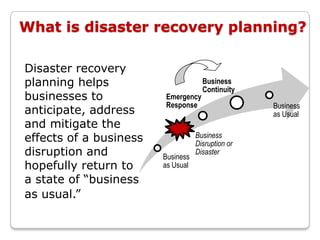
Disaster recovery
planning helps                       Business
                                     Continuity
businesses to           Emergency
                        Response                   Business
anticipate, address                                as Usual
and mitigate the
effects of a business              Business
                                   Disruption or
disruption and          Business
                                   Disaster
hopefully return to     as Usual
a state of “business
as usual.”
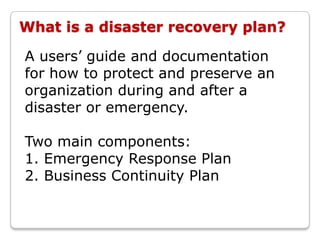
What is a disaster recovery plan?

A users’ guide and documentation
for how to protect and preserve an
organization during and after a
disaster or emergency.

Two main components:
1. Emergency Response Plan
2. Business Continuity Plan
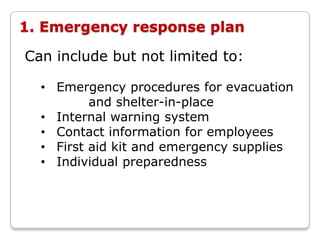
1. Emergency response plan

Can include but not limited to:

  • Emergency procedures for evacuation
          and shelter-in-place
  • Internal warning system
  • Contact information for employees
  • First aid kit and emergency supplies
  • Individual preparedness
Example:
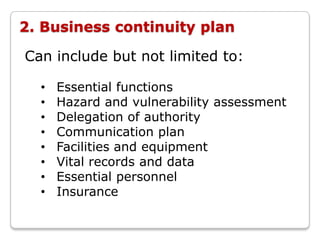
2. Business continuity plan

Can include but not limited to:

  •   Essential functions
  •   Hazard and vulnerability assessment
  •   Delegation of authority
  •   Communication plan
  •   Facilities and equipment
  •   Vital records and data
  •   Essential personnel
  •   Insurance
Example:
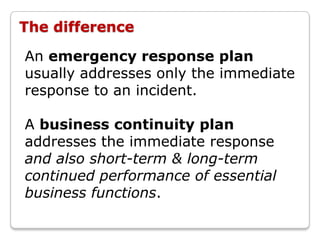
The difference

An emergency response plan
usually addresses only the immediate
response to an incident.

A business continuity plan
addresses the immediate response
and also short-term & long-term
continued performance of essential
business functions.
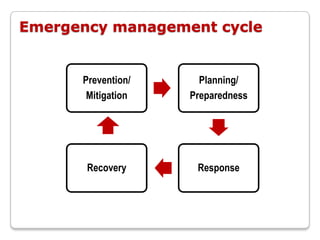
Emergency management cycle


      Prevention/     Planning/
       Mitigation   Preparedness


       Recovery      Response
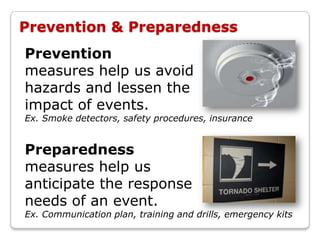
Prevention & Preparedness
Prevention
measures help us avoid
hazards and lessen the
impact of events.
Ex. Smoke detectors, safety procedures, insurance


Preparedness
measures help us
anticipate the response
needs of an event.
Ex. Communication plan, training and drills, emergency kits
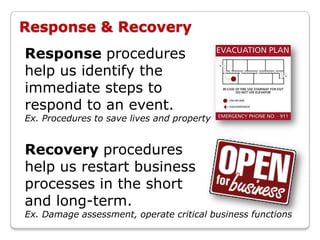
Response & Recovery
Response procedures
help us identify the
immediate steps to
respond to an event.
Ex. Procedures to save lives and property


Recovery procedures
help us restart business
processes in the short
and long-term.
Ex. Damage assessment, operate critical business functions
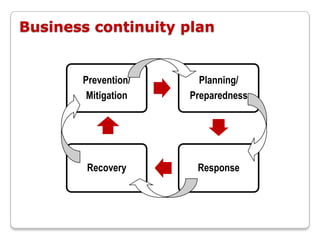
Business continuity plan


       Prevention/     Planning/
        Mitigation   Preparedness


        Recovery      Response
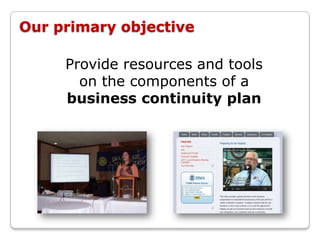
Our primary objective

     Provide resources and tools
       on the components of a
     business continuity plan
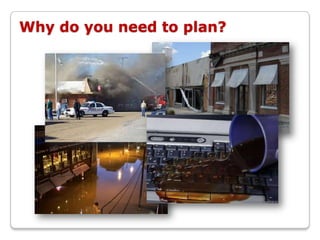
Why do you need to plan?


    According to some estimates,
   up to 40% of small businesses,
    which experience a disaster,
    never reopen their doors.
Why do you need to plan?


 If the unexpected does happen, your
  business continuity plan may be the
   difference between your business
 recovering or failing from the event.
Why do you need to plan?

In addition to:

  • Reducing the disruption of business
         operations
  • Minimizing the chaos of an event
  • Protecting facilities, equipment, assets

 Small businesses play a key role
   in the Nebraska economy
   and in local communities!
Is this you?
Then take the next step….

The most difficult part is
    getting started!

An Introduction to Disaster Recovery Planning

  • 1.
    An Introduction to DisasterRecovery Planning South Central Economic Development District PO Box 79│Holdrege, NE 68949│308.995.3190
  • 2.
    Overview 1. What isdisaster recovery planning? 2. Our primary objective 3. Why do you need to plan?
  • 3.
    What is disasterrecovery planning? Disaster recovery planning helps Business Continuity businesses to Emergency Response Business anticipate, address as Usual and mitigate the effects of a business Business Disruption or disruption and Business Disaster hopefully return to as Usual a state of “business as usual.”
  • 4.
    What is adisaster recovery plan? A users’ guide and documentation for how to protect and preserve an organization during and after a disaster or emergency. Two main components: 1. Emergency Response Plan 2. Business Continuity Plan
  • 5.
    1. Emergency responseplan Can include but not limited to: • Emergency procedures for evacuation and shelter-in-place • Internal warning system • Contact information for employees • First aid kit and emergency supplies • Individual preparedness
  • 6.
  • 7.
    2. Business continuityplan Can include but not limited to: • Essential functions • Hazard and vulnerability assessment • Delegation of authority • Communication plan • Facilities and equipment • Vital records and data • Essential personnel • Insurance
  • 8.
  • 9.
    The difference An emergencyresponse plan usually addresses only the immediate response to an incident. A business continuity plan addresses the immediate response and also short-term & long-term continued performance of essential business functions.
  • 10.
    Emergency management cycle Prevention/ Planning/ Mitigation Preparedness Recovery Response
  • 11.
    Prevention & Preparedness Prevention measureshelp us avoid hazards and lessen the impact of events. Ex. Smoke detectors, safety procedures, insurance Preparedness measures help us anticipate the response needs of an event. Ex. Communication plan, training and drills, emergency kits
  • 12.
    Response & Recovery Responseprocedures help us identify the immediate steps to respond to an event. Ex. Procedures to save lives and property Recovery procedures help us restart business processes in the short and long-term. Ex. Damage assessment, operate critical business functions
  • 13.
    Business continuity plan Prevention/ Planning/ Mitigation Preparedness Recovery Response
  • 14.
    Our primary objective Provide resources and tools on the components of a business continuity plan
  • 15.
    Why do youneed to plan? According to some estimates, up to 40% of small businesses, which experience a disaster, never reopen their doors.
  • 16.
    Why do youneed to plan?
  • 17.
    Why do youneed to plan? If the unexpected does happen, your business continuity plan may be the difference between your business recovering or failing from the event.
  • 18.
    Why do youneed to plan? In addition to: • Reducing the disruption of business operations • Minimizing the chaos of an event • Protecting facilities, equipment, assets Small businesses play a key role in the Nebraska economy and in local communities!
  • 19.
  • 20.
    Then take thenext step…. The most difficult part is getting started!