National Weather Service
Strategic Plan 2010-2025

                  Jack Hayes
NOAA Assistant Administrator for Weather Services, and
         National Weather Service Director

                  Norman, Oklahoma
                   August 10, 2009
Global & National Challenges
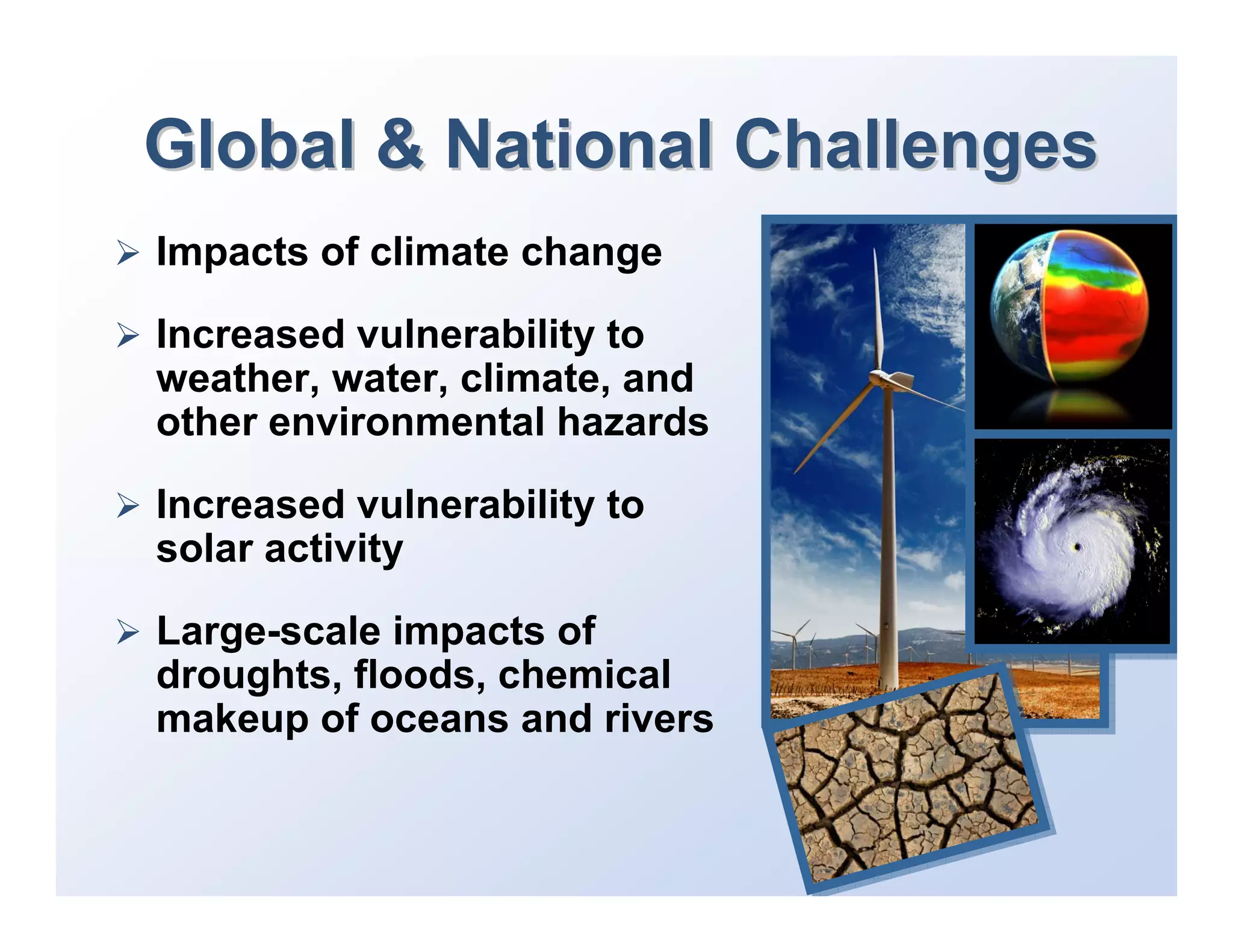
Impacts of climate change

Increased vulnerability to
weather, water, climate, and
other environmental hazards

Increased vulnerability to
solar activity

Large-scale impacts of
droughts, floods, chemical
makeup of oceans and rivers
NWS Vision
A safer, more informed and productive
society where environmental
knowledge empowers
the Nation to make
the best decisions

 Services focused on impacts

 Earth system forecasts

 Data, information, and
 knowledge
Key Outcomes for 2025
Loss of life, displacement from high impact events
reduced
NWS data and information contribute to a national
competitive advantage
Environmental data, prediction capabilities, and
decision support services integral components to:

  Managing and sustaining healthy ecosystems and communities
  Understanding and living with climate change
  Minimizing risks to our national security
2025: Decision Support
  Providing the right information, at the right
           time, to the right people
Key Objectives & Strategies
 More accurate forecasts and increased lead
 times for warnings
 Watches, warnings and advisories that increase
 responsiveness using social science
 Direct, interpretive forecaster support
 for .govs
 Readily accessible, user-centric data
 and information
 Levels of uncertainty included in
 forecasts and warnings
 Partnership and collaboration an
 integral component
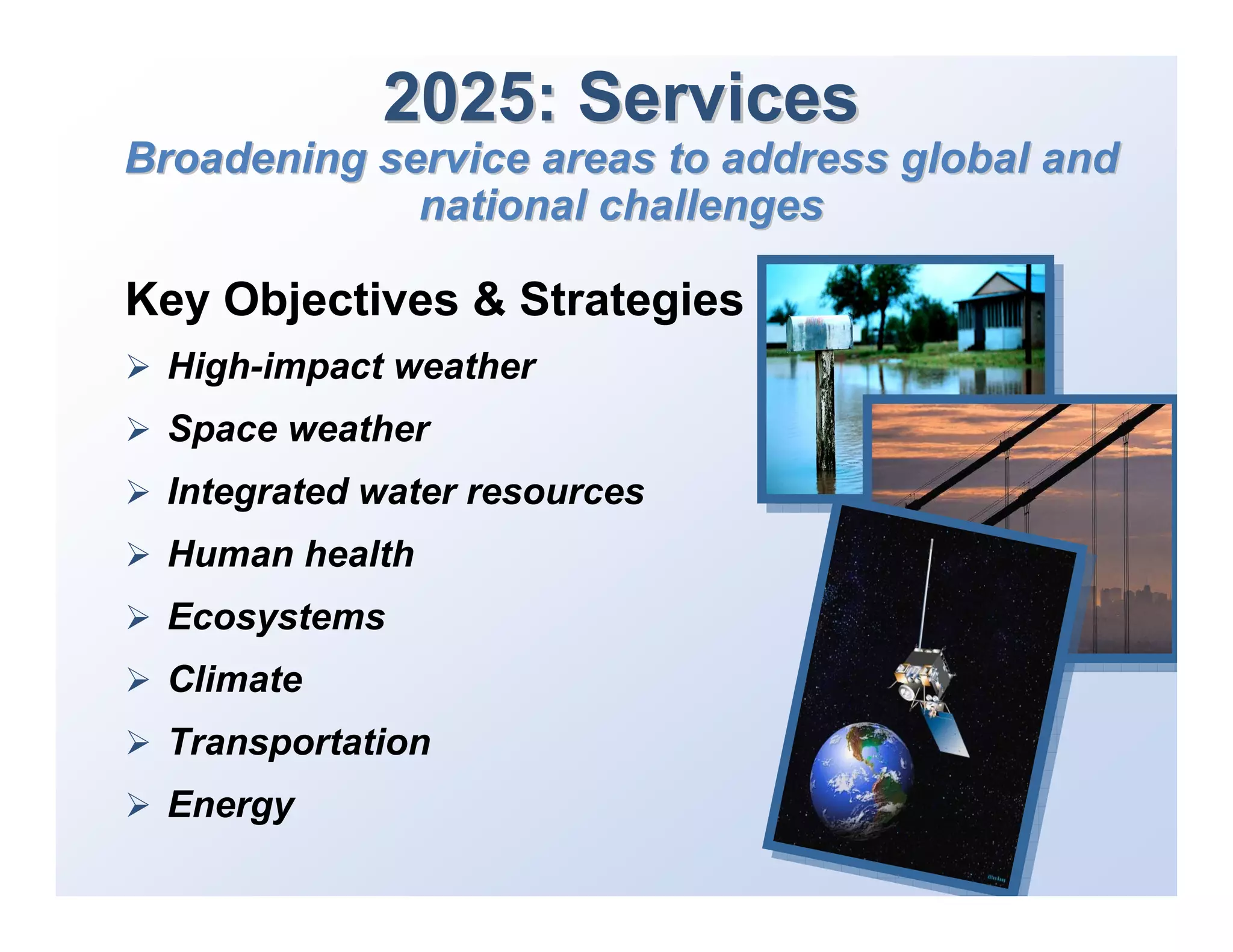
2025: Services
Broadening service areas to address global and
             national challenges

Key Objectives & Strategies
 High-impact weather
 Space weather
 Integrated water resources
 Human health
 Ecosystems
 Climate
 Transportation
 Energy
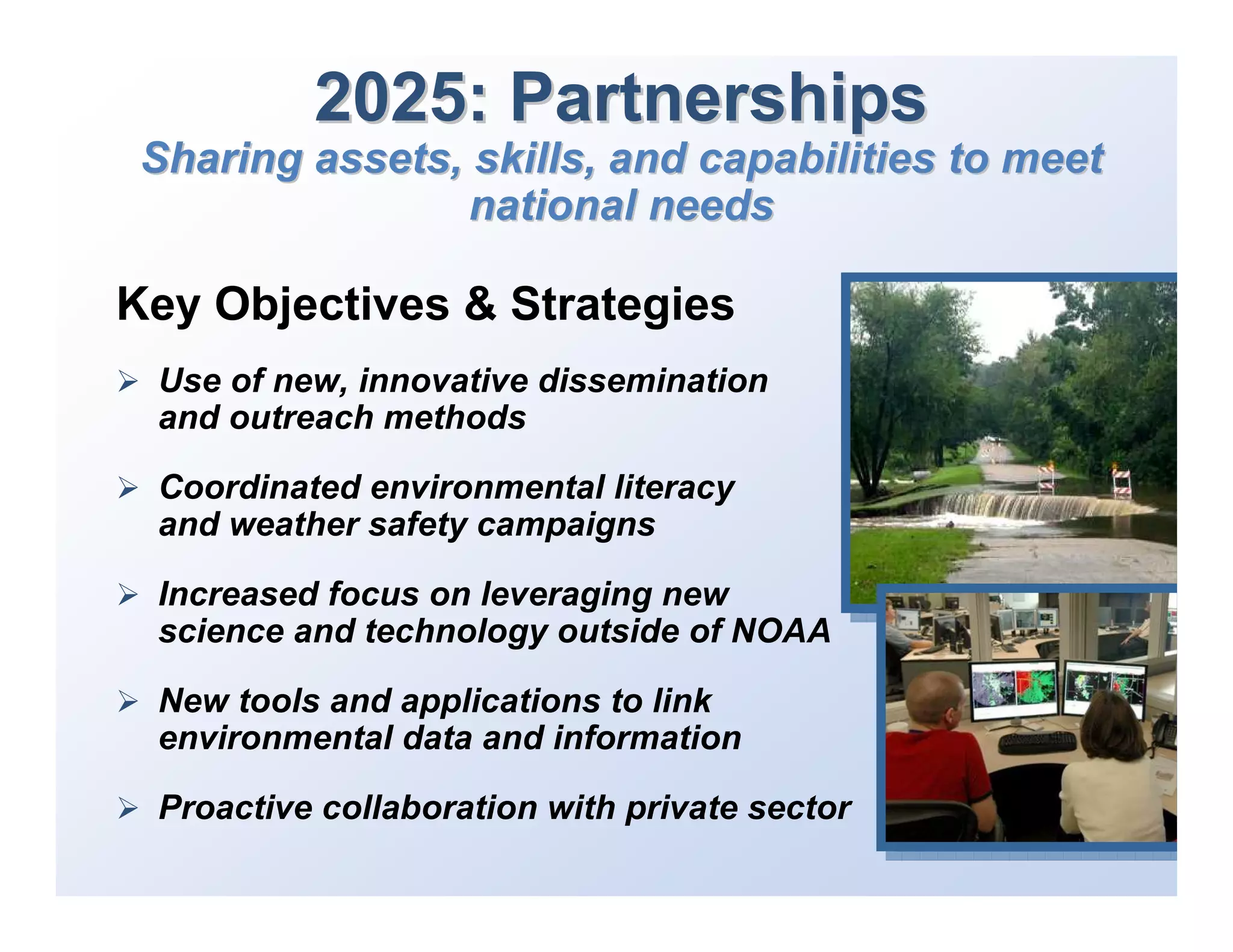
2025: Partnerships
 Sharing assets, skills, and capabilities to meet
                 national needs

Key Objectives & Strategies
 Use of new, innovative dissemination
 and outreach methods

 Coordinated environmental literacy
 and weather safety campaigns

 Increased focus on leveraging new
 science and technology outside of NOAA

 New tools and applications to link
 environmental data and information

 Proactive collaboration with private sector
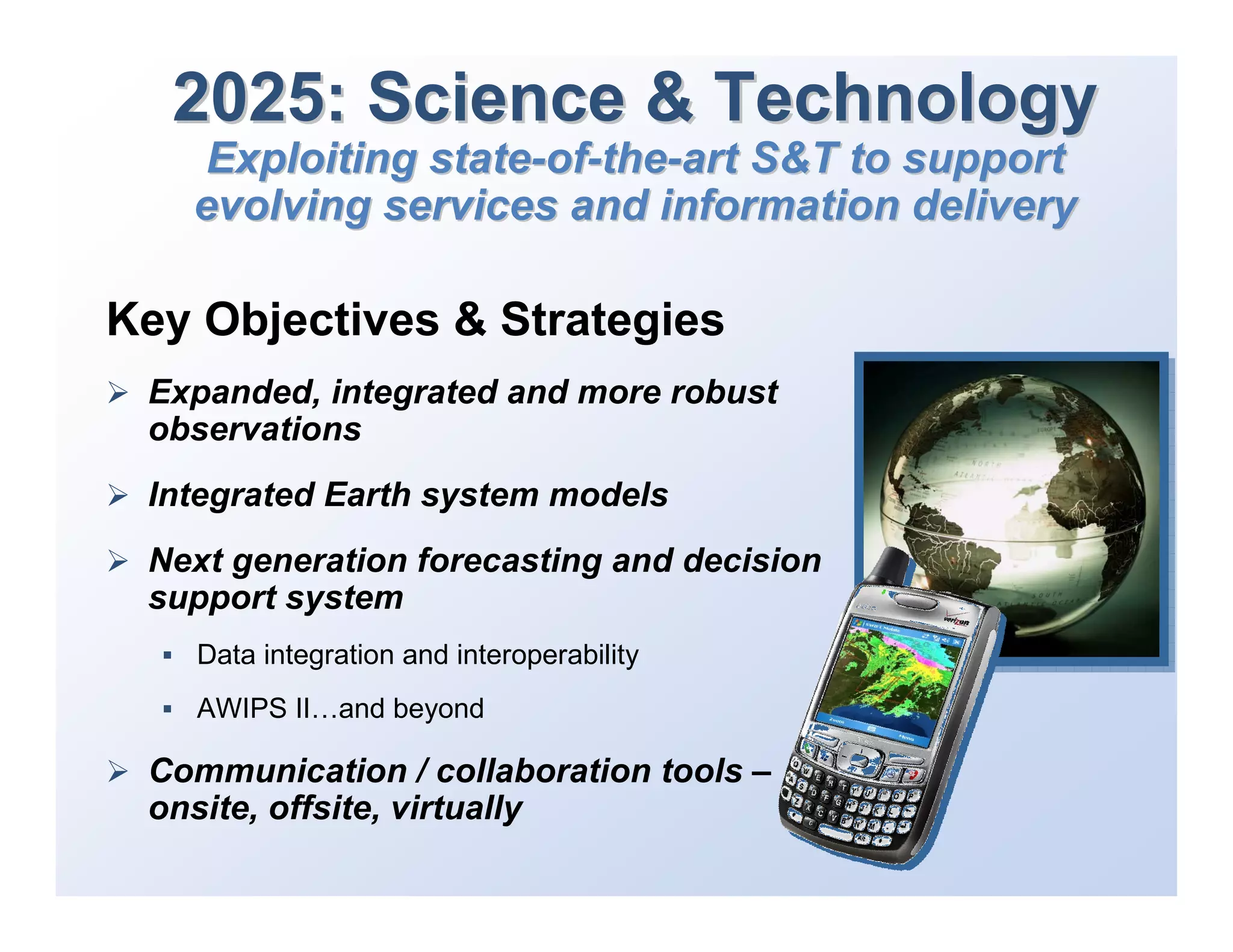
2025: Science & Technology
    Exploiting state-of-the-art S&T to support
   evolving services and information delivery

Key Objectives & Strategies
 Expanded, integrated and more robust
 observations
 Integrated Earth system models
 Next generation forecasting and decision
 support system
   Data integration and interoperability
   AWIPS II…and beyond

 Communication / collaboration tools –
 onsite, offsite, virtually
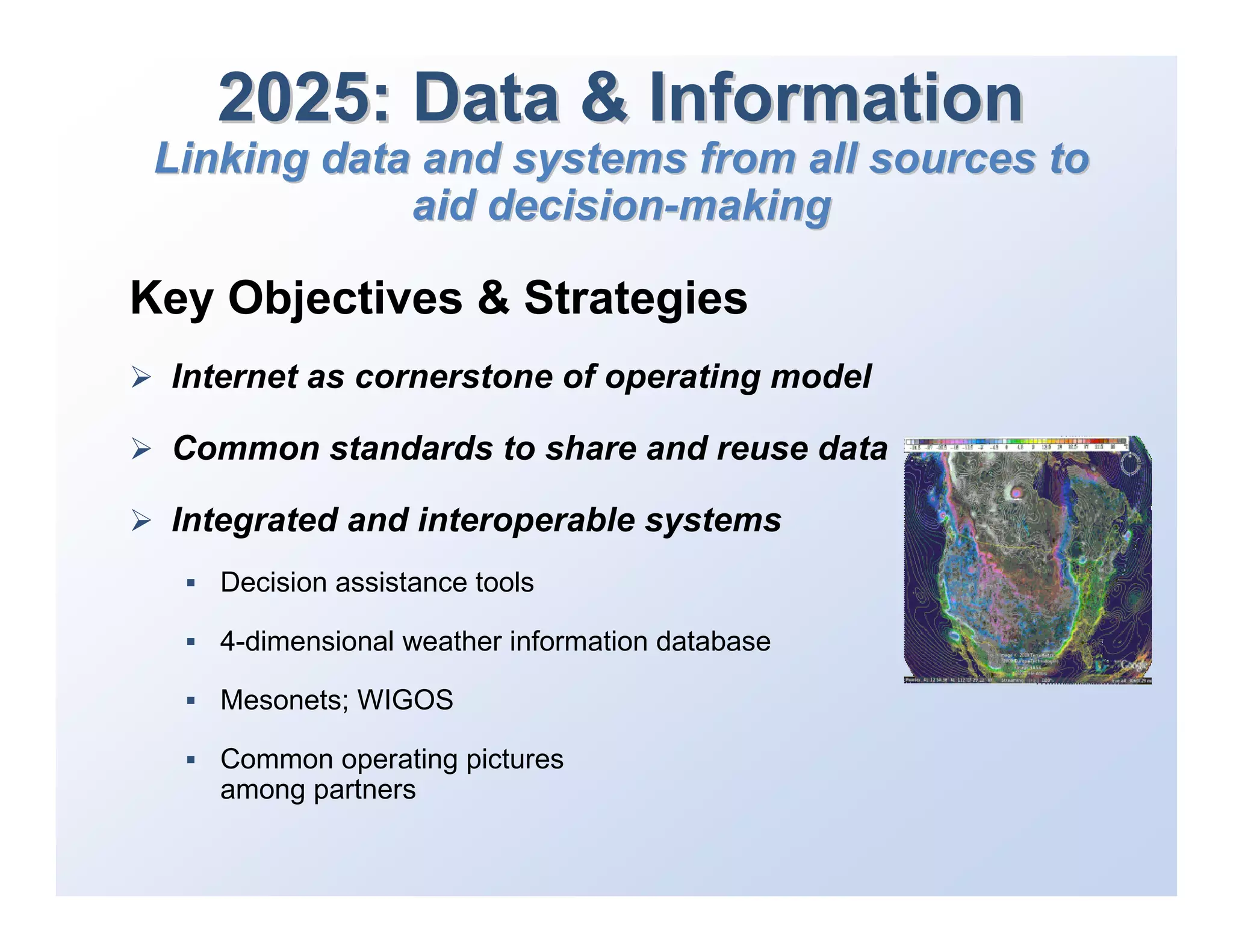
2025: Data & Information
 Linking data and systems from all sources to
             aid decision-making

Key Objectives & Strategies
 Internet as cornerstone of operating model

 Common standards to share and reuse data

 Integrated and interoperable systems
    Decision assistance tools

    4-dimensional weather information database

    Mesonets; WIGOS

    Common operating pictures
    among partners
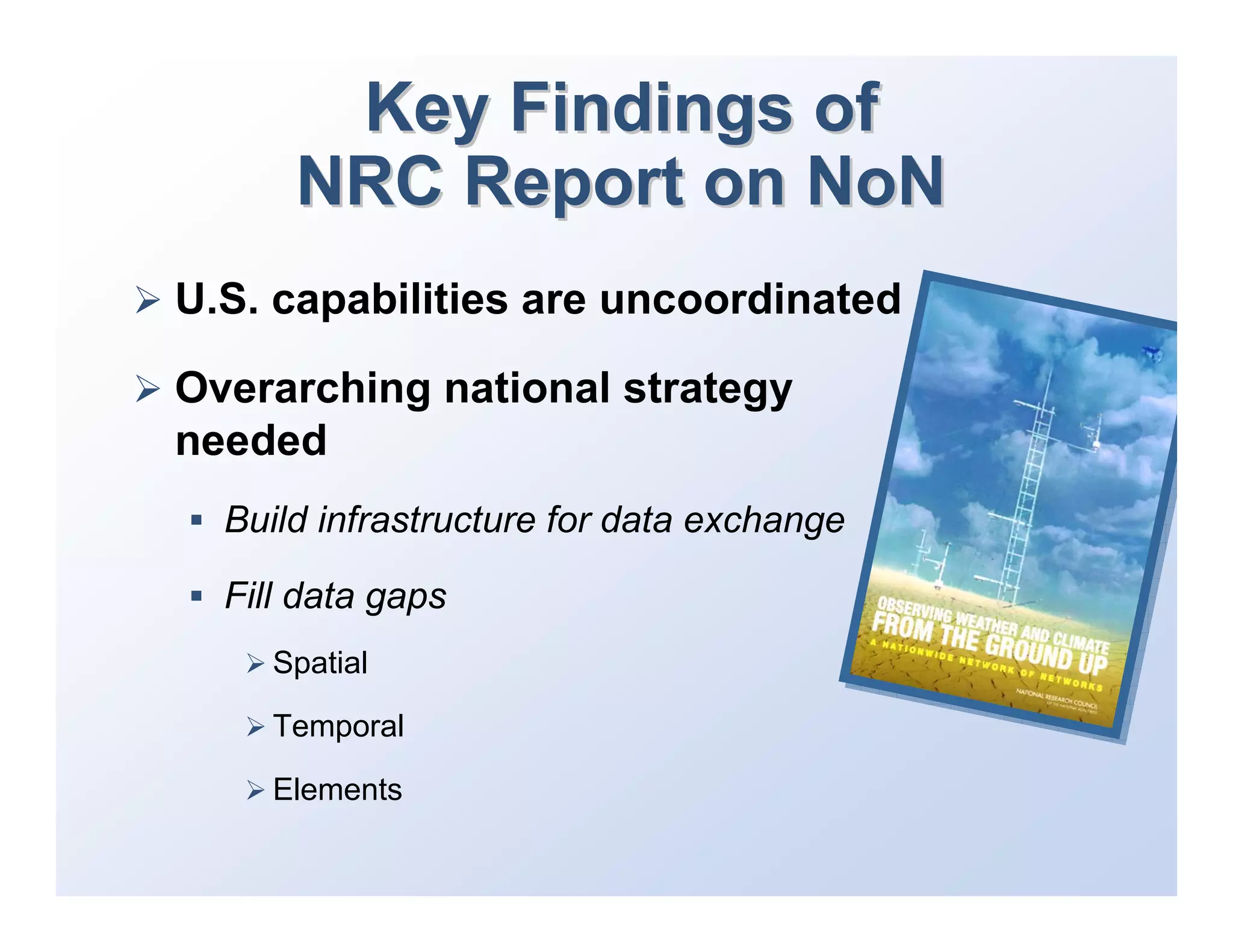
Key Findings of
      NRC Report on NoN
U.S. capabilities are uncoordinated

Overarching national strategy
needed
  Build infrastructure for data exchange

  Fill data gaps
     Spatial

     Temporal

     Elements
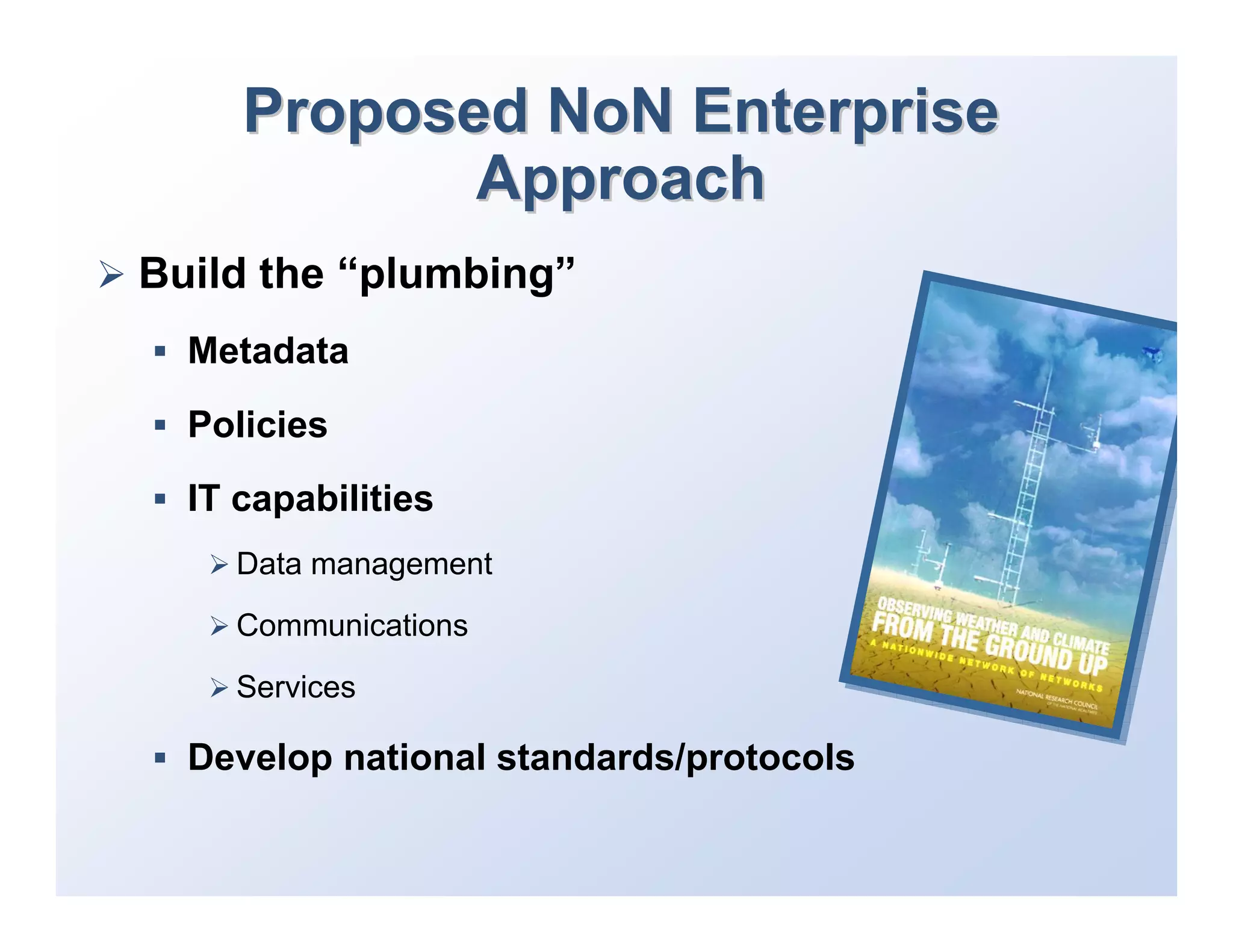
Proposed NoN Enterprise
            Approach
Build the “plumbing”
  Metadata
  Policies
  IT capabilities
    Data management
    Communications
    Services

  Develop national standards/protocols
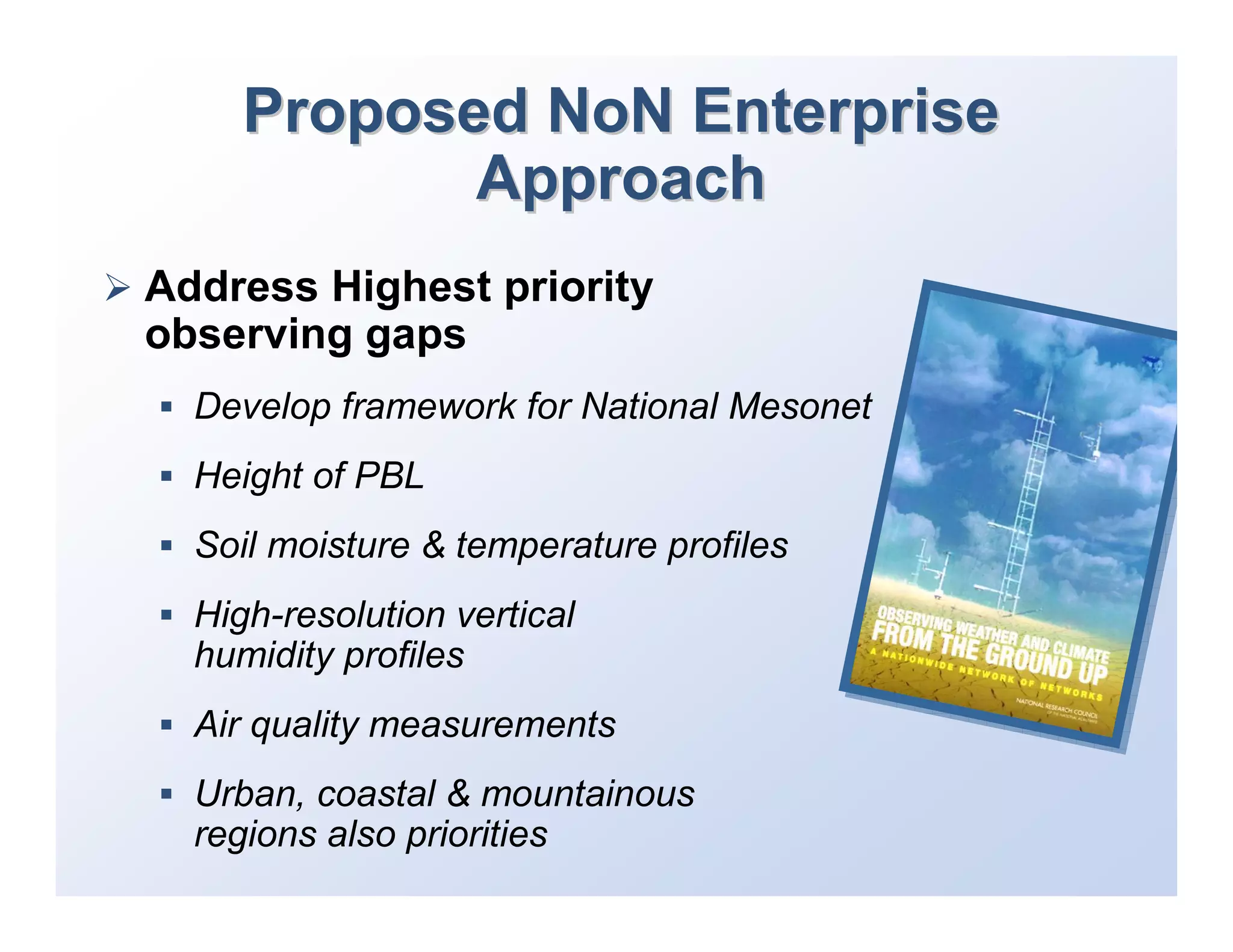
Proposed NoN Enterprise
            Approach
Address Highest priority
observing gaps
  Develop framework for National Mesonet
  Height of PBL
  Soil moisture & temperature profiles
  High-resolution vertical
  humidity profiles
  Air quality measurements
  Urban, coastal & mountainous
  regions also priorities
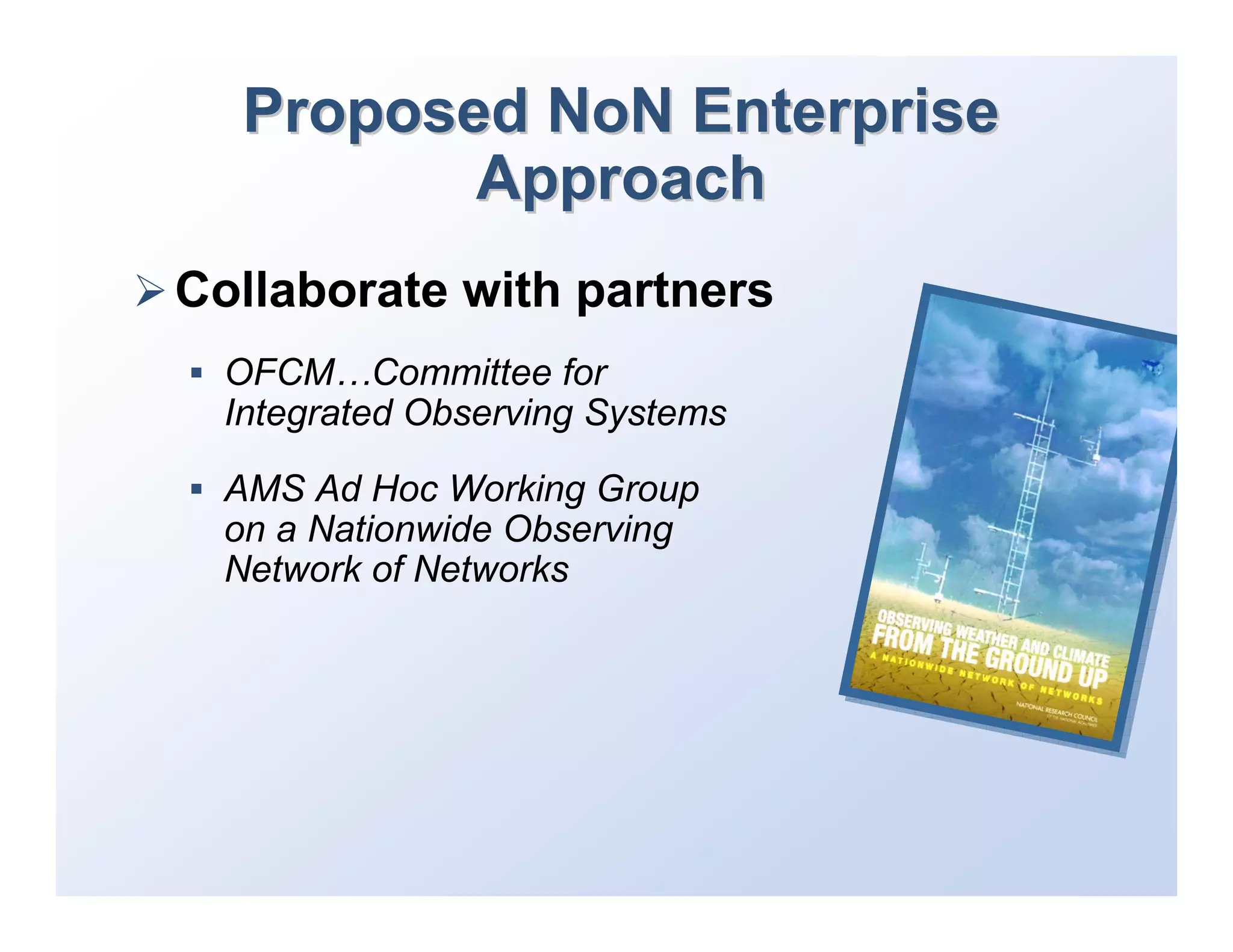
Proposed NoN Enterprise
          Approach
Collaborate with partners
  OFCM…Committee for
  Integrated Observing Systems

  AMS Ad Hoc Working Group
  on a Nationwide Observing
  Network of Networks
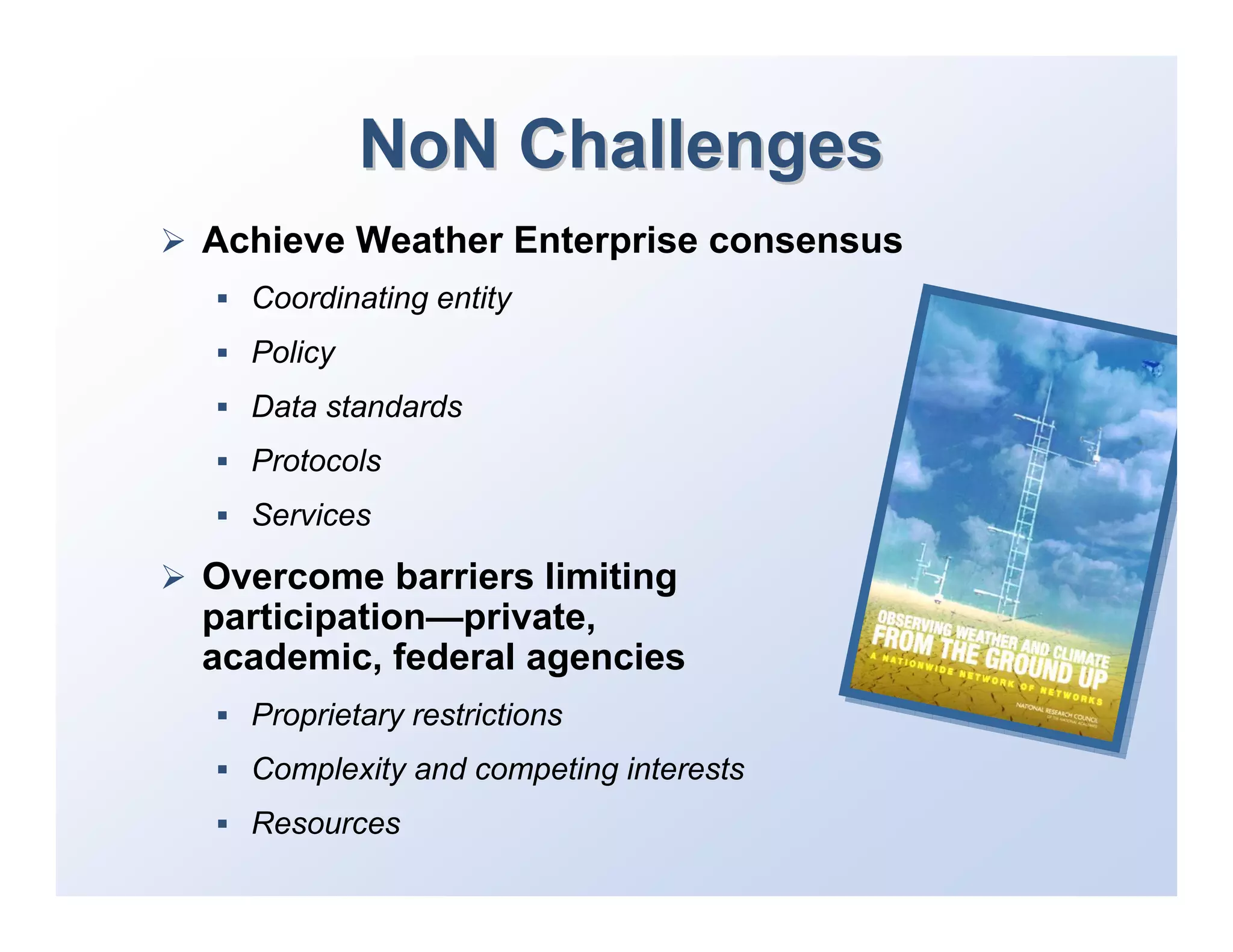
NoN Challenges
Achieve Weather Enterprise consensus
  Coordinating entity
  Policy
  Data standards
  Protocols
  Services

Overcome barriers limiting
participation—private,
academic, federal agencies
  Proprietary restrictions
  Complexity and competing interests
  Resources
ams2009scm-02-Hayes

ams2009scm-02-Hayes

  • 1.
    National Weather Service StrategicPlan 2010-2025 Jack Hayes NOAA Assistant Administrator for Weather Services, and National Weather Service Director Norman, Oklahoma August 10, 2009
  • 2.
    Global & NationalChallenges Impacts of climate change Increased vulnerability to weather, water, climate, and other environmental hazards Increased vulnerability to solar activity Large-scale impacts of droughts, floods, chemical makeup of oceans and rivers
  • 3.
    NWS Vision A safer,more informed and productive society where environmental knowledge empowers the Nation to make the best decisions Services focused on impacts Earth system forecasts Data, information, and knowledge
  • 4.
    Key Outcomes for2025 Loss of life, displacement from high impact events reduced NWS data and information contribute to a national competitive advantage Environmental data, prediction capabilities, and decision support services integral components to: Managing and sustaining healthy ecosystems and communities Understanding and living with climate change Minimizing risks to our national security
  • 5.
    2025: Decision Support Providing the right information, at the right time, to the right people Key Objectives & Strategies More accurate forecasts and increased lead times for warnings Watches, warnings and advisories that increase responsiveness using social science Direct, interpretive forecaster support for .govs Readily accessible, user-centric data and information Levels of uncertainty included in forecasts and warnings Partnership and collaboration an integral component
  • 6.
    2025: Services Broadening serviceareas to address global and national challenges Key Objectives & Strategies High-impact weather Space weather Integrated water resources Human health Ecosystems Climate Transportation Energy
  • 7.
    2025: Partnerships Sharingassets, skills, and capabilities to meet national needs Key Objectives & Strategies Use of new, innovative dissemination and outreach methods Coordinated environmental literacy and weather safety campaigns Increased focus on leveraging new science and technology outside of NOAA New tools and applications to link environmental data and information Proactive collaboration with private sector
  • 8.
    2025: Science &Technology Exploiting state-of-the-art S&T to support evolving services and information delivery Key Objectives & Strategies Expanded, integrated and more robust observations Integrated Earth system models Next generation forecasting and decision support system Data integration and interoperability AWIPS II…and beyond Communication / collaboration tools – onsite, offsite, virtually
  • 9.
    2025: Data &Information Linking data and systems from all sources to aid decision-making Key Objectives & Strategies Internet as cornerstone of operating model Common standards to share and reuse data Integrated and interoperable systems Decision assistance tools 4-dimensional weather information database Mesonets; WIGOS Common operating pictures among partners
  • 10.
    Key Findings of NRC Report on NoN U.S. capabilities are uncoordinated Overarching national strategy needed Build infrastructure for data exchange Fill data gaps Spatial Temporal Elements
  • 11.
    Proposed NoN Enterprise Approach Build the “plumbing” Metadata Policies IT capabilities Data management Communications Services Develop national standards/protocols
  • 12.
    Proposed NoN Enterprise Approach Address Highest priority observing gaps Develop framework for National Mesonet Height of PBL Soil moisture & temperature profiles High-resolution vertical humidity profiles Air quality measurements Urban, coastal & mountainous regions also priorities
  • 13.
    Proposed NoN Enterprise Approach Collaborate with partners OFCM…Committee for Integrated Observing Systems AMS Ad Hoc Working Group on a Nationwide Observing Network of Networks
  • 14.
    NoN Challenges Achieve WeatherEnterprise consensus Coordinating entity Policy Data standards Protocols Services Overcome barriers limiting participation—private, academic, federal agencies Proprietary restrictions Complexity and competing interests Resources