WHAT ARE THE SOURCES
OF RENEWABLE ENERGY?
WHAT IS RENEWABLE ENERGY?
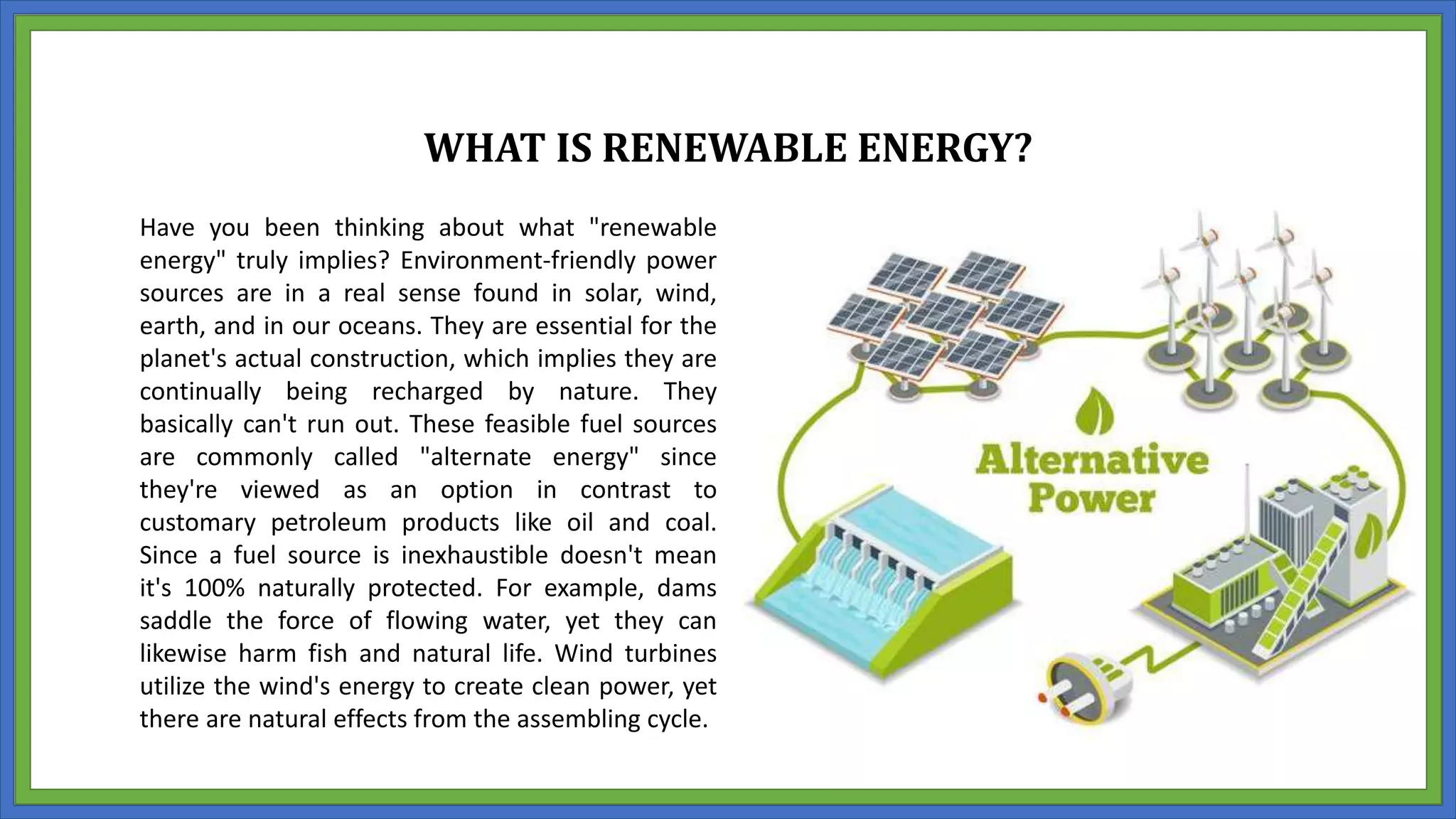
Have you been thinking about what "renewable
energy" truly implies? Environment-friendly power
sources are in a real sense found in solar, wind,
earth, and in our oceans. They are essential for the
planet's actual construction, which implies they are
continually being recharged by nature. They
basically can't run out. These feasible fuel sources
are commonly called "alternate energy" since
they're viewed as an option in contrast to
customary petroleum products like oil and coal.
Since a fuel source is inexhaustible doesn't mean
it's 100% naturally protected. For example, dams
saddle the force of flowing water, yet they can
likewise harm fish and natural life. Wind turbines
utilize the wind's energy to create clean power, yet
there are natural effects from the assembling cycle.
Everything considered, however, alternate energy
assets carry a lot lighter ecological impression than
petroleum products. This is the reason sustainable
power sources are so significant – they are our pass
to a less polluted world. Regardless of whether we
didn't confront the danger of environmental
change, limiting pollution is essential for adequate
health. Furthermore, what's useful for the climate is
progressively acceptable financially for residents
and businesses. Solar and wind power, specifically,
are currently more affordable than petroleum
derivatives in numerous countries of the world, and
the value continues to diminish every year.
Solar Energy
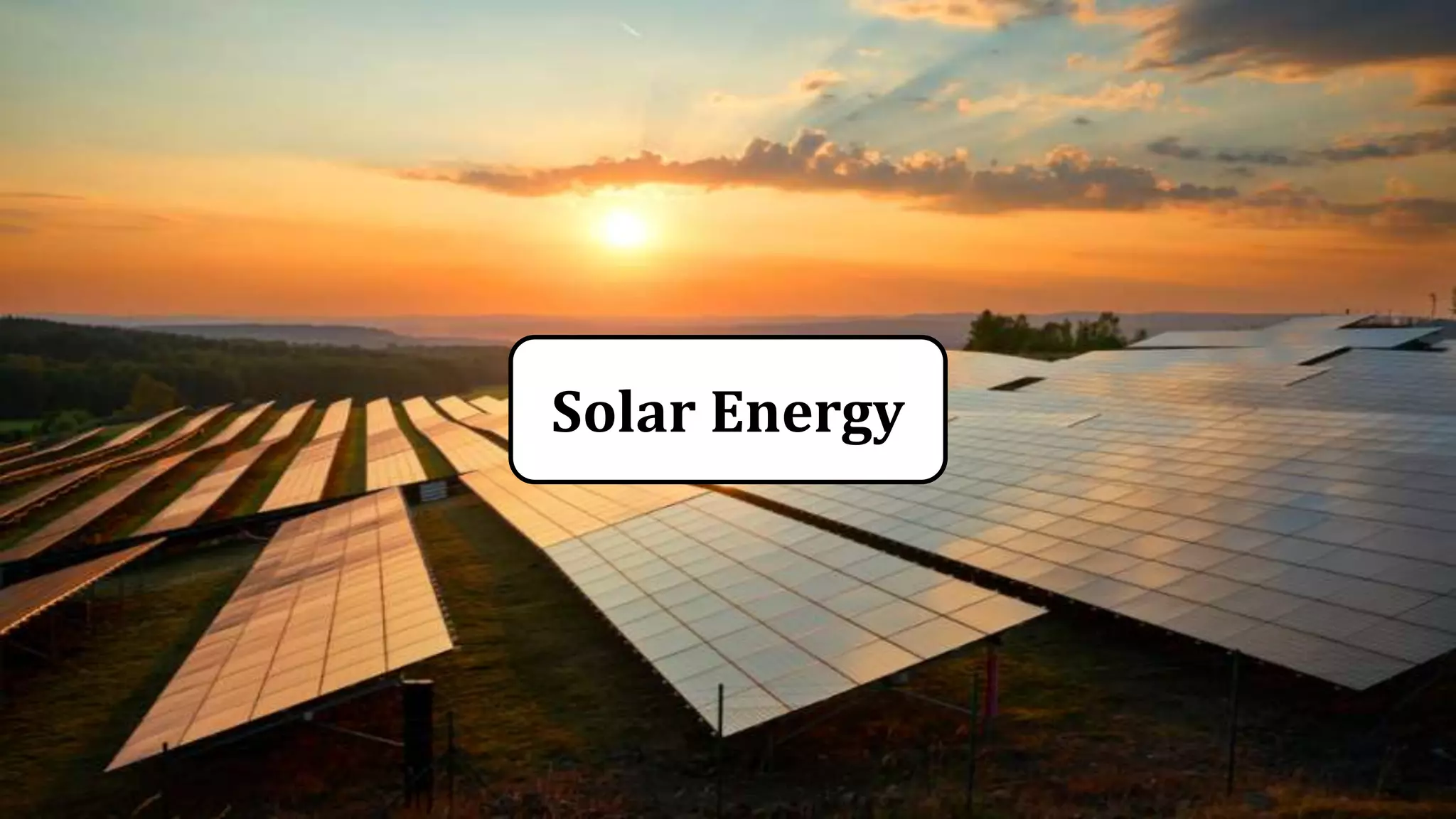
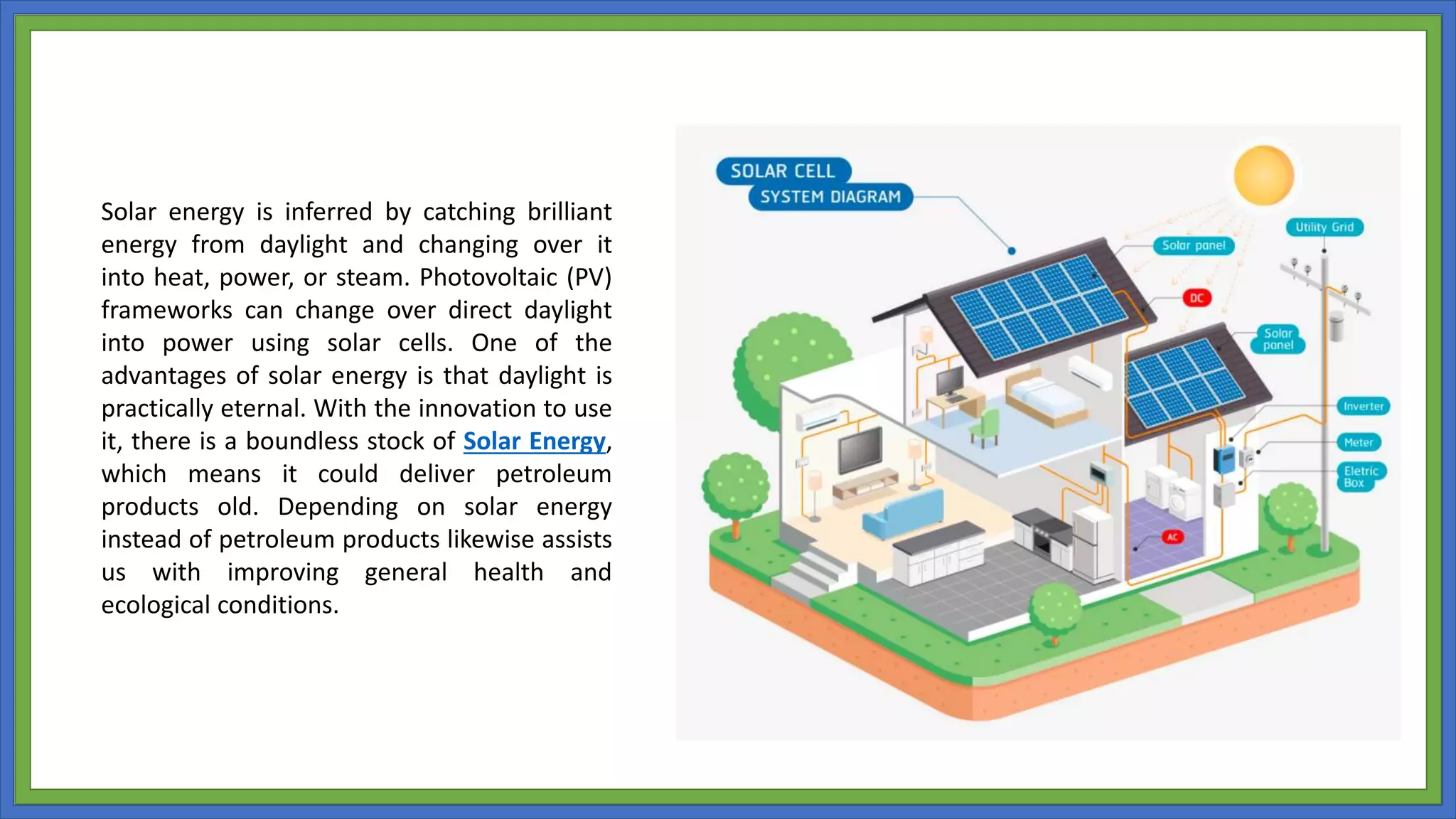
Solar energy is inferred by catching brilliant
energy from daylight and changing over it
into heat, power, or steam. Photovoltaic (PV)
frameworks can change over direct daylight
into power using solar cells. One of the
advantages of solar energy is that daylight is
practically eternal. With the innovation to use
it, there is a boundless stock of Solar Energy,
which means it could deliver petroleum
products old. Depending on solar energy
instead of petroleum products likewise assists
us with improving general health and
ecological conditions.
Wind Energy
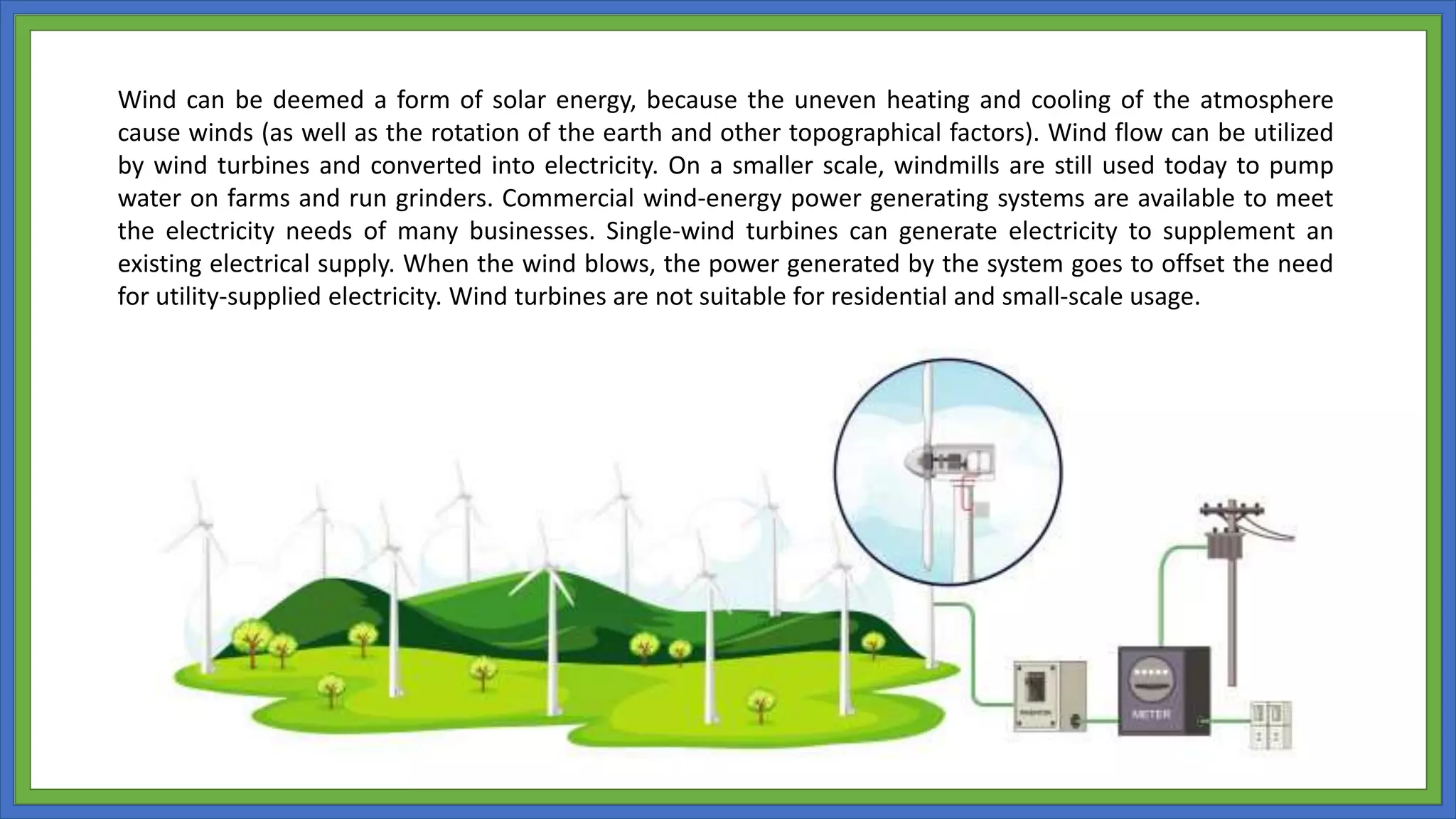
Wind can be deemed a form of solar energy, because the uneven heating and cooling of the atmosphere
cause winds (as well as the rotation of the earth and other topographical factors). Wind flow can be utilized
by wind turbines and converted into electricity. On a smaller scale, windmills are still used today to pump
water on farms and run grinders. Commercial wind-energy power generating systems are available to meet
the electricity needs of many businesses. Single-wind turbines can generate electricity to supplement an
existing electrical supply. When the wind blows, the power generated by the system goes to offset the need
for utility-supplied electricity. Wind turbines are not suitable for residential and small-scale usage.
Geothermal Energy
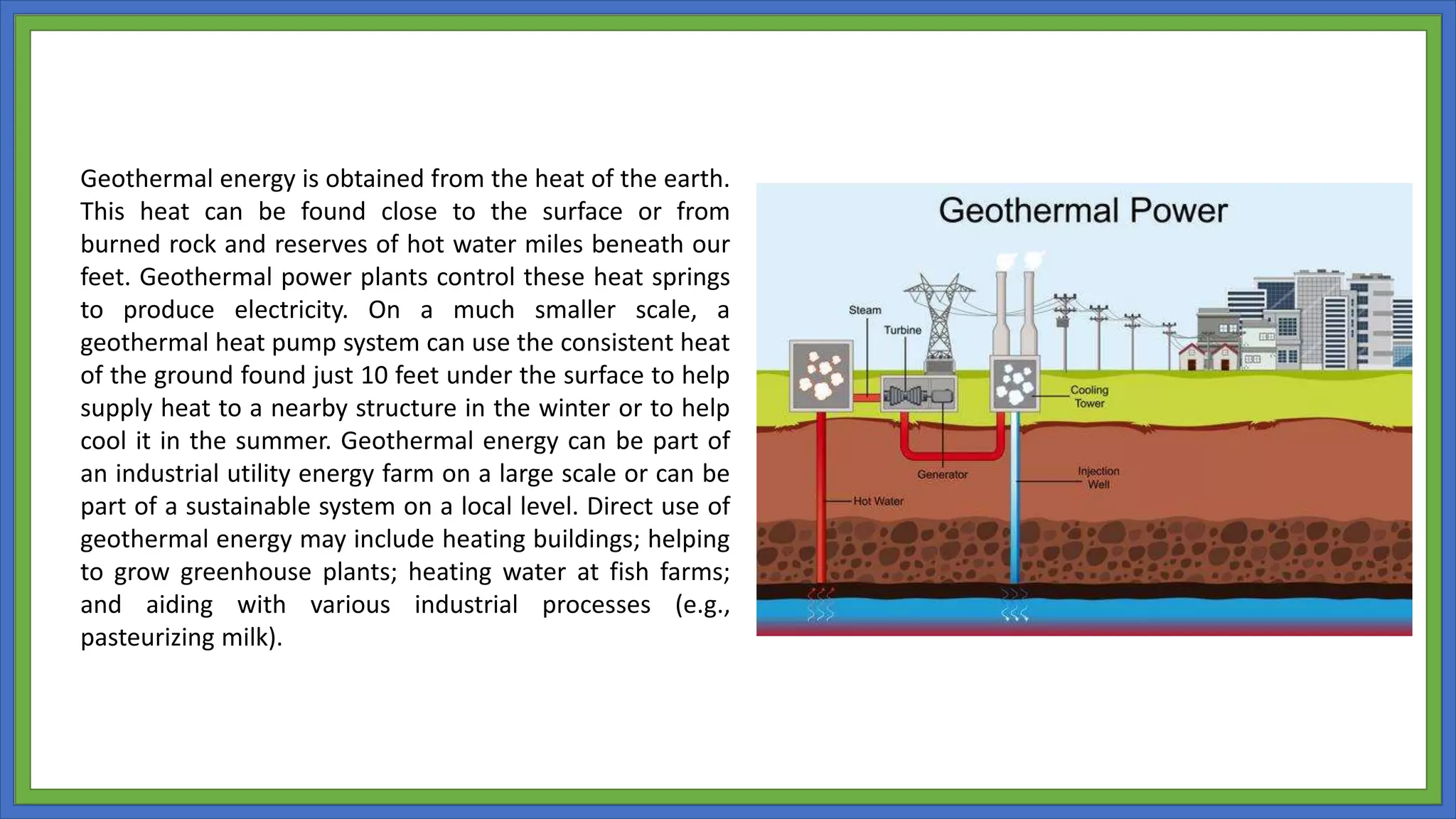
Geothermal energy is obtained from the heat of the earth.
This heat can be found close to the surface or from
burned rock and reserves of hot water miles beneath our
feet. Geothermal power plants control these heat springs
to produce electricity. On a much smaller scale, a
geothermal heat pump system can use the consistent heat
of the ground found just 10 feet under the surface to help
supply heat to a nearby structure in the winter or to help
cool it in the summer. Geothermal energy can be part of
an industrial utility energy farm on a large scale or can be
part of a sustainable system on a local level. Direct use of
geothermal energy may include heating buildings; helping
to grow greenhouse plants; heating water at fish farms;
and aiding with various industrial processes (e.g.,
pasteurizing milk).
Hydro Energy
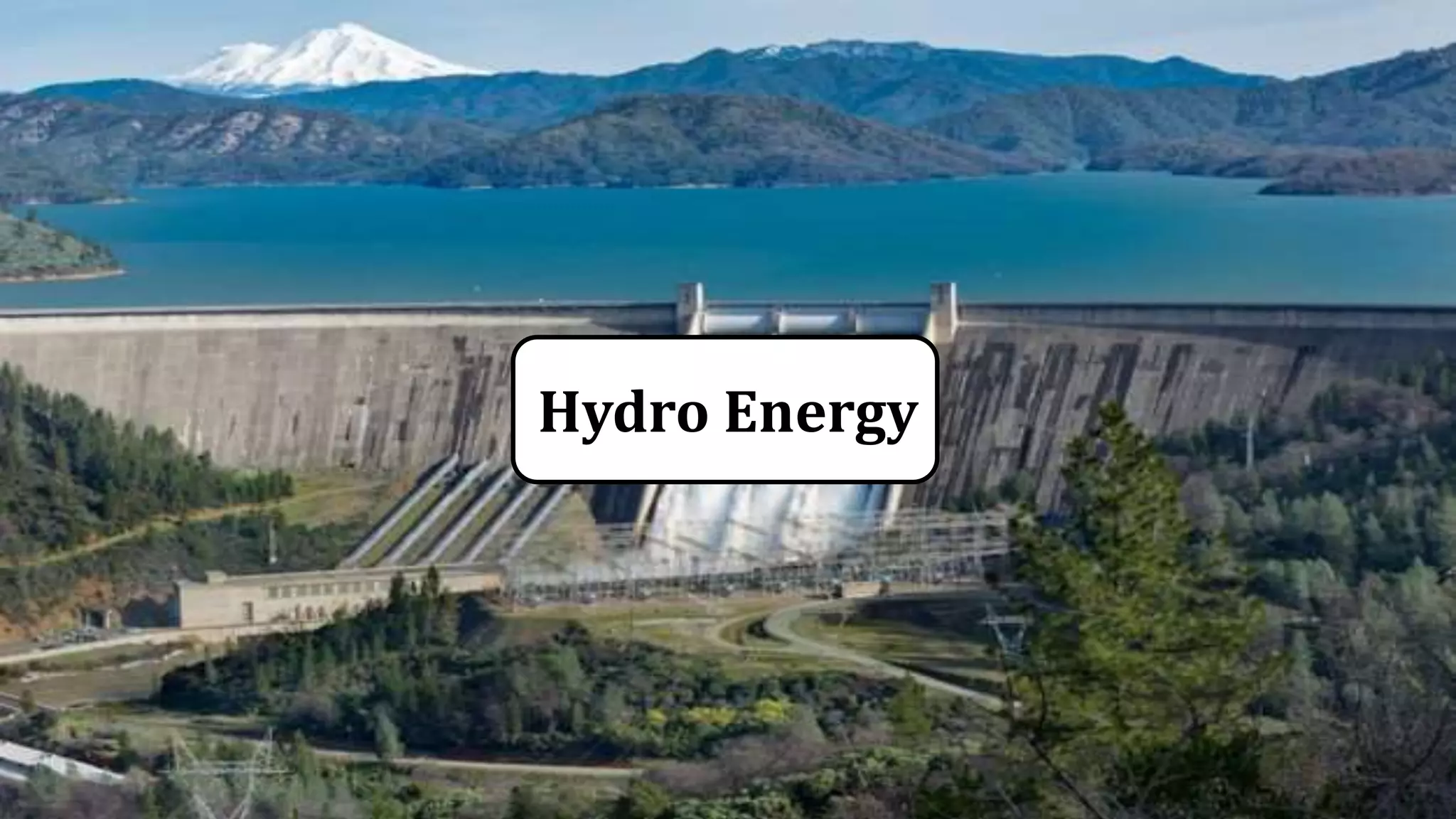
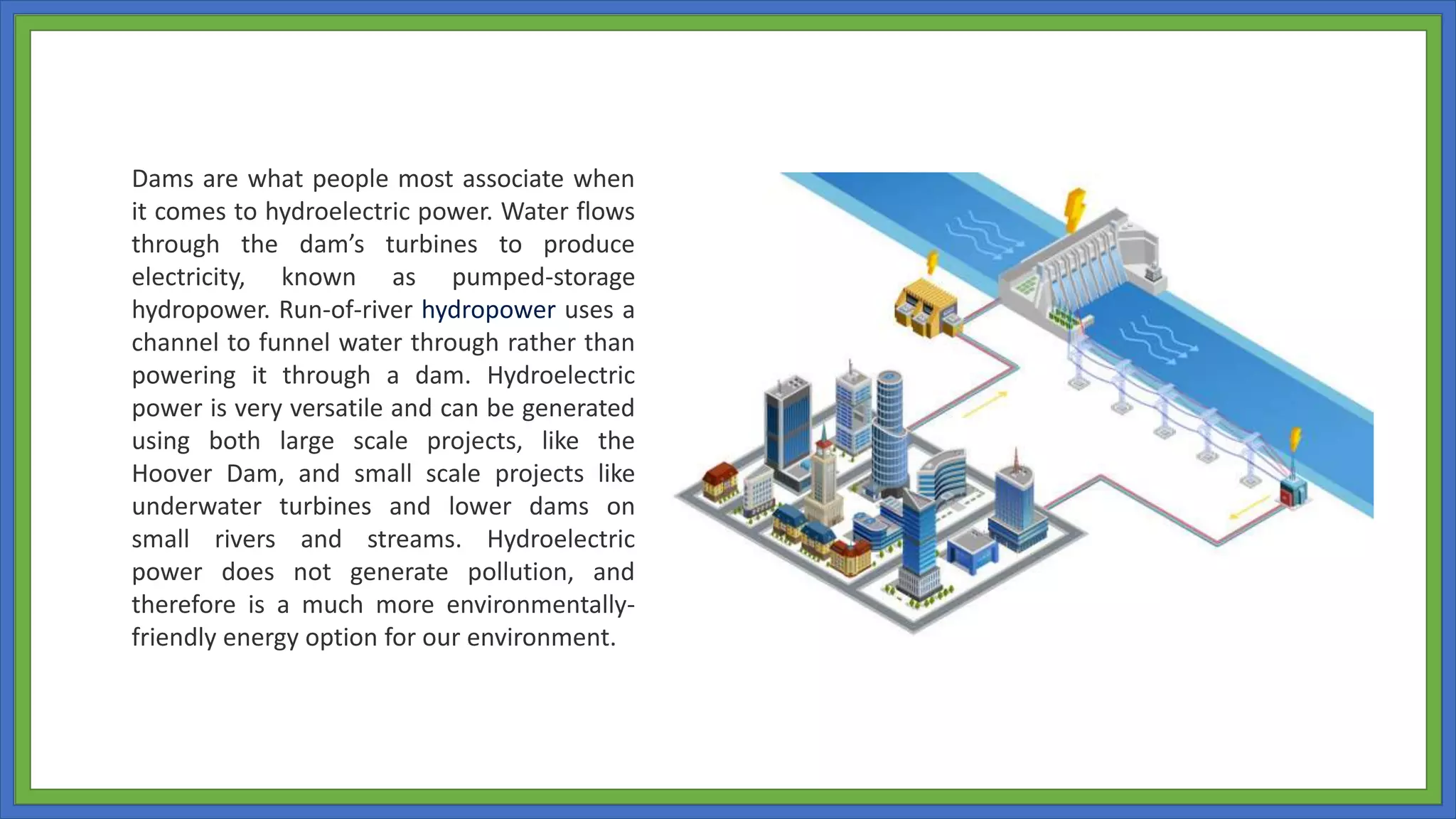
Dams are what people most associate when
it comes to hydroelectric power. Water flows
through the dam’s turbines to produce
electricity, known as pumped-storage
hydropower. Run-of-river hydropower uses a
channel to funnel water through rather than
powering it through a dam. Hydroelectric
power is very versatile and can be generated
using both large scale projects, like the
Hoover Dam, and small scale projects like
underwater turbines and lower dams on
small rivers and streams. Hydroelectric
power does not generate pollution, and
therefore is a much more environmentally-
friendly energy option for our environment.
Tidal Energy
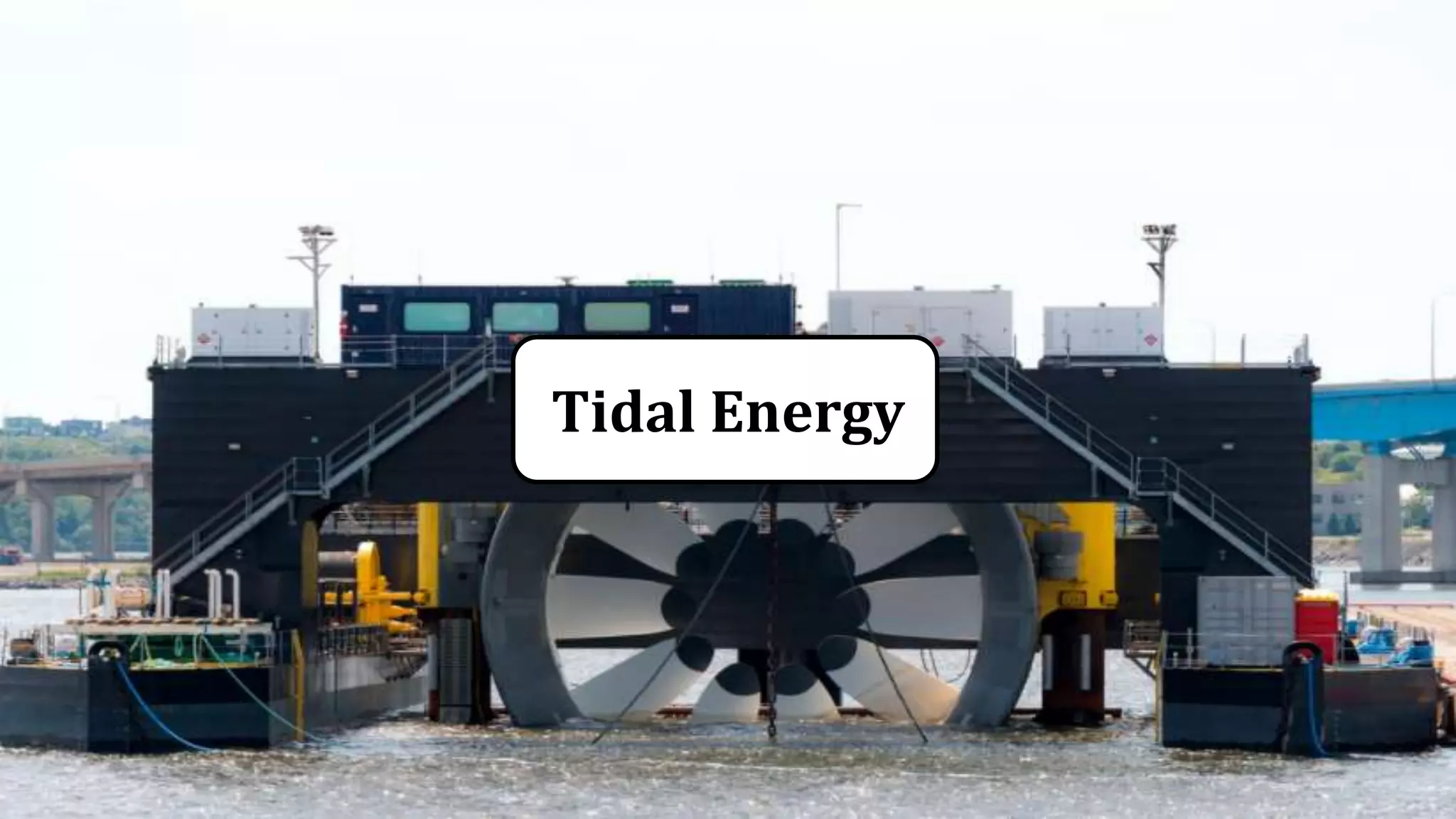
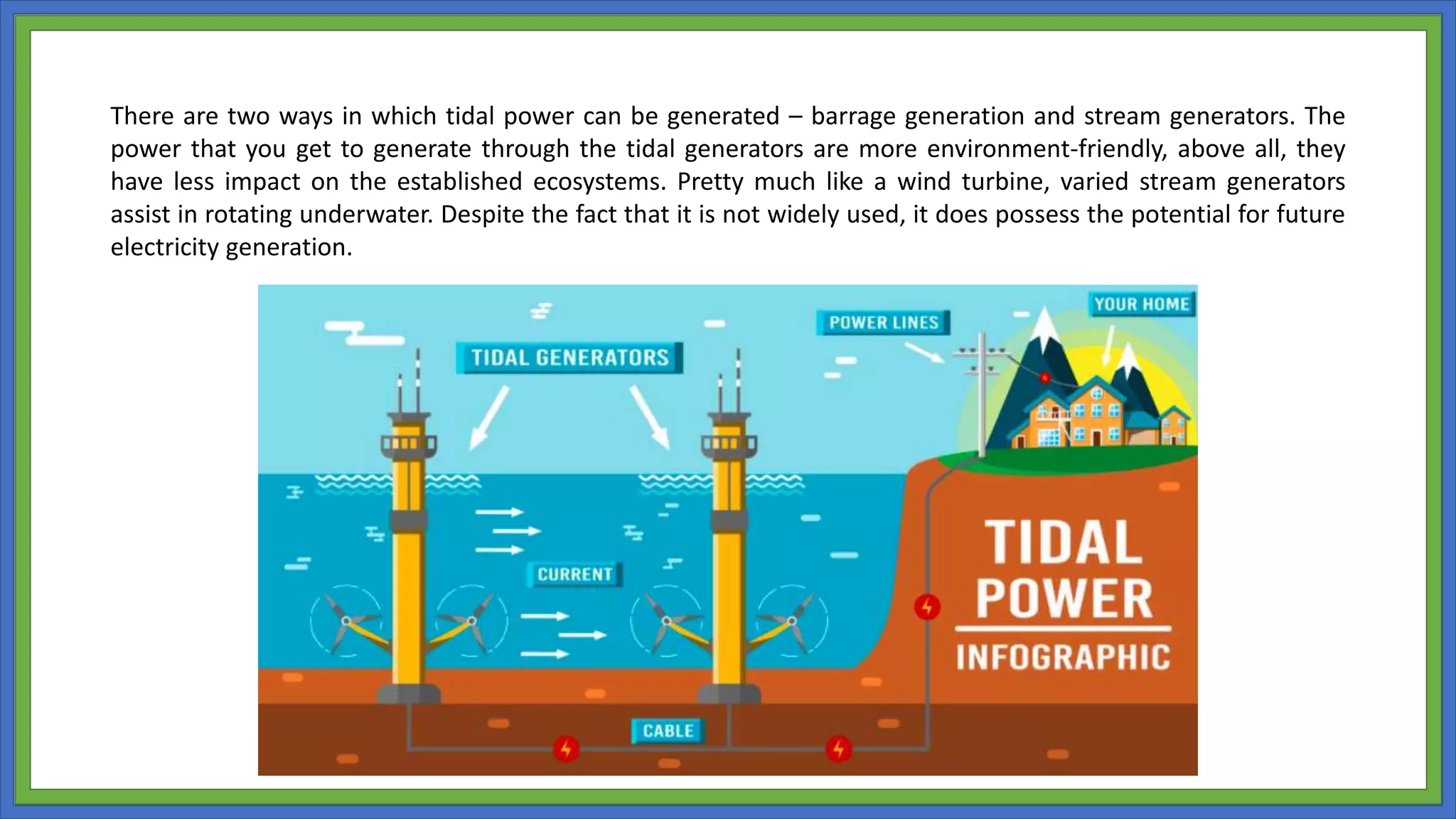
There are two ways in which tidal power can be generated – barrage generation and stream generators. The
power that you get to generate through the tidal generators are more environment-friendly, above all, they
have less impact on the established ecosystems. Pretty much like a wind turbine, varied stream generators
assist in rotating underwater. Despite the fact that it is not widely used, it does possess the potential for future
electricity generation.

What are the Sources of Renewable Energy

  • 1.
    WHAT ARE THESOURCES OF RENEWABLE ENERGY?
  • 2.
    WHAT IS RENEWABLEENERGY? Have you been thinking about what "renewable energy" truly implies? Environment-friendly power sources are in a real sense found in solar, wind, earth, and in our oceans. They are essential for the planet's actual construction, which implies they are continually being recharged by nature. They basically can't run out. These feasible fuel sources are commonly called "alternate energy" since they're viewed as an option in contrast to customary petroleum products like oil and coal. Since a fuel source is inexhaustible doesn't mean it's 100% naturally protected. For example, dams saddle the force of flowing water, yet they can likewise harm fish and natural life. Wind turbines utilize the wind's energy to create clean power, yet there are natural effects from the assembling cycle.
  • 3.
    Everything considered, however,alternate energy assets carry a lot lighter ecological impression than petroleum products. This is the reason sustainable power sources are so significant – they are our pass to a less polluted world. Regardless of whether we didn't confront the danger of environmental change, limiting pollution is essential for adequate health. Furthermore, what's useful for the climate is progressively acceptable financially for residents and businesses. Solar and wind power, specifically, are currently more affordable than petroleum derivatives in numerous countries of the world, and the value continues to diminish every year.
  • 4.
  • 5.
    Solar energy isinferred by catching brilliant energy from daylight and changing over it into heat, power, or steam. Photovoltaic (PV) frameworks can change over direct daylight into power using solar cells. One of the advantages of solar energy is that daylight is practically eternal. With the innovation to use it, there is a boundless stock of Solar Energy, which means it could deliver petroleum products old. Depending on solar energy instead of petroleum products likewise assists us with improving general health and ecological conditions.
  • 6.
  • 7.
    Wind can bedeemed a form of solar energy, because the uneven heating and cooling of the atmosphere cause winds (as well as the rotation of the earth and other topographical factors). Wind flow can be utilized by wind turbines and converted into electricity. On a smaller scale, windmills are still used today to pump water on farms and run grinders. Commercial wind-energy power generating systems are available to meet the electricity needs of many businesses. Single-wind turbines can generate electricity to supplement an existing electrical supply. When the wind blows, the power generated by the system goes to offset the need for utility-supplied electricity. Wind turbines are not suitable for residential and small-scale usage.
  • 8.
  • 9.
    Geothermal energy isobtained from the heat of the earth. This heat can be found close to the surface or from burned rock and reserves of hot water miles beneath our feet. Geothermal power plants control these heat springs to produce electricity. On a much smaller scale, a geothermal heat pump system can use the consistent heat of the ground found just 10 feet under the surface to help supply heat to a nearby structure in the winter or to help cool it in the summer. Geothermal energy can be part of an industrial utility energy farm on a large scale or can be part of a sustainable system on a local level. Direct use of geothermal energy may include heating buildings; helping to grow greenhouse plants; heating water at fish farms; and aiding with various industrial processes (e.g., pasteurizing milk).
  • 10.
  • 11.
    Dams are whatpeople most associate when it comes to hydroelectric power. Water flows through the dam’s turbines to produce electricity, known as pumped-storage hydropower. Run-of-river hydropower uses a channel to funnel water through rather than powering it through a dam. Hydroelectric power is very versatile and can be generated using both large scale projects, like the Hoover Dam, and small scale projects like underwater turbines and lower dams on small rivers and streams. Hydroelectric power does not generate pollution, and therefore is a much more environmentally- friendly energy option for our environment.
  • 12.
  • 13.
    There are twoways in which tidal power can be generated – barrage generation and stream generators. The power that you get to generate through the tidal generators are more environment-friendly, above all, they have less impact on the established ecosystems. Pretty much like a wind turbine, varied stream generators assist in rotating underwater. Despite the fact that it is not widely used, it does possess the potential for future electricity generation.