Using ADR to Efficiently Settle
Disputes
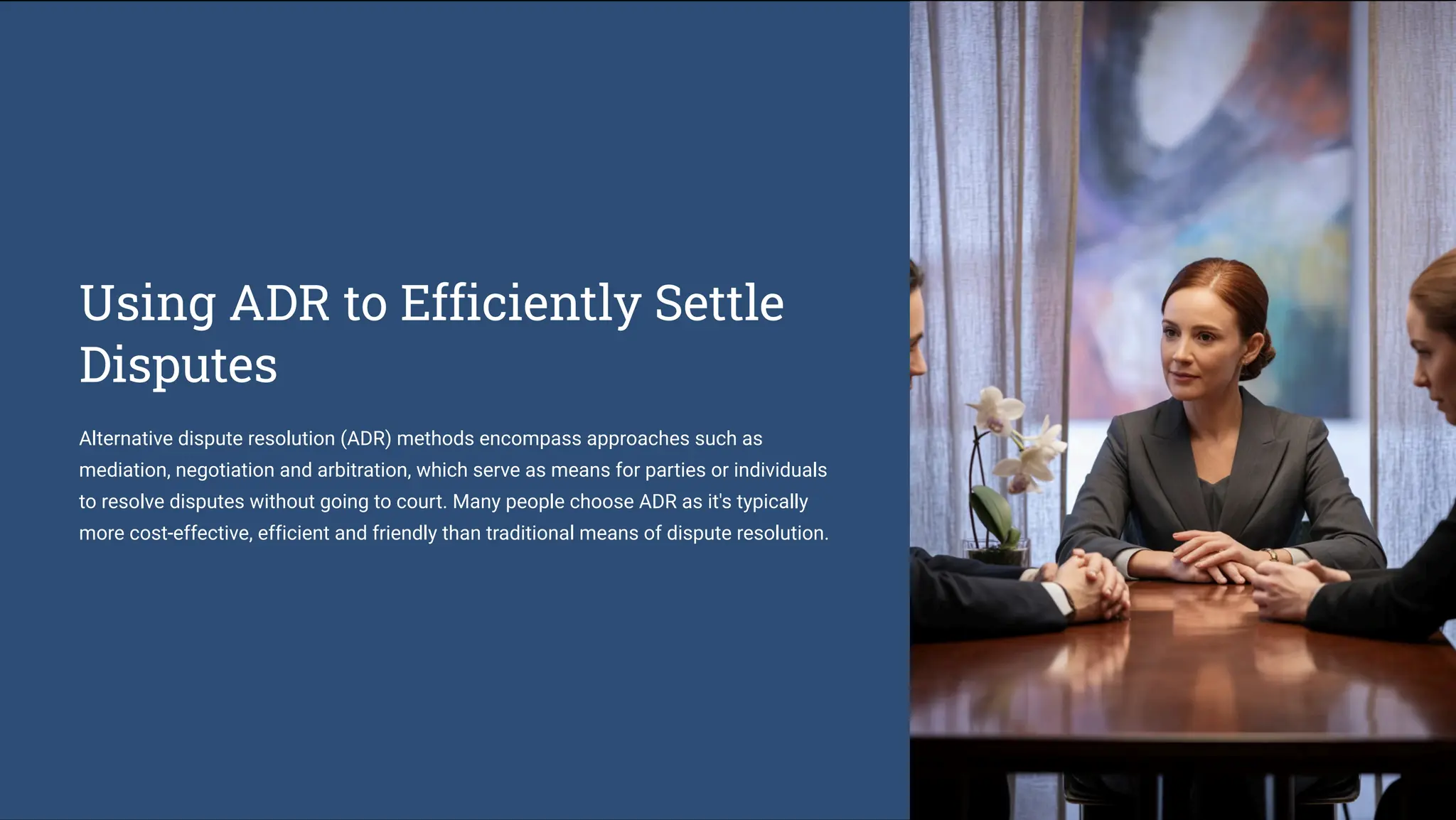
Alternative dispute resolution (ADR) methods encompass approaches such as
mediation, negotiation and arbitration, which serve as means for parties or individuals
to resolve disputes without going to court. Many people choose ADR as it's typically
more cost-effective, efficient and friendly than traditional means of dispute resolution.
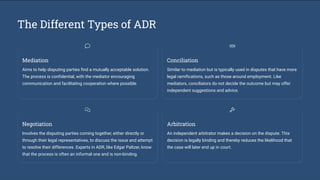
The Different Types of ADR
Mediation
Aims to help disputing parties find a mutually acceptable solution.
The process is confidential, with the mediator encouraging
communication and facilitating cooperation where possible.
Conciliation
Similar to mediation but is typically used in disputes that have more
legal ramifications, such as those around employment. Like
mediators, conciliators do not decide the outcome but may offer
independent suggestions and advice.
Negotiation
Involves the disputing parties coming together, either directly or
through their legal representatives, to discuss the issue and attempt
to resolve their differences. Experts in ADR, like Edgar Paltzer, know
that the process is often an informal one and is non-binding.
Arbitration
An independent arbitrator makes a decision on the dispute. This
decision is legally binding and thereby reduces the likelihood that
the case will later end up in court.
The Benefits of ADR
Avoid Court Proceedings
Crucially, ADR offers the opportunity for parties to resolve a dispute
without going to court. As well as being a lengthy process, the latter can
be costly and cause (or exacerbate) bad feeling between the individuals
involved. Going to court can be stressful and is often an intimidating
prospect.
Speed and Cost Efficiency
ADR tends to be a significantly quicker process, with resolution
sometimes possible within as little as a day with some methods. It's
also much more cost effective and less formal, making it appealing to
many.
Flexibility and Customisation
Furthermore, ADR can be more adaptable, empowering disputing parties
to choose their arbitrator or mediator and shape the process to meet
their requirements. This often enables more individualised, inventive
resolutions, tailored to the unique needs of the process's participants.
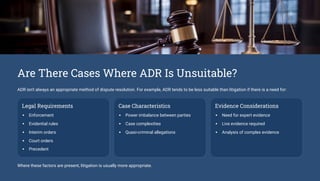
Are There Cases Where ADR Is Unsuitable?
ADR isn't always an appropriate method of dispute resolution. For example, ADR tends to be less suitable than litigation if there is a need for:
Legal Requirements
Enforcement
Evidential rules
Interim orders
Court orders
Precedent
Case Characteristics
Power imbalance between parties
Case complexities
Quasi-criminal allegations
Evidence Considerations
Need for expert evidence
Live evidence required
Analysis of complex evidence
Where these factors are present, litigation is usually more appropriate.

Using ADR to Efficiently Settle Disputes

  • 1.
    Using ADR toEfficiently Settle Disputes Alternative dispute resolution (ADR) methods encompass approaches such as mediation, negotiation and arbitration, which serve as means for parties or individuals to resolve disputes without going to court. Many people choose ADR as it's typically more cost-effective, efficient and friendly than traditional means of dispute resolution.
  • 2.
    The Different Typesof ADR Mediation Aims to help disputing parties find a mutually acceptable solution. The process is confidential, with the mediator encouraging communication and facilitating cooperation where possible. Conciliation Similar to mediation but is typically used in disputes that have more legal ramifications, such as those around employment. Like mediators, conciliators do not decide the outcome but may offer independent suggestions and advice. Negotiation Involves the disputing parties coming together, either directly or through their legal representatives, to discuss the issue and attempt to resolve their differences. Experts in ADR, like Edgar Paltzer, know that the process is often an informal one and is non-binding. Arbitration An independent arbitrator makes a decision on the dispute. This decision is legally binding and thereby reduces the likelihood that the case will later end up in court.
  • 3.
    The Benefits ofADR Avoid Court Proceedings Crucially, ADR offers the opportunity for parties to resolve a dispute without going to court. As well as being a lengthy process, the latter can be costly and cause (or exacerbate) bad feeling between the individuals involved. Going to court can be stressful and is often an intimidating prospect. Speed and Cost Efficiency ADR tends to be a significantly quicker process, with resolution sometimes possible within as little as a day with some methods. It's also much more cost effective and less formal, making it appealing to many. Flexibility and Customisation Furthermore, ADR can be more adaptable, empowering disputing parties to choose their arbitrator or mediator and shape the process to meet their requirements. This often enables more individualised, inventive resolutions, tailored to the unique needs of the process's participants.
  • 4.
    Are There CasesWhere ADR Is Unsuitable? ADR isn't always an appropriate method of dispute resolution. For example, ADR tends to be less suitable than litigation if there is a need for: Legal Requirements Enforcement Evidential rules Interim orders Court orders Precedent Case Characteristics Power imbalance between parties Case complexities Quasi-criminal allegations Evidence Considerations Need for expert evidence Live evidence required Analysis of complex evidence Where these factors are present, litigation is usually more appropriate.