Presentation on
“A review study on Alport Syndrome: a rare
genetic disorder characterized by progressive
kidney disease and abnormalities of the inner ear
and the eye”
Aim and Objective of the Study
 To gain knowledge about Alport syndrome.
 To know about the genetic causes of Alport syndrome.
 To gather information about the damaging effects of this disease on
different organs of our body.
 To discuss about the diagnosis, treatment and management of this
disease.
Background
The disease we now know as Alport syndrome was first described in
the British medical literature in the early years of the 20th century. In
1927 Dr. Cecil Alport published a paper describing the association of
kidney disease and deafness in affected individuals. Many additional
cases were described in the literature and the disorder was named after
Dr. Alport in 1961.
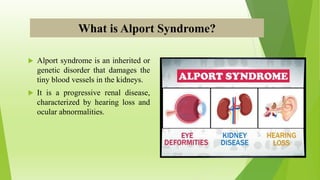
What is Alport Syndrome?
 Alport syndrome is an inherited or
genetic disorder that damages the
tiny blood vessels in the kidneys.
 It is a progressive renal disease,
characterized by hearing loss and
ocular abnormalities.
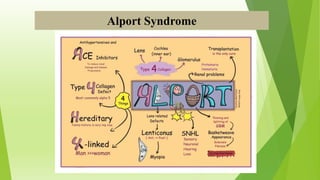
Alport Syndrome
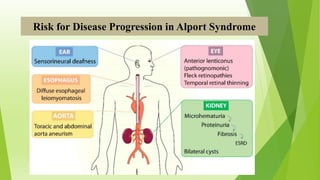
Risk for Disease Progression in Alport Syndrome
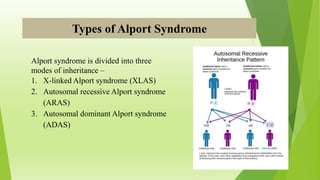
Types of Alport Syndrome
Alport syndrome is divided into three
modes of inheritance –
1. X-linked Alport syndrome (XLAS)
2. Autosomal recessive Alport syndrome
(ARAS)
3. Autosomal dominant Alport syndrome
(ADAS)
Types of Alport Syndrome
 X-linked Alport syndrome
X-linked (related to the X chromosome) is the most common form of
Alport Syndrome. About 80% of the people have the X-linked type.
 Autosomal recessive Alport syndrome (ARAS)
This is when both parents carry the abnormal gene and both parents
pass the abnormal gene to the child.
 Autosomal dominant Alport syndrome (ADAS)
This happens when one parent has the disease and passes the abnormal
gene to the child. Only one copy of the abnormal gene is needed to
cause the disease.
Causes of Alport Syndrome
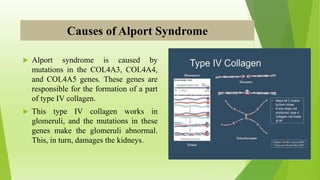
 Alport syndrome is caused by
mutations in the COL4A3, COL4A4,
and COL4A5 genes. These genes are
responsible for the formation of a part
of type IV collagen.
 This type IV collagen works in
glomeruli, and the mutations in these
genes make the glomeruli abnormal.
This, in turn, damages the kidneys.
Causes of Alport Syndrome
 This type IV collagen is also found in inner ears, and
abnormalities in it can lead to sensorineural hearing loss.
 Type IV collagen is also important in keeping the shape of eye
lens and the normal color of retina, and it’s the abnormalities with
it that cause the eye complications associated with Alport
syndrome.
Symptoms of Alport Syndrome
With all types of Alport syndrome, the kidneys
are affected and the tiny blood vessels in the
glomeruli are damaged.
 Symptoms of kidney problems include:
 Abnormal urine color
 Blood in the urine (which can be worsened
by upper respiratory infections or exercise)
 High blood pressure
 Swelling throughout the body
Symptoms of Alport Syndrome
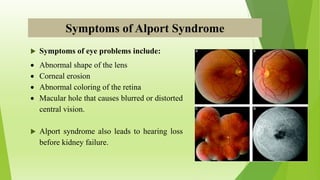
 Symptoms of eye problems include:
 Abnormal shape of the lens
 Corneal erosion
 Abnormal coloring of the retina
 Macular hole that causes blurred or distorted
central vision.
 Alport syndrome also leads to hearing loss
before kidney failure.
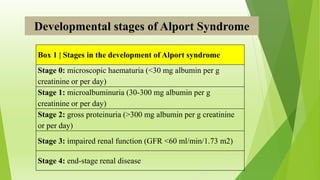
Developmental stages of Alport Syndrome
Box 1 | Stages in the development of Alport syndrome
Stage 0: microscopic haematuria (<30 mg albumin per g
creatinine or per day)
Stage 1: microalbuminuria (30-300 mg albumin per g
creatinine or per day)
Stage 2: gross proteinuria (>300 mg albumin per g creatinine
or per day)
Stage 3: impaired renal function (GFR <60 ml/min/1.73 m2)
Stage 4: end-stage renal disease
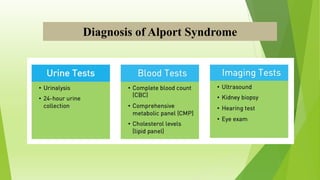
Diagnosis of Alport Syndrome
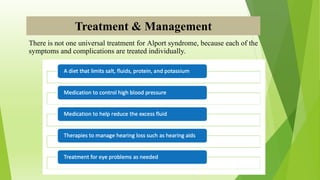
Treatment & Management
There is not one universal treatment for Alport syndrome, because each of the
symptoms and complications are treated individually.
Conclusion
Alport Syndrome is still a greatly under and misdiagnosed disorder.
The pathophysiology is still not fully understood and genetics of the
disease also have some gaps. Up to know, there is no specific and
effective treatment for AS. Further studies are necessary to establish
novel and effective therapeutic protocols.
alpoort syndrome.pptx

alpoort syndrome.pptx

  • 1.
    Presentation on “A reviewstudy on Alport Syndrome: a rare genetic disorder characterized by progressive kidney disease and abnormalities of the inner ear and the eye”
  • 2.
    Aim and Objectiveof the Study  To gain knowledge about Alport syndrome.  To know about the genetic causes of Alport syndrome.  To gather information about the damaging effects of this disease on different organs of our body.  To discuss about the diagnosis, treatment and management of this disease.
  • 3.
    Background The disease wenow know as Alport syndrome was first described in the British medical literature in the early years of the 20th century. In 1927 Dr. Cecil Alport published a paper describing the association of kidney disease and deafness in affected individuals. Many additional cases were described in the literature and the disorder was named after Dr. Alport in 1961.
  • 4.
    What is AlportSyndrome?  Alport syndrome is an inherited or genetic disorder that damages the tiny blood vessels in the kidneys.  It is a progressive renal disease, characterized by hearing loss and ocular abnormalities.
  • 5.
  • 6.
    Risk for DiseaseProgression in Alport Syndrome
  • 7.
    Types of AlportSyndrome Alport syndrome is divided into three modes of inheritance – 1. X-linked Alport syndrome (XLAS) 2. Autosomal recessive Alport syndrome (ARAS) 3. Autosomal dominant Alport syndrome (ADAS)
  • 8.
    Types of AlportSyndrome  X-linked Alport syndrome X-linked (related to the X chromosome) is the most common form of Alport Syndrome. About 80% of the people have the X-linked type.  Autosomal recessive Alport syndrome (ARAS) This is when both parents carry the abnormal gene and both parents pass the abnormal gene to the child.  Autosomal dominant Alport syndrome (ADAS) This happens when one parent has the disease and passes the abnormal gene to the child. Only one copy of the abnormal gene is needed to cause the disease.
  • 9.
    Causes of AlportSyndrome  Alport syndrome is caused by mutations in the COL4A3, COL4A4, and COL4A5 genes. These genes are responsible for the formation of a part of type IV collagen.  This type IV collagen works in glomeruli, and the mutations in these genes make the glomeruli abnormal. This, in turn, damages the kidneys.
  • 10.
    Causes of AlportSyndrome  This type IV collagen is also found in inner ears, and abnormalities in it can lead to sensorineural hearing loss.  Type IV collagen is also important in keeping the shape of eye lens and the normal color of retina, and it’s the abnormalities with it that cause the eye complications associated with Alport syndrome.
  • 11.
    Symptoms of AlportSyndrome With all types of Alport syndrome, the kidneys are affected and the tiny blood vessels in the glomeruli are damaged.  Symptoms of kidney problems include:  Abnormal urine color  Blood in the urine (which can be worsened by upper respiratory infections or exercise)  High blood pressure  Swelling throughout the body
  • 12.
    Symptoms of AlportSyndrome  Symptoms of eye problems include:  Abnormal shape of the lens  Corneal erosion  Abnormal coloring of the retina  Macular hole that causes blurred or distorted central vision.  Alport syndrome also leads to hearing loss before kidney failure.
  • 13.
    Developmental stages ofAlport Syndrome Box 1 | Stages in the development of Alport syndrome Stage 0: microscopic haematuria (<30 mg albumin per g creatinine or per day) Stage 1: microalbuminuria (30-300 mg albumin per g creatinine or per day) Stage 2: gross proteinuria (>300 mg albumin per g creatinine or per day) Stage 3: impaired renal function (GFR <60 ml/min/1.73 m2) Stage 4: end-stage renal disease
  • 14.
  • 15.
    Treatment & Management Thereis not one universal treatment for Alport syndrome, because each of the symptoms and complications are treated individually.
  • 16.
    Conclusion Alport Syndrome isstill a greatly under and misdiagnosed disorder. The pathophysiology is still not fully understood and genetics of the disease also have some gaps. Up to know, there is no specific and effective treatment for AS. Further studies are necessary to establish novel and effective therapeutic protocols.