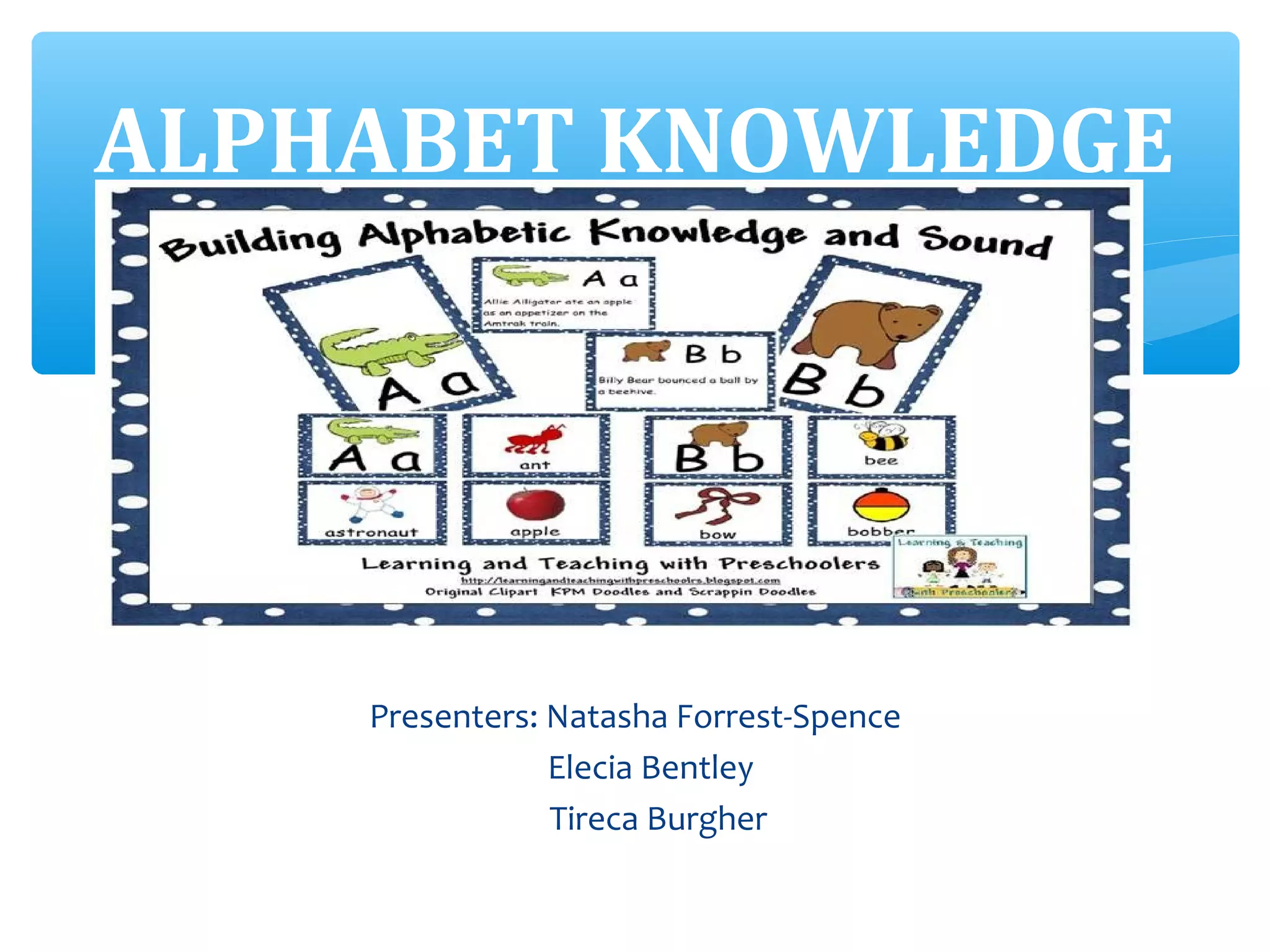
ALPHABET KNOWLEDGE
Presenters: Natasha Forrest-Spence
Elecia Bentley
Tireca Burgher
Alphabet knowledge is knowing the names, sound and
print that is associated with letters of the alphabet. It is
however much more than just simply being able to recite
or sing the letters of the alphabeth.
It can also be defined as the relationship between
phonology (sounds in speech) and orthography (spelling
pattern of written language).
Alphabet Knowledge refers to the matching of
phonemes (smallest units of sound) with their respective
grapheme (the written symbols in a language).
What is Alphabet Knowledge?
It includes knowing letter names and their respective
sounds. It also encompasses knowing how the
graphemes relates to phonemes in the English
Language.
Alphabet knowledge include the ability to sound-out
and read new words that have not been encountered
before.
Overall it is absolutely essential in developing further
literacy skills such as word recognition and phonics.
Once this skill is developed children are less likely to
experience reading difficulties later on.
In order for children to acquire the skills of Alphabet
Knowledge they first need to master their letter
knowledge and decoding skills.
∗ Letter knowledge is an understanding of the letters in
the language; how they work, their patterns and the
sounds they represent.
∗Decoding skills the ability to break down specific
sound-letter pairs in a written word and blend them
together to read the entire word.
What are the skills required?
The child should be able to:
Recite/sing alphabet fluently
Identify upper-case letters
Identify lower-case letters
Match upper-case letters with lower-case letters
What must the child know to acquire
this knowledge
What must the child know to acquire
this knowledge cont’d
∗ Identify the sounds that each letter makes
∗ Break down words in small units so as to pronounce
the word
∗ Understand the features that makes one letter
different from another e.g. ‘b’ and ‘d’
∗ Being able to form the letters of the alphabet
What must the child know to acquire
this knowledge cont’d
∗ Identify the sounds that each letter makes
∗ Break down words in small units so as to pronounce
the word
∗ Understand the features that makes one letter
different from another e.g. ‘b’ and ‘d’
∗ Being able to form the letters of the alphabet

Alphabet knowledge presentation

  • 1.
    ALPHABET KNOWLEDGE Presenters: NatashaForrest-Spence Elecia Bentley Tireca Burgher
  • 2.
    Alphabet knowledge isknowing the names, sound and print that is associated with letters of the alphabet. It is however much more than just simply being able to recite or sing the letters of the alphabeth. It can also be defined as the relationship between phonology (sounds in speech) and orthography (spelling pattern of written language). Alphabet Knowledge refers to the matching of phonemes (smallest units of sound) with their respective grapheme (the written symbols in a language). What is Alphabet Knowledge?
  • 3.
    It includes knowingletter names and their respective sounds. It also encompasses knowing how the graphemes relates to phonemes in the English Language. Alphabet knowledge include the ability to sound-out and read new words that have not been encountered before. Overall it is absolutely essential in developing further literacy skills such as word recognition and phonics. Once this skill is developed children are less likely to experience reading difficulties later on.
  • 4.
    In order forchildren to acquire the skills of Alphabet Knowledge they first need to master their letter knowledge and decoding skills. ∗ Letter knowledge is an understanding of the letters in the language; how they work, their patterns and the sounds they represent. ∗Decoding skills the ability to break down specific sound-letter pairs in a written word and blend them together to read the entire word. What are the skills required?
  • 5.
    The child shouldbe able to: Recite/sing alphabet fluently Identify upper-case letters Identify lower-case letters Match upper-case letters with lower-case letters What must the child know to acquire this knowledge
  • 6.
    What must thechild know to acquire this knowledge cont’d ∗ Identify the sounds that each letter makes ∗ Break down words in small units so as to pronounce the word ∗ Understand the features that makes one letter different from another e.g. ‘b’ and ‘d’ ∗ Being able to form the letters of the alphabet
  • 7.
    What must thechild know to acquire this knowledge cont’d ∗ Identify the sounds that each letter makes ∗ Break down words in small units so as to pronounce the word ∗ Understand the features that makes one letter different from another e.g. ‘b’ and ‘d’ ∗ Being able to form the letters of the alphabet