ALL Year 1 Inquiry
“What is acceleration and how do we achieve it?”
ALL Year 2&3 Inquiry
“How do we develop effective intervention practices
that sustain students acceleration and ensure
intervention coherence at a school-wide level?
Acceleration
Acceleration is described as the learner’s progress
showing a ; noticeably faster upward movement
that might otherwise be expected by the trend of
their own past learning; and is progressing faster
than classmates progressing at expected rates in
order to catch them up. This rate of progress brings
the learner’s achievement level to that consistent
with, or beyond , a set of benchmarks or standards
(NZ Curriculum Reading, Writing standards)
Implementing a
system of support
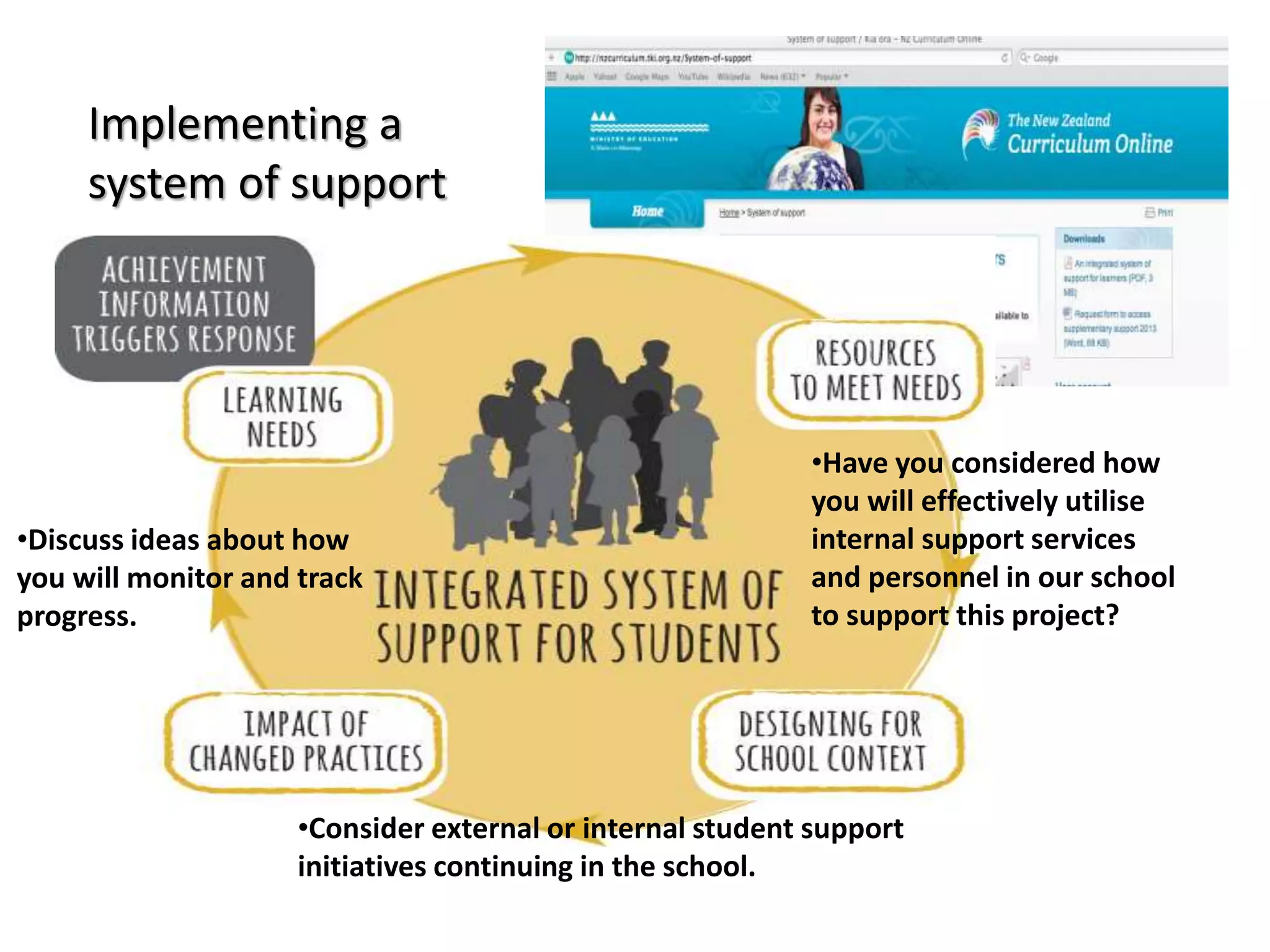
•Consider external or internal student support
initiatives continuing in the school.
•Have you considered how
you will effectively utilise
internal support services
and personnel in our school
to support this project?
•Discuss ideas about how
you will monitor and track
progress.
Curriculum and Achievement Plan
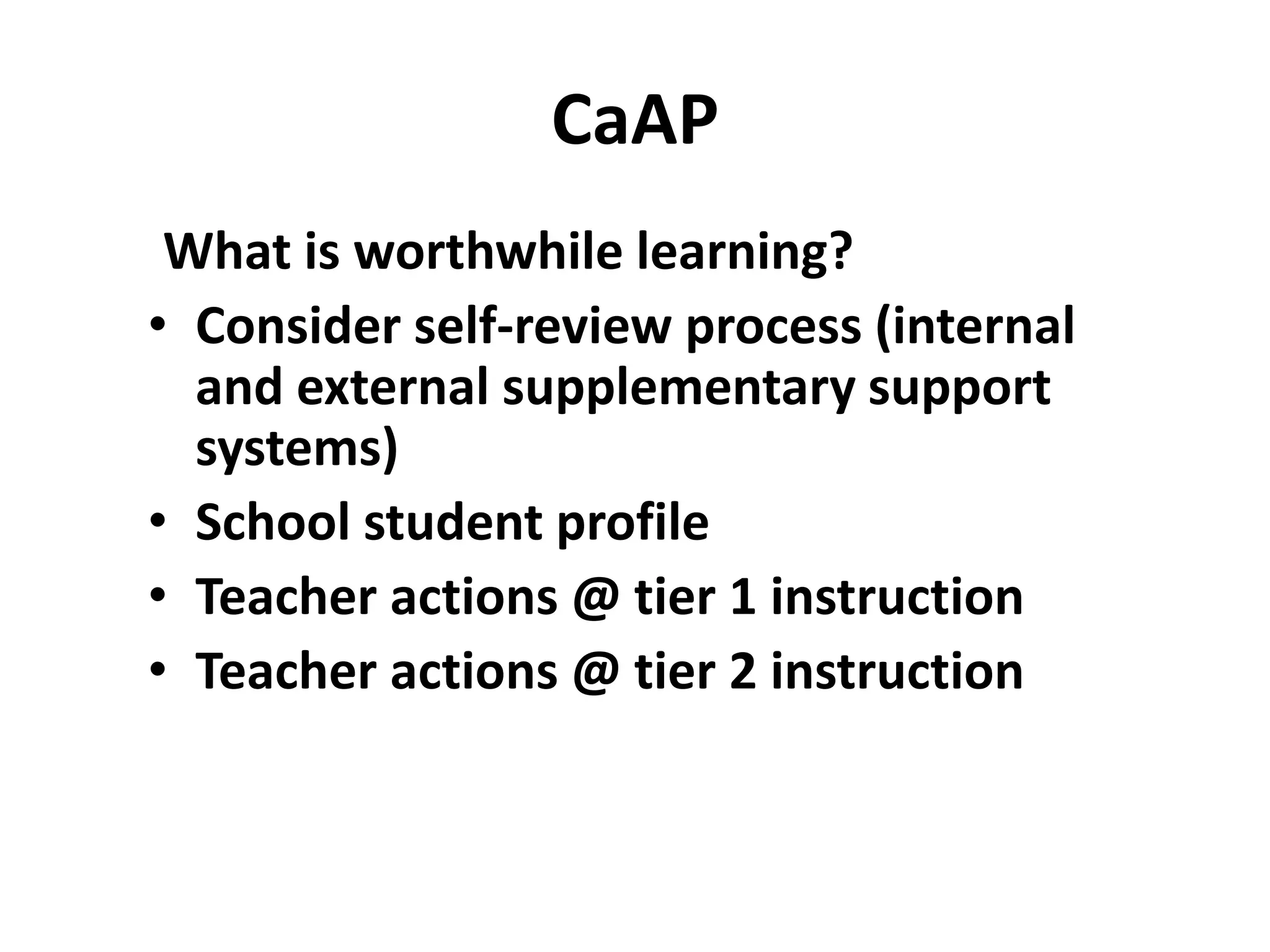
What is worthwhile learning?
• Consider self-review process (internal
and external supplementary support
systems)
• School student profile
• Teacher actions @ tier 1 instruction
• Teacher actions @ tier 2 instruction
CaAP
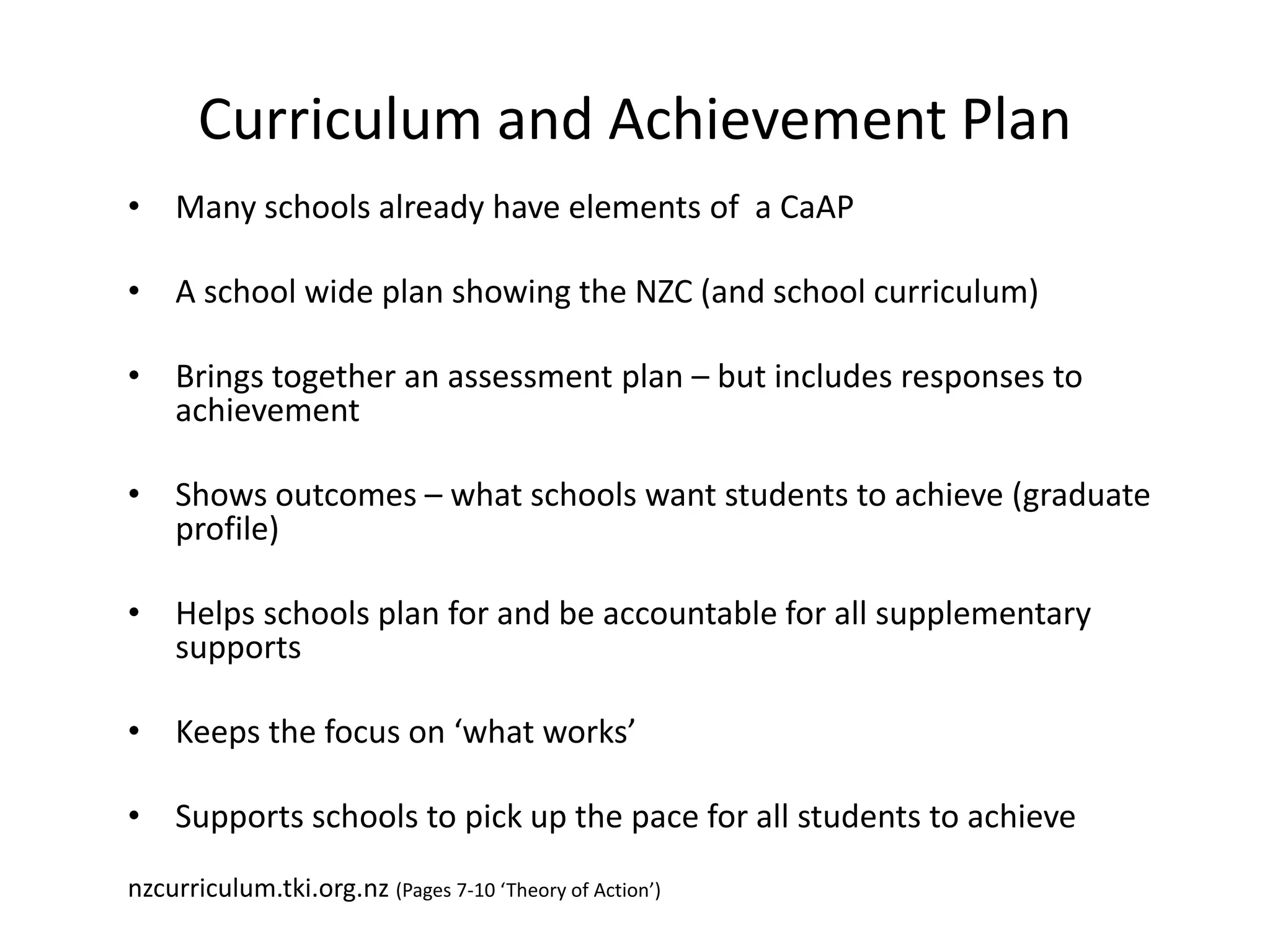
Curriculum and Achievement Plan
• Many schools already have elements of a CaAP
• A school wide plan showing the NZC (and school curriculum)
• Brings together an assessment plan – but includes responses to
achievement
• Shows outcomes – what schools want students to achieve (graduate
profile)
• Helps schools plan for and be accountable for all supplementary
supports
• Keeps the focus on ‘what works’
• Supports schools to pick up the pace for all students to achieve
nzcurriculum.tki.org.nz (Pages 7-10 ‘Theory of Action’)
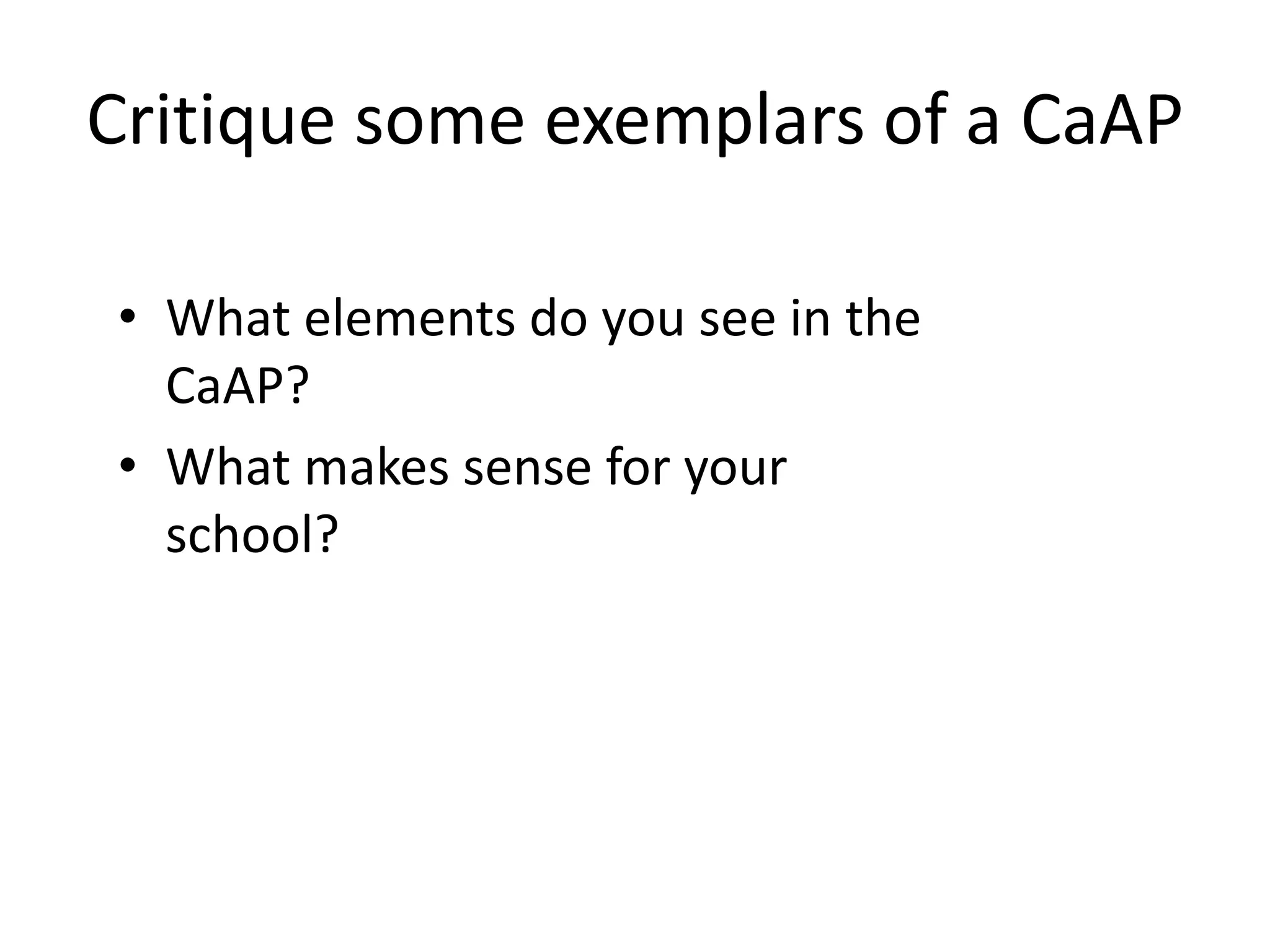
Critique some exemplars of a CaAP
• What elements do you see in the
CaAP?
• What makes sense for your
school?
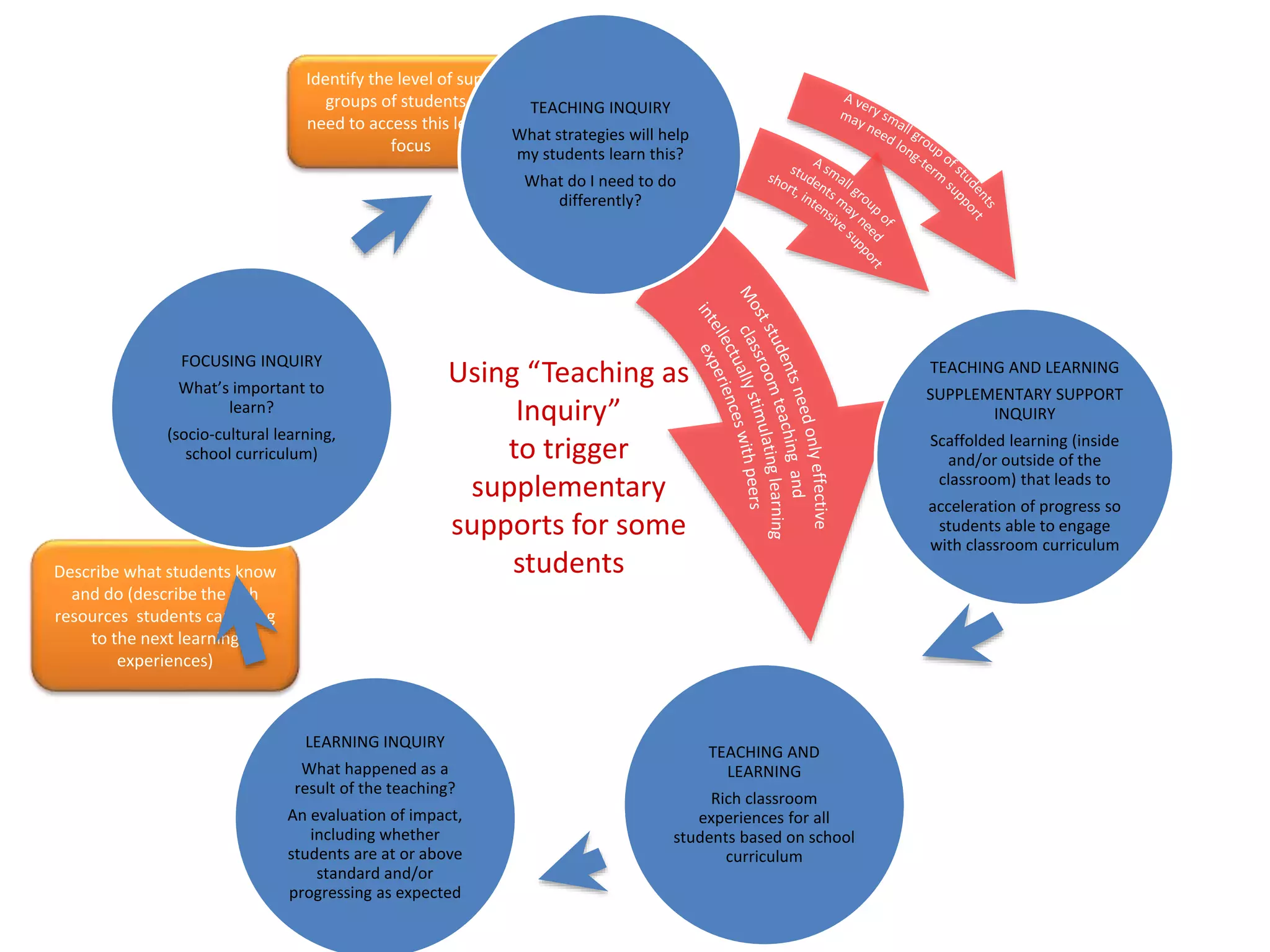
Identify the level of support
groups of students will
need to access this learning
focus
Describe what students know
and do (describe the rich
resources students can bring
to the next learning
experiences)
TEACHING INQUIRY
What strategies will help
my students learn this?
What do I need to do
differently?
TEACHING AND LEARNING
SUPPLEMENTARY SUPPORT
INQUIRY
Scaffolded learning (inside
and/or outside of the
classroom) that leads to
acceleration of progress so
students able to engage
with classroom curriculum
TEACHING AND
LEARNING
Rich classroom
experiences for all
students based on school
curriculum
LEARNING INQUIRY
What happened as a
result of the teaching?
An evaluation of impact,
including whether
students are at or above
standard and/or
progressing as expected
FOCUSING INQUIRY
What’s important to
learn?
(socio-cultural learning,
school curriculum)
Using “Teaching as
Inquiry”
to trigger
supplementary
supports for some
students
How effectively and appropriately does your
school choose a cost-effective mix of
approaches and interventions for our students
achieving below curriculum expectations in
literacy?
Discuss what actions you have taken or intend
to take to move along the continuum to
improve your current rating
Rubric 6: Is ALL the right choice?

All c aa p 2015

  • 1.
    ALL Year 1Inquiry “What is acceleration and how do we achieve it?”
  • 2.
    ALL Year 2&3Inquiry “How do we develop effective intervention practices that sustain students acceleration and ensure intervention coherence at a school-wide level?
  • 3.
    Acceleration Acceleration is describedas the learner’s progress showing a ; noticeably faster upward movement that might otherwise be expected by the trend of their own past learning; and is progressing faster than classmates progressing at expected rates in order to catch them up. This rate of progress brings the learner’s achievement level to that consistent with, or beyond , a set of benchmarks or standards (NZ Curriculum Reading, Writing standards)
  • 4.
    Implementing a system ofsupport •Consider external or internal student support initiatives continuing in the school. •Have you considered how you will effectively utilise internal support services and personnel in our school to support this project? •Discuss ideas about how you will monitor and track progress.
  • 5.
  • 6.
    What is worthwhilelearning? • Consider self-review process (internal and external supplementary support systems) • School student profile • Teacher actions @ tier 1 instruction • Teacher actions @ tier 2 instruction CaAP
  • 7.
    Curriculum and AchievementPlan • Many schools already have elements of a CaAP • A school wide plan showing the NZC (and school curriculum) • Brings together an assessment plan – but includes responses to achievement • Shows outcomes – what schools want students to achieve (graduate profile) • Helps schools plan for and be accountable for all supplementary supports • Keeps the focus on ‘what works’ • Supports schools to pick up the pace for all students to achieve nzcurriculum.tki.org.nz (Pages 7-10 ‘Theory of Action’)
  • 9.
    Critique some exemplarsof a CaAP • What elements do you see in the CaAP? • What makes sense for your school?
  • 10.
    Identify the levelof support groups of students will need to access this learning focus Describe what students know and do (describe the rich resources students can bring to the next learning experiences) TEACHING INQUIRY What strategies will help my students learn this? What do I need to do differently? TEACHING AND LEARNING SUPPLEMENTARY SUPPORT INQUIRY Scaffolded learning (inside and/or outside of the classroom) that leads to acceleration of progress so students able to engage with classroom curriculum TEACHING AND LEARNING Rich classroom experiences for all students based on school curriculum LEARNING INQUIRY What happened as a result of the teaching? An evaluation of impact, including whether students are at or above standard and/or progressing as expected FOCUSING INQUIRY What’s important to learn? (socio-cultural learning, school curriculum) Using “Teaching as Inquiry” to trigger supplementary supports for some students
  • 11.
    How effectively andappropriately does your school choose a cost-effective mix of approaches and interventions for our students achieving below curriculum expectations in literacy? Discuss what actions you have taken or intend to take to move along the continuum to improve your current rating Rubric 6: Is ALL the right choice?

Editor's Notes

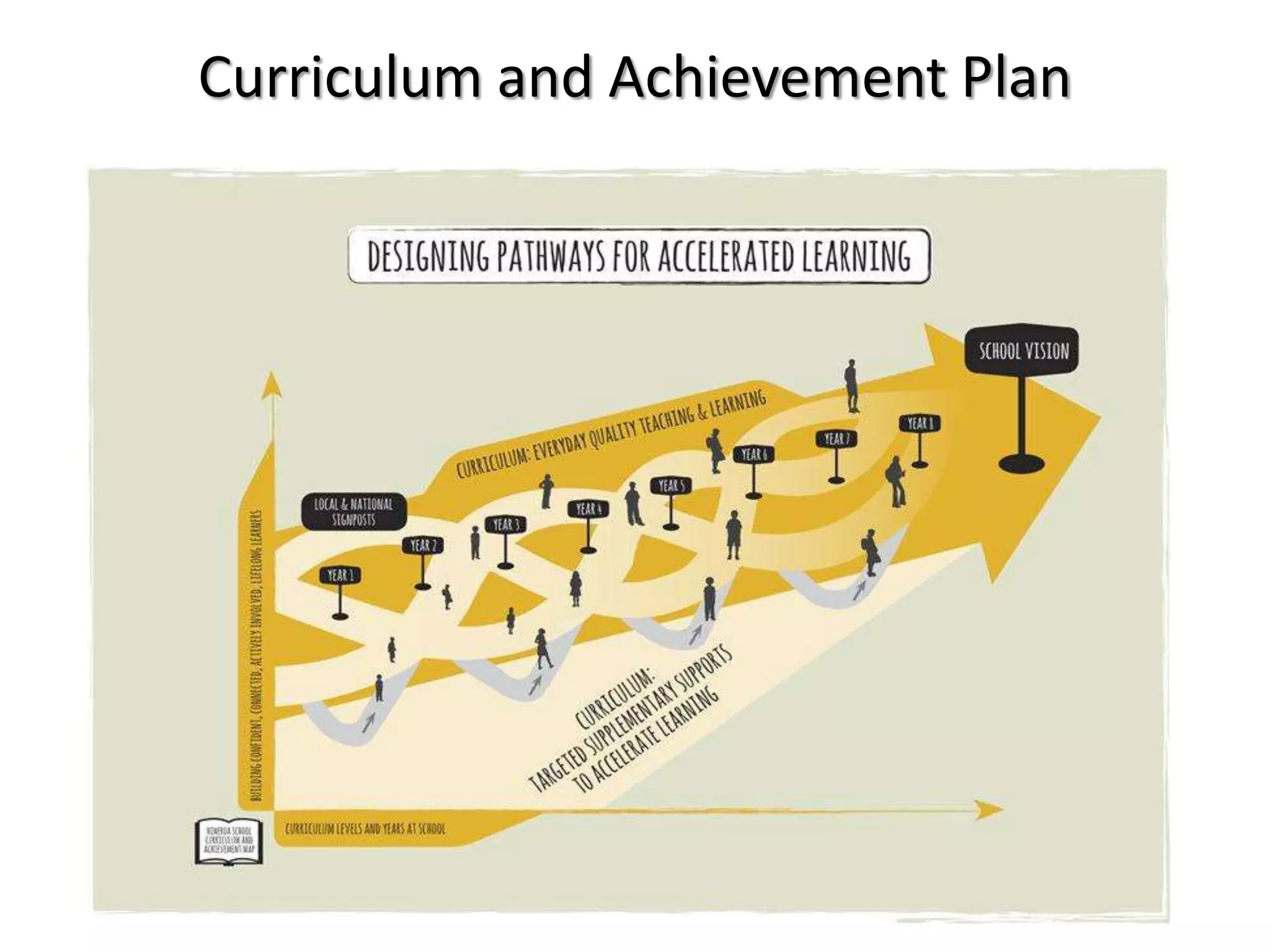
  • #6 Read page 9 – Abridged Theory of Action This diagram shows the pathway of progress for most students and the diversion from the expected pathway for some students. It highlights the need for a graduate profile for students in each school so that the pathways can be mapped for students who are not at expected levels. The options for students are shown.. Multiple pathways to success.. BUT also the need to consider those students walking along the grey path.. This is the basis of your Curriculum and Achievement Programme (described in a Plan) Three tiers of support – NZ curriculum update
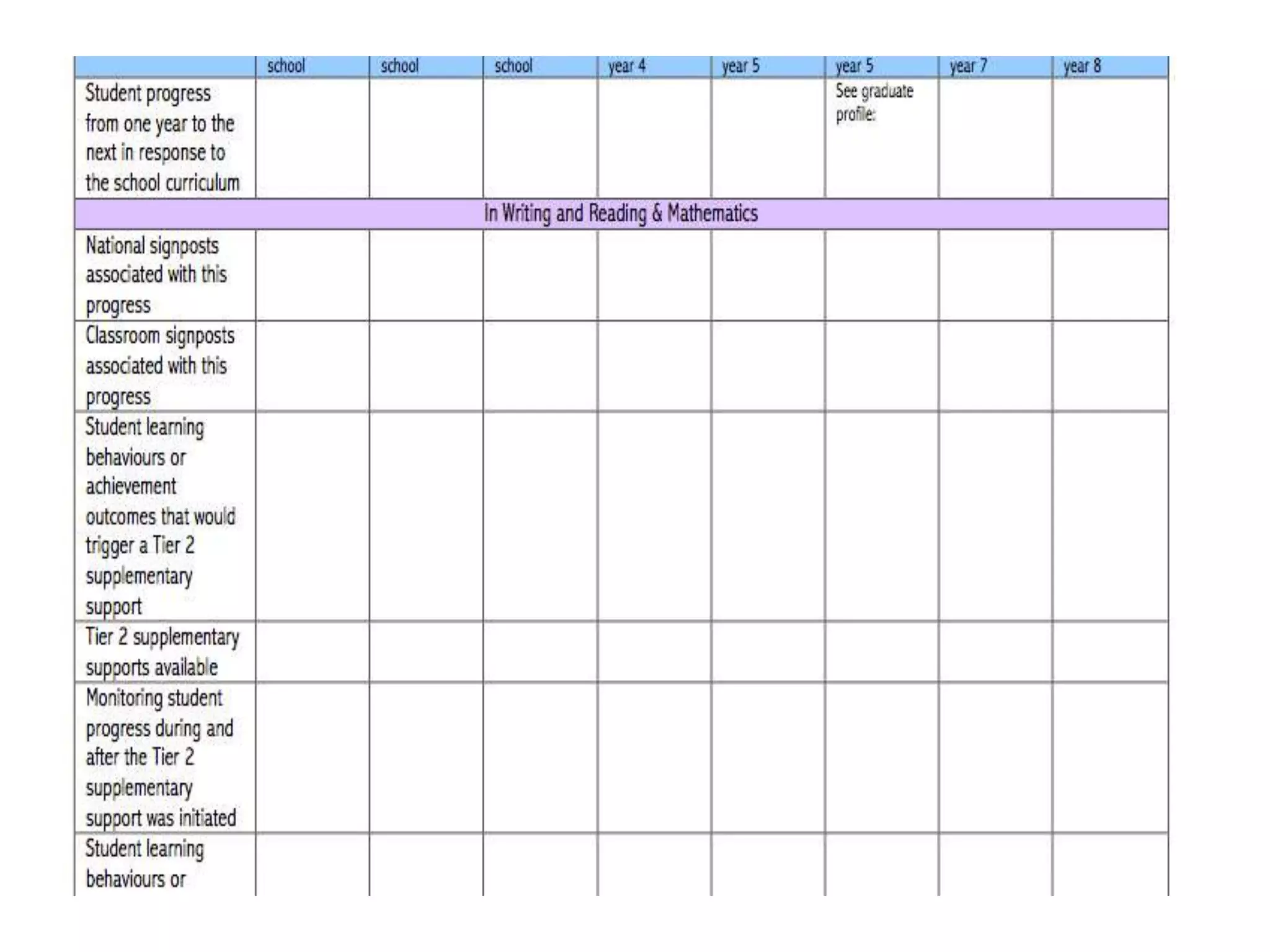
  • #8 Read pgs 9 – 12 in the Theory of Action. Note what will be achieved by having a Curriculum and Achievement Plan (CAAP) and the purpose of the plan – the bringing together of a school’s curriculum document and assessment documentation but showing what will be done in repsonse to students who are not meeting the NS. Focussing on what is worthwhile learning, what is achievement and what responses will occur as a result of students not achieving? Some schoosl attempted plans in 2013 and mapped what they already did. The important part of a CAAP is the critique of what has usually been the response to an underachievemnt trigger and what actually the response needs to be to meet the need identified. Refer to diagram pg 12 and find on line questions and diagram on http://nzcurriculum.tki.org.nz/System-of-support-incl.-PLD/School-initiated-supports/Accelerated-Learning-in-Literacy-Mathematics