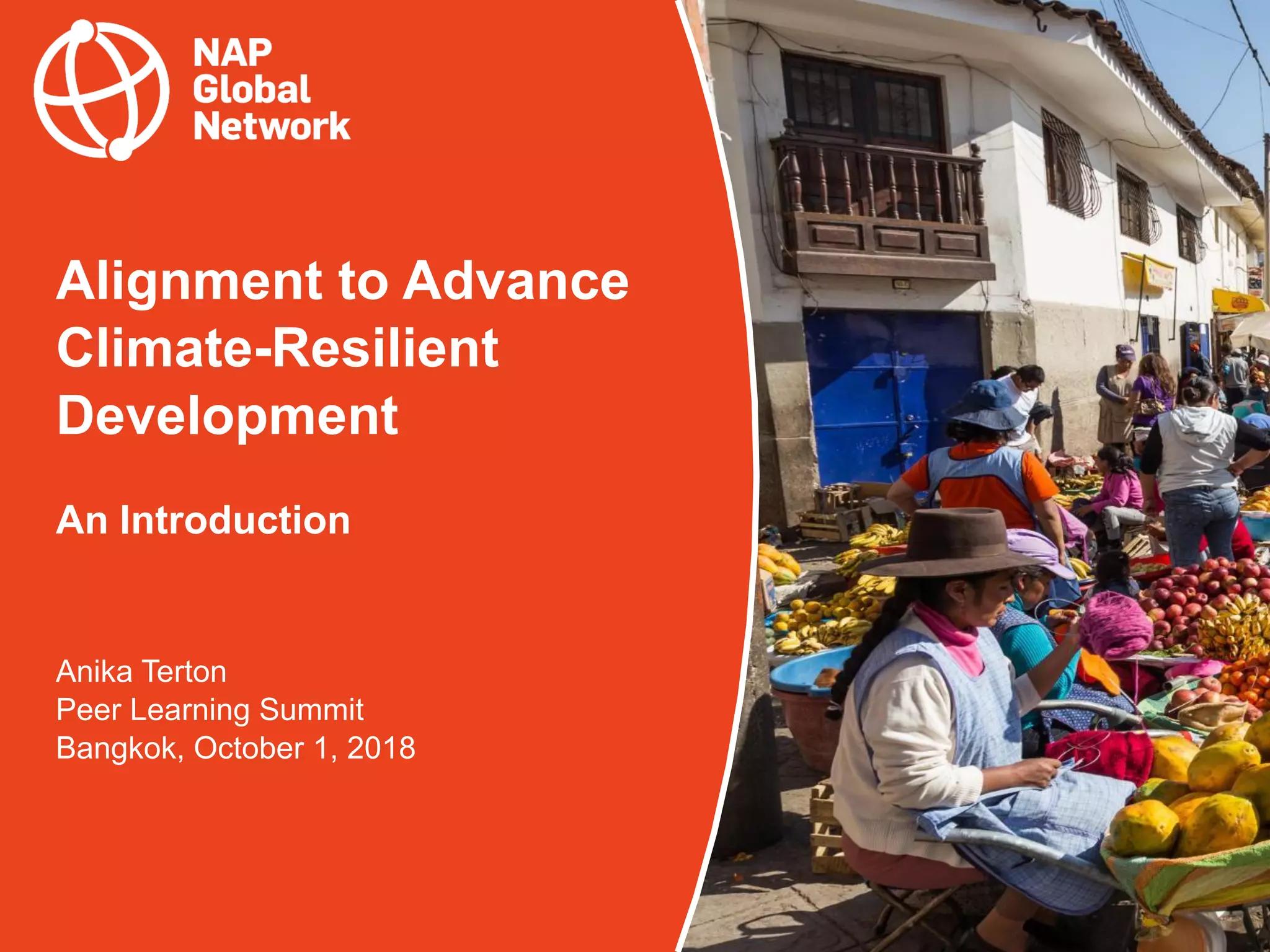
Alignment to Advance
Climate-Resilient
Development
An Introduction
Anika Terton
Peer Learning Summit
Bangkok, October 1, 2018
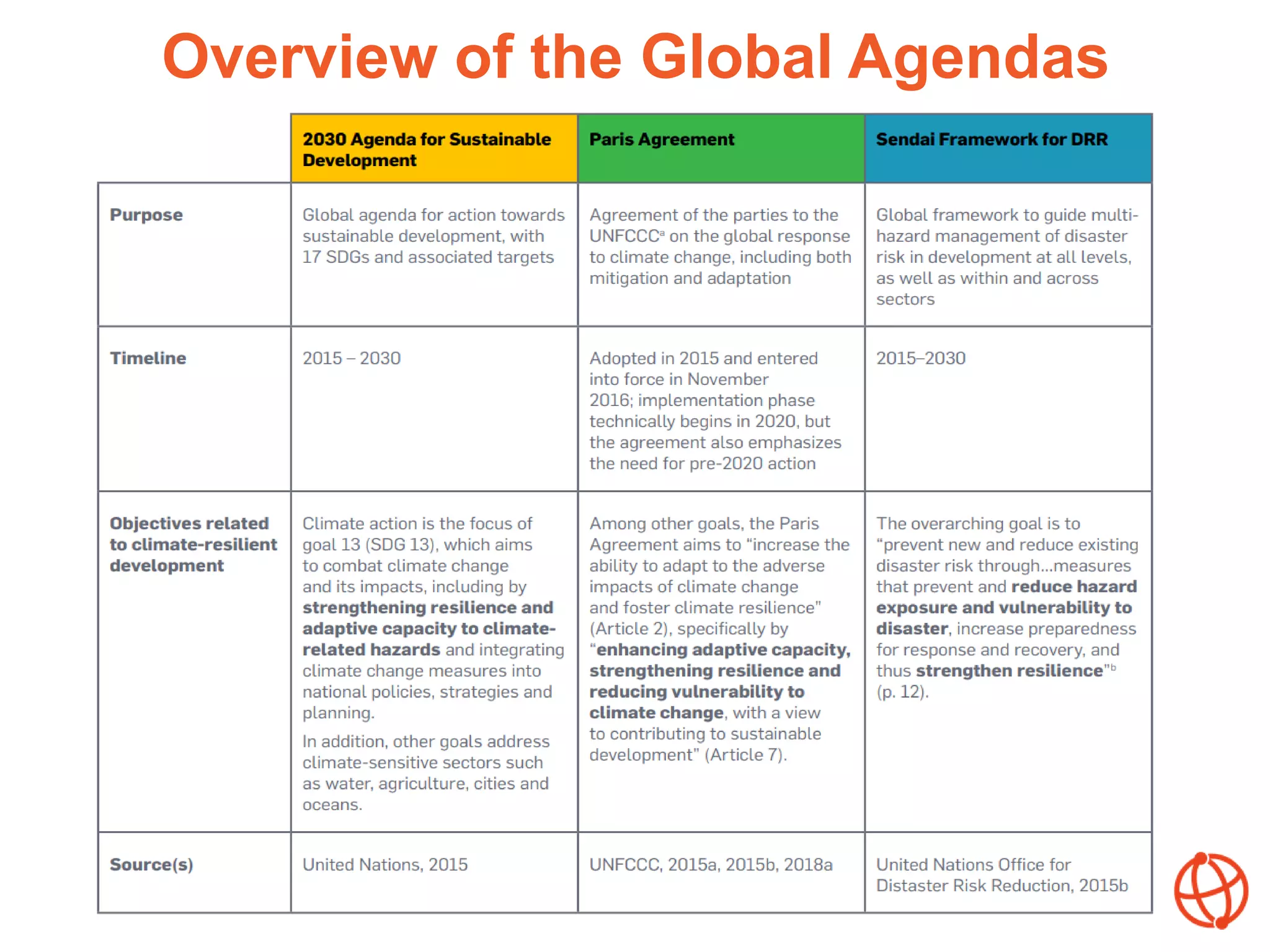
Overview of the Global Agendas
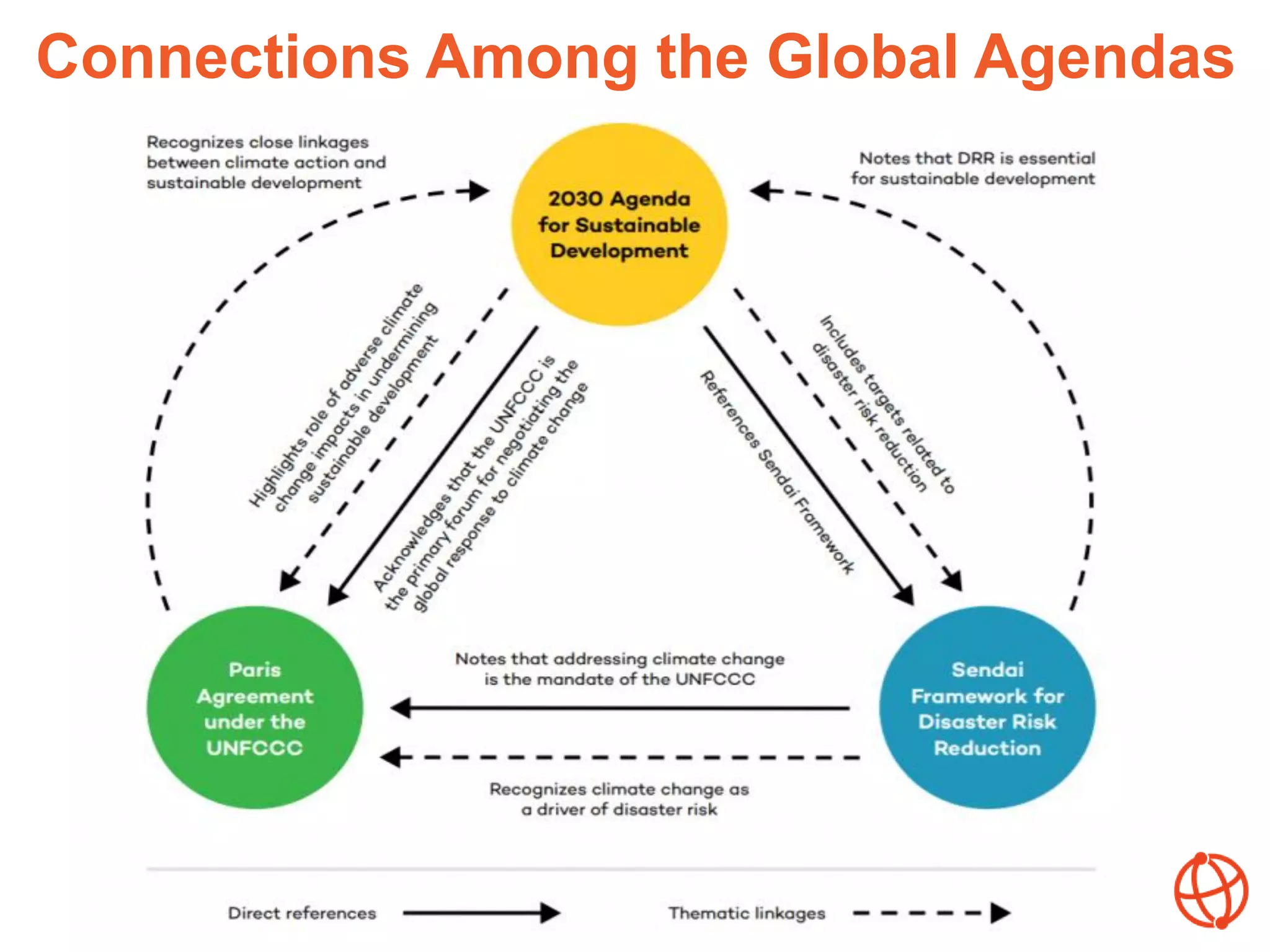
Connections Among the Global Agendas
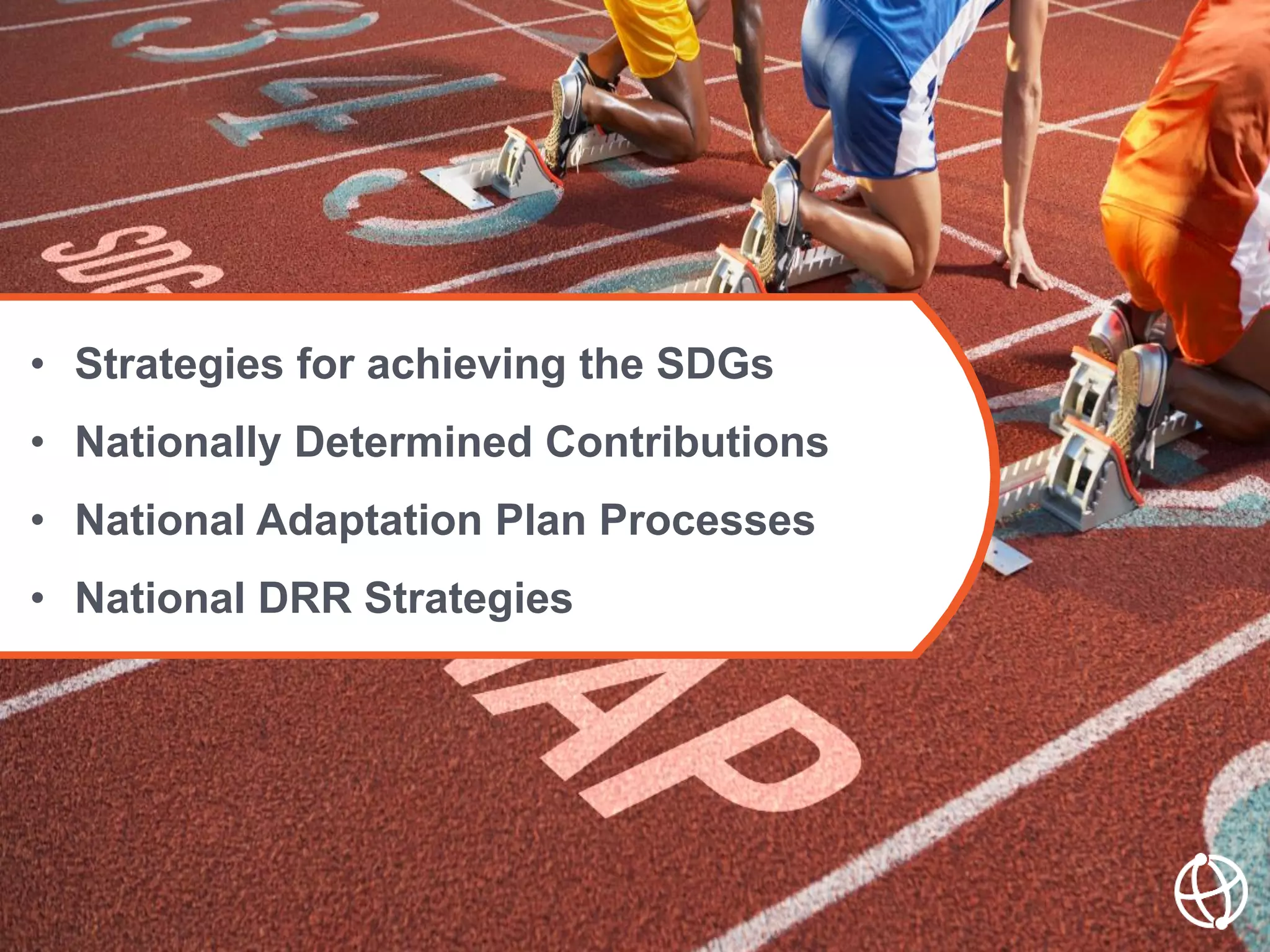
• Strategies for achieving the SDGs
• Nationally Determined Contributions
• National Adaptation Plan Processes
• National DRR Strategies
Definition:
Alignment is the process of
identifying synergies among policy
processes with common objectives to
increase efficiency and effectiveness
for improved outcomes.
Alignment can increase:
• Coherence
• Efficiency
• Effectiveness
What is Alignment?
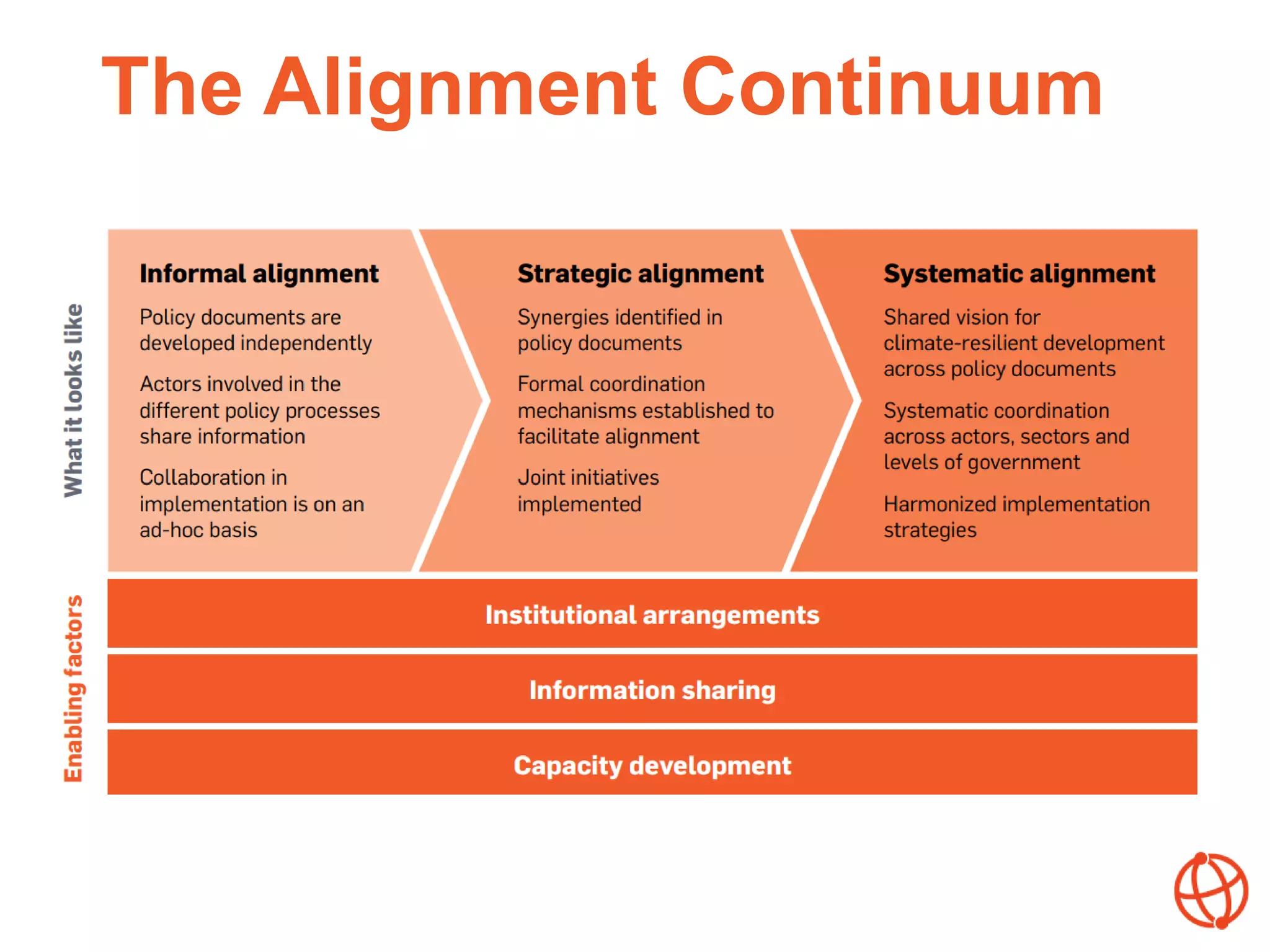
The Alignment Continuum
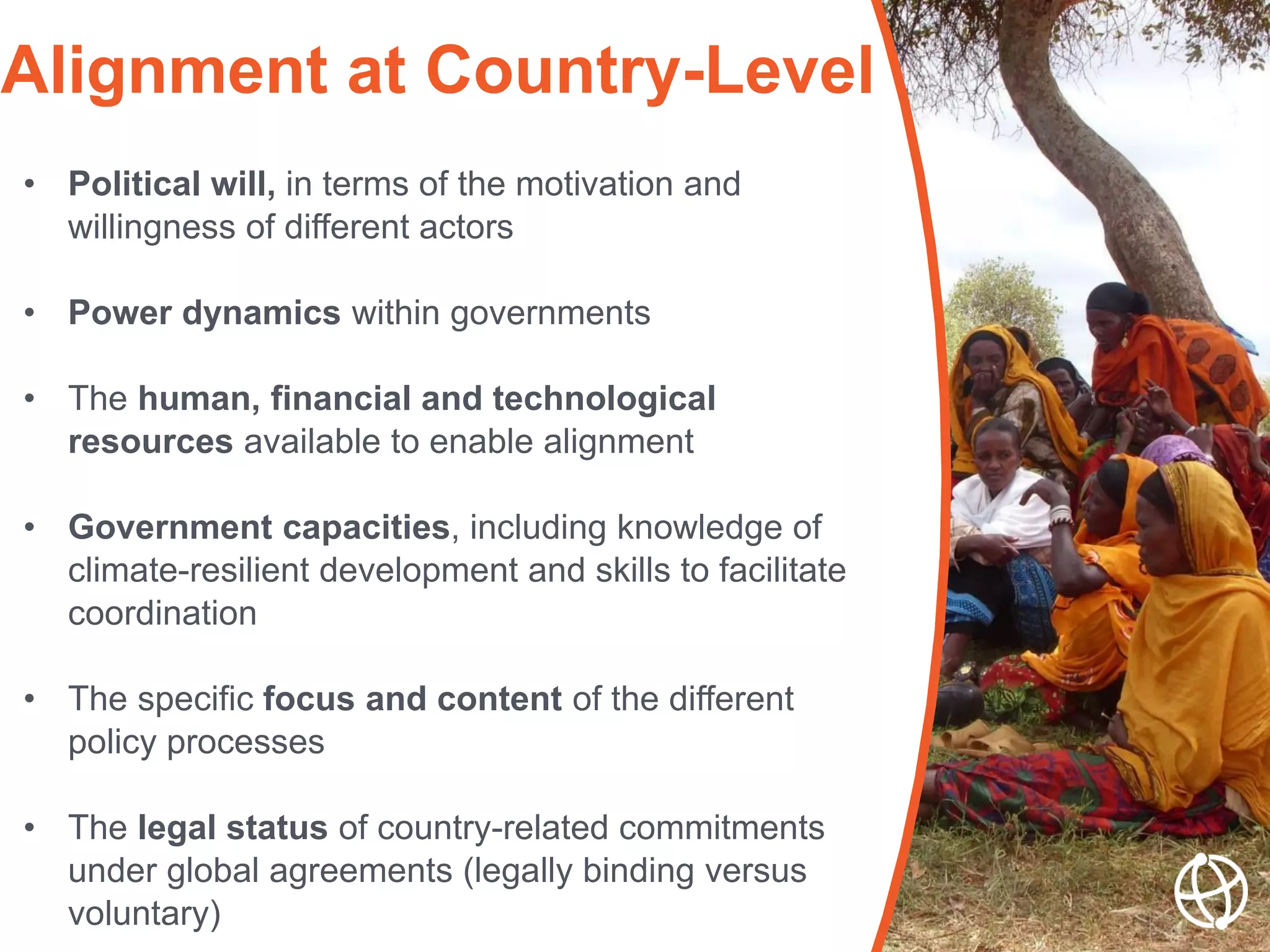
• Political will, in terms of the motivation and
willingness of different actors
• Power dynamics within governments
• The human, financial and technological
resources available to enable alignment
• Government capacities, including knowledge of
climate-resilient development and skills to facilitate
coordination
• The specific focus and content of the different
policy processes
• The legal status of country-related commitments
under global agreements (legally binding versus
voluntary)
Alignment at Country-Level
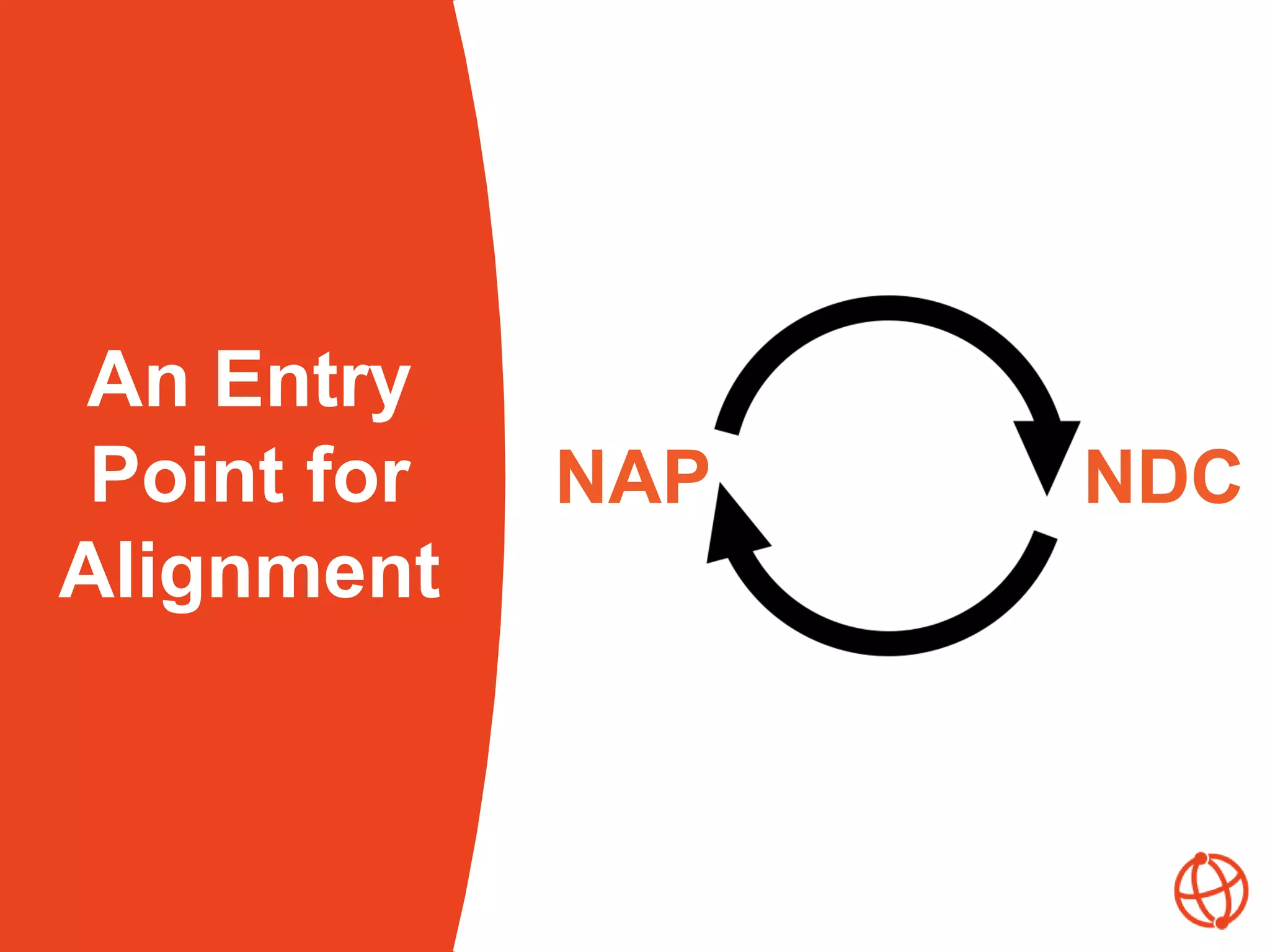
An Entry
Point for
Alignment
NAP NDC
Key Messages
➢ Alignment of country-level policy processes
under the 2030 Agenda, the Paris Agreement and
the Sendai Framework can help to advance
climate-resilient development.
➢ At the global level, these agendas share
objectives to strengthen resilience, build
adaptive capacity and reduce vulnerability to
climate change and disasters, creating a strong
rationale for alignment.
➢ Alignment can increase coherence, efficiency
and effectiveness in country policy processes for
improved outcomes.
➢ Progress on alignment may follow a continuum
from informal to systematic.
www.napglobalnetwork.org
info@napglobalnetwork.org
Twitter: @NAP_Network

Alignment to Advance Climate-Resilient Development: An Introduction

  • 1.
    Alignment to Advance Climate-Resilient Development AnIntroduction Anika Terton Peer Learning Summit Bangkok, October 1, 2018
  • 2.
    Overview of theGlobal Agendas
  • 3.
    Connections Among theGlobal Agendas
  • 4.
    • Strategies forachieving the SDGs • Nationally Determined Contributions • National Adaptation Plan Processes • National DRR Strategies
  • 5.
    Definition: Alignment is theprocess of identifying synergies among policy processes with common objectives to increase efficiency and effectiveness for improved outcomes. Alignment can increase: • Coherence • Efficiency • Effectiveness What is Alignment?
  • 6.
  • 7.
    • Political will,in terms of the motivation and willingness of different actors • Power dynamics within governments • The human, financial and technological resources available to enable alignment • Government capacities, including knowledge of climate-resilient development and skills to facilitate coordination • The specific focus and content of the different policy processes • The legal status of country-related commitments under global agreements (legally binding versus voluntary) Alignment at Country-Level
  • 8.
  • 9.
    Key Messages ➢ Alignmentof country-level policy processes under the 2030 Agenda, the Paris Agreement and the Sendai Framework can help to advance climate-resilient development. ➢ At the global level, these agendas share objectives to strengthen resilience, build adaptive capacity and reduce vulnerability to climate change and disasters, creating a strong rationale for alignment. ➢ Alignment can increase coherence, efficiency and effectiveness in country policy processes for improved outcomes. ➢ Progress on alignment may follow a continuum from informal to systematic.
  • 10.