Pragmatic
Algorithmic Auditing 1.0
2020 Copyright QuantUniversity LLC.
Presented By:
Sri Krishnamurthy, CFA, CAP
sri@quantuniversity.com
www.quantuniversity.com
Data Club
Northeastern University
2
Speaker bio
• Advisory and Consultancy for Financial
Analytics
• Prior Experience at MathWorks, Citigroup
and Endeca and 25+ financial services and
energy customers.
• Columnist for the Wilmott Magazine
• Author of forthcoming book
“Pragmatic AI and ML in Finance”
• Teaches AI/ML and Fintech Related topics in
the MS and MBA programs at Northeastern
University, Boston
• Reviewer: Journal of Asset Management
Sri Krishnamurthy
Founder and CEO
QuantUniversity
3
QuantUniversity
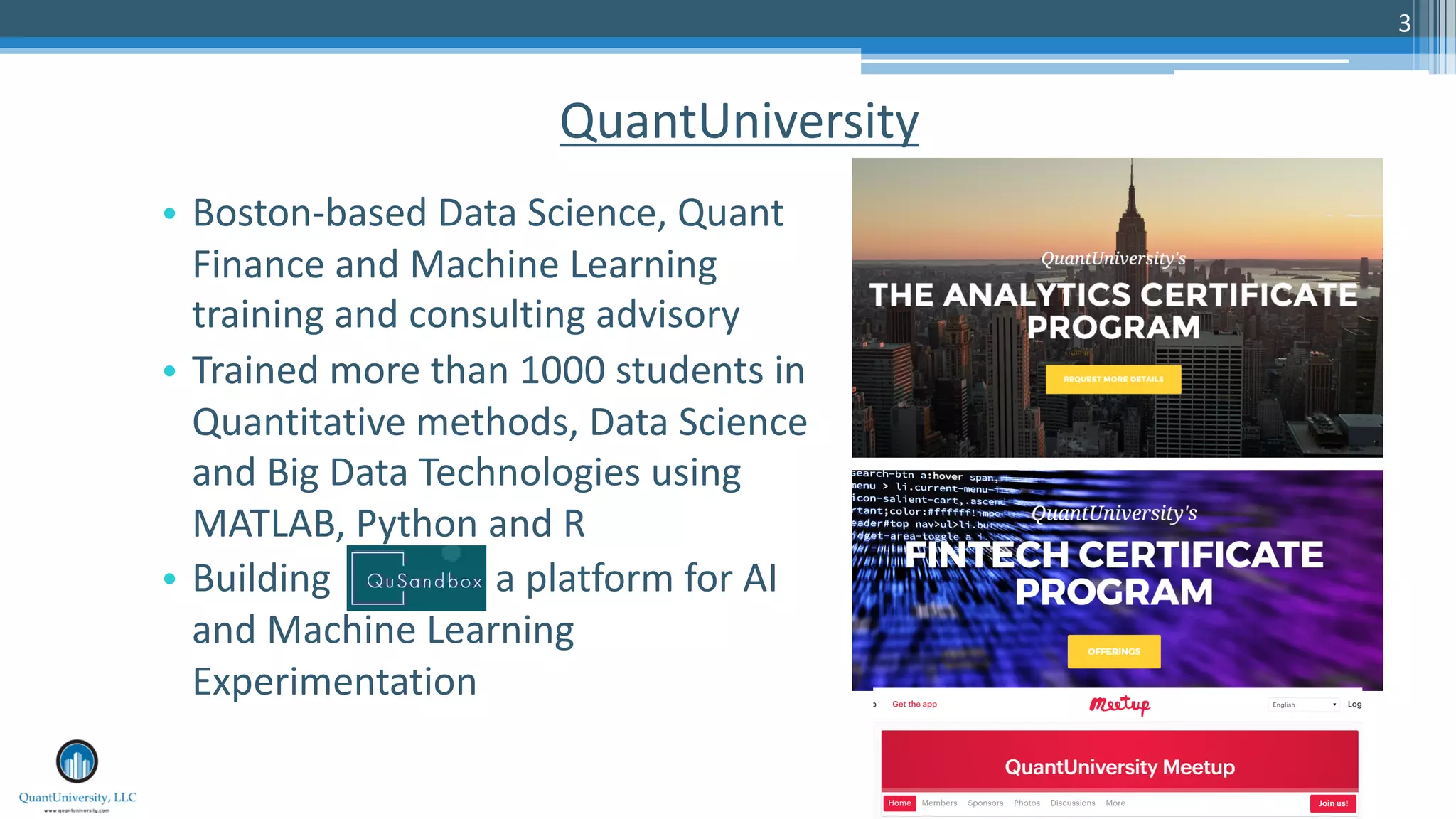
• Boston-based Data Science, Quant
Finance and Machine Learning
training and consulting advisory
• Trained more than 1000 students in
Quantitative methods, Data Science
and Big Data Technologies using
MATLAB, Python and R
• Building a platform for AI
and Machine Learning
Experimentation
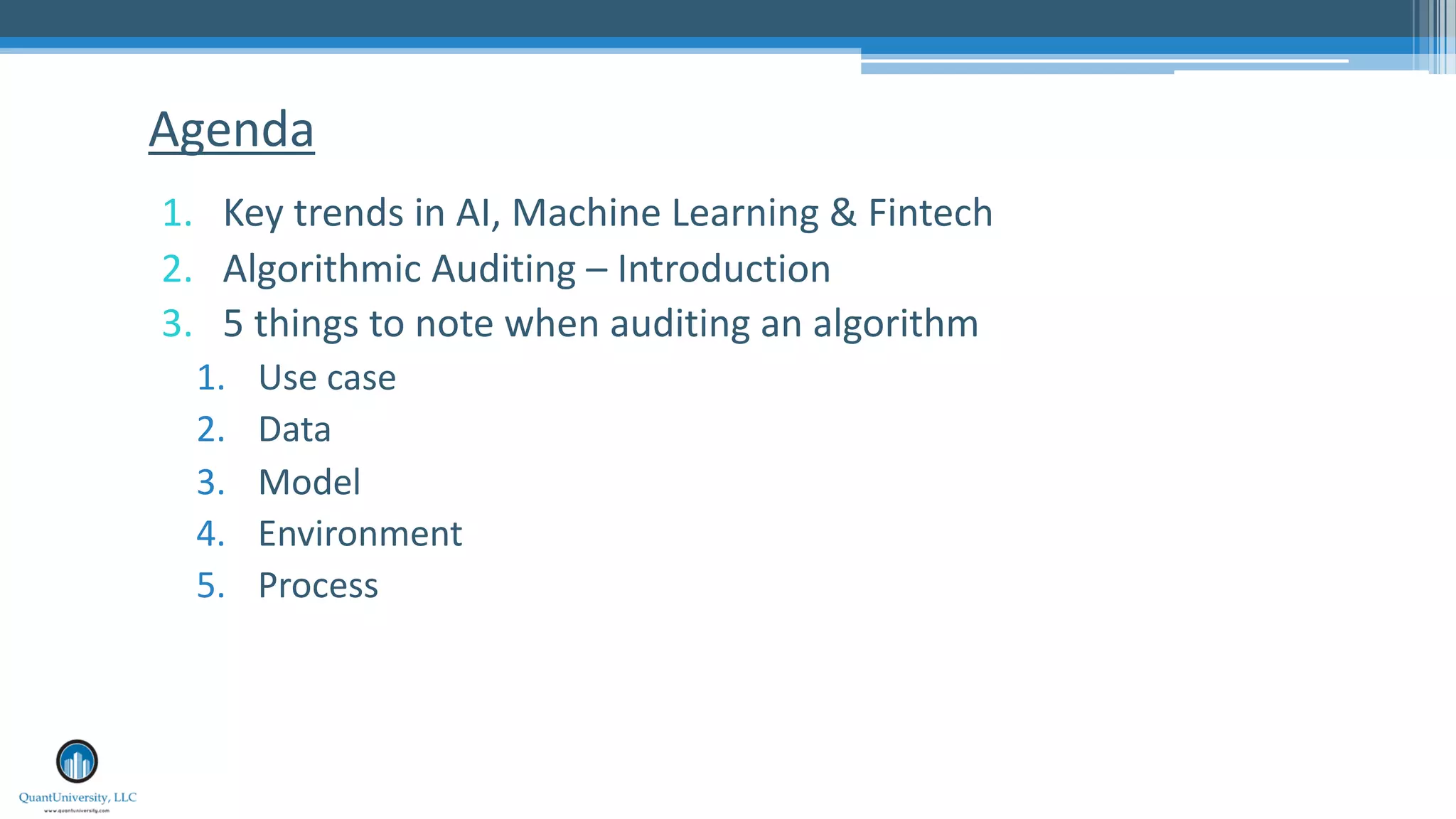
1. Key trends in AI, Machine Learning & Fintech
2. Algorithmic Auditing – Introduction
3. 5 things to note when auditing an algorithm
1. Use case
2. Data
3. Model
4. Environment
5. Process
Agenda
AI and Machine Learning in Finance
6
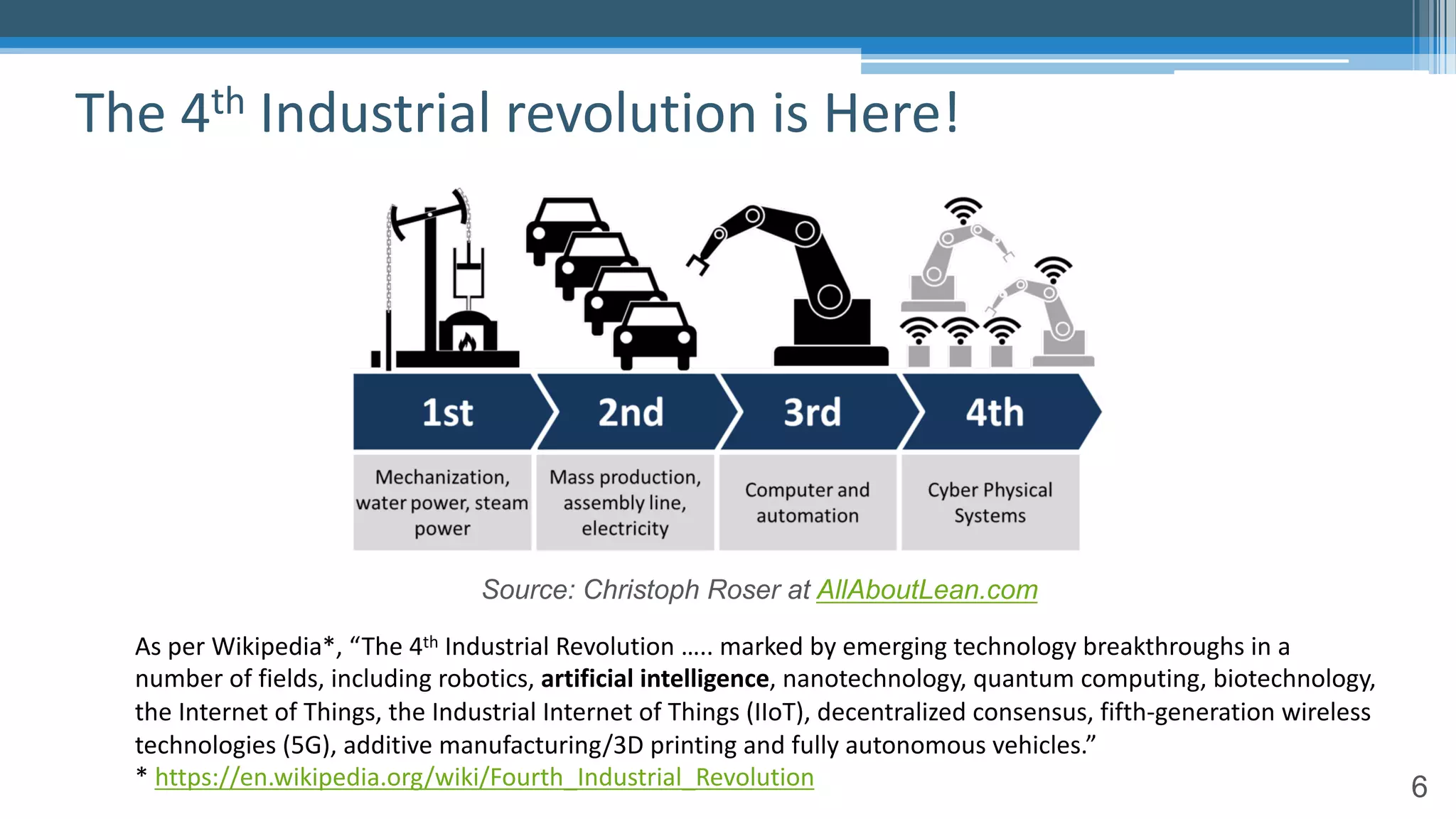
The 4th Industrial revolution is Here!
Source: Christoph Roser at AllAboutLean.com
As per Wikipedia*, “The 4th Industrial Revolution ….. marked by emerging technology breakthroughs in a
number of fields, including robotics, artificial intelligence, nanotechnology, quantum computing, biotechnology,
the Internet of Things, the Industrial Internet of Things (IIoT), decentralized consensus, fifth-generation wireless
technologies (5G), additive manufacturing/3D printing and fully autonomous vehicles.”
* https://en.wikipedia.org/wiki/Fourth_Industrial_Revolution
7
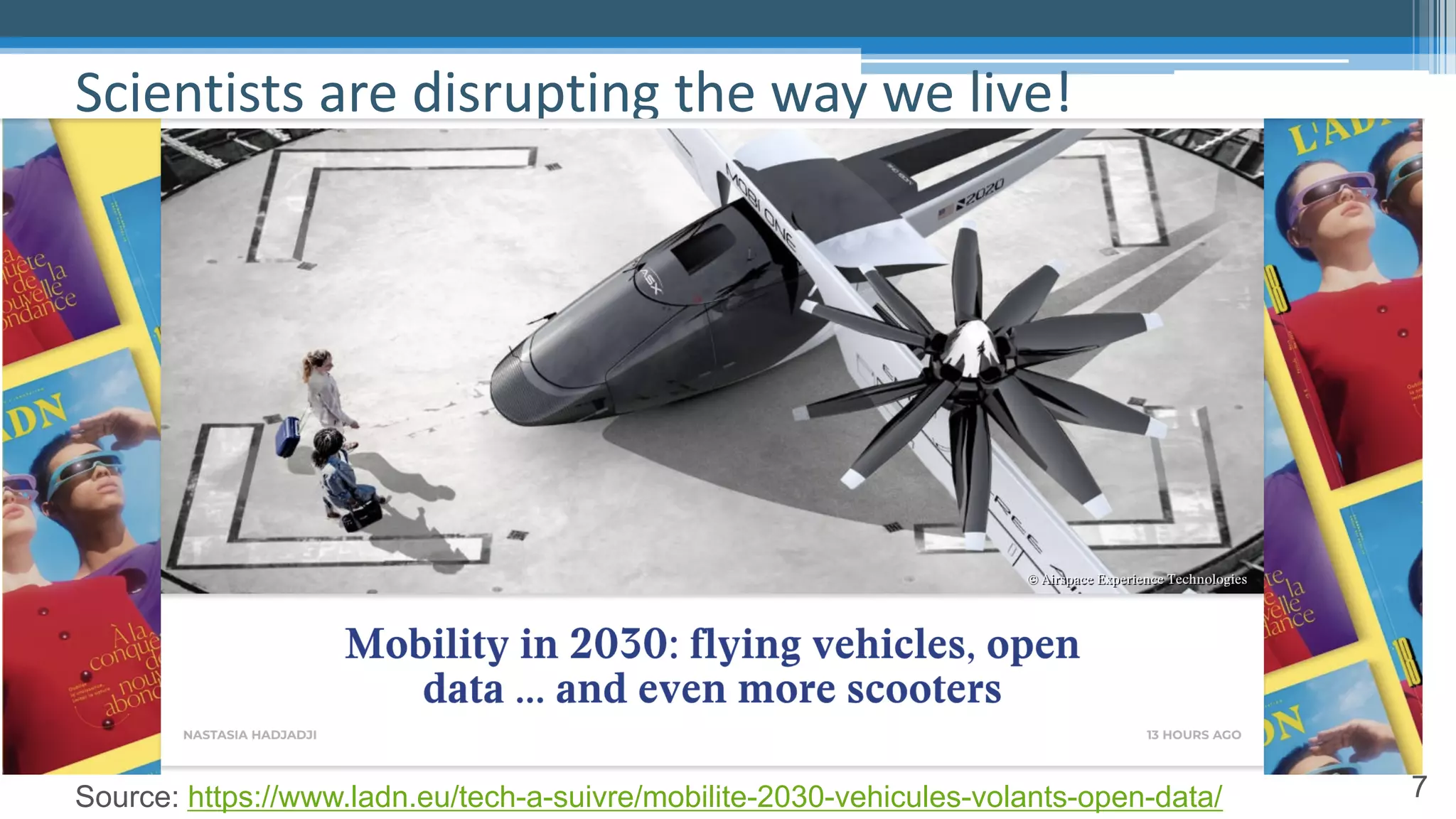
Scientists are disrupting the way we live!
Source: https://www.ladn.eu/tech-a-suivre/mobilite-2030-vehicules-volants-open-data/
8
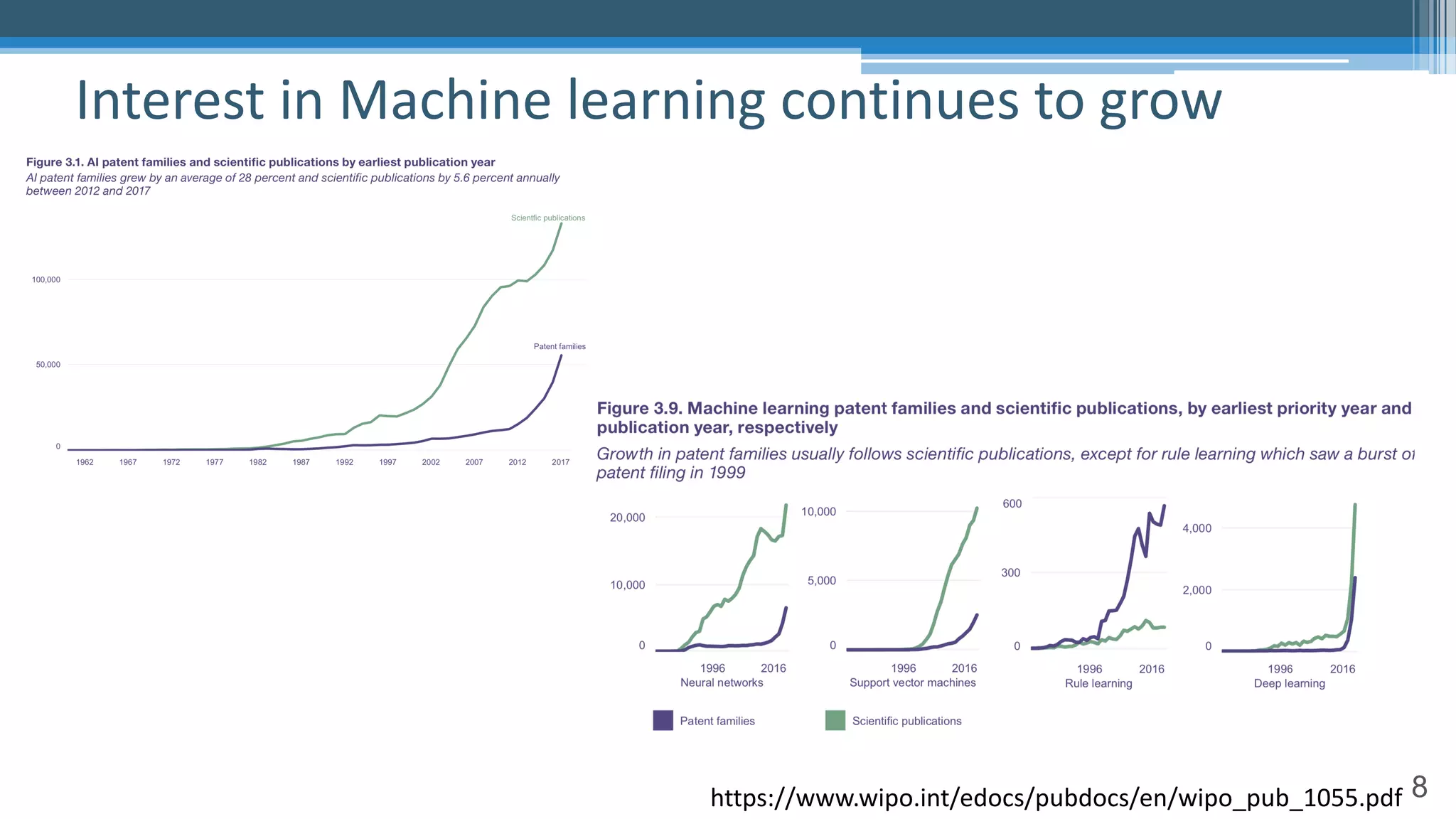
Interest in Machine learning continues to grow
https://www.wipo.int/edocs/pubdocs/en/wipo_pub_1055.pdf
9
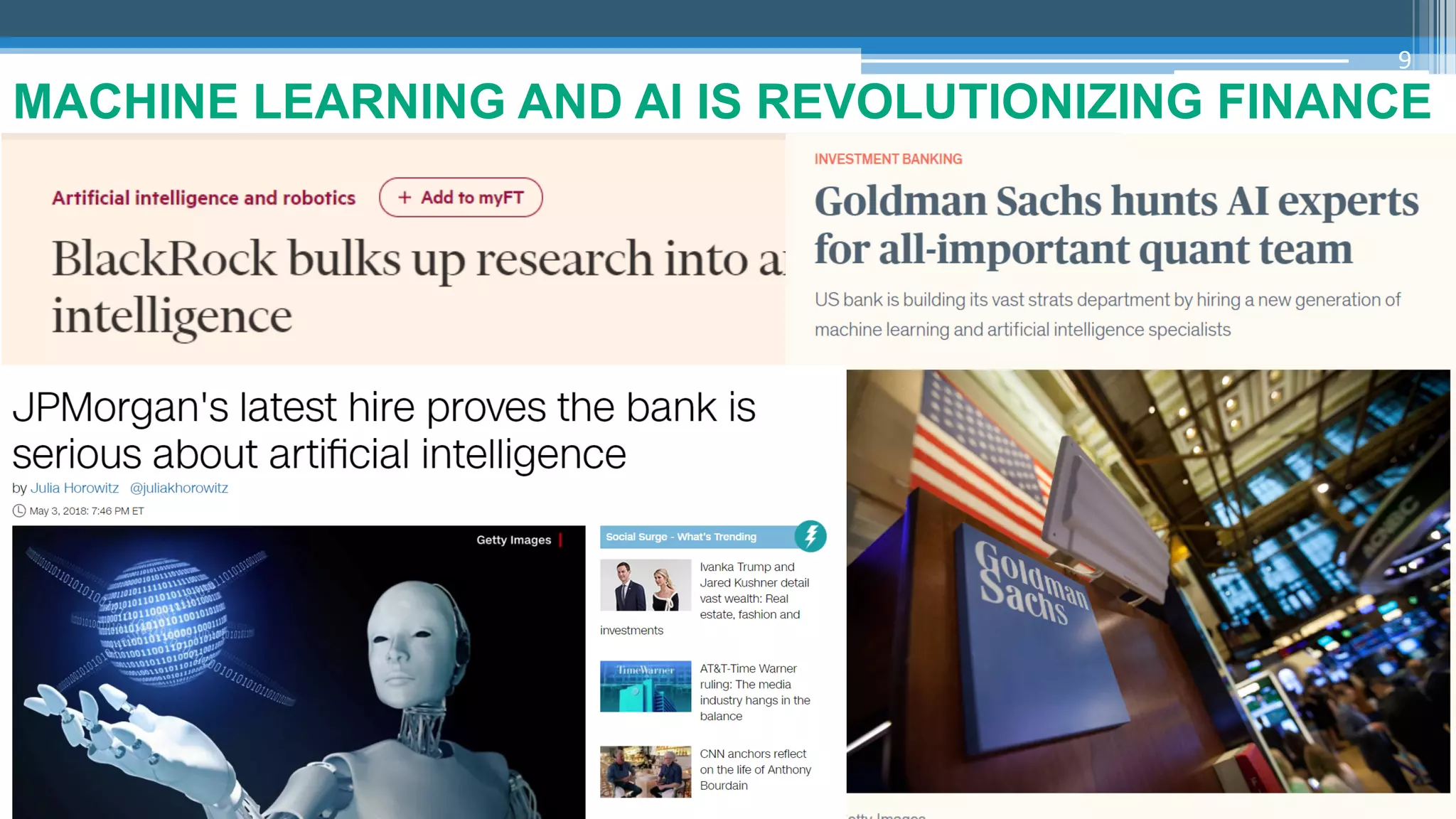
MACHINE LEARNING AND AI IS REVOLUTIONIZING FINANCE
10
11
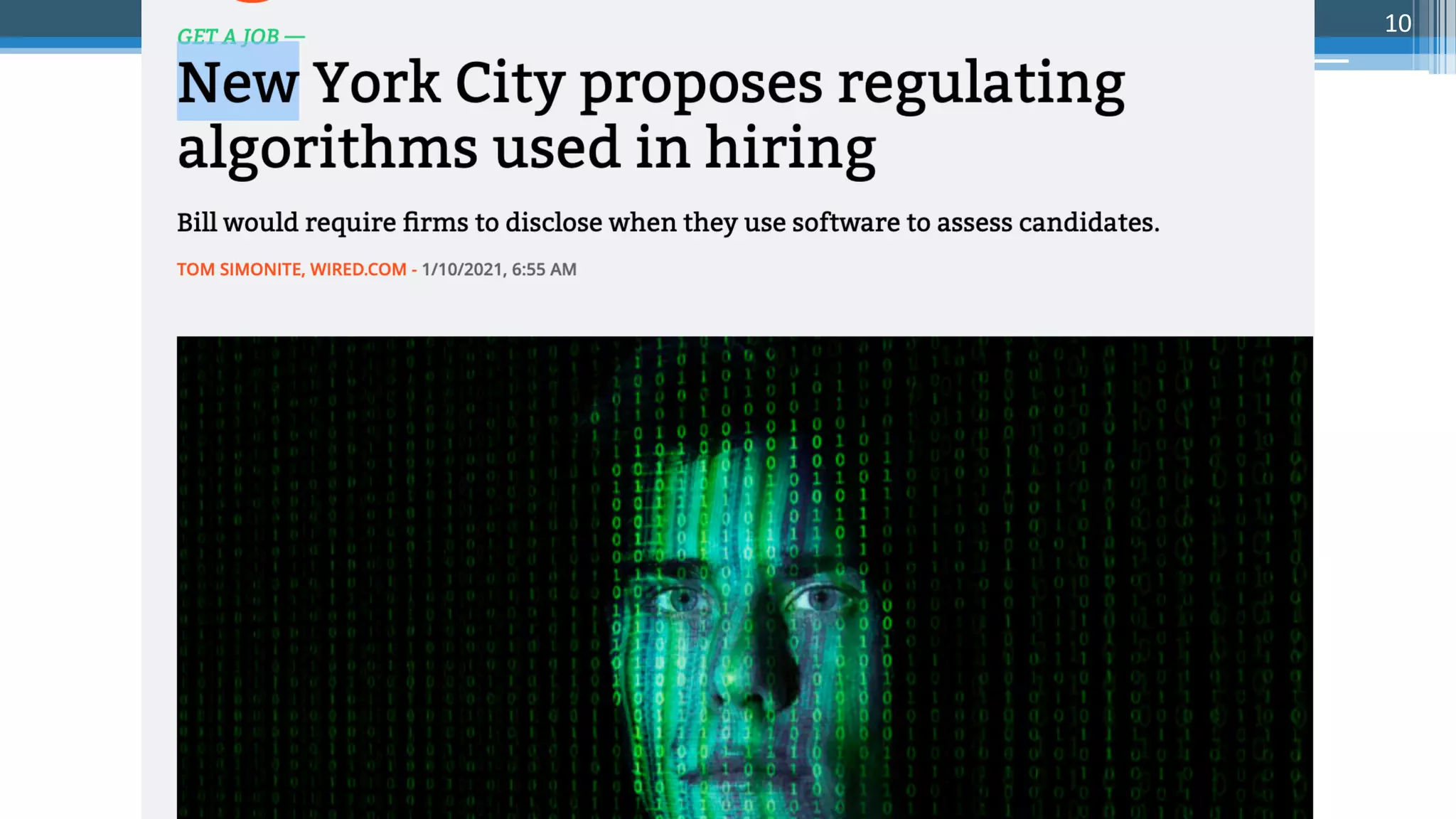
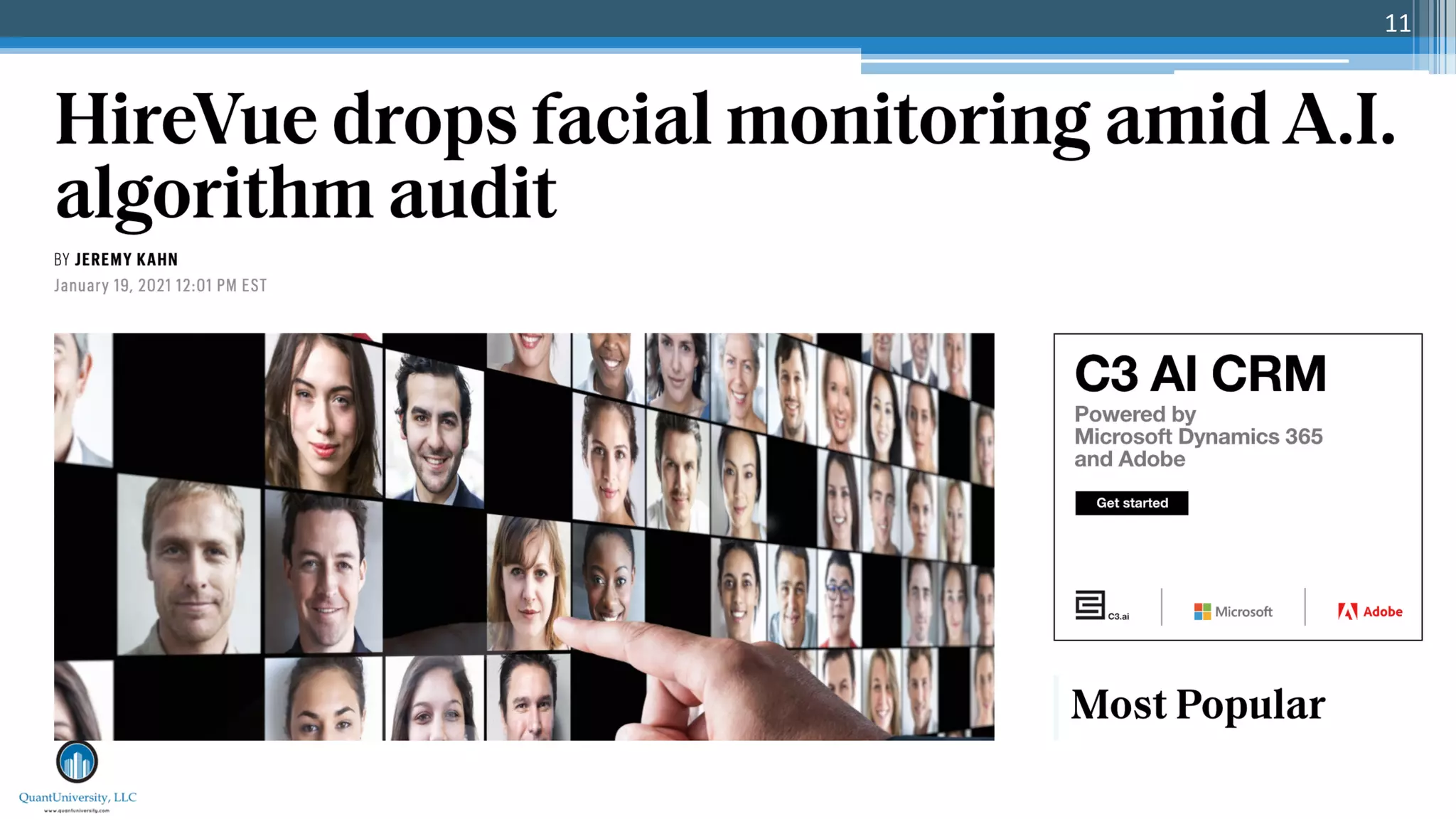
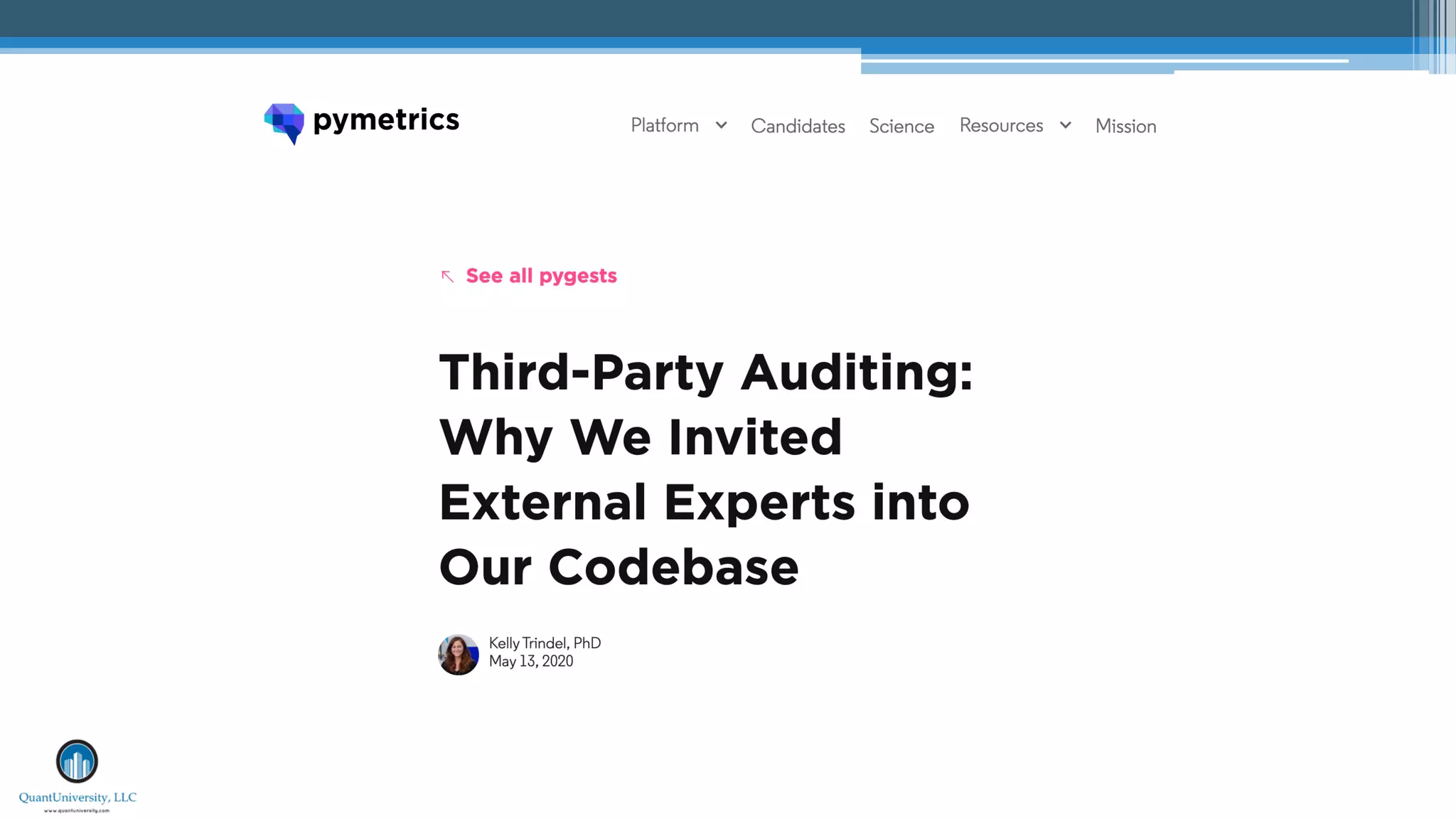
Algorithm Audits in the news
13
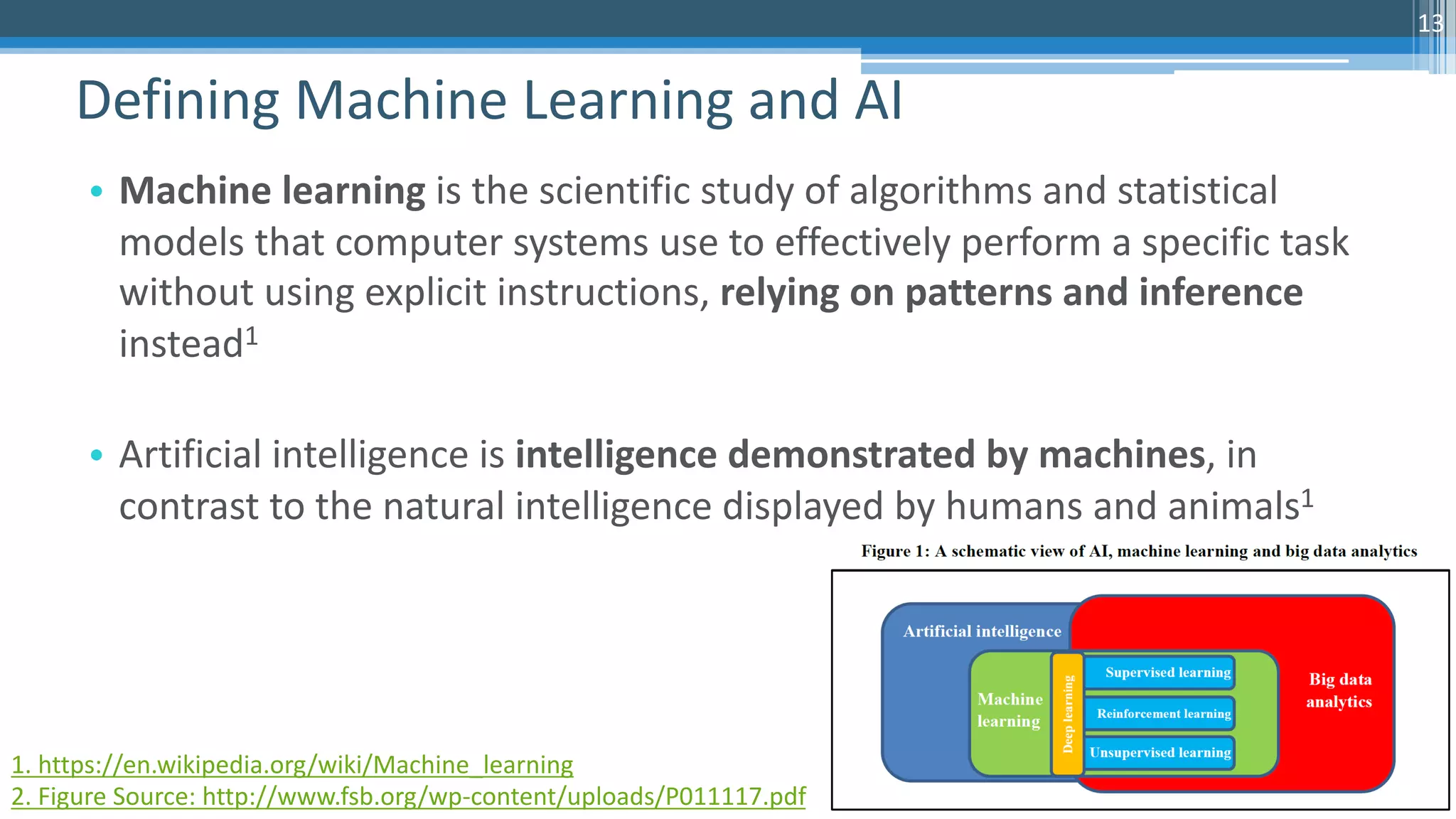
• Machine learning is the scientific study of algorithms and statistical
models that computer systems use to effectively perform a specific task
without using explicit instructions, relying on patterns and inference
instead1
• Artificial intelligence is intelligence demonstrated by machines, in
contrast to the natural intelligence displayed by humans and animals1
Defining Machine Learning and AI
13
1. https://en.wikipedia.org/wiki/Machine_learning
2. Figure Source: http://www.fsb.org/wp-content/uploads/P011117.pdf
14
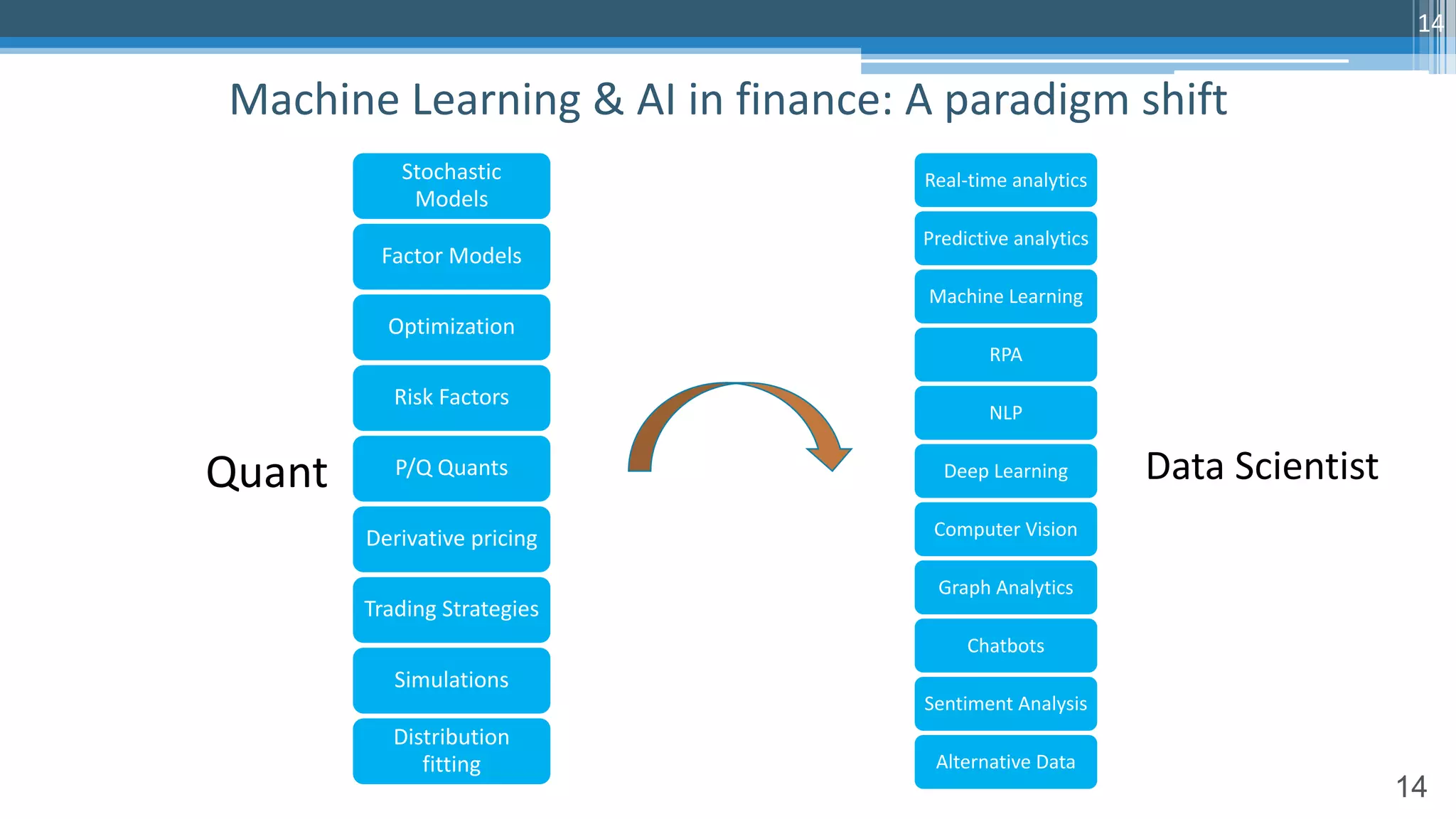
Machine Learning & AI in finance: A paradigm shift
14
Stochastic
Models
Factor Models
Optimization
Risk Factors
P/Q Quants
Derivative pricing
Trading Strategies
Simulations
Distribution
fitting
Quant
Real-time analytics
Predictive analytics
Machine Learning
RPA
NLP
Deep Learning
Computer Vision
Graph Analytics
Chatbots
Sentiment Analysis
Alternative Data
Data Scientist
15
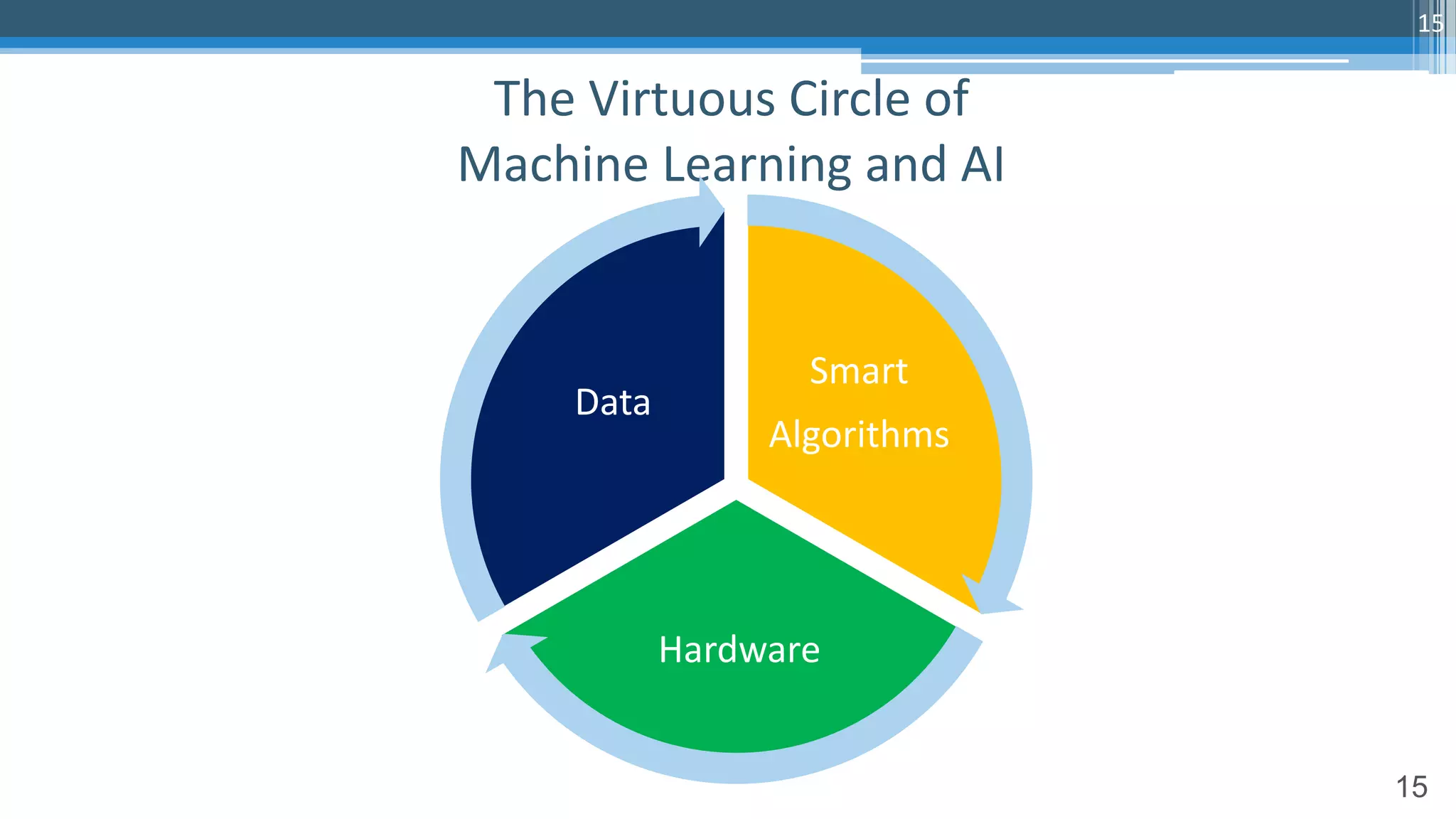
The Virtuous Circle of
Machine Learning and AI
15
Smart
Algorithms
Hardware
Data
16
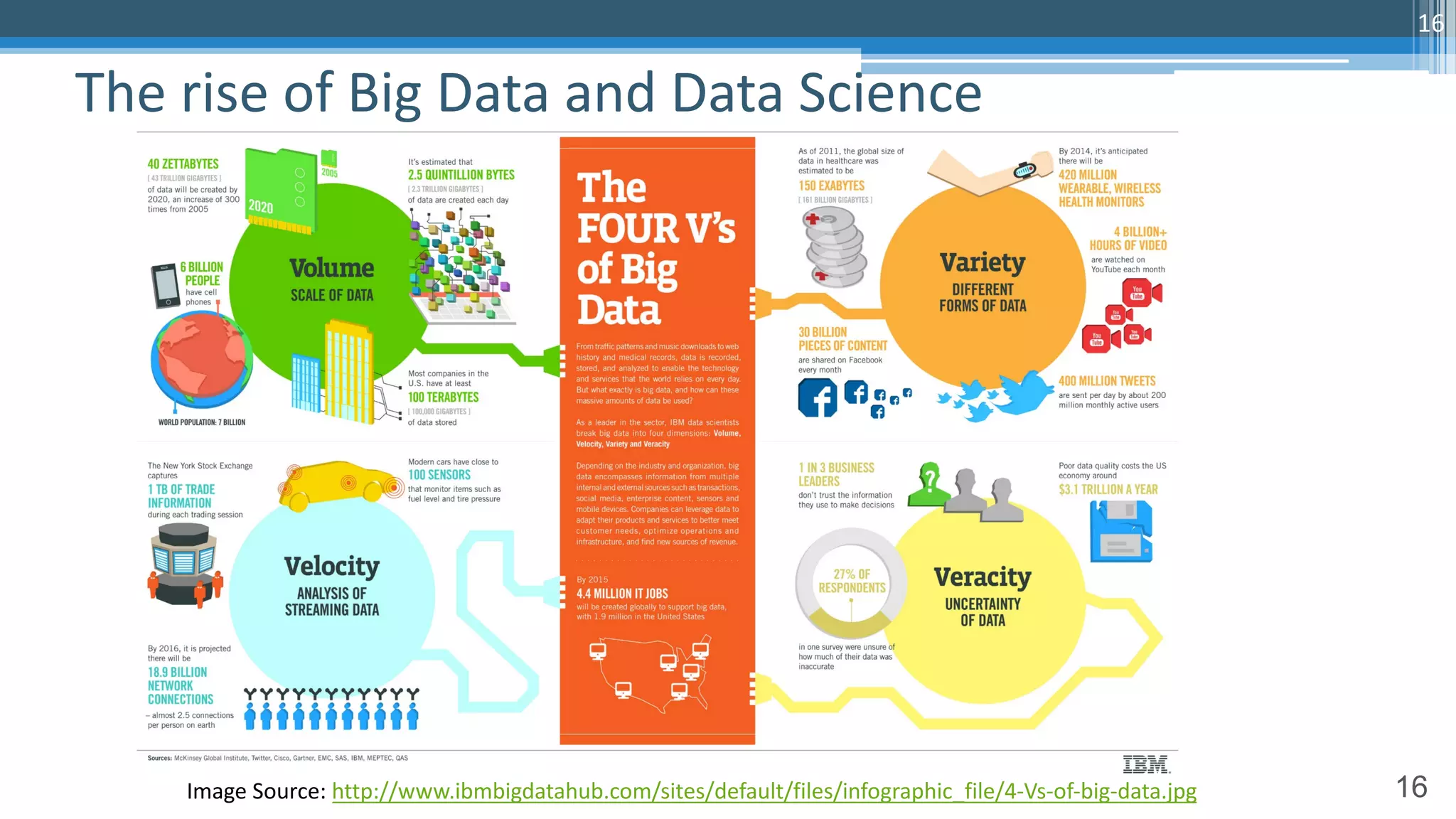
The rise of Big Data and Data Science
16
Image Source: http://www.ibmbigdatahub.com/sites/default/files/infographic_file/4-Vs-of-big-data.jpg
17
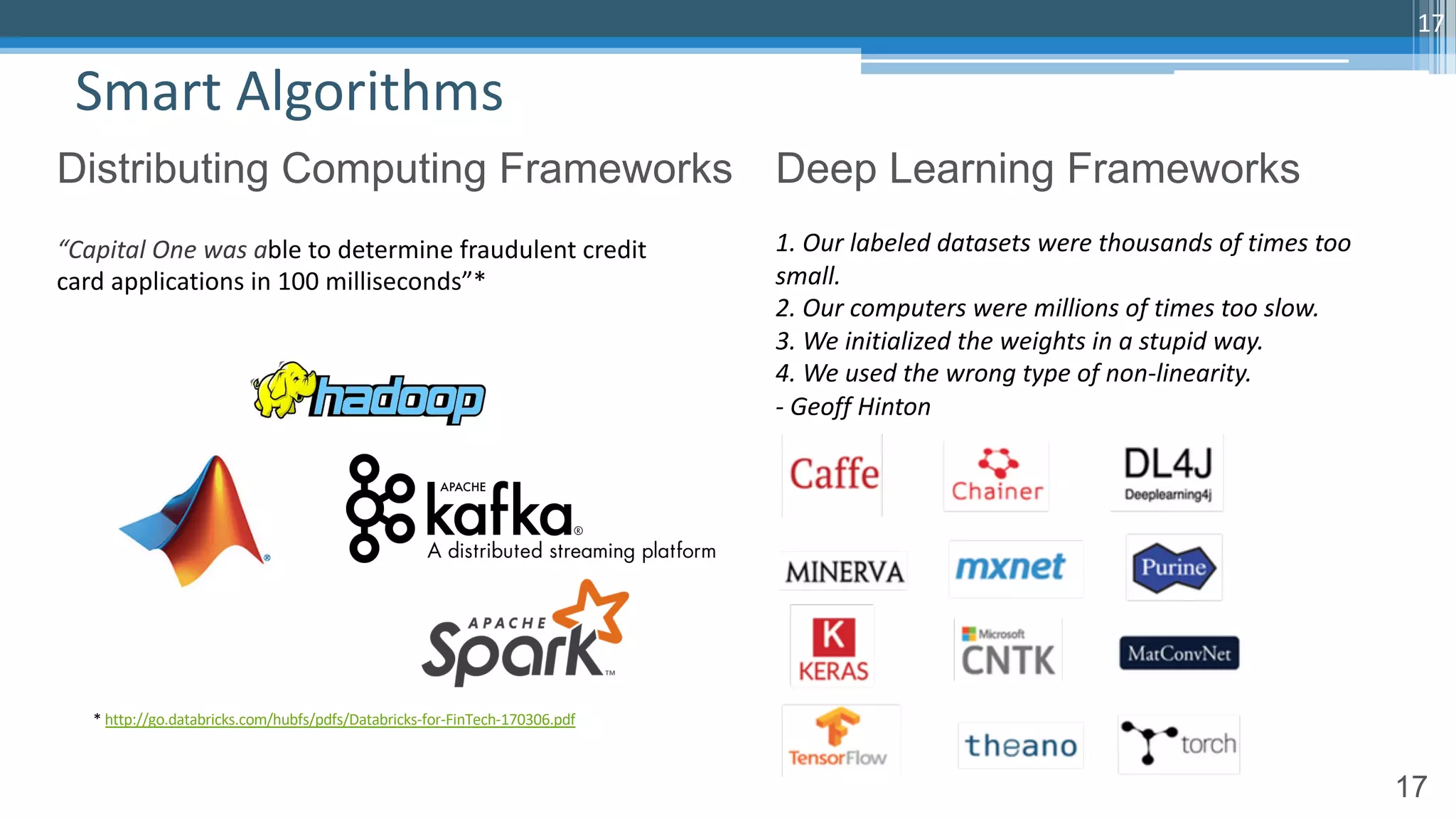
Smart Algorithms
17
Distributing Computing Frameworks Deep Learning Frameworks
1. Our labeled datasets were thousands of times too
small.
2. Our computers were millions of times too slow.
3. We initialized the weights in a stupid way.
4. We used the wrong type of non-linearity.
- Geoff Hinton
“Capital One was able to determine fraudulent credit
card applications in 100 milliseconds”*
* http://go.databricks.com/hubfs/pdfs/Databricks-for-FinTech-170306.pdf
18
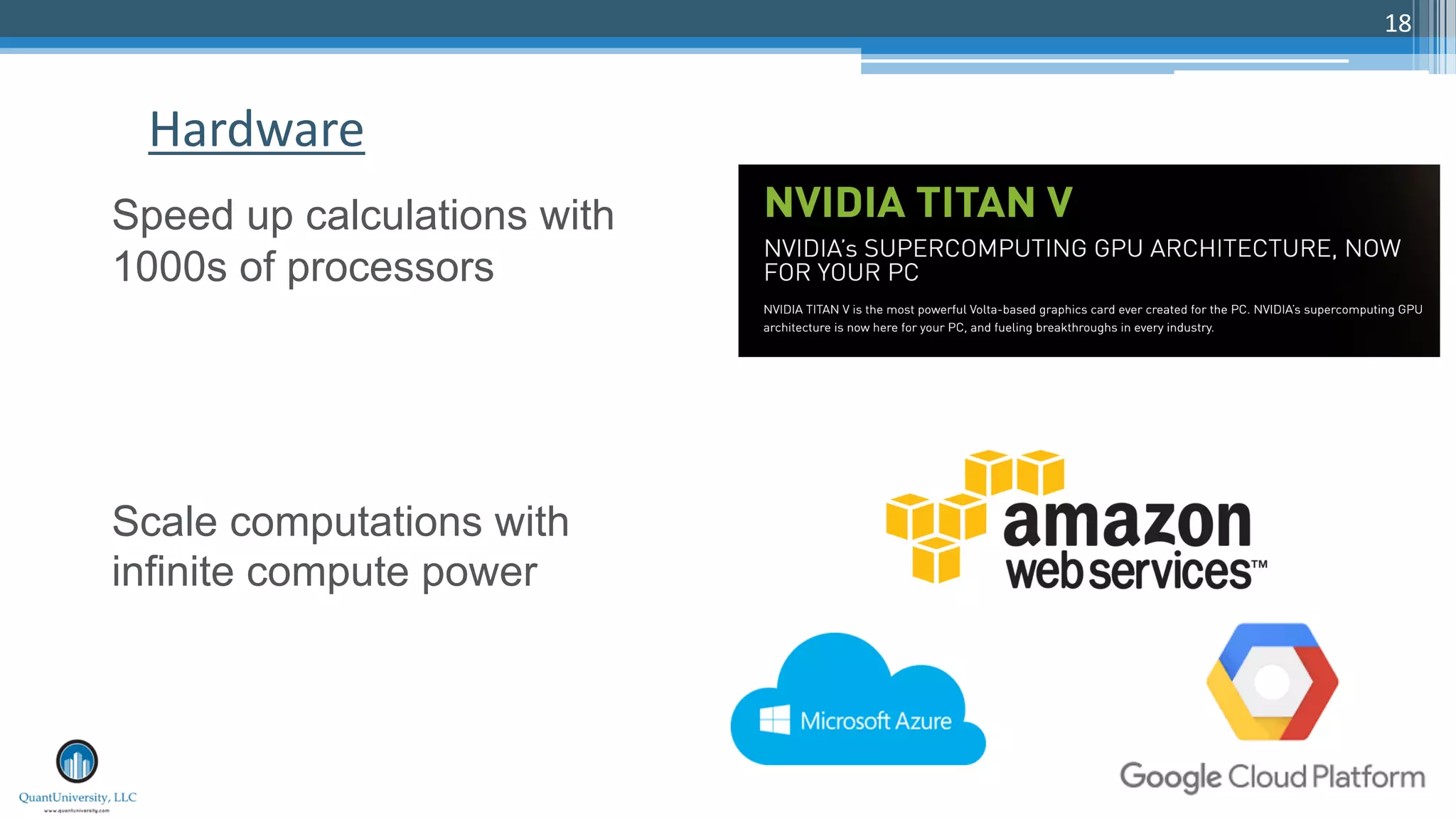
Hardware
Speed up calculations with
1000s of processors
Scale computations with
infinite compute power
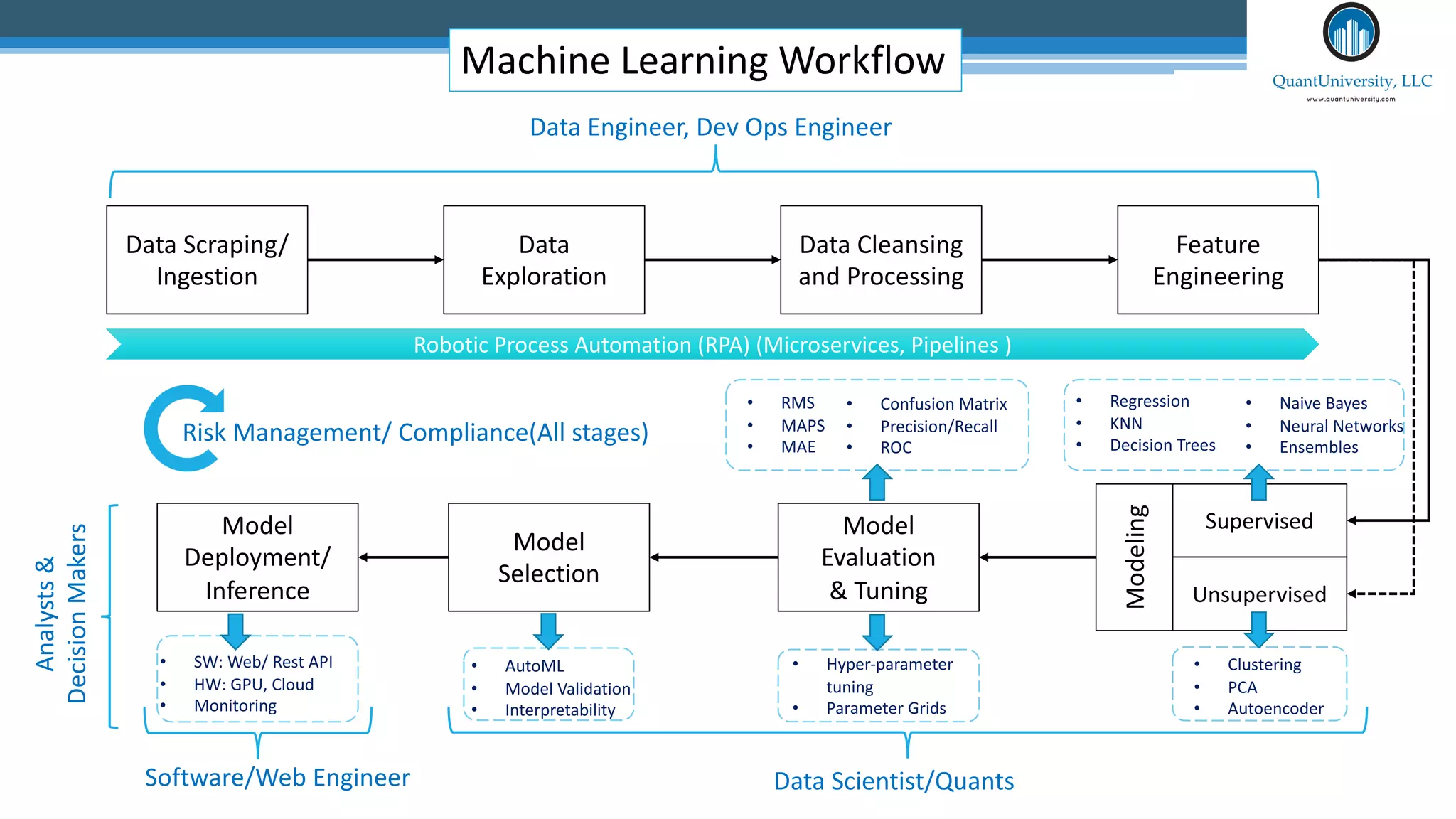
Machine Learning Workflow
Data Scraping/
Ingestion
Data
Exploration
Data Cleansing
and Processing
Feature
Engineering
Model
Evaluation
& Tuning
Model
Selection
Model
Deployment/
Inference
Supervised
Unsupervised
Modeling
Data Engineer, Dev Ops Engineer
Data Scientist/Quants
Software/Web Engineer
• AutoML
• Model Validation
• Interpretability
Robotic Process Automation (RPA) (Microservices, Pipelines )
• SW: Web/ Rest API
• HW: GPU, Cloud
• Monitoring
• Regression
• KNN
• Decision Trees
• Naive Bayes
• Neural Networks
• Ensembles
• Clustering
• PCA
• Autoencoder
• RMS
• MAPS
• MAE
• Confusion Matrix
• Precision/Recall
• ROC
• Hyper-parameter
tuning
• Parameter Grids
Risk Management/ Compliance(All stages)
Analysts
&
Decision
Makers
20
21
• Algorithmic auditing is a structured process conducted internally or
by a qualified independent third party that involves:
▫ Verifying and/or validating the working of the algorithm along with the
data, model, environment, process contextual to the use-cases in which
the algorithm is supposed to be used.
▫ Identification of issues that are clearly articulated and scoped for the
algorithm.
– Examples include : bias, discrimination, explainability, interpretability etc.
▫ Documentation of the understanding of the algorithm’s behavior, uses
as observed and evaluated by a qualified individual.
▫ Recommendations for mitigation, control and elimination of noted
risks.
Algorithmic Auditing
22
Review this:
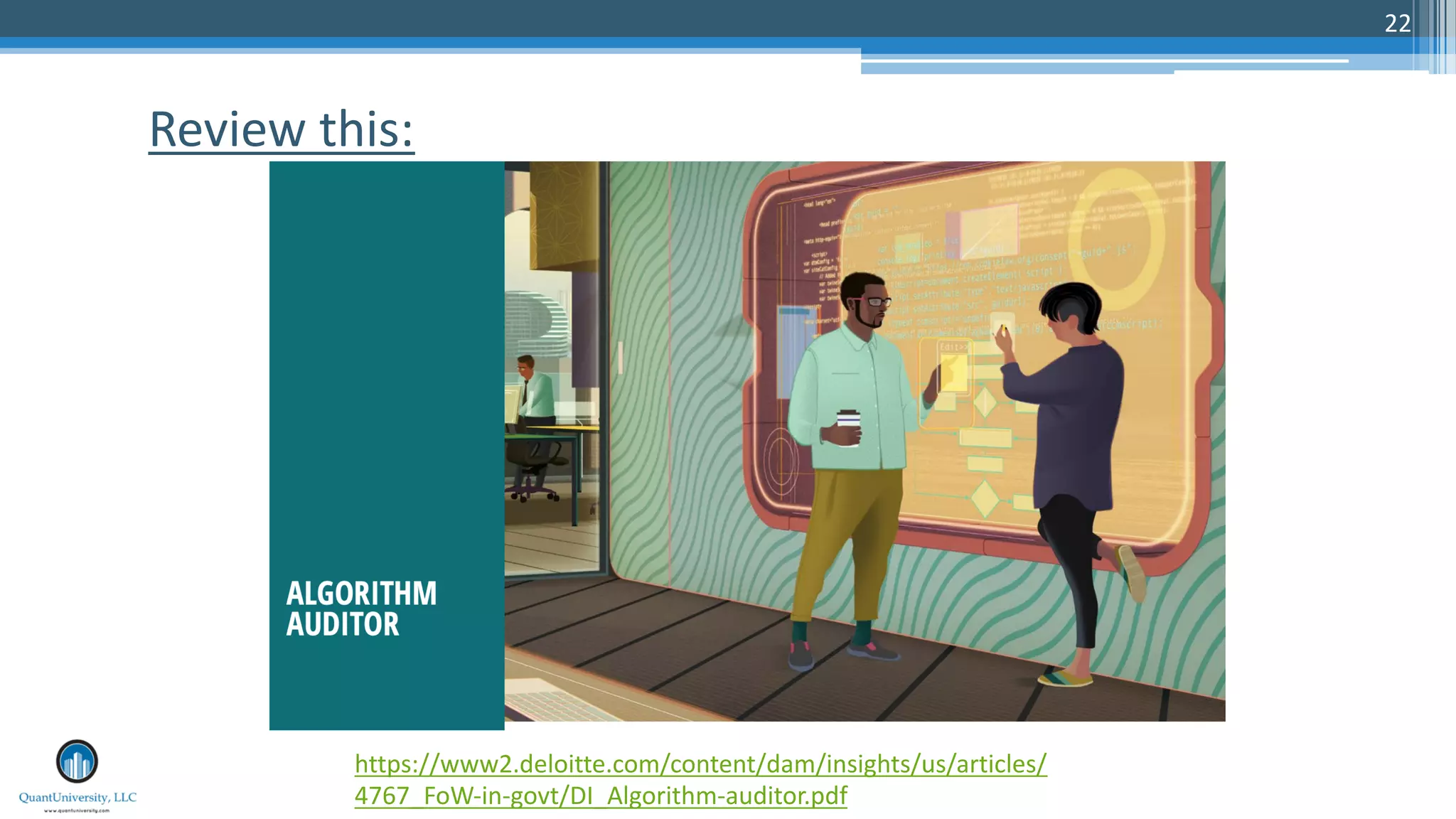
https://www2.deloitte.com/content/dam/insights/us/articles/
4767_FoW-in-govt/DI_Algorithm-auditor.pdf
23
24
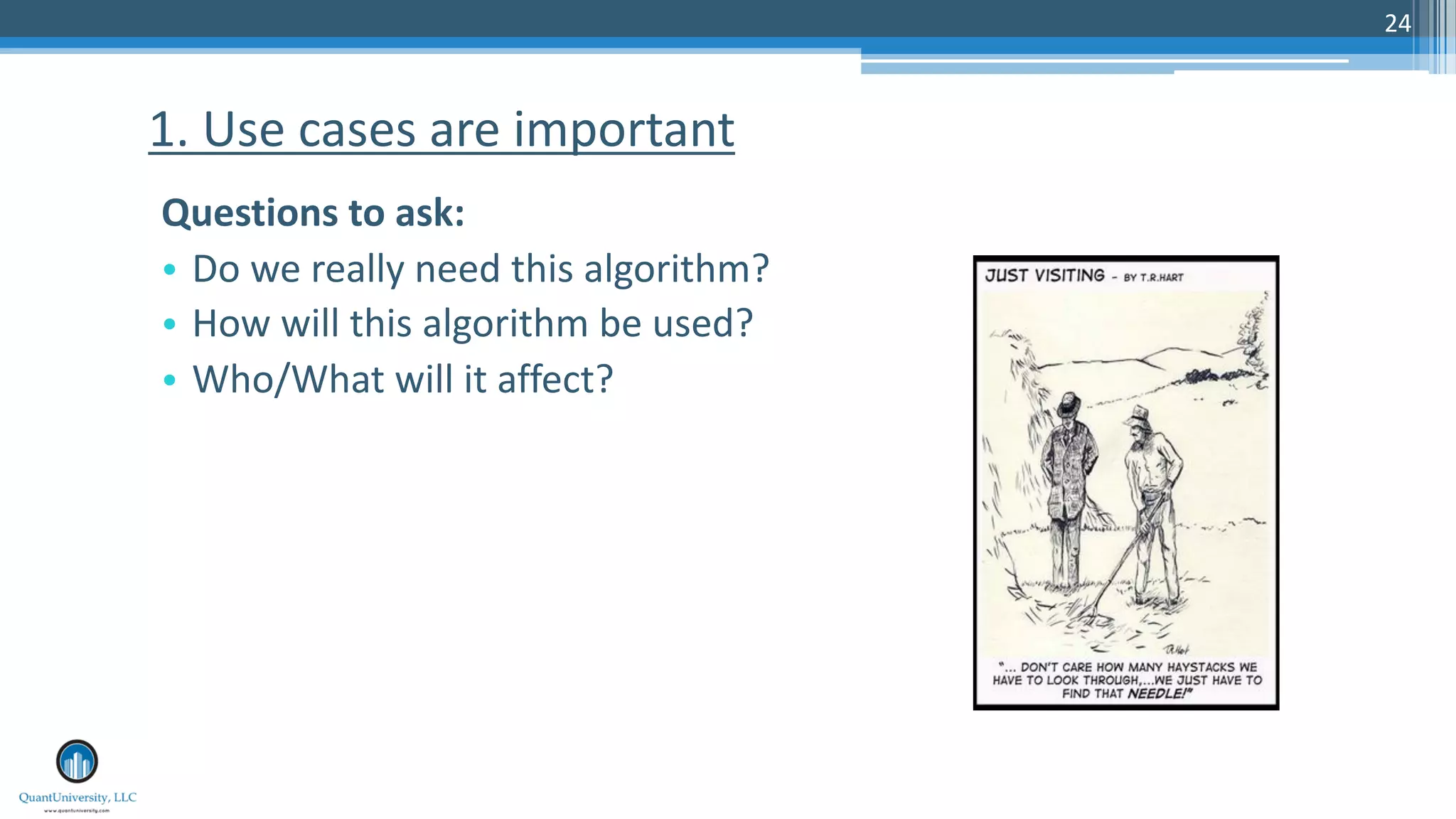
Questions to ask:
• Do we really need this algorithm?
• How will this algorithm be used?
• Who/What will it affect?
1. Use cases are important
25
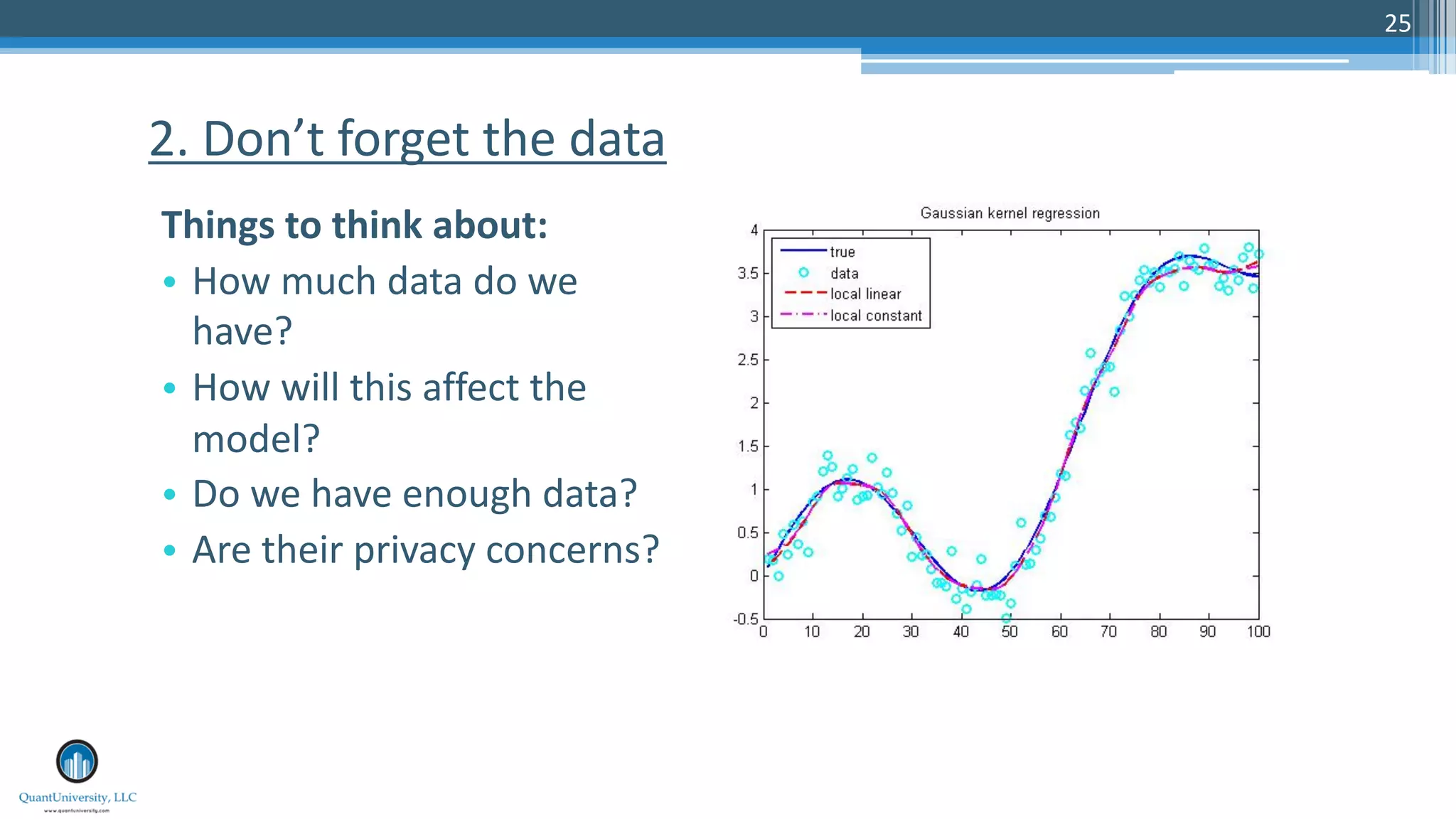
Things to think about:
• How much data do we
have?
• How will this affect the
model?
• Do we have enough data?
• Are their privacy concerns?
2. Don’t forget the data
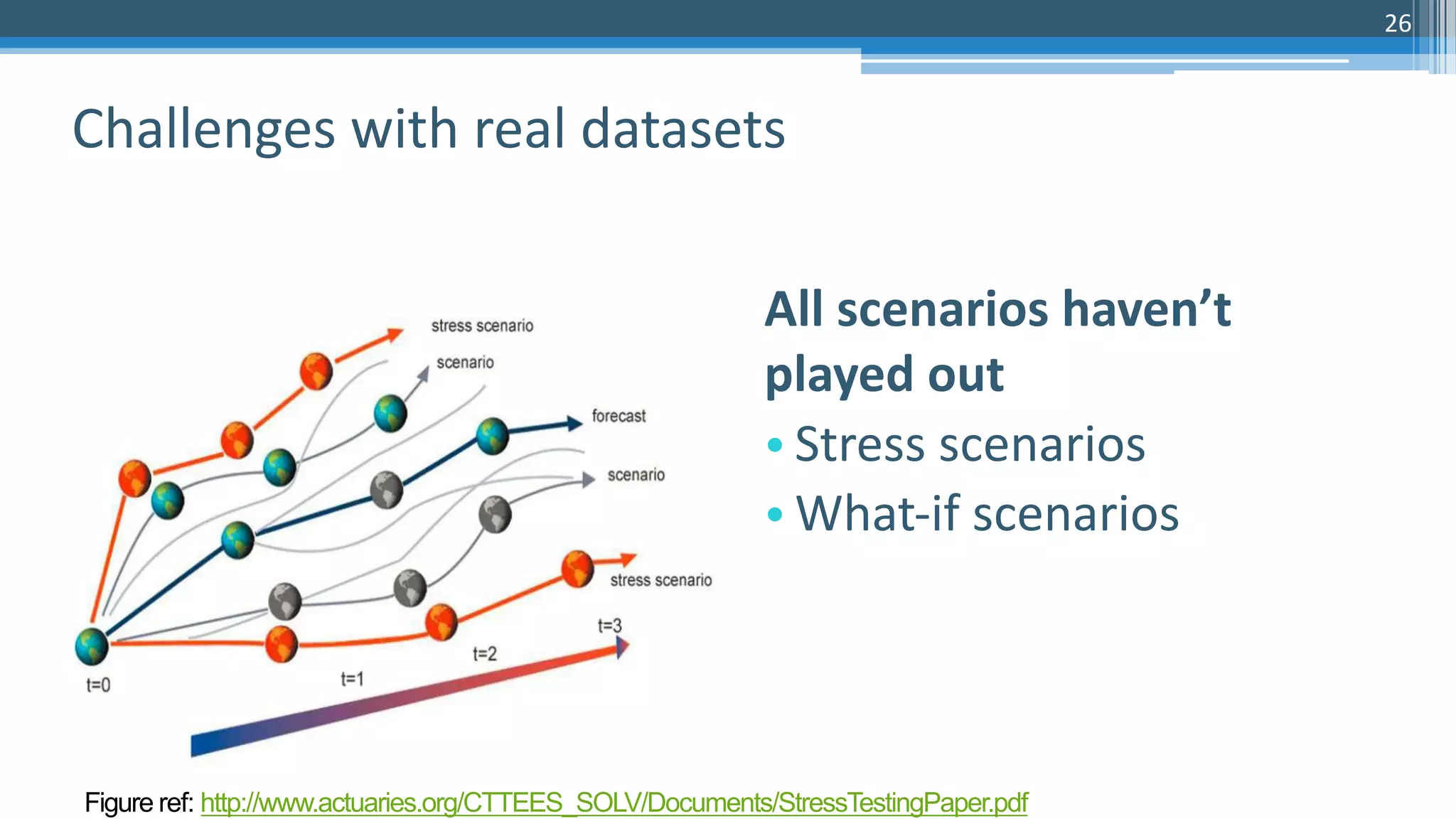
26
All scenarios haven’t
played out
• Stress scenarios
• What-if scenarios
Challenges with real datasets
Figure ref: http://www.actuaries.org/CTTEES_SOLV/Documents/StressTestingPaper.pdf
27
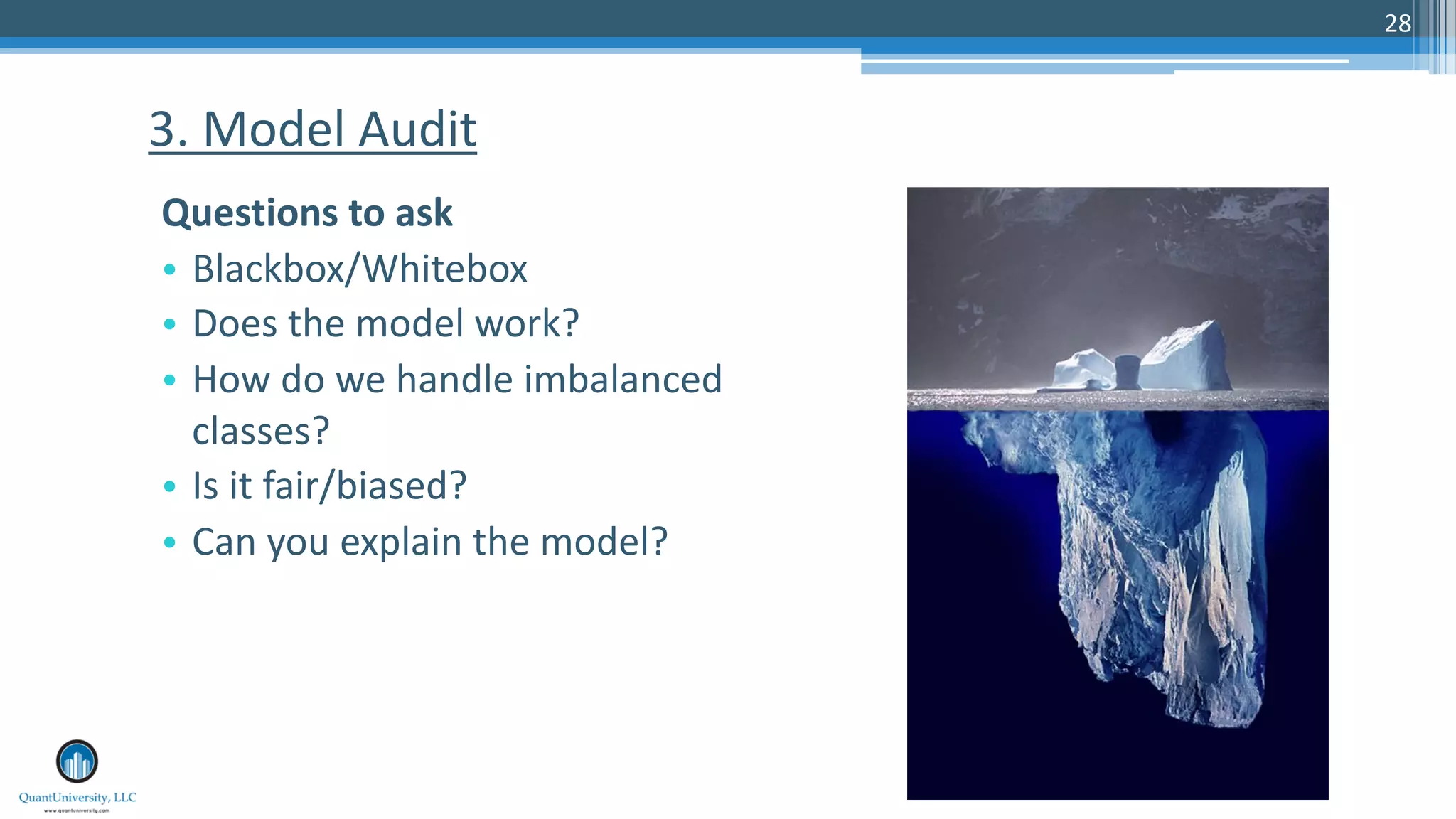
28
Questions to ask
• Blackbox/Whitebox
• Does the model work?
• How do we handle imbalanced
classes?
• Is it fair/biased?
• Can you explain the model?
3. Model Audit
29
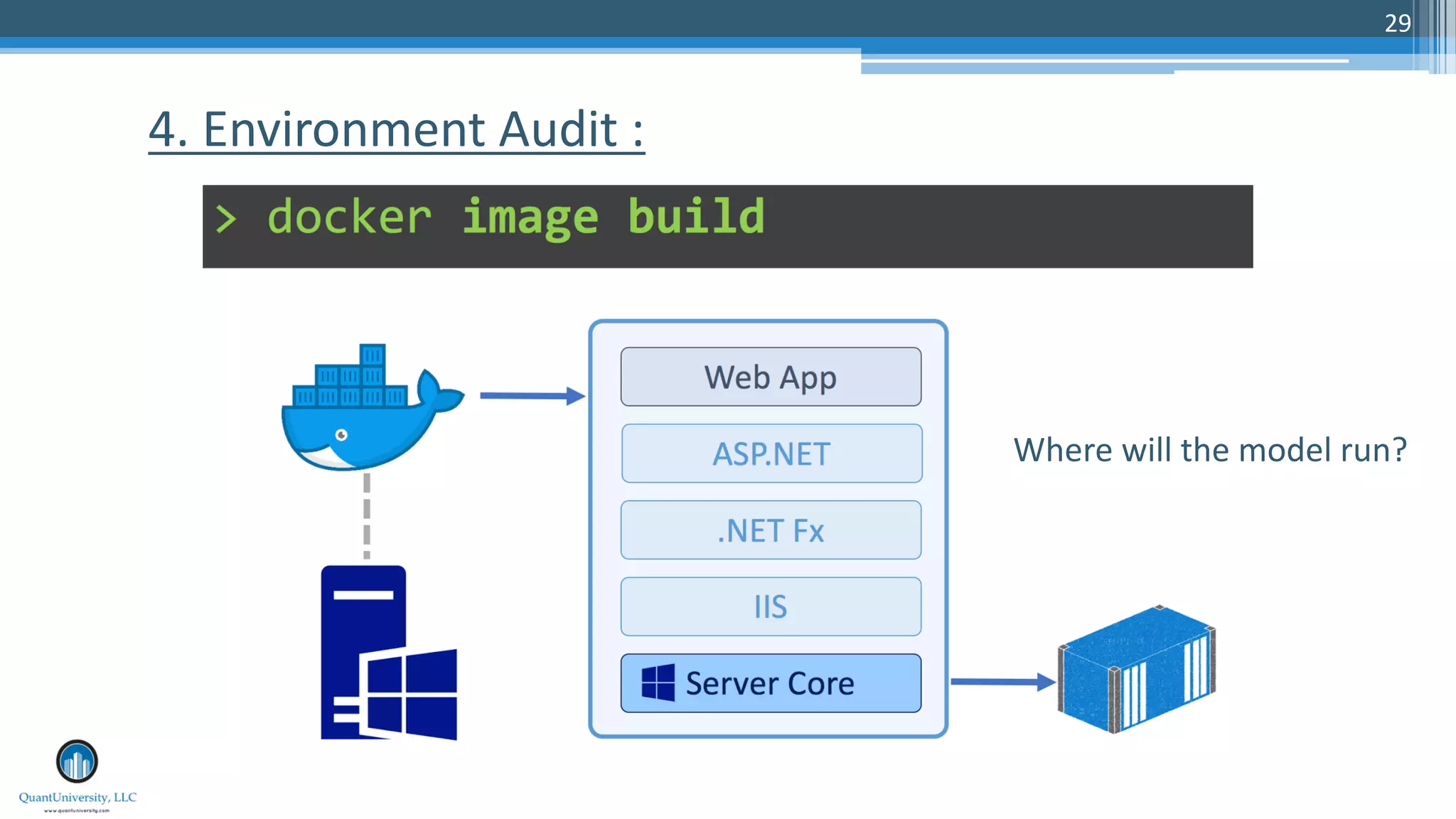
4. Environment Audit :
Where will the model run?
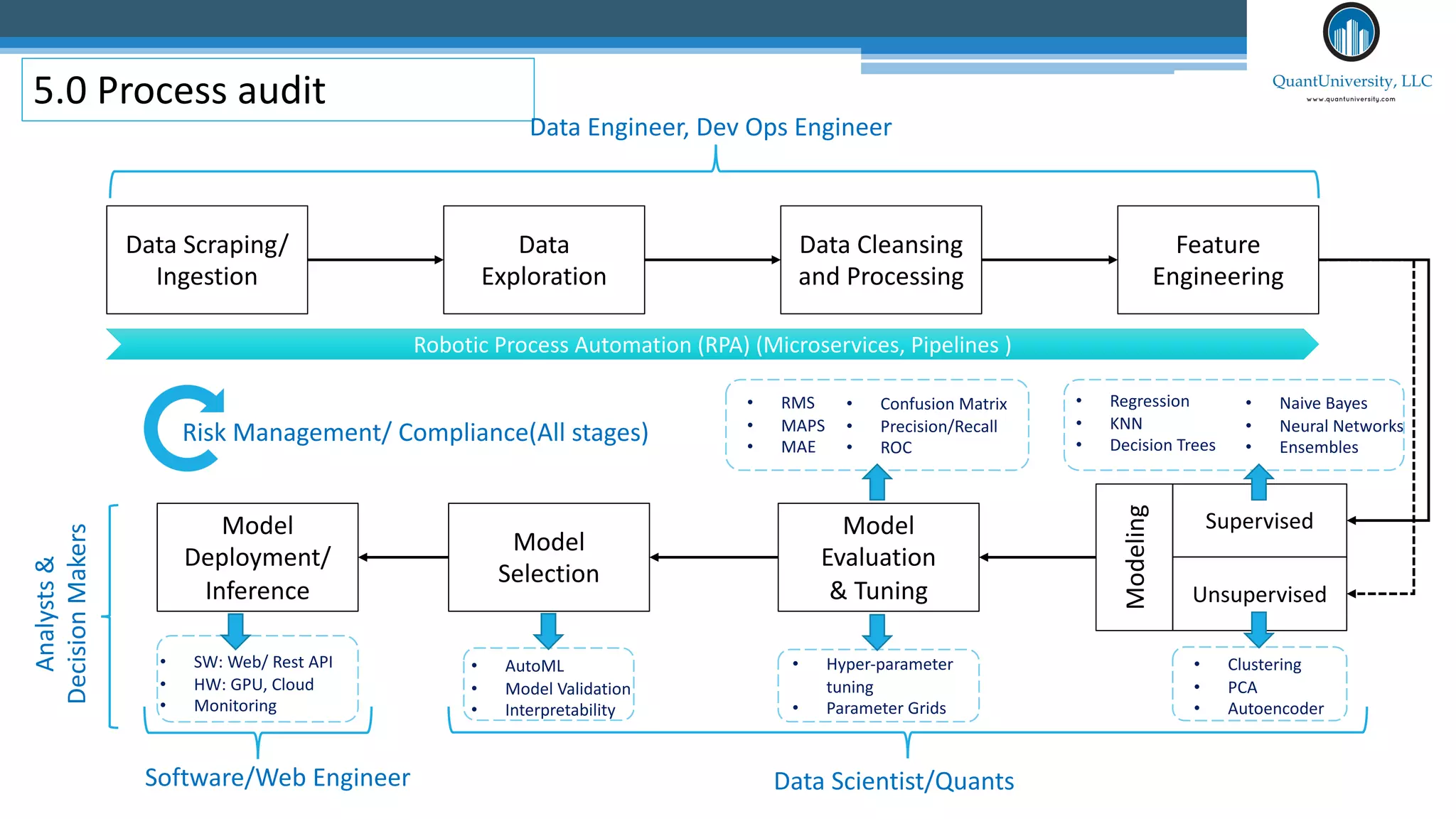
5.0 Process audit
Data Scraping/
Ingestion
Data
Exploration
Data Cleansing
and Processing
Feature
Engineering
Model
Evaluation
& Tuning
Model
Selection
Model
Deployment/
Inference
Supervised
Unsupervised
Modeling
Data Engineer, Dev Ops Engineer
Data Scientist/Quants
Software/Web Engineer
• AutoML
• Model Validation
• Interpretability
Robotic Process Automation (RPA) (Microservices, Pipelines )
• SW: Web/ Rest API
• HW: GPU, Cloud
• Monitoring
• Regression
• KNN
• Decision Trees
• Naive Bayes
• Neural Networks
• Ensembles
• Clustering
• PCA
• Autoencoder
• RMS
• MAPS
• MAE
• Confusion Matrix
• Precision/Recall
• ROC
• Hyper-parameter
tuning
• Parameter Grids
Risk Management/ Compliance(All stages)
Analysts
&
Decision
Makers
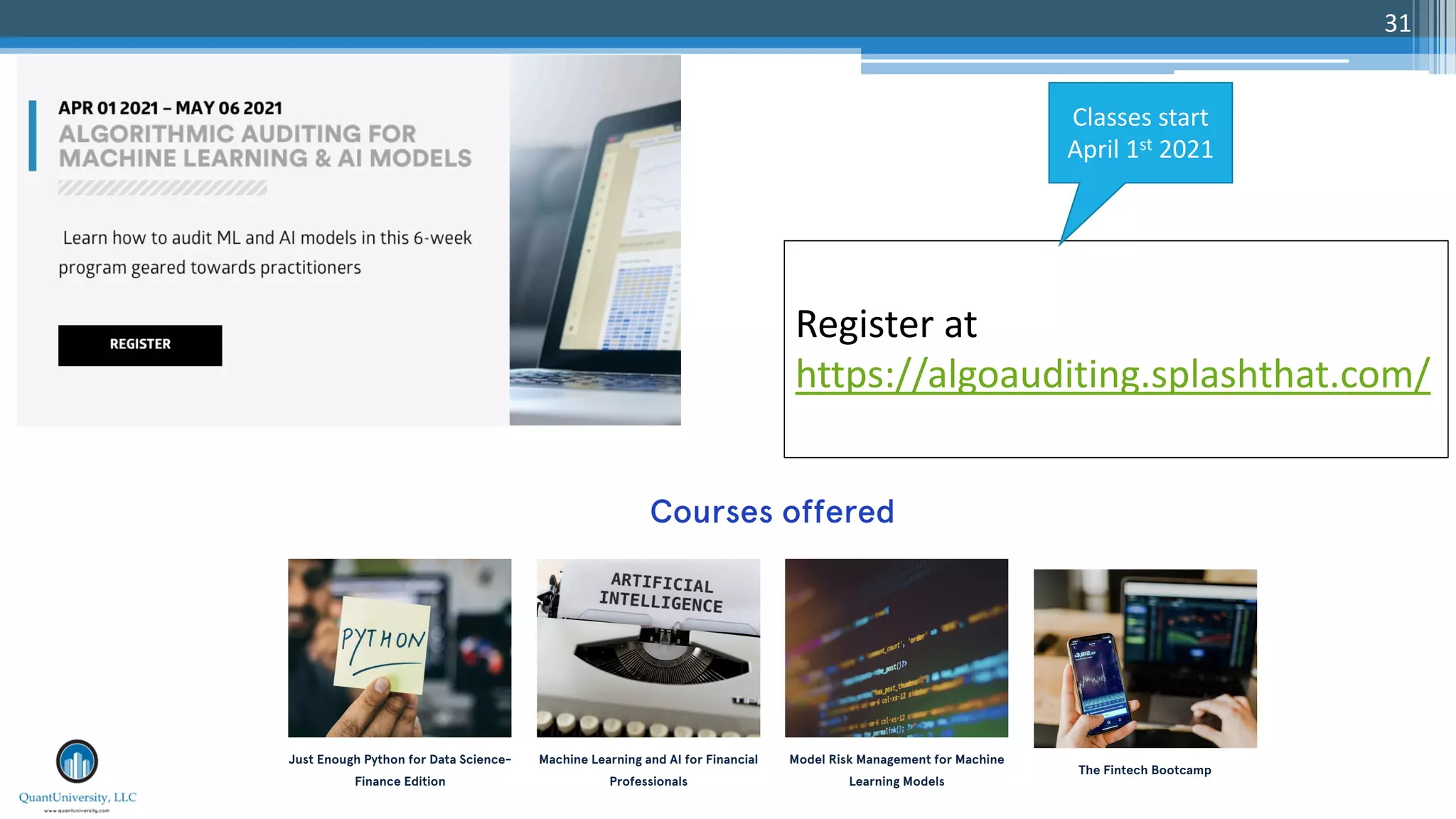
Register at
https://algoauditing.splashthat.com/
Classes start
April 1st 2021
31
Thank you!
Sri Krishnamurthy, CFA, CAP
Founder and CEO
QuantUniversity LLC.
srikrishnamurthy
www.qu.academy
Contact
Information, data and drawings embodied in this presentation are strictly a property of QuantUniversity LLC. and shall not be
distributed or used in any other publication without the prior written consent of QuantUniversity LLC.
32

Algorithmic auditing 1.0

  • 1.
    Pragmatic Algorithmic Auditing 1.0 2020Copyright QuantUniversity LLC. Presented By: Sri Krishnamurthy, CFA, CAP sri@quantuniversity.com www.quantuniversity.com Data Club Northeastern University
  • 2.
    2 Speaker bio • Advisoryand Consultancy for Financial Analytics • Prior Experience at MathWorks, Citigroup and Endeca and 25+ financial services and energy customers. • Columnist for the Wilmott Magazine • Author of forthcoming book “Pragmatic AI and ML in Finance” • Teaches AI/ML and Fintech Related topics in the MS and MBA programs at Northeastern University, Boston • Reviewer: Journal of Asset Management Sri Krishnamurthy Founder and CEO QuantUniversity
  • 3.
    3 QuantUniversity • Boston-based DataScience, Quant Finance and Machine Learning training and consulting advisory • Trained more than 1000 students in Quantitative methods, Data Science and Big Data Technologies using MATLAB, Python and R • Building a platform for AI and Machine Learning Experimentation
  • 4.
    1. Key trendsin AI, Machine Learning & Fintech 2. Algorithmic Auditing – Introduction 3. 5 things to note when auditing an algorithm 1. Use case 2. Data 3. Model 4. Environment 5. Process Agenda
  • 5.
    AI and MachineLearning in Finance
  • 6.
    6 The 4th Industrialrevolution is Here! Source: Christoph Roser at AllAboutLean.com As per Wikipedia*, “The 4th Industrial Revolution ….. marked by emerging technology breakthroughs in a number of fields, including robotics, artificial intelligence, nanotechnology, quantum computing, biotechnology, the Internet of Things, the Industrial Internet of Things (IIoT), decentralized consensus, fifth-generation wireless technologies (5G), additive manufacturing/3D printing and fully autonomous vehicles.” * https://en.wikipedia.org/wiki/Fourth_Industrial_Revolution
  • 7.
    7 Scientists are disruptingthe way we live! Source: https://www.ladn.eu/tech-a-suivre/mobilite-2030-vehicules-volants-open-data/
  • 8.
    8 Interest in Machinelearning continues to grow https://www.wipo.int/edocs/pubdocs/en/wipo_pub_1055.pdf
  • 9.
    9 MACHINE LEARNING ANDAI IS REVOLUTIONIZING FINANCE
  • 10.
  • 11.
  • 13.
    13 • Machine learningis the scientific study of algorithms and statistical models that computer systems use to effectively perform a specific task without using explicit instructions, relying on patterns and inference instead1 • Artificial intelligence is intelligence demonstrated by machines, in contrast to the natural intelligence displayed by humans and animals1 Defining Machine Learning and AI 13 1. https://en.wikipedia.org/wiki/Machine_learning 2. Figure Source: http://www.fsb.org/wp-content/uploads/P011117.pdf
  • 14.
    14 Machine Learning &AI in finance: A paradigm shift 14 Stochastic Models Factor Models Optimization Risk Factors P/Q Quants Derivative pricing Trading Strategies Simulations Distribution fitting Quant Real-time analytics Predictive analytics Machine Learning RPA NLP Deep Learning Computer Vision Graph Analytics Chatbots Sentiment Analysis Alternative Data Data Scientist
  • 15.
    15 The Virtuous Circleof Machine Learning and AI 15 Smart Algorithms Hardware Data
  • 16.
    16 The rise ofBig Data and Data Science 16 Image Source: http://www.ibmbigdatahub.com/sites/default/files/infographic_file/4-Vs-of-big-data.jpg
  • 17.
    17 Smart Algorithms 17 Distributing ComputingFrameworks Deep Learning Frameworks 1. Our labeled datasets were thousands of times too small. 2. Our computers were millions of times too slow. 3. We initialized the weights in a stupid way. 4. We used the wrong type of non-linearity. - Geoff Hinton “Capital One was able to determine fraudulent credit card applications in 100 milliseconds”* * http://go.databricks.com/hubfs/pdfs/Databricks-for-FinTech-170306.pdf
  • 18.
    18 Hardware Speed up calculationswith 1000s of processors Scale computations with infinite compute power
  • 19.
    Machine Learning Workflow DataScraping/ Ingestion Data Exploration Data Cleansing and Processing Feature Engineering Model Evaluation & Tuning Model Selection Model Deployment/ Inference Supervised Unsupervised Modeling Data Engineer, Dev Ops Engineer Data Scientist/Quants Software/Web Engineer • AutoML • Model Validation • Interpretability Robotic Process Automation (RPA) (Microservices, Pipelines ) • SW: Web/ Rest API • HW: GPU, Cloud • Monitoring • Regression • KNN • Decision Trees • Naive Bayes • Neural Networks • Ensembles • Clustering • PCA • Autoencoder • RMS • MAPS • MAE • Confusion Matrix • Precision/Recall • ROC • Hyper-parameter tuning • Parameter Grids Risk Management/ Compliance(All stages) Analysts & Decision Makers
  • 20.
  • 21.
    21 • Algorithmic auditingis a structured process conducted internally or by a qualified independent third party that involves: ▫ Verifying and/or validating the working of the algorithm along with the data, model, environment, process contextual to the use-cases in which the algorithm is supposed to be used. ▫ Identification of issues that are clearly articulated and scoped for the algorithm. – Examples include : bias, discrimination, explainability, interpretability etc. ▫ Documentation of the understanding of the algorithm’s behavior, uses as observed and evaluated by a qualified individual. ▫ Recommendations for mitigation, control and elimination of noted risks. Algorithmic Auditing
  • 22.
  • 23.
  • 24.
    24 Questions to ask: •Do we really need this algorithm? • How will this algorithm be used? • Who/What will it affect? 1. Use cases are important
  • 25.
    25 Things to thinkabout: • How much data do we have? • How will this affect the model? • Do we have enough data? • Are their privacy concerns? 2. Don’t forget the data
  • 26.
    26 All scenarios haven’t playedout • Stress scenarios • What-if scenarios Challenges with real datasets Figure ref: http://www.actuaries.org/CTTEES_SOLV/Documents/StressTestingPaper.pdf
  • 27.
  • 28.
    28 Questions to ask •Blackbox/Whitebox • Does the model work? • How do we handle imbalanced classes? • Is it fair/biased? • Can you explain the model? 3. Model Audit
  • 29.
    29 4. Environment Audit: Where will the model run?
  • 30.
    5.0 Process audit DataScraping/ Ingestion Data Exploration Data Cleansing and Processing Feature Engineering Model Evaluation & Tuning Model Selection Model Deployment/ Inference Supervised Unsupervised Modeling Data Engineer, Dev Ops Engineer Data Scientist/Quants Software/Web Engineer • AutoML • Model Validation • Interpretability Robotic Process Automation (RPA) (Microservices, Pipelines ) • SW: Web/ Rest API • HW: GPU, Cloud • Monitoring • Regression • KNN • Decision Trees • Naive Bayes • Neural Networks • Ensembles • Clustering • PCA • Autoencoder • RMS • MAPS • MAE • Confusion Matrix • Precision/Recall • ROC • Hyper-parameter tuning • Parameter Grids Risk Management/ Compliance(All stages) Analysts & Decision Makers
  • 31.
  • 32.
    Thank you! Sri Krishnamurthy,CFA, CAP Founder and CEO QuantUniversity LLC. srikrishnamurthy www.qu.academy Contact Information, data and drawings embodied in this presentation are strictly a property of QuantUniversity LLC. and shall not be distributed or used in any other publication without the prior written consent of QuantUniversity LLC. 32