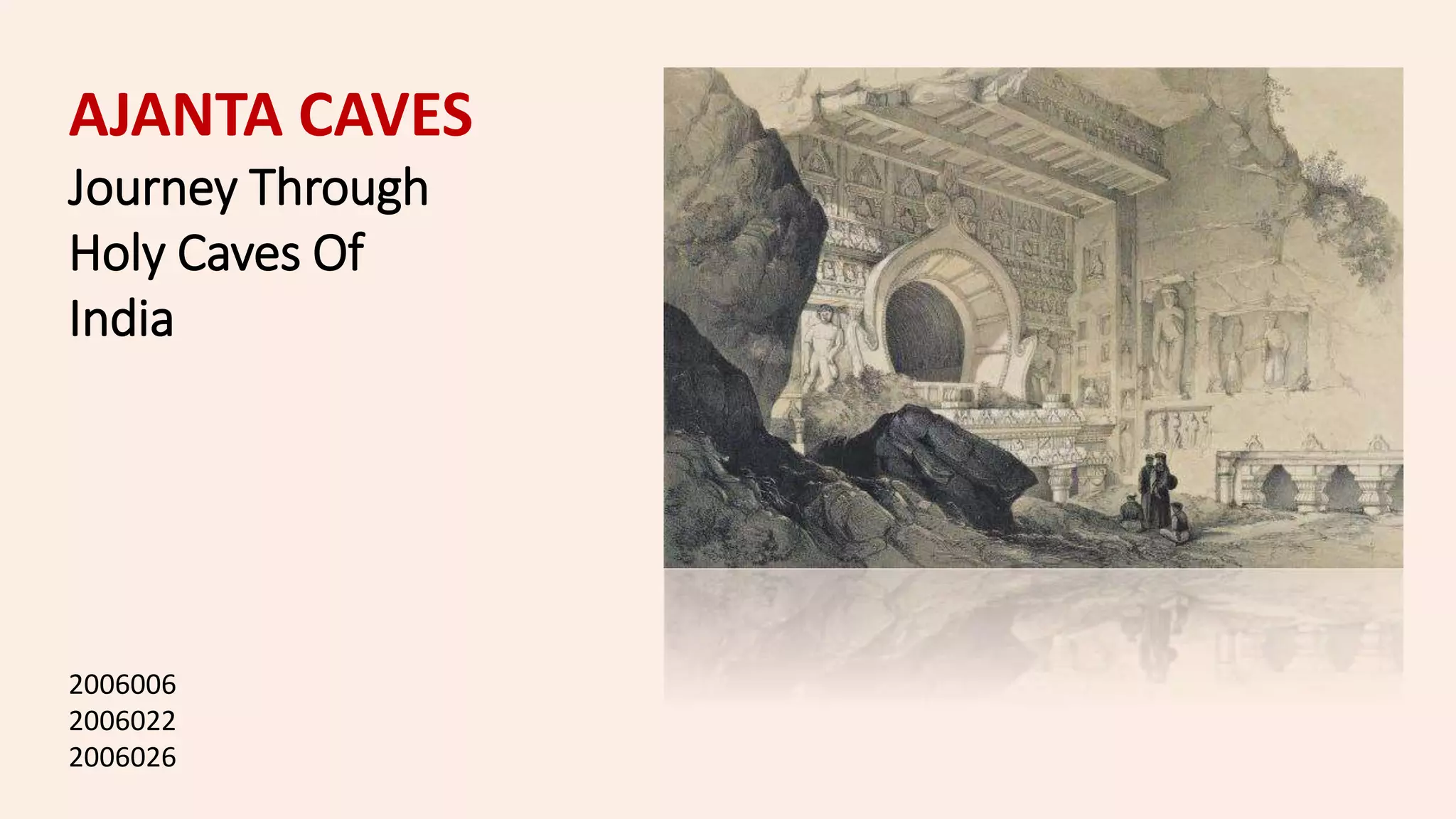
AJANTA CAVES
Journey Through
Holy Caves Of
India
2006006
2006022
2006026
•
INTRODUCTION
 The Ajanta Caves are approximately 30 rock-cut Buddhist cave monuments
 Duration :From 2nd century BCE to about 480 CE.
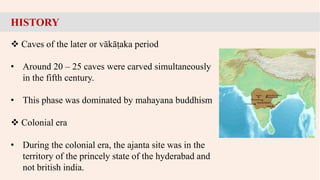
 Location :Aurangabad district of Maharashtra, India
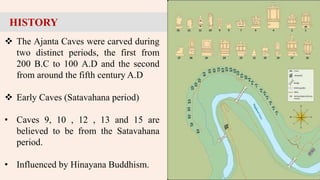
 The Ajanta Caves were carved during
two distinct periods, the first from
200 B.C to 100 A.D and the second
from around the fifth century A.D
 Early Caves (Satavahana period)
• Caves 9, 10 , 12 , 13 and 15 are
believed to be from the Satavahana
period.
• Influenced by Hinayana Buddhism.
HISTORY
HISTORY
 Caves of the later or vākāṭaka period
• Around 20 – 25 caves were carved simultaneously
in the fifth century.
• This phase was dominated by mahayana buddhism
 Colonial era
• During the colonial era, the ajanta site was in the
territory of the princely state of the hyderabad and
not british india.
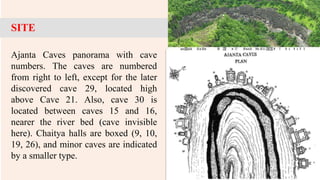
Ajanta Caves panorama with cave
numbers. The caves are numbered
from right to left, except for the later
discovered cave 29, located high
above Cave 21. Also, cave 30 is
located between caves 15 and 16,
nearer the river bed (cave invisible
here). Chaitya halls are boxed (9, 10,
19, 26), and minor caves are indicated
by a smaller type.
SITE
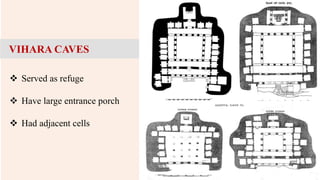
 Served as refuge
 Have large entrance porch
 Had adjacent cells
VIHARA CAVES
CHAITYA CAVES
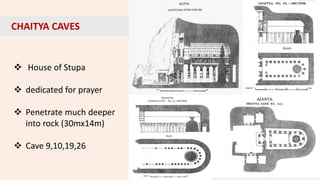
 House of Stupa
 dedicated for prayer
 Penetrate much deeper
into rock (30mx14m)
 Cave 9,10,19,26
ARCHITECTURAL COMPONENTS
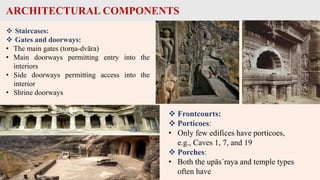
 Staircases:
 Gates and doorways:
• The main gates (torṇa-dvāra)
• Main doorways permitting entry into the
interiors
• Side doorways permitting access into the
interior
• Shrine doorways
 Frontcourts:
 Porticoes:
• Only few edifices have porticoes,
e.g., Caves 1, 7, and 19
 Porches:
• Both the upās´raya and temple types
often have
ARCHITECTURAL COMPONENTS
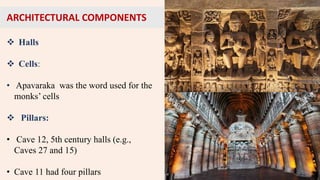
 Halls
 Cells:
• Apavaraka was the word used for the
monks’ cells
 Pillars:
• Cave 12, 5th century halls (e.g.,
Caves 27 and 15)
• Cave 11 had four pillars
AJANTA CAVE MURALS
Nothing Less Than The Birth Of Indian Art
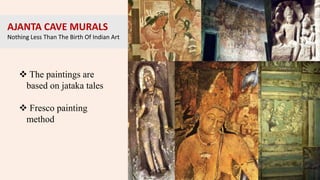
 The paintings are
based on jataka tales
 Fresco painting
method
CONCLUSION
Since 1983, Ajanta caves have been
listed among the UNESCO World
Heritage Sites of India. It is described
as among the finest surviving
examples of ancient Indian art.
THANK YOU
https://www.sensesatlas.com/territory/rock-cut-architecture-of-india-the-ajanta-caves/
https://www.theguardian.com/artanddesign/2014/aug/15/mural-ajanta-caves-india-birth-indian-art
REFERENCE

Ajanta Cave Architecture

  • 1.
    AJANTA CAVES Journey Through HolyCaves Of India 2006006 2006022 2006026
  • 2.
    • INTRODUCTION  The AjantaCaves are approximately 30 rock-cut Buddhist cave monuments  Duration :From 2nd century BCE to about 480 CE.  Location :Aurangabad district of Maharashtra, India
  • 3.
     The AjantaCaves were carved during two distinct periods, the first from 200 B.C to 100 A.D and the second from around the fifth century A.D  Early Caves (Satavahana period) • Caves 9, 10 , 12 , 13 and 15 are believed to be from the Satavahana period. • Influenced by Hinayana Buddhism. HISTORY
  • 4.
    HISTORY  Caves ofthe later or vākāṭaka period • Around 20 – 25 caves were carved simultaneously in the fifth century. • This phase was dominated by mahayana buddhism  Colonial era • During the colonial era, the ajanta site was in the territory of the princely state of the hyderabad and not british india.
  • 5.
    Ajanta Caves panoramawith cave numbers. The caves are numbered from right to left, except for the later discovered cave 29, located high above Cave 21. Also, cave 30 is located between caves 15 and 16, nearer the river bed (cave invisible here). Chaitya halls are boxed (9, 10, 19, 26), and minor caves are indicated by a smaller type. SITE
  • 6.
     Served asrefuge  Have large entrance porch  Had adjacent cells VIHARA CAVES
  • 7.
    CHAITYA CAVES  Houseof Stupa  dedicated for prayer  Penetrate much deeper into rock (30mx14m)  Cave 9,10,19,26
  • 8.
    ARCHITECTURAL COMPONENTS  Staircases: Gates and doorways: • The main gates (torṇa-dvāra) • Main doorways permitting entry into the interiors • Side doorways permitting access into the interior • Shrine doorways  Frontcourts:  Porticoes: • Only few edifices have porticoes, e.g., Caves 1, 7, and 19  Porches: • Both the upās´raya and temple types often have
  • 9.
    ARCHITECTURAL COMPONENTS  Halls Cells: • Apavaraka was the word used for the monks’ cells  Pillars: • Cave 12, 5th century halls (e.g., Caves 27 and 15) • Cave 11 had four pillars
  • 10.
    AJANTA CAVE MURALS NothingLess Than The Birth Of Indian Art  The paintings are based on jataka tales  Fresco painting method
  • 11.
    CONCLUSION Since 1983, Ajantacaves have been listed among the UNESCO World Heritage Sites of India. It is described as among the finest surviving examples of ancient Indian art.
  • 12.