VIDEO
MIM – F2
Group - F
AIRBORNE EXPRESS
Amel Atie
Pulkit Ganjoo
Victor Honrubia
Maeva Mandard
Sebastiano Peroni
Maximilian Tempel
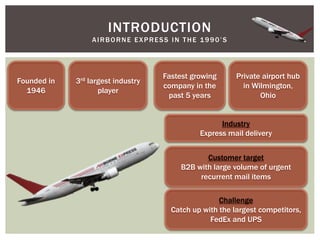
INTRODUCTION
AIRBORNE EXPRESS IN THE 1990’S
Industry
Express mail delivery
Private airport hub
in Wilmington,
Ohio
Fastest growing
company in the
past 5 years
Customer target
B2B with large volume of urgent
recurrent mail items
Challenge
Catch up with the largest competitors,
FedEx and UPS
Founded in
1946
3rd largest industry
player
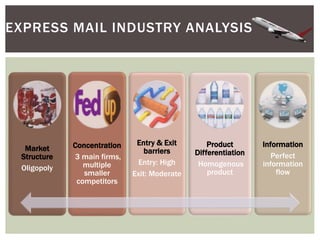
EXPRESS MAIL INDUSTRY ANALYSIS
Market
Structure
Oligopoly
Concentration
3 main firms,
multiple
smaller
competitors
Entry & Exit
barriers
Entry: High
Exit: Moderate
Product
Differentiation
Homogenous
product
Information
Perfect
information
flow
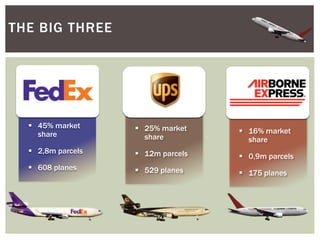
 25% market
share
 12m parcels
 529 planes
THE BIG THREE
 45% market
share
 2,8m parcels
 608 planes
 16% market
share
 0,9m parcels
 175 planes
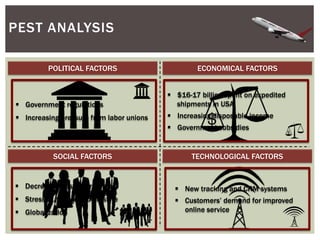
POLITICAL FACTORS ECONOMICAL FACTORS
SOCIAL FACTORS TECHNOLOGICAL FACTORS
 Government regulations
 Increasing pressure from labor unions
 $16-17 billion spent on expedited
shipments in USA
 Increasing disposable income
 Government subsidies
 Decreased customer loyalty
 Stressed, fast-paced lifestyle
 Globalization
 New tracking and CRM systems
 Customers’ demand for improved
online service
PEST ANALYSIS
Industry
Competitors
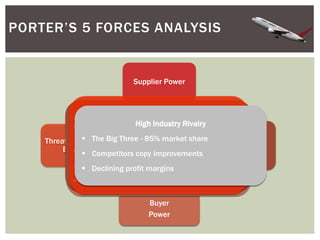
Supplier Power
Threat of
Substitutes
Buyer
Power
Threat Of Potential
Entrants
PORTER’S 5 FORCES ANALYSIS
High Supplier Power
 Dependence on hub facilities, warehouses,
cargo planes, fuel
 High risk of strikes by employees
High Buyer Power
 High-volume customers expect high discounts
 Price sensitive
 Use more than one supplier
 Require customized service
High Threat of Substitution
 Facsimile and electronic mail are faster and
cheaper
 Low product differentiation
 Low customer loyalty
 Similar price & quality of service
Low Threat of New Entrants
 Low attractiveness - decreasing volumes,
prices
 High capital requirements
 Economies of scale
 Regulatory constraints
High Industry Rivalry
 The Big Three - 85% market share
 Competitors copy improvements
 Declining profit margins
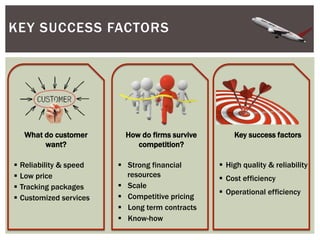
What do customer
want?
 Reliability & speed
 Low price
 Tracking packages
 Customized services
How do firms survive
competition?
 Strong financial
resources
 Scale
 Competitive pricing
 Long term contracts
 Know-how
Key success factors
 High quality & reliability
 Cost efficiency
 Operational efficiency
KEY SUCCESS FACTORS
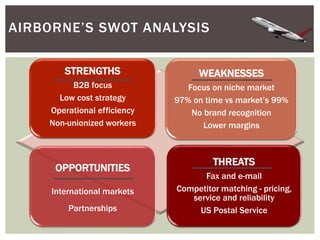
STRENGTHS
B2B focus
Low cost strategy
Operational efficiency
Non-unionized workers
WEAKNESSES
Focus on niche market
97% on time vs market’s 99%
No brand recognition
Lower margins
OPPORTUNITIES
International markets
Partnerships
THREATS
Fax and e-mail
Competitor matching - pricing,
service and reliability
US Postal Service
AIRBORNE’S SWOT ANALYSIS
STRATEGIC GROUP MAPS
EXPRESS DELIVERY
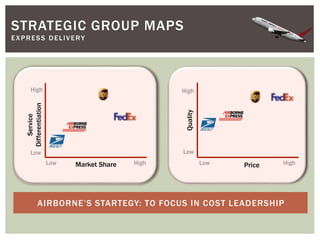
AIRBORNE’S STARTEGY: TO FOCUS IN COST LEADERSHIP
Low HighMarket Share
Low
High
Service
Differentiation
Low HighPrice
Low
High
Quality
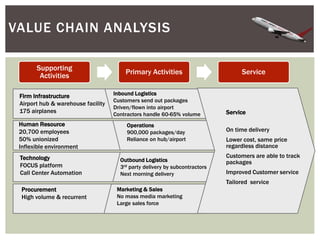
Procurement
High volume & recurrent
Firm Infrastructure
Airport hub & warehouse facility
175 airplanes
Technology
FOCUS platform
Call Center Automation
Human Resource
20,700 employees
50% unionized
Inflexible environment
Marketing & Sales
No mass media marketing
Large sales force
Inbound Logistics
Customers send out packages
Driven/flown into airport
Contractors handle 60-65% volume
Outbound Logistics
3rd party delivery by subcontractors
Next morning delivery
Operations
900,000 packages/day
Reliance on hub/airport
Service
On time delivery
Lower cost, same price
regardless distance
Customers are able to track
packages
Improved Customer service
Tailored service
Supporting
Activities
Primary Activities Service
VALUE CHAIN ANALYSIS
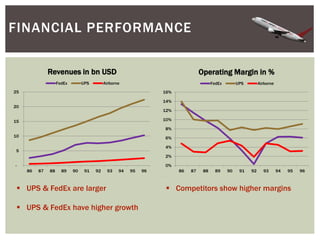
0%
2%
4%
6%
8%
10%
12%
14%
16%
86 87 88 89 90 91 92 93 94 95 96
Operating Margin in %
FedEx UPS Airborne
 Competitors show higher margins UPS & FedEx are larger
 UPS & FedEx have higher growth
-
5
10
15
20
25
86 87 88 89 90 91 92 93 94 95 96
Revenues in bn USD
FedEx UPS Airborne
FINANCIAL PERFORMANCE
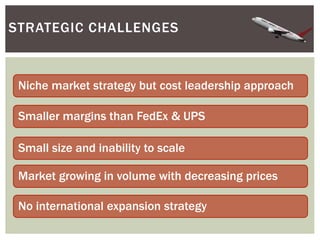
Niche market strategy but cost leadership approach
Smaller margins than FedEx & UPS
Small size and inability to scale
Market growing in volume with decreasing prices
No international expansion strategy
STRATEGIC CHALLENGES
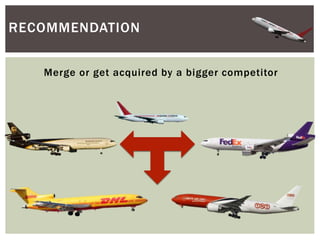
Merge or get acquired by a bigger competitor
RECOMMENDATION
THANK YOU

Airborne Express HBS case 798-070

  • 1.
  • 2.
    MIM – F2 Group- F AIRBORNE EXPRESS Amel Atie Pulkit Ganjoo Victor Honrubia Maeva Mandard Sebastiano Peroni Maximilian Tempel
  • 3.
    INTRODUCTION AIRBORNE EXPRESS INTHE 1990’S Industry Express mail delivery Private airport hub in Wilmington, Ohio Fastest growing company in the past 5 years Customer target B2B with large volume of urgent recurrent mail items Challenge Catch up with the largest competitors, FedEx and UPS Founded in 1946 3rd largest industry player
  • 4.
    EXPRESS MAIL INDUSTRYANALYSIS Market Structure Oligopoly Concentration 3 main firms, multiple smaller competitors Entry & Exit barriers Entry: High Exit: Moderate Product Differentiation Homogenous product Information Perfect information flow
  • 5.
     25% market share 12m parcels  529 planes THE BIG THREE  45% market share  2,8m parcels  608 planes  16% market share  0,9m parcels  175 planes
  • 6.
    POLITICAL FACTORS ECONOMICALFACTORS SOCIAL FACTORS TECHNOLOGICAL FACTORS  Government regulations  Increasing pressure from labor unions  $16-17 billion spent on expedited shipments in USA  Increasing disposable income  Government subsidies  Decreased customer loyalty  Stressed, fast-paced lifestyle  Globalization  New tracking and CRM systems  Customers’ demand for improved online service PEST ANALYSIS
  • 7.
    Industry Competitors Supplier Power Threat of Substitutes Buyer Power ThreatOf Potential Entrants PORTER’S 5 FORCES ANALYSIS High Supplier Power  Dependence on hub facilities, warehouses, cargo planes, fuel  High risk of strikes by employees High Buyer Power  High-volume customers expect high discounts  Price sensitive  Use more than one supplier  Require customized service High Threat of Substitution  Facsimile and electronic mail are faster and cheaper  Low product differentiation  Low customer loyalty  Similar price & quality of service Low Threat of New Entrants  Low attractiveness - decreasing volumes, prices  High capital requirements  Economies of scale  Regulatory constraints High Industry Rivalry  The Big Three - 85% market share  Competitors copy improvements  Declining profit margins
  • 8.
    What do customer want? Reliability & speed  Low price  Tracking packages  Customized services How do firms survive competition?  Strong financial resources  Scale  Competitive pricing  Long term contracts  Know-how Key success factors  High quality & reliability  Cost efficiency  Operational efficiency KEY SUCCESS FACTORS
  • 9.
    STRENGTHS B2B focus Low coststrategy Operational efficiency Non-unionized workers WEAKNESSES Focus on niche market 97% on time vs market’s 99% No brand recognition Lower margins OPPORTUNITIES International markets Partnerships THREATS Fax and e-mail Competitor matching - pricing, service and reliability US Postal Service AIRBORNE’S SWOT ANALYSIS
  • 10.
    STRATEGIC GROUP MAPS EXPRESSDELIVERY AIRBORNE’S STARTEGY: TO FOCUS IN COST LEADERSHIP Low HighMarket Share Low High Service Differentiation Low HighPrice Low High Quality
  • 11.
    Procurement High volume &recurrent Firm Infrastructure Airport hub & warehouse facility 175 airplanes Technology FOCUS platform Call Center Automation Human Resource 20,700 employees 50% unionized Inflexible environment Marketing & Sales No mass media marketing Large sales force Inbound Logistics Customers send out packages Driven/flown into airport Contractors handle 60-65% volume Outbound Logistics 3rd party delivery by subcontractors Next morning delivery Operations 900,000 packages/day Reliance on hub/airport Service On time delivery Lower cost, same price regardless distance Customers are able to track packages Improved Customer service Tailored service Supporting Activities Primary Activities Service VALUE CHAIN ANALYSIS
  • 12.
    0% 2% 4% 6% 8% 10% 12% 14% 16% 86 87 8889 90 91 92 93 94 95 96 Operating Margin in % FedEx UPS Airborne  Competitors show higher margins UPS & FedEx are larger  UPS & FedEx have higher growth - 5 10 15 20 25 86 87 88 89 90 91 92 93 94 95 96 Revenues in bn USD FedEx UPS Airborne FINANCIAL PERFORMANCE
  • 13.
    Niche market strategybut cost leadership approach Smaller margins than FedEx & UPS Small size and inability to scale Market growing in volume with decreasing prices No international expansion strategy STRATEGIC CHALLENGES
  • 14.
    Merge or getacquired by a bigger competitor RECOMMENDATION
  • 15.