Archeological Area Of
Agrigento - ITALY
• The archaeological area of Agrigento, the
Valley of the Temples, is on the southern coast
of Sicily and covers the vast territory of the
ancient polis, from the Rupe Atenea to the
acropolis of the original ancient city, as well as
to the sacred hill on which stand the main
Doric temples and up to the extramural
necropolis.
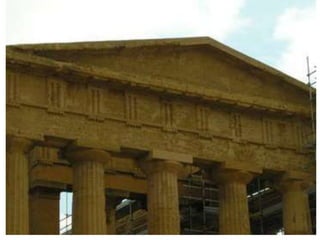
• Founded as a Greek colony in the 6th century
BC, Agrigento became one of the leading cities
in the Mediterranean region. Its supremacy
and pride are demonstrated by the remains of
the magnificent Doric temples that dominate
the ancient town, much of which still lies
intact under today's fields and orchards.
Selected excavated areas reveal the late
Hellenistic and Roman town and the burial
practices of its early Christian inhabitants
• Agrigento has a special place among classical
sites in the history of the ancient world
because of the way in which its original site,
typical of Greek colonial settlements, has been
preserved, as well as the substantial remains
of a group of buildings from an early period
that were not overlain by later structures or
converted to suit later tastes and cults.
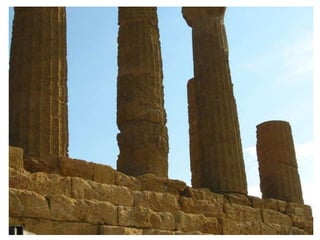
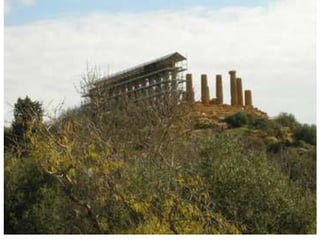
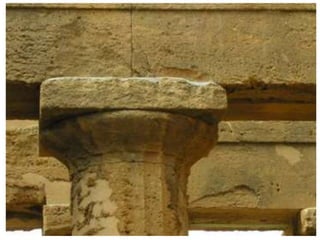
• The great row of Doric temples is one of the
most outstanding monuments of Greek art
and culture.
The archaeological area of Agrigento exhibits
an important interchange of human values,
being undoubtedly one of the leading cities in
the Mediterranean region with its outstanding
evidence of Greek influence.
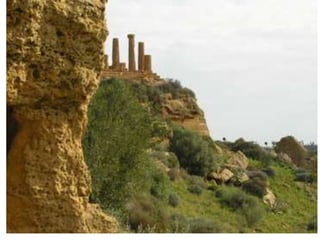
• As one of the greatest cities of the ancient
Mediterranean region, Agrigento is an
extraordinary testament of Greek civilization
in its exceptionally preserved condition.
The temples in the area exemplify Greek
architecture and are considered to be among
the most extraordinary representations of
Doric architecture in the world
Integrity
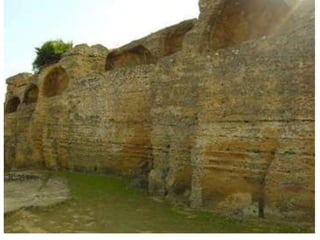
The archaeological area of Agrigento includes all the
essential elements that contribute to the justification of
its Outstanding Universal Value. The site boundary
includes the entire territory of the ancient polis,
including the extramural area of the necropolis, the
substantial excavated areas of the residential area of
Hellenistic and Roman Agrigento, the complex network
of underground aqueducts and a wide portion of land
where there are still unexcavated archaeological
structures. The archaeological structures have been
preserved in good condition, thus ensuring an
authentic representation. However, land instability
remains an issue.
Authenticity
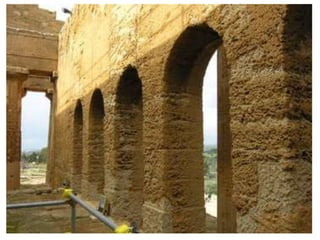
The authenticity of the archaeological sites of
Agrigento is outstanding. Although some restoration
work carried out in the late 18th and 19th centuries
CE did not follow the principles of modern
conservation as set out in the 1964 Venice Charter,
subsequent restoration works have resolved the
problems of previous restoration methods and have
compensated for past mistakes. Recent works have
been conducted in full compliance with the
principles of modern restoration.
• Protection and management requirements
The site is protected by the national law for protection
of cultural heritage, Decreto Legislativo 42/2004,.
The regional Law n.20/2000 has founded the
Archaeological and Landscape Park of the Valley of the
Temples of Agrigento which aims not only to protect
the landscape and historical heritage of the site, but
also to improve and promote it. The park enjoys
financial administrative autonomy. Therefore the
Council of the Park can plan and carry out any
intervention of preservation and improvement of the
site
THANK YOU 
• ERASMUS+ PROJECT CONONECT
• PREPARED BY; ÖZGE SARI
• BURDUR CUMHURİYET ANADOLU LİSESİ

AGRİGENTO

  • 1.
  • 2.
    • The archaeologicalarea of Agrigento, the Valley of the Temples, is on the southern coast of Sicily and covers the vast territory of the ancient polis, from the Rupe Atenea to the acropolis of the original ancient city, as well as to the sacred hill on which stand the main Doric temples and up to the extramural necropolis.
  • 4.
    • Founded asa Greek colony in the 6th century BC, Agrigento became one of the leading cities in the Mediterranean region. Its supremacy and pride are demonstrated by the remains of the magnificent Doric temples that dominate the ancient town, much of which still lies intact under today's fields and orchards. Selected excavated areas reveal the late Hellenistic and Roman town and the burial practices of its early Christian inhabitants
  • 6.
    • Agrigento hasa special place among classical sites in the history of the ancient world because of the way in which its original site, typical of Greek colonial settlements, has been preserved, as well as the substantial remains of a group of buildings from an early period that were not overlain by later structures or converted to suit later tastes and cults.
  • 8.
    • The greatrow of Doric temples is one of the most outstanding monuments of Greek art and culture. The archaeological area of Agrigento exhibits an important interchange of human values, being undoubtedly one of the leading cities in the Mediterranean region with its outstanding evidence of Greek influence.
  • 10.
    • As oneof the greatest cities of the ancient Mediterranean region, Agrigento is an extraordinary testament of Greek civilization in its exceptionally preserved condition. The temples in the area exemplify Greek architecture and are considered to be among the most extraordinary representations of Doric architecture in the world
  • 12.
    Integrity The archaeological areaof Agrigento includes all the essential elements that contribute to the justification of its Outstanding Universal Value. The site boundary includes the entire territory of the ancient polis, including the extramural area of the necropolis, the substantial excavated areas of the residential area of Hellenistic and Roman Agrigento, the complex network of underground aqueducts and a wide portion of land where there are still unexcavated archaeological structures. The archaeological structures have been preserved in good condition, thus ensuring an authentic representation. However, land instability remains an issue.
  • 14.
    Authenticity The authenticity ofthe archaeological sites of Agrigento is outstanding. Although some restoration work carried out in the late 18th and 19th centuries CE did not follow the principles of modern conservation as set out in the 1964 Venice Charter, subsequent restoration works have resolved the problems of previous restoration methods and have compensated for past mistakes. Recent works have been conducted in full compliance with the principles of modern restoration.
  • 16.
    • Protection andmanagement requirements The site is protected by the national law for protection of cultural heritage, Decreto Legislativo 42/2004,. The regional Law n.20/2000 has founded the Archaeological and Landscape Park of the Valley of the Temples of Agrigento which aims not only to protect the landscape and historical heritage of the site, but also to improve and promote it. The park enjoys financial administrative autonomy. Therefore the Council of the Park can plan and carry out any intervention of preservation and improvement of the site
  • 17.
    THANK YOU  •ERASMUS+ PROJECT CONONECT • PREPARED BY; ÖZGE SARI • BURDUR CUMHURİYET ANADOLU LİSESİ