











Bruno Sbille
Tools from Psychology for coaches, trainers and team
members
Who is @BrunoSbille? (hint: that’s me :)
Bruno.sbille@gmail.com
brunosbille.com
Psychology...
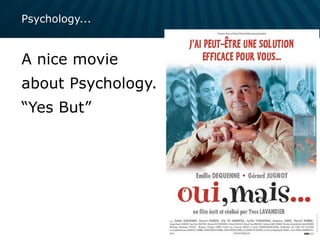
A nice movie
about Psychology.
“Yes But”
Today we will discuss 2 tools, 2 models from
psychology
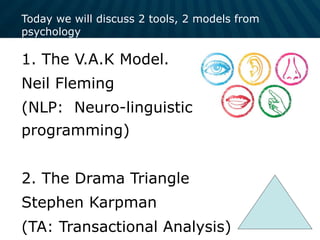
1. The V.A.K Model.
Neil Fleming
(NLP: Neuro-linguistic
programming)
2. The Drama Triangle
Stephen Karpman
(TA: Transactional Analysis)
NLP: Neuro Linguistic Programming
Bandler & Grinder
NLP approach
•Observe talented people
•Identify common structures
•Model (create a model)
•Get other people to do it
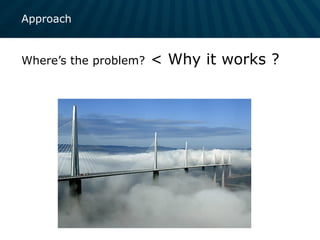
Approach
Where’s the problem? < Why it works ?
Applications
Myths
V.A.K
Neil Fleming
I need you to find a buddy...
Please stand-up, create teams of 2
Once your team is created, please sit.
Five senses
VAK (aka VAKOG)
•V: Visual
•A: Auditory
•K: Kinesthetic
•O: Olfactory
•G: Gustatory
VAK or VAKOG ?
•V: Visual
•A: Auditory
•K: Kinesthetic (including
Olfactory and Gustatory)
Each of us has a preferred channel
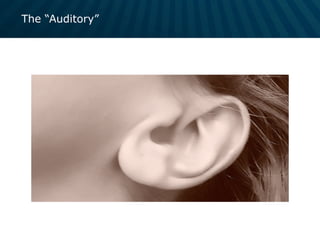
The “Auditory”
Auditory
•Auditory learners best learn
through listening (lectures,
discussions, tapes, etc.
•“What did you say?”
•Credibility
•Usually channel the most used
•Can speak a lot to express one
idea
The “Kinesthetic”
Kinesthetic
•Tactile/kinesthetic learners prefer
to learn via experience—moving,
touching, and doing
•Importance of sensations,
feelings
•sensible to the working
atmosphere
•“You feel me?”
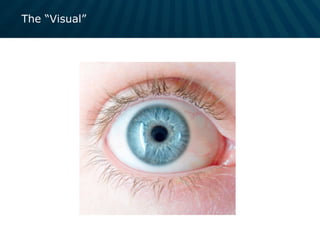
The “Visual”
Visual
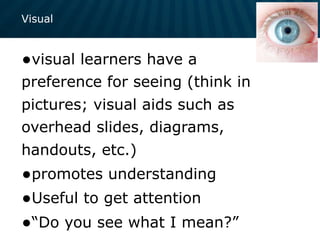
•visual learners have a
preference for seeing (think in
pictures; visual aids such as
overhead slides, diagrams,
handouts, etc.)
•promotes understanding
•Useful to get attention
•“Do you see what I mean?”
What can you do with these concepts ?
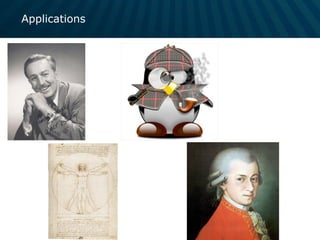
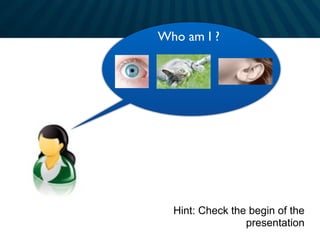
Who am I ?
Hint: Check the begin of the
presentation
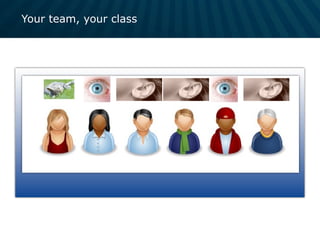
Your team, your class
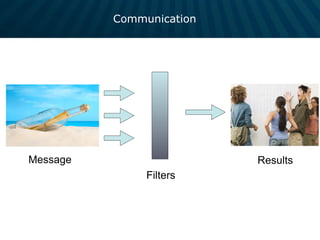
Communication
Message Results
Filters
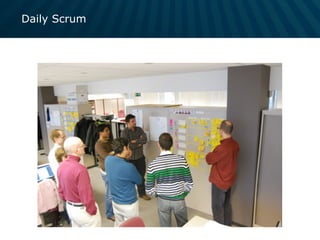
Daily Scrum
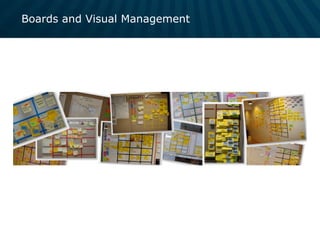
Boards and Visual Management
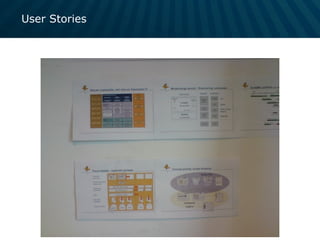
User Stories
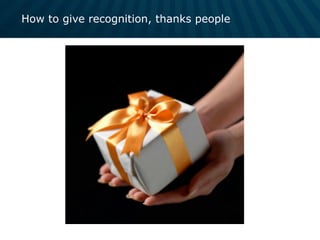
How to give recognition, thanks people
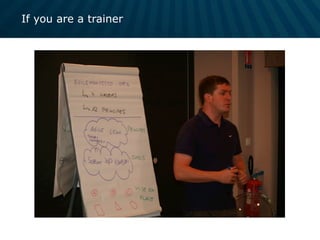
If you are a trainer
Want to know more
http://www.businessballs.com/
vaklearningstylestest.htm
http://www.idea-sandbox.com/
blog/2012/03/disney-
brainstorming-method-dreamer-
realist-and-spoiler/
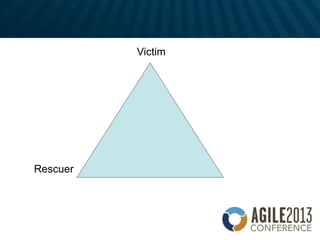
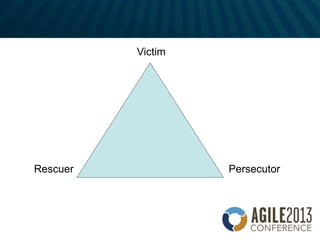
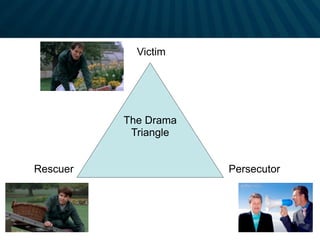
The Drama triangle
Karpman
Victim
Rescuer
Victim
Rescuer
Persecutor
Victim
Rescuer Persecutor
The Drama
Triangle
Victim
Rescuer Persecutor
Benefits...and needs
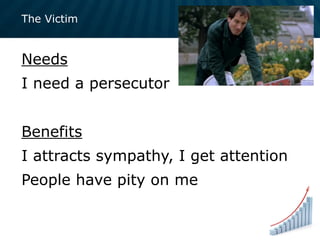
The Victim
Needs
I need a persecutor
Benefits
I attracts sympathy, I get attention
People have pity on me
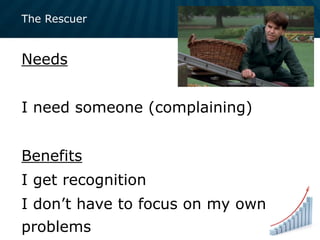
The Rescuer
Needs
I need someone (complaining)
Benefits
I get recognition
I don’t have to focus on my own
problems
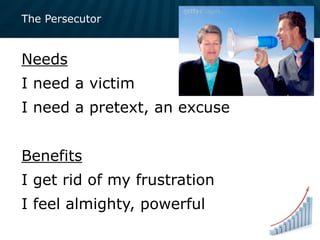
The Persecutor
Needs
I need a victim
I need a pretext, an excuse
Benefits
I get rid of my frustration
I feel almighty, powerful
Unfortunately, this comes with some perverse
effects...
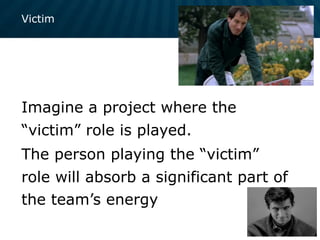
Victim
Imagine a project where the
“victim” role is played.
The person playing the “victim”
role will absorb a significant part of
the team’s energy
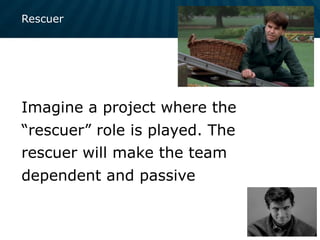
Rescuer
Imagine a project where the
“rescuer” role is played. The
rescuer will make the team
dependent and passive
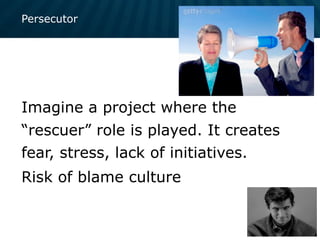
Persecutor
Imagine a project where the
“rescuer” role is played. It creates
fear, stress, lack of initiatives.
Risk of blame culture
To summarize...
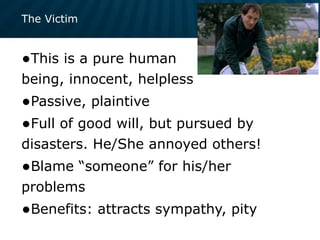
The Victim
•This is a pure human
being, innocent, helpless
•Passive, plaintive
•Full of good will, but pursued by
disasters. He/She annoyed others!
•Blame “someone” for his/her
problems
•Benefits: attracts sympathy, pity
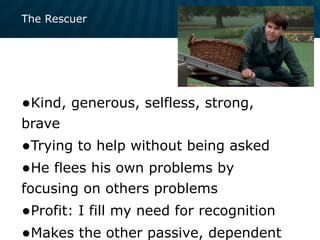
The Rescuer
•Kind, generous, selfless, strong,
brave
•Trying to help without being asked
•He flees his own problems by
focusing on others problems
•Profit: I fill my need for recognition
•Makes the other passive, dependent
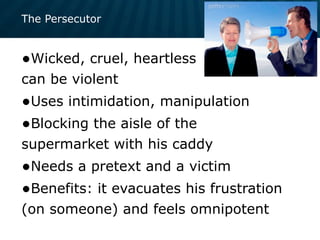
The Persecutor
•Wicked, cruel, heartless
can be violent
•Uses intimidation, manipulation
•Blocking the aisle of the
supermarket with his caddy
•Needs a pretext and a victim
•Benefits: it evacuates his frustration
(on someone) and feels omnipotent
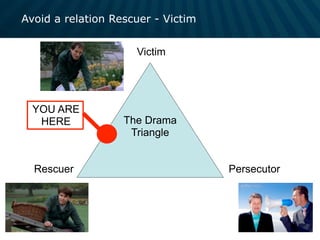
How to avoid, escape the triangle ?
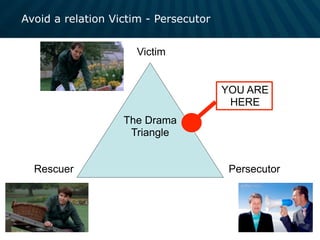
The Drama
Triangle
Victim
Rescuer Persecutor
YOU ARE
HERE
Avoid a relation Victim - Persecutor
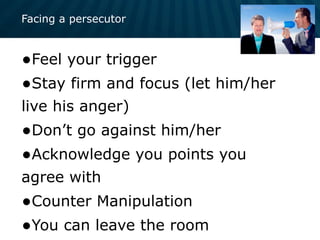
Facing a persecutor
•Feel your trigger
•Stay firm and focus (let him/her
live his anger)
•Don’t go against him/her
•Acknowledge you points you
agree with
•Counter Manipulation
•You can leave the room
The Drama
Triangle
Victim
Rescuer Persecutor
YOU ARE
HERE
Avoid a relation Rescuer - Victim
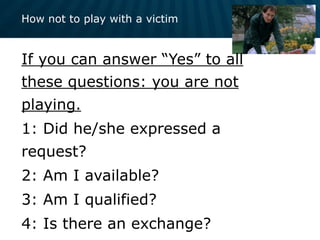
How not to play with a victim
If you can answer “Yes” to all
these questions: you are not
playing.
1: Did he/she expressed a
request?
2: Am I available?
3: Am I qualified?
4: Is there an exchange?
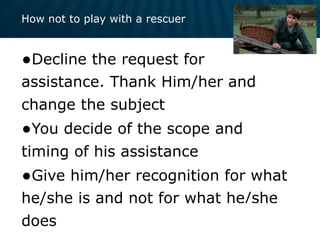
How not to play with a rescuer
•Decline the request for
assistance. Thank Him/her and
change the subject
•You decide of the scope and
timing of his assistance
•Give him/her recognition for what
he/she is and not for what he/she
does
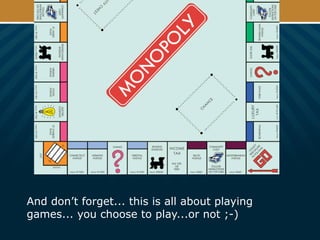
And don’t forget... this is all about playing
games... you choose to play...or not ;-)

Agile2013 Talk: Tools from Psychology for coaches, trainers and team members