Frederik Vannieuwenhuyse
XP Days Benelux 2022
Agile Coaching Growth Wheel
Why?
http://whatisagilecoaching.org/agile-coaching-growth-wheel/
“… a more definition is required in order to
professionalize the world of Agile Coaching. …”
“… The goal is that the Agile Coaching growth wheel
lays down the core competencies that allow
practitioners to go from good to great through a
reflective process with clear guidance to assess their
progress. … “
https://resources.scrumalliance.org/Article/agile-coaching-growth-wheel
Agile Coaching Growth Wheel
• Looking for support

• Understanding

• Assessing

• Targeted improvements
My Why
Agile Coaching Growth Wheel
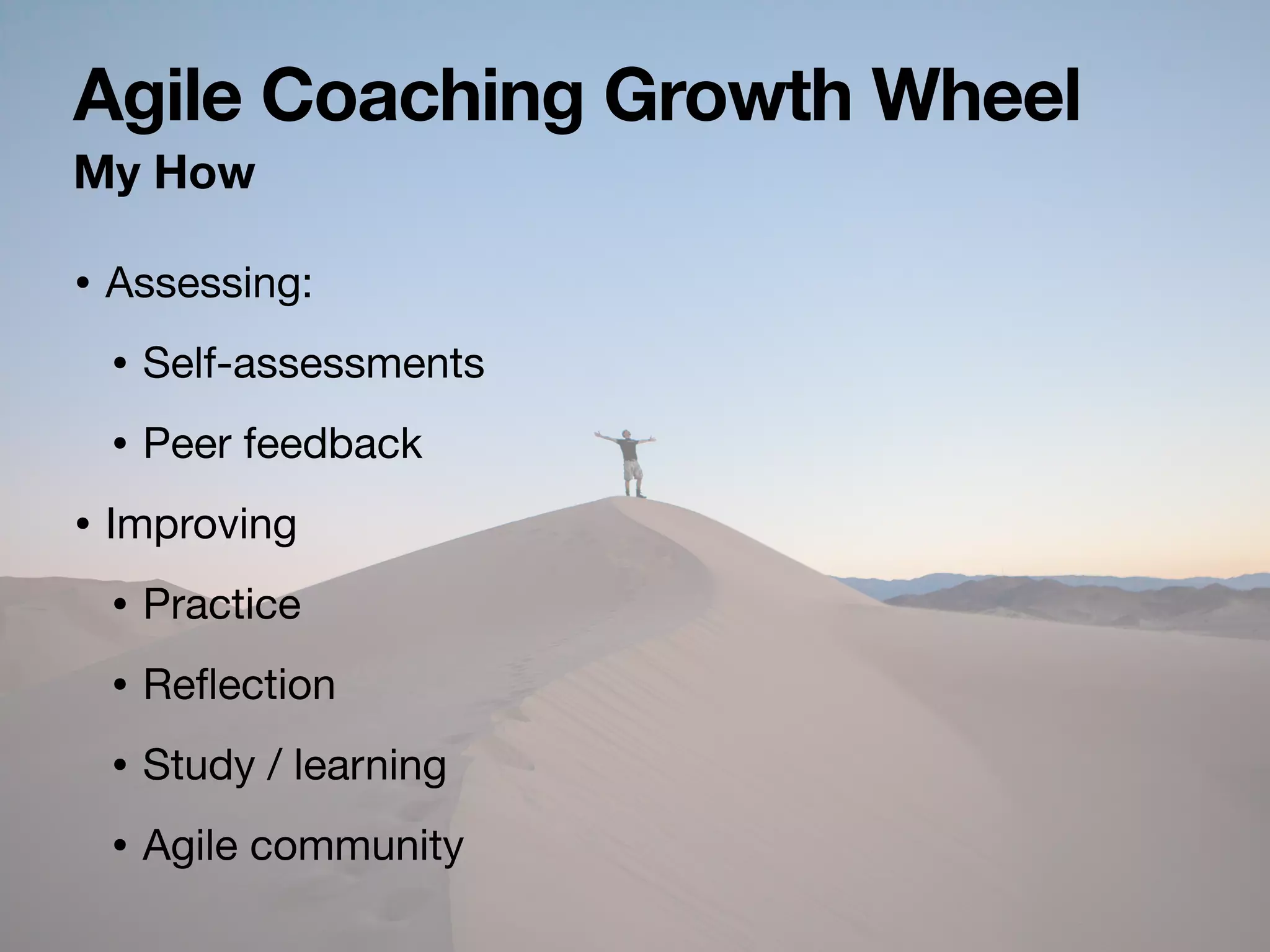
My How
• Assessing:

• Self-assessments

• Peer feedback

• Improving

• Practice

• Re
fl
ection

• Study / learning

• Agile community
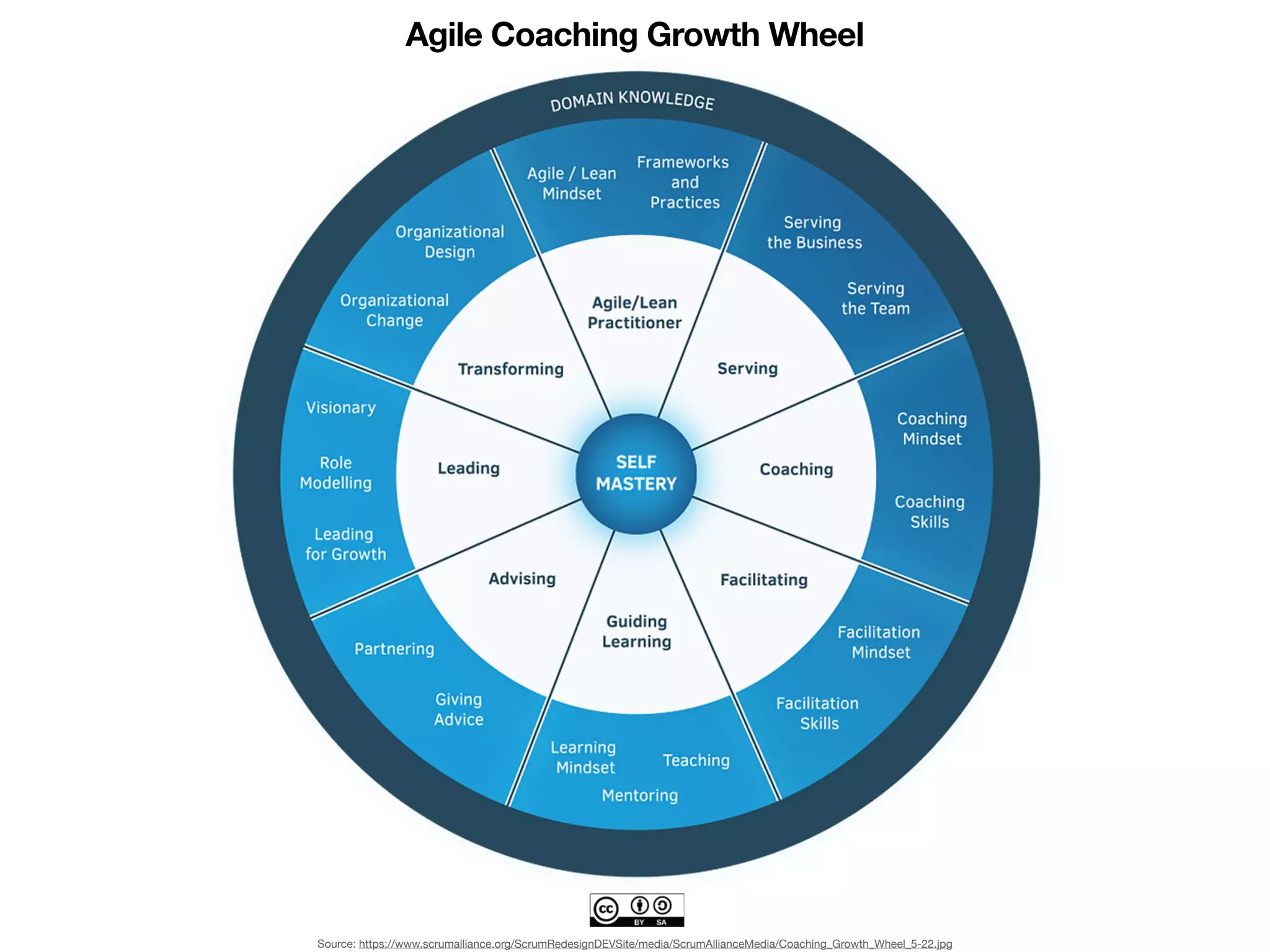
Source: https://www.scrumalliance.org/ScrumRedesignDEVSite/media/ScrumAllianceMedia/Coaching_Growth_Wheel_5-22.jpg
Agile Coaching Growth Wheel
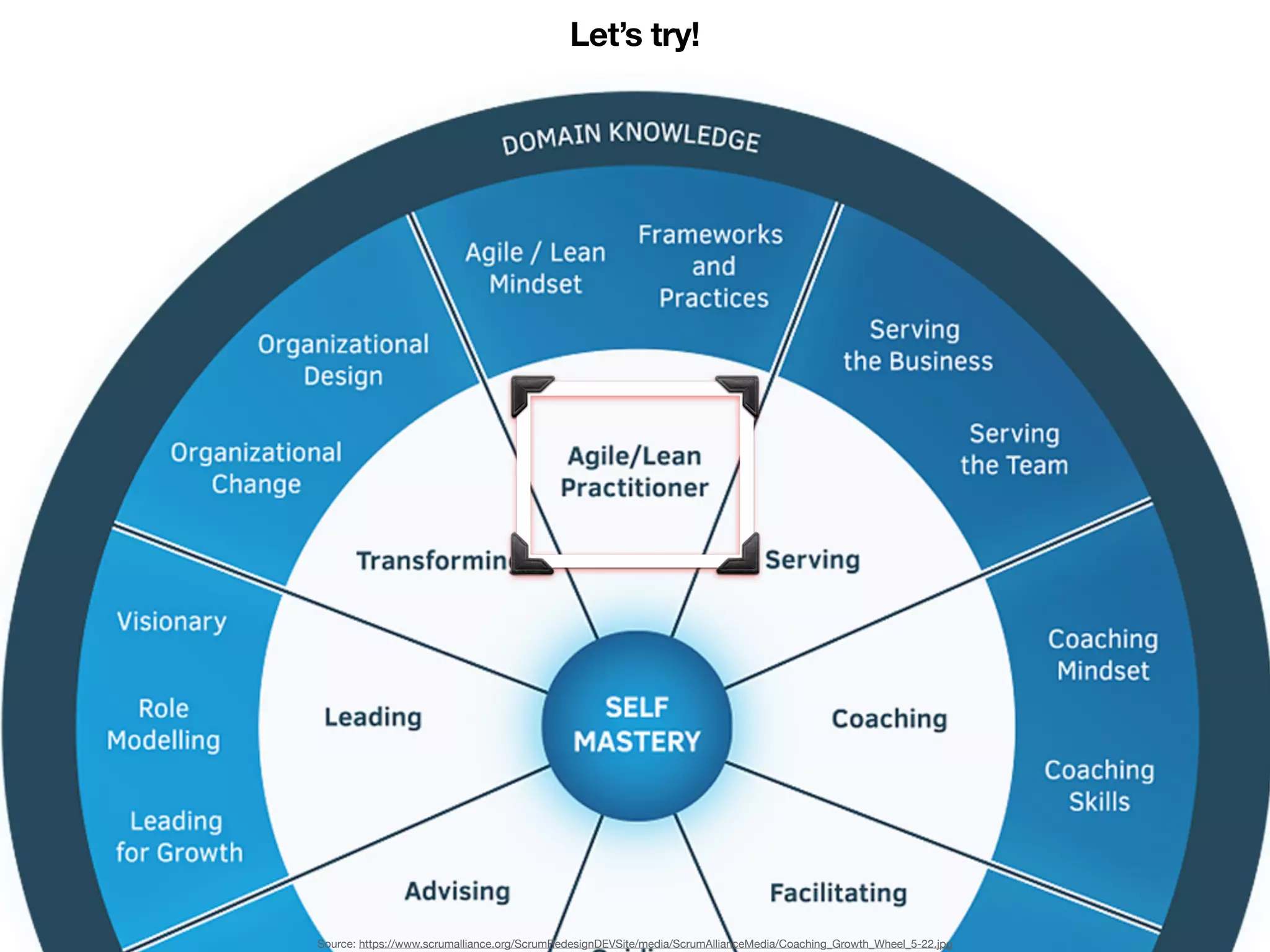
The Competencies
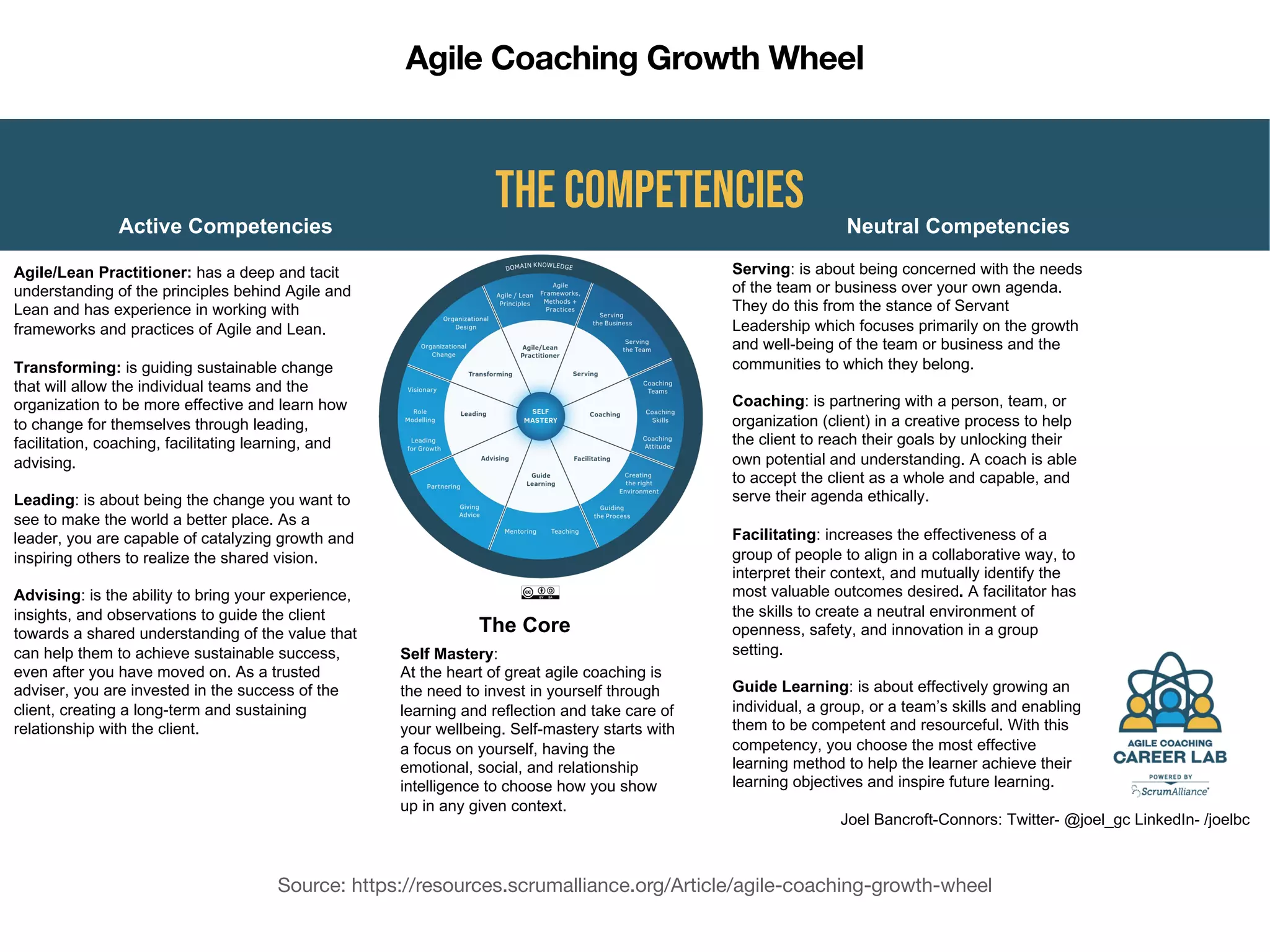
Agile/Lean Practitioner: has a deep and tacit
understanding of the principles behind Agile and
Lean and has experience in working with
frameworks and practices of Agile and Lean.
Transforming: is guiding sustainable change
that will allow the individual teams and the
organization to be more effective and learn how
to change for themselves through leading,
facilitation, coaching, facilitating learning, and
advising.
Leading: is about being the change you want to
see to make the world a better place. As a
leader, you are capable of catalyzing growth and
inspiring others to realize the shared vision.
Advising: is the ability to bring your experience,
insights, and observations to guide the client
towards a shared understanding of the value that
can help them to achieve sustainable success,
even after you have moved on. As a trusted
adviser, you are invested in the success of the
client, creating a long-term and sustaining
relationship with the client.
Serving: is about being concerned with the needs
of the team or business over your own agenda.
They do this from the stance of Servant
Leadership which focuses primarily on the growth
and well-being of the team or business and the
communities to which they belong.
Coaching: is partnering with a person, team, or
organization (client) in a creative process to help
the client to reach their goals by unlocking their
own potential and understanding. A coach is able
to accept the client as a whole and capable, and
serve their agenda ethically.
Facilitating: increases the effectiveness of a
group of people to align in a collaborative way, to
interpret their context, and mutually identify the
most valuable outcomes desired. A facilitator has
the skills to create a neutral environment of
openness, safety, and innovation in a group
setting.
Guide Learning: is about effectively growing an
individual, a group, or a team’s skills and enabling
them to be competent and resourceful. With this
competency, you choose the most effective
learning method to help the learner achieve their
learning objectives and inspire future learning.
Self Mastery:
At the heart of great agile coaching is
the need to invest in yourself through
learning and reflection and take care of
your wellbeing. Self-mastery starts with
a focus on yourself, having the
emotional, social, and relationship
intelligence to choose how you show
up in any given context.
Active Competencies Neutral Competencies
The Core
Joel Bancroft-Connors: Twitter- @joel_gc LinkedIn- /joelbc
Agile Coaching Growth Wheel
Source: https://resources.scrumalliance.org/Article/agile-coaching-growth-wheel
Agile Coaching Growth Wheel
How?
Step 1: Identify an area of improvement

Step 2: Re
fl
ect on a competency area

Step 3: Brainstorm options and generate actions.

Step 4: Inspect, Adapt, Repeat

Recommended: do this with another coach (pairing)
Source: https://resources.scrumalliance.org/uploads/2022/1/14/Competency%20dreyfus%20model-irxHQAarpknthU6OFxHxw.png
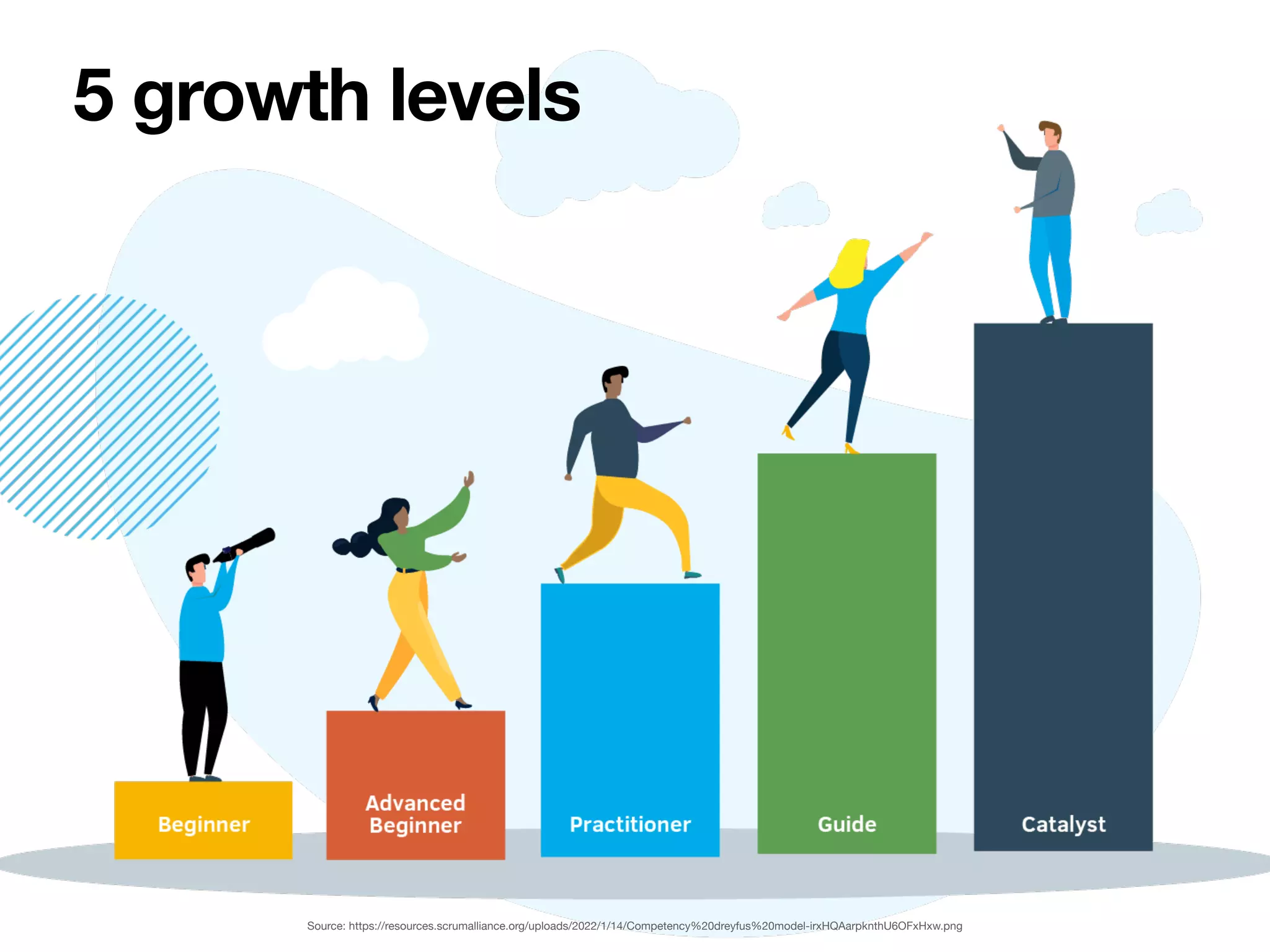
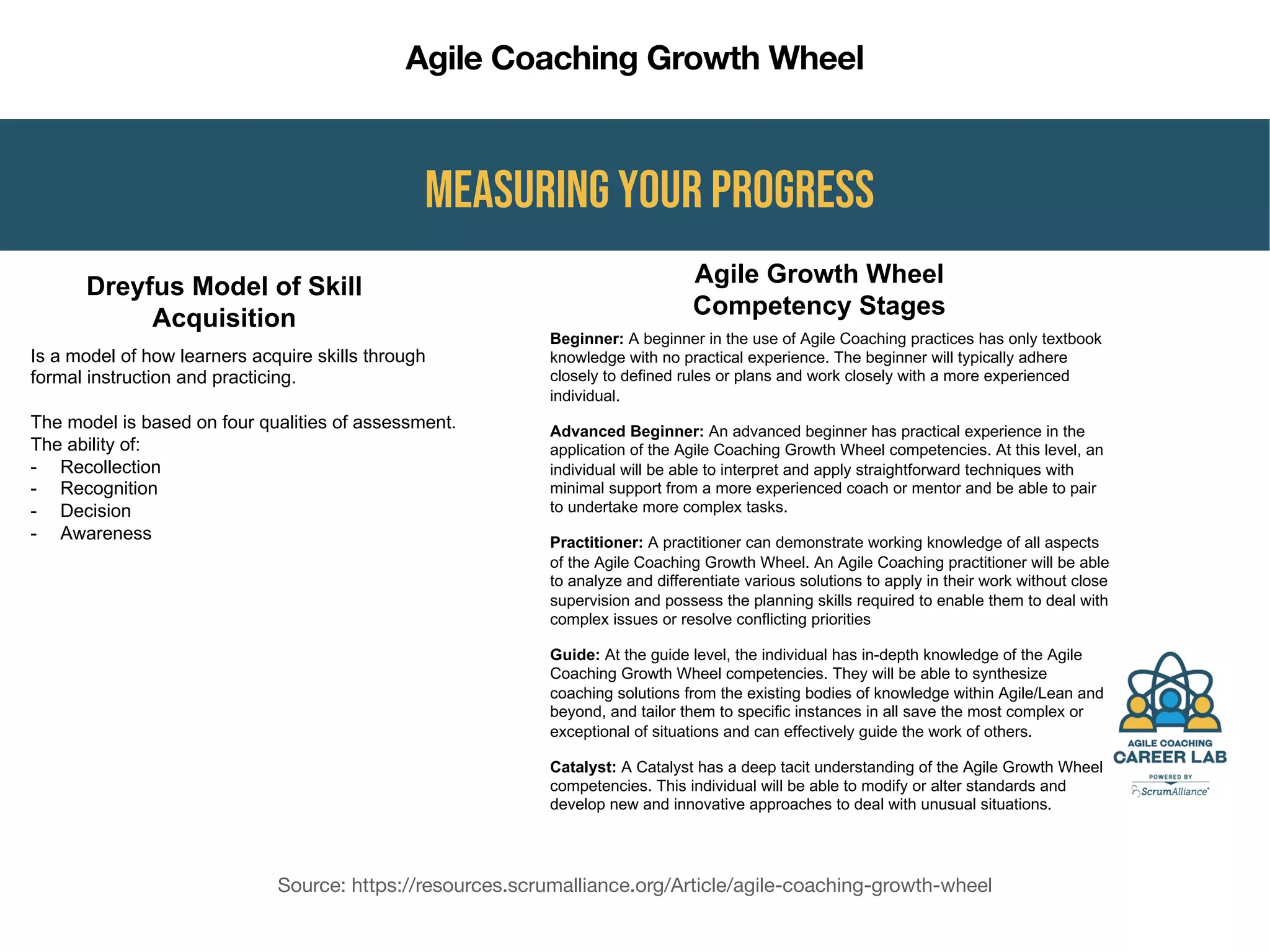
5 growth levels
Measuring Your Progress
Beginner: A beginner in the use of Agile Coaching practices has only textbook
knowledge with no practical experience. The beginner will typically adhere
closely to defined rules or plans and work closely with a more experienced
individual.
Advanced Beginner: An advanced beginner has practical experience in the
application of the Agile Coaching Growth Wheel competencies. At this level, an
individual will be able to interpret and apply straightforward techniques with
minimal support from a more experienced coach or mentor and be able to pair
to undertake more complex tasks.
Practitioner: A practitioner can demonstrate working knowledge of all aspects
of the Agile Coaching Growth Wheel. An Agile Coaching practitioner will be able
to analyze and differentiate various solutions to apply in their work without close
supervision and possess the planning skills required to enable them to deal with
complex issues or resolve conflicting priorities
Guide: At the guide level, the individual has in-depth knowledge of the Agile
Coaching Growth Wheel competencies. They will be able to synthesize
coaching solutions from the existing bodies of knowledge within Agile/Lean and
beyond, and tailor them to specific instances in all save the most complex or
exceptional of situations and can effectively guide the work of others.
Catalyst: A Catalyst has a deep tacit understanding of the Agile Growth Wheel
competencies. This individual will be able to modify or alter standards and
develop new and innovative approaches to deal with unusual situations.
Dreyfus Model of Skill
Acquisition
Is a model of how learners acquire skills through
formal instruction and practicing.
The model is based on four qualities of assessment.
The ability of:
- Recollection
- Recognition
- Decision
- Awareness
Agile Growth Wheel
Competency Stages
Agile Coaching Growth Wheel
Source: https://resources.scrumalliance.org/Article/agile-coaching-growth-wheel
Source: https://www.scrumalliance.org/ScrumRedesignDEVSite/media/ScrumAllianceMedia/Coaching_Growth_Wheel_5-22.jpg
Let’s try!
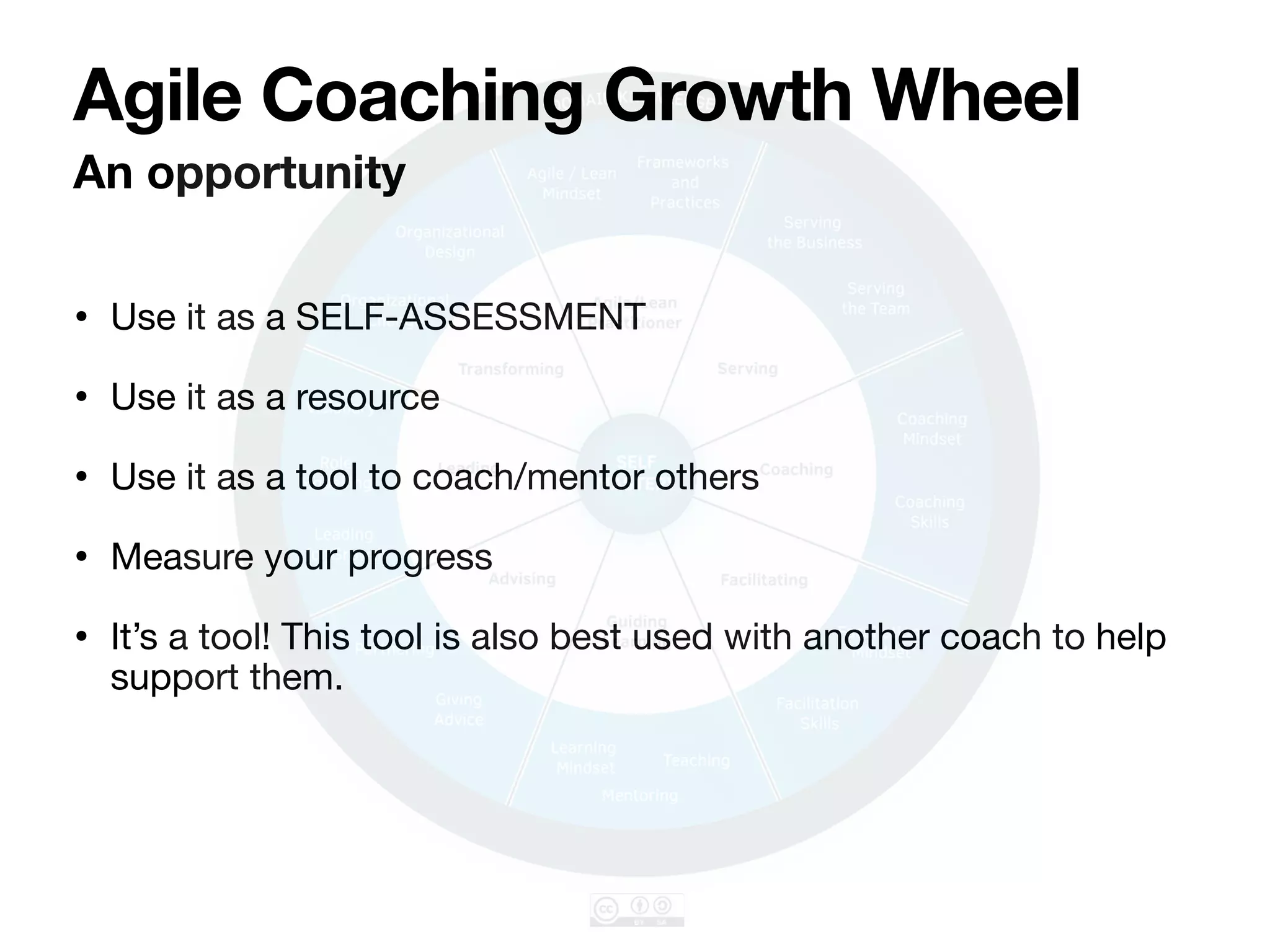
• Use it as a SELF-ASSESSMENT

• Use it as a resource

• Use it as a tool to coach/mentor others

• Measure your progress

• It’s a tool! This tool is also best used with another coach to help
support them.
An opportunity
Agile Coaching Growth Wheel
• Don’t use it to measure (individual) performance

• Don’t use it to incentivize

• Don’t use it to compare coaches

• Don’t use it as a selling point
NO-GO
Agile Coaching Growth Wheel
• http://whatisagilecoaching.org/agile-coaching-growth-wheel/
(where I initially discovered it)

• https://resources.scrumalliance.org/Article/agile-coaching-growth-
wheel

• https://resources.scrumalliance.org/uploads/2022/8/1/
Agile%20Coaching%20Growth%20Wheel_v3.1_06_2022-
LdLPhlrvwkinKL1i4trgkQ.pdf (guidance document, current version)

• Feedback form: https://www.surveymonkey.com/r/growth_wheel

• https://miro.com/app/board/uXjVOOlEqwQ=/ (ACGW learning
resources, work-in-progress)
References
Agile Coaching Growth Wheel
Frederik Vannieuwenhuyse
Enabling and guiding teams and organizations towards
more e
ff
ective collaboration, improvement, and agility.
• Scrum Master, Agile Coach, Facilitator, Teacher

• Works at iLean.be

• Klimaks Agile Team Coaching alumnus
www.klimaks.be

• Personal blog: value-
fi
rst.be

Agile Coaching Growth Wheel intro report

  • 1.
    Frederik Vannieuwenhuyse XP DaysBenelux 2022 Agile Coaching Growth Wheel
  • 2.
    Agile Coaching GrowthWheel Why? http://whatisagilecoaching.org/agile-coaching-growth-wheel/ “… a more definition is required in order to professionalize the world of Agile Coaching. …” “… The goal is that the Agile Coaching growth wheel lays down the core competencies that allow practitioners to go from good to great through a reflective process with clear guidance to assess their progress. … “ https://resources.scrumalliance.org/Article/agile-coaching-growth-wheel
  • 3.
    Agile Coaching GrowthWheel • Looking for support • Understanding • Assessing • Targeted improvements My Why
  • 4.
    Agile Coaching GrowthWheel My How • Assessing: • Self-assessments • Peer feedback • Improving • Practice • Re fl ection • Study / learning • Agile community
  • 5.
  • 6.
    The Competencies Agile/Lean Practitioner:has a deep and tacit understanding of the principles behind Agile and Lean and has experience in working with frameworks and practices of Agile and Lean. Transforming: is guiding sustainable change that will allow the individual teams and the organization to be more effective and learn how to change for themselves through leading, facilitation, coaching, facilitating learning, and advising. Leading: is about being the change you want to see to make the world a better place. As a leader, you are capable of catalyzing growth and inspiring others to realize the shared vision. Advising: is the ability to bring your experience, insights, and observations to guide the client towards a shared understanding of the value that can help them to achieve sustainable success, even after you have moved on. As a trusted adviser, you are invested in the success of the client, creating a long-term and sustaining relationship with the client. Serving: is about being concerned with the needs of the team or business over your own agenda. They do this from the stance of Servant Leadership which focuses primarily on the growth and well-being of the team or business and the communities to which they belong. Coaching: is partnering with a person, team, or organization (client) in a creative process to help the client to reach their goals by unlocking their own potential and understanding. A coach is able to accept the client as a whole and capable, and serve their agenda ethically. Facilitating: increases the effectiveness of a group of people to align in a collaborative way, to interpret their context, and mutually identify the most valuable outcomes desired. A facilitator has the skills to create a neutral environment of openness, safety, and innovation in a group setting. Guide Learning: is about effectively growing an individual, a group, or a team’s skills and enabling them to be competent and resourceful. With this competency, you choose the most effective learning method to help the learner achieve their learning objectives and inspire future learning. Self Mastery: At the heart of great agile coaching is the need to invest in yourself through learning and reflection and take care of your wellbeing. Self-mastery starts with a focus on yourself, having the emotional, social, and relationship intelligence to choose how you show up in any given context. Active Competencies Neutral Competencies The Core Joel Bancroft-Connors: Twitter- @joel_gc LinkedIn- /joelbc Agile Coaching Growth Wheel Source: https://resources.scrumalliance.org/Article/agile-coaching-growth-wheel
  • 7.
    Agile Coaching GrowthWheel How? Step 1: Identify an area of improvement Step 2: Re fl ect on a competency area Step 3: Brainstorm options and generate actions. Step 4: Inspect, Adapt, Repeat Recommended: do this with another coach (pairing)
  • 8.
  • 9.
    Measuring Your Progress Beginner:A beginner in the use of Agile Coaching practices has only textbook knowledge with no practical experience. The beginner will typically adhere closely to defined rules or plans and work closely with a more experienced individual. Advanced Beginner: An advanced beginner has practical experience in the application of the Agile Coaching Growth Wheel competencies. At this level, an individual will be able to interpret and apply straightforward techniques with minimal support from a more experienced coach or mentor and be able to pair to undertake more complex tasks. Practitioner: A practitioner can demonstrate working knowledge of all aspects of the Agile Coaching Growth Wheel. An Agile Coaching practitioner will be able to analyze and differentiate various solutions to apply in their work without close supervision and possess the planning skills required to enable them to deal with complex issues or resolve conflicting priorities Guide: At the guide level, the individual has in-depth knowledge of the Agile Coaching Growth Wheel competencies. They will be able to synthesize coaching solutions from the existing bodies of knowledge within Agile/Lean and beyond, and tailor them to specific instances in all save the most complex or exceptional of situations and can effectively guide the work of others. Catalyst: A Catalyst has a deep tacit understanding of the Agile Growth Wheel competencies. This individual will be able to modify or alter standards and develop new and innovative approaches to deal with unusual situations. Dreyfus Model of Skill Acquisition Is a model of how learners acquire skills through formal instruction and practicing. The model is based on four qualities of assessment. The ability of: - Recollection - Recognition - Decision - Awareness Agile Growth Wheel Competency Stages Agile Coaching Growth Wheel Source: https://resources.scrumalliance.org/Article/agile-coaching-growth-wheel
  • 10.
  • 11.
    • Use itas a SELF-ASSESSMENT • Use it as a resource • Use it as a tool to coach/mentor others • Measure your progress • It’s a tool! This tool is also best used with another coach to help support them. An opportunity Agile Coaching Growth Wheel
  • 12.
    • Don’t useit to measure (individual) performance • Don’t use it to incentivize • Don’t use it to compare coaches • Don’t use it as a selling point NO-GO Agile Coaching Growth Wheel
  • 13.
    • http://whatisagilecoaching.org/agile-coaching-growth-wheel/ (where Iinitially discovered it) • https://resources.scrumalliance.org/Article/agile-coaching-growth- wheel • https://resources.scrumalliance.org/uploads/2022/8/1/ Agile%20Coaching%20Growth%20Wheel_v3.1_06_2022- LdLPhlrvwkinKL1i4trgkQ.pdf (guidance document, current version) • Feedback form: https://www.surveymonkey.com/r/growth_wheel • https://miro.com/app/board/uXjVOOlEqwQ=/ (ACGW learning resources, work-in-progress) References Agile Coaching Growth Wheel
  • 14.
    Frederik Vannieuwenhuyse Enabling andguiding teams and organizations towards more e ff ective collaboration, improvement, and agility. • Scrum Master, Agile Coach, Facilitator, Teacher • Works at iLean.be • Klimaks Agile Team Coaching alumnus www.klimaks.be • Personal blog: value- fi rst.be