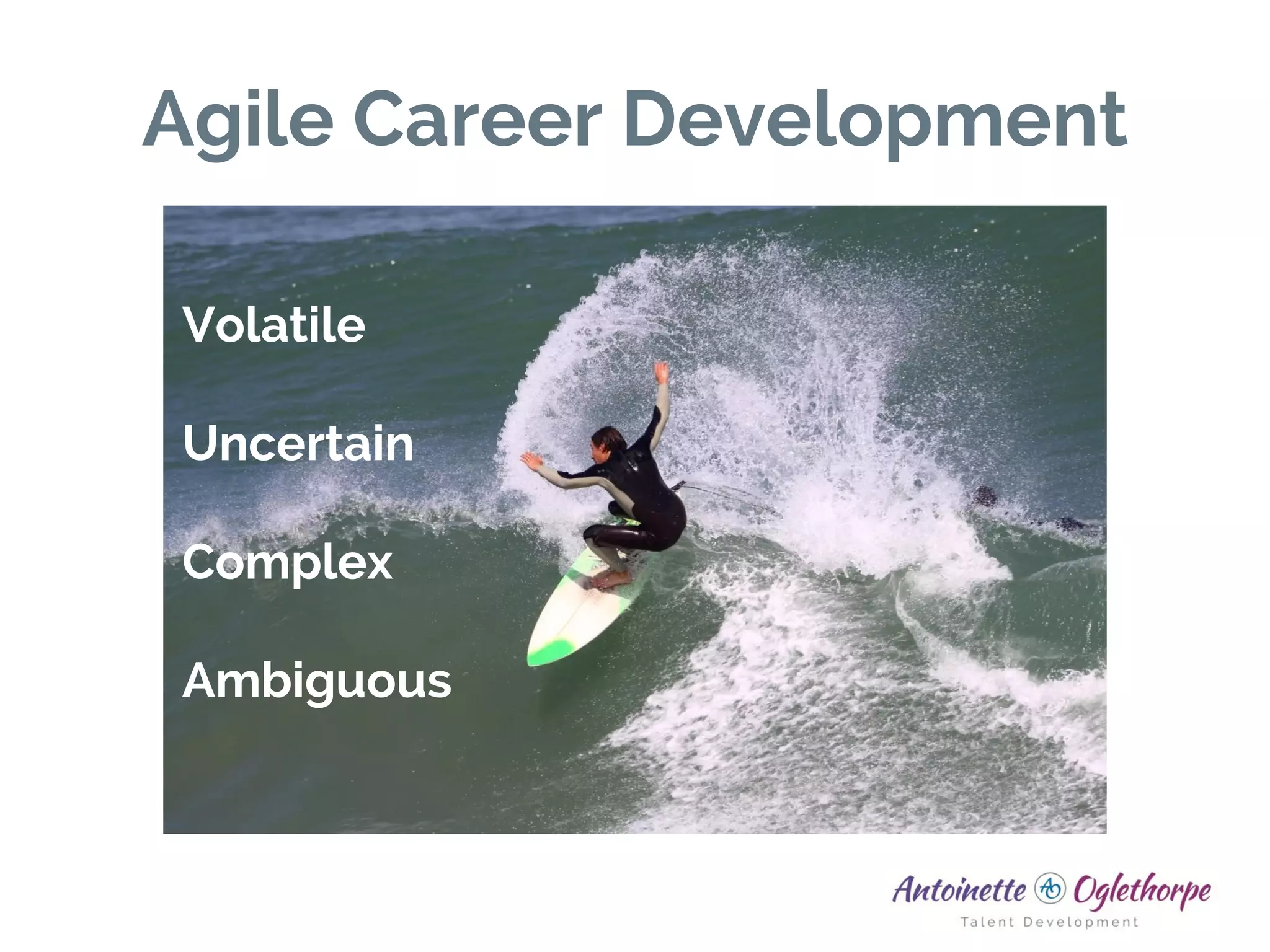
Agile Career Development
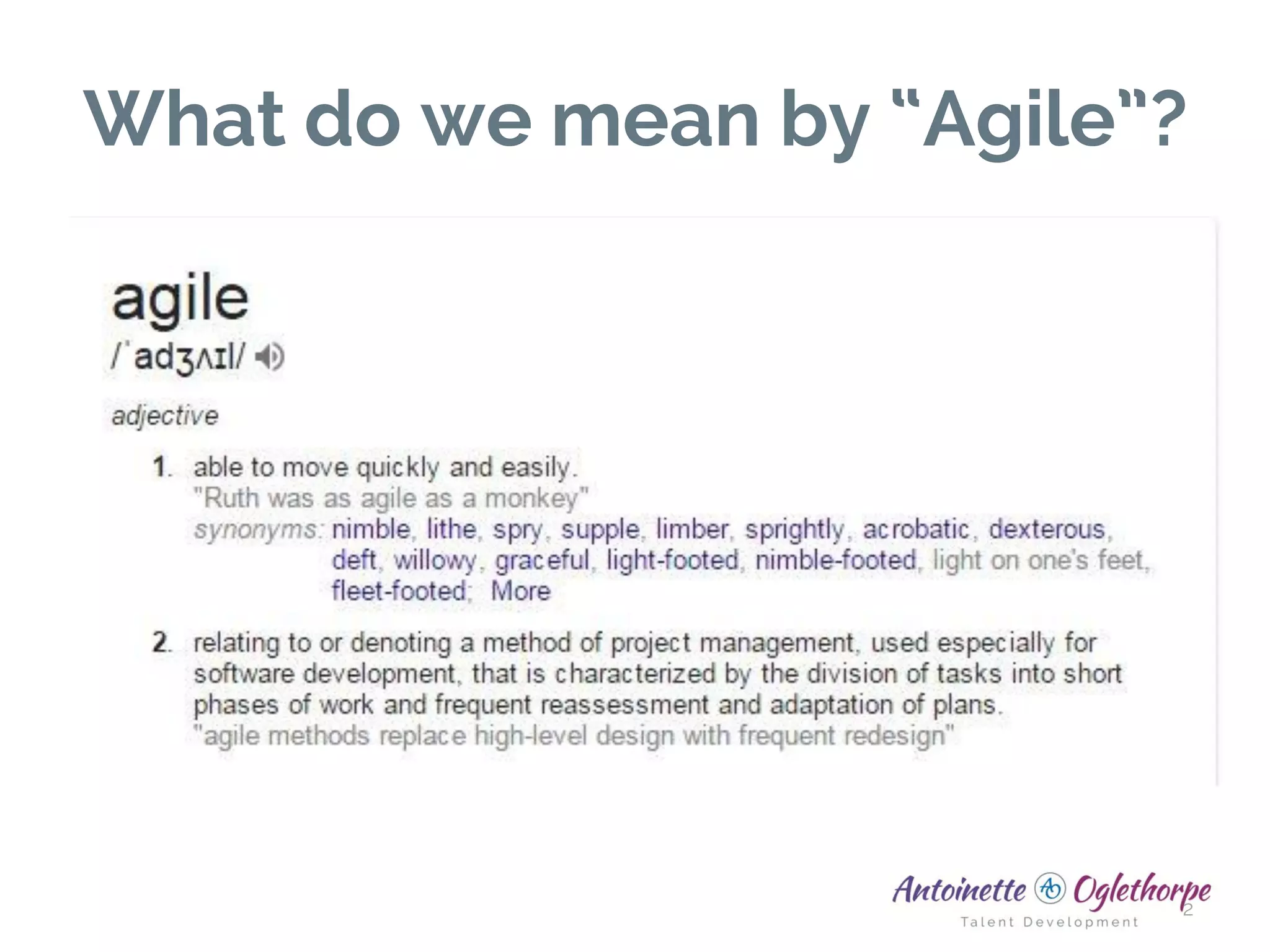
What do we mean by “Agile”?
2
WHY WE NEED AGILE CAREER
DEVELOPMENT
3
6 GLOBAL MEGATRENDS
4
"Learning is not compulsory but neither is
survival“
W. Edwards Deming
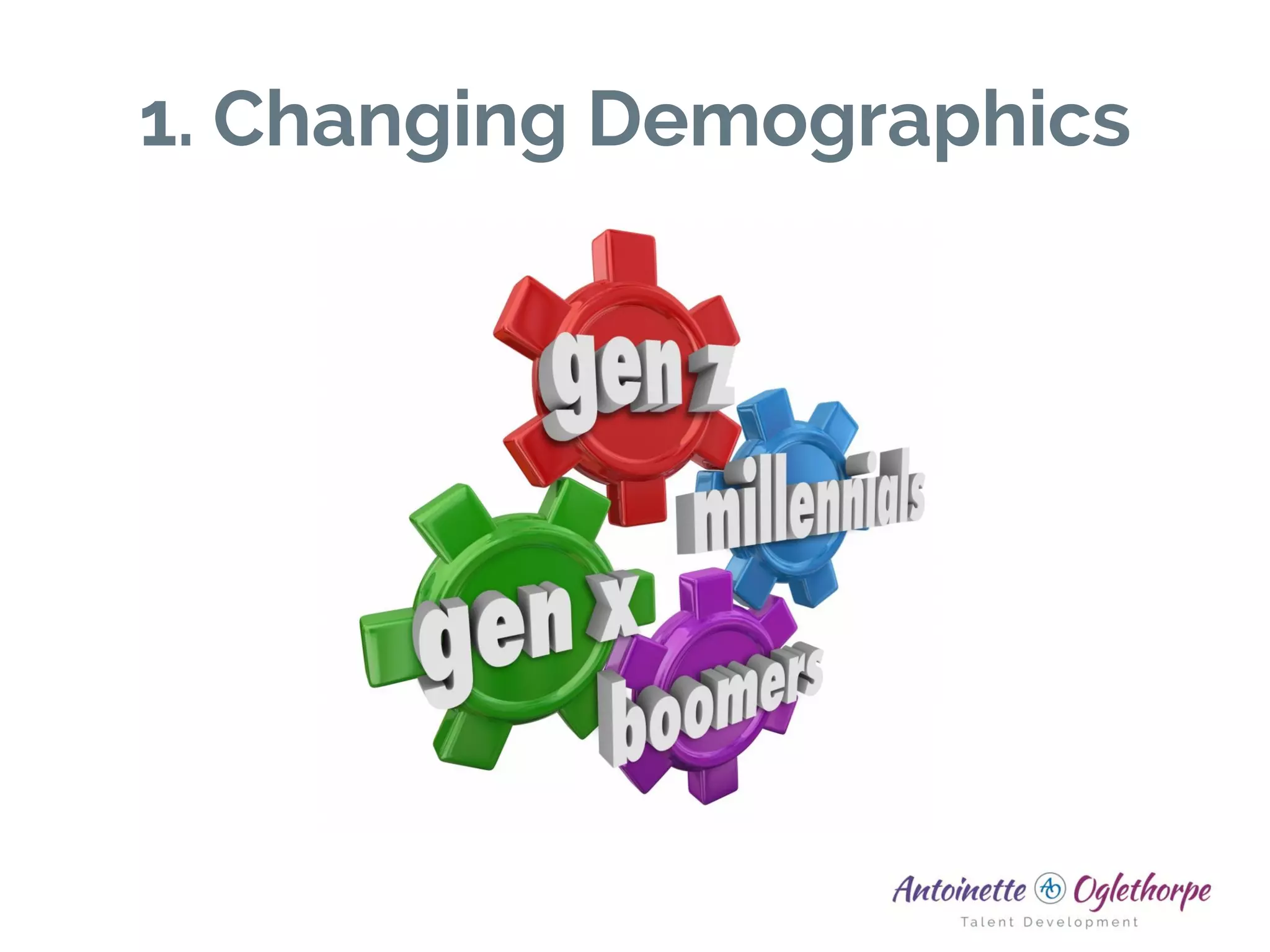
1. Changing Demographics
2. Globalisation & Future
Markets
3. Individualism
4. Environmental Crisis
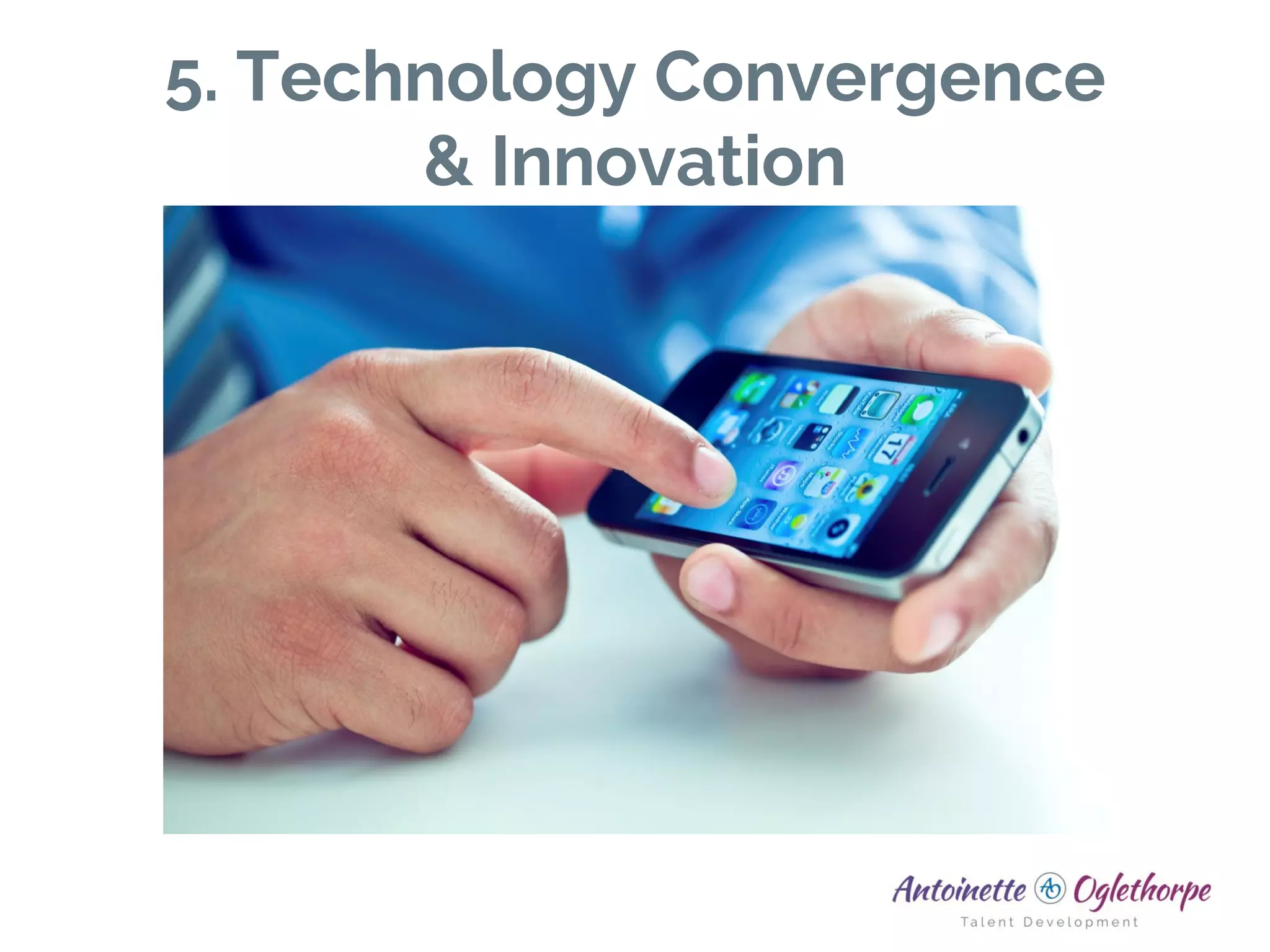
5. Technology Convergence
& Innovation
6. Sharing Global
Responsibility
Did you know…?Did you know? Shift happens…
12
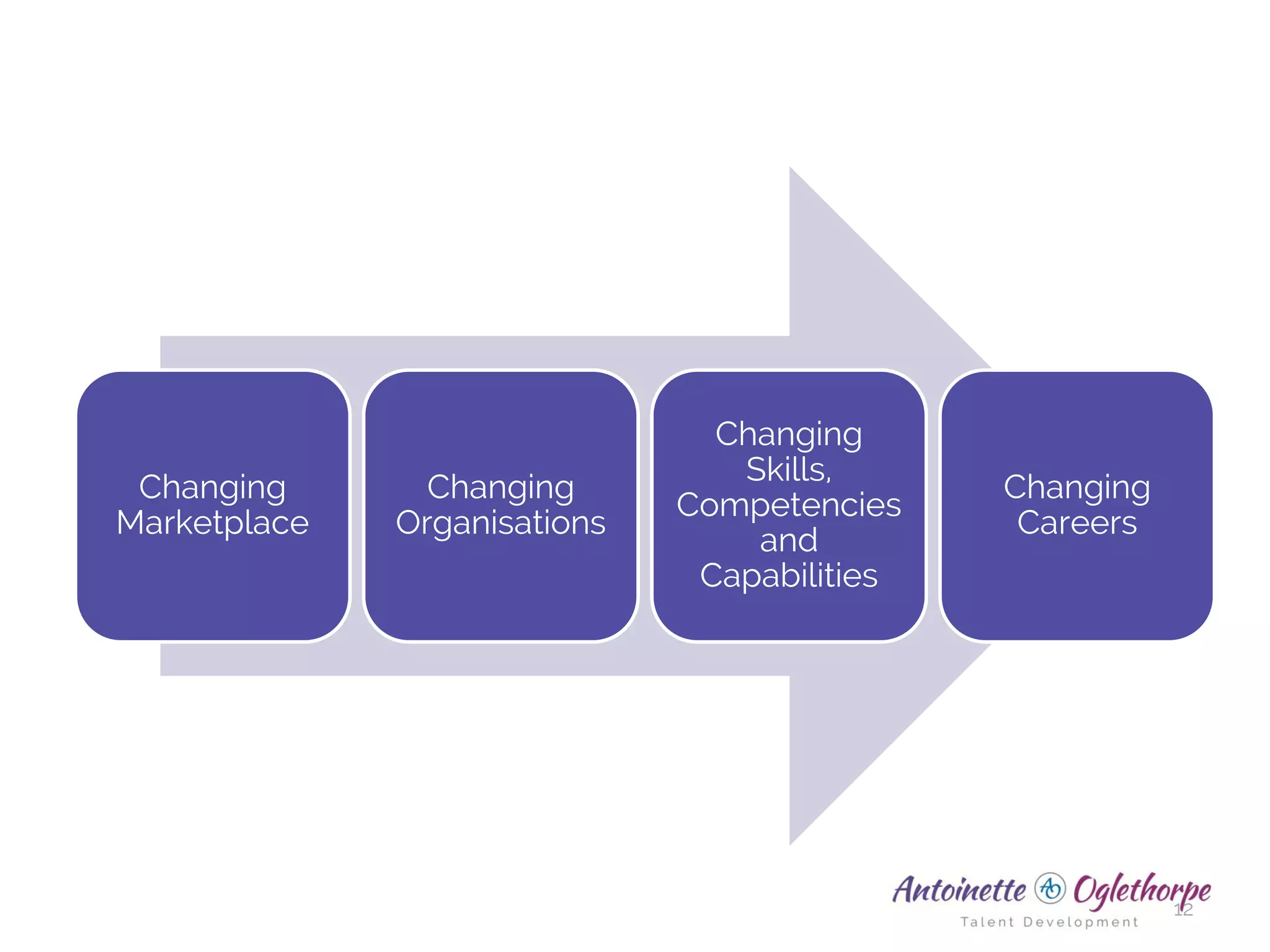
Changing
Marketplace
Changing
Organisations
Changing
Skills,
Competencies
and
Capabilities
Changing
Careers
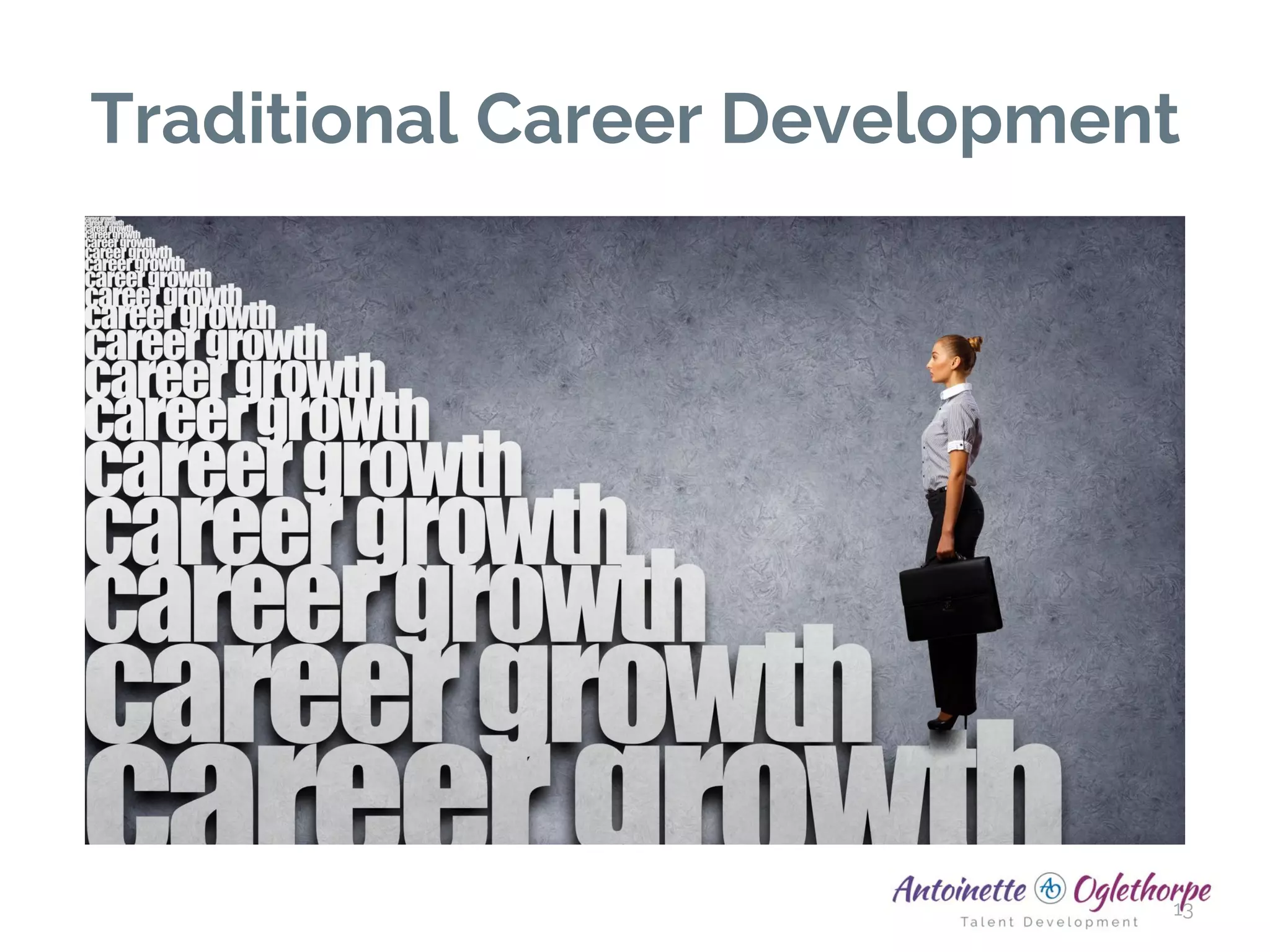
Traditional Career Development
13
Agile Career Development
Volatile
Uncertain
Complex
Ambiguous
Discussion
• If an organisation had an agile approach
to career development, how would you
know? What would be the signs?
• What would managers notice?
• What would employees notice?
15
WHAT ARE THE COMPONENTS
OF AGILITY?
16
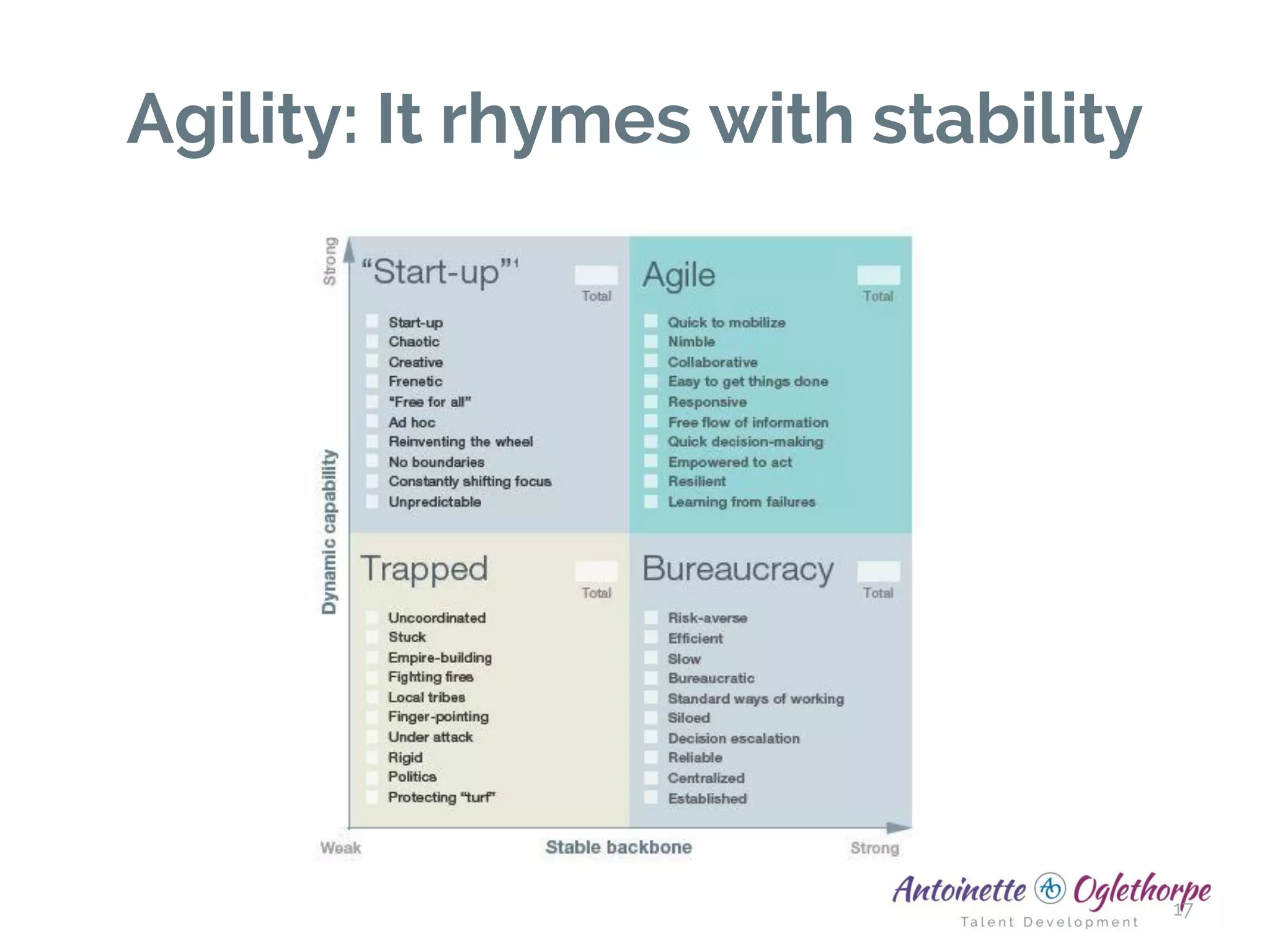
Agility: It rhymes with stability
17
HOW DO WE MAKE CAREER
DEVELOPMENT MORE AGILE?
18
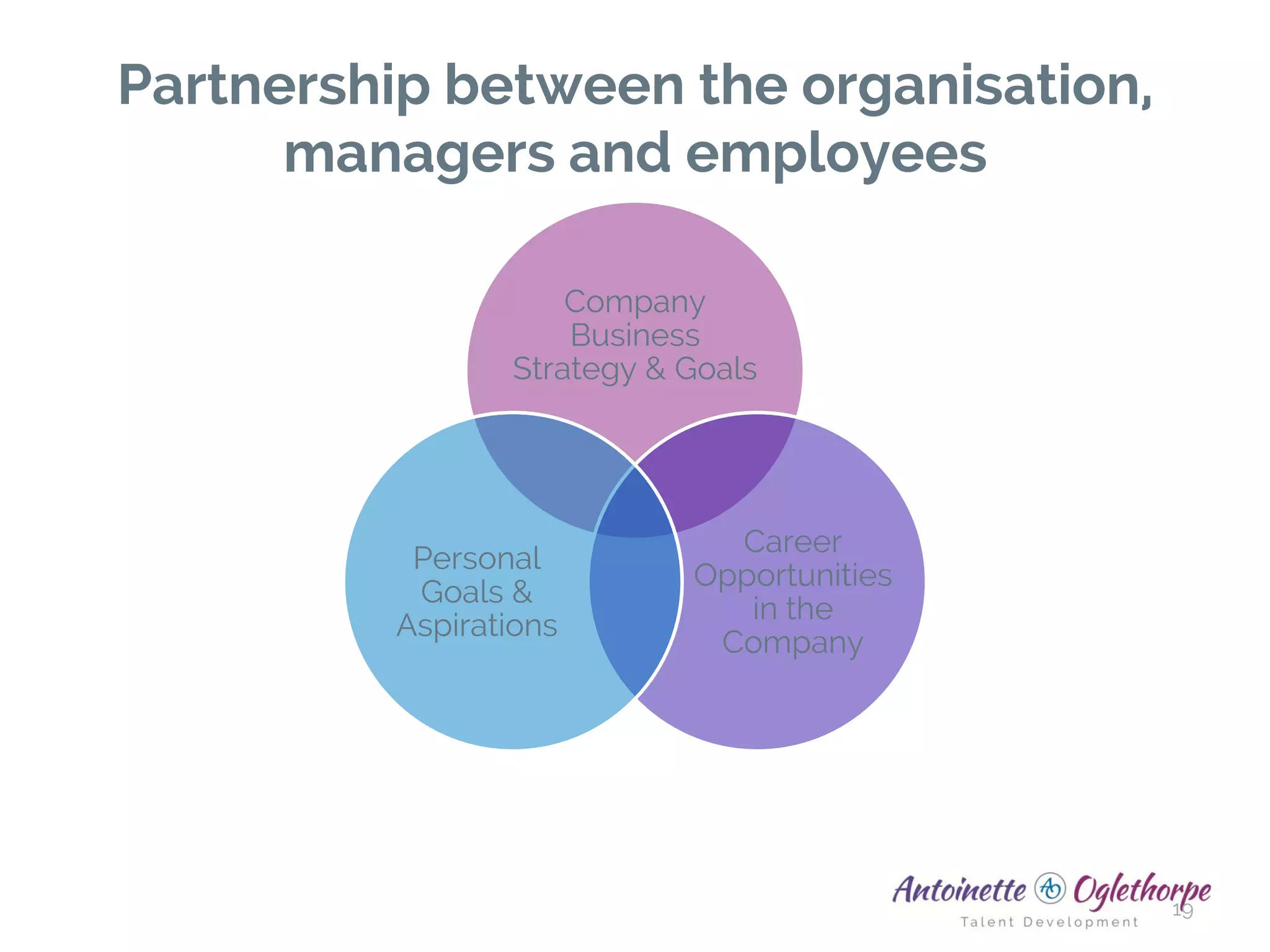
Partnership between the organisation,
managers and employees
19
Company
Business
Strategy & Goals
Career
Opportunities
in the
Company
Personal
Goals &
Aspirations
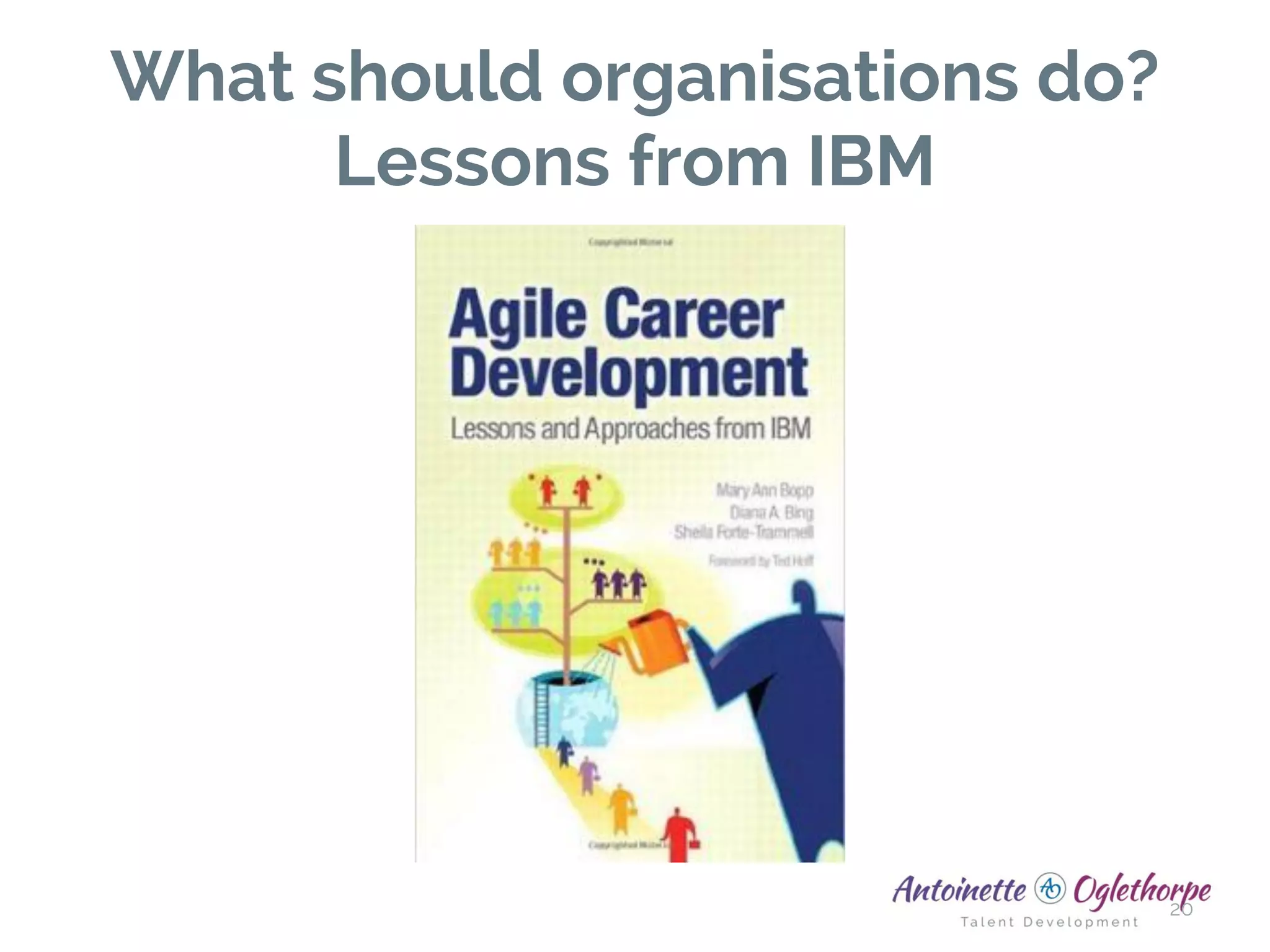
What should organisations do?
Lessons from IBM
20
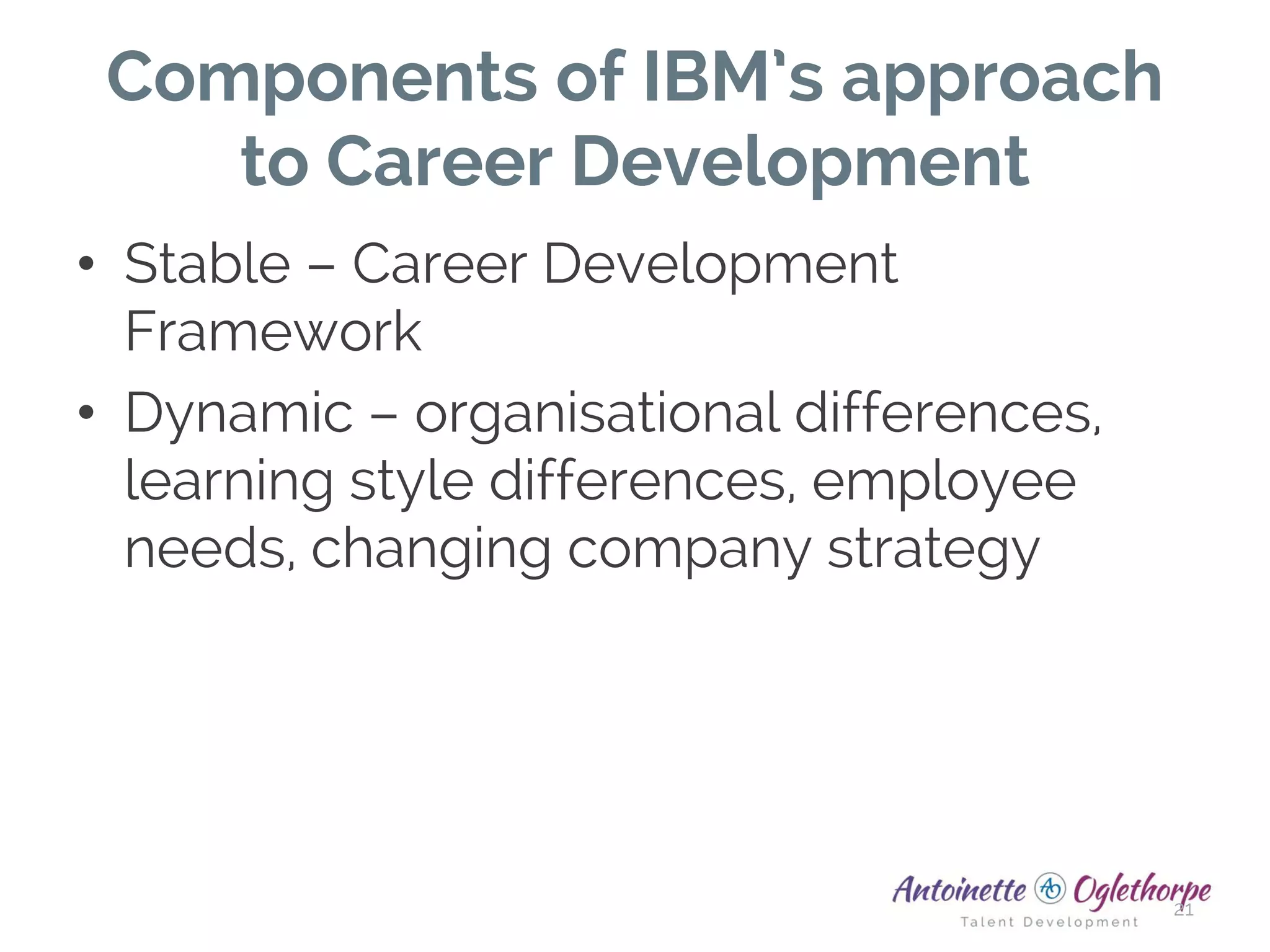
Components of IBM’s approach
to Career Development
• Stable – Career Development
Framework
• Dynamic – organisational differences,
learning style differences, employee
needs, changing company strategy
21
Career Development Framework
• Competencies – needed by all
employees
• Skills—specific to job roles
• Capabilities— combination of applied
knowledge, skills, abilities, and on-the-
job experiences
22
IBM Competencies (at some
point)
• Embrace challenge
• Partner for clients’
Success
• Collaborate globally
• Act with a systemic
perspective
• Build mutual trust
• Influence through
expertise
• Continuously
transform
• Communicate for
impact
• Help IBMers
succeed
23
IBM Skills (Expertise taxonomy)
• Provides standard framework and single
set of terms
• “Housed” in large database that
identifies job roles and associated skills
• Provides foundation for all HR processes
24
IBM Capabilities
• Based on a multitude of experiences
that IBM must deliver to enable client
success
• Rely on a combination of applied
knowledge, skills, abilities, and on-the-
job experiences
• 5 levels of proficiency (“Entry” to
“Thought Leader”)
25
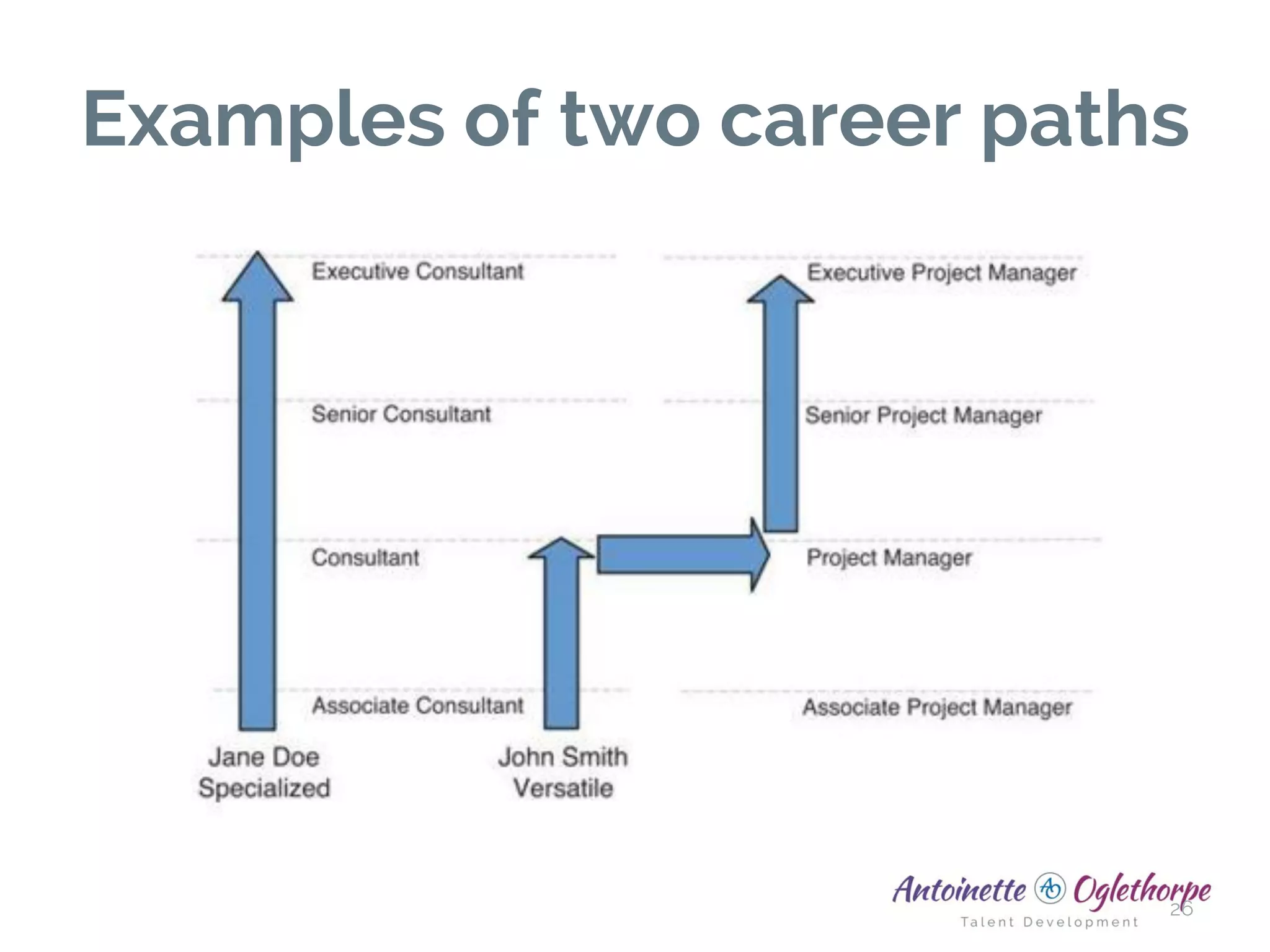
Examples of two career paths
26
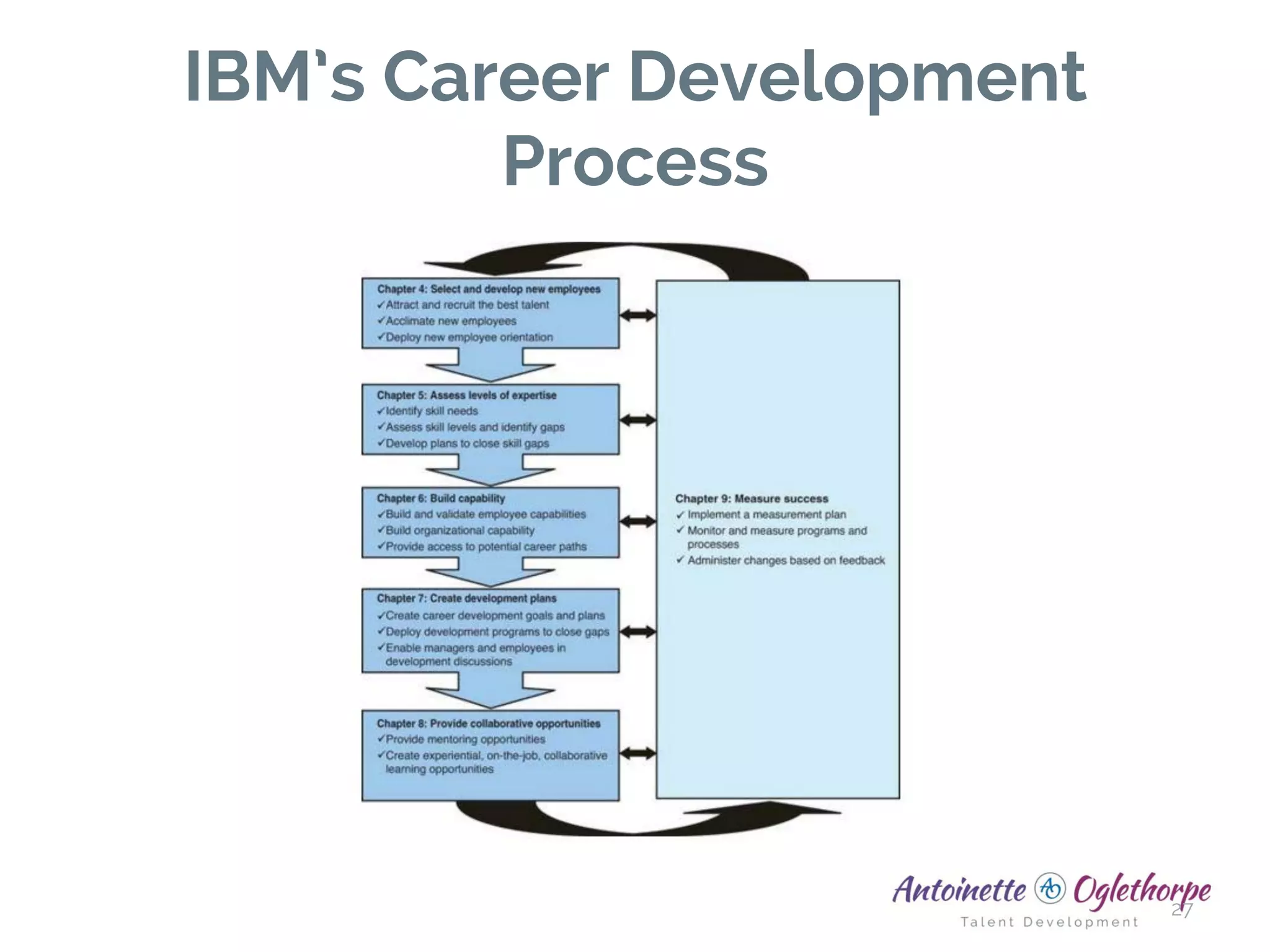
IBM’s Career Development
Process
27
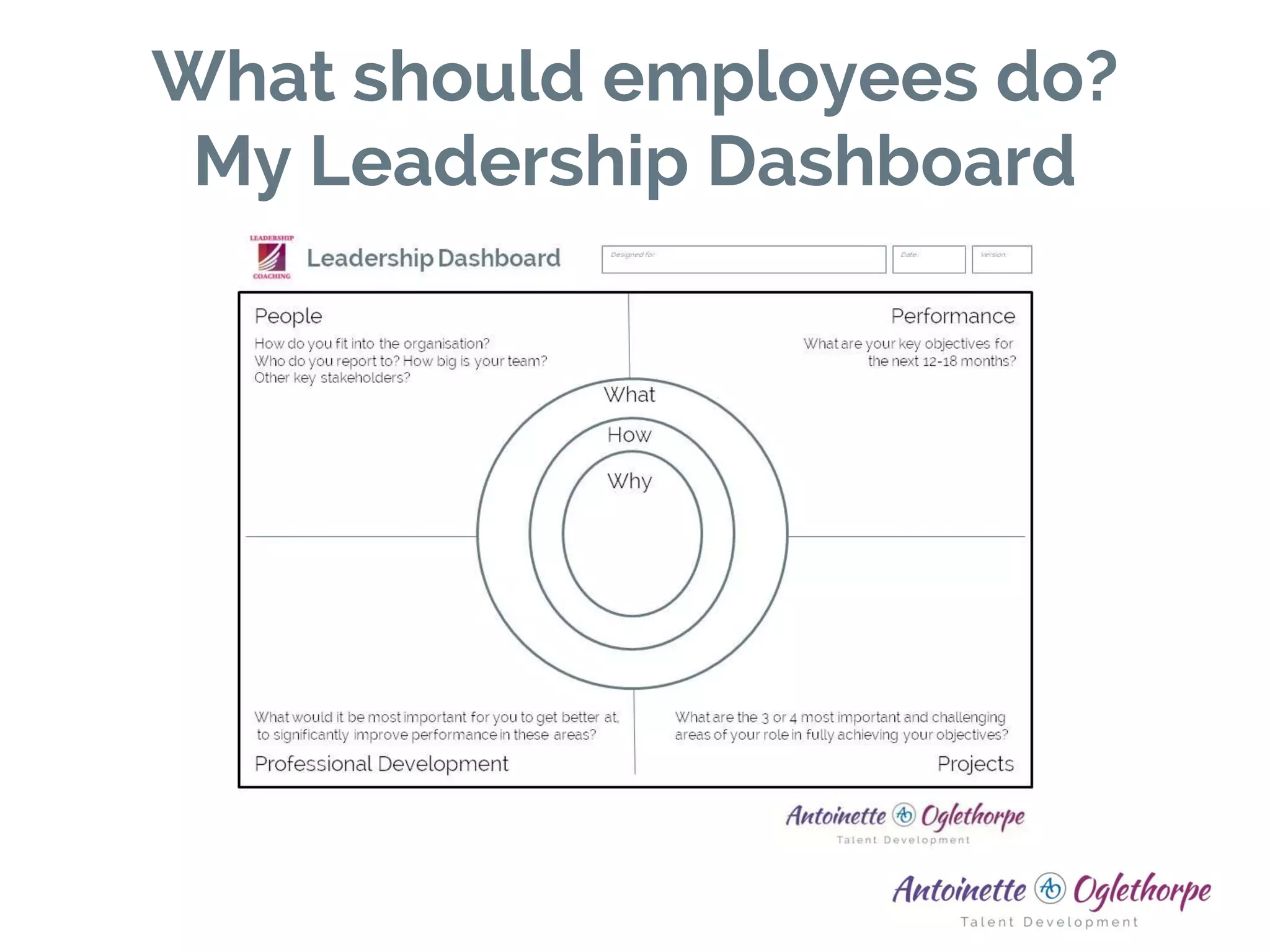
What should employees do?
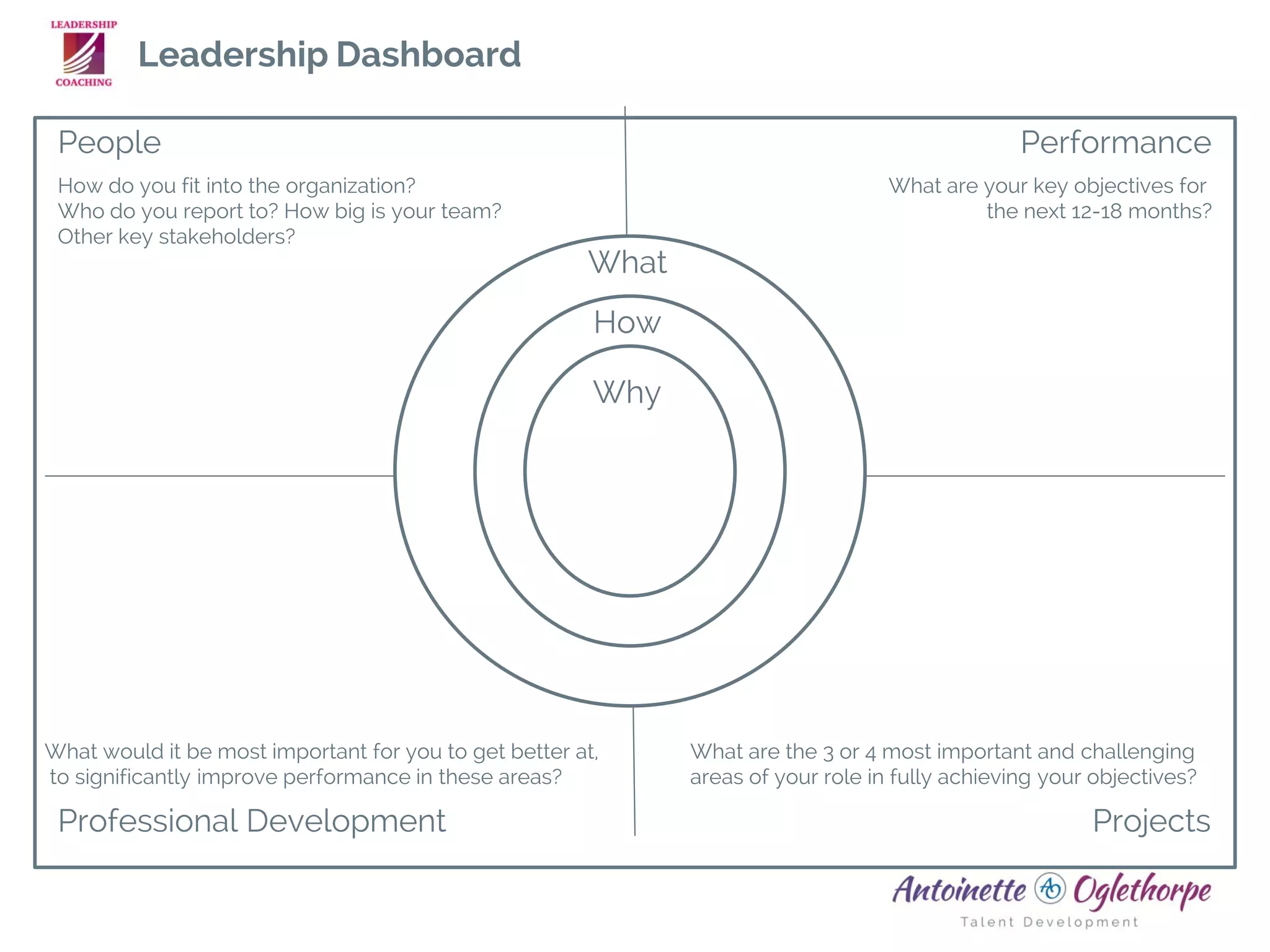
My Leadership Dashboard
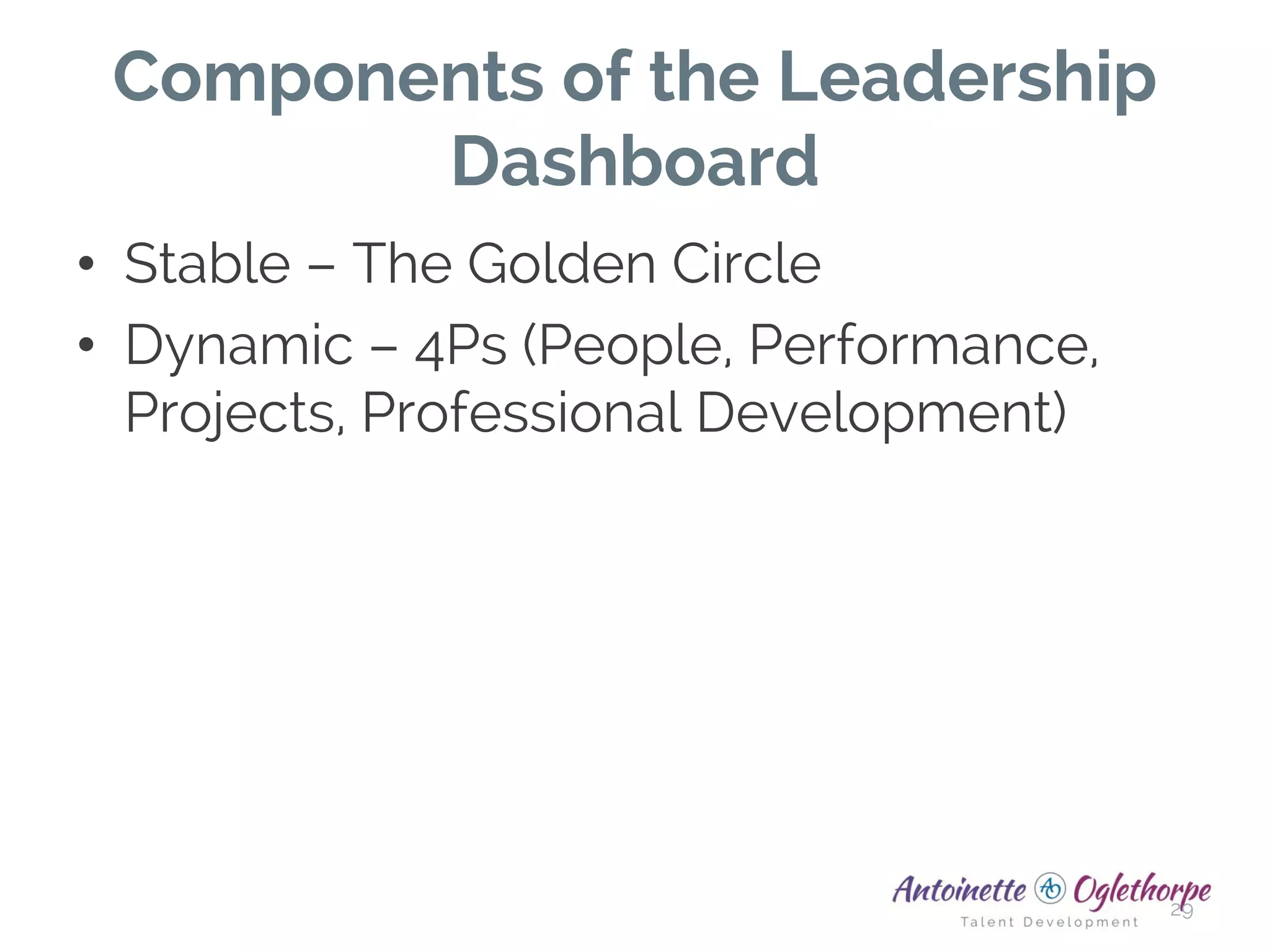
Components of the Leadership
Dashboard
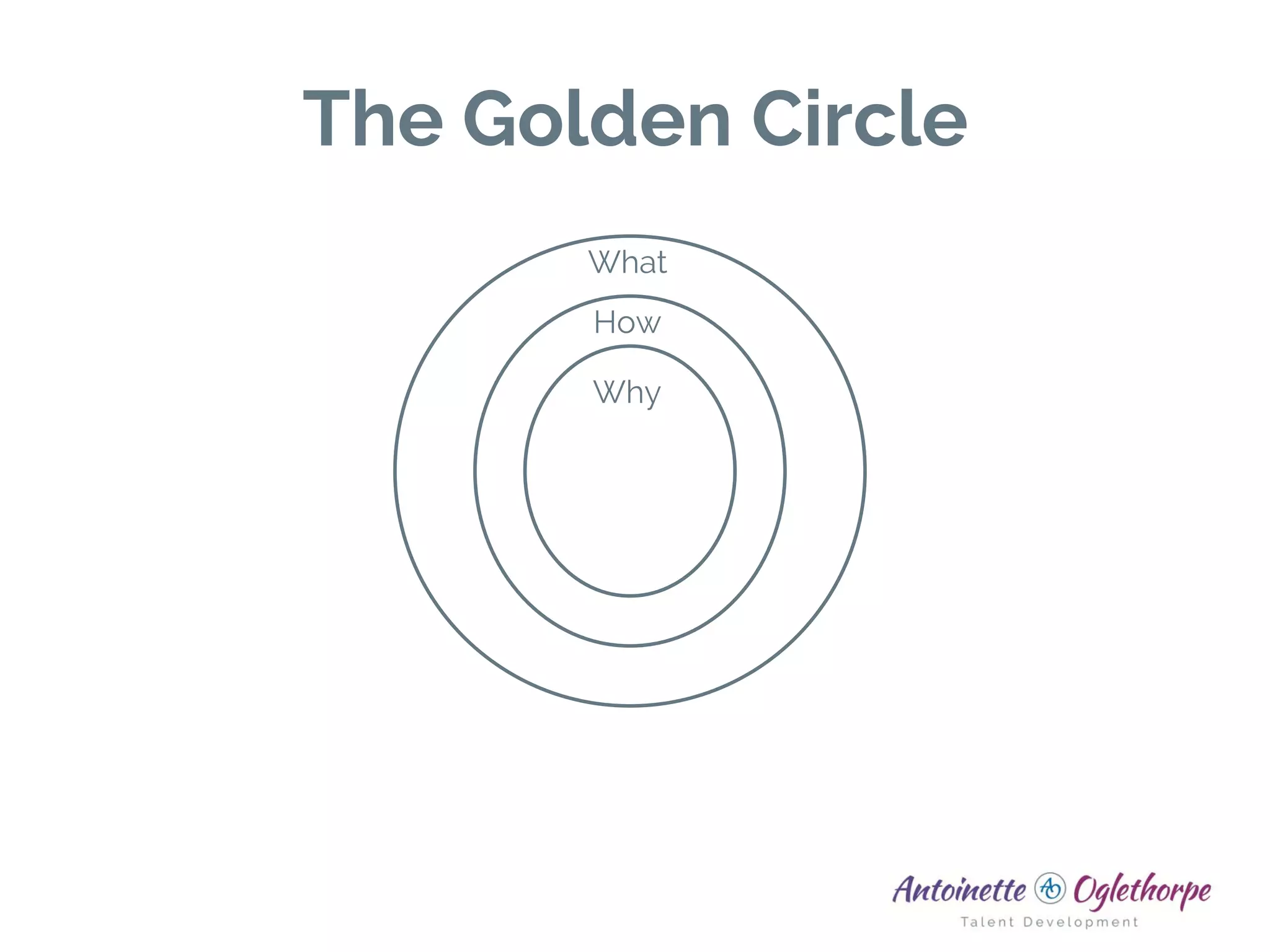
• Stable – The Golden Circle
• Dynamic – 4Ps (People, Performance,
Projects, Professional Development)
29
Why
How
What
The Golden Circle
Why
How
What
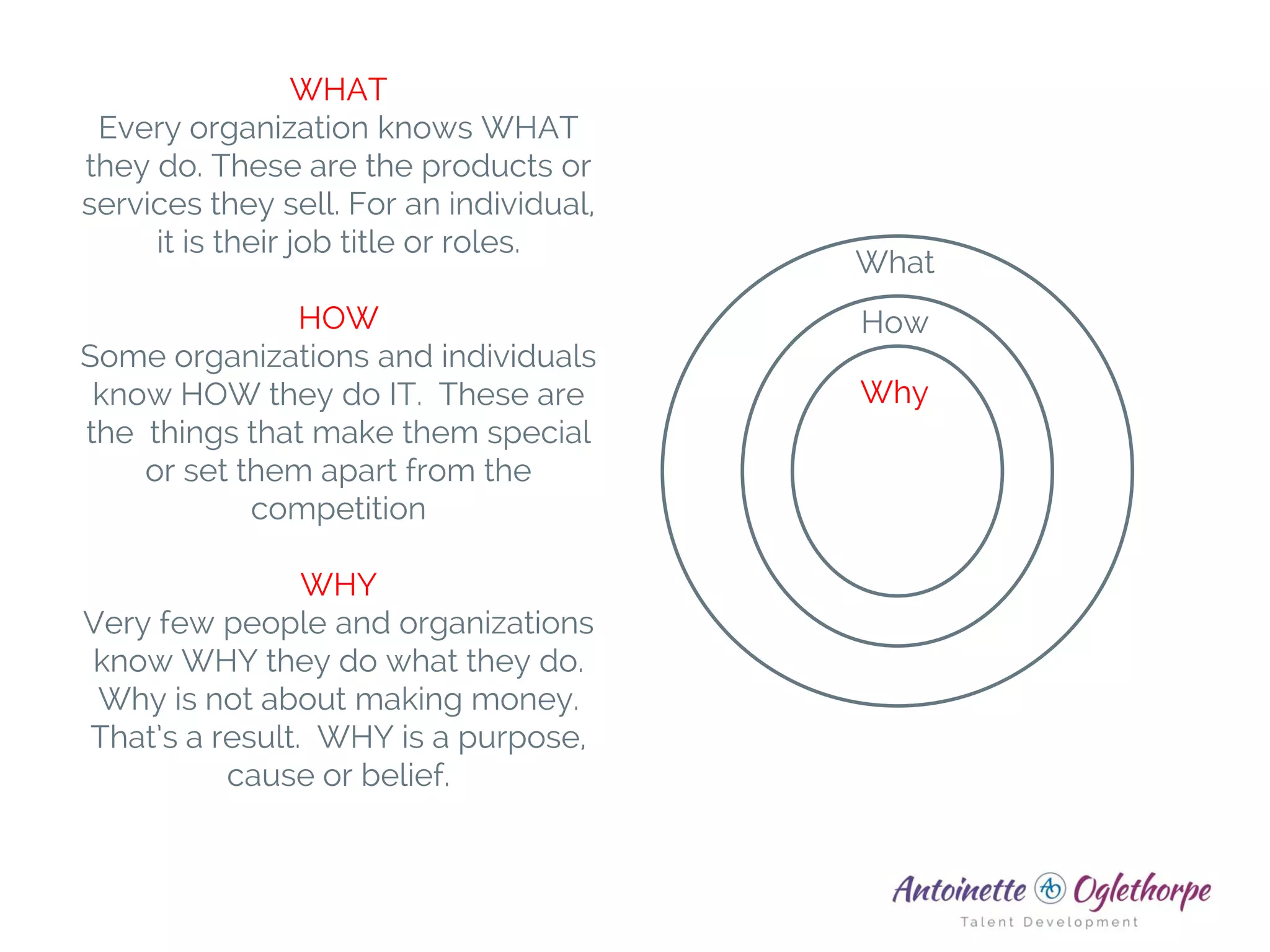
WHAT
Every organization knows WHAT
they do. These are the products or
services they sell. For an individual,
it is their job title or roles.
HOW
Some organizations and individuals
know HOW they do IT. These are
the things that make them special
or set them apart from the
competition
WHY
Very few people and organizations
know WHY they do what they do.
Why is not about making money.
That’s a result. WHY is a purpose,
cause or belief.
Why
How
What
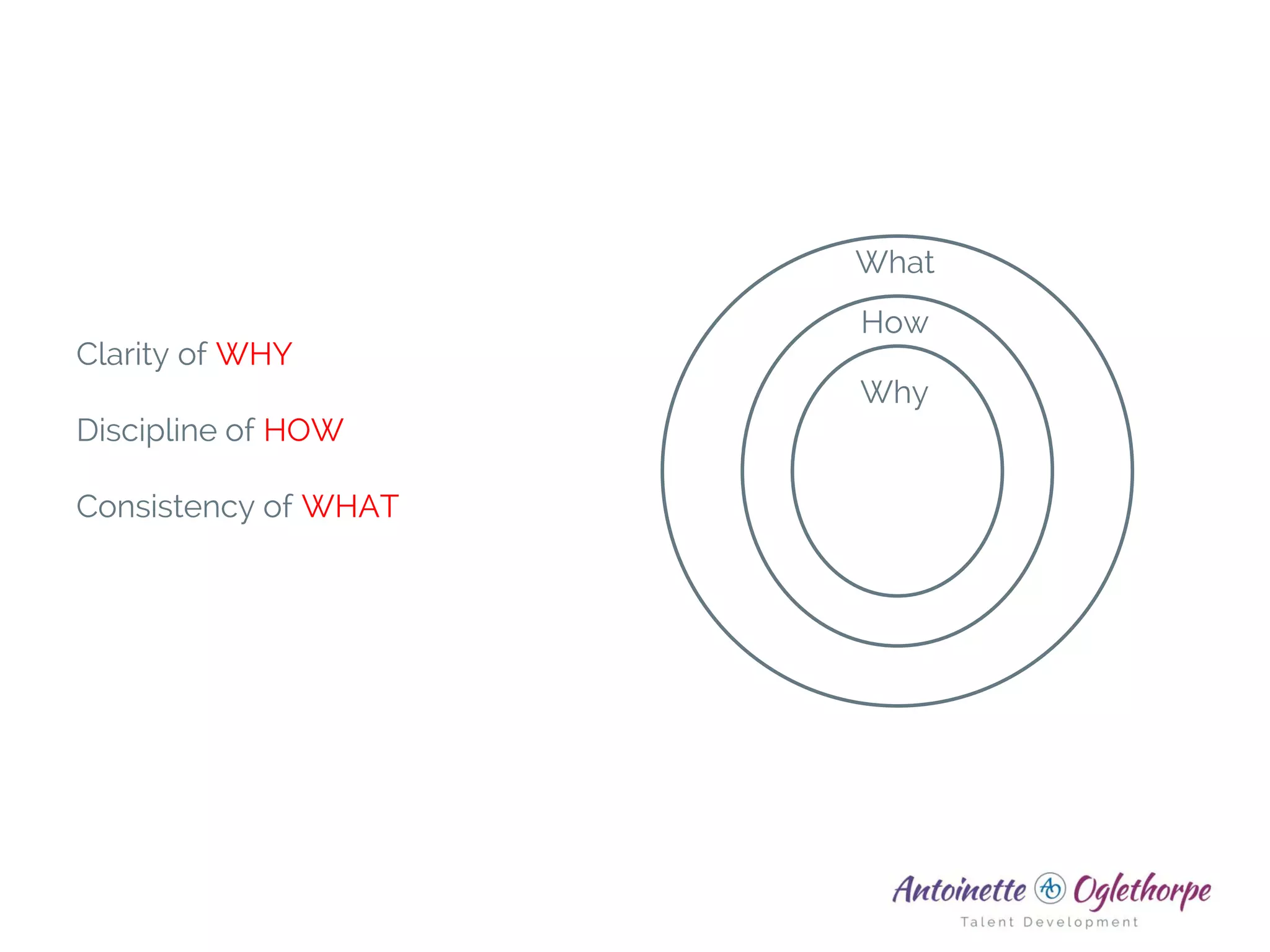
Clarity of WHY
Discipline of HOW
Consistency of WHAT
Leadership Dashboard
Why
How
What
People Performance
Professional Development Projects
What are your key objectives for
the next 12-18 months?
What are the 3 or 4 most important and challenging
areas of your role in fully achieving your objectives?
How do you fit into the organization?
Who do you report to? How big is your team?
Other key stakeholders?
What would it be most important for you to get better at,
to significantly improve performance in these areas?
Discussion
• What role can Career Coaches play in
helping organisations and employees
develop a more agile approach to career
development?

Agile Career Development - How can we help organisations and employees adapt their career development strategies to changing circumstances?