DZANAN GVOZDEN | SCRUM MASTER | ATLANTBH
Agile and scrum in Atlantbh
5 Tips Towards Better Agility
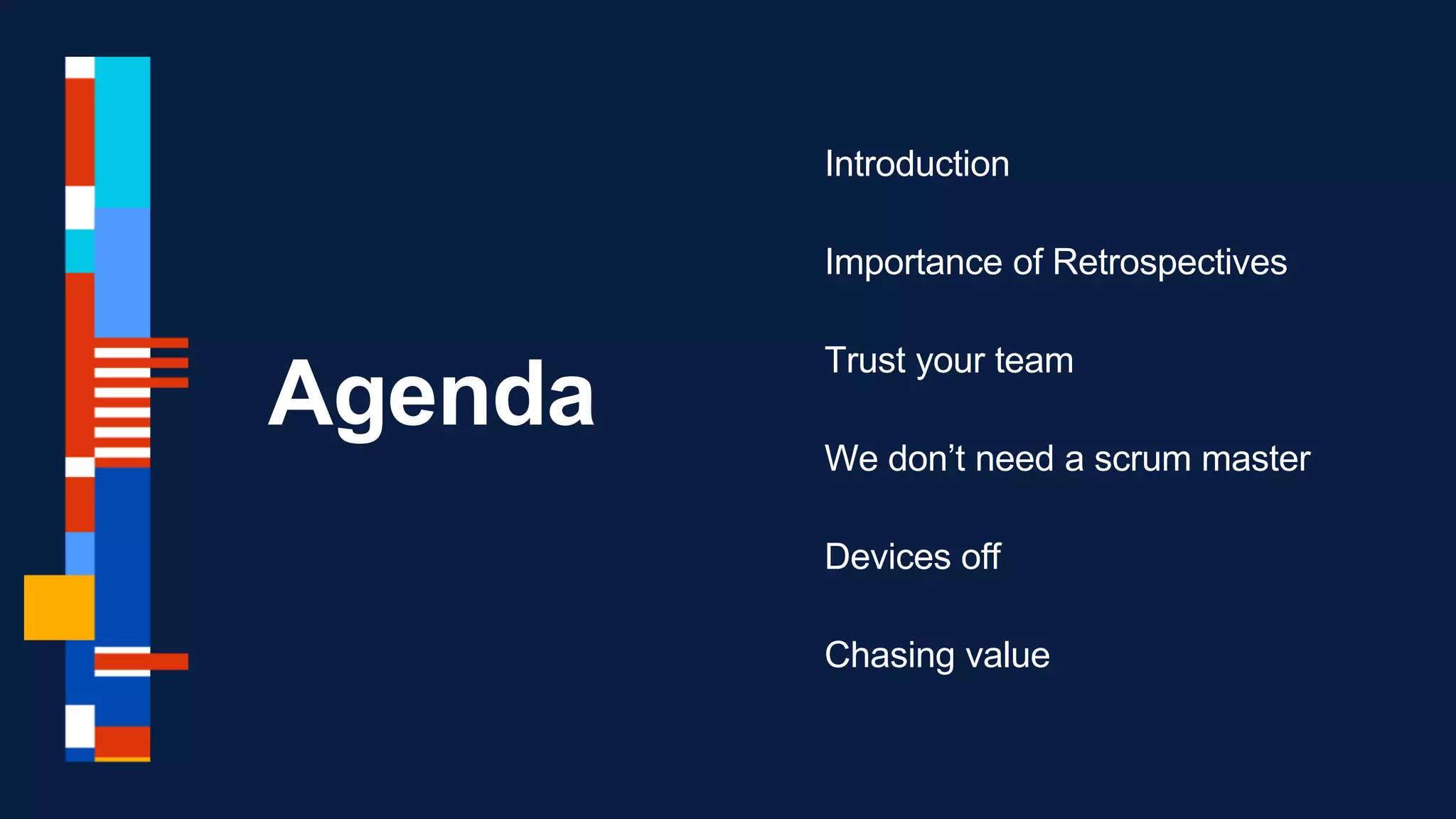
Agenda
Introduction
Importance of Retrospectives
Trust your team
We don’t need a scrum master
Devices off
Chasing value
Introduction
Let’s talk scrum.
Scrum – theory and practice
• Easy to understand difficult to master and
implement
• Simpler hierarchy, team managing itself,
constant change, estimation points…
• Practice and theory often misalign
Importance of
retrospectives
Transparency. Inspection. Adaptation.
“…Important thing to note at Sprint
Retrospectives is not to deal with the
symptoms of the problems you are
having, but rather root causes, and to
make sure your team has the action
plan to tackle the issues identified
during the Retrospectives…”
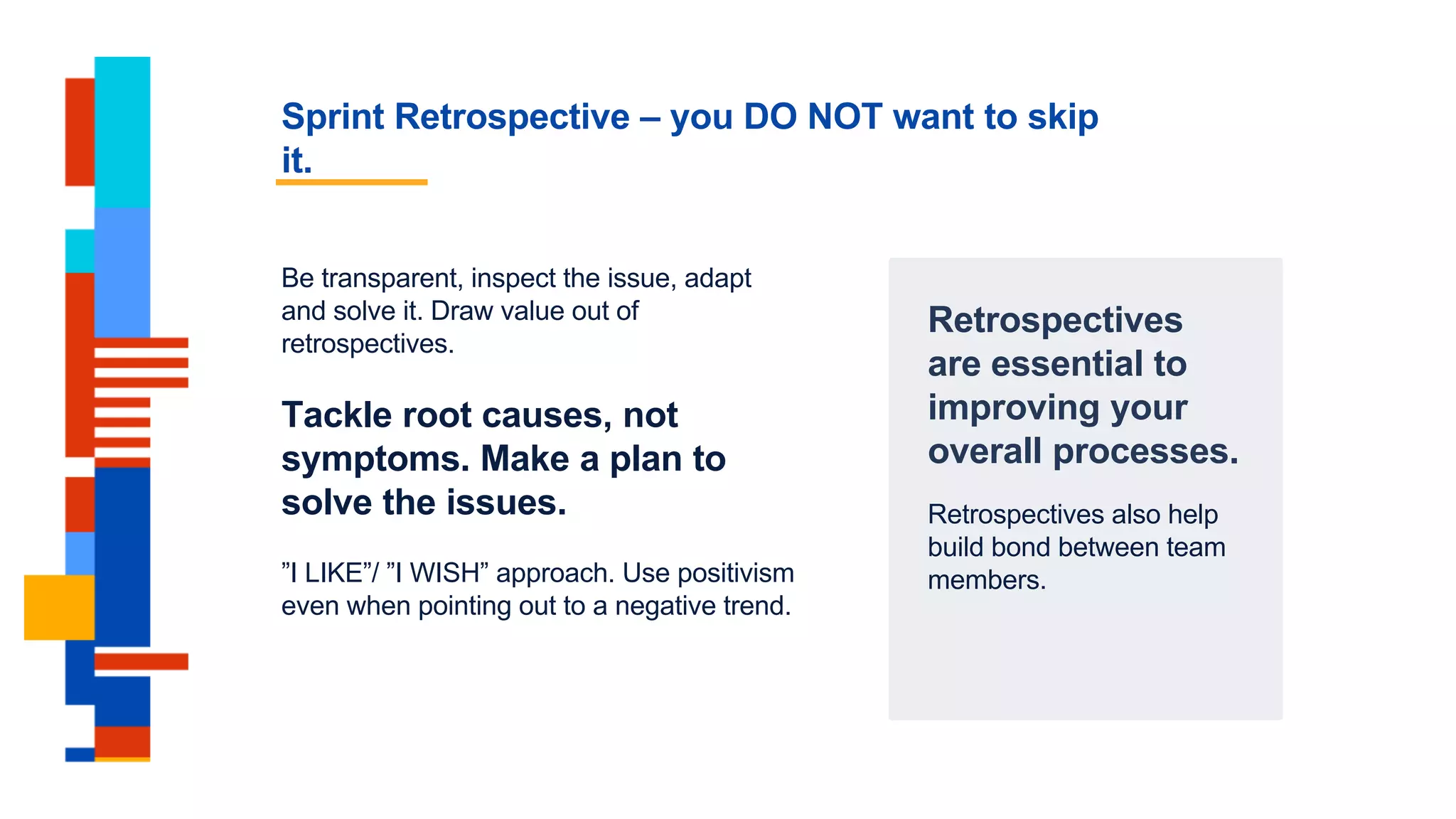
Sprint Retrospective – you DO NOT want to skip
it.
Retrospectives
are essential to
improving your
overall processes.
Retrospectives also help
build bond between team
members.
Be transparent, inspect the issue, adapt
and solve it. Draw value out of
retrospectives.
Tackle root causes, not
symptoms. Make a plan to
solve the issues.
”I LIKE”/ ”I WISH” approach. Use positivism
even when pointing out to a negative trend.
Trust your team.
Give new team members more space.
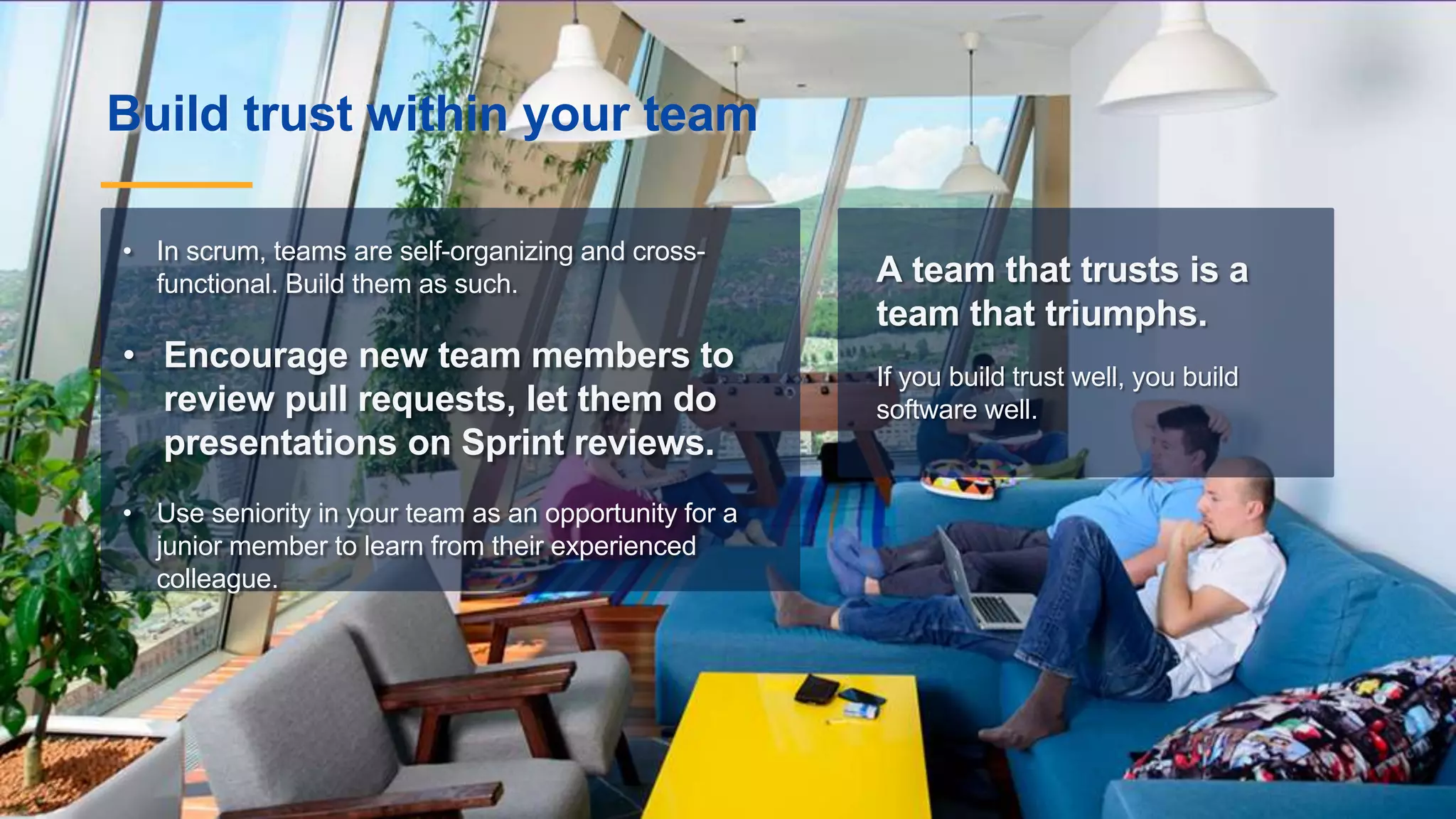
Build trust within your team
A team that trusts is a
team that triumphs.
If you build trust well, you build
software well.
• In scrum, teams are self-organizing and cross-
functional. Build them as such.
• Encourage new team members to
review pull requests, let them do
presentations on Sprint reviews.
• Use seniority in your team as an opportunity for a
junior member to learn from their experienced
colleague.
We don’t need a scrum
master
Scrum at it’s finest.
“A team not
regularly in need of
a Scrum master is a
team that has a great
Scrum master.”
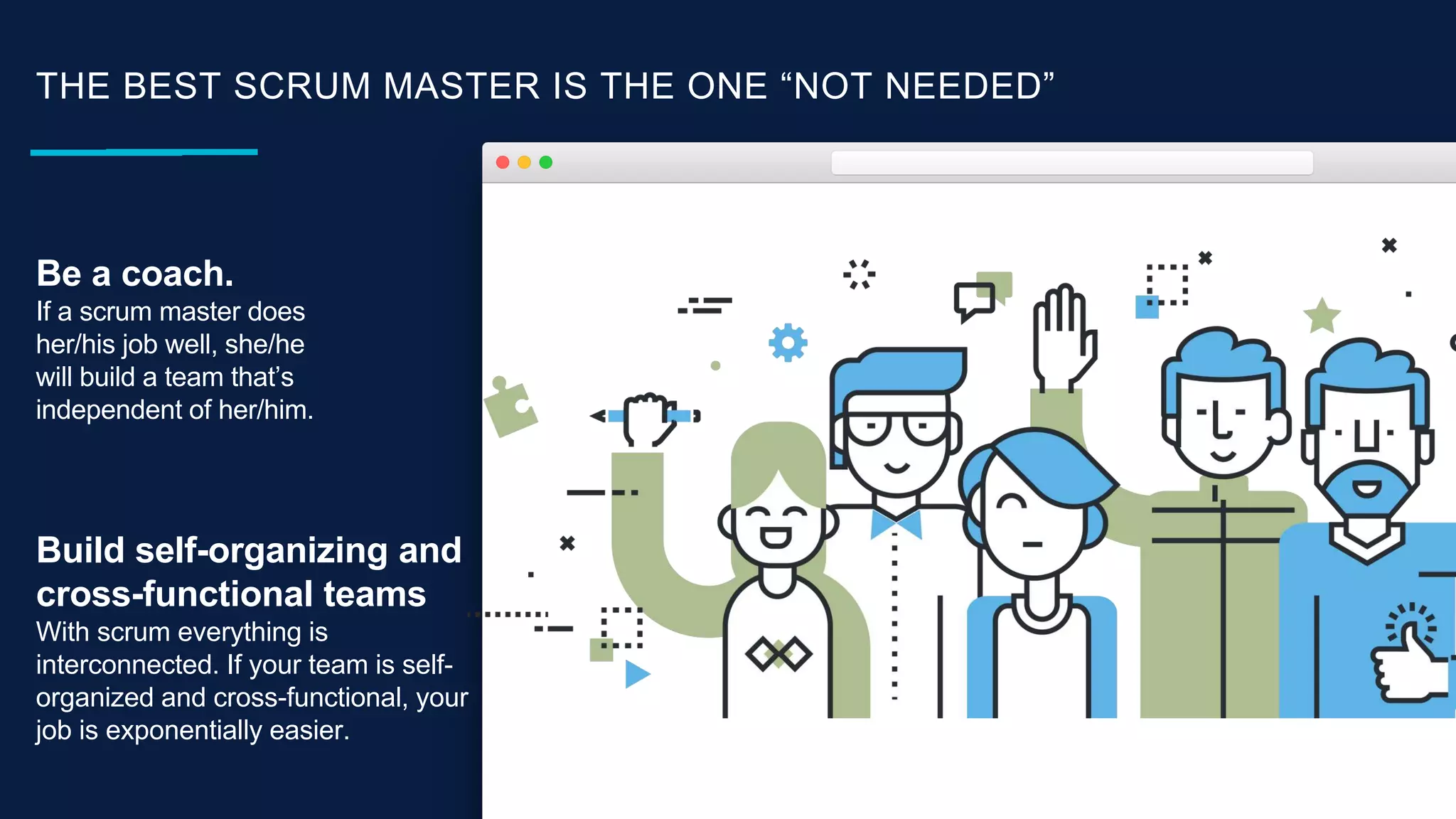
THE BEST SCRUM MASTER IS THE ONE “NOT NEEDED”
Be a coach.
If a scrum master does
her/his job well, she/he
will build a team that’s
independent of her/him.
Build self-organizing and
cross-functional teams
With scrum everything is
interconnected. If your team is self-
organized and cross-functional, your
job is exponentially easier.
Devices off!
We don’t need our laptops today.
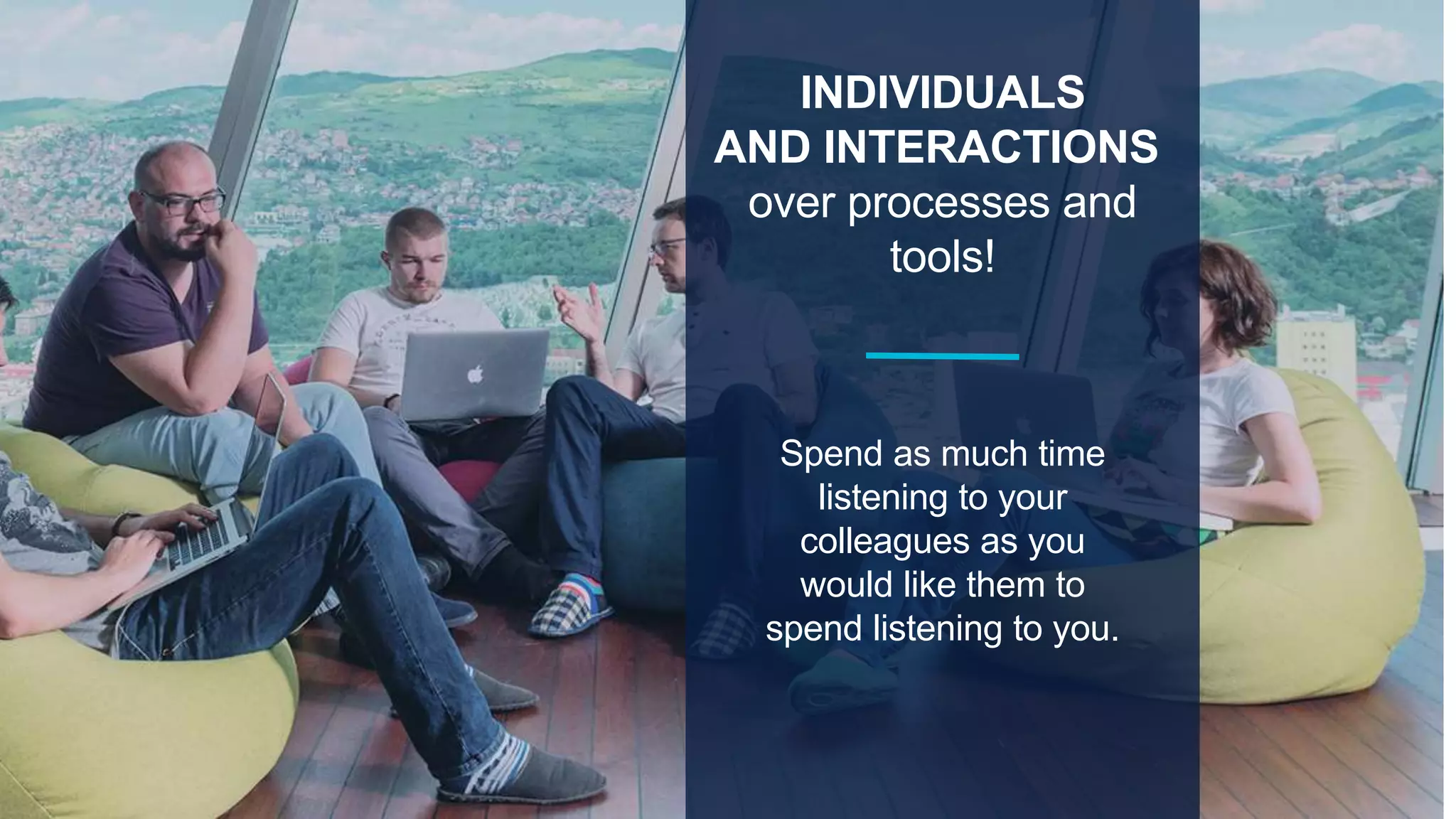
INDIVIDUALS
AND INTERACTIONS
over processes and
tools!
Spend as much time
listening to your
colleagues as you
would like them to
spend listening to you.
Laptops and phones are enemies of
scrum!
Or at least tiny obstacles.
• Scrum meetings should be as device
free as possible.
• Participate. Share opinions. Sync up.
Give feedback.
• Listen to your teammates.
Understand their point of view.
• Focus your attention toward the
discussion being held even if it
doesn’t concern you. The more you
know the better you understand.
Chasing value
Making daily stand-ups “stand out”
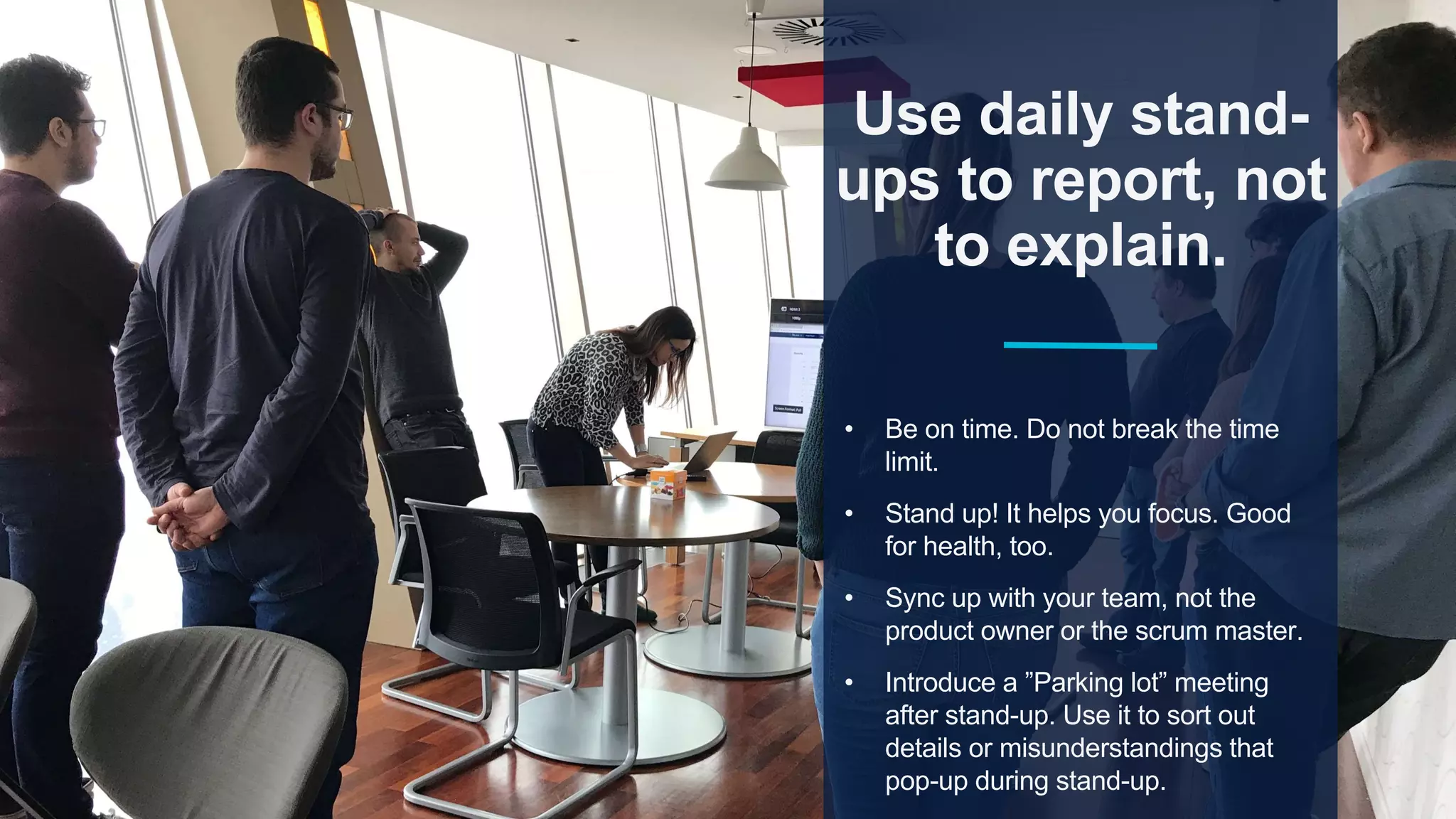
Use daily stand-
ups to report, not
to explain.
• Be on time. Do not break the time
limit.
• Stand up! It helps you focus. Good
for health, too.
• Sync up with your team, not the
product owner or the scrum master.
• Introduce a ”Parking lot” meeting
after stand-up. Use it to sort out
details or misunderstandings that
pop-up during stand-up.
Thank you!
DZANAN GVOZDEN | SCRUM MASTER | ATLANTBH

Agile and Scrum in AtlantBH – 5 Tips Towards Better Agility

  • 1.
    DZANAN GVOZDEN |SCRUM MASTER | ATLANTBH Agile and scrum in Atlantbh 5 Tips Towards Better Agility
  • 2.
    Agenda Introduction Importance of Retrospectives Trustyour team We don’t need a scrum master Devices off Chasing value
  • 3.
  • 4.
    Scrum – theoryand practice • Easy to understand difficult to master and implement • Simpler hierarchy, team managing itself, constant change, estimation points… • Practice and theory often misalign
  • 5.
  • 6.
    “…Important thing tonote at Sprint Retrospectives is not to deal with the symptoms of the problems you are having, but rather root causes, and to make sure your team has the action plan to tackle the issues identified during the Retrospectives…”
  • 7.
    Sprint Retrospective –you DO NOT want to skip it. Retrospectives are essential to improving your overall processes. Retrospectives also help build bond between team members. Be transparent, inspect the issue, adapt and solve it. Draw value out of retrospectives. Tackle root causes, not symptoms. Make a plan to solve the issues. ”I LIKE”/ ”I WISH” approach. Use positivism even when pointing out to a negative trend.
  • 8.
    Trust your team. Givenew team members more space.
  • 9.
    Build trust withinyour team A team that trusts is a team that triumphs. If you build trust well, you build software well. • In scrum, teams are self-organizing and cross- functional. Build them as such. • Encourage new team members to review pull requests, let them do presentations on Sprint reviews. • Use seniority in your team as an opportunity for a junior member to learn from their experienced colleague.
  • 10.
    We don’t needa scrum master Scrum at it’s finest.
  • 11.
    “A team not regularlyin need of a Scrum master is a team that has a great Scrum master.”
  • 12.
    THE BEST SCRUMMASTER IS THE ONE “NOT NEEDED” Be a coach. If a scrum master does her/his job well, she/he will build a team that’s independent of her/him. Build self-organizing and cross-functional teams With scrum everything is interconnected. If your team is self- organized and cross-functional, your job is exponentially easier.
  • 13.
    Devices off! We don’tneed our laptops today.
  • 14.
    INDIVIDUALS AND INTERACTIONS over processesand tools! Spend as much time listening to your colleagues as you would like them to spend listening to you.
  • 15.
    Laptops and phonesare enemies of scrum! Or at least tiny obstacles. • Scrum meetings should be as device free as possible. • Participate. Share opinions. Sync up. Give feedback. • Listen to your teammates. Understand their point of view. • Focus your attention toward the discussion being held even if it doesn’t concern you. The more you know the better you understand.
  • 16.
    Chasing value Making dailystand-ups “stand out”
  • 17.
    Use daily stand- upsto report, not to explain. • Be on time. Do not break the time limit. • Stand up! It helps you focus. Good for health, too. • Sync up with your team, not the product owner or the scrum master. • Introduce a ”Parking lot” meeting after stand-up. Use it to sort out details or misunderstandings that pop-up during stand-up.
  • 18.
    Thank you! DZANAN GVOZDEN| SCRUM MASTER | ATLANTBH