Agile vs. Traditional Product Development
Watchdog Corp
2
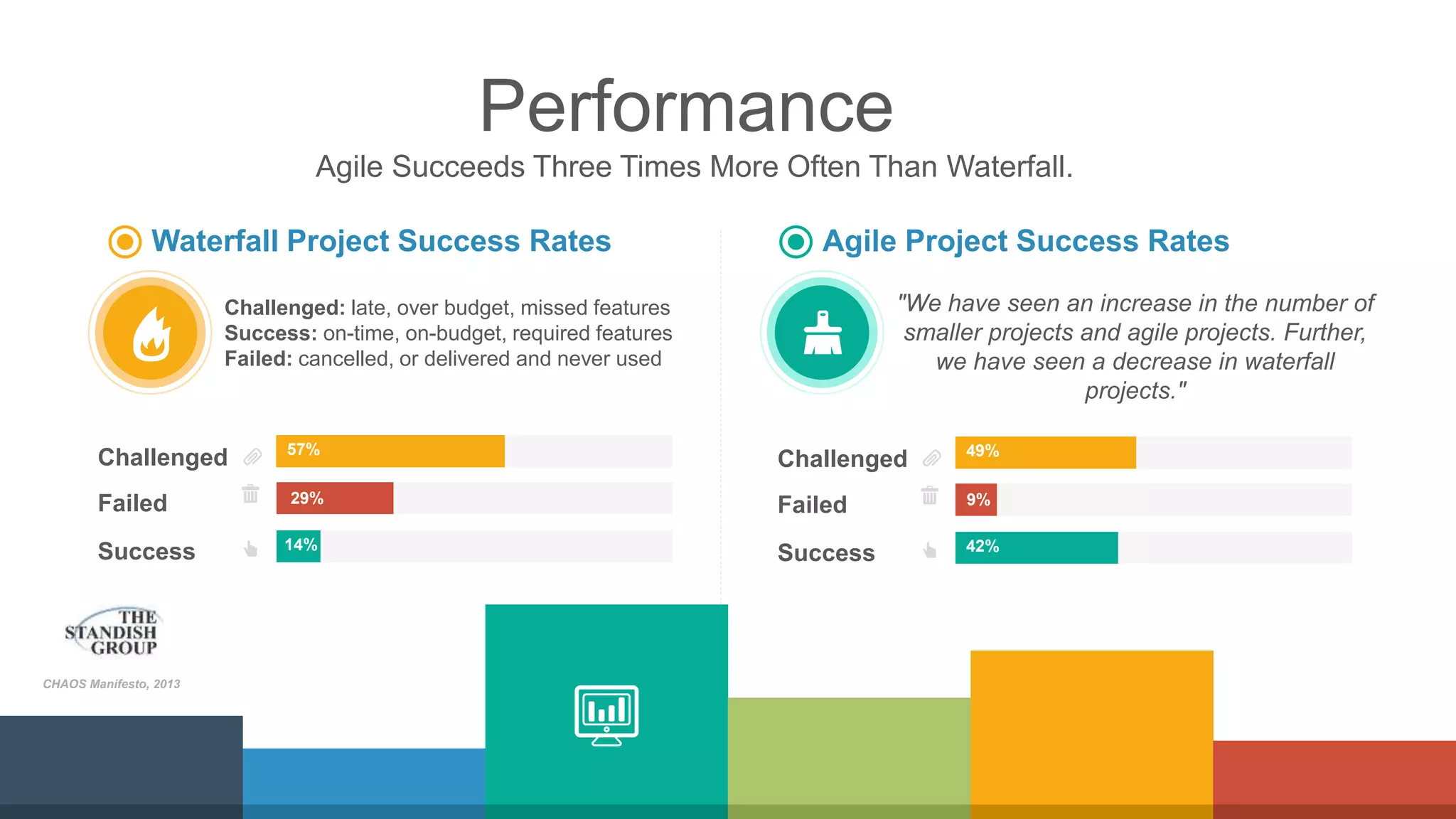
Waterfall Project Success Rates
Challenged: late, over budget, missed features
Success: on-time, on-budget, required features
Failed: cancelled, or delivered and never used
Agile Project Success Rates
"We have seen an increase in the number of
smaller projects and agile projects. Further,
we have seen a decrease in waterfall
projects."
50%
14%
57%
Performance
Agile Succeeds Three Times More Often Than Waterfall.
29%
Challenged
Success
Failed
50%
42%
49%
9%
Challenged
Success
Failed
CHAOS Manifesto, 2013
3
CHAOS Manifesto, 2013
Feature Usage
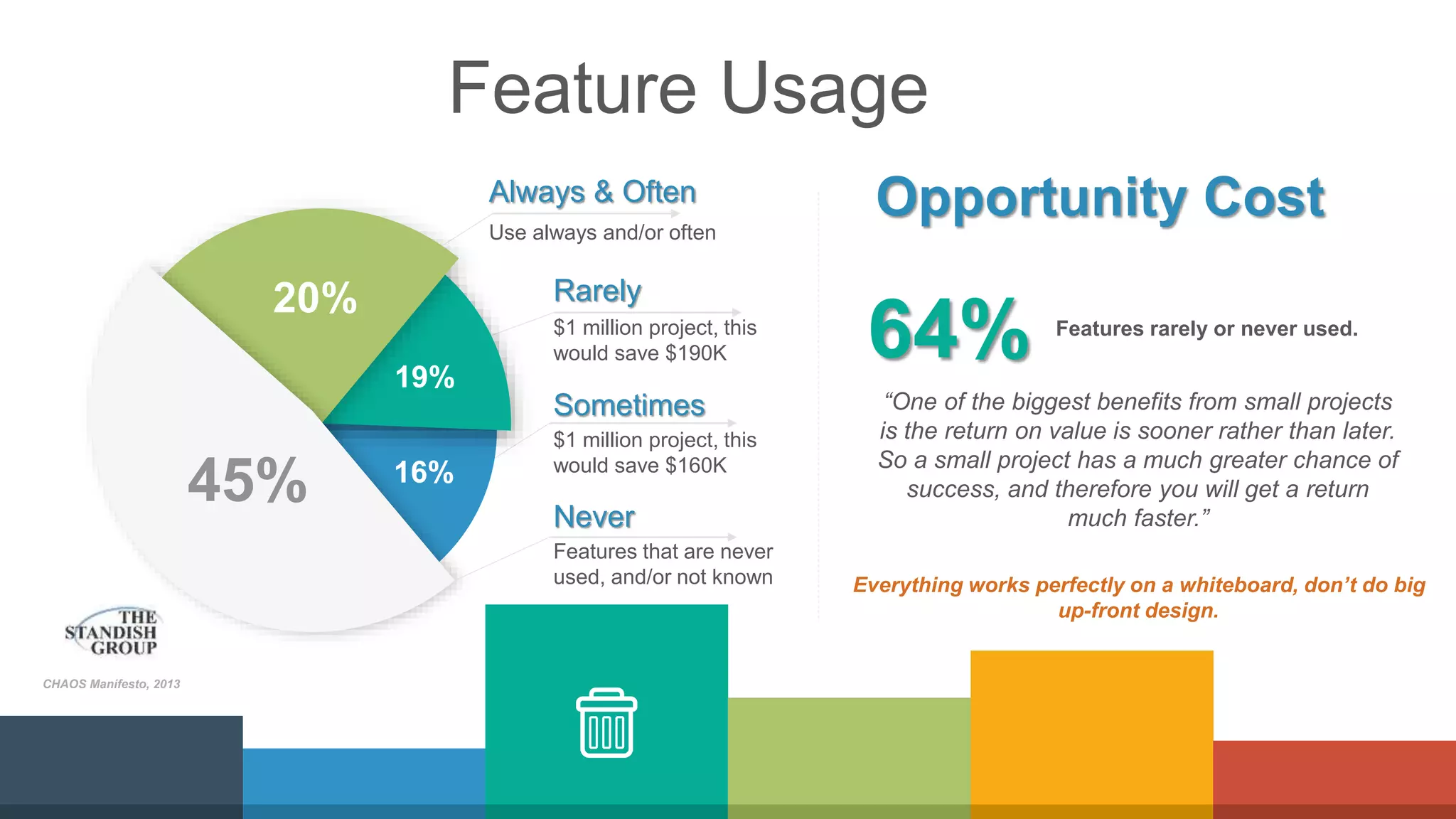
Always & Often
Use always and/or often
Rarely
$1 million project, this
would save $190K
Sometimes
$1 million project, this
would save $160K
Never
Features that are never
used, and/or not known
45% 16%
19%
20%
“One of the biggest benefits from small projects
is the return on value is sooner rather than later.
So a small project has a much greater chance of
success, and therefore you will get a return
much faster.”
Opportunity Cost
Everything works perfectly on a whiteboard, don’t do big
up-front design.
64% Features rarely or never used.
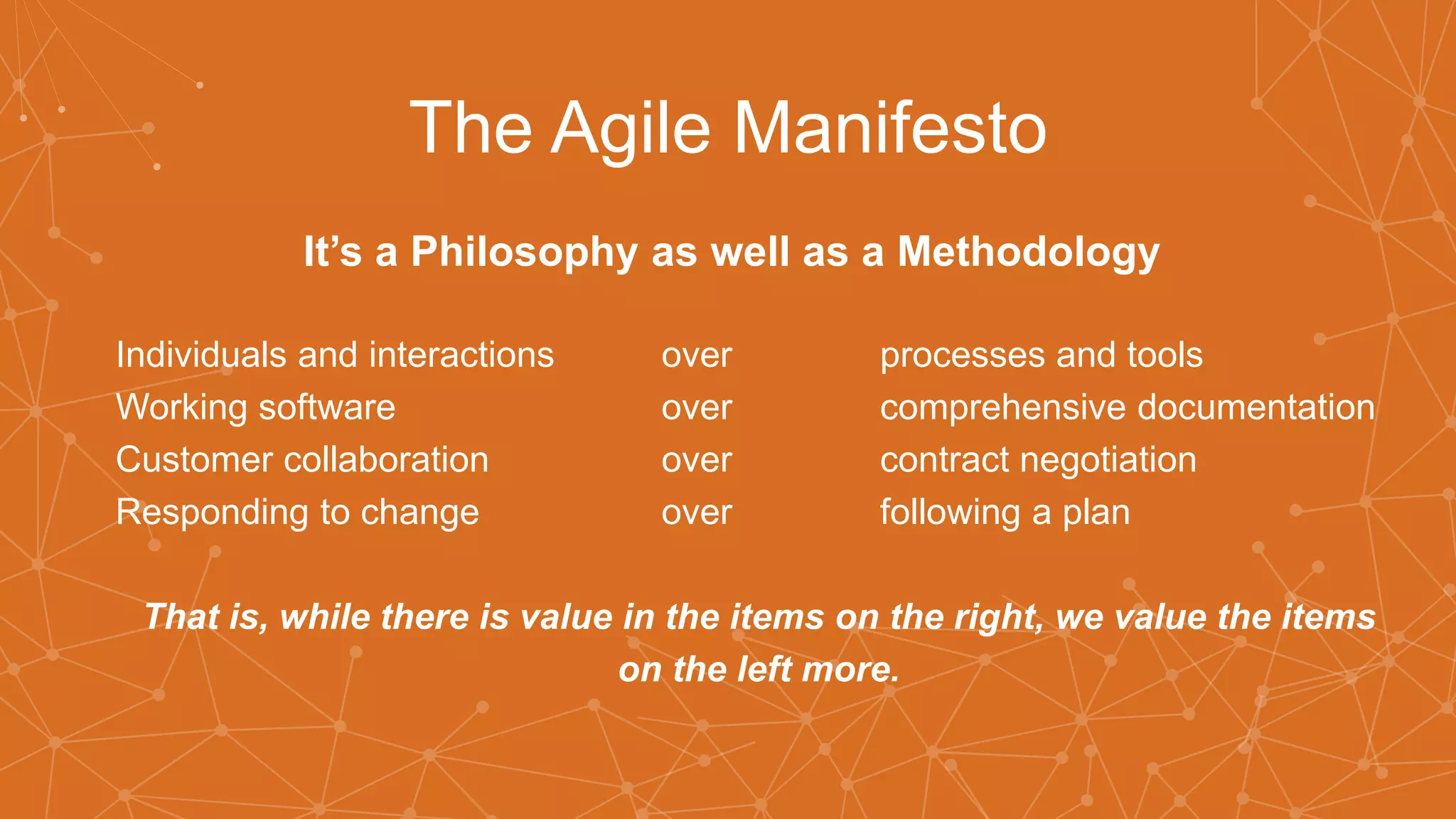
The Agile Manifesto
It’s a Philosophy as well as a Methodology
Individuals and interactions over processes and tools
Working software over comprehensive documentation
Customer collaboration over contract negotiation
Responding to change over following a plan
That is, while there is value in the items on the right, we value the items
on the left more.
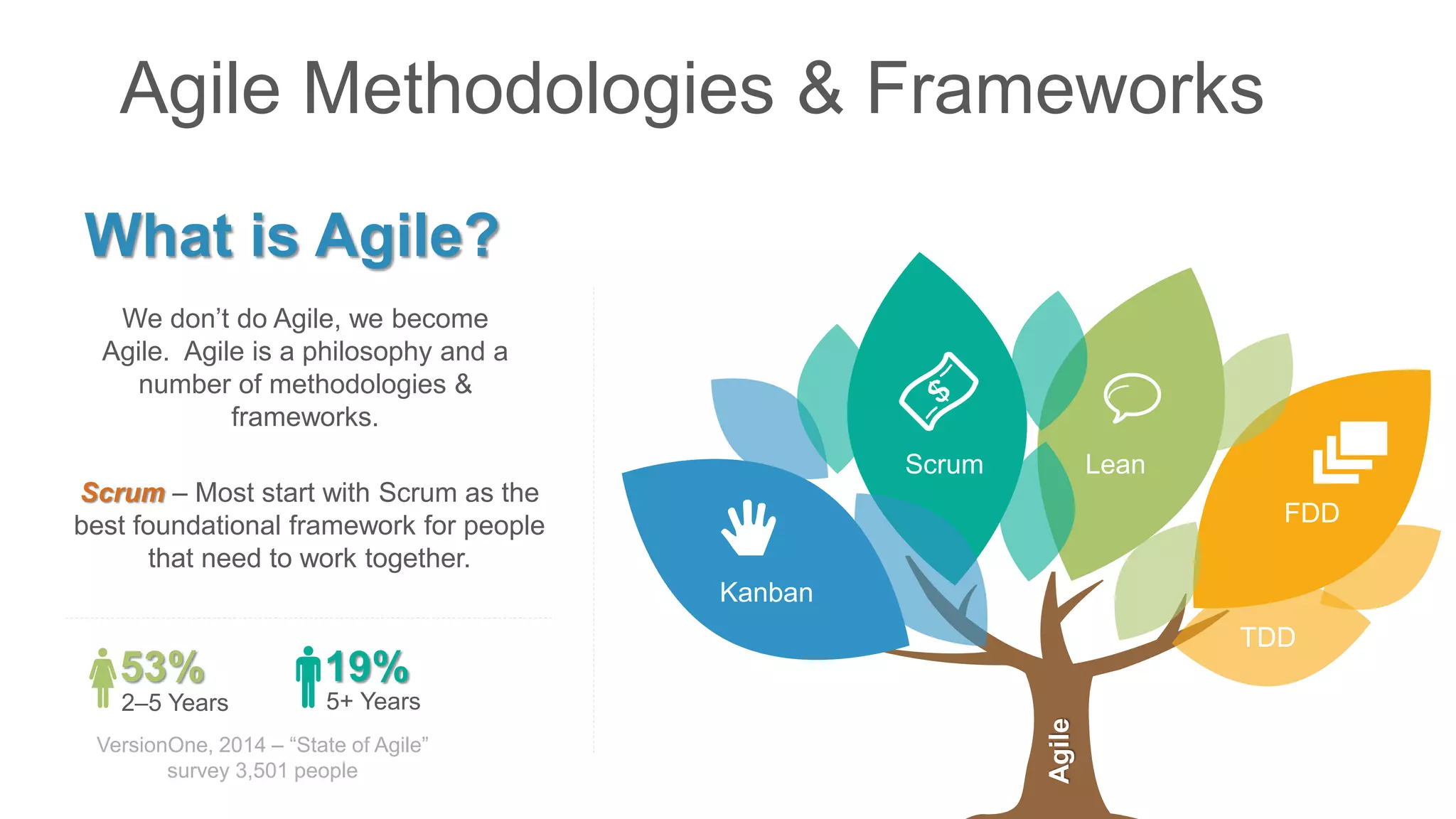
Agile Methodologies & Frameworks
Kanban
Scrum Lean
FDD
Scrum – Most start with Scrum as the
best foundational framework for people
that need to work together.
What is Agile?
We don’t do Agile, we become
Agile. Agile is a philosophy and a
number of methodologies &
frameworks.
53%
2–5 Years
19%
5+ Years
VersionOne, 2014 – “State of Agile”
survey 3,501 people
Agile
TDD
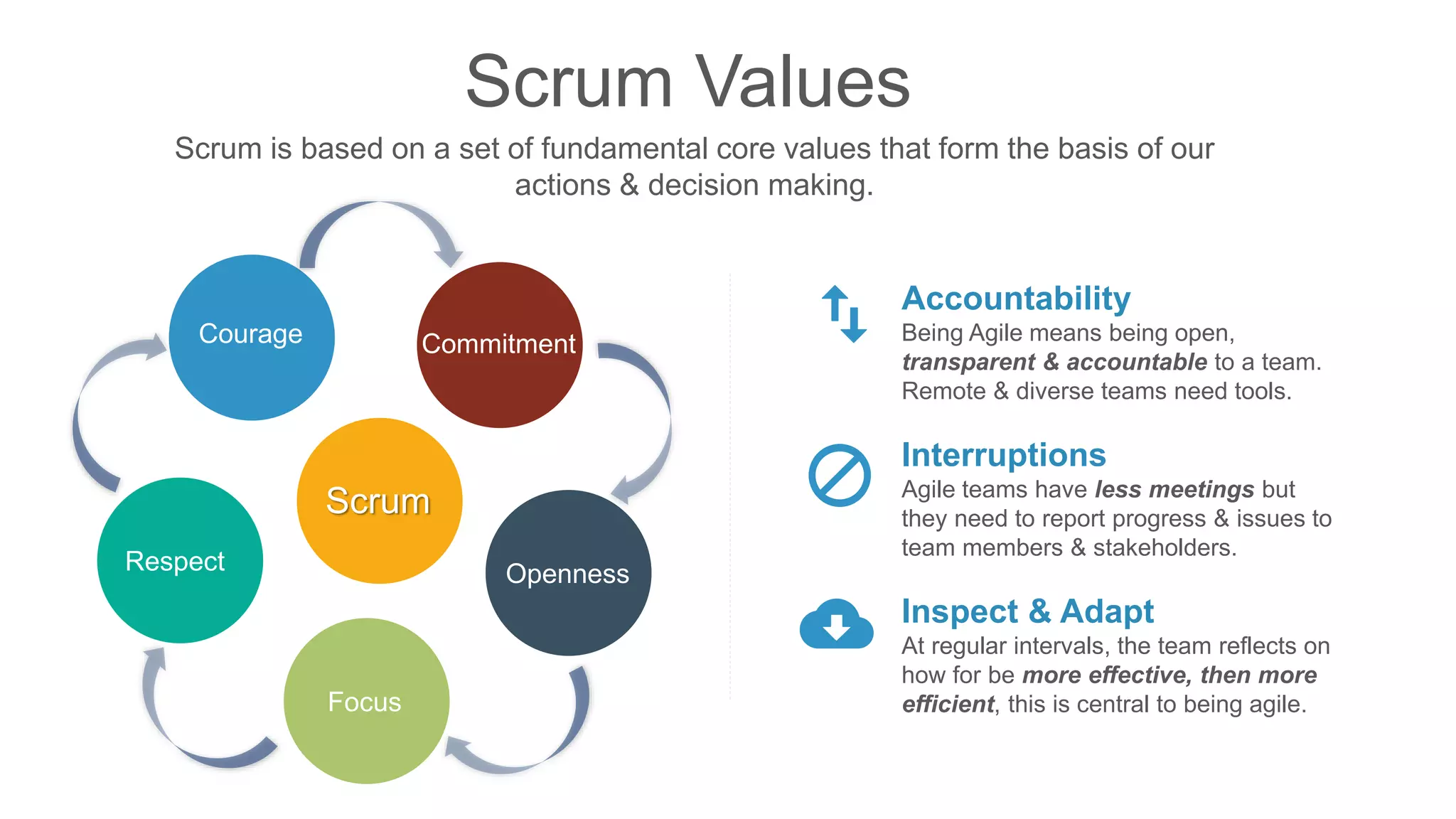
Scrum Values
Scrum is based on a set of fundamental core values that form the basis of our
actions & decision making.
Accountability
Being Agile means being open,
transparent & accountable to a team.
Remote & diverse teams need tools.
Interruptions
Agile teams have less meetings but
they need to report progress & issues to
team members & stakeholders.
Inspect & Adapt
At regular intervals, the team reflects on
how for be more effective, then more
efficient, this is central to being agile.
Scrum
Focus
Respect Openness
Courage Commitment
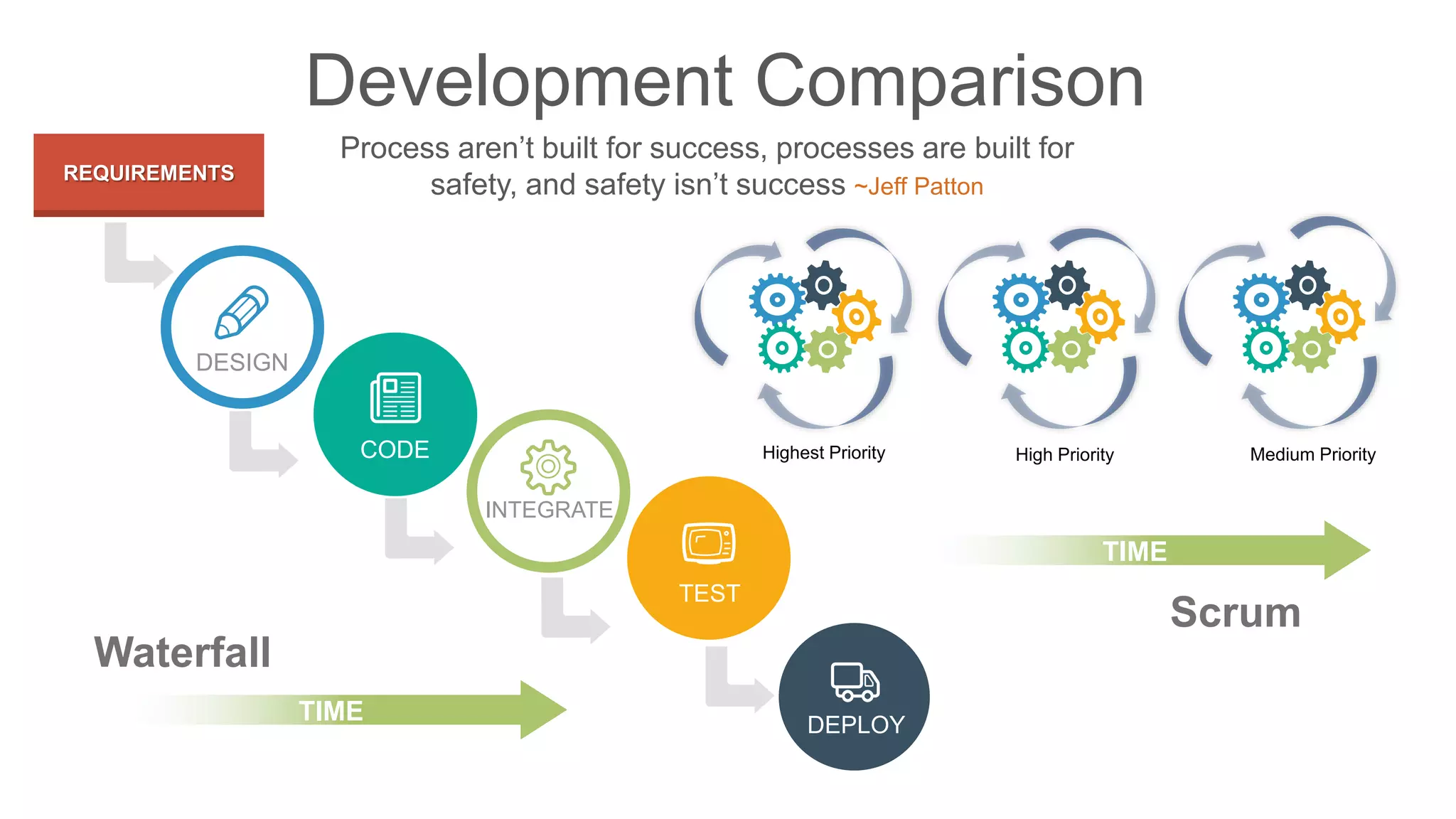
Development Comparison
DESIGN
CODE
INTEGRATE
TEST
DEPLOY
REQUIREMENTS
TIME
TIME
Process aren’t built for success, processes are built for
safety, and safety isn’t success ~Jeff Patton
Waterfall
Scrum
Highest Priority High Priority Medium Priority
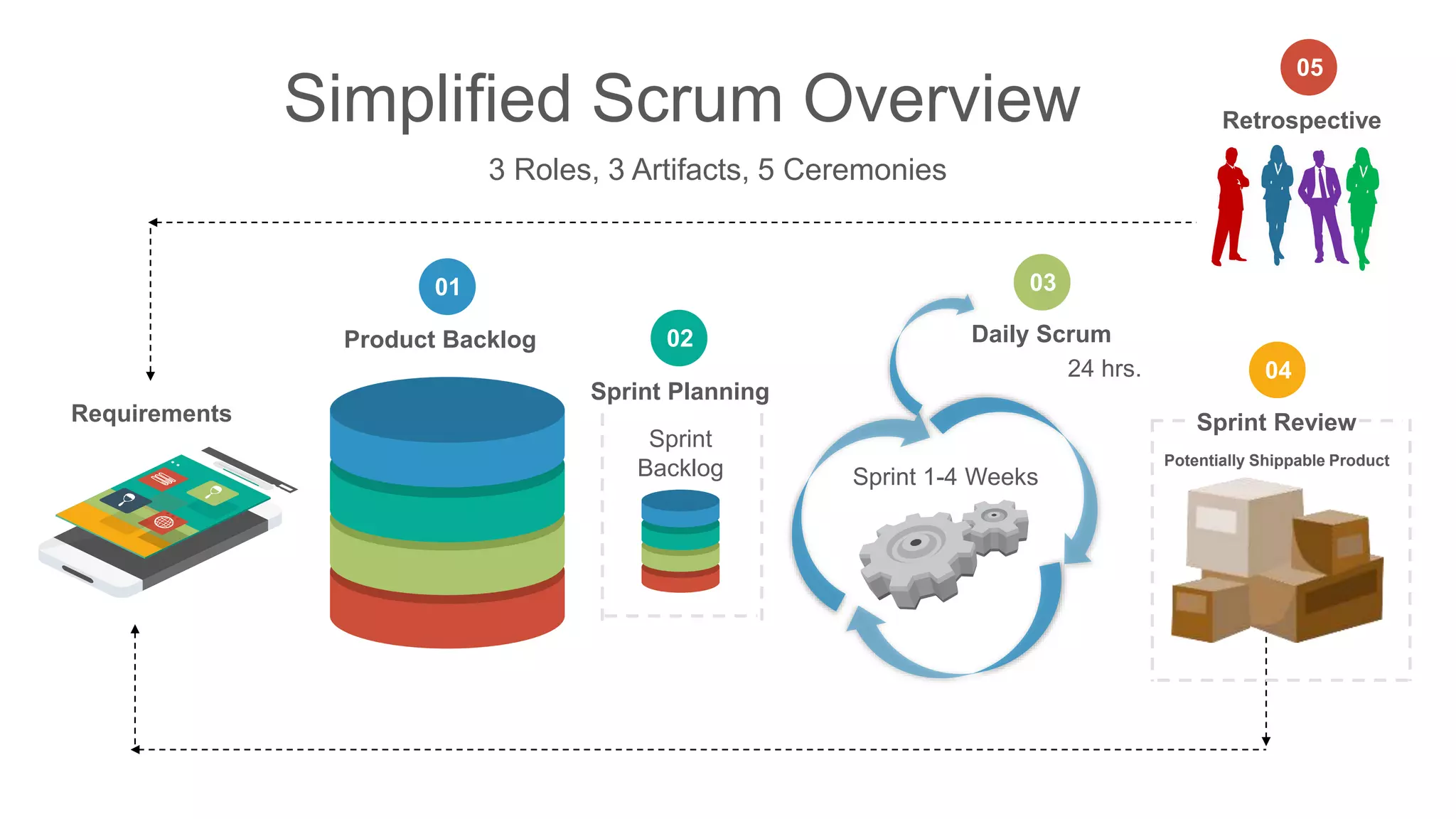
Simplified Scrum Overview
3 Roles, 3 Artifacts, 5 Ceremonies
Requirements
Product Backlog
Sprint
Backlog
Sprint Planning
Sprint 1-4 Weeks
Daily Scrum
Retrospective
Sprint Review
Potentially Shippable Product
24 hrs.
01
02
03
04
05
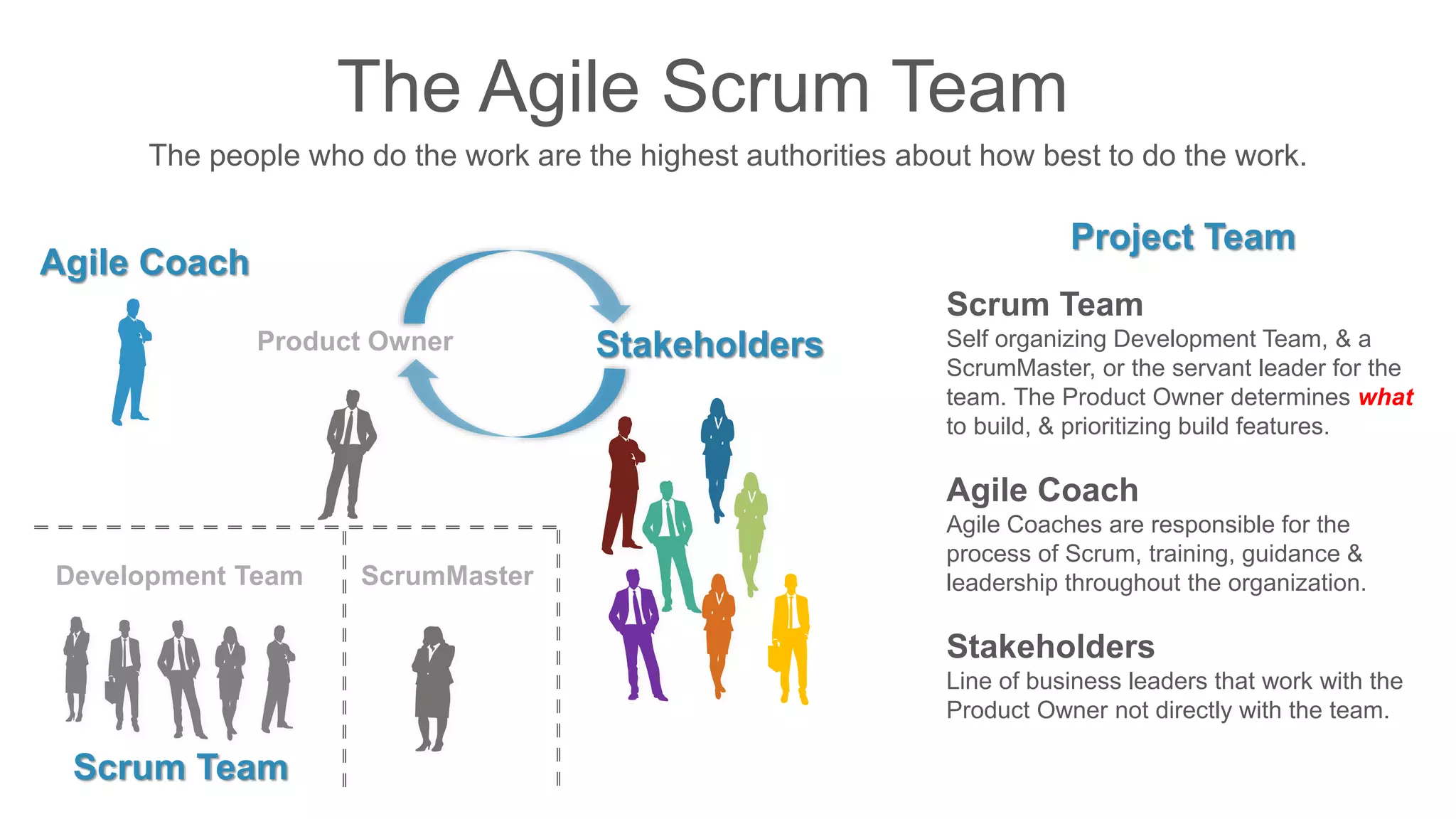
The Agile Scrum Team
Scrum Team
Product Owner
ScrumMasterDevelopment Team
Stakeholders
Agile Coach
Scrum Team
Self organizing Development Team, & a
ScrumMaster, or the servant leader for the
team. The Product Owner determines what
to build, & prioritizing build features.
Agile Coach
Agile Coaches are responsible for the
process of Scrum, training, guidance &
leadership throughout the organization.
Stakeholders
Line of business leaders that work with the
Product Owner not directly with the team.
The people who do the work are the highest authorities about how best to do the work.
Project Team
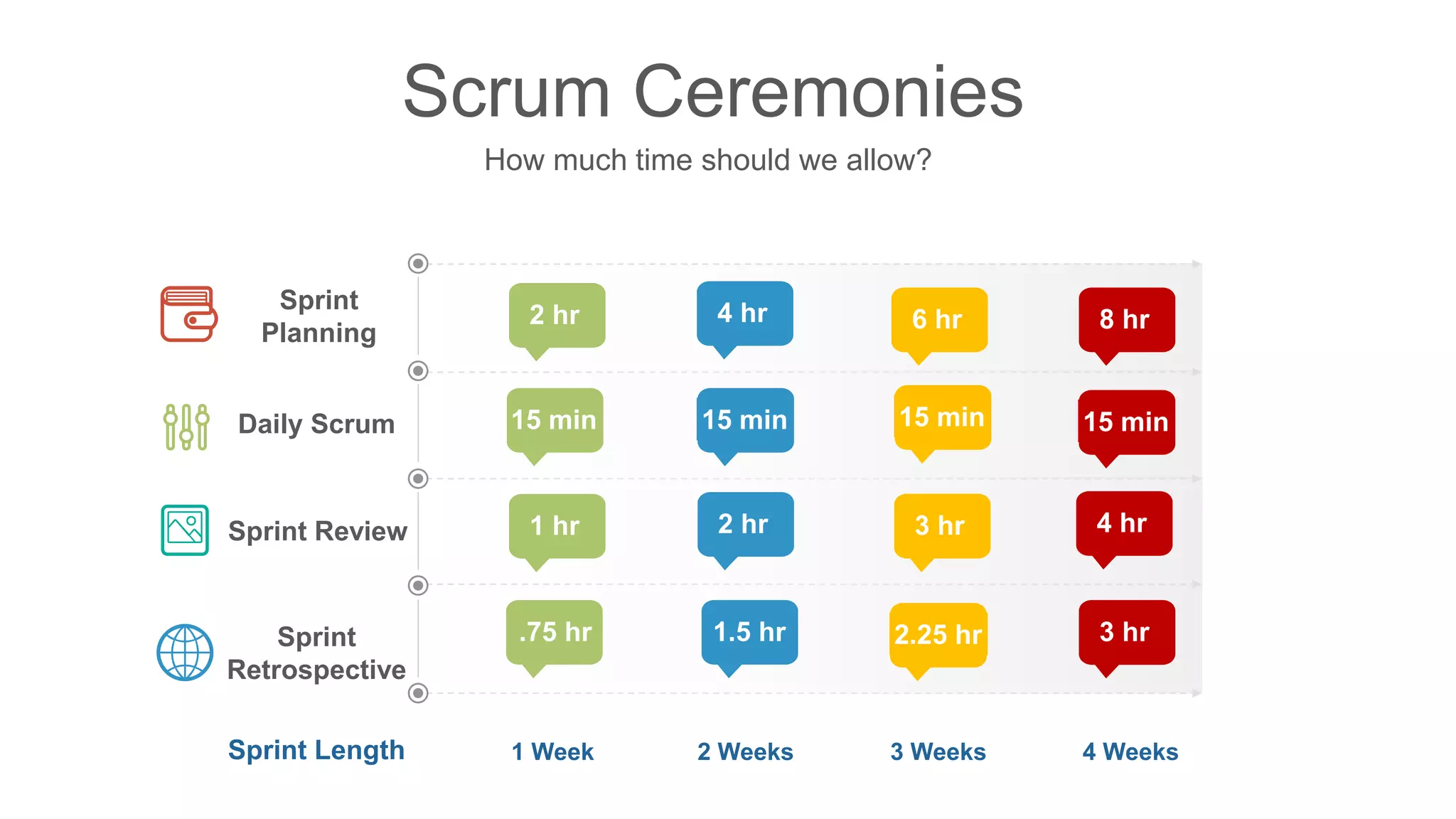
Scrum Ceremonies
Sprint
Retrospective
Sprint Review
Daily Scrum
Sprint
Planning
1 Week 2 Weeks 3 Weeks 4 Weeks
2 hr
15 min
1 hr
.75 hr 1.5 hr
15 min 15 min 15 min
2 hr
4 hr
3 hr
6 hr
2.25 hr
4 hr
3 hr
8 hr
How much time should we allow?
Sprint Length
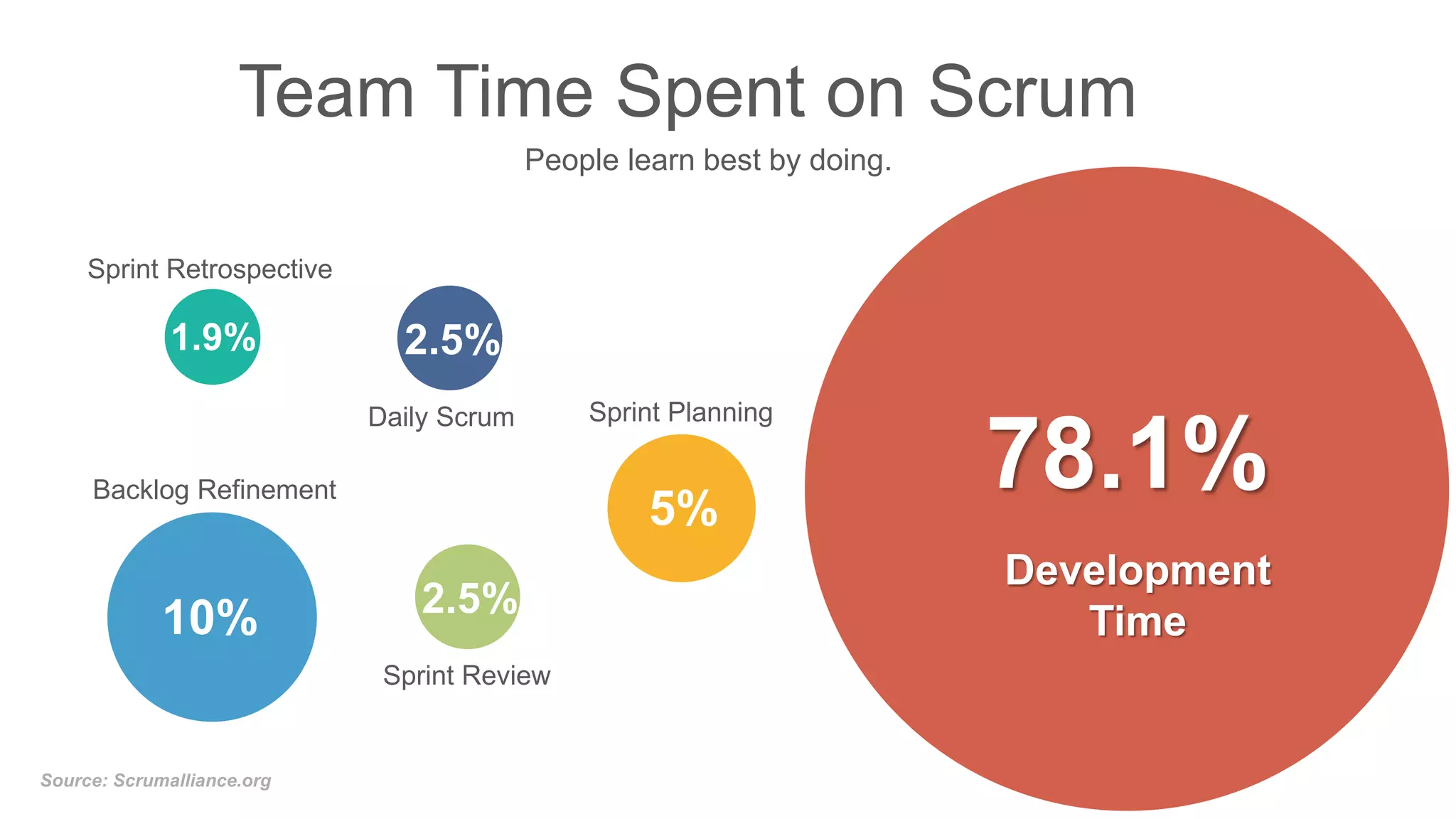
Team Time Spent on Scrum
Source: Scrumalliance.org
Daily Scrum
Sprint Retrospective
Sprint Review
Sprint Planning
Development
Time
Backlog Refinement 78.1%5%
2.5%
2.5%
10%
1.9%
People learn best by doing.
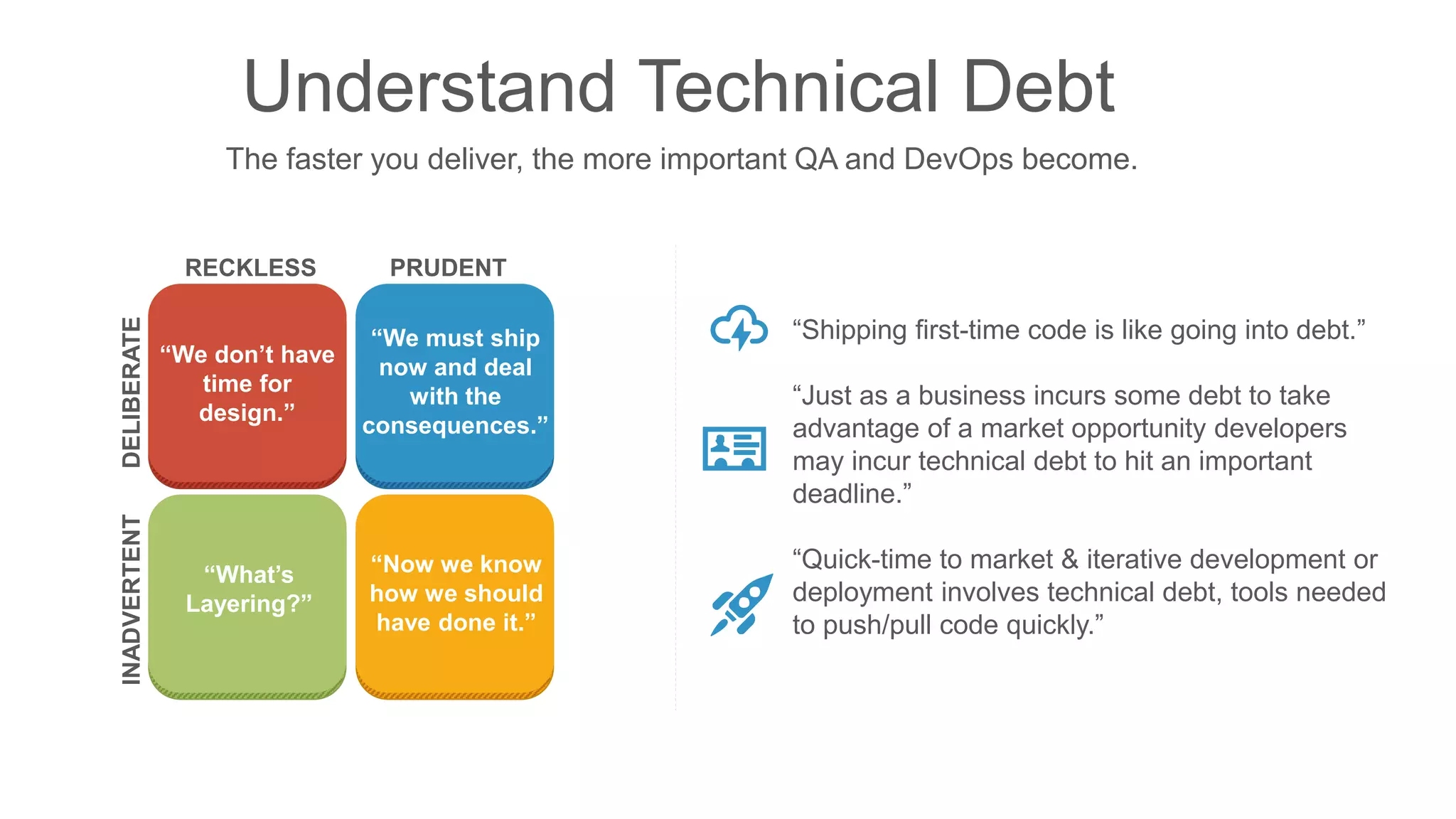
Understand Technical Debt
“Shipping first-time code is like going into debt.”
“Just as a business incurs some debt to take
advantage of a market opportunity developers
may incur technical debt to hit an important
deadline.”
“Quick-time to market & iterative development or
deployment involves technical debt, tools needed
to push/pull code quickly.”
“We don’t have
time for
design.”
“We must ship
now and deal
with the
consequences.”
“What’s
Layering?”
“Now we know
how we should
have done it.”
DELIBERATEINADVERTENT
PRUDENTRECKLESS
The faster you deliver, the more important QA and DevOps become.
1
3
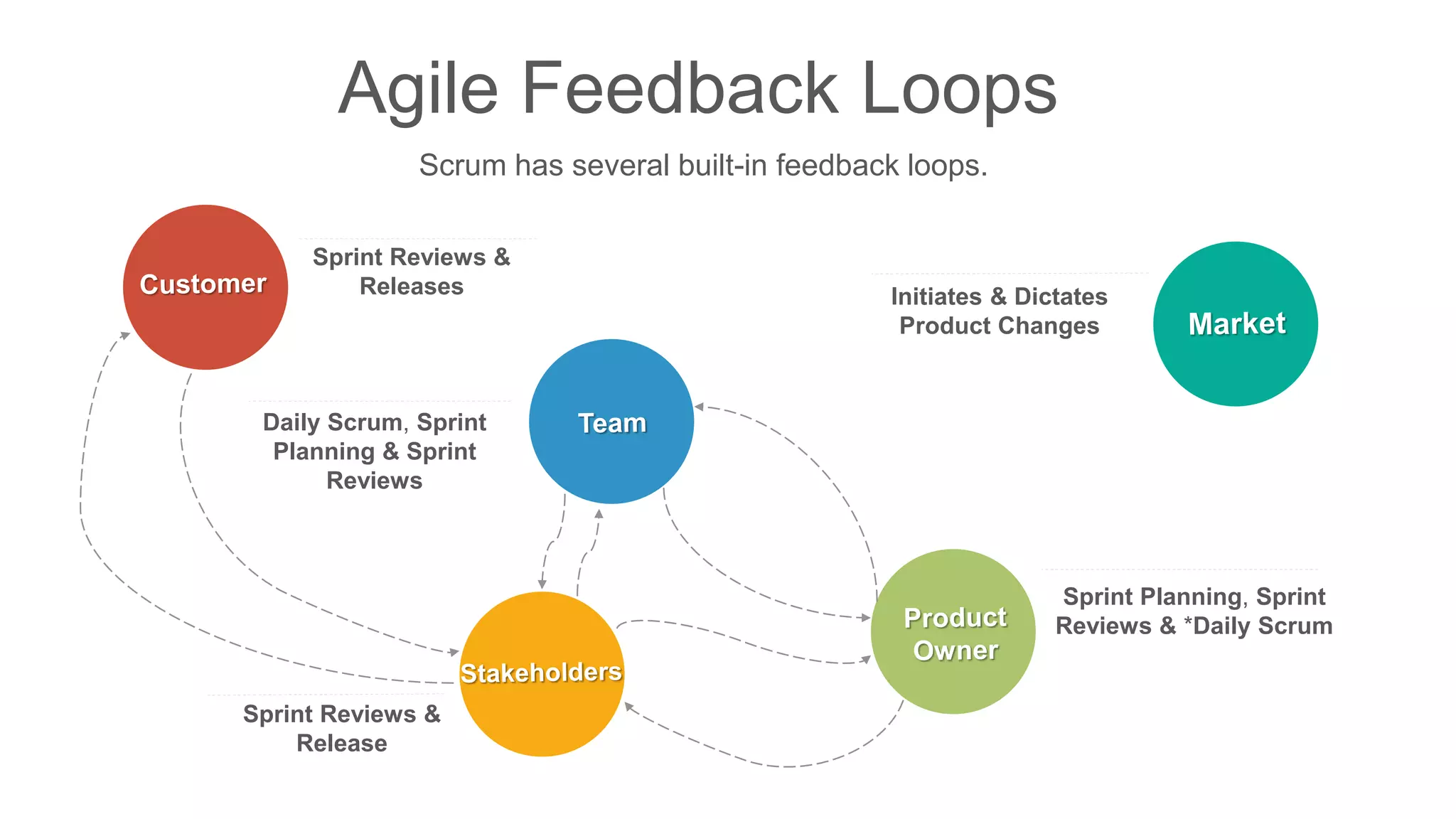
Sprint Reviews &
Release
Sprint Planning, Sprint
Reviews & *Daily Scrum
Initiates & Dictates
Product Changes
Sprint Reviews &
Releases
Daily Scrum, Sprint
Planning & Sprint
Reviews
Agile Feedback Loops
Scrum has several built-in feedback loops.
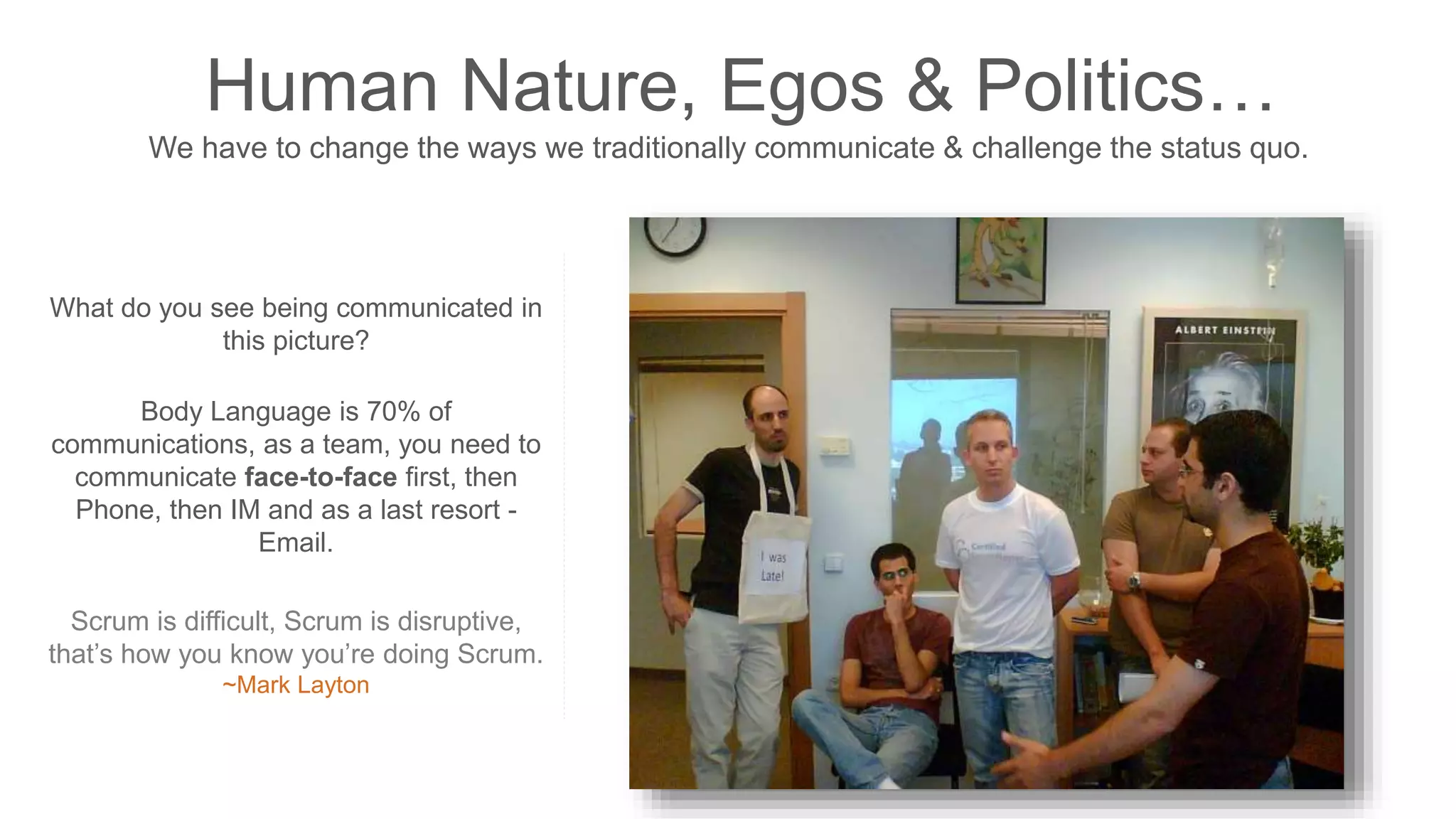
Human Nature, Egos & Politics…
We have to change the ways we traditionally communicate & challenge the status quo.
What do you see being communicated in
this picture?
Scrum is difficult, Scrum is disruptive,
that’s how you know you’re doing Scrum.
~Mark Layton
Body Language is 70% of
communications, as a team, you need to
communicate face-to-face first, then
Phone, then IM and as a last resort -
Email.
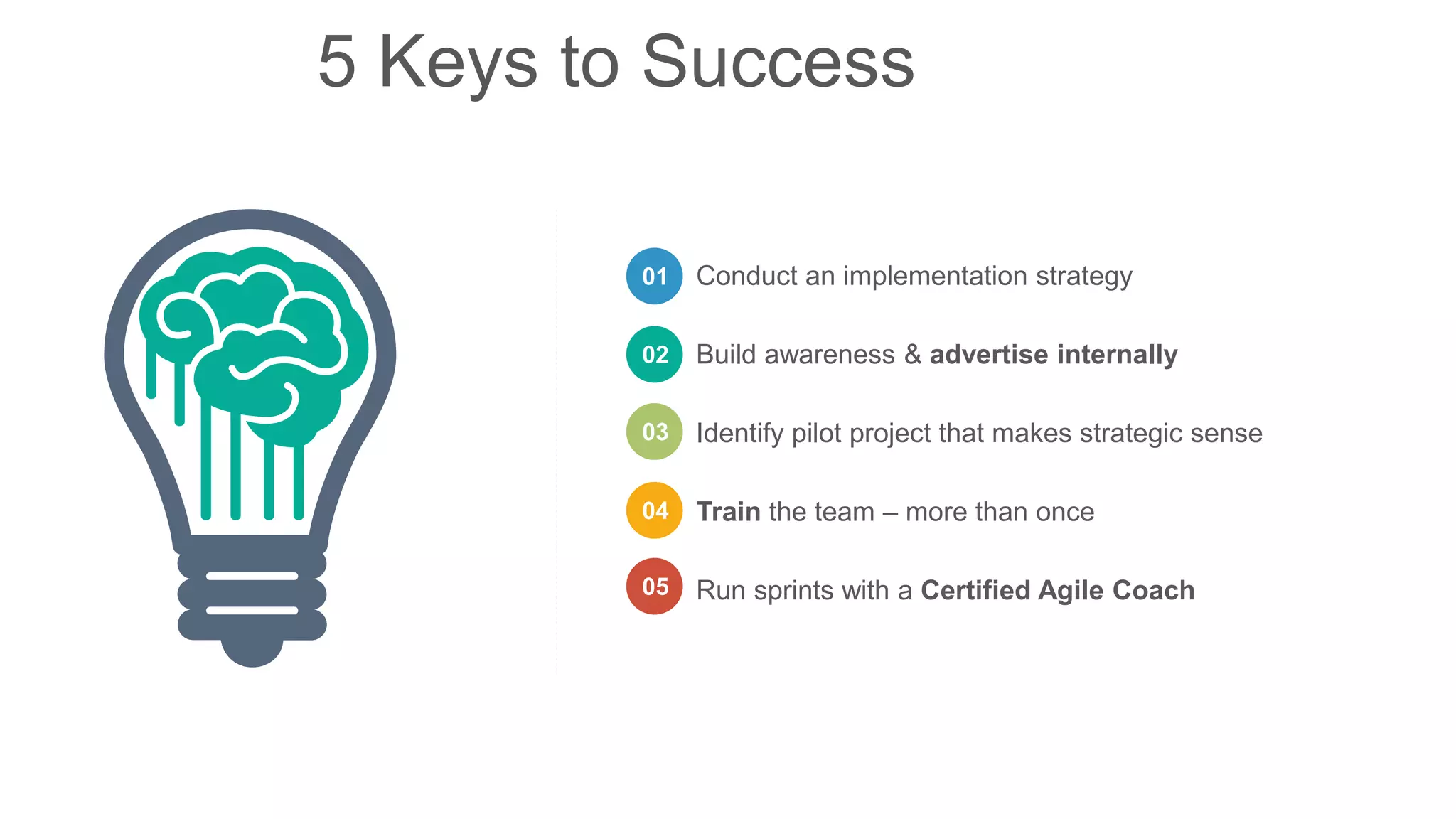
5 Keys to Success
Conduct an implementation strategy
Build awareness & advertise internally
Identify pilot project that makes strategic sense
Train the team – more than once
Run sprints with a Certified Agile Coach
01
02
03
04
05
5 Common Mistakes
Double Work Agile – doing Scrum & Waterfall
No formal training or workshops
An ineffective Product Owner
Tweaking & short-cuts – “death by 1000 cuts”
No professional transition support
01
02
03
04
05
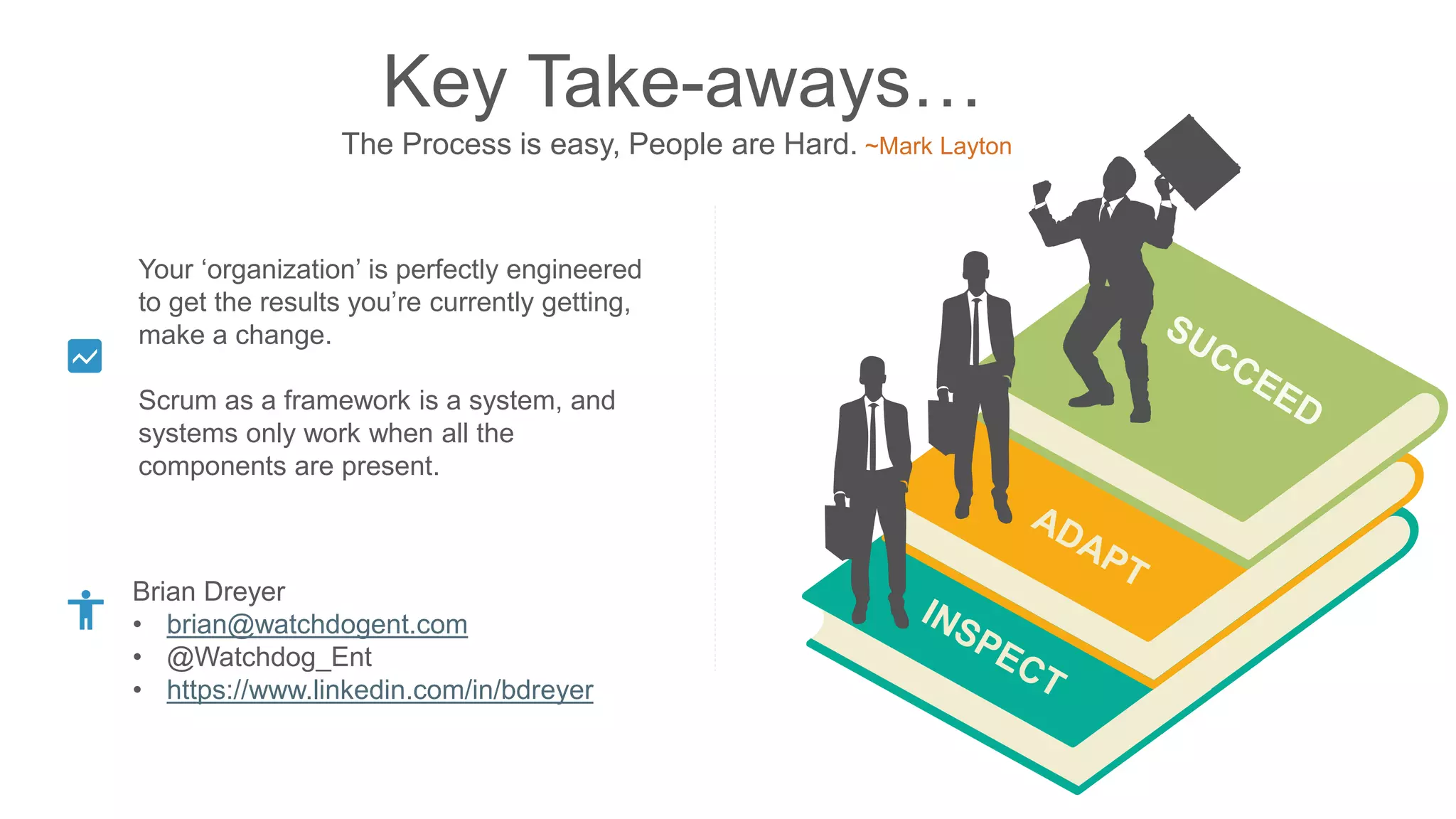
Key Take-aways…
The Process is easy, People are Hard. ~Mark Layton
Brian Dreyer
• brian@watchdogent.com
• @Watchdog_Ent
• https://www.linkedin.com/in/bdreyer
Your ‘organization’ is perfectly engineered
to get the results you’re currently getting,
make a change.
Scrum as a framework is a system, and
systems only work when all the
components are present.

Agile - Product is Progress.

  • 1.
    Agile vs. TraditionalProduct Development Watchdog Corp
  • 2.
    2 Waterfall Project SuccessRates Challenged: late, over budget, missed features Success: on-time, on-budget, required features Failed: cancelled, or delivered and never used Agile Project Success Rates "We have seen an increase in the number of smaller projects and agile projects. Further, we have seen a decrease in waterfall projects." 50% 14% 57% Performance Agile Succeeds Three Times More Often Than Waterfall. 29% Challenged Success Failed 50% 42% 49% 9% Challenged Success Failed CHAOS Manifesto, 2013
  • 3.
    3 CHAOS Manifesto, 2013 FeatureUsage Always & Often Use always and/or often Rarely $1 million project, this would save $190K Sometimes $1 million project, this would save $160K Never Features that are never used, and/or not known 45% 16% 19% 20% “One of the biggest benefits from small projects is the return on value is sooner rather than later. So a small project has a much greater chance of success, and therefore you will get a return much faster.” Opportunity Cost Everything works perfectly on a whiteboard, don’t do big up-front design. 64% Features rarely or never used.
  • 4.
    The Agile Manifesto It’sa Philosophy as well as a Methodology Individuals and interactions over processes and tools Working software over comprehensive documentation Customer collaboration over contract negotiation Responding to change over following a plan That is, while there is value in the items on the right, we value the items on the left more.
  • 5.
    Agile Methodologies &Frameworks Kanban Scrum Lean FDD Scrum – Most start with Scrum as the best foundational framework for people that need to work together. What is Agile? We don’t do Agile, we become Agile. Agile is a philosophy and a number of methodologies & frameworks. 53% 2–5 Years 19% 5+ Years VersionOne, 2014 – “State of Agile” survey 3,501 people Agile TDD
  • 6.
    Scrum Values Scrum isbased on a set of fundamental core values that form the basis of our actions & decision making. Accountability Being Agile means being open, transparent & accountable to a team. Remote & diverse teams need tools. Interruptions Agile teams have less meetings but they need to report progress & issues to team members & stakeholders. Inspect & Adapt At regular intervals, the team reflects on how for be more effective, then more efficient, this is central to being agile. Scrum Focus Respect Openness Courage Commitment
  • 7.
    Development Comparison DESIGN CODE INTEGRATE TEST DEPLOY REQUIREMENTS TIME TIME Process aren’tbuilt for success, processes are built for safety, and safety isn’t success ~Jeff Patton Waterfall Scrum Highest Priority High Priority Medium Priority
  • 8.
    Simplified Scrum Overview 3Roles, 3 Artifacts, 5 Ceremonies Requirements Product Backlog Sprint Backlog Sprint Planning Sprint 1-4 Weeks Daily Scrum Retrospective Sprint Review Potentially Shippable Product 24 hrs. 01 02 03 04 05
  • 9.
    The Agile ScrumTeam Scrum Team Product Owner ScrumMasterDevelopment Team Stakeholders Agile Coach Scrum Team Self organizing Development Team, & a ScrumMaster, or the servant leader for the team. The Product Owner determines what to build, & prioritizing build features. Agile Coach Agile Coaches are responsible for the process of Scrum, training, guidance & leadership throughout the organization. Stakeholders Line of business leaders that work with the Product Owner not directly with the team. The people who do the work are the highest authorities about how best to do the work. Project Team
  • 10.
    Scrum Ceremonies Sprint Retrospective Sprint Review DailyScrum Sprint Planning 1 Week 2 Weeks 3 Weeks 4 Weeks 2 hr 15 min 1 hr .75 hr 1.5 hr 15 min 15 min 15 min 2 hr 4 hr 3 hr 6 hr 2.25 hr 4 hr 3 hr 8 hr How much time should we allow? Sprint Length
  • 11.
    Team Time Spenton Scrum Source: Scrumalliance.org Daily Scrum Sprint Retrospective Sprint Review Sprint Planning Development Time Backlog Refinement 78.1%5% 2.5% 2.5% 10% 1.9% People learn best by doing.
  • 12.
    Understand Technical Debt “Shippingfirst-time code is like going into debt.” “Just as a business incurs some debt to take advantage of a market opportunity developers may incur technical debt to hit an important deadline.” “Quick-time to market & iterative development or deployment involves technical debt, tools needed to push/pull code quickly.” “We don’t have time for design.” “We must ship now and deal with the consequences.” “What’s Layering?” “Now we know how we should have done it.” DELIBERATEINADVERTENT PRUDENTRECKLESS The faster you deliver, the more important QA and DevOps become.
  • 13.
    1 3 Sprint Reviews & Release SprintPlanning, Sprint Reviews & *Daily Scrum Initiates & Dictates Product Changes Sprint Reviews & Releases Daily Scrum, Sprint Planning & Sprint Reviews Agile Feedback Loops Scrum has several built-in feedback loops.
  • 14.
    Human Nature, Egos& Politics… We have to change the ways we traditionally communicate & challenge the status quo. What do you see being communicated in this picture? Scrum is difficult, Scrum is disruptive, that’s how you know you’re doing Scrum. ~Mark Layton Body Language is 70% of communications, as a team, you need to communicate face-to-face first, then Phone, then IM and as a last resort - Email.
  • 15.
    5 Keys toSuccess Conduct an implementation strategy Build awareness & advertise internally Identify pilot project that makes strategic sense Train the team – more than once Run sprints with a Certified Agile Coach 01 02 03 04 05
  • 16.
    5 Common Mistakes DoubleWork Agile – doing Scrum & Waterfall No formal training or workshops An ineffective Product Owner Tweaking & short-cuts – “death by 1000 cuts” No professional transition support 01 02 03 04 05
  • 17.
    Key Take-aways… The Processis easy, People are Hard. ~Mark Layton Brian Dreyer • brian@watchdogent.com • @Watchdog_Ent • https://www.linkedin.com/in/bdreyer Your ‘organization’ is perfectly engineered to get the results you’re currently getting, make a change. Scrum as a framework is a system, and systems only work when all the components are present.

Editor's Notes

  • #9 Roles – Dev. Team, SM, PO Artifacts – 1.Backlog, 2.Sprint Plan, 3.Review (running code) Ceremonies – 1.Backlog Creation/Grooming, 2.Sprint Planning, 3.Daily Scrum, 4.Sprint Review, 5.Sprint Retro Backlog – a well “groomed” and prioritized backlog is critical
  • #10 Teams need to be insulated from Stakeholders to be accountable