
Agent Technology
K6213 KM Technologies Presentation


                                     Aravind Sesagiri Raamkumar
                                     Nirmala Selvaraju
Agenda
• Introduction
• Typology of Agents
• Popular Examples of Software Agents
• Agent Technology in aid of KM
 • Application of IA for KM Integration
 • Information Agents
 • Agent based Customer Knowledge Management
• References
Introduction
 Agents can be defined to be autonomous, problem-solving
 computational entities capable of effective operation in dynamic
 and open environments.(Luck et al)

 Often deployed in ‘Multi-agent’ environments in which they
 interact and co-operate with each other.

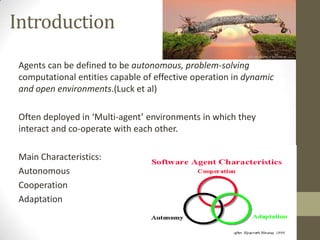
 Main Characteristics:
 Autonomous
 Cooperation
 Adaptation
Typology of Agents
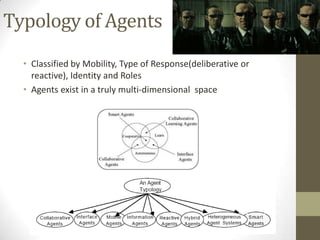
  • Classified by Mobility, Type of Response(deliberative or
    reactive), Identity and Roles
  • Agents exist in a truly multi-dimensional space
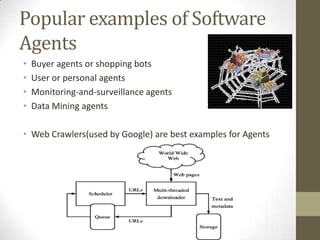
Popular examples of Software
Agents
•   Buyer agents or shopping bots
•   User or personal agents
•   Monitoring-and-surveillance agents
•   Data Mining agents

• Web Crawlers(used by Google) are best examples for Agents
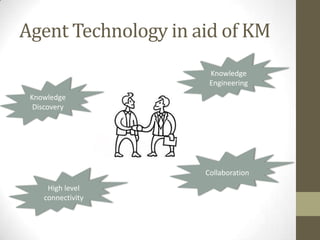
Agent Technology in aid of KM
                      Knowledge
                      Engineering
 Knowledge
  Discovery


                     Collaboration
     High level
    connectivity
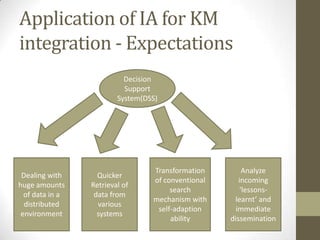
Application of IA for KM
integration - Expectations
                           Decision
                           Support
                         System(DSS)


                                  Transformation        Analyze
 Dealing with      Quicker
                                  of conventional      incoming
huge amounts     Retrieval of
                                       search          ‘lessons-
  of data in a    data from
                                  mechanism with     learnt’ and
  distributed      various
                                   self-adaption      immediate
 environment       systems
                                       ability      dissemination
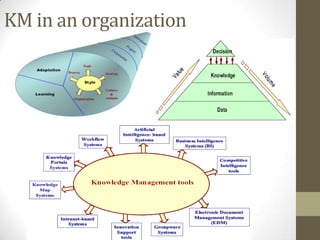
KM in an organization
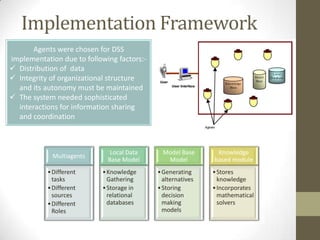
Implementation Framework
       Agents were chosen for DSS
implementation due to following factors:-
 Distribution of data
 Integrity of organizational structure
  and its autonomy must be maintained
 The system needed sophisticated
  interactions for information sharing
  and coordination


                              Local Data      Model Base      Knowledge
            Multiagents
                             Base Model        Model         based module
           • Different     • Knowledge      • Generating     • Stores
             tasks           Gathering        alternatives     knowledge
           • Different     • Storage in     • Storing        • Incorporates
             sources         relational       decision         mathematical
           • Different       databases        making           solvers
             Roles                            models
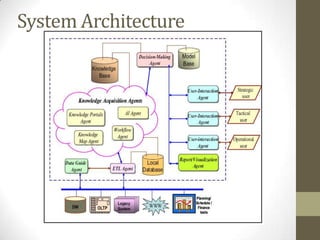
System Architecture
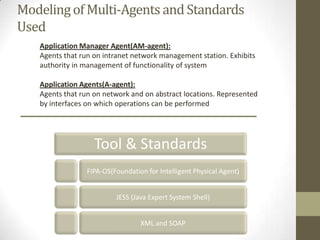
Modeling of Multi-Agents and Standards
Used
   Application Manager Agent(AM-agent):
   Agents that run on intranet network management station. Exhibits
   authority in management of functionality of system

   Application Agents(A-agent):
   Agents that run on network and on abstract locations. Represented
   by interfaces on which operations can be performed


                   Tool & Standards
                 FIPA-OS(Foundation for Intelligent Physical Agent)


                          JESS (Java Expert System Shell)


                                  XML and SOAP
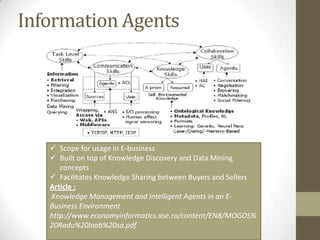
Information Agents


    Scope for usage in E-business
    Built on top of Knowledge Discovery and Data Mining
      concepts
    Facilitates Knowledge Sharing between Buyers and Sellers
   Article :
   Knowledge Management and Intelligent Agents in an E-
   Business Environment
   http://www.economyinformatics.ase.ro/content/EN8/MOGOS%
   20Radu%20Ioab%20sa.pdf
Agent based Customer Knowledge
  Management
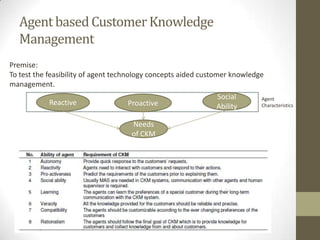
Premise:
To test the feasibility of agent technology concepts aided customer knowledge
management.
                                                              Social        Agent
            Reactive               Proactive                  Ability       Characteristics


                                     Needs
                                     of CKM
Agent based Customer Knowledge
Management


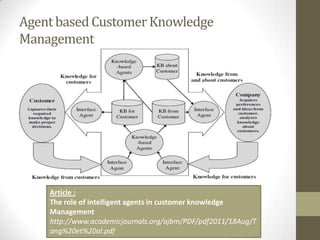
    Article :
    The role of intelligent agents in customer knowledge
    Management
    http://www.academicjournals.org/ajbm/PDF/pdf2011/18Aug/T
    ang%20et%20al.pdf
References
• Software Agents: An Overview Hyacinth S. Nwana
• Agent Technology: Enabling Next Generation Computing Luck
  et al
• Application of Intelligent Agent Technology for Knowledge
  Management Integration Houari et al
• Knowledge Management and Intelligent Agents in an E-
  Business Environment MOGOŞ et al
• The role of intelligent agents in customer knowledge
• Management Tan et al
Thank You

Agent Technology Presentation

  • 1.
    Agent Technology K6213 KMTechnologies Presentation Aravind Sesagiri Raamkumar Nirmala Selvaraju
  • 2.
    Agenda • Introduction • Typologyof Agents • Popular Examples of Software Agents • Agent Technology in aid of KM • Application of IA for KM Integration • Information Agents • Agent based Customer Knowledge Management • References
  • 3.
    Introduction Agents canbe defined to be autonomous, problem-solving computational entities capable of effective operation in dynamic and open environments.(Luck et al) Often deployed in ‘Multi-agent’ environments in which they interact and co-operate with each other. Main Characteristics: Autonomous Cooperation Adaptation
  • 4.
    Typology of Agents • Classified by Mobility, Type of Response(deliberative or reactive), Identity and Roles • Agents exist in a truly multi-dimensional space
  • 5.
    Popular examples ofSoftware Agents • Buyer agents or shopping bots • User or personal agents • Monitoring-and-surveillance agents • Data Mining agents • Web Crawlers(used by Google) are best examples for Agents
  • 6.
    Agent Technology inaid of KM Knowledge Engineering Knowledge Discovery Collaboration High level connectivity
  • 7.
    Application of IAfor KM integration - Expectations Decision Support System(DSS) Transformation Analyze Dealing with Quicker of conventional incoming huge amounts Retrieval of search ‘lessons- of data in a data from mechanism with learnt’ and distributed various self-adaption immediate environment systems ability dissemination
  • 8.
    KM in anorganization
  • 9.
    Implementation Framework Agents were chosen for DSS implementation due to following factors:-  Distribution of data  Integrity of organizational structure and its autonomy must be maintained  The system needed sophisticated interactions for information sharing and coordination Local Data Model Base Knowledge Multiagents Base Model Model based module • Different • Knowledge • Generating • Stores tasks Gathering alternatives knowledge • Different • Storage in • Storing • Incorporates sources relational decision mathematical • Different databases making solvers Roles models
  • 10.
  • 11.
    Modeling of Multi-Agentsand Standards Used Application Manager Agent(AM-agent): Agents that run on intranet network management station. Exhibits authority in management of functionality of system Application Agents(A-agent): Agents that run on network and on abstract locations. Represented by interfaces on which operations can be performed Tool & Standards FIPA-OS(Foundation for Intelligent Physical Agent) JESS (Java Expert System Shell) XML and SOAP
  • 12.
    Information Agents  Scope for usage in E-business  Built on top of Knowledge Discovery and Data Mining concepts  Facilitates Knowledge Sharing between Buyers and Sellers Article : Knowledge Management and Intelligent Agents in an E- Business Environment http://www.economyinformatics.ase.ro/content/EN8/MOGOS% 20Radu%20Ioab%20sa.pdf
  • 13.
    Agent based CustomerKnowledge Management Premise: To test the feasibility of agent technology concepts aided customer knowledge management. Social Agent Reactive Proactive Ability Characteristics Needs of CKM
  • 14.
    Agent based CustomerKnowledge Management Article : The role of intelligent agents in customer knowledge Management http://www.academicjournals.org/ajbm/PDF/pdf2011/18Aug/T ang%20et%20al.pdf
  • 15.
    References • Software Agents:An Overview Hyacinth S. Nwana • Agent Technology: Enabling Next Generation Computing Luck et al • Application of Intelligent Agent Technology for Knowledge Management Integration Houari et al • Knowledge Management and Intelligent Agents in an E- Business Environment MOGOŞ et al • The role of intelligent agents in customer knowledge • Management Tan et al
  • 16.