The Aesthetic Approach To
Teaching Literature In English
The aesthetic approach talks in depth
about the literary elements in the text.
• Aspects to be focused on:
1) Plot
2) Setting
3) Characterisation
4) Literary devices
Plot
• Sequence of events
• These are the examples of question to teach
about plot of a particular text.
-What are the main action that moves the plot?
-Are there any conflict?
-Does it follow the chronological order (Freytag’s
pyramid)?
-Identify similarities between main plot and sub-
plot
Questions that lead the students to
explain the sequence of
events
explain the reasons for
the various events
explain the results of
these events on the
plot
explain the relationship
between these events
and how they influence
the sequence of the
plot
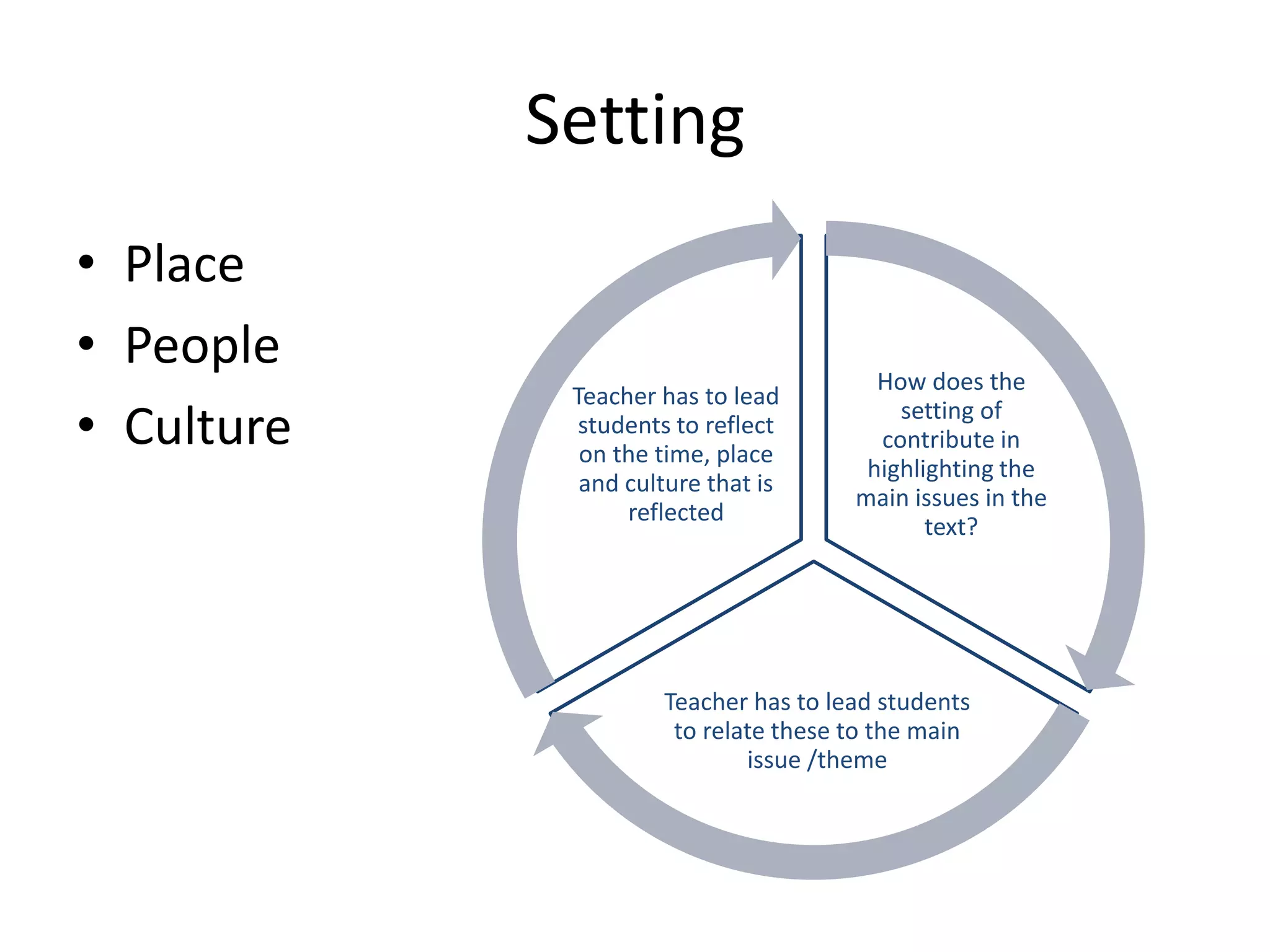
Setting
• Place
• People
• Culture
How does the
setting of
contribute in
highlighting the
main issues in the
text?
Teacher has to lead students
to relate these to the main
issue /theme
Teacher has to lead
students to reflect
on the time, place
and culture that is
reflected
Characterisation
• Gestures
• Habits
• Manners
• Speech
• Thoughts
• physical appearance
• character in the story
• Personality traits
The details of characters and
characterization:
All aspects of
physical and
personality traits
All aspects of
relationship and
conflict
All aspects pointing
to development or
change, or
otherwise
Value and function
of the character/s
to the text
Literary devices
• Imagery
• Symbols
• Tone
• Mood
• Metaphors
• Foreshadowing
• Alliteration
• Hyperbole
• Imagery etc.

Aesthetic Based Approach

  • 1.
    The Aesthetic ApproachTo Teaching Literature In English
  • 2.
    The aesthetic approachtalks in depth about the literary elements in the text. • Aspects to be focused on: 1) Plot 2) Setting 3) Characterisation 4) Literary devices
  • 3.
    Plot • Sequence ofevents • These are the examples of question to teach about plot of a particular text. -What are the main action that moves the plot? -Are there any conflict? -Does it follow the chronological order (Freytag’s pyramid)? -Identify similarities between main plot and sub- plot
  • 4.
    Questions that leadthe students to explain the sequence of events explain the reasons for the various events explain the results of these events on the plot explain the relationship between these events and how they influence the sequence of the plot
  • 5.
    Setting • Place • People •Culture How does the setting of contribute in highlighting the main issues in the text? Teacher has to lead students to relate these to the main issue /theme Teacher has to lead students to reflect on the time, place and culture that is reflected
  • 6.
    Characterisation • Gestures • Habits •Manners • Speech • Thoughts • physical appearance • character in the story • Personality traits
  • 7.
    The details ofcharacters and characterization: All aspects of physical and personality traits All aspects of relationship and conflict All aspects pointing to development or change, or otherwise Value and function of the character/s to the text
  • 8.
    Literary devices • Imagery •Symbols • Tone • Mood • Metaphors • Foreshadowing • Alliteration • Hyperbole • Imagery etc.