Connector
 Ask the Connector to read the connection they made:
 Explain what kind of connection it was ( T-T, T-S, or TW)
 Read the passage of the book whre the conncetion was
made.
 Allow each member of the group to comment and also

tell their own connections they made to the book.
Discussion Director

 Ask the group the questions

you created.
 Allow each person in your
group to participate in the
discussion and answer the
questions.
 After you have discussed your
questions and answers, allow
other team members to
present and discuss their
questions.
Illustrator
Use some form of
artwork to
represent a
significant scene or
idea from the
reading.
Illustrator
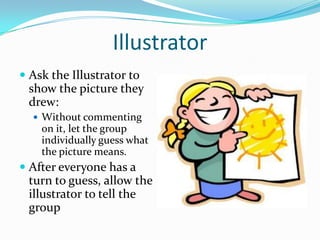
 Ask the Illustrator to
show the picture they
drew:
 Without commenting

on it, let the group
individually guess what
the picture means.

 After everyone has a
turn to guess, allow the
illustrator to tell the
group
What the picture means?

Where it came from?
What it represents ?
Word finder

 Discusses words in texts that are

unusual, interesting, or difficult
to understand.
Correspondent goes first
 Ask the correspondent to read her letter which
summarizes the story.
 Discuss the summary

 Allow other group members to add detail that they may

have forgotten.

 Ask the correspondent to read two sections of the
text they felt were the most interesting and explain
why they chose the sections to share.
Discussion Director
 Creates questions for the group and leads the discussion.
Connector
 Finds connections between the book and something

outside the text.
Correspondent
 Points out interesting or important passages within

the reading.
Wrap it up

 Ask students to make predictions about what will
happen next.
 Fill out “ Literature Circle Planning Sheet”
 For the first round Ms.Maria will set the jobs and dates.

Once the groups are independent, the members will set
the roles and dates.
Ways to have a Good Discussion













Be prepared
Sit so everyone can see each other.
Get started right away.
Look directly at the person who is talking.
Listen to understand.
Ask questions to understand better.
Speak clearly but not too loudly.
Wait for the speaker to finish.
Be sure everyone gets a turn
Respect on another’s idea.
Stay on topic.
Give examples from the text to support your thinking.
Self Reflection: Take part in a Group
 Did I understand what my role was in the group?
 Did I complete my task to the best of my ability?
 Did I have my turn speaking?
 Did I let others have a turn at speaking?

 Did I offer to help when it was needed?
 Did I enjoy taking part in the group work?
 Did I enjoy working with others in my group?
What were three things that you
enjoyed about you role in the
group?
What is something that you want
to do differently next time?

Reading Circle

  • 2.
    Connector  Ask theConnector to read the connection they made:  Explain what kind of connection it was ( T-T, T-S, or TW)  Read the passage of the book whre the conncetion was made.  Allow each member of the group to comment and also tell their own connections they made to the book.
  • 3.
    Discussion Director  Askthe group the questions you created.  Allow each person in your group to participate in the discussion and answer the questions.  After you have discussed your questions and answers, allow other team members to present and discuss their questions.
  • 4.
    Illustrator Use some formof artwork to represent a significant scene or idea from the reading.
  • 5.
    Illustrator  Ask theIllustrator to show the picture they drew:  Without commenting on it, let the group individually guess what the picture means.  After everyone has a turn to guess, allow the illustrator to tell the group
  • 6.
    What the picturemeans? Where it came from? What it represents ?
  • 7.
    Word finder  Discusseswords in texts that are unusual, interesting, or difficult to understand.
  • 8.
    Correspondent goes first Ask the correspondent to read her letter which summarizes the story.  Discuss the summary  Allow other group members to add detail that they may have forgotten.  Ask the correspondent to read two sections of the text they felt were the most interesting and explain why they chose the sections to share.
  • 9.
    Discussion Director  Createsquestions for the group and leads the discussion.
  • 10.
    Connector  Finds connectionsbetween the book and something outside the text.
  • 11.
    Correspondent  Points outinteresting or important passages within the reading.
  • 12.
    Wrap it up Ask students to make predictions about what will happen next.  Fill out “ Literature Circle Planning Sheet”  For the first round Ms.Maria will set the jobs and dates. Once the groups are independent, the members will set the roles and dates.
  • 13.
    Ways to havea Good Discussion             Be prepared Sit so everyone can see each other. Get started right away. Look directly at the person who is talking. Listen to understand. Ask questions to understand better. Speak clearly but not too loudly. Wait for the speaker to finish. Be sure everyone gets a turn Respect on another’s idea. Stay on topic. Give examples from the text to support your thinking.
  • 14.
    Self Reflection: Takepart in a Group  Did I understand what my role was in the group?  Did I complete my task to the best of my ability?  Did I have my turn speaking?  Did I let others have a turn at speaking?  Did I offer to help when it was needed?  Did I enjoy taking part in the group work?  Did I enjoy working with others in my group?
  • 15.
    What were threethings that you enjoyed about you role in the group? What is something that you want to do differently next time?