Advertising Techniques
Beauty Appeal
Celebrity Endorsement
Escape
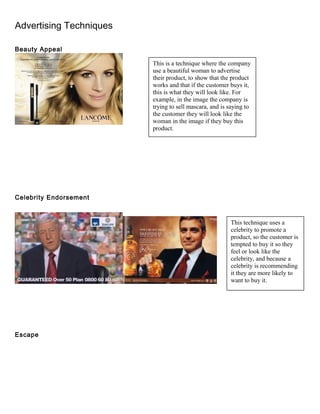
This is a technique where the company
use a beautiful woman to advertise
their product, to show that the product
works and that if the customer buys it,
this is what they will look like. For
example, in the image the company is
trying to sell mascara, and is saying to
the customer they will look like the
woman in the image if they buy this
product.
This technique uses a
celebrity to promote a
product, so the customer is
tempted to buy it so they
feel or look like the
celebrity, and because a
celebrity is recommending
it they are more likely to
want to buy it.
Independence/Individuality
Intelligence
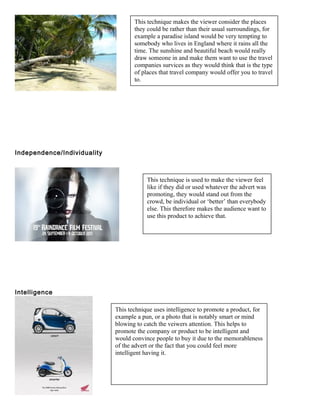
This technique makes the viewer consider the places
they could be rather than their usual surroundings, for
example a paradise island would be very tempting to
somebody who lives in England where it rains all the
time. The sunshine and beautiful beach would really
draw someone in and make them want to use the travel
companies survices as they would think that is the type
of places that travel company would offer you to travel
to.
This technique is used to make the viewer feel
like if they did or used whatever the advert was
promoting, they would stand out from the
crowd, be individual or ‘better’ than everybody
else. This therefore makes the audience want to
use this product to achieve that.
This technique uses intelligence to promote a product, for
example a pun, or a photo that is notably smart or mind
blowing to catch the veiwers attention. This helps to
promote the company or product to be intelligent and
would convince people to buy it due to the memorableness
of the advert or the fact that you could feel more
intelligent having it.
Lifestyle
Nurture
Peer Approval
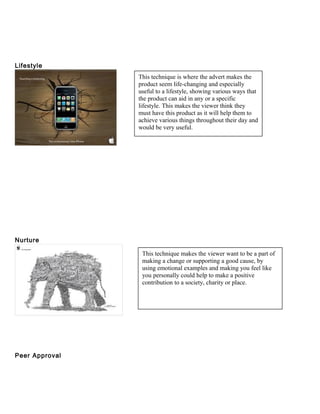
This technique is where the advert makes the
product seem life-changing and especially
useful to a lifestyle, showing various ways that
the product can aid in any or a specific
lifestyle. This makes the viewer think they
must have this product as it will help them to
achieve various things throughout their day and
would be very useful.
This technique makes the viewer want to be a part of
making a change or supporting a good cause, by
using emotional examples and making you feel like
you personally could help to make a positive
contribution to a society, charity or place.
Rebel
Rhetorical Question
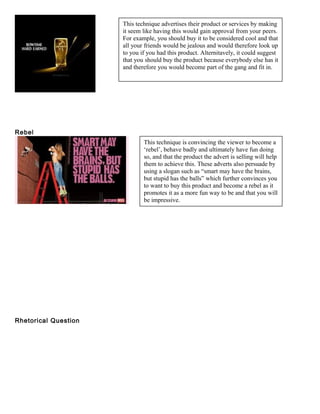
This technique advertises their product or services by making
it seem like having this would gain approval from your peers.
For example, you should buy it to be considered cool and that
all your friends would be jealous and would therefore look up
to you if you had this product. Alternitavely, it could suggest
that you should buy the product because everybody else has it
and therefore you would become part of the gang and fit in.
This technique is convincing the viewer to become a
‘rebel’, behave badly and ultimately have fun doing
so, and that the product the advert is selling will help
them to achieve this. These adverts also persuade by
using a slogan such as “smart may have the brains,
but stupid has the balls” which further convinces you
to want to buy this product and become a rebel as it
promotes it as a more fun way to be and that you will
be impressive.
Scientific / Statistical Claim
Unfinished Comparison / Claim
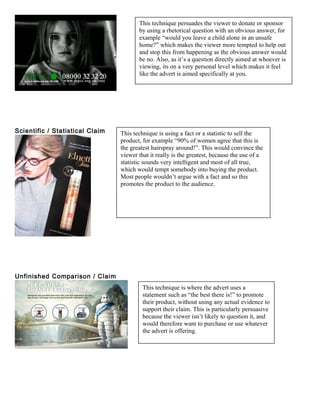
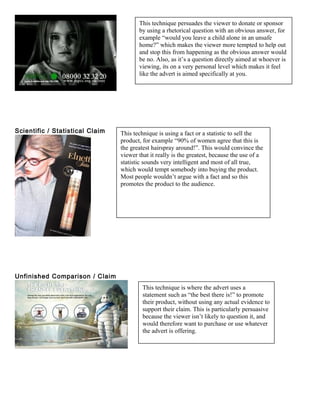
This technique persuades the viewer to donate or sponsor
by using a rhetorical question with an obvious answer, for
example “would you leave a child alone in an unsafe
home?” which makes the viewer more tempted to help out
and stop this from happening as the obvious answer would
be no. Also, as it’s a question directly aimed at whoever is
viewing, its on a very personal level which makes it feel
like the advert is aimed specifically at you.
This technique is using a fact or a statistic to sell the
product, for example “90% of women agree that this is
the greatest hairspray around!”. This would convince the
viewer that it really is the greatest, because the use of a
statistic sounds very intelligent and most of all true,
which would tempt somebody into buying the product.
Most people wouldn’t argue with a fact and so this
promotes the product to the audience.
This technique is where the advert uses a
statement such as “the best there is!” to promote
their product, without using any actual evidence to
support their claim. This is particularly persuasive
because the viewer isn’t likely to question it, and
would therefore want to purchase or use whatever
the advert is offering.
Scientific / Statistical Claim
Unfinished Comparison / Claim
This technique persuades the viewer to donate or sponsor
by using a rhetorical question with an obvious answer, for
example “would you leave a child alone in an unsafe
home?” which makes the viewer more tempted to help out
and stop this from happening as the obvious answer would
be no. Also, as it’s a question directly aimed at whoever is
viewing, its on a very personal level which makes it feel
like the advert is aimed specifically at you.
This technique is using a fact or a statistic to sell the
product, for example “90% of women agree that this is
the greatest hairspray around!”. This would convince the
viewer that it really is the greatest, because the use of a
statistic sounds very intelligent and most of all true,
which would tempt somebody into buying the product.
Most people wouldn’t argue with a fact and so this
promotes the product to the audience.
This technique is where the advert uses a
statement such as “the best there is!” to promote
their product, without using any actual evidence to
support their claim. This is particularly persuasive
because the viewer isn’t likely to question it, and
would therefore want to purchase or use whatever
the advert is offering.

Advertising Techniques

  • 1.
    Advertising Techniques Beauty Appeal CelebrityEndorsement Escape This is a technique where the company use a beautiful woman to advertise their product, to show that the product works and that if the customer buys it, this is what they will look like. For example, in the image the company is trying to sell mascara, and is saying to the customer they will look like the woman in the image if they buy this product. This technique uses a celebrity to promote a product, so the customer is tempted to buy it so they feel or look like the celebrity, and because a celebrity is recommending it they are more likely to want to buy it.
  • 2.
    Independence/Individuality Intelligence This technique makesthe viewer consider the places they could be rather than their usual surroundings, for example a paradise island would be very tempting to somebody who lives in England where it rains all the time. The sunshine and beautiful beach would really draw someone in and make them want to use the travel companies survices as they would think that is the type of places that travel company would offer you to travel to. This technique is used to make the viewer feel like if they did or used whatever the advert was promoting, they would stand out from the crowd, be individual or ‘better’ than everybody else. This therefore makes the audience want to use this product to achieve that. This technique uses intelligence to promote a product, for example a pun, or a photo that is notably smart or mind blowing to catch the veiwers attention. This helps to promote the company or product to be intelligent and would convince people to buy it due to the memorableness of the advert or the fact that you could feel more intelligent having it.
  • 3.
    Lifestyle Nurture Peer Approval This techniqueis where the advert makes the product seem life-changing and especially useful to a lifestyle, showing various ways that the product can aid in any or a specific lifestyle. This makes the viewer think they must have this product as it will help them to achieve various things throughout their day and would be very useful. This technique makes the viewer want to be a part of making a change or supporting a good cause, by using emotional examples and making you feel like you personally could help to make a positive contribution to a society, charity or place.
  • 4.
    Rebel Rhetorical Question This techniqueadvertises their product or services by making it seem like having this would gain approval from your peers. For example, you should buy it to be considered cool and that all your friends would be jealous and would therefore look up to you if you had this product. Alternitavely, it could suggest that you should buy the product because everybody else has it and therefore you would become part of the gang and fit in. This technique is convincing the viewer to become a ‘rebel’, behave badly and ultimately have fun doing so, and that the product the advert is selling will help them to achieve this. These adverts also persuade by using a slogan such as “smart may have the brains, but stupid has the balls” which further convinces you to want to buy this product and become a rebel as it promotes it as a more fun way to be and that you will be impressive.
  • 5.
    Scientific / StatisticalClaim Unfinished Comparison / Claim This technique persuades the viewer to donate or sponsor by using a rhetorical question with an obvious answer, for example “would you leave a child alone in an unsafe home?” which makes the viewer more tempted to help out and stop this from happening as the obvious answer would be no. Also, as it’s a question directly aimed at whoever is viewing, its on a very personal level which makes it feel like the advert is aimed specifically at you. This technique is using a fact or a statistic to sell the product, for example “90% of women agree that this is the greatest hairspray around!”. This would convince the viewer that it really is the greatest, because the use of a statistic sounds very intelligent and most of all true, which would tempt somebody into buying the product. Most people wouldn’t argue with a fact and so this promotes the product to the audience. This technique is where the advert uses a statement such as “the best there is!” to promote their product, without using any actual evidence to support their claim. This is particularly persuasive because the viewer isn’t likely to question it, and would therefore want to purchase or use whatever the advert is offering.
  • 6.
    Scientific / StatisticalClaim Unfinished Comparison / Claim This technique persuades the viewer to donate or sponsor by using a rhetorical question with an obvious answer, for example “would you leave a child alone in an unsafe home?” which makes the viewer more tempted to help out and stop this from happening as the obvious answer would be no. Also, as it’s a question directly aimed at whoever is viewing, its on a very personal level which makes it feel like the advert is aimed specifically at you. This technique is using a fact or a statistic to sell the product, for example “90% of women agree that this is the greatest hairspray around!”. This would convince the viewer that it really is the greatest, because the use of a statistic sounds very intelligent and most of all true, which would tempt somebody into buying the product. Most people wouldn’t argue with a fact and so this promotes the product to the audience. This technique is where the advert uses a statement such as “the best there is!” to promote their product, without using any actual evidence to support their claim. This is particularly persuasive because the viewer isn’t likely to question it, and would therefore want to purchase or use whatever the advert is offering.