ADVERTISING
According to American Marketing Association,
“Advertising is any paid form of non-personal presentation of
ideas, goods or services by an identified sponsor”.
Advertising is defined as a tool used to communicate with the
end-users of the product or service being offered.
5 M's
• Mission: What are the advertising objectives?
• Money: How much can be spent?
• Message: What message should be sent?
• Media: What media should be used?
• Measurement: How should the results be evaluated?
Mission
Advertising objectives:
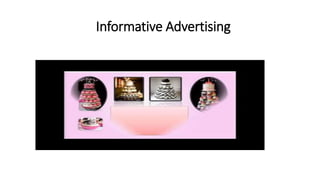
 Informative Advertising:
Informing the potential customers about the brand and its products is the first step towards
attaining business goals.
 Persuasive Advertising:
Persuade a consumer for buying a particular product, especially in the presence of several
similar products in the same category.
 Reminder Advertising:
Stimulate repeat purchase of products and services
 Reinforcement Advertising:
Ensure that people who have already purchased the company's product have made the
right choice, as well as how to best take advantage of the product.
Informative Advertising
Persuasive Advertising
Our English outcome is to create a Travel
Brochure to persuade you to visit the Arctic.
Where will your adventure take you?
Reminder Advertising
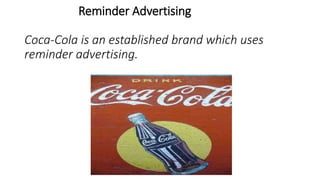
Coca-Cola is an established brand which uses
reminder advertising.
Deciding on advertising budget(Money)
 Stage in product life cycle:
new products --> large budgets-->awareness and gain consumers
Established brands-->low budgets
 Market share and consumer base:
The products, which are having high market share usually
require low expenditures. It is less expensive to reach consumers of a
widely used brand than to reach consumers of low share brands.
 Competition and clutter:
In a market with a large number of competitors and a high
advertising spending, a brand must advertise more heavily to be heard.
Ø Advertising frequency:
The number of repetitions needed to put across the brand’s
message to consumers has an important impact on the advertising budget.
Potential customers needs to see an ad seven times or more before
they buy. On average, you have to see an ad seven times before you even
notice it.
Ø Product substitutability:
A substitute good is a good that can be used in place of another.
Consumer having more of one product makes them desire less of the other
product.
Brands in a commodity class such as cigarettes, soft drinks and
liquor require heavy advertising to establish a differential image. Advertising
is also important when a brand can offer unique physical benefits or
features.
Message
 Message generation and evaluation
 Creative development and execution
 Social responsibility review
Media
Choosing among major media types :
Target audience media habits
Product characteristics
Message characteristics
Cost
Alternative advertising options:
Billboards
Public spaces
Product Placement
Point of Purchase
Deciding on media timing and allocation
• Buyer turnover
• Purchase frequency
• Forgetting rate
In launching new product,
• Continuity
• Concentration
• Flighting
• Pulsing
Types of advertising
• Print Advertising: Newspaper, magazines, & brochure
advertisements, etc.
• Broadcast Advertising: Television and radio advertisements.
• Outdoor Advertising: Hoardings, banners, flags, wraps, etc.
• Digital Advertising: Advertisements displayed over the
internet and digital devices.
• Product/Brand Integration: Product placements in
entertainment media like TV show, YouTube video, etc.
Importance Of Advertising
To The Customers
• Convenience: Targeted informative advertisements make the
customer’s decision making process easier as they get to know what
suits their requirements and budget.
• Awareness: Advertising educates the customers about different
products available in the market and their features.
• Better Quality: Only brands advertise themselves and their products.
There are no advertisements of unbranded products.
To The Business
• Awareness: Advertising increases the brand and product awareness
among the people belonging to the target market.
• Brand Image: Clever advertising helps the business to form the
desired brand image and brand personality in the minds of the
customers.
• Product Differentiation: Advertising helps the business to
differentiate its product from those of competitors’ and communicate
its features and advantages to the target audience.
• Increases Goodwill: Advertising reiterates brand vision and increases
the goodwill of the brand among its customers.
Advantages Of Advertising
• Reduces Per Unit Cost: The wide appeal of advertisements increases
the demand of the product which benefits the organization as it
capitalizes on the economies of scale.
• Helps In Launching New Product: Launching a new product is easy
when it is backed by an advertisement.
• Boosts Up Existing Customers’ Confidence In The
Brand: Advertisements boosts up existing customers’ confidence in
the brand as they get a feeling of pride when they see an
advertisement of the product or the brand they use.
• Helps In Reducing Customer Turnover: Strategic advertisements of
new offers and better service helps reduce customer turnover.
Disadvantages Of Advertising
Increases The Costs: Advertising is an expense to the business and is added to
the cost of the product. This cost is eventually borne by the end consumer.
Confuses The Buyer: Too many advertisements with similar claims often confuses
the buyer in what to buy and should he buy the product or not.
Is Sometimes Misleading: Some advertisements use smart strategies to mislead
the customers.

Advertising

  • 1.
    ADVERTISING According to AmericanMarketing Association, “Advertising is any paid form of non-personal presentation of ideas, goods or services by an identified sponsor”. Advertising is defined as a tool used to communicate with the end-users of the product or service being offered.
  • 2.
    5 M's • Mission:What are the advertising objectives? • Money: How much can be spent? • Message: What message should be sent? • Media: What media should be used? • Measurement: How should the results be evaluated?
  • 4.
    Mission Advertising objectives:  InformativeAdvertising: Informing the potential customers about the brand and its products is the first step towards attaining business goals.  Persuasive Advertising: Persuade a consumer for buying a particular product, especially in the presence of several similar products in the same category.  Reminder Advertising: Stimulate repeat purchase of products and services  Reinforcement Advertising: Ensure that people who have already purchased the company's product have made the right choice, as well as how to best take advantage of the product.
  • 5.
  • 6.
    Persuasive Advertising Our Englishoutcome is to create a Travel Brochure to persuade you to visit the Arctic. Where will your adventure take you?
  • 7.
    Reminder Advertising Coca-Cola isan established brand which uses reminder advertising.
  • 8.
    Deciding on advertisingbudget(Money)  Stage in product life cycle: new products --> large budgets-->awareness and gain consumers Established brands-->low budgets  Market share and consumer base: The products, which are having high market share usually require low expenditures. It is less expensive to reach consumers of a widely used brand than to reach consumers of low share brands.  Competition and clutter: In a market with a large number of competitors and a high advertising spending, a brand must advertise more heavily to be heard.
  • 9.
    Ø Advertising frequency: Thenumber of repetitions needed to put across the brand’s message to consumers has an important impact on the advertising budget. Potential customers needs to see an ad seven times or more before they buy. On average, you have to see an ad seven times before you even notice it. Ø Product substitutability: A substitute good is a good that can be used in place of another. Consumer having more of one product makes them desire less of the other product. Brands in a commodity class such as cigarettes, soft drinks and liquor require heavy advertising to establish a differential image. Advertising is also important when a brand can offer unique physical benefits or features.
  • 10.
    Message  Message generationand evaluation  Creative development and execution  Social responsibility review
  • 11.
    Media Choosing among majormedia types : Target audience media habits Product characteristics Message characteristics Cost Alternative advertising options: Billboards Public spaces Product Placement Point of Purchase
  • 13.
    Deciding on mediatiming and allocation • Buyer turnover • Purchase frequency • Forgetting rate In launching new product, • Continuity • Concentration • Flighting • Pulsing
  • 15.
    Types of advertising •Print Advertising: Newspaper, magazines, & brochure advertisements, etc. • Broadcast Advertising: Television and radio advertisements. • Outdoor Advertising: Hoardings, banners, flags, wraps, etc. • Digital Advertising: Advertisements displayed over the internet and digital devices. • Product/Brand Integration: Product placements in entertainment media like TV show, YouTube video, etc.
  • 16.
    Importance Of Advertising ToThe Customers • Convenience: Targeted informative advertisements make the customer’s decision making process easier as they get to know what suits their requirements and budget. • Awareness: Advertising educates the customers about different products available in the market and their features. • Better Quality: Only brands advertise themselves and their products. There are no advertisements of unbranded products.
  • 17.
    To The Business •Awareness: Advertising increases the brand and product awareness among the people belonging to the target market. • Brand Image: Clever advertising helps the business to form the desired brand image and brand personality in the minds of the customers. • Product Differentiation: Advertising helps the business to differentiate its product from those of competitors’ and communicate its features and advantages to the target audience. • Increases Goodwill: Advertising reiterates brand vision and increases the goodwill of the brand among its customers.
  • 18.
    Advantages Of Advertising •Reduces Per Unit Cost: The wide appeal of advertisements increases the demand of the product which benefits the organization as it capitalizes on the economies of scale. • Helps In Launching New Product: Launching a new product is easy when it is backed by an advertisement. • Boosts Up Existing Customers’ Confidence In The Brand: Advertisements boosts up existing customers’ confidence in the brand as they get a feeling of pride when they see an advertisement of the product or the brand they use. • Helps In Reducing Customer Turnover: Strategic advertisements of new offers and better service helps reduce customer turnover.
  • 19.
    Disadvantages Of Advertising IncreasesThe Costs: Advertising is an expense to the business and is added to the cost of the product. This cost is eventually borne by the end consumer. Confuses The Buyer: Too many advertisements with similar claims often confuses the buyer in what to buy and should he buy the product or not. Is Sometimes Misleading: Some advertisements use smart strategies to mislead the customers.