ADVERTISING
1
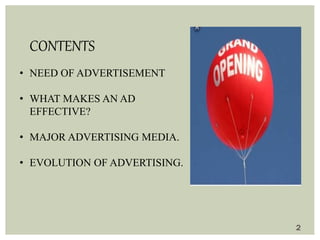
CONTENTS
• NEED OF ADVERTISEMENT
• WHAT MAKES AN AD
EFFECTIVE?
• MAJOR ADVERTISING MEDIA.
• EVOLUTION OF ADVERTISING.
2
3
NEED FOR ADVERTISING
• People don’t buy products , they buy
benefits.
• First effect is making audiences stop
and look at the ad generating
attention.
• Establishing brand awareness is the
key component.
• Agencies- DDB Mudra, McCann.
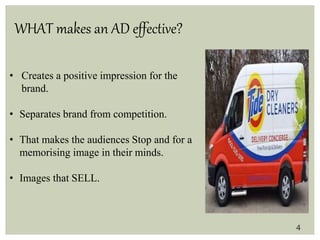
WHAT makes an AD effective?
• Creates a positive impression for the
brand.
• Separates brand from competition.
• That makes the audiences Stop and for a
memorising image in their minds.
• Images that SELL.
4
5
Major advertising media
• Magazine
• Word of mouth
• Television
• Newspaper
• Radio
• Outdoors
• Cinema
• Internet
• Pamplets
• Window display
6
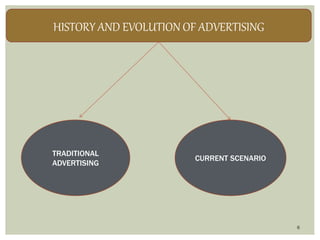
HISTORY AND EVOLUTION OF ADVERTISING
TRADITIONAL
ADVERTISING
CURRENT SCENARIO
7
TRADITIONAL ADVERTISING
The days when advertising was carried out via cheesy infomercials n
radio, fuzzy televisions and billboards.
The first TV ad popped up on screens in 1941 in America.
Characters were built around the products to create semblance of
connection between viewers and brands.
8
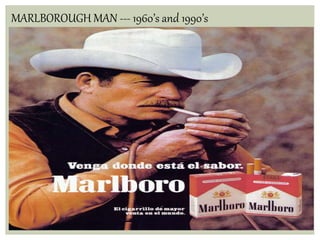
MARLBOROUGH MAN --- 1960’s and 1990’s
9
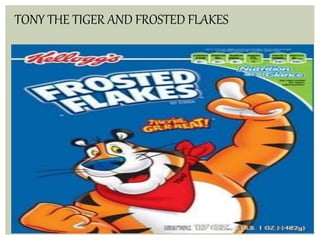
TONY THE TIGER AND FROSTED FLAKES
10
• Despite the different characters, ads at this time had
one purpose: TO SELL.
• Yes, these characters were central to the ads and
played a major part but the product always at the
forefront.
• Tony the Tiger or The Marlboro man simply served as
a tool to SELL, SELL, SELL.
11
Current scenario
Helpful content that provides a
solution to a problem.
Consumers like helpful content
and digs deeper to find out more
about brand.
Advertisement has kind of taken on a two step
process.
12
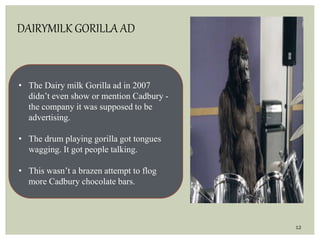
DAIRYMILK GORILLA AD
• The Dairy milk Gorilla ad in 2007
didn’t even show or mention Cadbury -
the company it was supposed to be
advertising.
• The drum playing gorilla got tongues
wagging. It got people talking.
• This wasn’t a brazen attempt to flog
more Cadbury chocolate bars.
13
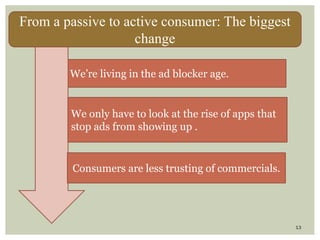
From a passive to active consumer: The biggest
change
We’re living in the ad blocker age.
We only have to look at the rise of apps that
stop ads from showing up .
Consumers are less trusting of commercials.
14
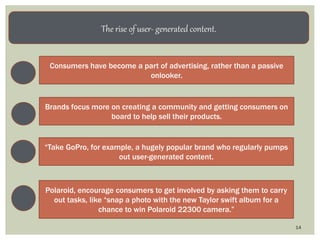
The rise of user- generated content.
Consumers have become a part of advertising, rather than a passive
onlooker.
Brands focus more on creating a community and getting consumers on
board to help sell their products.
“Take GoPro, for example, a hugely popular brand who regularly pumps
out user-generated content.
Polaroid, encourage consumers to get involved by asking them to carry
out tasks, like “snap a photo with the new Taylor swift album for a
chance to win Polaroid 22300 camera.”
15
• Why does this work? Because people trust other
people, not brands.
• Because of the need for loyal followers over one time
buyers, the brands are shifting their focus from one
time buyers to creating a loyal following.
• For example, Patagonia Clothing, they actively
encourage their buyers to send back their clothing to
get it fixed, rather than buy a brand new item.
Thank you
16

ADVERTISING

  • 1.
  • 2.
    CONTENTS • NEED OFADVERTISEMENT • WHAT MAKES AN AD EFFECTIVE? • MAJOR ADVERTISING MEDIA. • EVOLUTION OF ADVERTISING. 2
  • 3.
    3 NEED FOR ADVERTISING •People don’t buy products , they buy benefits. • First effect is making audiences stop and look at the ad generating attention. • Establishing brand awareness is the key component. • Agencies- DDB Mudra, McCann.
  • 4.
    WHAT makes anAD effective? • Creates a positive impression for the brand. • Separates brand from competition. • That makes the audiences Stop and for a memorising image in their minds. • Images that SELL. 4
  • 5.
    5 Major advertising media •Magazine • Word of mouth • Television • Newspaper • Radio • Outdoors • Cinema • Internet • Pamplets • Window display
  • 6.
    6 HISTORY AND EVOLUTIONOF ADVERTISING TRADITIONAL ADVERTISING CURRENT SCENARIO
  • 7.
    7 TRADITIONAL ADVERTISING The dayswhen advertising was carried out via cheesy infomercials n radio, fuzzy televisions and billboards. The first TV ad popped up on screens in 1941 in America. Characters were built around the products to create semblance of connection between viewers and brands.
  • 8.
    8 MARLBOROUGH MAN ---1960’s and 1990’s
  • 9.
    9 TONY THE TIGERAND FROSTED FLAKES
  • 10.
    10 • Despite thedifferent characters, ads at this time had one purpose: TO SELL. • Yes, these characters were central to the ads and played a major part but the product always at the forefront. • Tony the Tiger or The Marlboro man simply served as a tool to SELL, SELL, SELL.
  • 11.
    11 Current scenario Helpful contentthat provides a solution to a problem. Consumers like helpful content and digs deeper to find out more about brand. Advertisement has kind of taken on a two step process.
  • 12.
    12 DAIRYMILK GORILLA AD •The Dairy milk Gorilla ad in 2007 didn’t even show or mention Cadbury - the company it was supposed to be advertising. • The drum playing gorilla got tongues wagging. It got people talking. • This wasn’t a brazen attempt to flog more Cadbury chocolate bars.
  • 13.
    13 From a passiveto active consumer: The biggest change We’re living in the ad blocker age. We only have to look at the rise of apps that stop ads from showing up . Consumers are less trusting of commercials.
  • 14.
    14 The rise ofuser- generated content. Consumers have become a part of advertising, rather than a passive onlooker. Brands focus more on creating a community and getting consumers on board to help sell their products. “Take GoPro, for example, a hugely popular brand who regularly pumps out user-generated content. Polaroid, encourage consumers to get involved by asking them to carry out tasks, like “snap a photo with the new Taylor swift album for a chance to win Polaroid 22300 camera.”
  • 15.
    15 • Why doesthis work? Because people trust other people, not brands. • Because of the need for loyal followers over one time buyers, the brands are shifting their focus from one time buyers to creating a loyal following. • For example, Patagonia Clothing, they actively encourage their buyers to send back their clothing to get it fixed, rather than buy a brand new item.
  • 16.