Advanced MEP
Strategies for High-
Performance Buildings
Tejjy Inc.
Email: info@tejjy.com
Website: www.tejjy.com
Tel: 202-465-4830
1801 RESEARCH BLVD Suite 110,Rockville MD 20850
2
TABLE OF CONTENTS
 Introduction
 Energy Efficiency Enhancement
 Sustainable Design Integration
 Indoor Environmental Quality Optimization
 Integration of Advanced Technology
 Resilience and Adaptability Focus
 Conclusion
3
INTRODUCTION
Definition of High-Performance Buildings:
 High-performance buildings are designed to achieve superior levels of energy
efficiency, sustainability, and occupant comfort.
 They incorporate advanced strategies to minimize environmental impact and optimize
overall building performance.
Significance of Advanced MEP Strategies:
 Advanced Mechanical, Electrical, and Plumbing (MEP) strategies play a critical role in
enhancing the efficiency and sustainability of modern buildings.
 These strategies are essential for creating environments that promote occupant well-
being, energy conservation, and environmental responsibility.
Overview of the Presentation:
 This presentation will explore key advanced MEP strategies for optimizing the
performance of high-performance buildings.
 We will delve into various aspects such as energy efficiency, sustainable design
integration, indoor environmental quality, advanced technology implementation, and
resilience planning.
Objectives:
 To understand the importance of advanced MEP strategies in creating sustainable and
efficient buildings.
 To explore the key components and best practices for implementing advanced MEP
strategies.
 To showcase real-world examples and case studies highlighting successful
applications of these strategies.
4
ENERGY EFFICIENCY ENHANCEMENT
Introduction to Energy Efficiency:
Energy efficiency in the context of building design and operation refers to the implementation
of strategies and technologies that minimize energy consumption and waste. By prioritizing
energy efficiency, buildings can significantly reduce their operational costs and environmental
impact.
HVAC System Optimization:
One of the primary areas for enhancing energy efficiency is the optimization of heating,
ventilation, and air conditioning (HVAC) systems. By incorporating high-efficiency HVAC
equipment and smart controls, buildings can effectively manage temperature levels while
minimizing energy usage.
Intelligent Lighting Solutions:
Integrating intelligent lighting solutions, such as LED lighting technology and automated
controls, can lead to substantial energy savings. Furthermore, the utilization of natural light
through effective day lighting strategies can further reduce the overall energy consumption of
a building.
Building Automation Systems (BAS):
Advanced Building Automation Systems (BAS) play a crucial role in centralizing the control
and management of various building systems. By optimizing the operation of HVAC, lighting,
and other energy-consuming elements, BAS contributes to overall energy efficiency
improvements.
Energy Audits and Performance Monitoring:
Regular energy audits and performance monitoring are essential for identifying potential
areas of energy waste and implementing targeted energy-saving measures. By utilizing data
analytics and monitoring tools, building operators can make informed decisions to optimize
energy consumption.
5
Sustainable Design Integration
Introduction to Sustainable Design:
Sustainable design is a holistic approach that aims to minimize the environmental impact of a
building while promoting resource efficiency and occupant well-being. It encompasses
various strategies that contribute to long-term sustainability and reduced carbon footprint.
Incorporating Sustainable Materials:
The use of sustainable materials, such as recycled or locally sourced materials, and those
with low environmental impact, is crucial for sustainable building construction. Implementing
materials with high recyclability and low embodied energy can significantly reduce the
building's overall environmental footprint.
Integration of Renewable Energy Sources:
The integration of renewable energy sources, such as solar panels, wind turbines, and
geothermal systems, plays a pivotal role in reducing reliance on non-renewable energy
sources. By harnessing renewable energy, buildings can significantly decrease their carbon
emissions and contribute to a more sustainable energy future.
Implementation of Water-Saving Plumbing Systems:
Efficient water management through the implementation of water-saving plumbing systems,
such as low-flow fixtures, greywater recycling, and rainwater harvesting, is essential for
sustainable building design. These systems help reduce water consumption and promote
responsible water usage practices.
Life Cycle Analysis Considerations:
Conducting a life cycle analysis (LCA) of building materials and systems is essential to
assess their environmental impact throughout their life cycle. By considering factors such as
manufacturing, transportation, use, and disposal, building professionals can make informed
decisions that minimize environmental impact over the building's entire lifespan.
Collaboration with Sustainable Design Professionals:
Collaborating with sustainable design professionals, architects, and engineers is critical for
the successful implementation of sustainable design strategies. Their expertise can provide
6
valuable insights and ensure that sustainable principles are integrated seamlessly into the
building's design and construction processes.
Emphasis on Green Certifications and Standards:
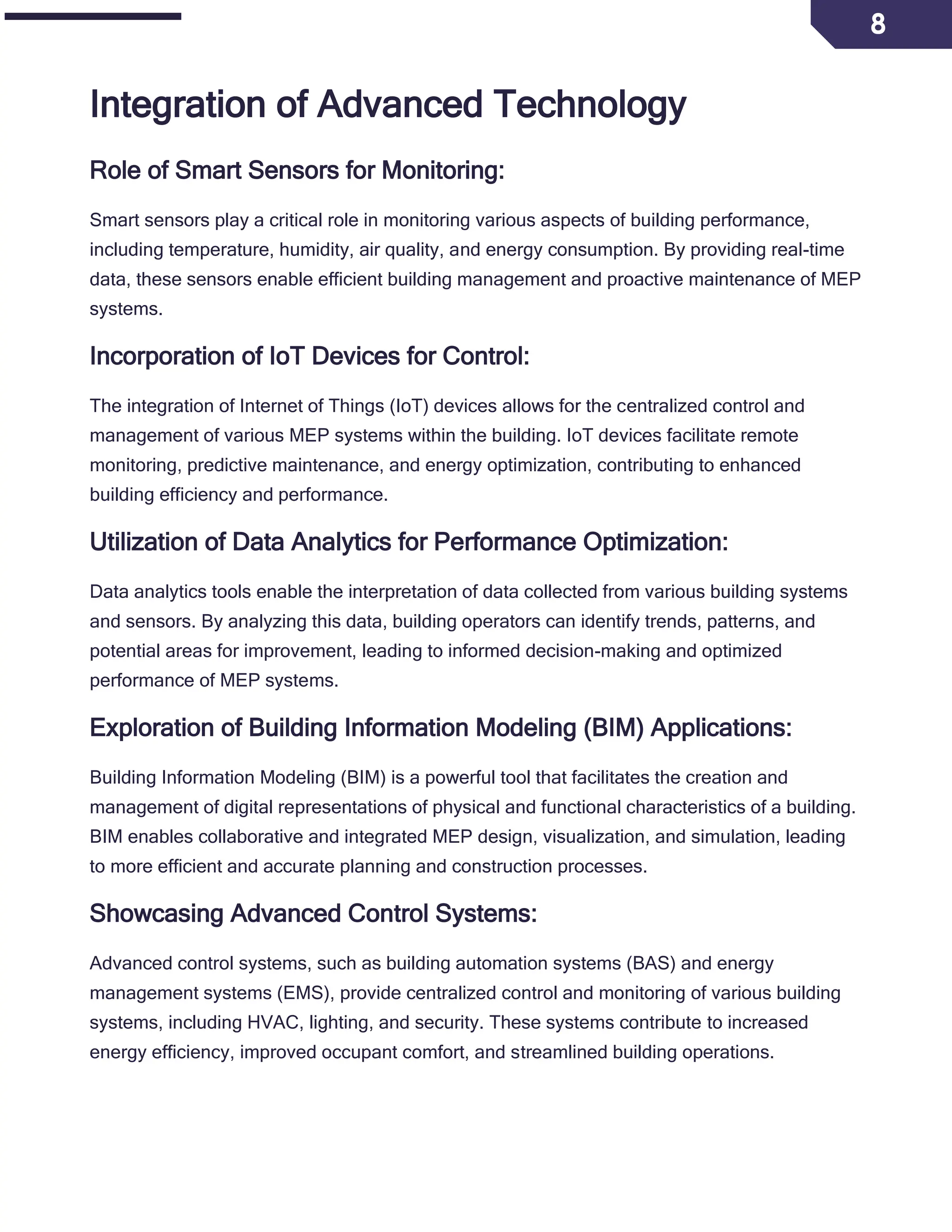
Obtaining green building certifications, such as LEED (Leadership in Energy and
Environmental Design) or BREEAM (Building Research Establishment Environmental
Assessment Method), can validate the sustainability of the building design. Adhering to
recognized green building standards demonstrates a commitment to sustainable practices
and environmental stewardship.
7
Indoor Environmental Quality Optimization
Importance of Indoor Environmental Quality (IEQ):
Indoor Environmental Quality (IEQ) refers to the overall quality of the indoor environment in
terms of air quality, thermal comfort, lighting, and acoustics. Optimizing IEQ is crucial for
promoting occupant health, well-being, and productivity within the building.
Ensuring Proper Ventilation Systems:
Efficient ventilation systems are essential for maintaining high indoor air quality. Properly
designed ventilation systems help to remove indoor air pollutants and bring in fresh outdoor
air, ensuring a healthy and comfortable indoor environment for building occupants.
Managing High-Quality Indoor Air:
Implementing air filtration systems and air quality monitoring solutions can significantly
improve the indoor air quality. By removing airborne pollutants and allergens, these systems
contribute to creating a healthier and more conducive indoor environment for occupants.
Enhancing Thermal Comfort for Occupants:
Maintaining optimal temperature and humidity levels is crucial for ensuring occupant comfort
and well-being. Advanced HVAC systems and temperature control technologies help regulate
indoor temperatures, providing a comfortable environment for building occupants throughout
the year.
Incorporating Daylighting Strategies:
Integrating daylighting strategies through well-designed windows and skylights can enhance
the visual comfort and well-being of occupants. Maximizing natural light not only reduces the
need for artificial lighting but also has positive effects on occupant mood and productivity.
Integrating Acoustic Control Measures:
Controlling indoor noise levels through the use of sound-absorbing materials and acoustical
design solutions is vital for creating a peaceful and productive indoor environment. By
minimizing noise disturbances, building occupants can experience improved concentration
and overall well-being.
8
Integration of Advanced Technology
Role of Smart Sensors for Monitoring:
Smart sensors play a critical role in monitoring various aspects of building performance,
including temperature, humidity, air quality, and energy consumption. By providing real-time
data, these sensors enable efficient building management and proactive maintenance of MEP
systems.
Incorporation of IoT Devices for Control:
The integration of Internet of Things (IoT) devices allows for the centralized control and
management of various MEP systems within the building. IoT devices facilitate remote
monitoring, predictive maintenance, and energy optimization, contributing to enhanced
building efficiency and performance.
Utilization of Data Analytics for Performance Optimization:
Data analytics tools enable the interpretation of data collected from various building systems
and sensors. By analyzing this data, building operators can identify trends, patterns, and
potential areas for improvement, leading to informed decision-making and optimized
performance of MEP systems.
Exploration of Building Information Modeling (BIM) Applications:
Building Information Modeling (BIM) is a powerful tool that facilitates the creation and
management of digital representations of physical and functional characteristics of a building.
BIM enables collaborative and integrated MEP design, visualization, and simulation, leading
to more efficient and accurate planning and construction processes.
Showcasing Advanced Control Systems:
Advanced control systems, such as building automation systems (BAS) and energy
management systems (EMS), provide centralized control and monitoring of various building
systems, including HVAC, lighting, and security. These systems contribute to increased
energy efficiency, improved occupant comfort, and streamlined building operations.
9
Resilience and Adaptability Focus
Importance of Climate Change Resilience:
Building resilience to the impacts of climate change is crucial for ensuring the long-term
sustainability of buildings. Implementing resilient MEP systems that can withstand extreme
weather events and temperature fluctuations is essential for maintaining building functionality
and occupant safety.
Measures for Enhancing Disaster Resilience:
Integrating disaster-resilient MEP systems, such as backup power systems, flood-resistant
equipment, and fire suppression systems, is essential for mitigating the impact of natural
disasters. By incorporating redundancy and backup systems, buildings can minimize
disruptions and ensure continuity of operations during unforeseen events.
Adapting to Fluctuating Energy Demands:
MEP systems that can adapt to fluctuating energy demands and peak usage periods are
essential for maintaining optimal building performance and energy efficiency. Implementing
demand response programs, energy storage solutions, and flexible energy distribution
systems enables efficient energy management and cost savings.
Implementation of Redundancy and Backup Systems:
Incorporating redundancy and backup systems in critical MEP components, such as HVAC,
lighting, and water supply systems, enhances the reliability and resilience of the building. By
ensuring the availability of alternative systems during emergencies, buildings can minimize
downtime and ensure occupant comfort and safety.
Collaboration with Resilience Experts:
Collaborating with resilience experts, disaster management professionals, and industry
stakeholders is crucial for developing comprehensive resilience strategies. Drawing on the
expertise of these professionals can help identify potential risks, prioritize resilience
measures, and implement effective solutions to enhance the building's overall resilience and
adaptability.
10
Conclusion
We conclude with a clear understanding of the pivotal role advanced MEP strategies play in
the creation of sustainable, high-performance buildings. By integrating innovative solutions,
we can pave the way for a more environmentally conscious and resilient future.
Through our exploration of energy efficiency enhancement, sustainable design integration,
indoor environmental quality optimization, the integration of advanced technology, and a
focus on resilience and adaptability, we have underscored the critical importance of a
comprehensive approach to MEP systems.
Our commitment to sustainable practices and continuous innovation is essential for fostering
a built environment that prioritizes energy efficiency, occupant well-being, and environmental
stewardship.
Let us remain dedicated to the pursuit of excellence in MEP design and implementation, with
a focus on creating buildings that not only meet the needs of today but also contribute
positively to the challenges of tomorrow.
We extend our sincere appreciation to our audience for their engagement and participation.
Together, let us continue to drive positive change and build a more sustainable future for
generations to come.
For further inquiries, collaboration opportunities, and additional resources on advanced MEP
strategies, please refer to the contact information provided.

Advanced MEP Strategies for High-Performance Buildings

  • 1.
    Advanced MEP Strategies forHigh- Performance Buildings Tejjy Inc. Email: info@tejjy.com Website: www.tejjy.com Tel: 202-465-4830 1801 RESEARCH BLVD Suite 110,Rockville MD 20850
  • 2.
    2 TABLE OF CONTENTS Introduction  Energy Efficiency Enhancement  Sustainable Design Integration  Indoor Environmental Quality Optimization  Integration of Advanced Technology  Resilience and Adaptability Focus  Conclusion
  • 3.
    3 INTRODUCTION Definition of High-PerformanceBuildings:  High-performance buildings are designed to achieve superior levels of energy efficiency, sustainability, and occupant comfort.  They incorporate advanced strategies to minimize environmental impact and optimize overall building performance. Significance of Advanced MEP Strategies:  Advanced Mechanical, Electrical, and Plumbing (MEP) strategies play a critical role in enhancing the efficiency and sustainability of modern buildings.  These strategies are essential for creating environments that promote occupant well- being, energy conservation, and environmental responsibility. Overview of the Presentation:  This presentation will explore key advanced MEP strategies for optimizing the performance of high-performance buildings.  We will delve into various aspects such as energy efficiency, sustainable design integration, indoor environmental quality, advanced technology implementation, and resilience planning. Objectives:  To understand the importance of advanced MEP strategies in creating sustainable and efficient buildings.  To explore the key components and best practices for implementing advanced MEP strategies.  To showcase real-world examples and case studies highlighting successful applications of these strategies.
  • 4.
    4 ENERGY EFFICIENCY ENHANCEMENT Introductionto Energy Efficiency: Energy efficiency in the context of building design and operation refers to the implementation of strategies and technologies that minimize energy consumption and waste. By prioritizing energy efficiency, buildings can significantly reduce their operational costs and environmental impact. HVAC System Optimization: One of the primary areas for enhancing energy efficiency is the optimization of heating, ventilation, and air conditioning (HVAC) systems. By incorporating high-efficiency HVAC equipment and smart controls, buildings can effectively manage temperature levels while minimizing energy usage. Intelligent Lighting Solutions: Integrating intelligent lighting solutions, such as LED lighting technology and automated controls, can lead to substantial energy savings. Furthermore, the utilization of natural light through effective day lighting strategies can further reduce the overall energy consumption of a building. Building Automation Systems (BAS): Advanced Building Automation Systems (BAS) play a crucial role in centralizing the control and management of various building systems. By optimizing the operation of HVAC, lighting, and other energy-consuming elements, BAS contributes to overall energy efficiency improvements. Energy Audits and Performance Monitoring: Regular energy audits and performance monitoring are essential for identifying potential areas of energy waste and implementing targeted energy-saving measures. By utilizing data analytics and monitoring tools, building operators can make informed decisions to optimize energy consumption.
  • 5.
    5 Sustainable Design Integration Introductionto Sustainable Design: Sustainable design is a holistic approach that aims to minimize the environmental impact of a building while promoting resource efficiency and occupant well-being. It encompasses various strategies that contribute to long-term sustainability and reduced carbon footprint. Incorporating Sustainable Materials: The use of sustainable materials, such as recycled or locally sourced materials, and those with low environmental impact, is crucial for sustainable building construction. Implementing materials with high recyclability and low embodied energy can significantly reduce the building's overall environmental footprint. Integration of Renewable Energy Sources: The integration of renewable energy sources, such as solar panels, wind turbines, and geothermal systems, plays a pivotal role in reducing reliance on non-renewable energy sources. By harnessing renewable energy, buildings can significantly decrease their carbon emissions and contribute to a more sustainable energy future. Implementation of Water-Saving Plumbing Systems: Efficient water management through the implementation of water-saving plumbing systems, such as low-flow fixtures, greywater recycling, and rainwater harvesting, is essential for sustainable building design. These systems help reduce water consumption and promote responsible water usage practices. Life Cycle Analysis Considerations: Conducting a life cycle analysis (LCA) of building materials and systems is essential to assess their environmental impact throughout their life cycle. By considering factors such as manufacturing, transportation, use, and disposal, building professionals can make informed decisions that minimize environmental impact over the building's entire lifespan. Collaboration with Sustainable Design Professionals: Collaborating with sustainable design professionals, architects, and engineers is critical for the successful implementation of sustainable design strategies. Their expertise can provide
  • 6.
    6 valuable insights andensure that sustainable principles are integrated seamlessly into the building's design and construction processes. Emphasis on Green Certifications and Standards: Obtaining green building certifications, such as LEED (Leadership in Energy and Environmental Design) or BREEAM (Building Research Establishment Environmental Assessment Method), can validate the sustainability of the building design. Adhering to recognized green building standards demonstrates a commitment to sustainable practices and environmental stewardship.
  • 7.
    7 Indoor Environmental QualityOptimization Importance of Indoor Environmental Quality (IEQ): Indoor Environmental Quality (IEQ) refers to the overall quality of the indoor environment in terms of air quality, thermal comfort, lighting, and acoustics. Optimizing IEQ is crucial for promoting occupant health, well-being, and productivity within the building. Ensuring Proper Ventilation Systems: Efficient ventilation systems are essential for maintaining high indoor air quality. Properly designed ventilation systems help to remove indoor air pollutants and bring in fresh outdoor air, ensuring a healthy and comfortable indoor environment for building occupants. Managing High-Quality Indoor Air: Implementing air filtration systems and air quality monitoring solutions can significantly improve the indoor air quality. By removing airborne pollutants and allergens, these systems contribute to creating a healthier and more conducive indoor environment for occupants. Enhancing Thermal Comfort for Occupants: Maintaining optimal temperature and humidity levels is crucial for ensuring occupant comfort and well-being. Advanced HVAC systems and temperature control technologies help regulate indoor temperatures, providing a comfortable environment for building occupants throughout the year. Incorporating Daylighting Strategies: Integrating daylighting strategies through well-designed windows and skylights can enhance the visual comfort and well-being of occupants. Maximizing natural light not only reduces the need for artificial lighting but also has positive effects on occupant mood and productivity. Integrating Acoustic Control Measures: Controlling indoor noise levels through the use of sound-absorbing materials and acoustical design solutions is vital for creating a peaceful and productive indoor environment. By minimizing noise disturbances, building occupants can experience improved concentration and overall well-being.
  • 8.
    8 Integration of AdvancedTechnology Role of Smart Sensors for Monitoring: Smart sensors play a critical role in monitoring various aspects of building performance, including temperature, humidity, air quality, and energy consumption. By providing real-time data, these sensors enable efficient building management and proactive maintenance of MEP systems. Incorporation of IoT Devices for Control: The integration of Internet of Things (IoT) devices allows for the centralized control and management of various MEP systems within the building. IoT devices facilitate remote monitoring, predictive maintenance, and energy optimization, contributing to enhanced building efficiency and performance. Utilization of Data Analytics for Performance Optimization: Data analytics tools enable the interpretation of data collected from various building systems and sensors. By analyzing this data, building operators can identify trends, patterns, and potential areas for improvement, leading to informed decision-making and optimized performance of MEP systems. Exploration of Building Information Modeling (BIM) Applications: Building Information Modeling (BIM) is a powerful tool that facilitates the creation and management of digital representations of physical and functional characteristics of a building. BIM enables collaborative and integrated MEP design, visualization, and simulation, leading to more efficient and accurate planning and construction processes. Showcasing Advanced Control Systems: Advanced control systems, such as building automation systems (BAS) and energy management systems (EMS), provide centralized control and monitoring of various building systems, including HVAC, lighting, and security. These systems contribute to increased energy efficiency, improved occupant comfort, and streamlined building operations.
  • 9.
    9 Resilience and AdaptabilityFocus Importance of Climate Change Resilience: Building resilience to the impacts of climate change is crucial for ensuring the long-term sustainability of buildings. Implementing resilient MEP systems that can withstand extreme weather events and temperature fluctuations is essential for maintaining building functionality and occupant safety. Measures for Enhancing Disaster Resilience: Integrating disaster-resilient MEP systems, such as backup power systems, flood-resistant equipment, and fire suppression systems, is essential for mitigating the impact of natural disasters. By incorporating redundancy and backup systems, buildings can minimize disruptions and ensure continuity of operations during unforeseen events. Adapting to Fluctuating Energy Demands: MEP systems that can adapt to fluctuating energy demands and peak usage periods are essential for maintaining optimal building performance and energy efficiency. Implementing demand response programs, energy storage solutions, and flexible energy distribution systems enables efficient energy management and cost savings. Implementation of Redundancy and Backup Systems: Incorporating redundancy and backup systems in critical MEP components, such as HVAC, lighting, and water supply systems, enhances the reliability and resilience of the building. By ensuring the availability of alternative systems during emergencies, buildings can minimize downtime and ensure occupant comfort and safety. Collaboration with Resilience Experts: Collaborating with resilience experts, disaster management professionals, and industry stakeholders is crucial for developing comprehensive resilience strategies. Drawing on the expertise of these professionals can help identify potential risks, prioritize resilience measures, and implement effective solutions to enhance the building's overall resilience and adaptability.
  • 10.
    10 Conclusion We conclude witha clear understanding of the pivotal role advanced MEP strategies play in the creation of sustainable, high-performance buildings. By integrating innovative solutions, we can pave the way for a more environmentally conscious and resilient future. Through our exploration of energy efficiency enhancement, sustainable design integration, indoor environmental quality optimization, the integration of advanced technology, and a focus on resilience and adaptability, we have underscored the critical importance of a comprehensive approach to MEP systems. Our commitment to sustainable practices and continuous innovation is essential for fostering a built environment that prioritizes energy efficiency, occupant well-being, and environmental stewardship. Let us remain dedicated to the pursuit of excellence in MEP design and implementation, with a focus on creating buildings that not only meet the needs of today but also contribute positively to the challenges of tomorrow. We extend our sincere appreciation to our audience for their engagement and participation. Together, let us continue to drive positive change and build a more sustainable future for generations to come. For further inquiries, collaboration opportunities, and additional resources on advanced MEP strategies, please refer to the contact information provided.