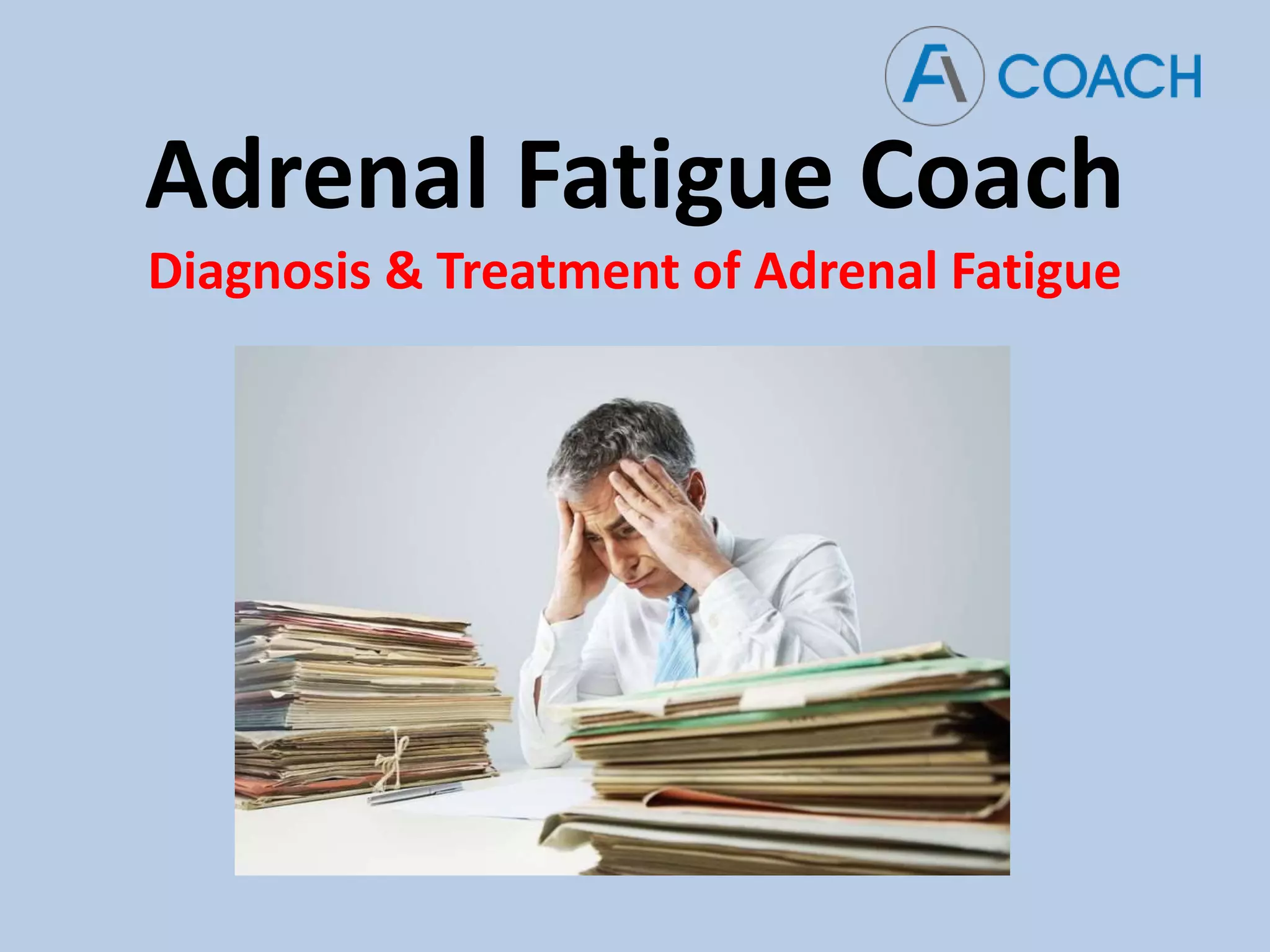
Adrenal Fatigue Coach
Diagnosis & Treatment of Adrenal Fatigue
What is Adrenal Fatigue?
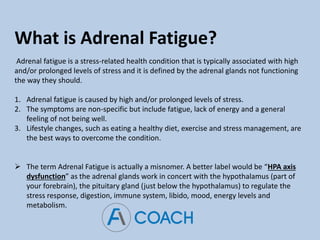
Adrenal fatigue is a stress-related health condition that is typically associated with high
and/or prolonged levels of stress and it is defined by the adrenal glands not functioning
the way they should.
1. Adrenal fatigue is caused by high and/or prolonged levels of stress.
2. The symptoms are non-specific but include fatigue, lack of energy and a general
feeling of not being well.
3. Lifestyle changes, such as eating a healthy diet, exercise and stress management, are
the best ways to overcome the condition.
 The term Adrenal Fatigue is actually a misnomer. A better label would be “HPA axis
dysfunction” as the adrenal glands work in concert with the hypothalamus (part of
your forebrain), the pituitary gland (just below the hypothalamus) to regulate the
stress response, digestion, immune system, libido, mood, energy levels and
metabolism.
Adrenal Glands & HPA Axis
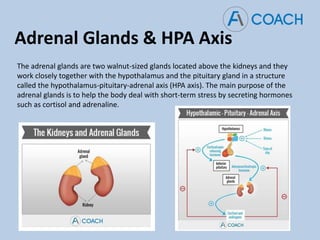
The adrenal glands are two walnut-sized glands located above the kidneys and they
work closely together with the hypothalamus and the pituitary gland in a structure
called the hypothalamus-pituitary-adrenal axis (HPA axis). The main purpose of the
adrenal glands is to help the body deal with short-term stress by secreting hormones
such as cortisol and adrenaline.
Signs of Adrenal Fatigue
Adrenal Fatigue can have a number of signs and symptoms, but as the name implies, the
most telling symptom of Adrenal Fatigue is indeed “fatigue”. But the kind of fatigue
experienced here is when the tiredness and sense of being sleepy extends throughout the
whole day which does not go away after a good sleep.
The following are some of the telltale signs of Adrenal Fatigue:
 Feeling tired even after sleeping or taking a nap.
 Difficulty to get up in the morning.
 Craving for salty food is more evident.
 It takes longer to recover from illness.
 Best time is in the evening.
 Feel like drowning in own sorrows.
 Feeling depressed.
 Experience hormonal imbalances.
 Difficulty remembering things.
 Body temperature is off balance.
What Causes Adrenal Fatigue?
When the adrenal glands are continuously required to keep up high cortisol levels, they
eventually are unable to respond appropriately. This inability usually stems from one of
four sources that keep overworking and depleting the adrenal glands:
1. Physical stress such as poor nutrition, lack of sleep, surgery, injury, strenuous exercise,
inactive lifestyle
2. Diseases pneumonia, flu or bronchitis, auto-immune cancer, and other health
conditions
3. Emotional/psychological stress from toxic relationships, work or other life situations
4. Environmental stress from food sensitivities/intolerance, pollutants and toxic
chemicals in the water, air and food
Diagnosis
 Normal functioning adrenal glands produce more than 50 hormones but cortisol is the
most important hormone to look at when testing for Adrenal Fatigue.
 Testing cortisol levels can be done through a variety of tests all depending on your
doctor’s order and ofcourse your own wishes. To get the most accurate diagnosis you
may use several tests in conjunction with self-assessments and other complementary
health tests.
 The best way to determine adrenal function is to test cortisol at a variety of points
through the day to see if cortisol is spiking and dropping at the correct times. 24-hour
Saliva hormone testing (rather than blood or urine testing) is considered to be the
best lab test for detecting Adrenal Fatigue
 Lab tests that most conventional doctors use only measure extreme adrenal
dysfunction (Cushing’s Syndrome and Addison’s Disease). Those tests also don’t take
into account the natural changes of adrenal function throughout the day (diurnal
rhythm).
Healing From Adrenal Fatigue
Through stress reduction, proper diet, lifestyle adjustments, and supplementation,
Adrenal Fatigue can be cured. The duration of recovery will vary from individual to
individual as each individual´s symptoms, level of Adrenal Fatigue and personal
circumstances will differ. Because the causes of Adrenal Fatigue differ for everyone,
treatment for Adrenal Fatigue should be tailored to an individual’s own personal situation.
If the healing process is taken seriously, Adrenal Fatigue could be cured in:
 6 to 9 months for light Adrenal Fatigue
 12 to 18 months for moderate Adrenal Fatigue
 Up to 24 months for severe Adrenal Fatigue
When designing a treatment plan there are 2 key elements that should be focused on to
restore adrenal function and cure Adrenal Fatigue:
1) Reducing stressors that are overworking and depleting the adrenal glands
2) Rebuilding the adrenal glands
Want More Information?
Check out our website for more information and resources around
Adrenal Fatigue:
http://www.adrenalfatiguecoach.com
- Thank you -

Adrenal fatigue coach

  • 1.
    Adrenal Fatigue Coach Diagnosis& Treatment of Adrenal Fatigue
  • 2.
    What is AdrenalFatigue? Adrenal fatigue is a stress-related health condition that is typically associated with high and/or prolonged levels of stress and it is defined by the adrenal glands not functioning the way they should. 1. Adrenal fatigue is caused by high and/or prolonged levels of stress. 2. The symptoms are non-specific but include fatigue, lack of energy and a general feeling of not being well. 3. Lifestyle changes, such as eating a healthy diet, exercise and stress management, are the best ways to overcome the condition.  The term Adrenal Fatigue is actually a misnomer. A better label would be “HPA axis dysfunction” as the adrenal glands work in concert with the hypothalamus (part of your forebrain), the pituitary gland (just below the hypothalamus) to regulate the stress response, digestion, immune system, libido, mood, energy levels and metabolism.
  • 3.
    Adrenal Glands &HPA Axis The adrenal glands are two walnut-sized glands located above the kidneys and they work closely together with the hypothalamus and the pituitary gland in a structure called the hypothalamus-pituitary-adrenal axis (HPA axis). The main purpose of the adrenal glands is to help the body deal with short-term stress by secreting hormones such as cortisol and adrenaline.
  • 4.
    Signs of AdrenalFatigue Adrenal Fatigue can have a number of signs and symptoms, but as the name implies, the most telling symptom of Adrenal Fatigue is indeed “fatigue”. But the kind of fatigue experienced here is when the tiredness and sense of being sleepy extends throughout the whole day which does not go away after a good sleep. The following are some of the telltale signs of Adrenal Fatigue:  Feeling tired even after sleeping or taking a nap.  Difficulty to get up in the morning.  Craving for salty food is more evident.  It takes longer to recover from illness.  Best time is in the evening.  Feel like drowning in own sorrows.  Feeling depressed.  Experience hormonal imbalances.  Difficulty remembering things.  Body temperature is off balance.
  • 5.
    What Causes AdrenalFatigue? When the adrenal glands are continuously required to keep up high cortisol levels, they eventually are unable to respond appropriately. This inability usually stems from one of four sources that keep overworking and depleting the adrenal glands: 1. Physical stress such as poor nutrition, lack of sleep, surgery, injury, strenuous exercise, inactive lifestyle 2. Diseases pneumonia, flu or bronchitis, auto-immune cancer, and other health conditions 3. Emotional/psychological stress from toxic relationships, work or other life situations 4. Environmental stress from food sensitivities/intolerance, pollutants and toxic chemicals in the water, air and food
  • 6.
    Diagnosis  Normal functioningadrenal glands produce more than 50 hormones but cortisol is the most important hormone to look at when testing for Adrenal Fatigue.  Testing cortisol levels can be done through a variety of tests all depending on your doctor’s order and ofcourse your own wishes. To get the most accurate diagnosis you may use several tests in conjunction with self-assessments and other complementary health tests.  The best way to determine adrenal function is to test cortisol at a variety of points through the day to see if cortisol is spiking and dropping at the correct times. 24-hour Saliva hormone testing (rather than blood or urine testing) is considered to be the best lab test for detecting Adrenal Fatigue  Lab tests that most conventional doctors use only measure extreme adrenal dysfunction (Cushing’s Syndrome and Addison’s Disease). Those tests also don’t take into account the natural changes of adrenal function throughout the day (diurnal rhythm).
  • 7.
    Healing From AdrenalFatigue Through stress reduction, proper diet, lifestyle adjustments, and supplementation, Adrenal Fatigue can be cured. The duration of recovery will vary from individual to individual as each individual´s symptoms, level of Adrenal Fatigue and personal circumstances will differ. Because the causes of Adrenal Fatigue differ for everyone, treatment for Adrenal Fatigue should be tailored to an individual’s own personal situation. If the healing process is taken seriously, Adrenal Fatigue could be cured in:  6 to 9 months for light Adrenal Fatigue  12 to 18 months for moderate Adrenal Fatigue  Up to 24 months for severe Adrenal Fatigue When designing a treatment plan there are 2 key elements that should be focused on to restore adrenal function and cure Adrenal Fatigue: 1) Reducing stressors that are overworking and depleting the adrenal glands 2) Rebuilding the adrenal glands
  • 8.
    Want More Information? Checkout our website for more information and resources around Adrenal Fatigue: http://www.adrenalfatiguecoach.com - Thank you -