adopting paperless office (green office) , the
facts
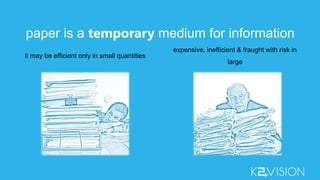
paper is a temporary medium for information
it may be efficient only in small quantities

expensive, inefficient & fraught with risk in
large
paper facts in an average
organization
 stores 10,000 to 12,000 documents in a four-

drawer file cabinet
 uses 9 square feet of floor space per four-drawer
file cabinet
 spends $1,500 per year per four-drawer cabinet

 spends $20 in labor filing each document
 employs one person per every 12 filing cabinets to
keep and maintain the same
 spends 18 minutes searching for a document

 spends $125 in labor searching for every misfiled
document

 spends $350-$700 searching and replacing lost

documents
 spends 400 hours per year searching for lost files
 spends 25 hours recreating lost documents
 misplaces/loses and average of 1 out of every 10

documents
 copies 19 times every document
 paper requirement growth is 22% per year
(paperwork doubles within 3.3 years)

 70% of today's businesses will fail in a period of
three weeks after a catastrophic loss of paper
records
reality in most of organizations
→the volume of paper records is still increasing steadily in 56% of
organizations
→half of organizations are scanning newly received papers and filing them
electronically rather than manually
→third of businesses are looking to go to all-electronic records-keeping
the other half are manually filing inbound paper documents←
40% of organizations routinely printing newly generated documents and ←
emails to file them as paper records
electronic records are more than twice as likely to be described as “unmanaged” ←
than paper records
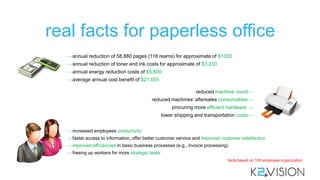
real facts for paperless office
→ annual reduction of 58,880 pages (118 reams) for approximate of $1000
→ annual reduction of toner and ink costs for approximate of $3,230
→ annual energy reduction costs of $5,600
→ average annual cost benefit of $21,555
reduced machine count ←
reduced machines’ aftersales consumables ←
procuring more efficient hardware ←
lower shipping and transportation costs ←
→ increased employees productivity

→ faster access to information, offer better customer service and improved customer satisfaction
→ improved efficiencies in basic business processes (e.g., invoice processing)
→ freeing up workers for more strategic tasks
facts based on 100 employee organization
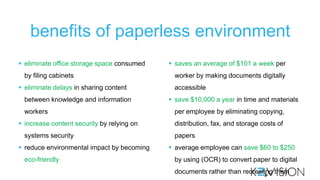
benefits of paperless environment
 eliminate office storage space consumed
by filing cabinets

 eliminate delays in sharing content
between knowledge and information
workers
 increase content security by relying on
systems security
 reduce environmental impact by becoming
eco-friendly

 saves an average of $101 a week per
worker by making documents digitally

accessible
 save $10,000 a year in time and materials
per employee by eliminating copying,
distribution, fax, and storage costs of
papers
 average employee can save $60 to $250
by using (OCR) to convert paper to digital
documents rather than recreating them
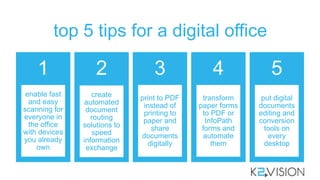
top 5 tips for a digital office

1

2

3

4

5

enable fast
and easy
scanning for
everyone in
the office
with devices
you already
own

create
automated
document
routing
solutions to
speed
information
exchange

print to PDF
instead of
printing to
paper and
share
documents
digitally

transform
paper forms
to PDF or
InfoPath
forms and
automate
them

put digital
documents
editing and
conversion
tools on
every
desktop

adopting paperless office, the facts

  • 1.
    adopting paperless office(green office) , the facts
  • 2.
    paper is atemporary medium for information it may be efficient only in small quantities expensive, inefficient & fraught with risk in large
  • 3.
    paper facts inan average organization  stores 10,000 to 12,000 documents in a four- drawer file cabinet  uses 9 square feet of floor space per four-drawer file cabinet  spends $1,500 per year per four-drawer cabinet  spends $20 in labor filing each document  employs one person per every 12 filing cabinets to keep and maintain the same  spends 18 minutes searching for a document  spends $125 in labor searching for every misfiled document  spends $350-$700 searching and replacing lost documents  spends 400 hours per year searching for lost files  spends 25 hours recreating lost documents  misplaces/loses and average of 1 out of every 10 documents  copies 19 times every document  paper requirement growth is 22% per year (paperwork doubles within 3.3 years)  70% of today's businesses will fail in a period of three weeks after a catastrophic loss of paper records
  • 4.
    reality in mostof organizations →the volume of paper records is still increasing steadily in 56% of organizations →half of organizations are scanning newly received papers and filing them electronically rather than manually →third of businesses are looking to go to all-electronic records-keeping the other half are manually filing inbound paper documents← 40% of organizations routinely printing newly generated documents and ← emails to file them as paper records electronic records are more than twice as likely to be described as “unmanaged” ← than paper records
  • 5.
    real facts forpaperless office → annual reduction of 58,880 pages (118 reams) for approximate of $1000 → annual reduction of toner and ink costs for approximate of $3,230 → annual energy reduction costs of $5,600 → average annual cost benefit of $21,555 reduced machine count ← reduced machines’ aftersales consumables ← procuring more efficient hardware ← lower shipping and transportation costs ← → increased employees productivity → faster access to information, offer better customer service and improved customer satisfaction → improved efficiencies in basic business processes (e.g., invoice processing) → freeing up workers for more strategic tasks facts based on 100 employee organization
  • 6.
    benefits of paperlessenvironment  eliminate office storage space consumed by filing cabinets  eliminate delays in sharing content between knowledge and information workers  increase content security by relying on systems security  reduce environmental impact by becoming eco-friendly  saves an average of $101 a week per worker by making documents digitally accessible  save $10,000 a year in time and materials per employee by eliminating copying, distribution, fax, and storage costs of papers  average employee can save $60 to $250 by using (OCR) to convert paper to digital documents rather than recreating them
  • 7.
    top 5 tipsfor a digital office 1 2 3 4 5 enable fast and easy scanning for everyone in the office with devices you already own create automated document routing solutions to speed information exchange print to PDF instead of printing to paper and share documents digitally transform paper forms to PDF or InfoPath forms and automate them put digital documents editing and conversion tools on every desktop