Webinar How-to and Etiquette: Before dialing the conference call number, please disable the call-waiting feature (should you have it).  (For some U.S. systems, do this by dialing *70.) Dial the conference call number. 1(800) 236-2165; Access Code: 860378923# If you have any background noise, we ask that you mute your line.  If you do so, then do not forget to un-mute your line  when wishing to ask a question or comment . We ask that you DO NOT place the conference call on hold at any time during the Webinar (in most systems, there may be hold-music which would then play for the rest of the audience and as such, interrupt the presentation). Always precede your question or comment by stating your full name. Alzheimer’ Disease and Dementia:  Living Well to Care for and Preserve Cognition   PANELISTS: Kimberly Taylor, PhD , and Mary Ann Johnson, MA MODERATOR: E. Ayn Welleford, PhD
Prevention of Cognitive Decline Kimberly F. Taylor, Ph.D. Virginia Commonwealth University Department of Gerontology
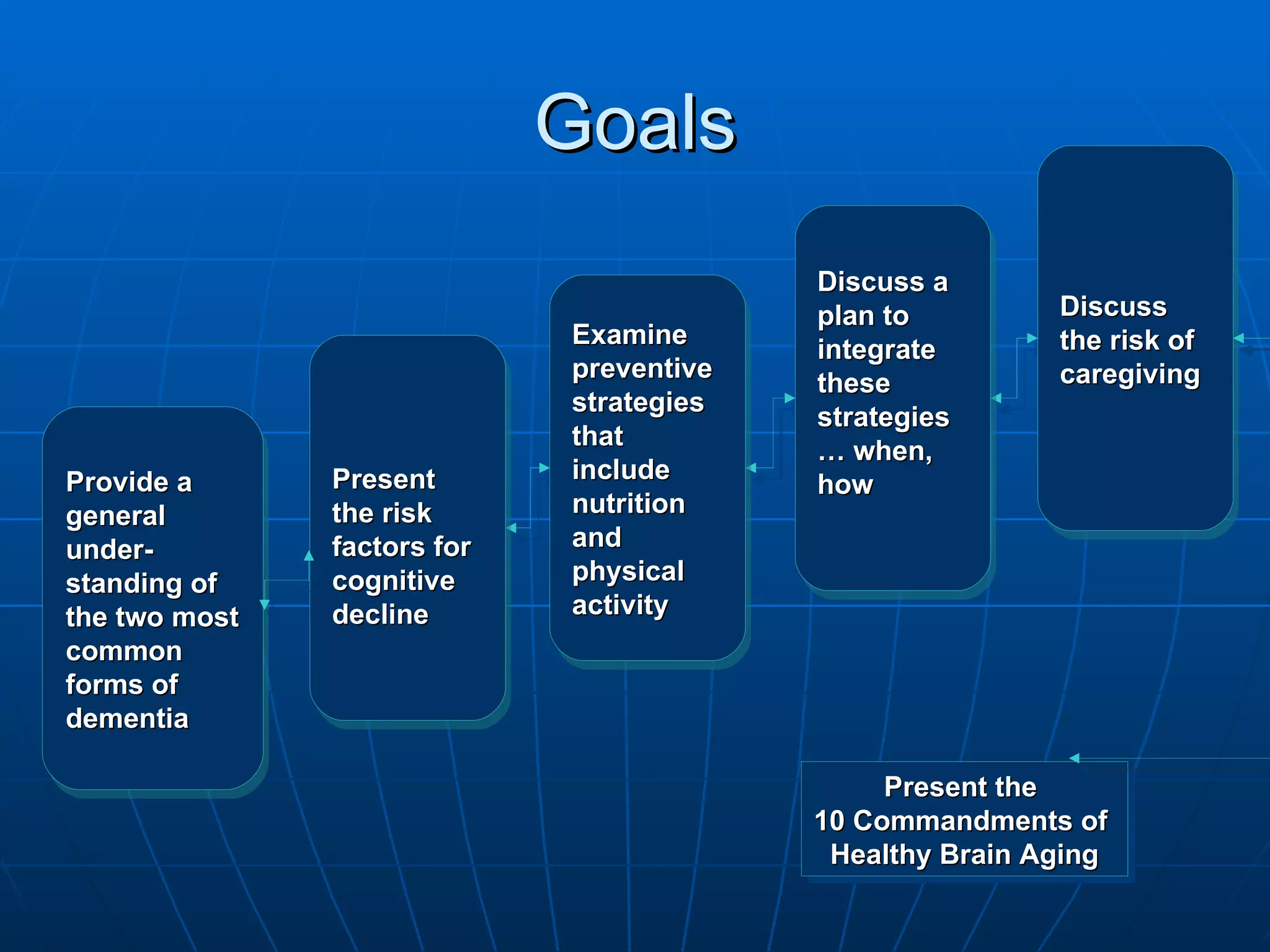
Goals Discuss the risk of caregiving Discuss a plan to integrate these strategies… when, how Examine preventive strategies that include nutrition and physical activity Present the risk factors for cognitive decline Provide a general under-standing of the two most common forms of dementia Present the  10 Commandments of  Healthy Brain Aging
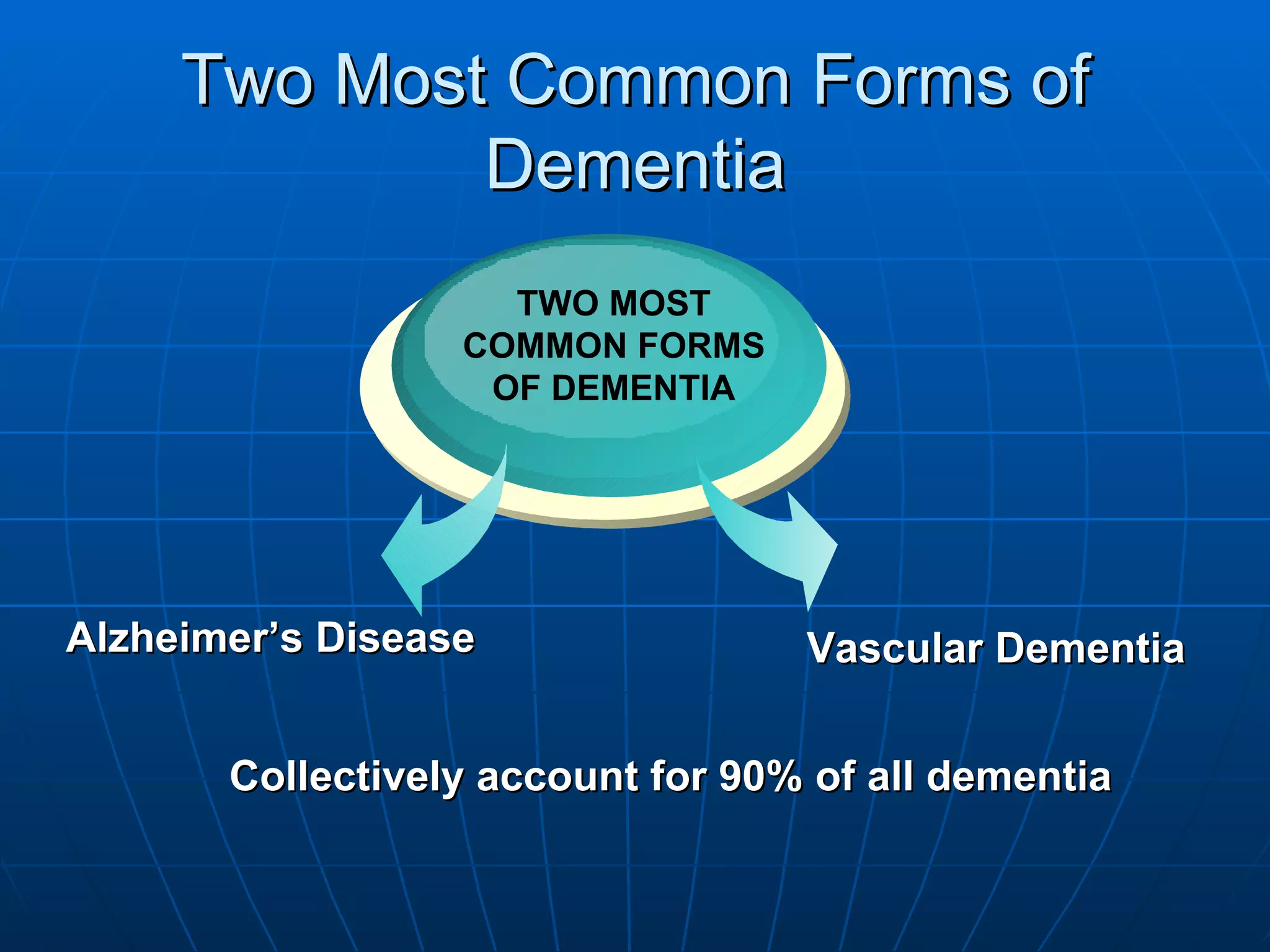
Two Most Common Forms of Dementia TWO MOST COMMON FORMS OF DEMENTIA Alzheimer’s Disease Vascular Dementia Collectively account for 90% of all dementia
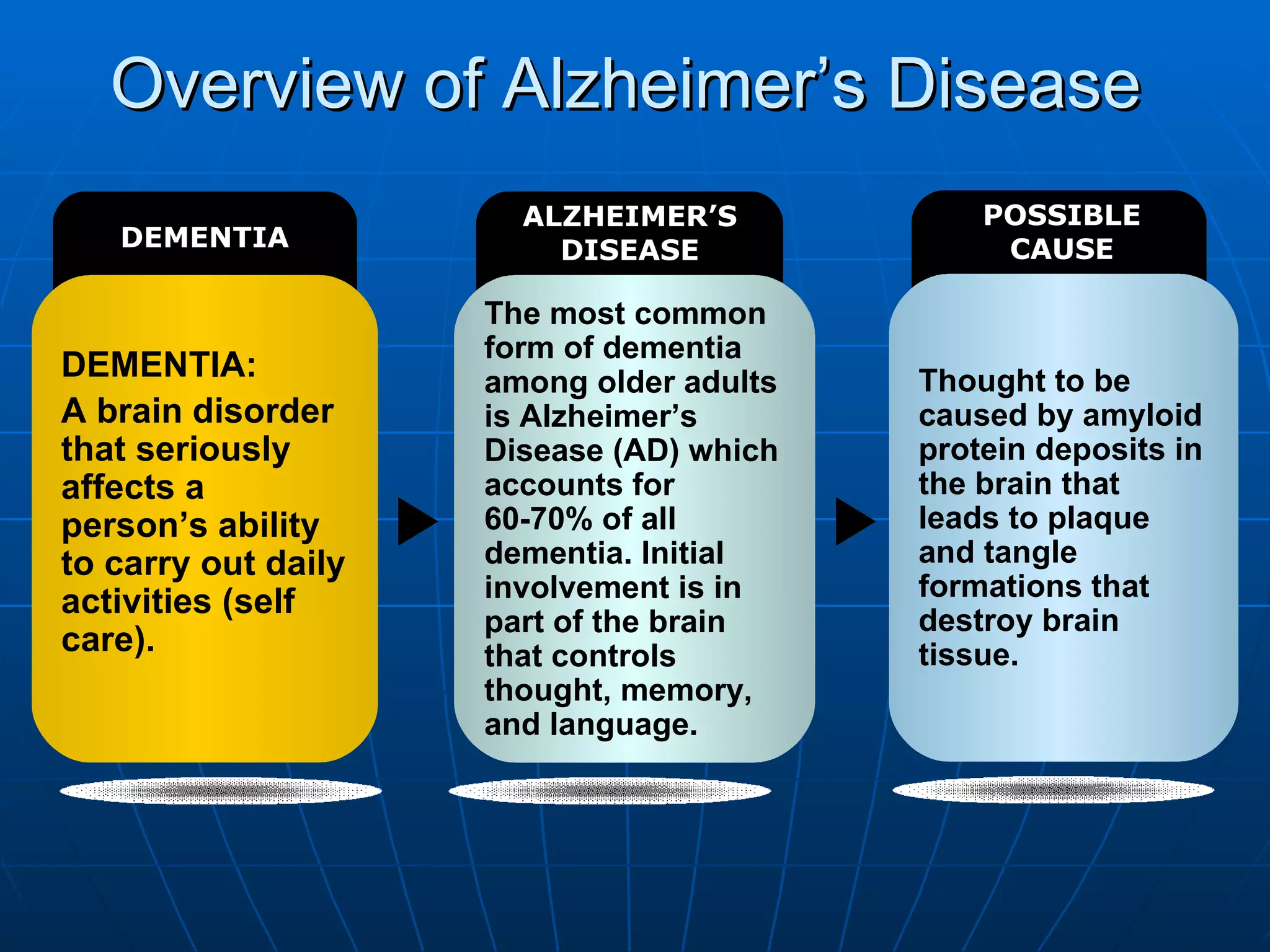
Overview of Alzheimer’s Disease  DEMENTIA:  A brain disorder that seriously affects a person’s ability to carry out daily activities (self care).   DEMENTIA The most common form of dementia among older adults is Alzheimer’s Disease (AD) which accounts for 60-70% of all dementia. Initial involvement is in part of the brain that controls thought, memory, and language. ALZHEIMER’S DISEASE Thought to be caused by amyloid protein deposits in the brain that leads to plaque and tangle formations that destroy brain tissue.  POSSIBLE CAUSE
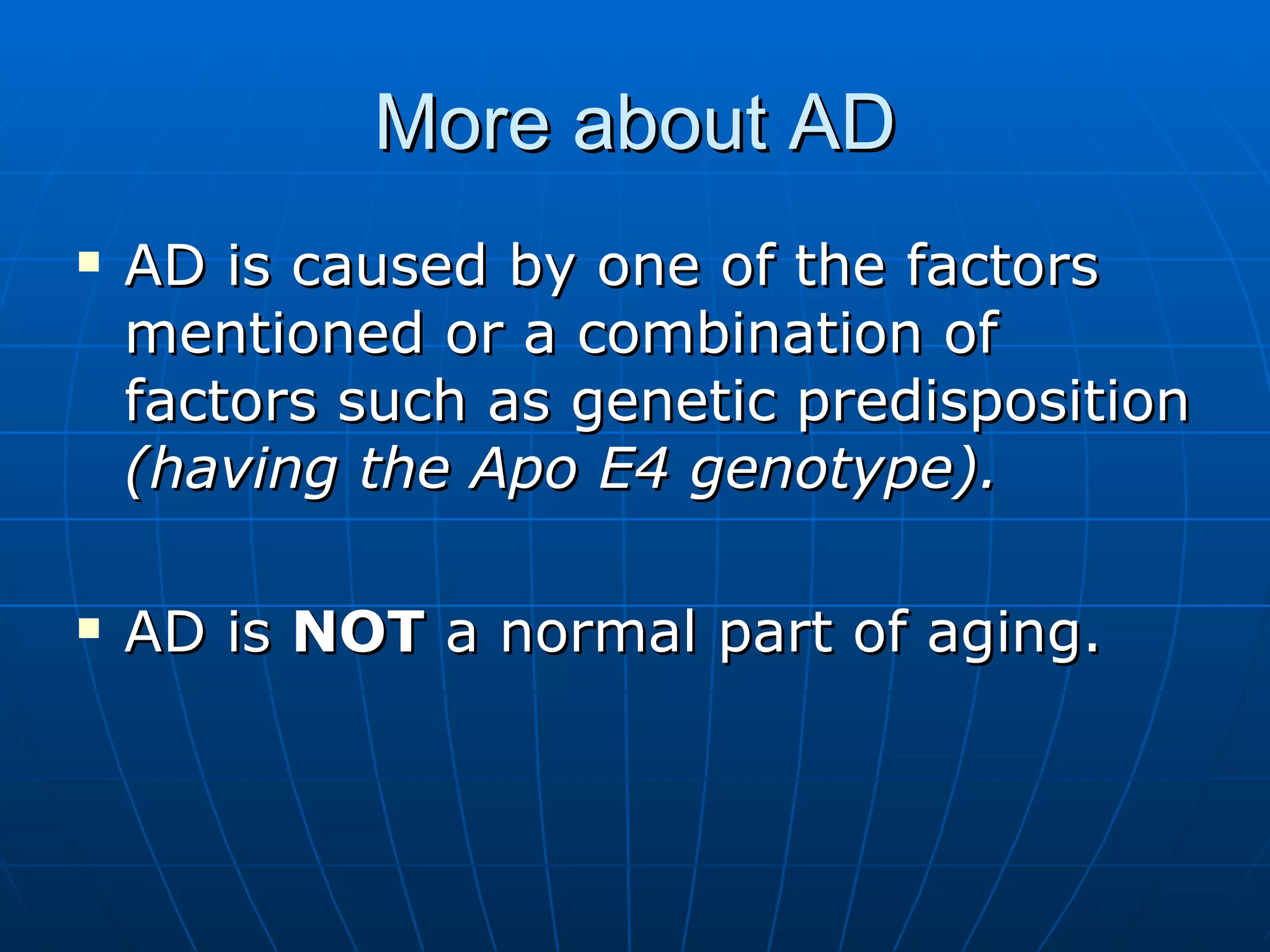
More about AD AD is caused by one of the factors mentioned or a combination of factors such as genetic predisposition  (having the Apo E4 genotype). AD is  NOT  a normal part of aging.
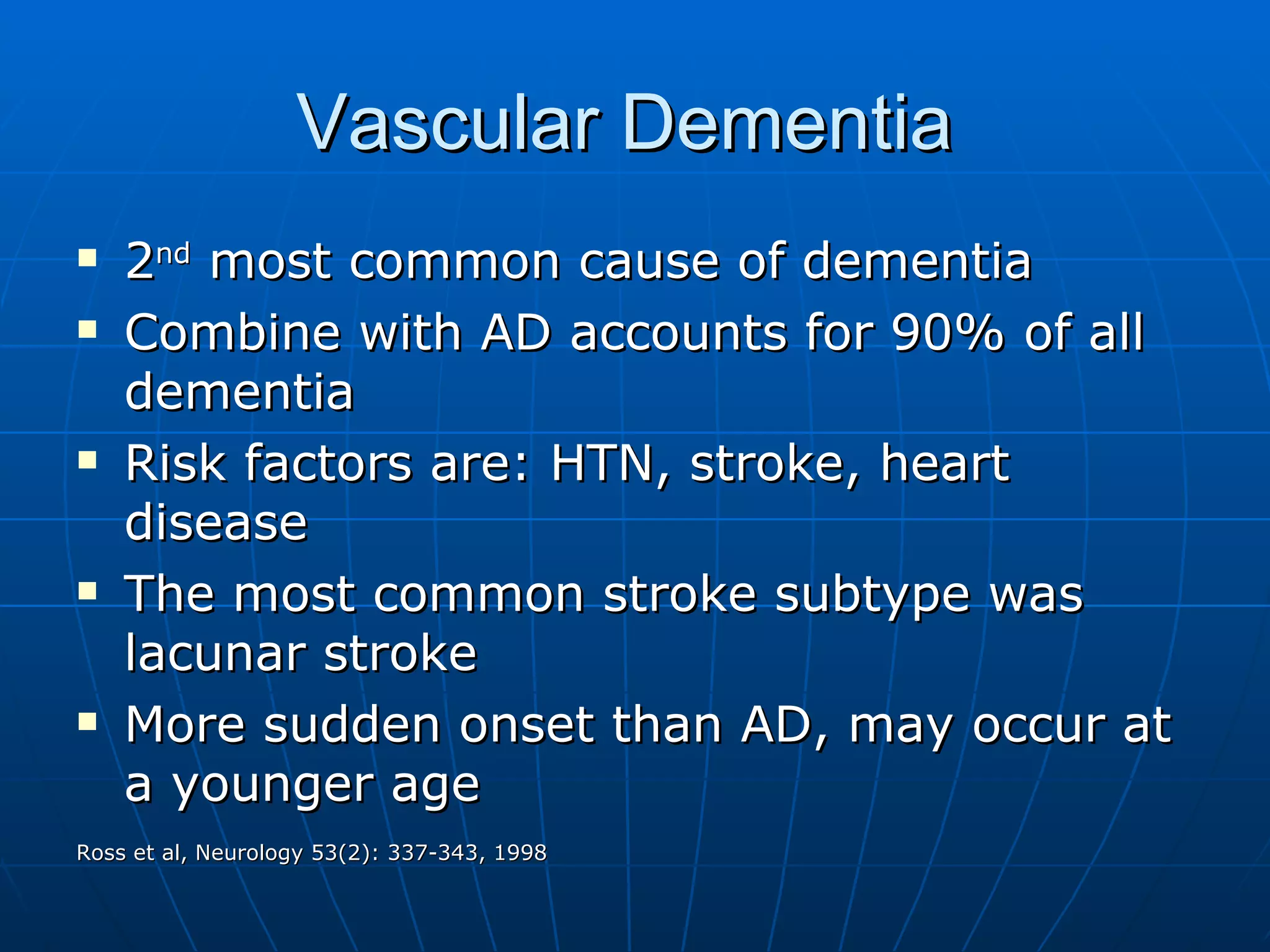
Vascular Dementia  2 nd  most common cause of dementia  Combine with AD accounts for 90% of all dementia  Risk factors are: HTN, stroke, heart disease The most common stroke subtype was lacunar stroke  More sudden onset than AD, may occur at a younger age Ross et al, Neurology 53(2): 337-343, 1998
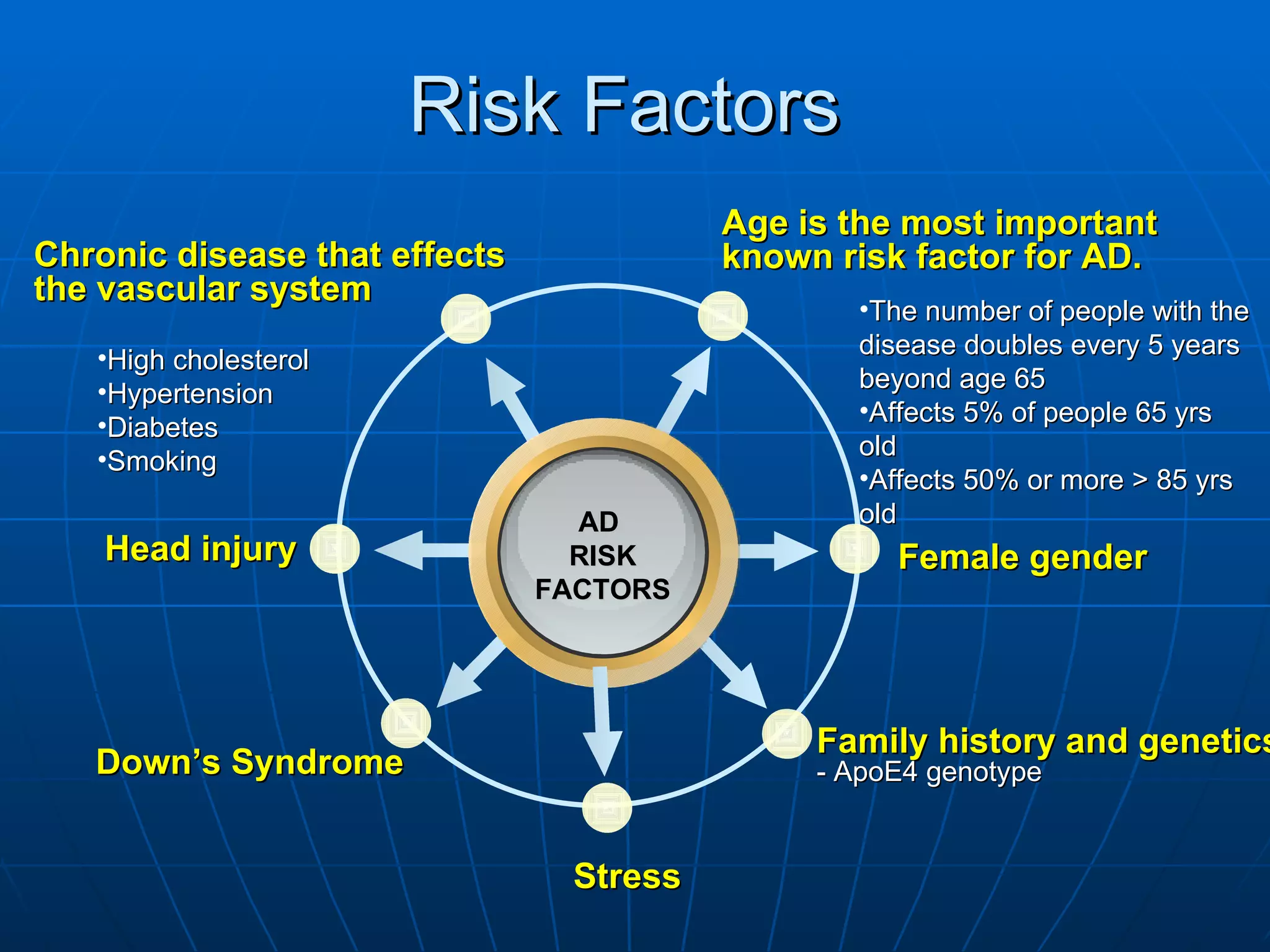
Risk Factors  Age is the most important known risk factor for AD. Chronic disease that effects the vascular system High cholesterol  Hypertension  Diabetes  Smoking   Female gender   Family history and genetics - ApoE4 genotype Head injury Down’s Syndrome   The number of people with the disease doubles every 5 years beyond age 65 Affects 5% of people 65 yrs old Affects 50% or more > 85 yrs old Stress   AD  RISK FACTORS
What about the protective factors against Alzheimer’s Disease? High education level  Active cognitive involvement  Active leisure activity  Physical activity and exercise  Daily consumption of fruits and vegetables, weekly intake of fatty fish Antioxidants and vitamin E, B6, B12, C and folate, omega 3 fatty acids  Moderate use of alcohol Lower cholesterol  How to protect your brain:
When to start? It’s never too late! Earlier in life is better Take up a regular physical activity Vary your routine Eat 3-5 fruits and vegetables per day Learn something new! Simplify life and minimize stress need vs. wants should vs. could
New Insight to AD  Treatment/ Prevention  ADCLT: 80 mg atorvastatin + a cholinesterase inhibitor proved a slowing of the progression of AD in a specialized population  This did not demonstrate a decrease in free radicals  AD recently referred to as Type 3 diabetes  Thiazolidinediones: do not seem to be effective in rodent models  Resveratol: recently demonstrated highly effective in rodent models
Metabolic Risk Factors If you have 3 or more of the following you may have  Metabolic Syndrome Waist circumference: >39” for men,  35” women Hypertension: ≥ 130/85 Elevated fasting glucose: > 100mg/dL Elevated triglycerides: ≥ 150 mg/dL Low HDL cholesterol: < 40 for men, <50 for women
Why is Metabolic Syndrome Important? Increases your risk of type 2 diabetes two fold and risk of cardiovascular disease three fold This increases your risk for cognitive decline
Prevention:  Cognitive Activities vs. Physical Activity Each has protective benefits; however they act through mechanisms that are different  Cognitive activities appear to increase spatial memory, increase hippocampal neuronal development and neurotropin production  Exercise decreases amyloid precursor proteins (APP) Wolf et al, 2006, Biological Psychiatry
Studies Examining the Impact of Exercise on AD  Karoly Mirnics (U of Pitt) demonstrated that  A β  plaques inversely correlated with physical activity   Naprilysin increase which is a enzyme that degrades A β Cell, 2005, 120:701-13
Studies that illuminate the role of physical activity  Dishman et al, (2006) suggest that  chronic volumes of physical activity attenuates neural responses to stress in brain circuits Stevens and Killeen (2006) demonstrated that  12 weeks of exercise (3x/week) on demented patients improve their performance on the Clock Drawing Test and Revised Elderly Persons Disability Scale compared to control and social intervention .
Studies that illuminate the role of physical activity (cont.)  Adlard et al (2005) Five months of exercise decrease A β  plaques in frontal cortex and hippocampus   Enhanced rate of learning on the Morris water maze and decrease escape latencies over 1 st  3-6 days of trial  Proposed mechanisms:  change in processing of APP after short term exercise (1 mo) demonstrated a decrease in proteolytic fragments of APP May involve neuronal metabolism change that affects APP processing   J of Neuroscience 25 (17) 4217-4221
More Evidence for Physical Activity  Friedland et al (2001) -  Individuals less cognitively and physically active at midlife had 250% increase risk for developing AD Laurin et al (2001) -  highest activity group had 60% less incidence of AD Rovio et al (2005) -  as little as 2x/wk leisure time activity decrease risk for dementia and AD Larson et al (2006) -  incidence of dementia 13/1000 person years for 3x/wk compared to 19.7/1000 person years for less than 3x/week
What about Nutrition?   Regular exercise doesn’t give a license to overeat Excess calories are a major culprit Supplements should not be considered magic pills, they will be less protective in an inhospitable environment Consider consuming nuts and beans daily, 3-5 fruits and vegetables, and fatty fishes, and lean meats
Risk of AD and “Belly fat” Centralized distribution of adiposity at midlife increases risk of dementia irrespective of total body weight This is independent to cardiovascular and diabetic co-morbidities Taking a waist to hip ratio is a reasonable indicator of fat patterning W:H < .8 Whitmer, R.A. et al  (2008) Neurology
Antioxidant Rich Diet It is important that “diet” is the key term and is thought of as the food we consume   ( Barberger-Gateau, P., et.al., (2007) Neurology) Daily consumption of fruits and vegetable reduced the risk of all dementias   ( Barberger-Gateau, P., et.al., (2007) Neurology) Weekly consumption of fish, especially two or more fish meals per week   (Morris, M.C., et al (2005) Archives of Neurology)  Regular consumption of omega-3 fatty acids in conjunction with vitamin E   (GISSI Prevention Trial (1999) Lancet)
Soy Although there has been much investigation on soy, there is lack of conclusive evidence that soy milk or isoflavone supplementation improves memory or prevents cognitive decline Kreijkamp-Kaspers, S., et al (2004) JAMA;  Fournier, L.R., et al (2007) J Nutrition, Health, and Aging; White, L.R., (2000) J American College of Nutrition
Alcohol Consumption Resveratrol,  the polyphenol found in the skin of red grapes , is thought to have a protective effect against  β -amyloid induced oxidative stress Significant inverse relationship between moderate (3-4 glasses) wine consumption and incidence of AD and dementia  (Luchinger, J.A., et al (2004) J American Geriatric Society; Savaskan, E. et al (2003), Gerontology; Kumar, P., et al (2006) Behavioral Pharmacology)
Dietary Supplements: B12, B6, B1, B2, Niacin (B3) and Folate (B9) B vitamins and folate have been shown to have an inverses relationship with cognitive decline  (Durga, J. et al (2006) Neurobiology of Aging;  Ramos, M.I., et al 2005) Am J Clinical Nutrition; Mooijaart, S.P., et al (2005) Am J Clinical Nutrition) However, there are trials that present conflicting results  (Morris, M.C., (2006)   J Alzheimer’s Disease ;  Brian,J. et al (2002) J Nutrition)
Dietary Moral of the Story A diet that has variety of fruits and vegetables, whole grains, fatty fishes, and red wine Use of mono-saturated fats such as olive oil Supplements should be consumed so that the amount does not exceed the daily RDA
Exercising your Brain! Cognitive activities should be performed regularly and be varied Enhance linguistic ability Do some math Read Journal Learn something new…
Caregivers Most are women The average length of time in  a caregiving role is 6 years Caregivers are at risk for depression, compromised immune function, hypertension and cardiovascular disease The toll is high during the caregiving period and implications continue for years after the role ends
The 10 Commandments of  Healthy Brain Aging*   *Kimberly Taylor, 2007
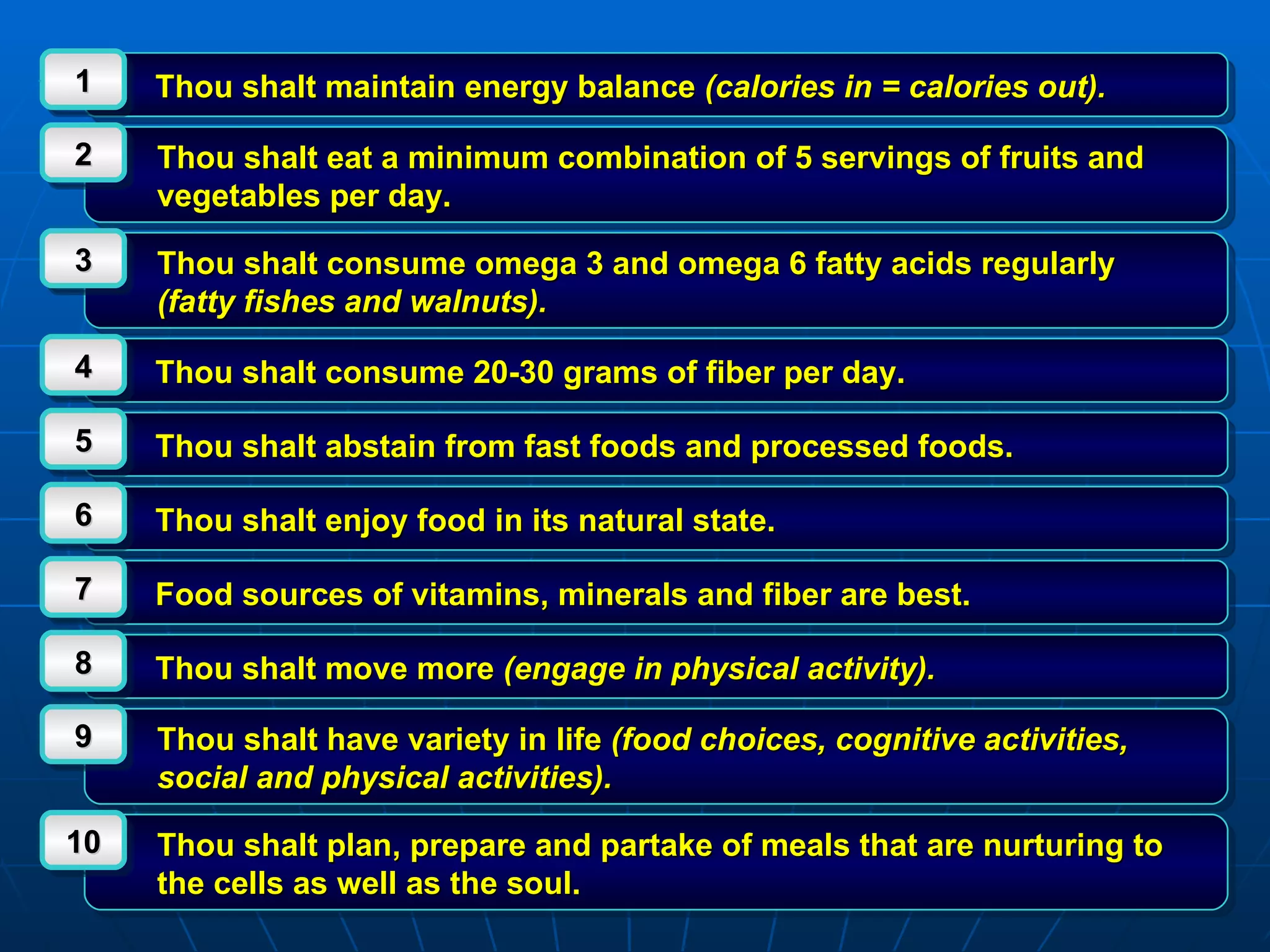
Thou shalt maintain energy balance  (calories in = calories out). 1 Thou shalt eat a minimum combination of 5 servings of fruits and vegetables per day. 2 Thou shalt consume omega 3 and omega 6 fatty acids regularly  (fatty fishes and walnuts). 3 Thou shalt consume 20-30 grams of fiber per day. 4 Thou shalt abstain from fast foods and processed foods. 5 Thou shalt enjoy food in its natural state. 6 Food sources of vitamins, minerals and fiber are best. 7 Thou shalt move more  (engage in physical activity). 8 Thou shalt have variety in life  (food choices, cognitive activities, social and physical activities). 9 Thou shalt plan, prepare and partake of meals that are nurturing to the cells as well as the soul. 10
 

Ad webinar diet and exercise to prevent cognitive decline

  • 1.
    Webinar How-to andEtiquette: Before dialing the conference call number, please disable the call-waiting feature (should you have it). (For some U.S. systems, do this by dialing *70.) Dial the conference call number. 1(800) 236-2165; Access Code: 860378923# If you have any background noise, we ask that you mute your line. If you do so, then do not forget to un-mute your line when wishing to ask a question or comment . We ask that you DO NOT place the conference call on hold at any time during the Webinar (in most systems, there may be hold-music which would then play for the rest of the audience and as such, interrupt the presentation). Always precede your question or comment by stating your full name. Alzheimer’ Disease and Dementia: Living Well to Care for and Preserve Cognition PANELISTS: Kimberly Taylor, PhD , and Mary Ann Johnson, MA MODERATOR: E. Ayn Welleford, PhD
  • 2.
    Prevention of CognitiveDecline Kimberly F. Taylor, Ph.D. Virginia Commonwealth University Department of Gerontology
  • 3.
    Goals Discuss therisk of caregiving Discuss a plan to integrate these strategies… when, how Examine preventive strategies that include nutrition and physical activity Present the risk factors for cognitive decline Provide a general under-standing of the two most common forms of dementia Present the 10 Commandments of Healthy Brain Aging
  • 4.
    Two Most CommonForms of Dementia TWO MOST COMMON FORMS OF DEMENTIA Alzheimer’s Disease Vascular Dementia Collectively account for 90% of all dementia
  • 5.
    Overview of Alzheimer’sDisease DEMENTIA: A brain disorder that seriously affects a person’s ability to carry out daily activities (self care). DEMENTIA The most common form of dementia among older adults is Alzheimer’s Disease (AD) which accounts for 60-70% of all dementia. Initial involvement is in part of the brain that controls thought, memory, and language. ALZHEIMER’S DISEASE Thought to be caused by amyloid protein deposits in the brain that leads to plaque and tangle formations that destroy brain tissue. POSSIBLE CAUSE
  • 6.
    More about ADAD is caused by one of the factors mentioned or a combination of factors such as genetic predisposition (having the Apo E4 genotype). AD is NOT a normal part of aging.
  • 7.
    Vascular Dementia 2 nd most common cause of dementia Combine with AD accounts for 90% of all dementia Risk factors are: HTN, stroke, heart disease The most common stroke subtype was lacunar stroke More sudden onset than AD, may occur at a younger age Ross et al, Neurology 53(2): 337-343, 1998
  • 8.
    Risk Factors Age is the most important known risk factor for AD. Chronic disease that effects the vascular system High cholesterol Hypertension Diabetes Smoking Female gender Family history and genetics - ApoE4 genotype Head injury Down’s Syndrome The number of people with the disease doubles every 5 years beyond age 65 Affects 5% of people 65 yrs old Affects 50% or more > 85 yrs old Stress AD RISK FACTORS
  • 9.
    What about theprotective factors against Alzheimer’s Disease? High education level Active cognitive involvement Active leisure activity Physical activity and exercise Daily consumption of fruits and vegetables, weekly intake of fatty fish Antioxidants and vitamin E, B6, B12, C and folate, omega 3 fatty acids Moderate use of alcohol Lower cholesterol How to protect your brain:
  • 10.
    When to start?It’s never too late! Earlier in life is better Take up a regular physical activity Vary your routine Eat 3-5 fruits and vegetables per day Learn something new! Simplify life and minimize stress need vs. wants should vs. could
  • 11.
    New Insight toAD Treatment/ Prevention ADCLT: 80 mg atorvastatin + a cholinesterase inhibitor proved a slowing of the progression of AD in a specialized population This did not demonstrate a decrease in free radicals AD recently referred to as Type 3 diabetes Thiazolidinediones: do not seem to be effective in rodent models Resveratol: recently demonstrated highly effective in rodent models
  • 12.
    Metabolic Risk FactorsIf you have 3 or more of the following you may have Metabolic Syndrome Waist circumference: >39” for men, 35” women Hypertension: ≥ 130/85 Elevated fasting glucose: > 100mg/dL Elevated triglycerides: ≥ 150 mg/dL Low HDL cholesterol: < 40 for men, <50 for women
  • 13.
    Why is MetabolicSyndrome Important? Increases your risk of type 2 diabetes two fold and risk of cardiovascular disease three fold This increases your risk for cognitive decline
  • 14.
    Prevention: CognitiveActivities vs. Physical Activity Each has protective benefits; however they act through mechanisms that are different Cognitive activities appear to increase spatial memory, increase hippocampal neuronal development and neurotropin production Exercise decreases amyloid precursor proteins (APP) Wolf et al, 2006, Biological Psychiatry
  • 15.
    Studies Examining theImpact of Exercise on AD Karoly Mirnics (U of Pitt) demonstrated that A β plaques inversely correlated with physical activity Naprilysin increase which is a enzyme that degrades A β Cell, 2005, 120:701-13
  • 16.
    Studies that illuminatethe role of physical activity Dishman et al, (2006) suggest that chronic volumes of physical activity attenuates neural responses to stress in brain circuits Stevens and Killeen (2006) demonstrated that 12 weeks of exercise (3x/week) on demented patients improve their performance on the Clock Drawing Test and Revised Elderly Persons Disability Scale compared to control and social intervention .
  • 17.
    Studies that illuminatethe role of physical activity (cont.) Adlard et al (2005) Five months of exercise decrease A β plaques in frontal cortex and hippocampus Enhanced rate of learning on the Morris water maze and decrease escape latencies over 1 st 3-6 days of trial Proposed mechanisms: change in processing of APP after short term exercise (1 mo) demonstrated a decrease in proteolytic fragments of APP May involve neuronal metabolism change that affects APP processing J of Neuroscience 25 (17) 4217-4221
  • 18.
    More Evidence forPhysical Activity Friedland et al (2001) - Individuals less cognitively and physically active at midlife had 250% increase risk for developing AD Laurin et al (2001) - highest activity group had 60% less incidence of AD Rovio et al (2005) - as little as 2x/wk leisure time activity decrease risk for dementia and AD Larson et al (2006) - incidence of dementia 13/1000 person years for 3x/wk compared to 19.7/1000 person years for less than 3x/week
  • 19.
    What about Nutrition? Regular exercise doesn’t give a license to overeat Excess calories are a major culprit Supplements should not be considered magic pills, they will be less protective in an inhospitable environment Consider consuming nuts and beans daily, 3-5 fruits and vegetables, and fatty fishes, and lean meats
  • 20.
    Risk of ADand “Belly fat” Centralized distribution of adiposity at midlife increases risk of dementia irrespective of total body weight This is independent to cardiovascular and diabetic co-morbidities Taking a waist to hip ratio is a reasonable indicator of fat patterning W:H < .8 Whitmer, R.A. et al (2008) Neurology
  • 21.
    Antioxidant Rich DietIt is important that “diet” is the key term and is thought of as the food we consume ( Barberger-Gateau, P., et.al., (2007) Neurology) Daily consumption of fruits and vegetable reduced the risk of all dementias ( Barberger-Gateau, P., et.al., (2007) Neurology) Weekly consumption of fish, especially two or more fish meals per week (Morris, M.C., et al (2005) Archives of Neurology) Regular consumption of omega-3 fatty acids in conjunction with vitamin E (GISSI Prevention Trial (1999) Lancet)
  • 22.
    Soy Although therehas been much investigation on soy, there is lack of conclusive evidence that soy milk or isoflavone supplementation improves memory or prevents cognitive decline Kreijkamp-Kaspers, S., et al (2004) JAMA; Fournier, L.R., et al (2007) J Nutrition, Health, and Aging; White, L.R., (2000) J American College of Nutrition
  • 23.
    Alcohol Consumption Resveratrol, the polyphenol found in the skin of red grapes , is thought to have a protective effect against β -amyloid induced oxidative stress Significant inverse relationship between moderate (3-4 glasses) wine consumption and incidence of AD and dementia (Luchinger, J.A., et al (2004) J American Geriatric Society; Savaskan, E. et al (2003), Gerontology; Kumar, P., et al (2006) Behavioral Pharmacology)
  • 24.
    Dietary Supplements: B12,B6, B1, B2, Niacin (B3) and Folate (B9) B vitamins and folate have been shown to have an inverses relationship with cognitive decline (Durga, J. et al (2006) Neurobiology of Aging; Ramos, M.I., et al 2005) Am J Clinical Nutrition; Mooijaart, S.P., et al (2005) Am J Clinical Nutrition) However, there are trials that present conflicting results (Morris, M.C., (2006) J Alzheimer’s Disease ; Brian,J. et al (2002) J Nutrition)
  • 25.
    Dietary Moral ofthe Story A diet that has variety of fruits and vegetables, whole grains, fatty fishes, and red wine Use of mono-saturated fats such as olive oil Supplements should be consumed so that the amount does not exceed the daily RDA
  • 26.
    Exercising your Brain!Cognitive activities should be performed regularly and be varied Enhance linguistic ability Do some math Read Journal Learn something new…
  • 27.
    Caregivers Most arewomen The average length of time in a caregiving role is 6 years Caregivers are at risk for depression, compromised immune function, hypertension and cardiovascular disease The toll is high during the caregiving period and implications continue for years after the role ends
  • 28.
    The 10 Commandmentsof Healthy Brain Aging* *Kimberly Taylor, 2007
  • 29.
    Thou shalt maintainenergy balance (calories in = calories out). 1 Thou shalt eat a minimum combination of 5 servings of fruits and vegetables per day. 2 Thou shalt consume omega 3 and omega 6 fatty acids regularly (fatty fishes and walnuts). 3 Thou shalt consume 20-30 grams of fiber per day. 4 Thou shalt abstain from fast foods and processed foods. 5 Thou shalt enjoy food in its natural state. 6 Food sources of vitamins, minerals and fiber are best. 7 Thou shalt move more (engage in physical activity). 8 Thou shalt have variety in life (food choices, cognitive activities, social and physical activities). 9 Thou shalt plan, prepare and partake of meals that are nurturing to the cells as well as the soul. 10
  • 30.

Editor's Notes

  • #22 Vegetables may have a more potent than fruit effect as demonstrated by a study of 13,388 women which concluded that vegetables exert a reductive effect on cognitive decline. (Kang et al (2005) Annals of Neurology Morris et al (2005) demonstrated that individuals who consumed 2 or more fish meals/week were at lesser risk of dementia
  • #24 There are a few other studies that have looked at other forms of alcohol, white wine, beer and spirits, however the results are not as conclusive.
  • #25 As far as supplements are concerned, megadoses of anything are not recommended. Try to get fruits and vegetables and food sources high in nutrients first.