

Introduction
These ratios measure the efficiency and rapidity of
the resources of the company, like inventory, fixed
assets , working capital etc. These ratios are
normally calculated on the basis of revenue or its
cost so these are also called turnover ratio. Some of
these are discuss further…
Activity Ratios
Inventory Turnover Ratio
Trade Receivable Turnover Ratio
Trade Payable Turnover Ratio
Working Capital Turnover Ratio
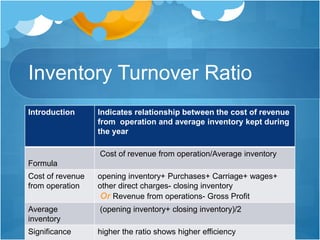
Inventory Turnover Ratio
Introduction Indicates relationship between the cost of revenue
from operation and average inventory kept during
the year
Formula
Cost of revenue from operation/Average inventory
Cost of revenue
from operation
opening inventory+ Purchases+ Carriage+ wages+
other direct charges- closing inventory
Or Revenue from operations- Gross Profit
Average
inventory
(opening inventory+ closing inventory)/2
Significance higher the ratio shows higher efficiency
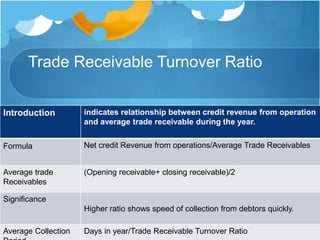
Trade Receivable Turnover Ratio
Introduction indicates relationship between credit revenue from operation
and average trade receivable during the year.
Formula Net credit Revenue from operations/Average Trade Receivables
Average trade
Receivables
(Opening receivable+ closing receivable)/2
Significance
Higher ratio shows speed of collection from debtors quickly.
Average Collection Days in year/Trade Receivable Turnover Ratio
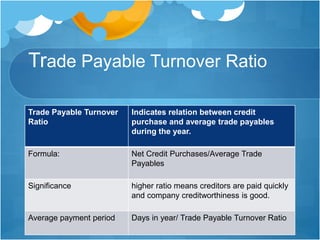
Trade Payable Turnover Ratio
Trade Payable Turnover
Ratio
Indicates relation between credit
purchase and average trade payables
during the year.
Formula: Net Credit Purchases/Average Trade
Payables
Significance higher ratio means creditors are paid quickly
and company creditworthiness is good.
Average payment period Days in year/ Trade Payable Turnover Ratio
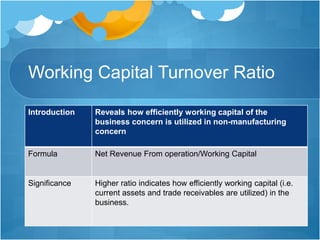
Working Capital Turnover Ratio
Introduction Reveals how efficiently working capital of the
business concern is utilized in non-manufacturing
concern
Formula Net Revenue From operation/Working Capital
Significance Higher ratio indicates how efficiently working capital (i.e.
current assets and trade receivables are utilized) in the
business.

Activity ratio or turnover ratio by deepak madan

  • 2.
    Introduction These ratios measurethe efficiency and rapidity of the resources of the company, like inventory, fixed assets , working capital etc. These ratios are normally calculated on the basis of revenue or its cost so these are also called turnover ratio. Some of these are discuss further…
  • 3.
    Activity Ratios Inventory TurnoverRatio Trade Receivable Turnover Ratio Trade Payable Turnover Ratio Working Capital Turnover Ratio
  • 4.
    Inventory Turnover Ratio IntroductionIndicates relationship between the cost of revenue from operation and average inventory kept during the year Formula Cost of revenue from operation/Average inventory Cost of revenue from operation opening inventory+ Purchases+ Carriage+ wages+ other direct charges- closing inventory Or Revenue from operations- Gross Profit Average inventory (opening inventory+ closing inventory)/2 Significance higher the ratio shows higher efficiency
  • 5.
    Trade Receivable TurnoverRatio Introduction indicates relationship between credit revenue from operation and average trade receivable during the year. Formula Net credit Revenue from operations/Average Trade Receivables Average trade Receivables (Opening receivable+ closing receivable)/2 Significance Higher ratio shows speed of collection from debtors quickly. Average Collection Days in year/Trade Receivable Turnover Ratio
  • 6.
    Trade Payable TurnoverRatio Trade Payable Turnover Ratio Indicates relation between credit purchase and average trade payables during the year. Formula: Net Credit Purchases/Average Trade Payables Significance higher ratio means creditors are paid quickly and company creditworthiness is good. Average payment period Days in year/ Trade Payable Turnover Ratio
  • 7.
    Working Capital TurnoverRatio Introduction Reveals how efficiently working capital of the business concern is utilized in non-manufacturing concern Formula Net Revenue From operation/Working Capital Significance Higher ratio indicates how efficiently working capital (i.e. current assets and trade receivables are utilized) in the business.

Editor's Notes

  • #6 While calculating this ratio , provision for bad and doubtful debts is not deducted from trade receivable, so that it may not give a false impression that trade receivables are collected quickly. In case if only closing debtors are given then theses are treated as average trade receivables.
  • #7 If credit purchase is not given in the question, the ratio may be calculated on the basis of total purchase
  • #8 But some times higher ratio is dangerous because it shows over trading