Codes and Conventions
By Rob Kirby
The Genre




An action/adventure film is essentially one long journey with
a progression of different, intense scenes, each one
becoming more death defying and seemingly impossible
than the one before. The task for the producers and directors
is to keep up the tension as the film advances to a storming
end sequence.
This genre is usually aimed at 12 years or above so that a
fair amount of powerful scenes can be used and won’t drive
away the ideal audiences.
Narrative


These type of films often crossed with Sci Fi/Romance/Comedy.
They would be produced and distributed through major Hollywood
studios and would use fast paced editing to keep the high intensity
flowing for the whole film. A fairly predictable chain of events is to
keep the audience interested by letting them see what they want to
see. Use of dramatic non-diegetic sound is key in Action/Adventure
films. A strong story ark of a quest for treasure, or an incredibly
valuable object, or an item which has a sufficient amount of power.
A fast moving narrative with constant set backs that are overcome
one by one, leading to fairly complex plots.
Characters and Locations








These are not realistic films, although the characters must be believable.
They can be set in a realistic or completely fictional world and can be set in
any time period from the past for even the future.
There is normally a main protagonist who is clearly a regular guy (with the
exception of possibly being extremely clever or very lucky, such as Indiana
Jones and Caption Jack Sparrow).
Humorous dialogue often gives a sense of relief, especially when the
characters are in a dangerous situation.
Exotic locations where the characters have to contend with extremes of
climate, as well as evil forces.
The aim is of the film is to please the audience by keeping them on the edge
of their seats through a series of mind boggling chases, mysterious
locations and wild adventures.
Todorov’s Narrative Theory
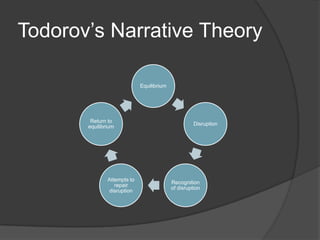
Equilibrium

Return to
equilibrium

Attempts to
repair
disruption

Disruption

Recognition
of disruption
Explaining Tolorov’s Theory






Equilibrium – Everything is normal at the
beginning of the film
Disruption – A disruption of the equilibrium by
some action
Recognition of disruption – A recognition that there
has been a disruption
Attempts to repair disruption – Having a go at
fixing the disruption
Return to equilibrium – A reinstatement of the
equilibrium
Todorov’s theory in an Action
film
An example of a film that follow these steps perfectly is ‘Die Hard’.

1. John McClane (Bruce Willis) is coming home to his family for Christmas and all is calm.
(The equilibrium)
2. Hans Gruber (Alan Rickman) and his team of terrorists take over the nakatomi building
which is hosting a Christmas part of which McClane and his wife are attending.
3. (2 points of recognition) McClane isn't in the room when the terrorsits storm in so is able
to move up the builiding when he hears screaming. People outside of the
building realise there's a disruption when a police man's car is shot at from the
building.
4. The police try sending in a SWAT team in which fails. The situation is solved by John
McClane throwing Gruber out of a high floor window which kills him.
5. The equilibrium is restored when the police got McClane, his wife and the other hostages
out of the building, and the McClanes leave in a police car.
Propp’s Character Roles
1. The Hero - The person who journey’s to restore balance in the storyline
2. The Villain - Opposes the hero
3. The Donor - Prepares the hero or gives the them something to help
4. The Helper - helps the hero in the quest
5. The Princess - Needs saving from the Hero
6. The Dispatcher - Sends the hero on his way
7. False Hero - takes credit for the hero’s actions or tries to marry the
Princess.
Propps theory in in Action
film


An example of a film that follow these steps perfectly is
‘Shrek’
1. The Hero - Shrek
2. The Villain – Lord Farquaad
3. The Donor – Shrek prepares himself

4. The Helper –Donkey
5. The Princess – Princess Fiona
6. The Dispatcher – Lord Farquaad
7. False Hero – Prince Charminh

Action adventure genre

  • 1.
  • 2.
    The Genre   An action/adventurefilm is essentially one long journey with a progression of different, intense scenes, each one becoming more death defying and seemingly impossible than the one before. The task for the producers and directors is to keep up the tension as the film advances to a storming end sequence. This genre is usually aimed at 12 years or above so that a fair amount of powerful scenes can be used and won’t drive away the ideal audiences.
  • 3.
    Narrative  These type offilms often crossed with Sci Fi/Romance/Comedy. They would be produced and distributed through major Hollywood studios and would use fast paced editing to keep the high intensity flowing for the whole film. A fairly predictable chain of events is to keep the audience interested by letting them see what they want to see. Use of dramatic non-diegetic sound is key in Action/Adventure films. A strong story ark of a quest for treasure, or an incredibly valuable object, or an item which has a sufficient amount of power. A fast moving narrative with constant set backs that are overcome one by one, leading to fairly complex plots.
  • 4.
    Characters and Locations      Theseare not realistic films, although the characters must be believable. They can be set in a realistic or completely fictional world and can be set in any time period from the past for even the future. There is normally a main protagonist who is clearly a regular guy (with the exception of possibly being extremely clever or very lucky, such as Indiana Jones and Caption Jack Sparrow). Humorous dialogue often gives a sense of relief, especially when the characters are in a dangerous situation. Exotic locations where the characters have to contend with extremes of climate, as well as evil forces. The aim is of the film is to please the audience by keeping them on the edge of their seats through a series of mind boggling chases, mysterious locations and wild adventures.
  • 5.
    Todorov’s Narrative Theory Equilibrium Returnto equilibrium Attempts to repair disruption Disruption Recognition of disruption
  • 6.
    Explaining Tolorov’s Theory      Equilibrium– Everything is normal at the beginning of the film Disruption – A disruption of the equilibrium by some action Recognition of disruption – A recognition that there has been a disruption Attempts to repair disruption – Having a go at fixing the disruption Return to equilibrium – A reinstatement of the equilibrium
  • 7.
    Todorov’s theory inan Action film An example of a film that follow these steps perfectly is ‘Die Hard’. 1. John McClane (Bruce Willis) is coming home to his family for Christmas and all is calm. (The equilibrium) 2. Hans Gruber (Alan Rickman) and his team of terrorists take over the nakatomi building which is hosting a Christmas part of which McClane and his wife are attending. 3. (2 points of recognition) McClane isn't in the room when the terrorsits storm in so is able to move up the builiding when he hears screaming. People outside of the building realise there's a disruption when a police man's car is shot at from the building. 4. The police try sending in a SWAT team in which fails. The situation is solved by John McClane throwing Gruber out of a high floor window which kills him. 5. The equilibrium is restored when the police got McClane, his wife and the other hostages out of the building, and the McClanes leave in a police car.
  • 8.
    Propp’s Character Roles 1.The Hero - The person who journey’s to restore balance in the storyline 2. The Villain - Opposes the hero 3. The Donor - Prepares the hero or gives the them something to help 4. The Helper - helps the hero in the quest 5. The Princess - Needs saving from the Hero 6. The Dispatcher - Sends the hero on his way 7. False Hero - takes credit for the hero’s actions or tries to marry the Princess.
  • 9.
    Propps theory inin Action film  An example of a film that follow these steps perfectly is ‘Shrek’ 1. The Hero - Shrek 2. The Villain – Lord Farquaad 3. The Donor – Shrek prepares himself 4. The Helper –Donkey 5. The Princess – Princess Fiona 6. The Dispatcher – Lord Farquaad 7. False Hero – Prince Charminh