Acids and Alkalis
Examples of Acids & Alkalis in our daily lives
Acids
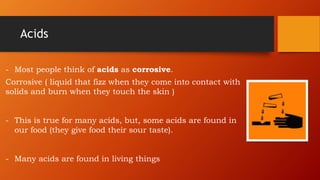
- Most people think of acids as corrosive.
Corrosive ( liquid that fizz when they come into contact with
solids and burn when they touch the skin )
- This is true for many acids, but, some acids are found in
our food (they give food their sour taste).
- Many acids are found in living things
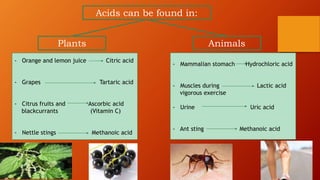
Acids can be found in:
Plants Animals
- Orange and lemon juice Citric acid
- Grapes Tartaric acid
- Citrus fruits and Ascorbic acid
blackcurrants (Vitamin C)
- Nettle stings Methanoic acid
- Mammalian stomach Hydrochloric acid
- Muscles during Lactic acid
vigorous exercise
- Urine Uric acid
- Ant sting Methanoic acid
Acid in vinegar
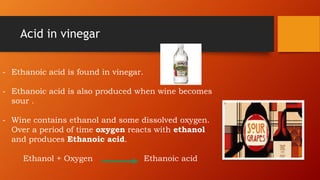
- Ethanoic acid is found in vinegar.
- Ethanoic acid is also produced when wine becomes
sour .
- Wine contains ethanol and some dissolved oxygen.
Over a period of time oxygen reacts with ethanol
and produces Ethanoic acid.
Ethanol + Oxygen Ethanoic acid
Organic acids and mineral acids
Acids can be classified into:
Organic acids Mineral acids
- Are acids produced by plants and
animals.
- Are acids not produced by living things.
- The 1st mineral acid to be discovered was nitric
acid.
- Nitric acid was used to separate silver and gold
(The silver dissolved but not the gold).
- Later sulfuric acid and then hydrochloric acid
where discovered.
Concentrated and diluted
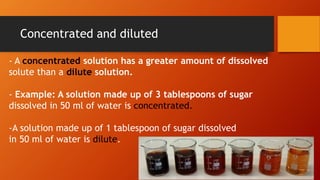
- A concentrated solution has a greater amount of dissolved
solute than a dilute solution.
- Example: A solution made up of 3 tablespoons of sugar
dissolved in 50 ml of water is concentrated.
-A solution made up of 1 tablespoon of sugar dissolved
in 50 ml of water is dilute.
Dilute acids
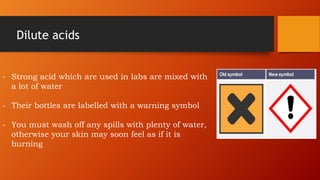
- Strong acid which are used in labs are mixed with
a lot of water
- Their bottles are labelled with a warning symbol
- You must wash off any spills with plenty of water,
otherwise your skin may soon feel as if it is
burning
Concentrated acids
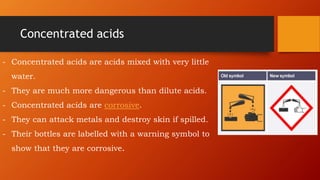
- Concentrated acids are acids mixed with very little
water.
- They are much more dangerous than dilute acids.
- Concentrated acids are corrosive.
- They can attack metals and destroy skin if spilled.
- Their bottles are labelled with a warning symbol to
show that they are corrosive.
H.W 98/99
Read pages 145,146
H.W 108
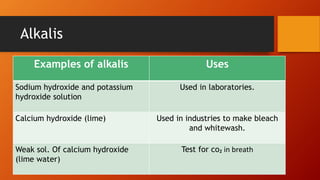
Alkalis
Examples of alkalis Uses
Sodium hydroxide and potassium
hydroxide solution
Used in laboratories.
Calcium hydroxide (lime) Used in industries to make bleach
and whitewash.
Weak sol. Of calcium hydroxide
(lime water)
Test for co₂ in breath
- A concentrated solution of an alkali is corrosive.
- Dilute solutions of alkali, such as sodium
hydroxide, react with fat on the surface of the
skin and change it into substances found in soap.
- House hold cleaners used of metals, floors and
ovens contain alkalis and must be handled
carefully.
H.W 100

Acids and alkalis 1

  • 1.
  • 3.
    Examples of Acids& Alkalis in our daily lives
  • 4.
    Acids - Most peoplethink of acids as corrosive. Corrosive ( liquid that fizz when they come into contact with solids and burn when they touch the skin ) - This is true for many acids, but, some acids are found in our food (they give food their sour taste). - Many acids are found in living things
  • 5.
    Acids can befound in: Plants Animals - Orange and lemon juice Citric acid - Grapes Tartaric acid - Citrus fruits and Ascorbic acid blackcurrants (Vitamin C) - Nettle stings Methanoic acid - Mammalian stomach Hydrochloric acid - Muscles during Lactic acid vigorous exercise - Urine Uric acid - Ant sting Methanoic acid
  • 6.
    Acid in vinegar -Ethanoic acid is found in vinegar. - Ethanoic acid is also produced when wine becomes sour . - Wine contains ethanol and some dissolved oxygen. Over a period of time oxygen reacts with ethanol and produces Ethanoic acid. Ethanol + Oxygen Ethanoic acid
  • 7.
    Organic acids andmineral acids Acids can be classified into: Organic acids Mineral acids - Are acids produced by plants and animals. - Are acids not produced by living things. - The 1st mineral acid to be discovered was nitric acid. - Nitric acid was used to separate silver and gold (The silver dissolved but not the gold). - Later sulfuric acid and then hydrochloric acid where discovered.
  • 8.
    Concentrated and diluted -A concentrated solution has a greater amount of dissolved solute than a dilute solution. - Example: A solution made up of 3 tablespoons of sugar dissolved in 50 ml of water is concentrated. -A solution made up of 1 tablespoon of sugar dissolved in 50 ml of water is dilute.
  • 9.
    Dilute acids - Strongacid which are used in labs are mixed with a lot of water - Their bottles are labelled with a warning symbol - You must wash off any spills with plenty of water, otherwise your skin may soon feel as if it is burning
  • 10.
    Concentrated acids - Concentratedacids are acids mixed with very little water. - They are much more dangerous than dilute acids. - Concentrated acids are corrosive. - They can attack metals and destroy skin if spilled. - Their bottles are labelled with a warning symbol to show that they are corrosive.
  • 11.
  • 13.
  • 14.
    Alkalis Examples of alkalisUses Sodium hydroxide and potassium hydroxide solution Used in laboratories. Calcium hydroxide (lime) Used in industries to make bleach and whitewash. Weak sol. Of calcium hydroxide (lime water) Test for co₂ in breath
  • 15.
    - A concentratedsolution of an alkali is corrosive. - Dilute solutions of alkali, such as sodium hydroxide, react with fat on the surface of the skin and change it into substances found in soap. - House hold cleaners used of metals, floors and ovens contain alkalis and must be handled carefully.
  • 16.