Acids and alkalis
Solutions can be sorted by whether
they are: acid, alkali or neutral.
When a substance dissolves in water it
makes a solution.
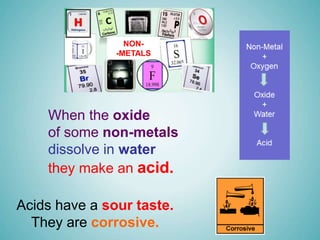
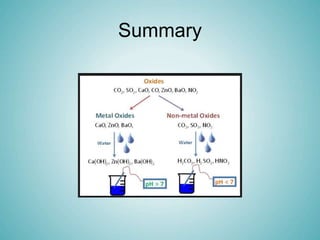
When the oxide
of some non-metals
dissolve in water
they make an acid.
Acids have a sour taste.
They are corrosive.
NON-
-METALS
Testing your chemistry
background
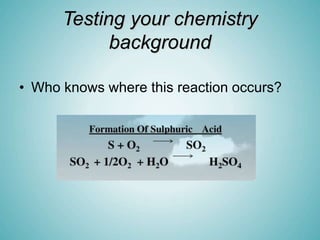
• Who knows where this reaction occurs?
Testing your chemistry
background
• Solution:
Acid rain is a rain that is unusually acidic, meaning that it has elevated
levels of hydrogen ions (low pH). It can have harmful effects on plants,
aquatic animals, and infrastructure. Acid rain is caused by emissions of
sulfur dioxide and nitrogen oxide, which react with the water molecules in
the atmosphere to produce acids.
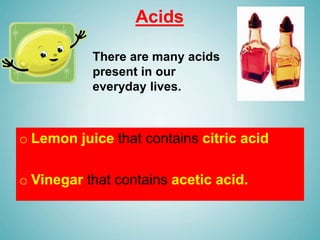
Acids
o Lemon juice that contains citric acid
o Vinegar that contains acetic acid.
There are many acids
present in our
everyday lives.
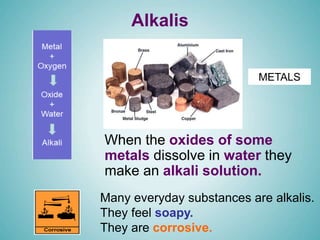
Alkalis
When the oxides of some
metals dissolve in water they
make an alkali solution.
Many everyday substances are alkalis.
They feel soapy.
They are corrosive.
METALS
Testing your science
background
• Who can tell me an alkali cleaning product
that is normally used at home?
Alkalis
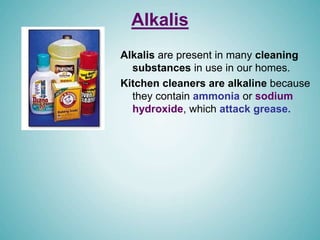
Alkalis are present in many cleaning
substances in use in our homes.
Kitchen cleaners are alkaline because
they contain ammonia or sodium
hydroxide, which attack grease.
Alkalis react with
acids and
neutralise them.
Neutralisation
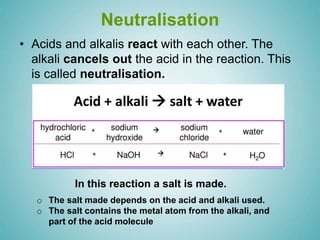
• Acids and alkalis react with each other. The
alkali cancels out the acid in the reaction. This
is called neutralisation.
In this reaction a salt is made.
o The salt made depends on the acid and alkali used.
o The salt contains the metal atom from the alkali, and
part of the acid molecule
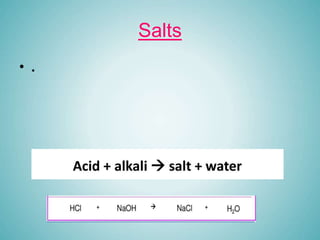
Salts
• .
Applications of Neutralisation
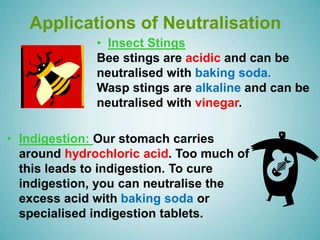
• Indigestion: Our stomach carries
around hydrochloric acid. Too much of
this leads to indigestion. To cure
indigestion, you can neutralise the
excess acid with baking soda or
specialised indigestion tablets.
• Insect Stings
Bee stings are acidic and can be
neutralised with baking soda.
Wasp stings are alkaline and can be
neutralised with vinegar.
Applications of Neutralisation
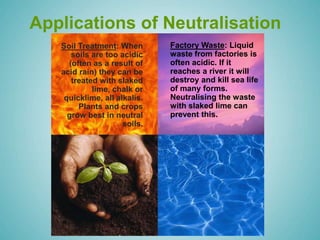
Soil Treatment: When
soils are too acidic
(often as a result of
acid rain) they can be
treated with slaked
lime, chalk or
quicklime, all alkalis.
Plants and crops
grow best in neutral
soils.
Factory Waste: Liquid
waste from factories is
often acidic. If it
reaches a river it will
destroy and kill sea life
of many forms.
Neutralising the waste
with slaked lime can
prevent this.
Just testing…
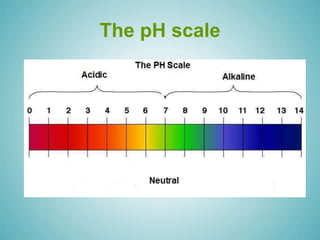
• What do we use to measure how acidic or
alkali a solution is?
Indicators
o Because acidity and alkalinity relate to pH, they may also be
known as pH indicators.
o Examples of acid-base indicators include litmus paper,
phenolphthalein, and red cabbage juice.
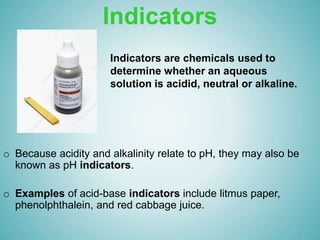
Indicators are chemicals used to
determine whether an aqueous
solution is acidid, neutral or alkaline.
Litmus
Test
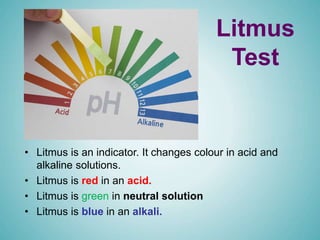
• Litmus is an indicator. It changes colour in acid and
alkaline solutions.
• Litmus is red in an acid.
• Litmus is green in neutral solution
• Litmus is blue in an alkali.
The pH scale
Summary
Acids and alkalis final ppt.ppt

Acids and alkalis final ppt.ppt

  • 1.
    Acids and alkalis Solutionscan be sorted by whether they are: acid, alkali or neutral. When a substance dissolves in water it makes a solution.
  • 2.
    When the oxide ofsome non-metals dissolve in water they make an acid. Acids have a sour taste. They are corrosive. NON- -METALS
  • 3.
    Testing your chemistry background •Who knows where this reaction occurs?
  • 4.
    Testing your chemistry background •Solution: Acid rain is a rain that is unusually acidic, meaning that it has elevated levels of hydrogen ions (low pH). It can have harmful effects on plants, aquatic animals, and infrastructure. Acid rain is caused by emissions of sulfur dioxide and nitrogen oxide, which react with the water molecules in the atmosphere to produce acids.
  • 5.
    Acids o Lemon juicethat contains citric acid o Vinegar that contains acetic acid. There are many acids present in our everyday lives.
  • 6.
    Alkalis When the oxidesof some metals dissolve in water they make an alkali solution. Many everyday substances are alkalis. They feel soapy. They are corrosive. METALS
  • 7.
    Testing your science background •Who can tell me an alkali cleaning product that is normally used at home?
  • 8.
    Alkalis Alkalis are presentin many cleaning substances in use in our homes. Kitchen cleaners are alkaline because they contain ammonia or sodium hydroxide, which attack grease.
  • 9.
    Alkalis react with acidsand neutralise them.
  • 10.
    Neutralisation • Acids andalkalis react with each other. The alkali cancels out the acid in the reaction. This is called neutralisation. In this reaction a salt is made. o The salt made depends on the acid and alkali used. o The salt contains the metal atom from the alkali, and part of the acid molecule
  • 11.
  • 12.
    Applications of Neutralisation •Indigestion: Our stomach carries around hydrochloric acid. Too much of this leads to indigestion. To cure indigestion, you can neutralise the excess acid with baking soda or specialised indigestion tablets. • Insect Stings Bee stings are acidic and can be neutralised with baking soda. Wasp stings are alkaline and can be neutralised with vinegar.
  • 13.
    Applications of Neutralisation SoilTreatment: When soils are too acidic (often as a result of acid rain) they can be treated with slaked lime, chalk or quicklime, all alkalis. Plants and crops grow best in neutral soils. Factory Waste: Liquid waste from factories is often acidic. If it reaches a river it will destroy and kill sea life of many forms. Neutralising the waste with slaked lime can prevent this.
  • 14.
    Just testing… • Whatdo we use to measure how acidic or alkali a solution is?
  • 15.
    Indicators o Because acidityand alkalinity relate to pH, they may also be known as pH indicators. o Examples of acid-base indicators include litmus paper, phenolphthalein, and red cabbage juice. Indicators are chemicals used to determine whether an aqueous solution is acidid, neutral or alkaline.
  • 16.
    Litmus Test • Litmus isan indicator. It changes colour in acid and alkaline solutions. • Litmus is red in an acid. • Litmus is green in neutral solution • Litmus is blue in an alkali.
  • 17.
  • 18.