ACID BASE BALANCE
Allen’s Test
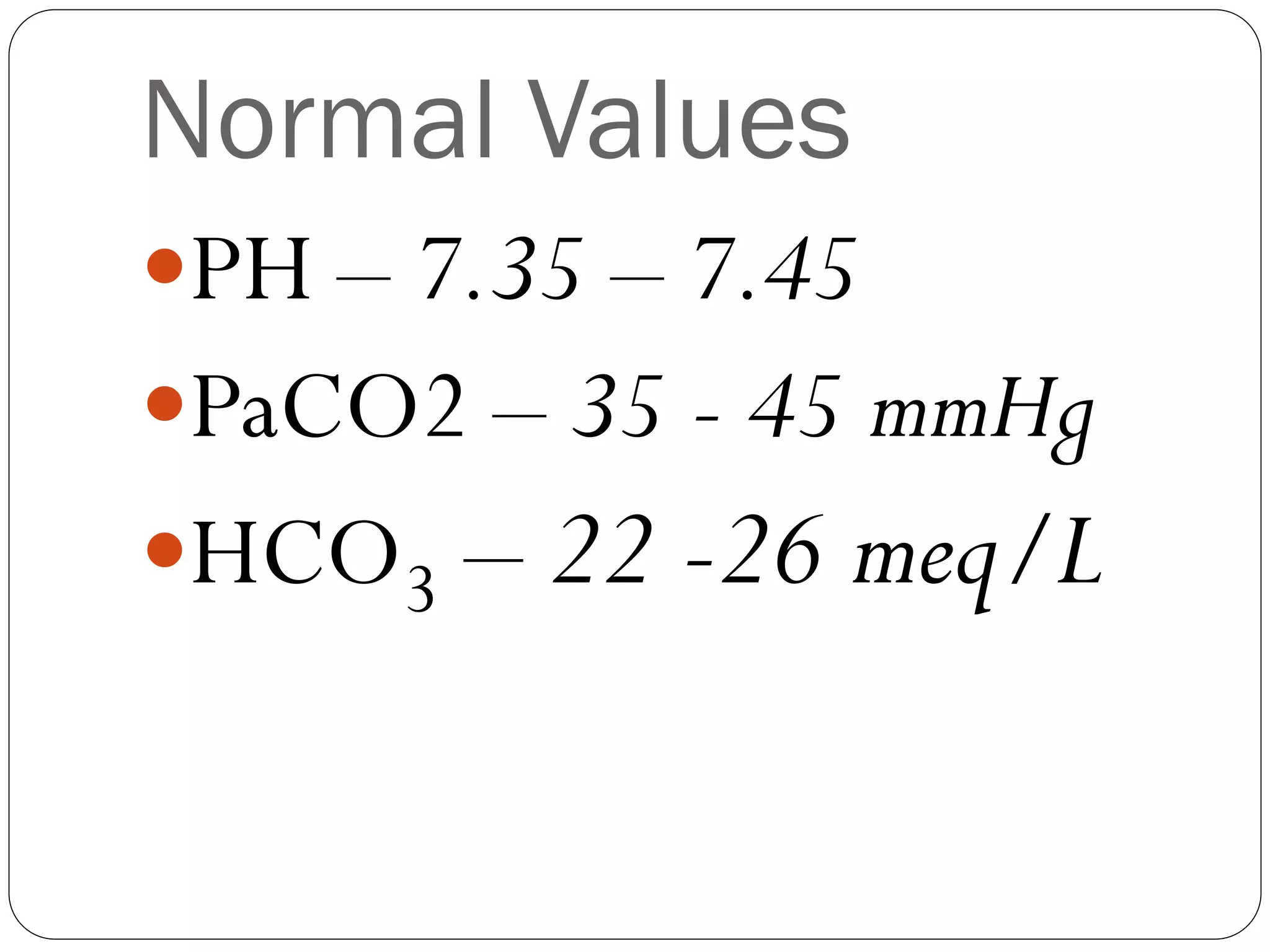
Normal Values
PH – 7.35 – 7.45
PaCO2 – 35 - 45 mmHg
HCO3 – 22 -26 meq/L
•Mild Hypoxemia (60-79mmHg)
•Moderate Hypoxemia (40-59mmHg)
•Severe Hypoxemia (less than 40mmHg)
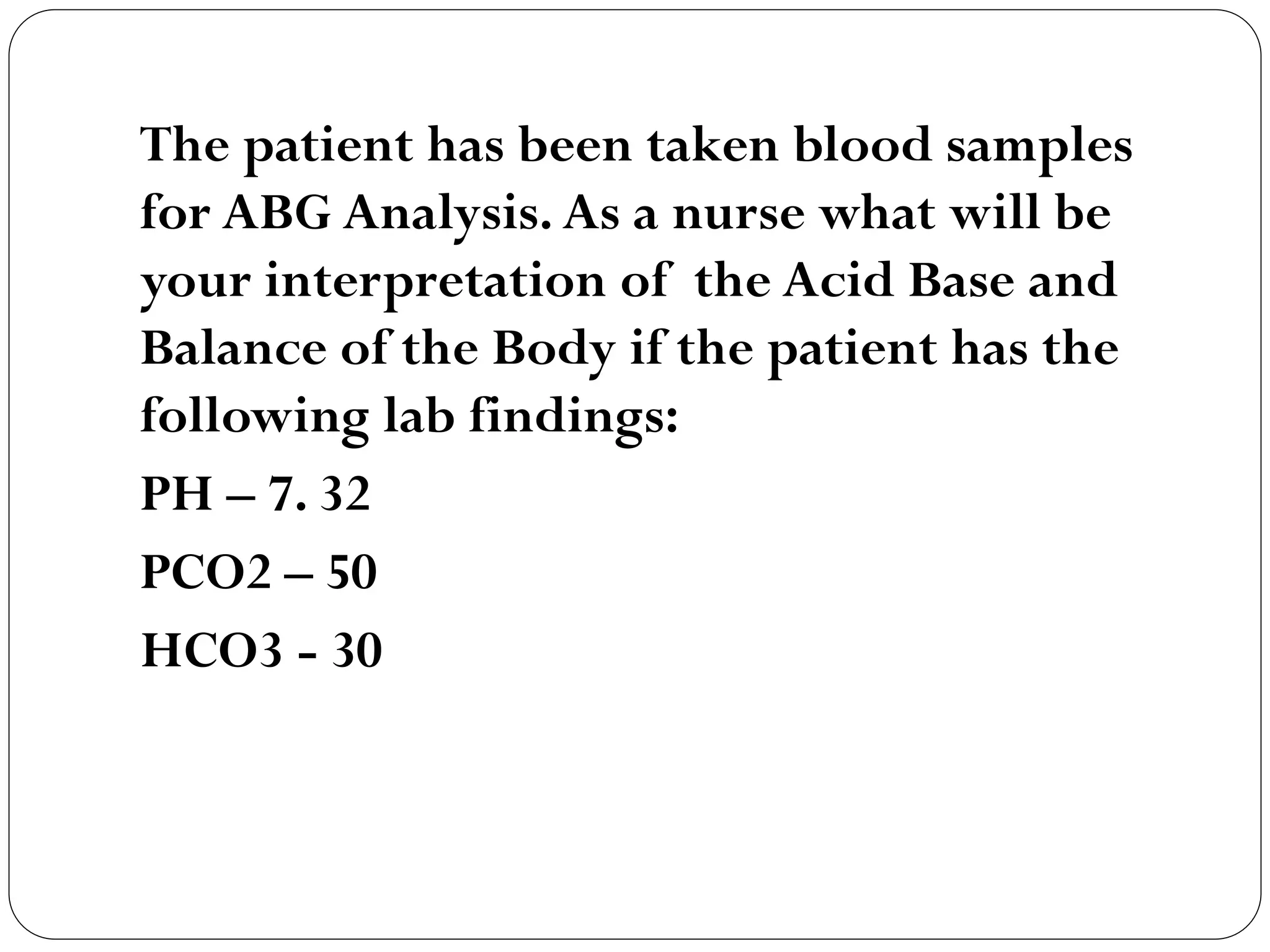
The patient has been taken blood samples
for ABG Analysis. As a nurse what will be
your interpretation of the Acid Base and
Balance of the Body if the patient has the
following lab findings:
PH – 7. 32
PCO2 – 50
HCO3 - 30
1. IDENTIFY THE PH
ALKALOSIS – if more than 7.45
ACIDOSIS – if less than 7.35
NormaALKA – 7.41 – 7.45
NormalACI – 7.35 – 7.39
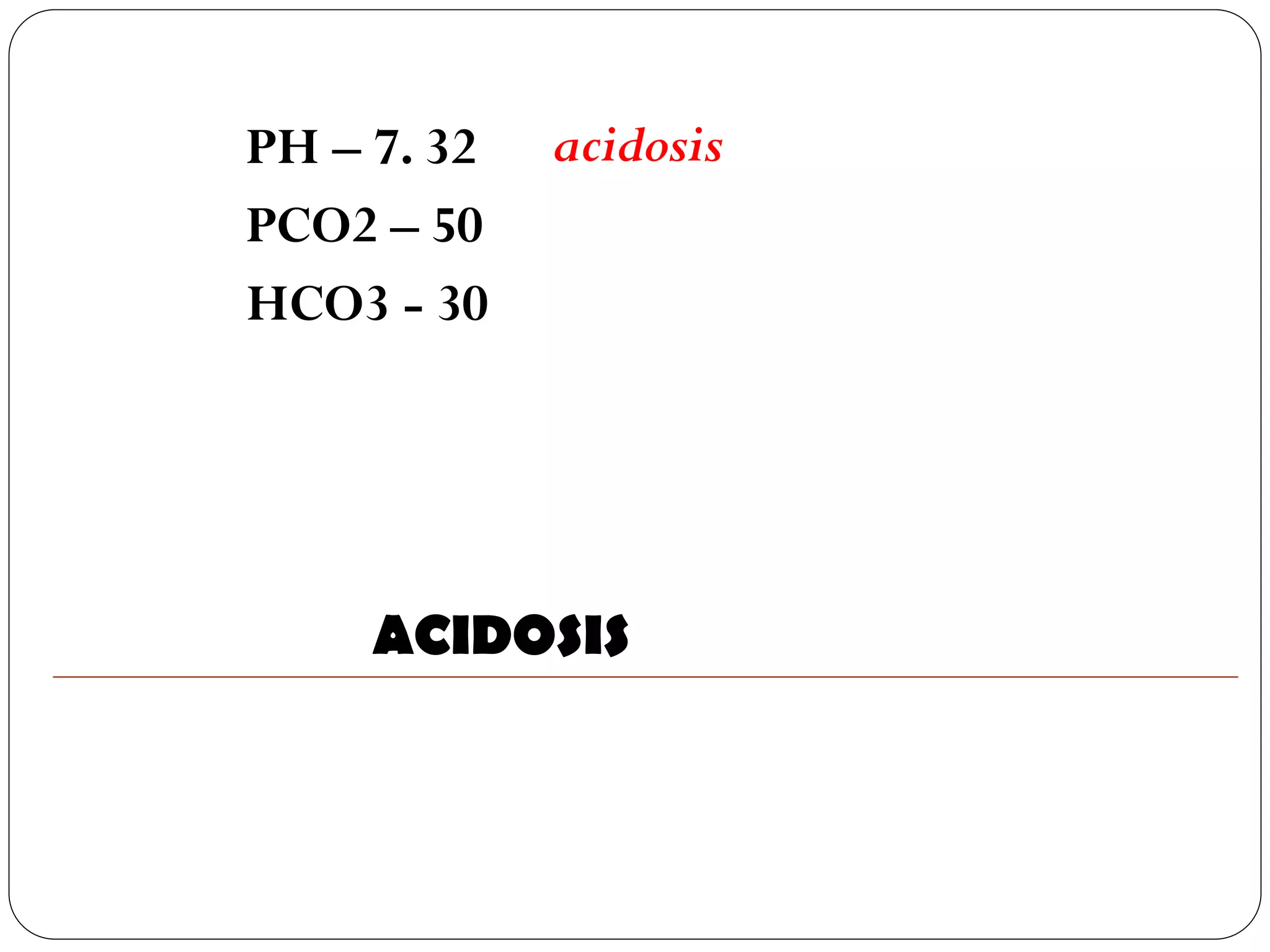
PH – 7. 32
PCO2 – 50
HCO3 - 30
acidosis
ACIDOSIS
2. IDENTIFY THE CAUSE
(RESPI / META)
PaCO2
ACI – if more than 45mmHg
ALKA – if less than 35 mmHg
HCO3
ACI – If less than 22
ALKA – if more than 26
2. IDENTIFY THE CAUSE
(RESPI / META)
Identify who has the same state as
the PH and that is the cause.
PaCO2 (RESPIRATORY)
HCO3 (METABOLIC)
PH – 7. 32
PCO2 – 50
HCO3 - 30
acidosis
ACIDOSIS
acidosis
alkalosis
RESPIRATORY
3. IDENTIFY IF THERE
IS COMPENSATION
Look at the remaining component:
Uncompensated – normal
Compensated – if opposite
PH – 7. 32
PCO2 – 50
HCO3 - 30
acidosis
RESPIRATORY ACIDOSIS
acidosis
alkalosis opposite
COMPENSATED
4. IDENTIFY THE TYPE
COMPENSATION
FULLY – if PH is Normal
PARTIALLY – if PH isAbnormal
PH – 7. 32
PCO2 – 50
HCO3 - 30
acidosis
RESPIRATORY ACIDOSIS
acidosis
alkalosis opposite
COMPENSATED
PARTIALLY COMPENSATED
LET’S TEST
YOUR SKILLS
PH – 7. 47
PCO2 – 57
HCO3 - 40
METABOLIC ALKALOSIS PARTIALLY COMPENSATED
1. Identify the PH
2. Determine the Cause
3. Identify if there is
compensation
4. Determine the type of
compensation
PH – 7. 60
PCO2 – 10
HCO3 - 21
RESIRATORY ALKALOSIS PARTIALLY COMPENSATED
1. Identify the PH
2. Determine the Cause
3. Identify if there is
compensation
4. Determine the type of
compensation
PH – 7. 30
PCO2 – 59
HCO3 - 25
RESIRATORY ACIDOSIS UNCOMPENSATED
1. Identify the PH
2. Determine the Cause
3. Identify if there is
compensation
4. Determine the type of
compensation
PH – 7. 43
PCO2 – 29
HCO3 - 15
RESPIRATORY ALKALOSIS FULLY COMPENSATED
1. Identify the PH
2. Determine the Cause
3. Identify if there is
compensation
4. Determine the type of
compensation
PH – 7. 37
PCO2 – 20
HCO3 – 20
METABOLIC ACIDOSIS FULLY COMPENSATED
1. Identify the PH
2. Determine the Cause
3. Identify if there is
compensation
4. Determine the type of
compensation
PH – 7. 22
PCO2 – 67
HCO3 – 50
RESPIRATORY ACIDOSIS PARTIALLY COMPENSATED
PH – 7. 10
PCO2 – 13
HCO3 – 9
METABOLIC ACIDOSIS PARTIALLY COMPENSATED
PH – 7. 49
PCO2 – 35
HCO3 – 28
METABOLIC ALKALOSIS UNCOMPENSATED
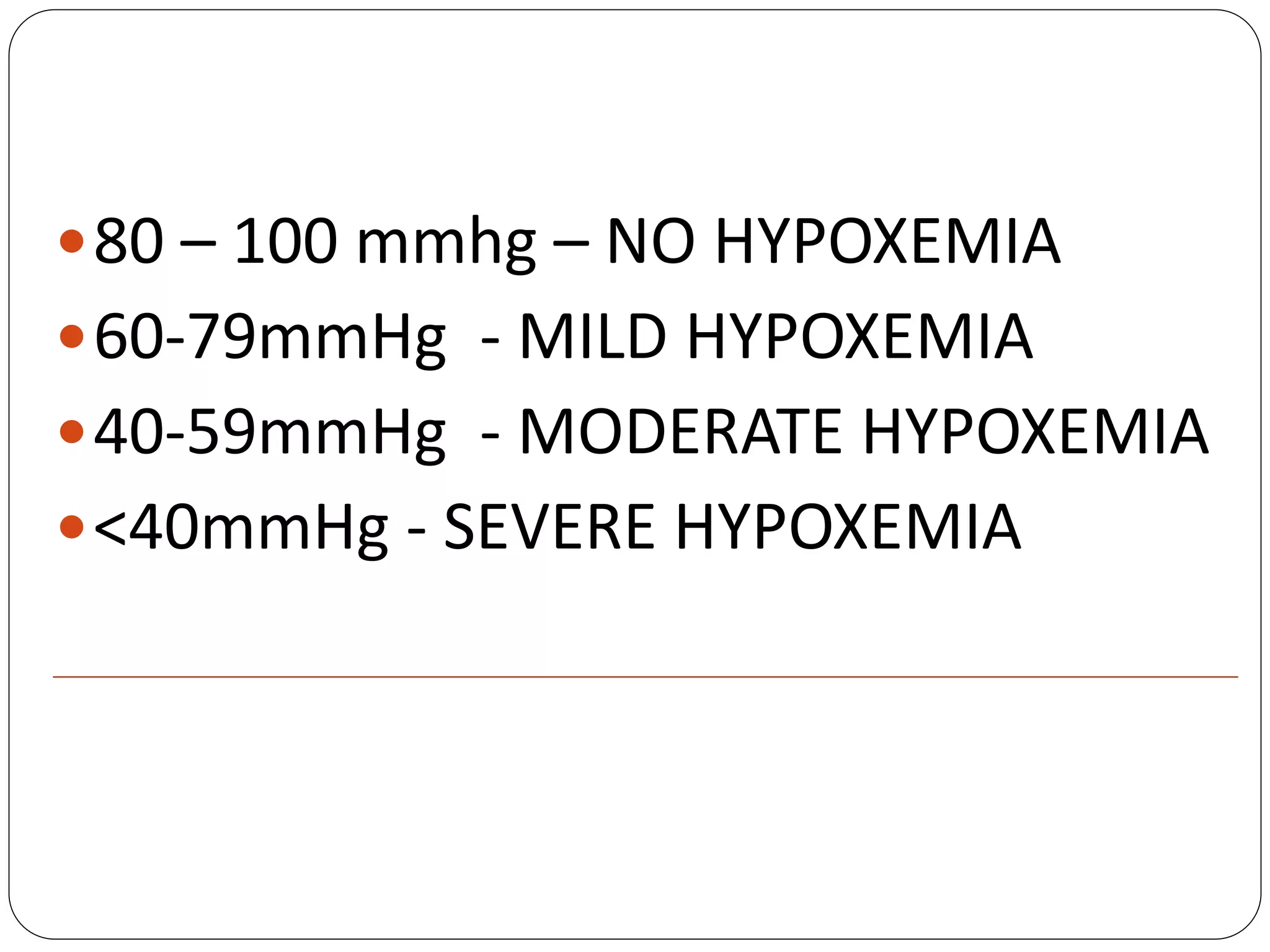
80 – 100 mmhg – NO HYPOXEMIA
60-79mmHg - MILD HYPOXEMIA
40-59mmHg - MODERATE HYPOXEMIA
<40mmHg - SEVERE HYPOXEMIA
PH – 7. 41
PCO2 – 55
HCO3 – 30
O2 - 50
METABOLIC ALKA FULLY COMPENSATED
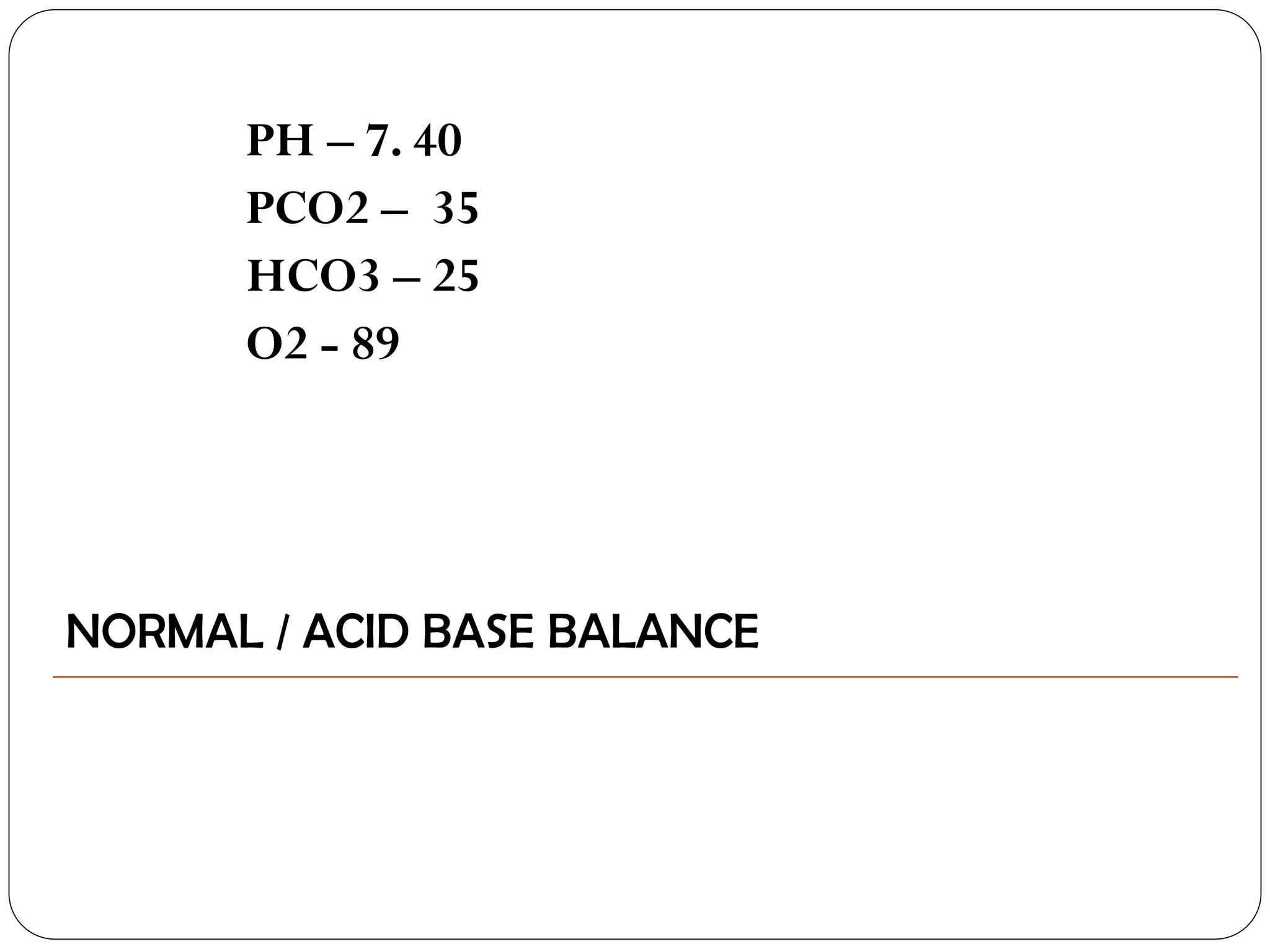
PH – 7. 40
PCO2 – 35
HCO3 – 25
O2 - 89
NORMAL / ACID BASE BALANCE

ACID-BASE-BALANCE (1).pdf

  • 1.
  • 2.
  • 3.
    Normal Values PH –7.35 – 7.45 PaCO2 – 35 - 45 mmHg HCO3 – 22 -26 meq/L
  • 4.
    •Mild Hypoxemia (60-79mmHg) •ModerateHypoxemia (40-59mmHg) •Severe Hypoxemia (less than 40mmHg)
  • 5.
    The patient hasbeen taken blood samples for ABG Analysis. As a nurse what will be your interpretation of the Acid Base and Balance of the Body if the patient has the following lab findings: PH – 7. 32 PCO2 – 50 HCO3 - 30
  • 6.
    1. IDENTIFY THEPH ALKALOSIS – if more than 7.45 ACIDOSIS – if less than 7.35 NormaALKA – 7.41 – 7.45 NormalACI – 7.35 – 7.39
  • 7.
    PH – 7.32 PCO2 – 50 HCO3 - 30 acidosis ACIDOSIS
  • 8.
    2. IDENTIFY THECAUSE (RESPI / META) PaCO2 ACI – if more than 45mmHg ALKA – if less than 35 mmHg HCO3 ACI – If less than 22 ALKA – if more than 26
  • 9.
    2. IDENTIFY THECAUSE (RESPI / META) Identify who has the same state as the PH and that is the cause. PaCO2 (RESPIRATORY) HCO3 (METABOLIC)
  • 10.
    PH – 7.32 PCO2 – 50 HCO3 - 30 acidosis ACIDOSIS acidosis alkalosis RESPIRATORY
  • 11.
    3. IDENTIFY IFTHERE IS COMPENSATION Look at the remaining component: Uncompensated – normal Compensated – if opposite
  • 12.
    PH – 7.32 PCO2 – 50 HCO3 - 30 acidosis RESPIRATORY ACIDOSIS acidosis alkalosis opposite COMPENSATED
  • 13.
    4. IDENTIFY THETYPE COMPENSATION FULLY – if PH is Normal PARTIALLY – if PH isAbnormal
  • 14.
    PH – 7.32 PCO2 – 50 HCO3 - 30 acidosis RESPIRATORY ACIDOSIS acidosis alkalosis opposite COMPENSATED PARTIALLY COMPENSATED
  • 15.
  • 16.
    PH – 7.47 PCO2 – 57 HCO3 - 40 METABOLIC ALKALOSIS PARTIALLY COMPENSATED 1. Identify the PH 2. Determine the Cause 3. Identify if there is compensation 4. Determine the type of compensation
  • 17.
    PH – 7.60 PCO2 – 10 HCO3 - 21 RESIRATORY ALKALOSIS PARTIALLY COMPENSATED 1. Identify the PH 2. Determine the Cause 3. Identify if there is compensation 4. Determine the type of compensation
  • 18.
    PH – 7.30 PCO2 – 59 HCO3 - 25 RESIRATORY ACIDOSIS UNCOMPENSATED 1. Identify the PH 2. Determine the Cause 3. Identify if there is compensation 4. Determine the type of compensation
  • 19.
    PH – 7.43 PCO2 – 29 HCO3 - 15 RESPIRATORY ALKALOSIS FULLY COMPENSATED 1. Identify the PH 2. Determine the Cause 3. Identify if there is compensation 4. Determine the type of compensation
  • 20.
    PH – 7.37 PCO2 – 20 HCO3 – 20 METABOLIC ACIDOSIS FULLY COMPENSATED 1. Identify the PH 2. Determine the Cause 3. Identify if there is compensation 4. Determine the type of compensation
  • 21.
    PH – 7.22 PCO2 – 67 HCO3 – 50 RESPIRATORY ACIDOSIS PARTIALLY COMPENSATED
  • 22.
    PH – 7.10 PCO2 – 13 HCO3 – 9 METABOLIC ACIDOSIS PARTIALLY COMPENSATED
  • 23.
    PH – 7.49 PCO2 – 35 HCO3 – 28 METABOLIC ALKALOSIS UNCOMPENSATED
  • 24.
    80 – 100mmhg – NO HYPOXEMIA 60-79mmHg - MILD HYPOXEMIA 40-59mmHg - MODERATE HYPOXEMIA <40mmHg - SEVERE HYPOXEMIA
  • 25.
    PH – 7.41 PCO2 – 55 HCO3 – 30 O2 - 50 METABOLIC ALKA FULLY COMPENSATED
  • 26.
    PH – 7.40 PCO2 – 35 HCO3 – 25 O2 - 89 NORMAL / ACID BASE BALANCE