ACID PROPERTY
IN DDBS
ACID PROPERTY
ACID PROPERTY
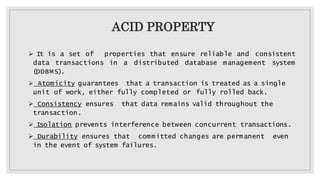
 It is a set of properties that ensure reliable and consistent
data transactions in a distributed database management system
(DDBMS).
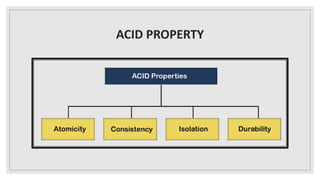
 Atomicity guarantees that a transaction is treated as a single
unit of work, either fully completed or fully rolled back.
 Consistency ensures that data remains valid throughout the
transaction.
 Isolation prevents interference between concurrent transactions.
 Durability ensures that committed changes are permanent even
in the event of system failures.
ATOMICITY
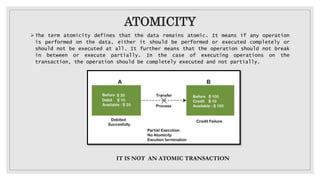
 The term atomicity defines that the data remains atomic. It means if any operation
is performed on the data, either it should be performed or executed completely or
should not be executed at all. It further means that the operation should not break
in between or execute partially. In the case of executing operations on the
transaction, the operation should be completely executed and not partially.
IT IS NOT AN ATOMIC TRANSACTION
Both debit and credit operations are done successfully.
Thus the transaction is atomic.
CONSISTENCY
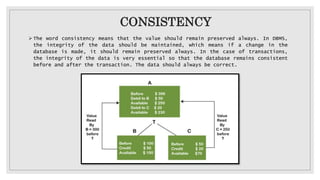
 The word consistency means that the value should remain preserved always. In DBMS,
the integrity of the data should be maintained, which means if a change in the
database is made, it should remain preserved always. In the case of transactions,
the integrity of the data is very essential so that the database remains consistent
before and after the transaction. The data should always be correct.
ISOLATIO
N
The term 'isolation' means separation.
In DBMS, Isolation is the property of a database where no data
should affect the other one and may occur concurrently.
In short, the operation on one database should begin when the
operation on the first database gets complete.
It means if two operations are being performed on two different
databases, they may not affect the value of one another.
In the case of transactions, when two or more transactions occur
simultaneously, the consistency should remain maintained.
Any changes that occur in any particular transaction will not be
seen by other transactions until the change is not committed in the
memory.
Independent execution of T1 & T2 by A
DURABILITY
 Durability ensures the permanency of something.
 In DBMS, the term durability ensures that the data after the
successful execution of the operation becomes permanent in the
database.
 The durability of the data should be so perfect that even if the
system fails or leads to a crash, the database still survives.
 However, if gets lost, it becomes the responsibility of the recovery
manager for ensuring the durability of the database.
 For committing the values, the COMMIT command must be used every time
we make changes.
CONCLUSION
 In conclusion, ACID properties play a crucial role in ensuring data
integrity in Distributed Database Management Systems.
 Atomicity, Consistency, Isolation, and Durability collectively
provide reliability,consistency,and durability to data transactions.
 By adhering to ACID principles, organizations can maintain the
integrity of their data, enable safe concurrent access, and ensure
the long-term persistence of their valuable information.
THANK YOU

ACID (ATOMICITY, CONSISTENCY,ISOLATION& DURABILITY)PROPERTY.pptx

  • 1.
  • 2.
  • 3.
    ACID PROPERTY  Itis a set of properties that ensure reliable and consistent data transactions in a distributed database management system (DDBMS).  Atomicity guarantees that a transaction is treated as a single unit of work, either fully completed or fully rolled back.  Consistency ensures that data remains valid throughout the transaction.  Isolation prevents interference between concurrent transactions.  Durability ensures that committed changes are permanent even in the event of system failures.
  • 4.
    ATOMICITY  The termatomicity defines that the data remains atomic. It means if any operation is performed on the data, either it should be performed or executed completely or should not be executed at all. It further means that the operation should not break in between or execute partially. In the case of executing operations on the transaction, the operation should be completely executed and not partially. IT IS NOT AN ATOMIC TRANSACTION
  • 5.
    Both debit andcredit operations are done successfully. Thus the transaction is atomic.
  • 6.
    CONSISTENCY  The wordconsistency means that the value should remain preserved always. In DBMS, the integrity of the data should be maintained, which means if a change in the database is made, it should remain preserved always. In the case of transactions, the integrity of the data is very essential so that the database remains consistent before and after the transaction. The data should always be correct.
  • 7.
    ISOLATIO N The term 'isolation'means separation. In DBMS, Isolation is the property of a database where no data should affect the other one and may occur concurrently. In short, the operation on one database should begin when the operation on the first database gets complete. It means if two operations are being performed on two different databases, they may not affect the value of one another. In the case of transactions, when two or more transactions occur simultaneously, the consistency should remain maintained. Any changes that occur in any particular transaction will not be seen by other transactions until the change is not committed in the memory.
  • 8.
  • 9.
    DURABILITY  Durability ensuresthe permanency of something.  In DBMS, the term durability ensures that the data after the successful execution of the operation becomes permanent in the database.  The durability of the data should be so perfect that even if the system fails or leads to a crash, the database still survives.  However, if gets lost, it becomes the responsibility of the recovery manager for ensuring the durability of the database.  For committing the values, the COMMIT command must be used every time we make changes.
  • 10.
    CONCLUSION  In conclusion,ACID properties play a crucial role in ensuring data integrity in Distributed Database Management Systems.  Atomicity, Consistency, Isolation, and Durability collectively provide reliability,consistency,and durability to data transactions.  By adhering to ACID principles, organizations can maintain the integrity of their data, enable safe concurrent access, and ensure the long-term persistence of their valuable information.
  • 11.