Definition of:
 Diffusion
 Cultural Lag
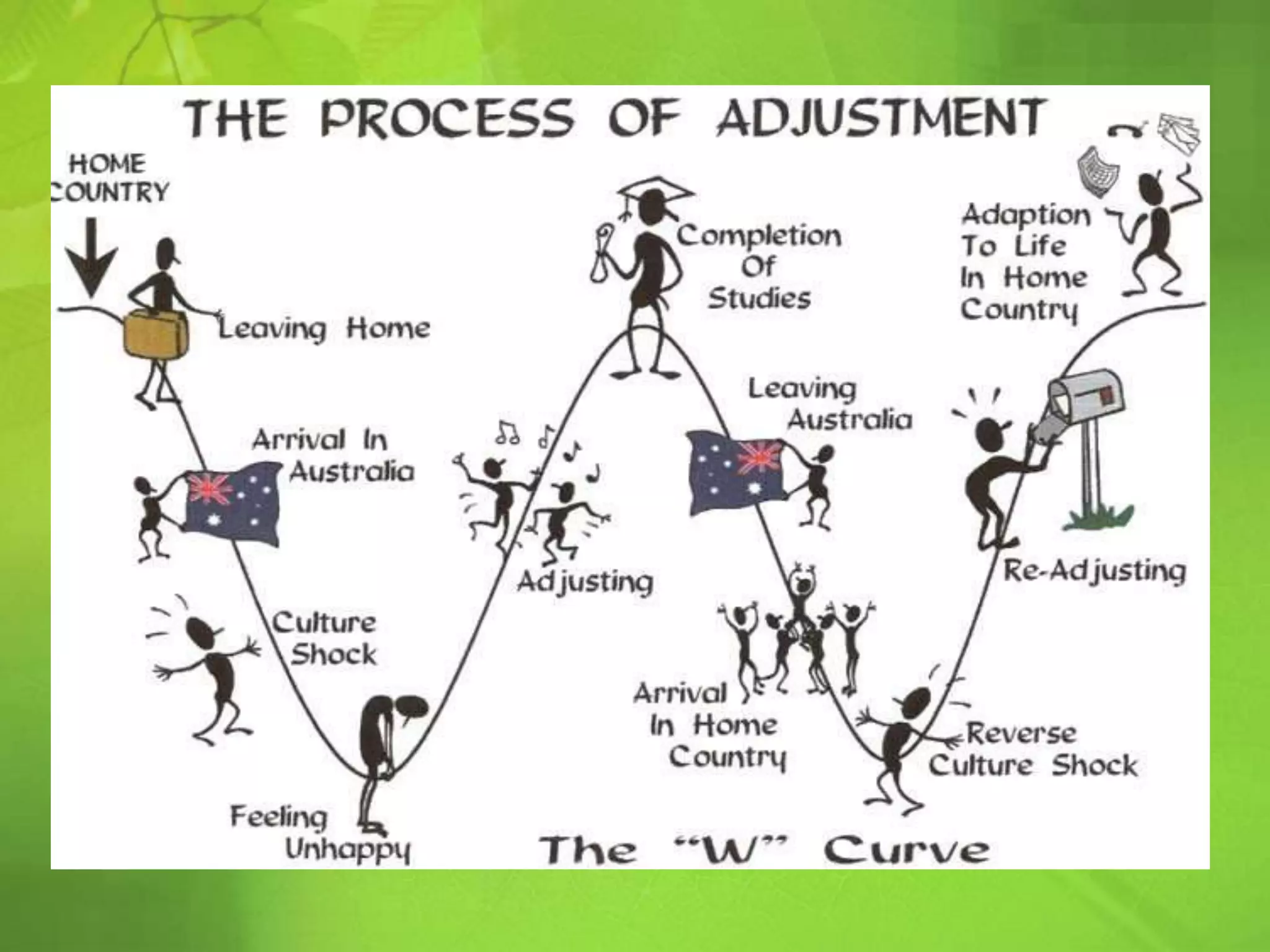
 Cultural Shock
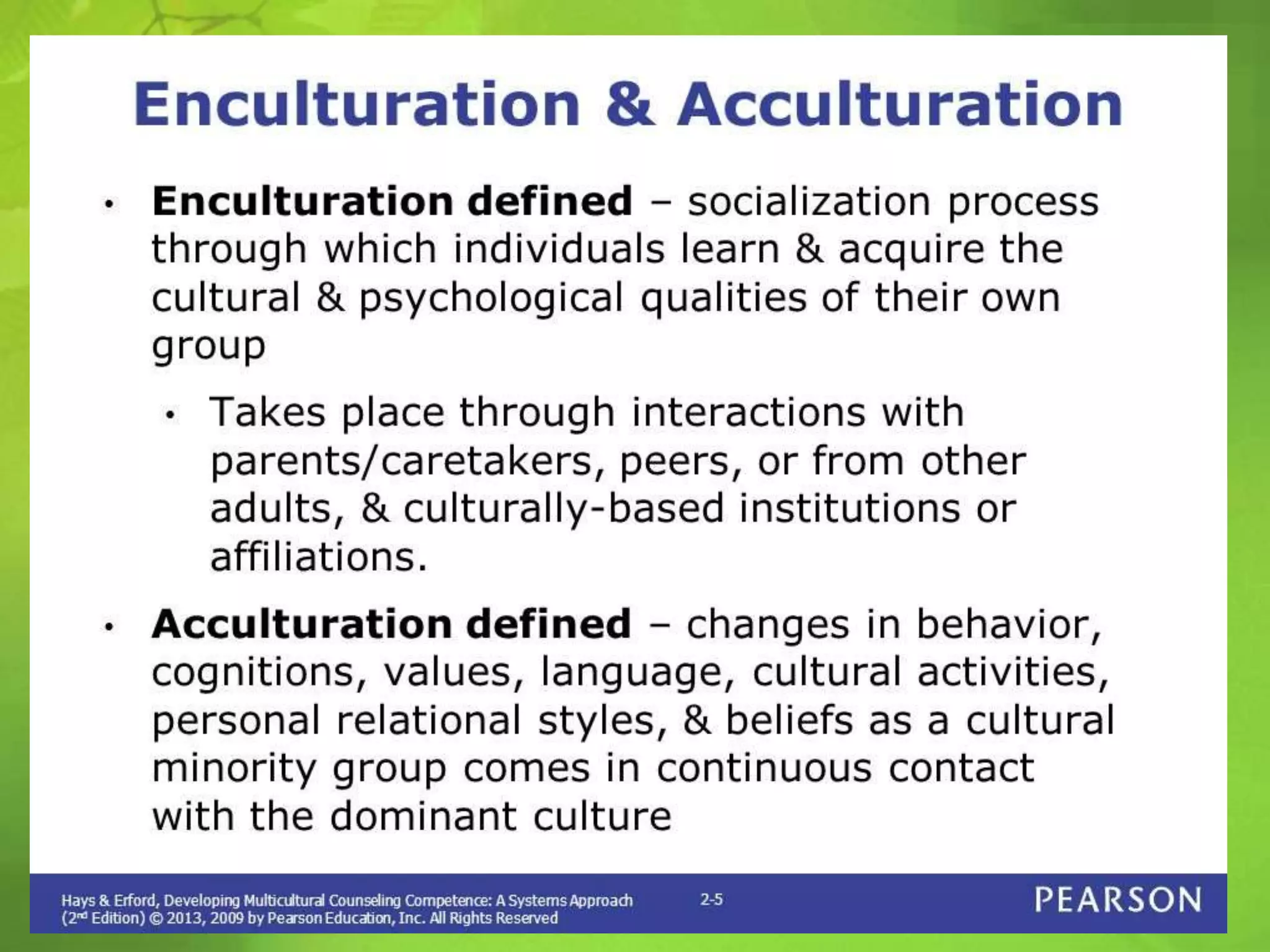
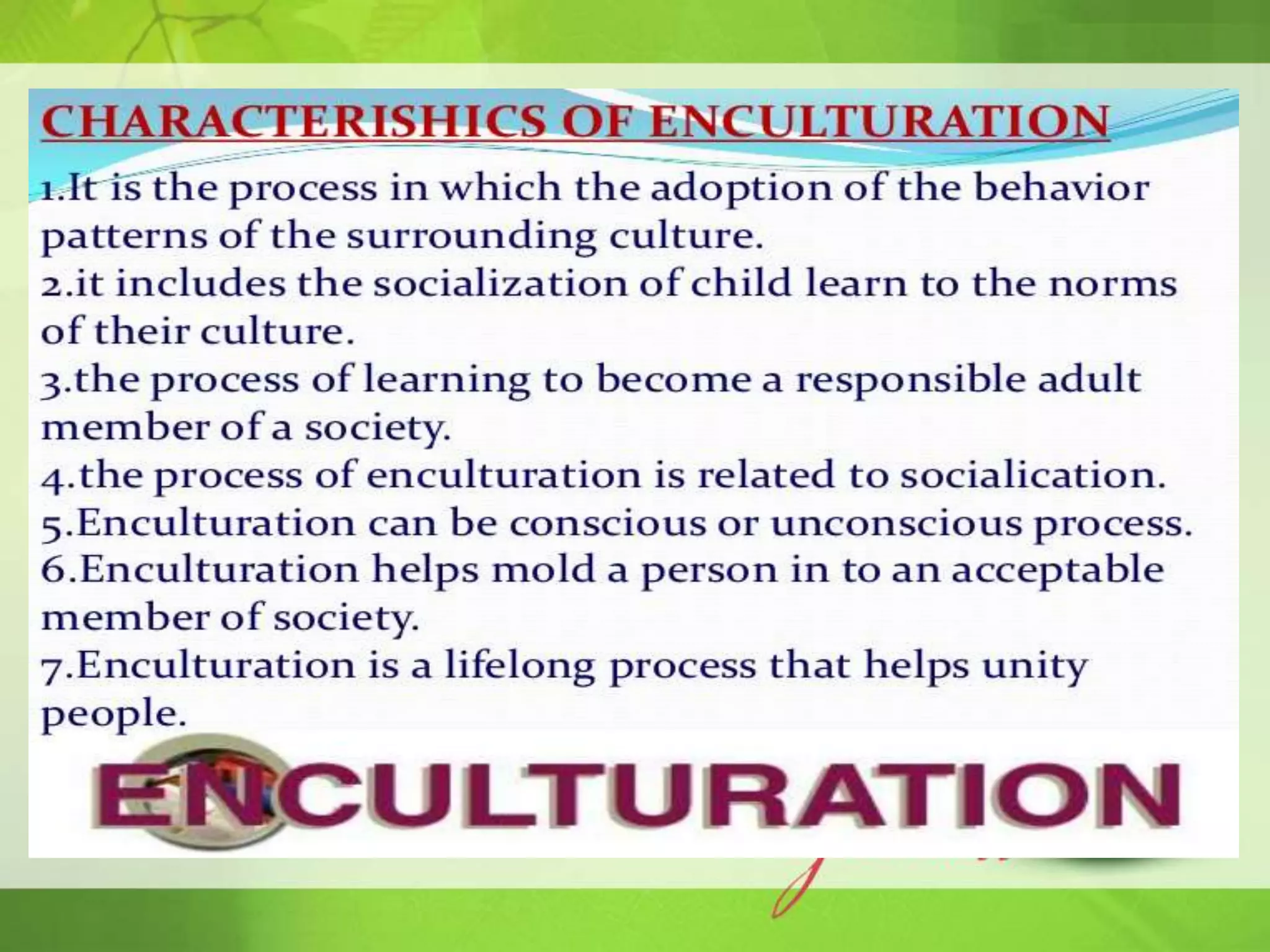
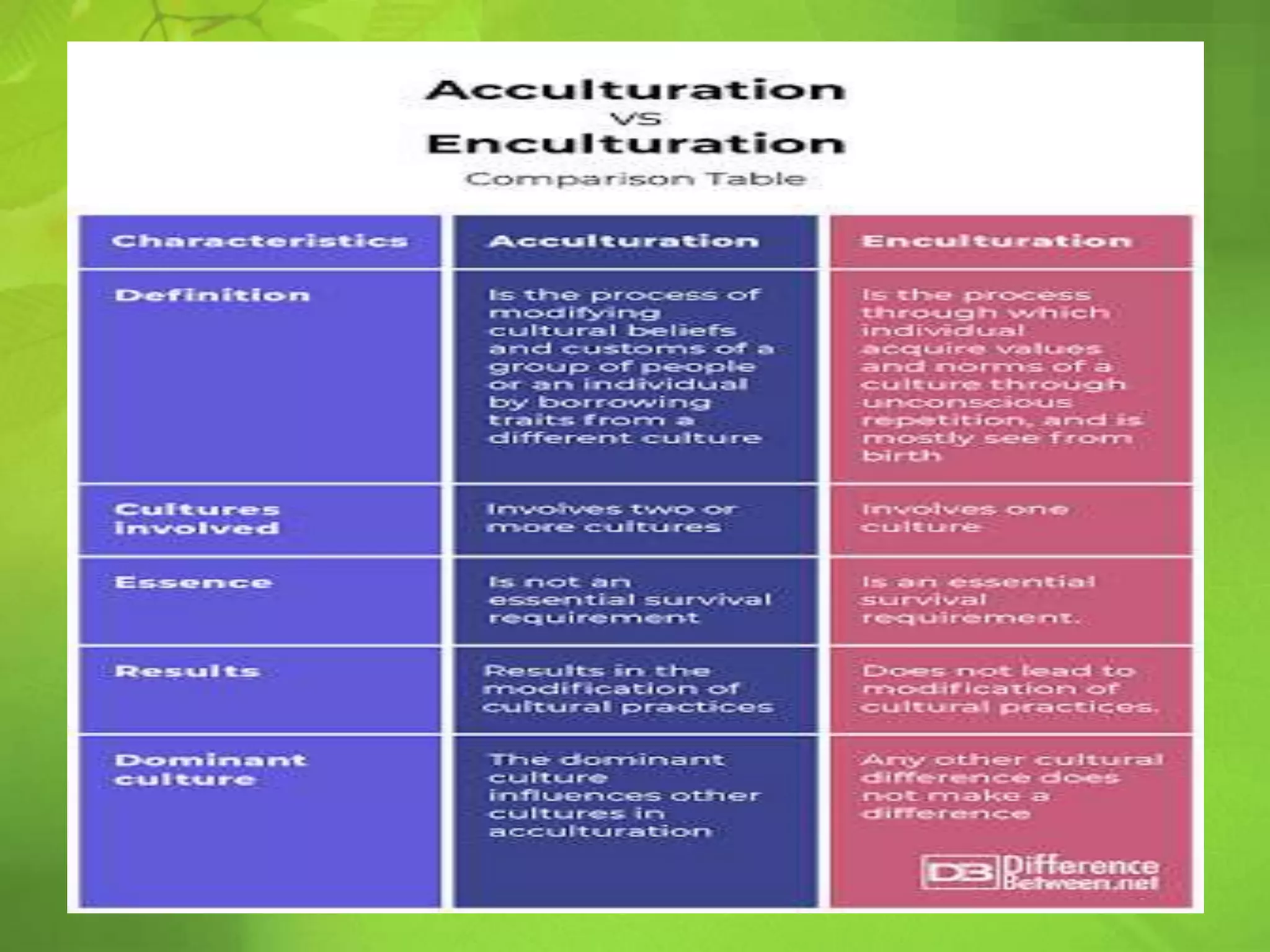
Acculturation and Enculturation
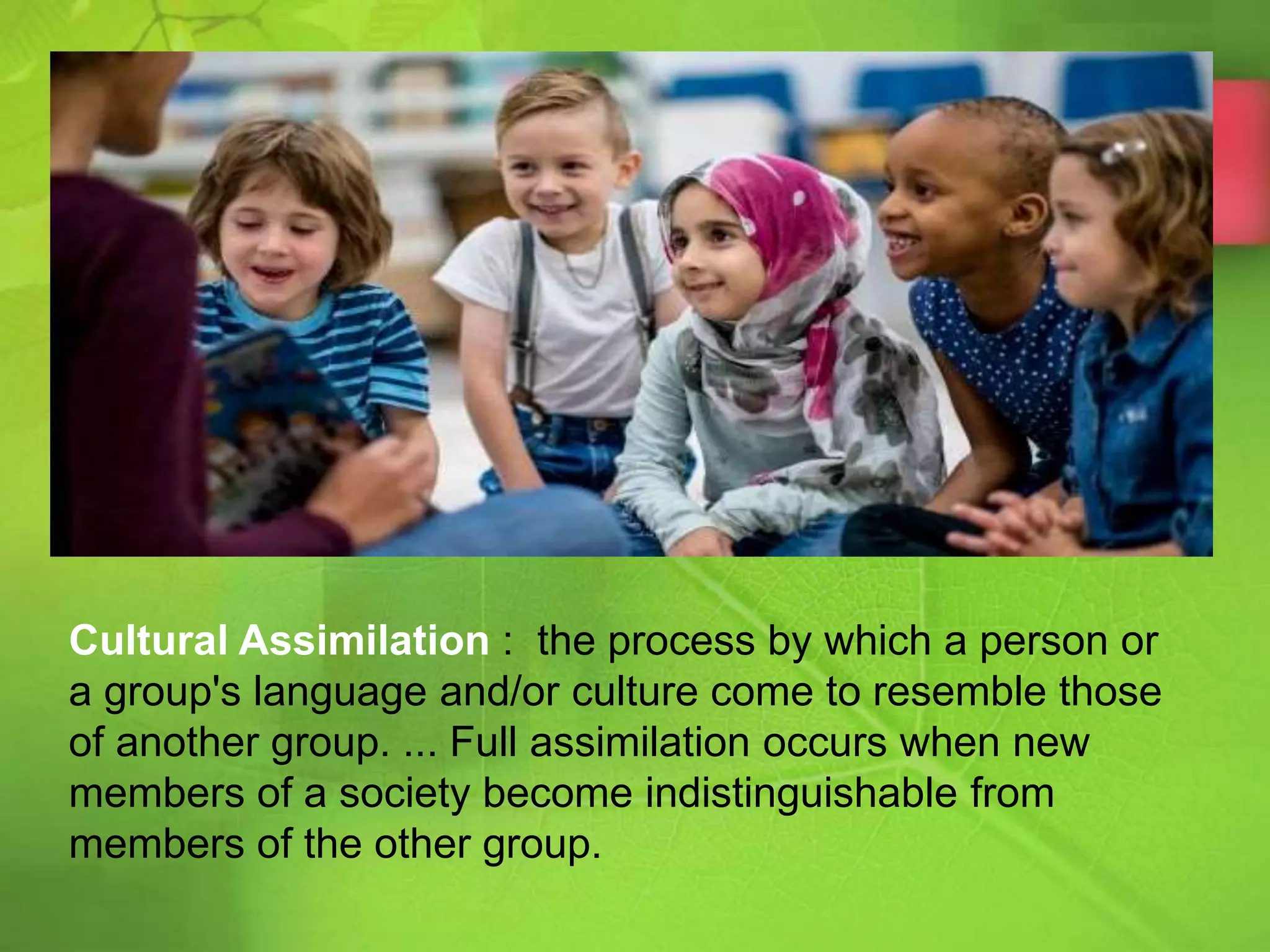
Cultural Assimilation : the process by which a person or
a group's language and/or culture come to resemble those
of another group. ... Full assimilation occurs when new
members of a society become indistinguishable from
members of the other group.
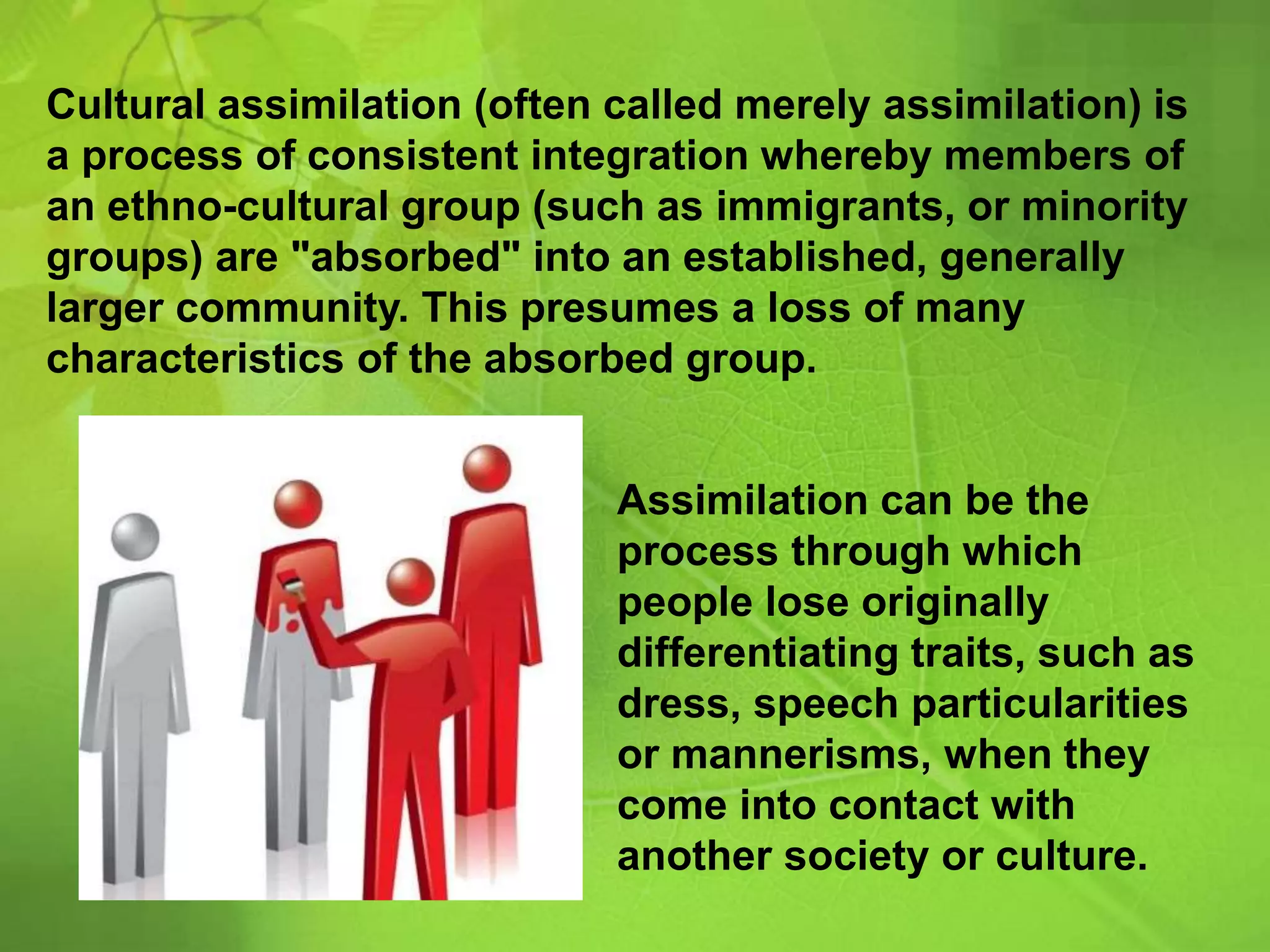
Cultural assimilation (often called merely assimilation) is
a process of consistent integration whereby members of
an ethno-cultural group (such as immigrants, or minority
groups) are "absorbed" into an established, generally
larger community. This presumes a loss of many
characteristics of the absorbed group.
Assimilation can be the
process through which
people lose originally
differentiating traits, such as
dress, speech particularities
or mannerisms, when they
come into contact with
another society or culture.
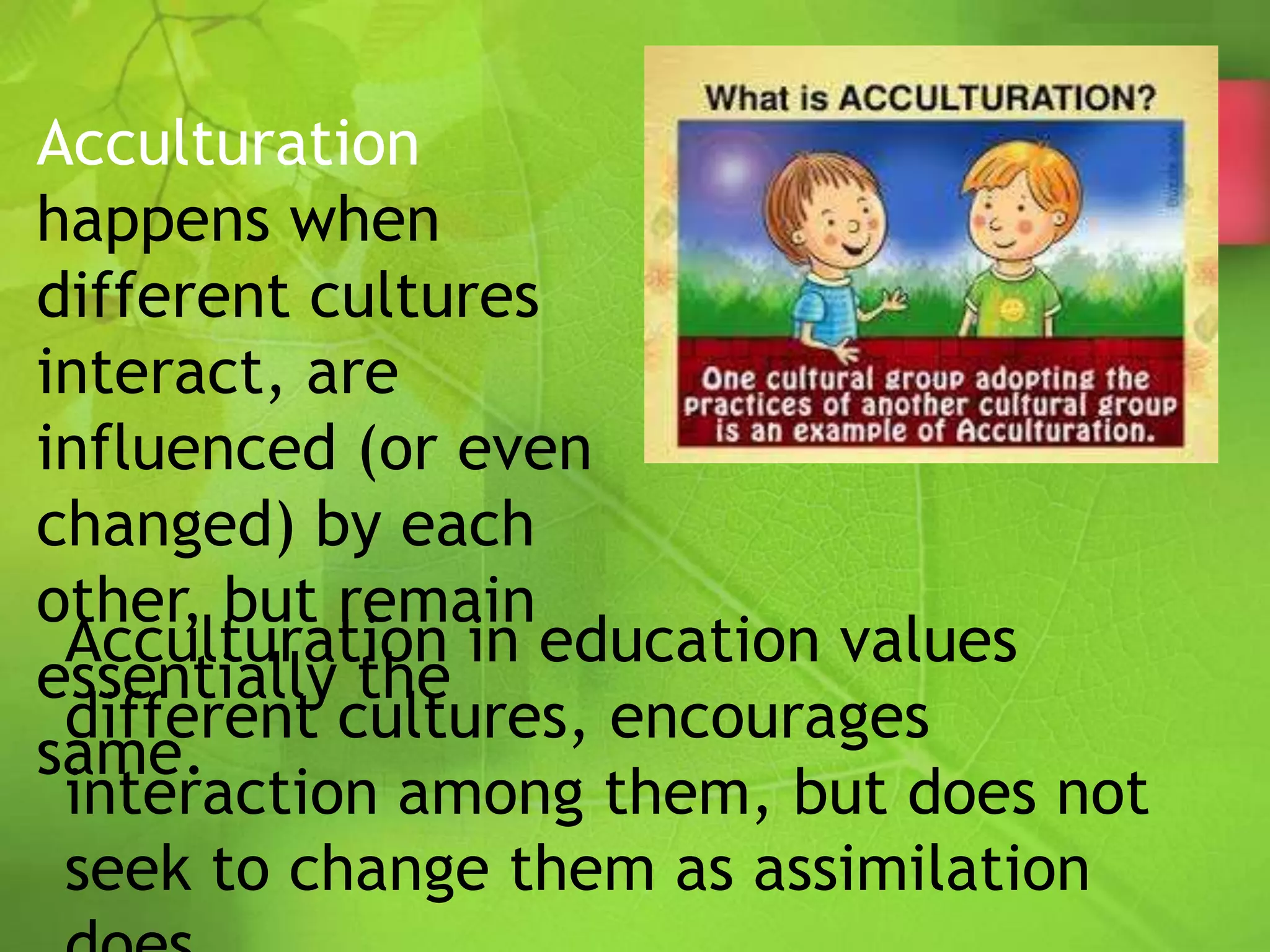
Acculturation
happens when
different cultures
interact, are
influenced (or even
changed) by each
other, but remain
essentially the
same.
Acculturation in education values
different cultures, encourages
interaction among them, but does not
seek to change them as assimilation
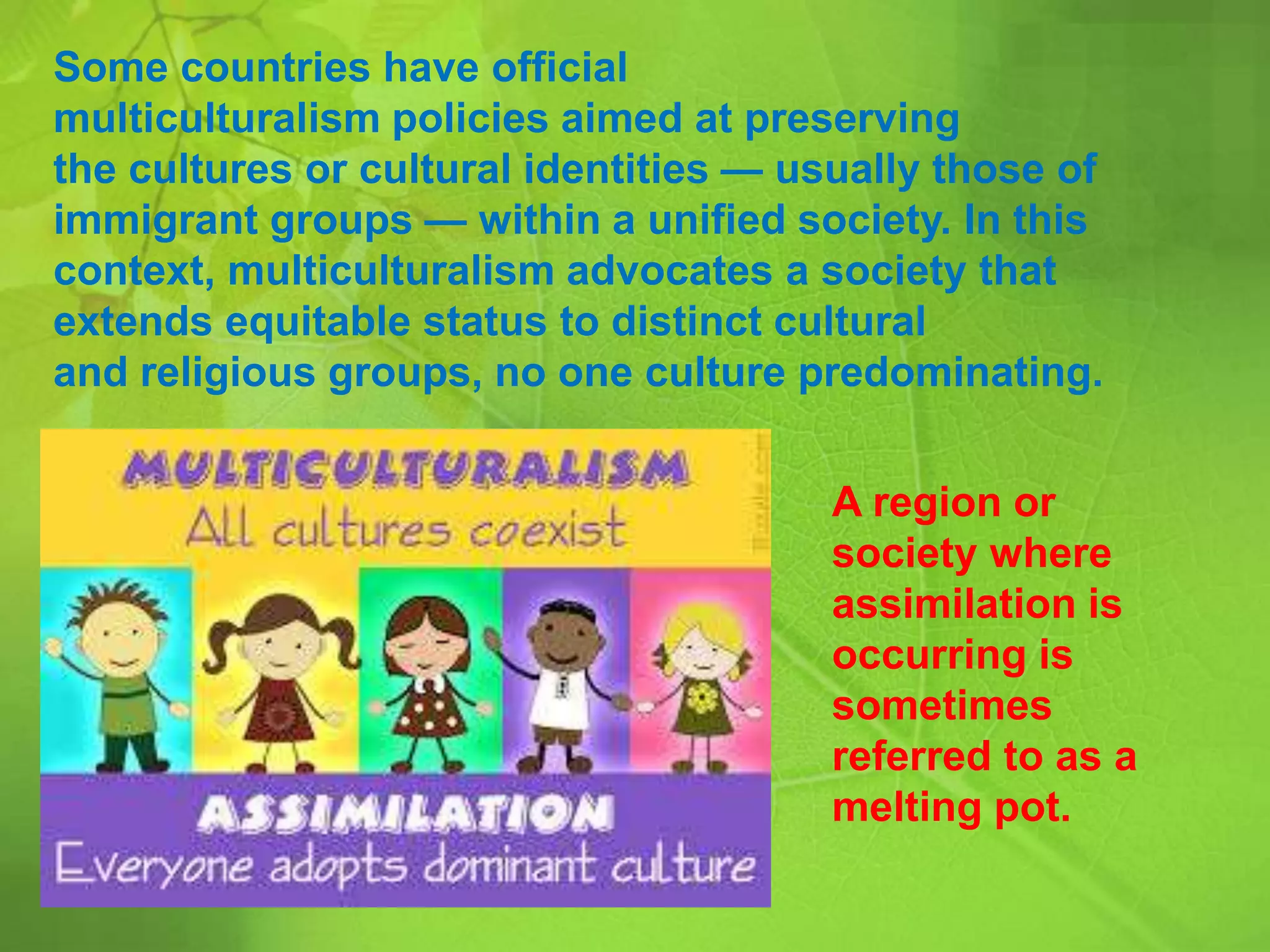
Some countries have official
multiculturalism policies aimed at preserving
the cultures or cultural identities — usually those of
immigrant groups — within a unified society. In this
context, multiculturalism advocates a society that
extends equitable status to distinct cultural
and religious groups, no one culture predominating.
A region or
society where
assimilation is
occurring is
sometimes
referred to as a
melting pot.
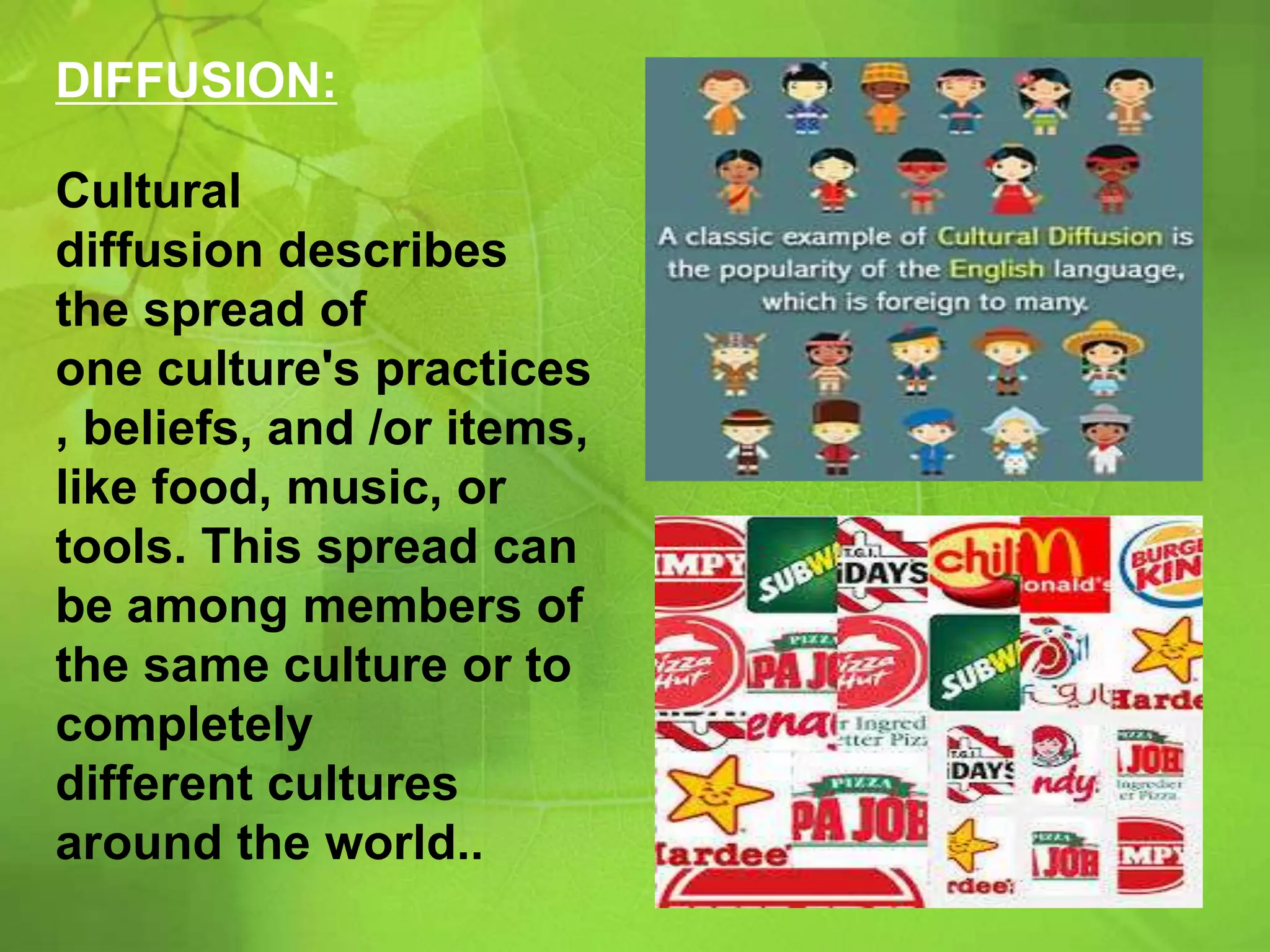
DIFFUSION:
Cultural
diffusion describes
the spread of
one culture's practices
, beliefs, and /or items,
like food, music, or
tools. This spread can
be among members of
the same culture or to
completely
different cultures
around the world..
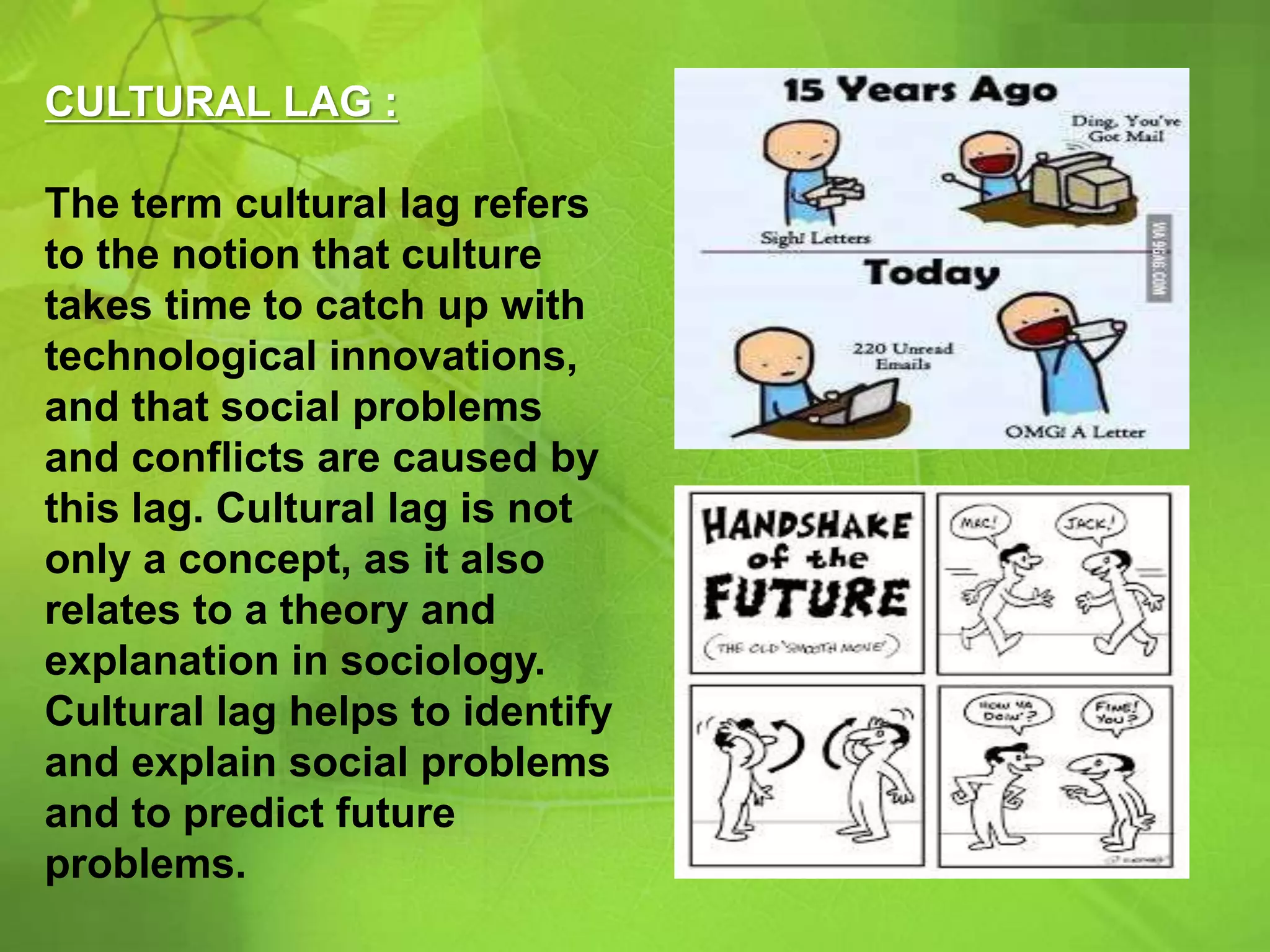
CULTURAL LAG :
The term cultural lag refers
to the notion that culture
takes time to catch up with
technological innovations,
and that social problems
and conflicts are caused by
this lag. Cultural lag is not
only a concept, as it also
relates to a theory and
explanation in sociology.
Cultural lag helps to identify
and explain social problems
and to predict future
problems.
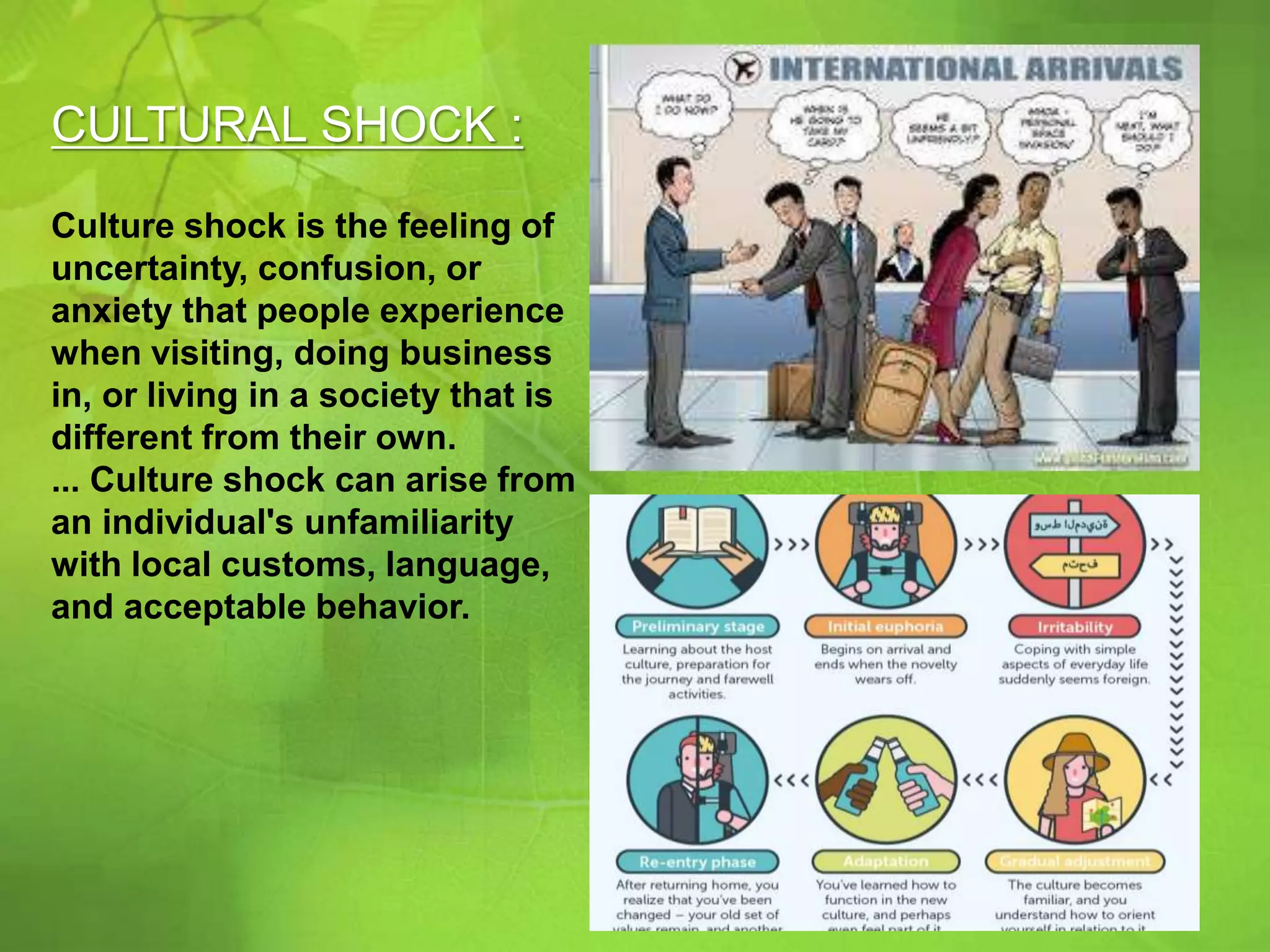
CULTURAL SHOCK :
Culture shock is the feeling of
uncertainty, confusion, or
anxiety that people experience
when visiting, doing business
in, or living in a society that is
different from their own.
... Culture shock can arise from
an individual's unfamiliarity
with local customs, language,
and acceptable behavior.
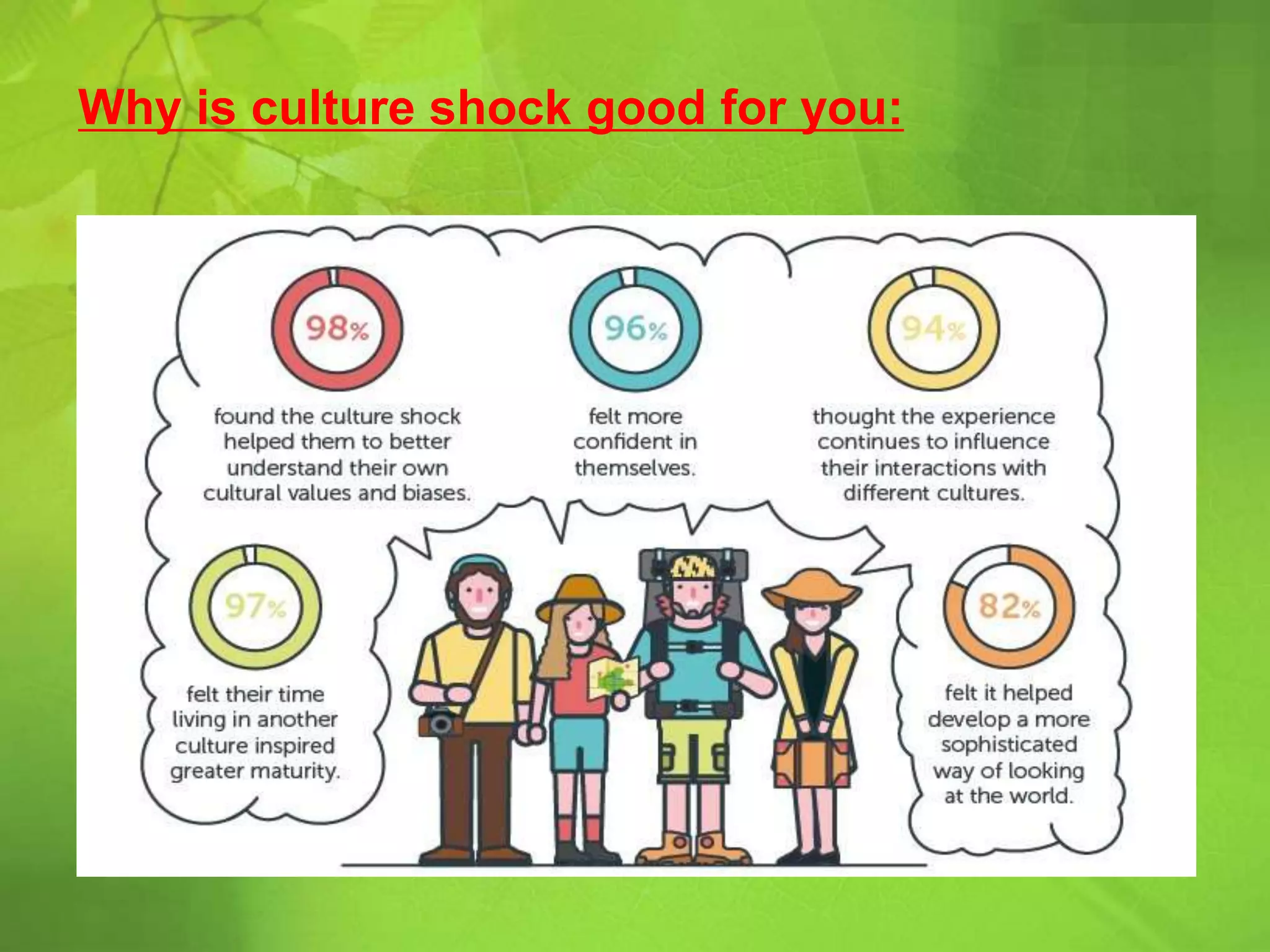
Why is culture shock good for you:
Acculturation and Assimilation the way to see the different views of a culture

Acculturation and Assimilation the way to see the different views of a culture

  • 1.
    Definition of:  Diffusion Cultural Lag  Cultural Shock Acculturation and Enculturation
  • 2.
    Cultural Assimilation :the process by which a person or a group's language and/or culture come to resemble those of another group. ... Full assimilation occurs when new members of a society become indistinguishable from members of the other group.
  • 3.
    Cultural assimilation (oftencalled merely assimilation) is a process of consistent integration whereby members of an ethno-cultural group (such as immigrants, or minority groups) are "absorbed" into an established, generally larger community. This presumes a loss of many characteristics of the absorbed group. Assimilation can be the process through which people lose originally differentiating traits, such as dress, speech particularities or mannerisms, when they come into contact with another society or culture.
  • 4.
    Acculturation happens when different cultures interact,are influenced (or even changed) by each other, but remain essentially the same. Acculturation in education values different cultures, encourages interaction among them, but does not seek to change them as assimilation
  • 8.
    Some countries haveofficial multiculturalism policies aimed at preserving the cultures or cultural identities — usually those of immigrant groups — within a unified society. In this context, multiculturalism advocates a society that extends equitable status to distinct cultural and religious groups, no one culture predominating. A region or society where assimilation is occurring is sometimes referred to as a melting pot.
  • 9.
    DIFFUSION: Cultural diffusion describes the spreadof one culture's practices , beliefs, and /or items, like food, music, or tools. This spread can be among members of the same culture or to completely different cultures around the world..
  • 10.
    CULTURAL LAG : Theterm cultural lag refers to the notion that culture takes time to catch up with technological innovations, and that social problems and conflicts are caused by this lag. Cultural lag is not only a concept, as it also relates to a theory and explanation in sociology. Cultural lag helps to identify and explain social problems and to predict future problems.
  • 11.
    CULTURAL SHOCK : Cultureshock is the feeling of uncertainty, confusion, or anxiety that people experience when visiting, doing business in, or living in a society that is different from their own. ... Culture shock can arise from an individual's unfamiliarity with local customs, language, and acceptable behavior.
  • 12.
    Why is cultureshock good for you: