_______Wish
 Accounts Payable: Accounts of money you owe. A
liability that is usually created when you've made a
purchase on credit.
 Accounts Receivable: Accounts of money owed to
you for the sale of goods or services.
 Accrual basis: A method of accounting where
transactions are recorded as they occur regardless of
when payment for that transaction is made or received
Accrued Assets: Assets from revenues
earned but not yet received.
Accrued Expenses: A liability
incurred during the accounting period
for which payment has not been made.
Accumulated Depreciation: The
running balance of the depreciation
taken on an asset.
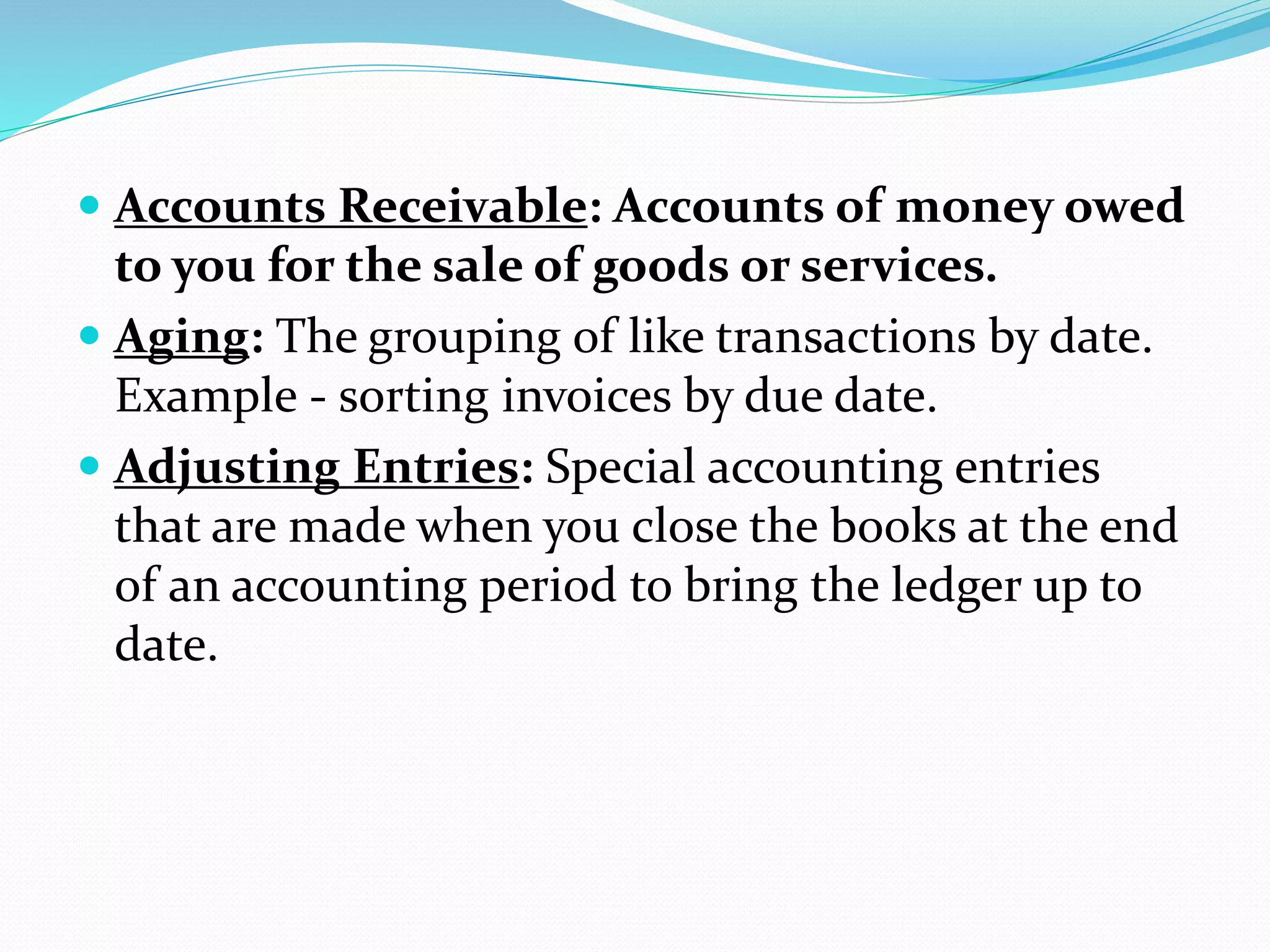
 Accounts Receivable: Accounts of money owed
to you for the sale of goods or services.
 Aging: The grouping of like transactions by date.
Example - sorting invoices by due date.
 Adjusting Entries: Special accounting entries
that are made when you close the books at the end
of an accounting period to bring the ledger up to
date.
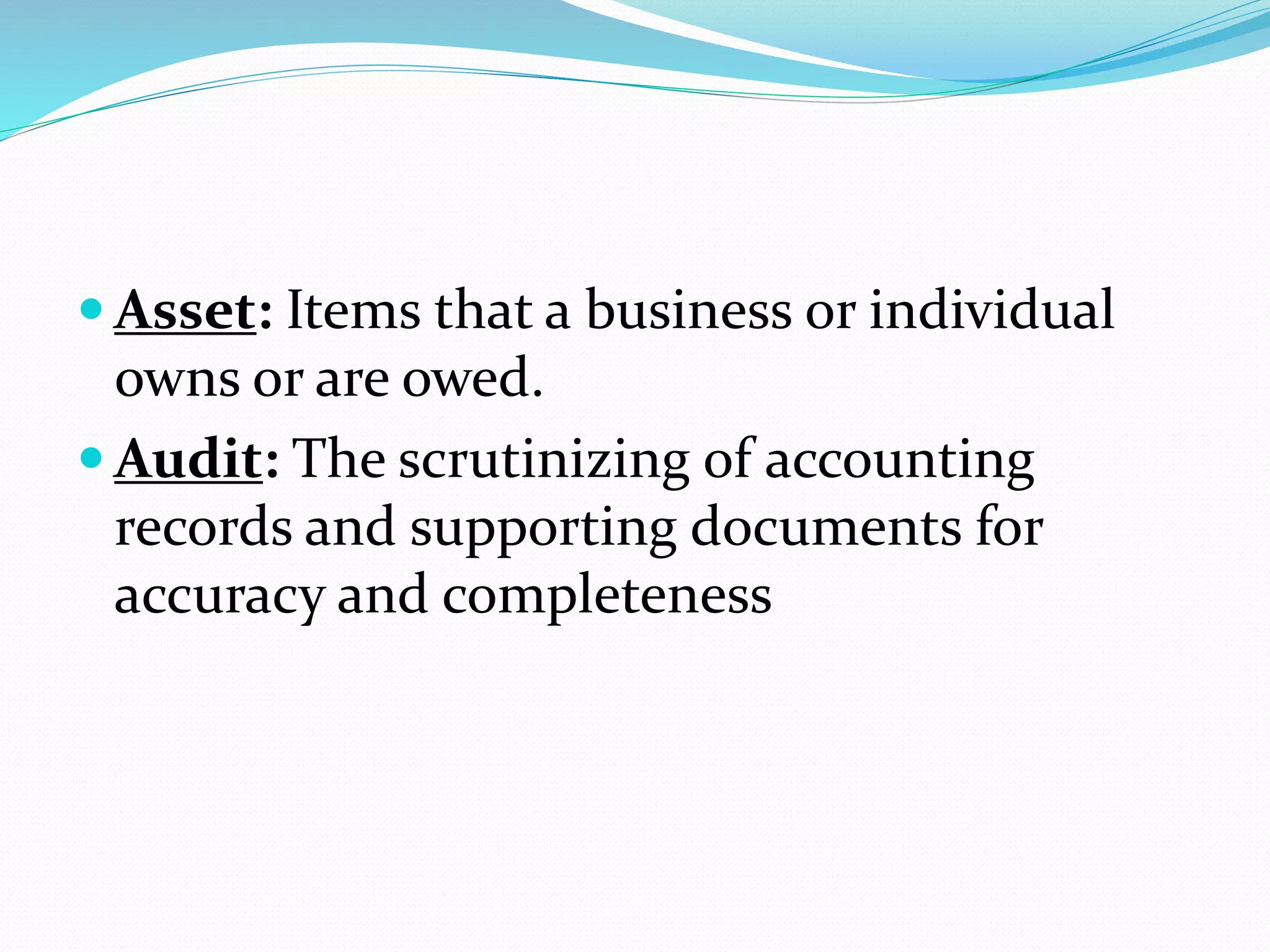
 Asset: Items that a business or individual
owns or are owed.
 Audit: The scrutinizing of accounting
records and supporting documents for
accuracy and completeness
 Bad Debt: An account or receivable that has
been deemed unrecoverable and written-off.
 Badwill (Negative Goodwill): The excess
amount of fair value of an asset or assets
over the purchase price.
 Balance Sheet: A statement listing the total
assets, liabilities, and owners' equity;
indicating the net worth of the company for
the given time period.
 .Bonds Payable: A long-term liability that represents
a promise to pay a sum of money plus interest at a
maturity date (a designated date in the future).
 Book Value of an Asset: Cost of the asset (the
amount that was paid for it) minus accumulated
depreciation
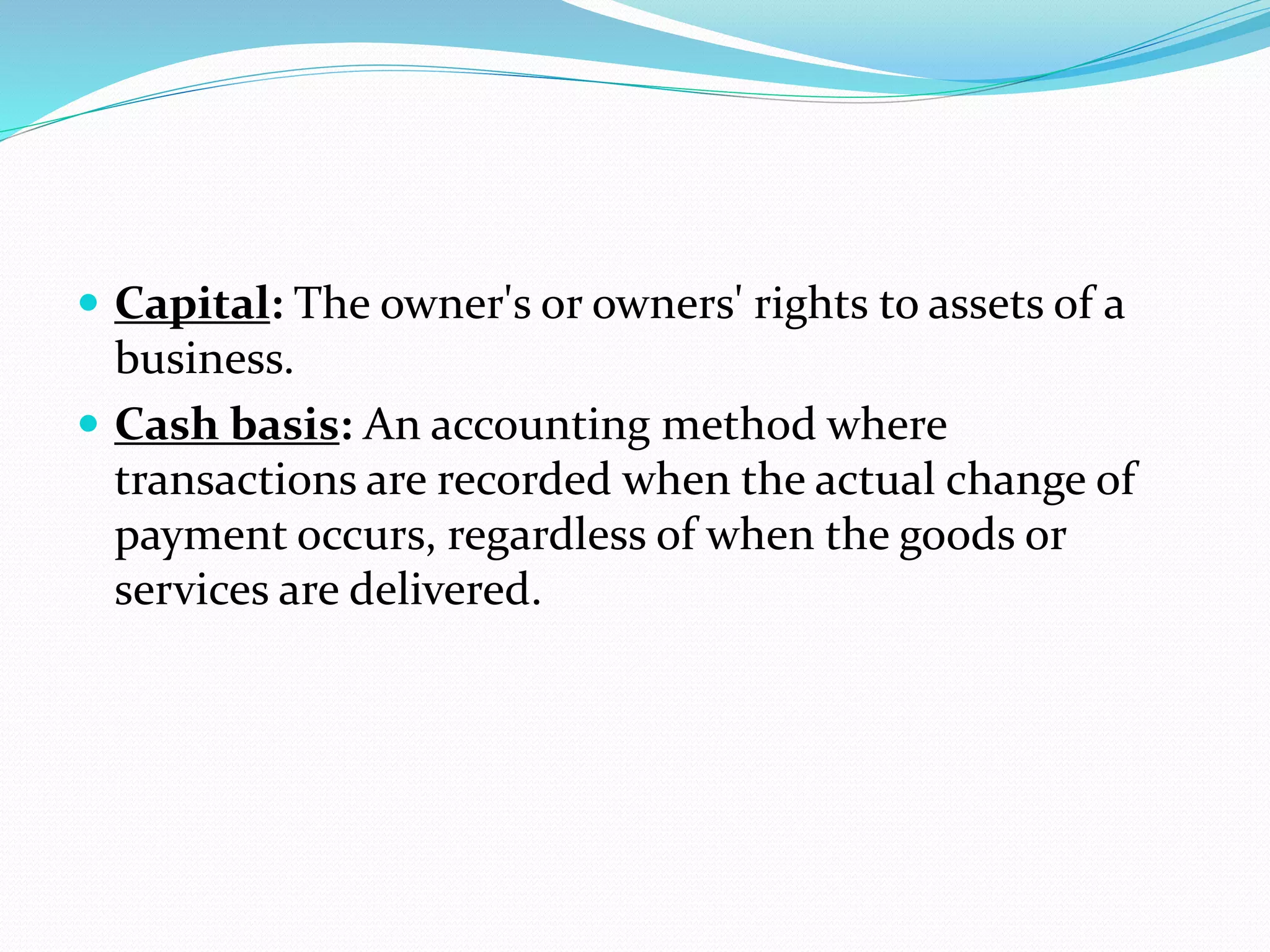
 Capital: The owner's or owners' rights to assets of a
business.
 Cash basis: An accounting method where
transactions are recorded when the actual change of
payment occurs, regardless of when the goods or
services are delivered.
 Cash equivalents: Highly liquid short-term
investments. Examples include money-market funds
and treasury bills.
 Certified Financial Statements: Financial
statements that have been audited and certified by a
CPA.
 Chart of accounts: A numerical listing of a business’s
accounts.
 Closing Entries: Journal entries made at the end of
the period to return the balance in all accounts to zero
and ready the account for the next reporting period..
 Contra account: An account that follows another
account and has a balance opposite of it. For example
accumulated depreciation is a contra asset account; it
would have a credit balance and be subtracted from
the asset's debit balance to obtain the book value or
carrying amount of the asset.
 Credit: An entry on the right side of an account -
decreases assets or increases liabilities.

 Debit: An entry on the left side of an account -
increases assets or decreases liabilities.
More terms here:
https://notesofwish.blogspot.com/
2018/04/accounting-terms.html
Depreciation: Dividends: Expenses: Extraordinary Gain or Loss:
Finished Goods Inventory: Fiscal: Form 941: Form 1099: General Ledger:
General partnership: Gross profit: Income statement: Intangibles:
Invoice: Journal: Just-in-Time: Ledger : Liability: Net sales:
Note payable: Operating Expenses : Owners' equity: Prepaid Expenses
Post: Purchase order: Retained earnings: Reversing Entry: Revenue:
Trial Balance:

Accounting terms

  • 1.
  • 2.
     Accounts Payable:Accounts of money you owe. A liability that is usually created when you've made a purchase on credit.  Accounts Receivable: Accounts of money owed to you for the sale of goods or services.  Accrual basis: A method of accounting where transactions are recorded as they occur regardless of when payment for that transaction is made or received
  • 3.
    Accrued Assets: Assetsfrom revenues earned but not yet received. Accrued Expenses: A liability incurred during the accounting period for which payment has not been made. Accumulated Depreciation: The running balance of the depreciation taken on an asset.
  • 4.
     Accounts Receivable:Accounts of money owed to you for the sale of goods or services.  Aging: The grouping of like transactions by date. Example - sorting invoices by due date.  Adjusting Entries: Special accounting entries that are made when you close the books at the end of an accounting period to bring the ledger up to date.
  • 5.
     Asset: Itemsthat a business or individual owns or are owed.  Audit: The scrutinizing of accounting records and supporting documents for accuracy and completeness
  • 6.
     Bad Debt:An account or receivable that has been deemed unrecoverable and written-off.  Badwill (Negative Goodwill): The excess amount of fair value of an asset or assets over the purchase price.  Balance Sheet: A statement listing the total assets, liabilities, and owners' equity; indicating the net worth of the company for the given time period.
  • 7.
     .Bonds Payable:A long-term liability that represents a promise to pay a sum of money plus interest at a maturity date (a designated date in the future).  Book Value of an Asset: Cost of the asset (the amount that was paid for it) minus accumulated depreciation
  • 8.
     Capital: Theowner's or owners' rights to assets of a business.  Cash basis: An accounting method where transactions are recorded when the actual change of payment occurs, regardless of when the goods or services are delivered.
  • 9.
     Cash equivalents:Highly liquid short-term investments. Examples include money-market funds and treasury bills.  Certified Financial Statements: Financial statements that have been audited and certified by a CPA.  Chart of accounts: A numerical listing of a business’s accounts.
  • 10.
     Closing Entries:Journal entries made at the end of the period to return the balance in all accounts to zero and ready the account for the next reporting period..  Contra account: An account that follows another account and has a balance opposite of it. For example accumulated depreciation is a contra asset account; it would have a credit balance and be subtracted from the asset's debit balance to obtain the book value or carrying amount of the asset.
  • 11.
     Credit: Anentry on the right side of an account - decreases assets or increases liabilities.   Debit: An entry on the left side of an account - increases assets or decreases liabilities.
  • 12.
    More terms here: https://notesofwish.blogspot.com/ 2018/04/accounting-terms.html Depreciation:Dividends: Expenses: Extraordinary Gain or Loss: Finished Goods Inventory: Fiscal: Form 941: Form 1099: General Ledger: General partnership: Gross profit: Income statement: Intangibles: Invoice: Journal: Just-in-Time: Ledger : Liability: Net sales: Note payable: Operating Expenses : Owners' equity: Prepaid Expenses Post: Purchase order: Retained earnings: Reversing Entry: Revenue: Trial Balance: