Accounting For Special
Transaction
Chapter 1
PARTNERSHIP
FORMATION
Chapter 1
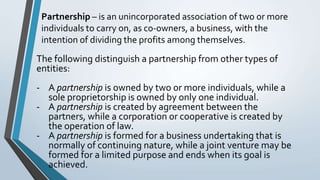
Partnership – is an unincorporated association of two or more
individuals to carry on, as co-owners, a business, with the
intention of dividing the profits among themselves.
The following distinguish a partnership from other types of
entities:
- A partnership is owned by two or more individuals, while a
sole proprietorship is owned by only one individual.
- A partnership is created by agreement between the
partners, while a corporation or cooperative is created by
the operation of law.
- A partnership is formed for a business undertaking that is
normally of continuing nature, while a joint venture may be
formed for a limited purpose and ends when its goal is
achieved.
Characteristics of a partnership
A. Ease of formation
B. Separate legal personality
C. Mutual agency
D. Co-ownership of property
E. Co-ownership of profits
F. Limited life
G. Transfer of ownership
H. Unlimited liabity
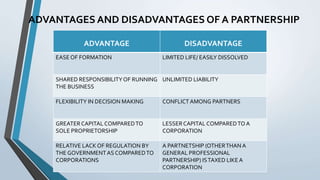
ADVANTAGE DISADVANTAGE
EASEOF FORMATION LIMITED LIFE/ EASILY DISSOLVED
SHARED RESPONSIBILITYOF RUNNING
THE BUSINESS
UNLIMITED LIABILITY
FLEXIBILITY IN DECISION MAKING CONFLICT AMONG PARTNERS
GREATERCAPITAL COMPAREDTO
SOLE PROPRIETORSHIP
LESSERCAPITAL COMPAREDTO A
CORPORATION
RELATIVE LACK OF REGULATION BY
THE GOVERNMENTAS COMPAREDTO
CORPORATIONS
A PARTNETSHIP (OTHERTHAN A
GENERAL PROFESSIONAL
PARTNERSHIP) ISTAXED LIKE A
CORPORATION
ADVANTAGES AND DISADVANTAGES OF A PARTNERSHIP
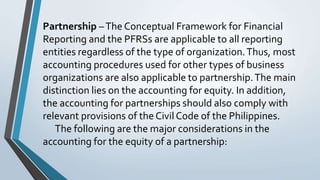
Partnership –The Conceptual Framework for Financial
Reporting and the PFRSs are applicable to all reporting
entities regardless of the type of organization.Thus, most
accounting procedures used for other types of business
organizations are also applicable to partnership.The main
distinction lies on the accounting for equity. In addition,
the accounting for partnerships should also comply with
relevant provisions of the Civil Code of the Philippines.
The following are the major considerations in the
accounting for the equity of a partnership:
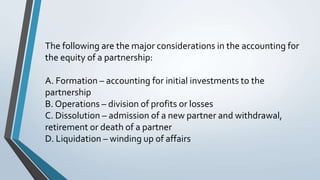
The following are the major considerations in the accounting for
the equity of a partnership:
A. Formation – accounting for initial investments to the
partnership
B. Operations – division of profits or losses
C. Dissolution – admission of a new partner and withdrawal,
retirement or death of a partner
D. Liquidation – winding up of affairs
Formation
A contract of partnership is consensual. It is created by the
agreement of the partners which may be constituted in any
form, such as oral or written.
However,Articles 1771 and 177 of the Phil. Civil code require
that a partnership agreement must be made in a public
instrument and recorded with the securities and exchange
commission SEC when:
a. immovable property or real right are contributed to the
partnership eg, PPE
B. the partnership has a capital of 3000 or more
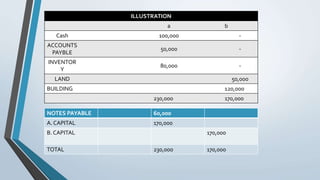
ILLUSTRATION
a b
Cash 100,000 -
ACCOUNTS
PAYBLE
50,000 -
INVENTOR
Y
80,000 -
LAND 50,000
BUILDING 120,000
230,000 170,000
NOTES PAYABLE 60,000
A. CAPITAL 170,000
B. CAPITAL 170,000
TOTAL 230,000 170,000
INCLUDE IN ACCOUNTS RECEIVABLE IS AN ACCOUNT AMOUTING TO 20,000WHICH IS DEEMED
UNCOLLECTIBLE.
THE INVENTORY HAS AN ESTIMATED SELLING PRICE OF 100,000 AND ESTIMATED COSTSTO SELL OF
10,000
THE PARTNERSHIP ASSUMED A 10,000 UNPAID MORTGAGE ONTHE LAND
THE BUILDING IS UNDER-DEPRECIATED BY 25,000
THERE IS AN UNPAID MORTGAGE OF 15,000 ONTHE BUILDINGWHICH B AGREEDTO SETTLE USING
HIS PERSONAL FUNDS.
THE NOTE PAYABLE IS STATED AT FACE AMOUNT. A PROPERVALUATION REQUIRESTHE
RECOGNITION OF A 15,000 DISCOUNT ON NOTE PAYABLE
A AND B SHALL SHARE IN PROFITS AND LOSSES ON A 60:40 RATIO, RESPECTIVELY
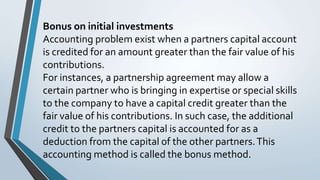
Bonus on initial investments
Accounting problem exist when a partners capital account
is credited for an amount greater than the fair value of his
contributions.
For instances, a partnership agreement may allow a
certain partner who is bringing in expertise or special skills
to the company to have a capital credit greater than the
fair value of his contributions. In such case, the additional
credit to the partners capital is accounted for as a
deduction from the capital of the other partners.This
accounting method is called the bonus method.
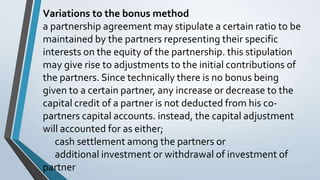
Variations to the bonus method
a partnership agreement may stipulate a certain ratio to be
maintained by the partners representing their specific
interests on the equity of the partnership. this stipulation
may give rise to adjustments to the initial contributions of
the partners. Since technically there is no bonus being
given to a certain partner, any increase or decrease to the
capital credit of a partner is not deducted from his co-
partners capital accounts. instead, the capital adjustment
will accounted for as either;
cash settlement among the partners or
additional investment or withdrawal of investment of
partner

Accounting-For-Special-Transactionss.pptx

  • 1.
  • 2.
  • 3.
    Partnership – isan unincorporated association of two or more individuals to carry on, as co-owners, a business, with the intention of dividing the profits among themselves. The following distinguish a partnership from other types of entities: - A partnership is owned by two or more individuals, while a sole proprietorship is owned by only one individual. - A partnership is created by agreement between the partners, while a corporation or cooperative is created by the operation of law. - A partnership is formed for a business undertaking that is normally of continuing nature, while a joint venture may be formed for a limited purpose and ends when its goal is achieved.
  • 4.
    Characteristics of apartnership A. Ease of formation B. Separate legal personality C. Mutual agency D. Co-ownership of property E. Co-ownership of profits F. Limited life G. Transfer of ownership H. Unlimited liabity
  • 5.
    ADVANTAGE DISADVANTAGE EASEOF FORMATIONLIMITED LIFE/ EASILY DISSOLVED SHARED RESPONSIBILITYOF RUNNING THE BUSINESS UNLIMITED LIABILITY FLEXIBILITY IN DECISION MAKING CONFLICT AMONG PARTNERS GREATERCAPITAL COMPAREDTO SOLE PROPRIETORSHIP LESSERCAPITAL COMPAREDTO A CORPORATION RELATIVE LACK OF REGULATION BY THE GOVERNMENTAS COMPAREDTO CORPORATIONS A PARTNETSHIP (OTHERTHAN A GENERAL PROFESSIONAL PARTNERSHIP) ISTAXED LIKE A CORPORATION ADVANTAGES AND DISADVANTAGES OF A PARTNERSHIP
  • 6.
    Partnership –The ConceptualFramework for Financial Reporting and the PFRSs are applicable to all reporting entities regardless of the type of organization.Thus, most accounting procedures used for other types of business organizations are also applicable to partnership.The main distinction lies on the accounting for equity. In addition, the accounting for partnerships should also comply with relevant provisions of the Civil Code of the Philippines. The following are the major considerations in the accounting for the equity of a partnership:
  • 7.
    The following arethe major considerations in the accounting for the equity of a partnership: A. Formation – accounting for initial investments to the partnership B. Operations – division of profits or losses C. Dissolution – admission of a new partner and withdrawal, retirement or death of a partner D. Liquidation – winding up of affairs
  • 8.
    Formation A contract ofpartnership is consensual. It is created by the agreement of the partners which may be constituted in any form, such as oral or written. However,Articles 1771 and 177 of the Phil. Civil code require that a partnership agreement must be made in a public instrument and recorded with the securities and exchange commission SEC when: a. immovable property or real right are contributed to the partnership eg, PPE B. the partnership has a capital of 3000 or more
  • 9.
    ILLUSTRATION a b Cash 100,000- ACCOUNTS PAYBLE 50,000 - INVENTOR Y 80,000 - LAND 50,000 BUILDING 120,000 230,000 170,000 NOTES PAYABLE 60,000 A. CAPITAL 170,000 B. CAPITAL 170,000 TOTAL 230,000 170,000
  • 10.
    INCLUDE IN ACCOUNTSRECEIVABLE IS AN ACCOUNT AMOUTING TO 20,000WHICH IS DEEMED UNCOLLECTIBLE. THE INVENTORY HAS AN ESTIMATED SELLING PRICE OF 100,000 AND ESTIMATED COSTSTO SELL OF 10,000 THE PARTNERSHIP ASSUMED A 10,000 UNPAID MORTGAGE ONTHE LAND THE BUILDING IS UNDER-DEPRECIATED BY 25,000 THERE IS AN UNPAID MORTGAGE OF 15,000 ONTHE BUILDINGWHICH B AGREEDTO SETTLE USING HIS PERSONAL FUNDS. THE NOTE PAYABLE IS STATED AT FACE AMOUNT. A PROPERVALUATION REQUIRESTHE RECOGNITION OF A 15,000 DISCOUNT ON NOTE PAYABLE A AND B SHALL SHARE IN PROFITS AND LOSSES ON A 60:40 RATIO, RESPECTIVELY
  • 11.
    Bonus on initialinvestments Accounting problem exist when a partners capital account is credited for an amount greater than the fair value of his contributions. For instances, a partnership agreement may allow a certain partner who is bringing in expertise or special skills to the company to have a capital credit greater than the fair value of his contributions. In such case, the additional credit to the partners capital is accounted for as a deduction from the capital of the other partners.This accounting method is called the bonus method.
  • 12.
    Variations to thebonus method a partnership agreement may stipulate a certain ratio to be maintained by the partners representing their specific interests on the equity of the partnership. this stipulation may give rise to adjustments to the initial contributions of the partners. Since technically there is no bonus being given to a certain partner, any increase or decrease to the capital credit of a partner is not deducted from his co- partners capital accounts. instead, the capital adjustment will accounted for as either; cash settlement among the partners or additional investment or withdrawal of investment of partner