STEP ONE
Identify the specific goals and targets you will monitor.
Choose your goals
In step one we will:
1
2
3
Learn more about the Sustainable Development Goals.
Explore young people’s priorities in YOUR country.
• The SDGs replaced the Millennium Development Goals.
• Consulted over 7 million people.
SDGs: WHERE DO THEY COME FROM?
Data revolution
The rapid increase of new forms of data; how they are
shared and how they are used.
Transparency
When governments, companies, organisations and individuals
operate in a way that is easy for others to see their actions,
plans, processes, rules and the information they hold.
KEY TERMS
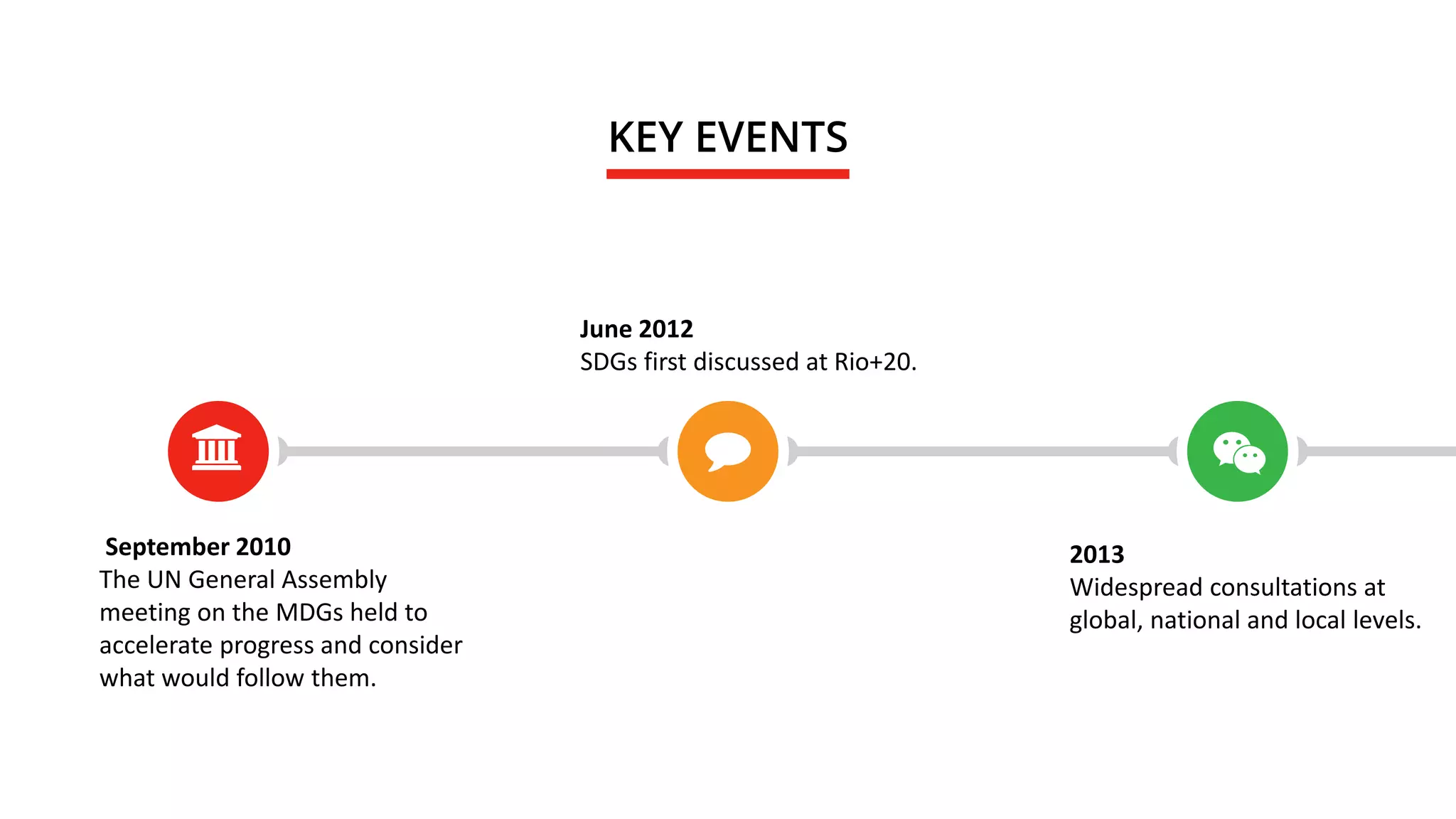
September 2010
The UN General Assembly
meeting on the MDGs held to
accelerate progress and consider
what would follow them.
June 2012
SDGs first discussed at Rio+20.
2013
Widespread consultations at
global, national and local levels.
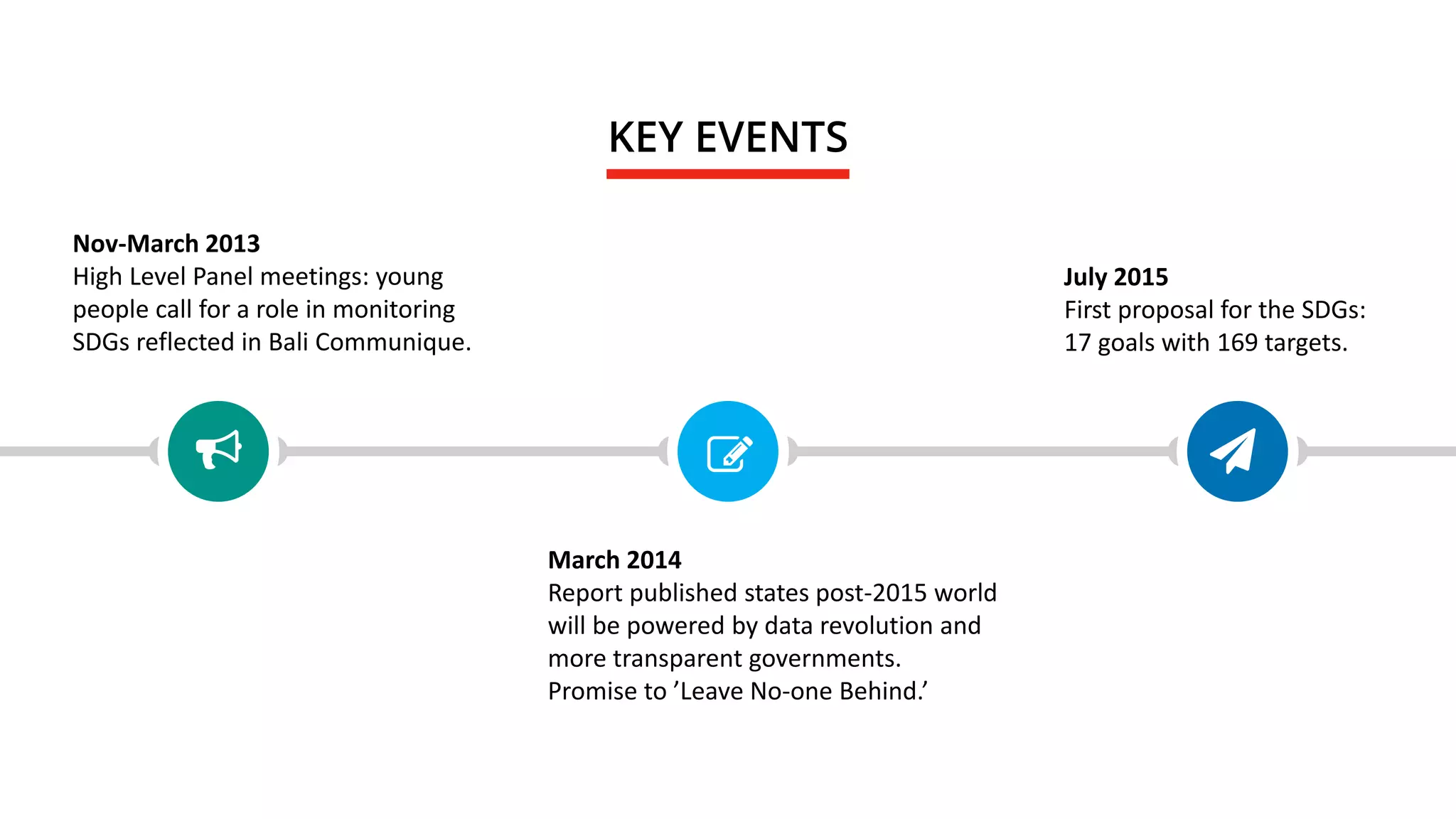
KEY EVENTS
Nov-March 2013
High Level Panel meetings: young
people call for a role in monitoring
SDGs reflected in Bali Communique.
March 2014
Report published states post-2015 world
will be powered by data revolution and
more transparent governments.
Promise to ’Leave No-one Behind.’
July 2015
First proposal for the SDGs:
17 goals with 169 targets.
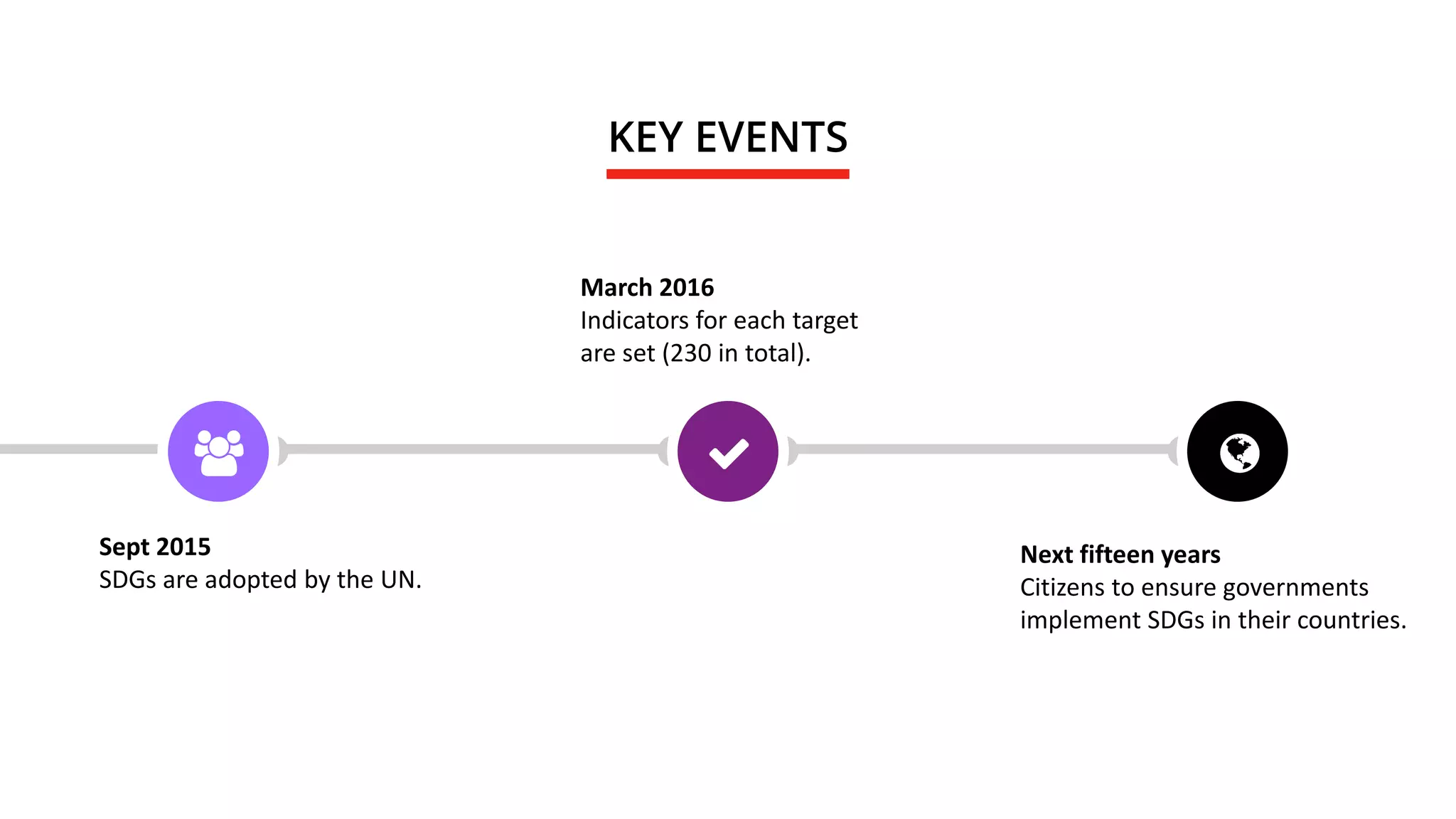
KEY EVENTS
Sept 2015
SDGs are adopted by the UN.
March 2016
Indicators for each target
are set (230 in total).
Next fifteen years
Citizens to ensure governments
implement SDGs in their countries.
KEY EVENTS
ACTIVITY
Compare MDG2 vs SDG4
Governance
How a state or organisation is governed.
KEY TERMS
CASE STUDY
Young people demanding better governance
Advocacy
An activity by a group or individual that aims to
influence political, economic or social decisions.
KEY TERMS
“Promote peaceful and inclusive societies for sustainable development , provide access to
justice for all and build effective, accountable and inclusive institutions at all levels.”
Targets include:
• End abuse, exploitation, trafficking and all forms violence and torture of children.
• Develop effective, accountable and transparent institutions at all levels.
• Ensure responsive, inclusive, participatory and representative decision-making at all levels.
THIS IS ADVOCACY AT WORK.
GOAL 16. PEACE, JUSTICE AND STRONG INSTITUTIONS
“Young people will be the torch-bearers of the next sustainable
development agenda” - Ban Ki-moon, UN General Secretary.
Young people have a right to participate, as stated in:
• The International Covenant on Political and Civil Rights.
• The UN Convention on the Rights of the Child .
HOW CAN WE ACHIEVE THE SDGs?
Selecting your accountability focus
ACTIVITY
We are going to do this by:
• Looking at what young people want in YOUR country.
• Feeling confident about the 17 SDGs.
• Choosing YOUR focus.
• Choose goals that young people in your country have identified as their priorities.
• Choose goals and targets that you are passionate about.
• Choose goals and targets related to a cause you are already working on.
• Make your decisions as a team.
• Reach out to partners and colleagues for advice.
TOP TIPS
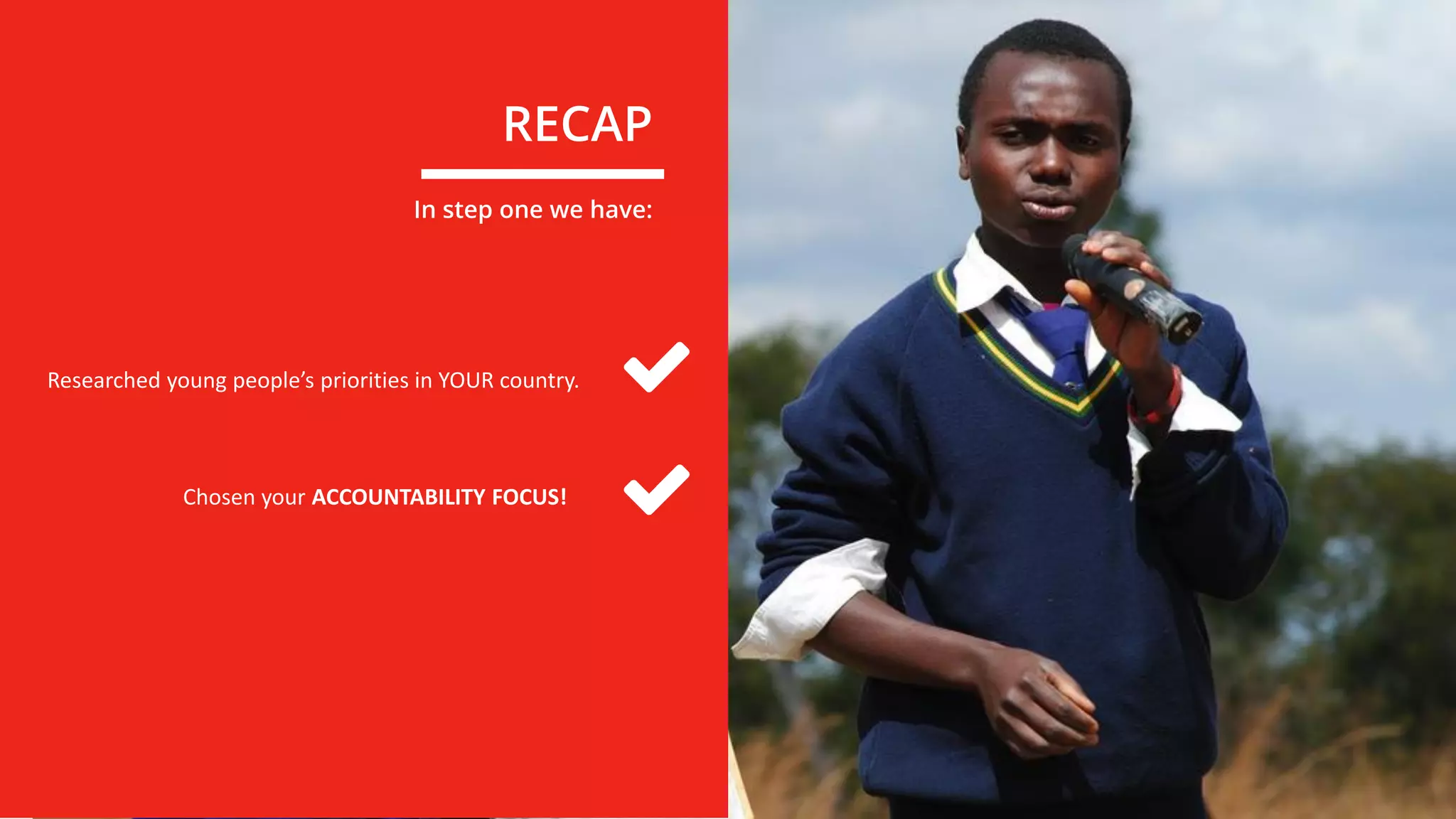
RECAP
Researched young people’s priorities in YOUR country.
In step one we have:
Chosen your ACCOUNTABILITY FOCUS!
This project has been funded with support from the European Commission.
This publication ‘Accountability in action training’ reflects the views of the author, and the Commission
cannot be held responsible for any use which may be made of the information contained therein.
This project is led by Restless Development and draws together a consortium
of youth-led and youth-focused organisations from around the world.
Together they have a wealth of experience in supporting young people to
play a leading role in governance and accountability.

Accountability in Action - Step One

  • 1.
    STEP ONE Identify thespecific goals and targets you will monitor. Choose your goals In step one we will: 1 2 3 Learn more about the Sustainable Development Goals. Explore young people’s priorities in YOUR country.
  • 2.
    • The SDGsreplaced the Millennium Development Goals. • Consulted over 7 million people. SDGs: WHERE DO THEY COME FROM?
  • 3.
    Data revolution The rapidincrease of new forms of data; how they are shared and how they are used. Transparency When governments, companies, organisations and individuals operate in a way that is easy for others to see their actions, plans, processes, rules and the information they hold. KEY TERMS
  • 4.
    September 2010 The UNGeneral Assembly meeting on the MDGs held to accelerate progress and consider what would follow them. June 2012 SDGs first discussed at Rio+20. 2013 Widespread consultations at global, national and local levels. KEY EVENTS
  • 5.
    Nov-March 2013 High LevelPanel meetings: young people call for a role in monitoring SDGs reflected in Bali Communique. March 2014 Report published states post-2015 world will be powered by data revolution and more transparent governments. Promise to ’Leave No-one Behind.’ July 2015 First proposal for the SDGs: 17 goals with 169 targets. KEY EVENTS
  • 6.
    Sept 2015 SDGs areadopted by the UN. March 2016 Indicators for each target are set (230 in total). Next fifteen years Citizens to ensure governments implement SDGs in their countries. KEY EVENTS
  • 7.
  • 8.
    Governance How a stateor organisation is governed. KEY TERMS
  • 9.
    CASE STUDY Young peopledemanding better governance
  • 10.
    Advocacy An activity bya group or individual that aims to influence political, economic or social decisions. KEY TERMS
  • 11.
    “Promote peaceful andinclusive societies for sustainable development , provide access to justice for all and build effective, accountable and inclusive institutions at all levels.” Targets include: • End abuse, exploitation, trafficking and all forms violence and torture of children. • Develop effective, accountable and transparent institutions at all levels. • Ensure responsive, inclusive, participatory and representative decision-making at all levels. THIS IS ADVOCACY AT WORK. GOAL 16. PEACE, JUSTICE AND STRONG INSTITUTIONS
  • 12.
    “Young people willbe the torch-bearers of the next sustainable development agenda” - Ban Ki-moon, UN General Secretary. Young people have a right to participate, as stated in: • The International Covenant on Political and Civil Rights. • The UN Convention on the Rights of the Child . HOW CAN WE ACHIEVE THE SDGs?
  • 13.
    Selecting your accountabilityfocus ACTIVITY We are going to do this by: • Looking at what young people want in YOUR country. • Feeling confident about the 17 SDGs. • Choosing YOUR focus.
  • 14.
    • Choose goalsthat young people in your country have identified as their priorities. • Choose goals and targets that you are passionate about. • Choose goals and targets related to a cause you are already working on. • Make your decisions as a team. • Reach out to partners and colleagues for advice. TOP TIPS
  • 15.
    RECAP Researched young people’spriorities in YOUR country. In step one we have: Chosen your ACCOUNTABILITY FOCUS!
  • 16.
    This project hasbeen funded with support from the European Commission. This publication ‘Accountability in action training’ reflects the views of the author, and the Commission cannot be held responsible for any use which may be made of the information contained therein. This project is led by Restless Development and draws together a consortium of youth-led and youth-focused organisations from around the world. Together they have a wealth of experience in supporting young people to play a leading role in governance and accountability.