The document provides guidance on writing with critical analysis and includes the following key points:
1. Critical analysis involves evaluating information from different perspectives rather than taking it at face value, considering context, and asking questions about the information.
2. When reading critically, one should ask questions about the main point, evidence, comparisons to other sources, limitations, and significance.
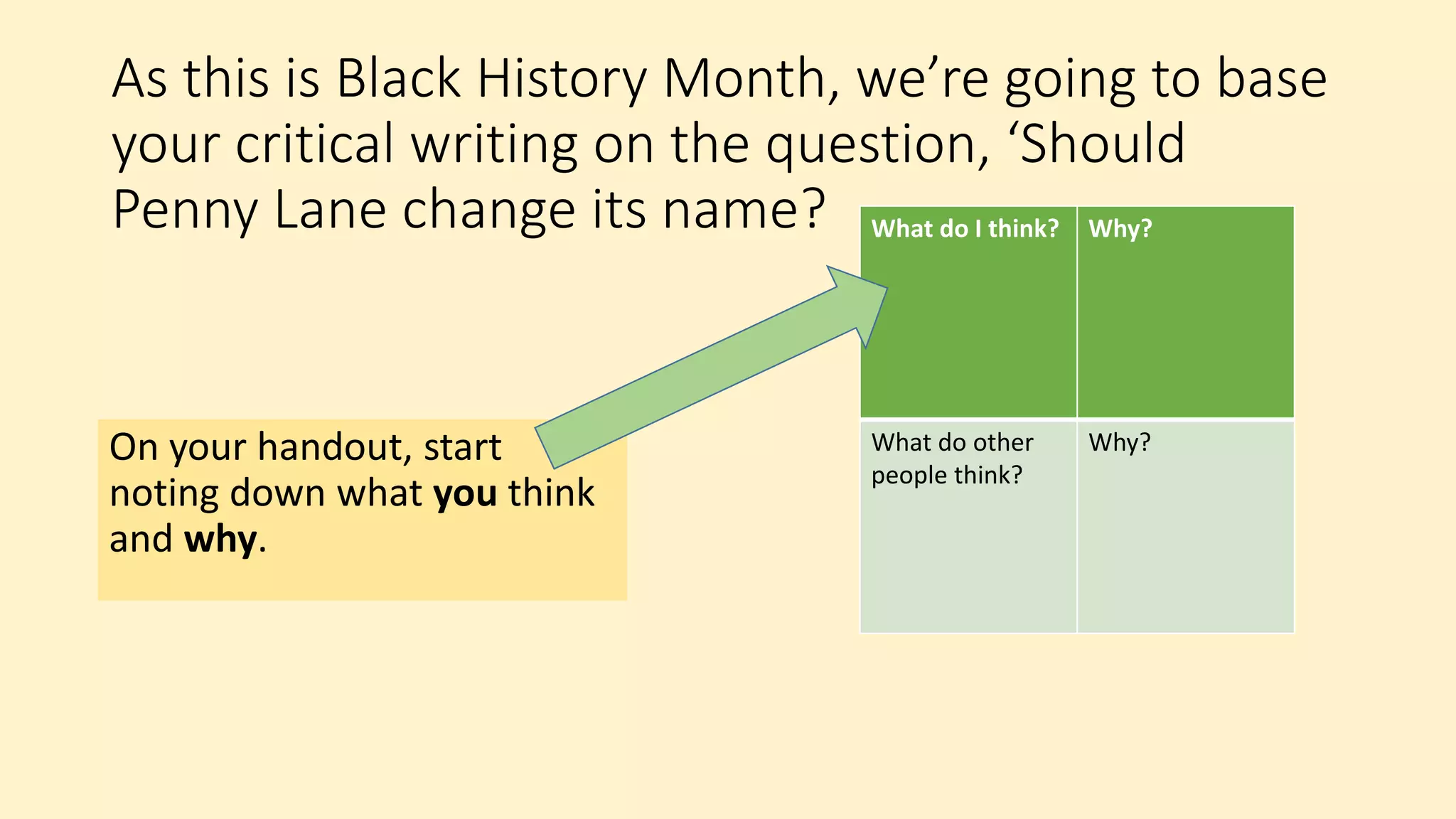
3. A example prompts writing critically about whether a place called Penny Lane should change its name, considering different perspectives on recent calls to remove memorials of slave owners.
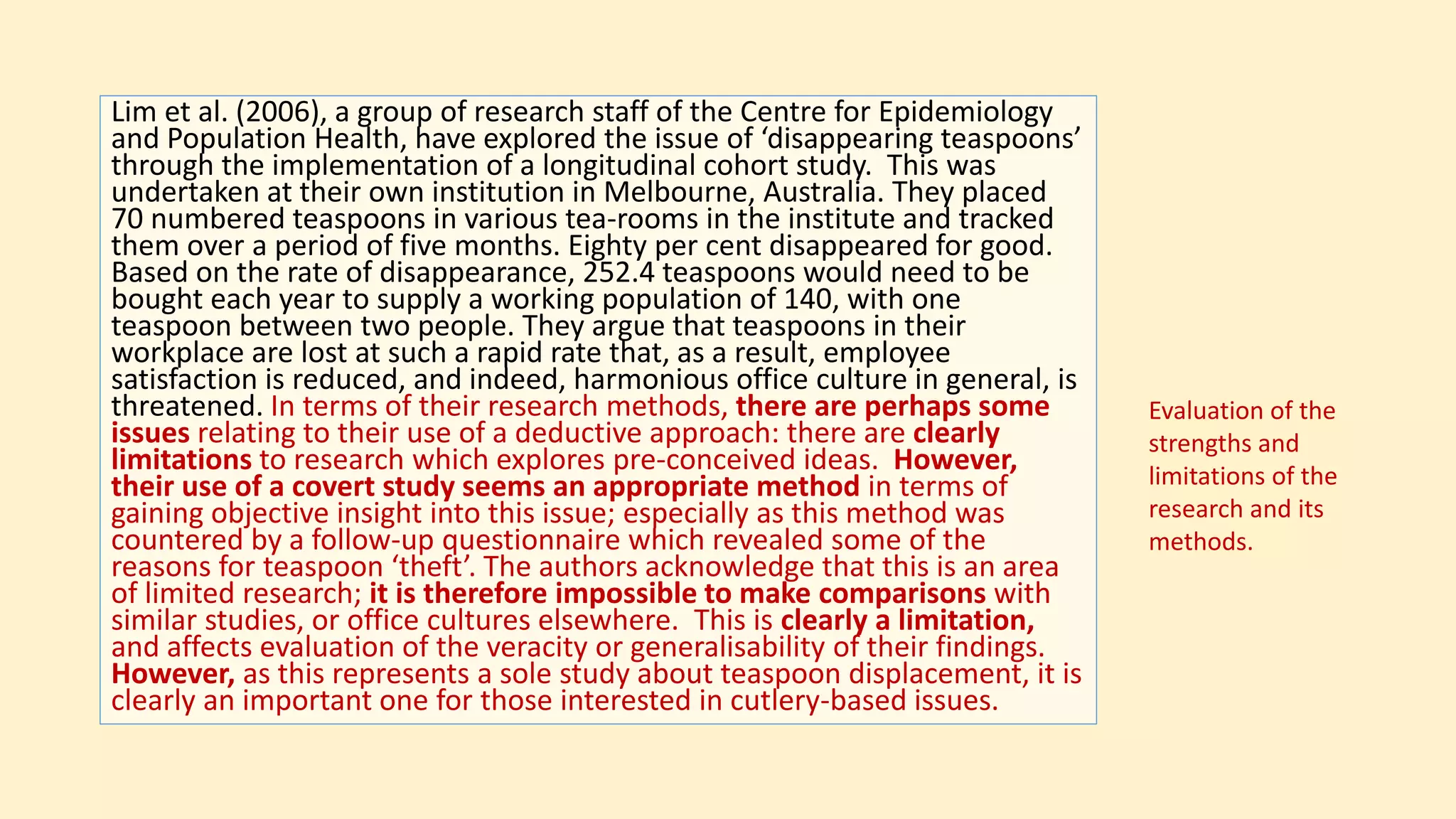
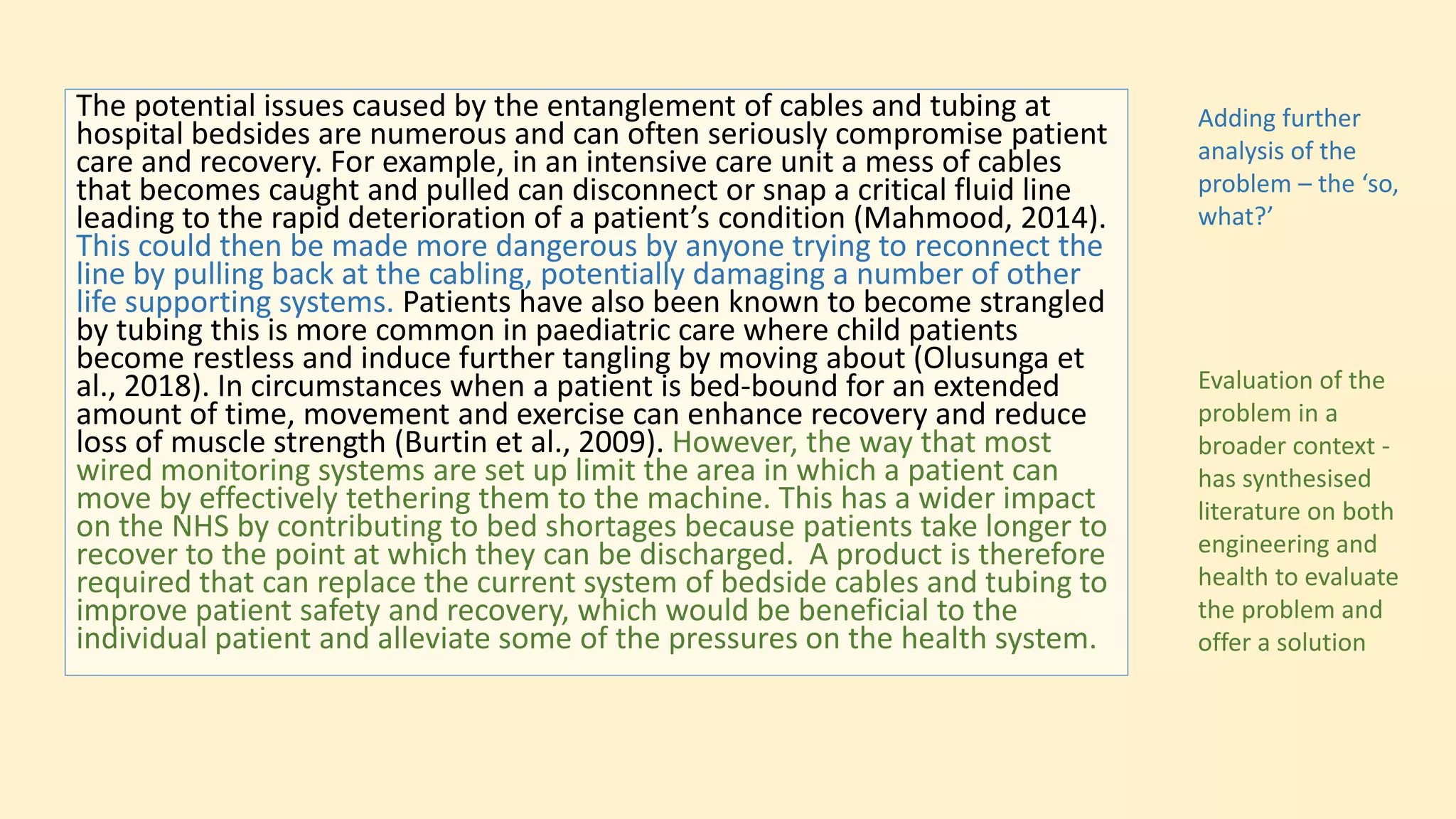
4. The document provides advice on using techniques like WEED (What, Explain, Examples, Do) and distancing language to demonstrate critical analysis in writing.