

Oriol	
  Pujol
ABOUT	
  DATA	
  FROM	
  A	
  
MACHINE	
  LEARNING	
  
PERSPECTIVE
TWO	
  FLAVOURS	
  AND	
  ONE	
  
PRESENTATION
Share	
  experiences	
  in	
  openness	
  from	
  the	
  machine	
  learning	
  
community
To	
  propose	
  potential	
  solutions	
  to	
  the	
  problem	
  of	
  sharing	
  
sensible	
  data
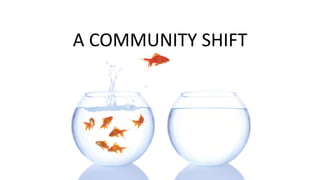
A	
  COMMUNITY	
  SHIFT
THE	
  ROLE	
  OF	
  DATA	
  IN	
  MACHINE	
  LEARNING
• Machine	
  learning	
  is	
  sometimes	
  called	
  learning	
  from	
  data.	
  Thus	
  we	
  are	
  
talking	
  about	
  building/coding	
  algorithms	
  that	
  learn	
  from	
  data.
• Data	
  is	
  the	
  key	
  component	
  in	
  most	
  research,	
  but	
  it	
  is	
  obviously	
  crucial	
  
in	
  machine	
  learning.
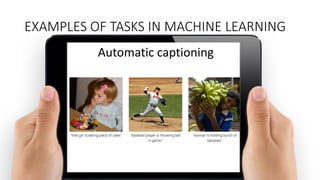
Automatic	
  captioning
EXAMPLES	
  OF	
  TASKS	
  IN	
  MACHINE	
  LEARNING
CURRENT	
  MACHINE	
  LEARNING	
  RESEARCH	
  FOCUS
• Improving	
  results	
  in	
  terms	
  of	
  generalization,	
  robustness,	
  speed,	
  and	
  
interpretability.	
  
• Comparison	
  with	
  other	
  techniques	
  is	
  fundamental.	
  
• Many	
  different	
  data	
  sets	
  are	
  needed	
  to	
  assess	
  each	
  property	
  we	
  are	
  
tackling	
  in	
  the	
  research,	
  e.g.	
  we	
  need	
  large	
  datasets	
  for	
  speed	
  and	
  big	
  
data.
• Sometimes,	
  their	
  application	
  largely	
  depends	
  on	
  the	
  domain,	
  e.g.,	
  
financial	
  products	
  forecasting,	
  targeted	
  gene	
  identification.
AS	
  A	
  RESEARCHER
DISEMINATION:	
  REPORTING	
  PROCESS,	
  CLAIMING	
  AUTHORSHIP
QUALITY:	
  COMMUNITY	
  VALIDITY	
  ASSESSMENT,	
  PEER	
  REVIEW	
  
(KPI	
  USED	
  BY	
  ORGANISATIONS	
  FOR	
  RESEARCH	
  QUALITY)
We	
  pursue	
  to	
  contribute	
  to	
  advance	
  science:	
  reproducibility	
  of	
  
experimentation	
  that	
  helps	
  to	
  eliminate individual	
  biases.	
  
FOR	
  THIS	
  REASON	
  WE	
  USE	
  PUBLISHING
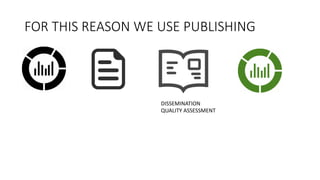
DISSEMINATION
QUALITY	
  ASSESSMENT
FOR	
  THIS	
  REASON	
  WE	
  USE	
  PUBLISHING
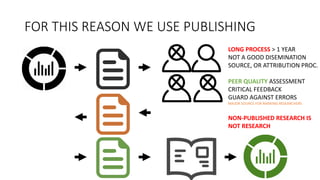
LONG	
  PROCESS	
  >	
  1	
  YEAR
NOT	
  A	
  GOOD	
  DISEMINATION	
  
SOURCE,	
  OR	
  ATTRIBUTION	
  PROC.
PEER	
  QUALITY	
  ASSESSMENT	
  
CRITICAL	
  FEEDBACK
GUARD	
  AGAINST	
  ERRORS
MAJOR	
  SOURCE	
  FOR	
  RANKING	
  RESEARCHERS
NON-­‐PUBLISHED	
  RESEARCH	
  IS	
  
NOT	
  RESEARCH
FOR	
  THIS	
  REASON	
  WE	
  USE	
  PUBLISHING
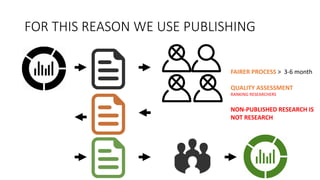
FAIRER	
  PROCESS >	
  	
  3-­‐6	
  month
QUALITY	
  ASSESSMENT
RANKING	
  RESEARCHERS
NON-­‐PUBLISHED	
  RESEARCH	
  IS	
  
NOT	
  RESEARCH
THE	
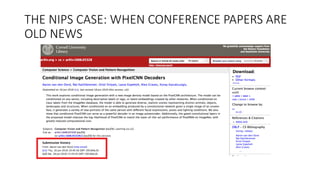
  NIPS	
  CASE:	
  WHEN	
  CONFERENCE	
  PAPERS	
  
ARE	
  OLD	
  NEWS
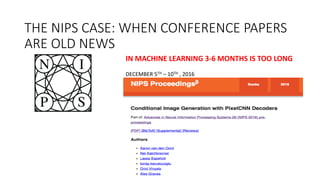
IN	
  MACHINE	
  LEARNING	
  3-­‐6	
  MONTHS	
  IS	
  TOO	
  LONG
DECEMBER	
  5TH – 10TH ,	
  2016
THE	
  NIPS	
  CASE:	
  WHEN	
  CONFERENCE	
  PAPERS	
  ARE	
  
OLD	
  NEWS
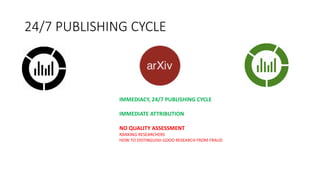
24/7	
  PUBLISHING	
  CYCLE
IMMEDIACY,	
  24/7	
  PUBLISHING	
  CYCLE
IMMEDIATE	
  ATTRIBUTION	
  
NO	
  QUALITY	
  ASSESSMENT
RANKING	
  RESEARCHERS
HOW	
  TO	
  DISTINGUISH	
  GOOD	
  RESEARCH	
  FROM	
  FRAUD
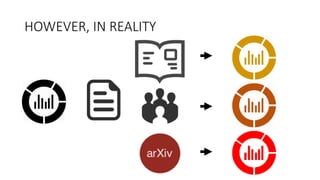
HOWEVER,	
  IN	
  REALITY
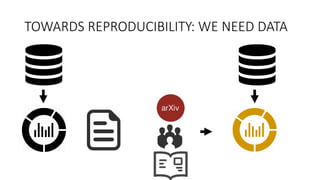
TOWARDS	
  REPRODUCIBILITY:	
  WE	
  NEED	
  DATA
AN	
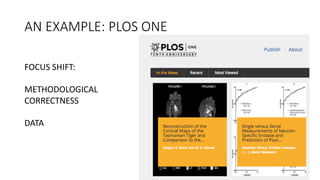
  EXAMPLE:	
  PLOS	
  ONE
FOCUS	
  SHIFT:
METHODOLOGICAL	
  
CORRECTNESS	
  
DATA
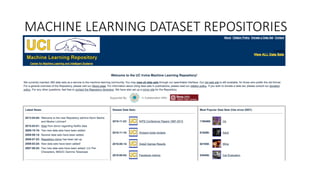
MACHINE	
  LEARNING	
  DATASET	
  REPOSITORIES
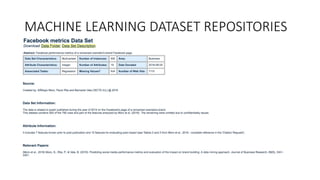
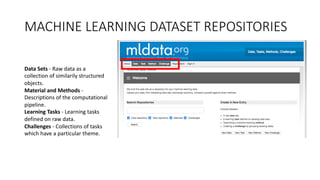
MACHINE	
  LEARNING	
  DATASET	
  REPOSITORIES
Data	
  Sets -­‐ Raw	
  data	
  as	
  a	
  
collection	
  of	
  similarily structured	
  
objects.
Material	
  and	
  Methods -­‐
Descriptions	
  of	
  the	
  computational	
  
pipeline.
Learning	
  Tasks -­‐ Learning	
  tasks	
  
defined	
  on	
  raw	
  data.
Challenges -­‐ Collections	
  of	
  tasks	
  
which	
  have	
  a	
  particular	
  theme.
MACHINE	
  LEARNING	
  DATASET	
  REPOSITORIES
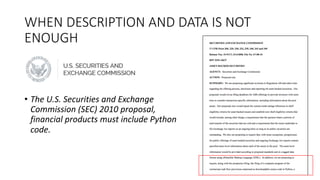
• The	
  U.S.	
  Securities	
  and	
  Exchange	
  
Commission	
  (SEC)	
  2010	
  proposal,	
  
financial	
  products	
  must	
  include	
  Python
code.
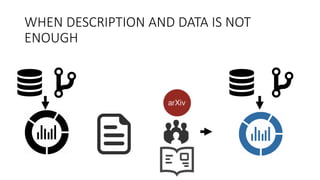
WHEN	
  DESCRIPTION	
  AND	
  DATA	
  IS	
  NOT	
  
ENOUGH
WHEN	
  DESCRIPTION	
  AND	
  DATA	
  IS	
  NOT	
  
ENOUGH
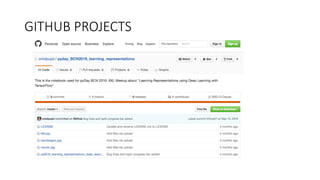
GITHUB	
  PROJECTS
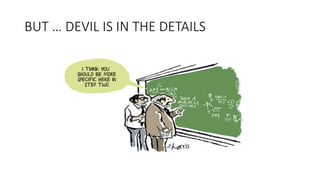
BUT	
  …	
  DEVIL	
  IS	
  IN	
  THE	
  DETAILS
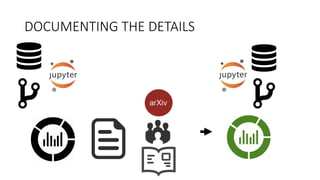
DOCUMENTING	
  THE	
  DETAILS
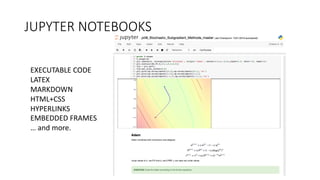
JUPYTER	
  NOTEBOOKS
EXECUTABLE	
  CODE
LATEX
MARKDOWN
HTML+CSS
HYPERLINKS
EMBEDDED	
  FRAMES
…	
  and	
  more.
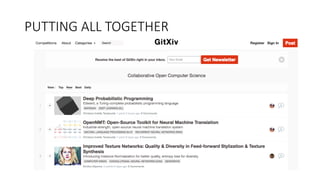
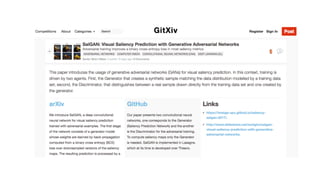
PUTTING	
  ALL	
  TOGETHER
BOTTOM	
  LINE
1. SCIENCE	
  IS	
  MORE	
  THAN	
  A	
  PUBLICATION
2. AT	
  ITS	
  CORE	
  LIES	
  REPRODUCIBILITY…THIS	
  INVOLVES	
  DATA
3. BUT	
  DATA	
  IS	
  NOT	
  EVEN	
  ENOUGH…	
  CODE	
  AND	
  PRECISE	
  EXPERIMENT	
  
REPRODUCIBILITY
4. DATA	
  AND	
  PROGRAMMING	
  LITERACY	
  IS	
  NEEDED
BUT	
  …	
  SOMETHING	
  ELSE	
  ABOUT	
  QUALITY	
  
ASSESSMENT:	
  OPEN	
  REVIEW	
  CASE
THE	
  RULES
• Submissions	
  posted	
  on	
  arXiv before	
  being	
  submitted	
  to	
  the	
  conference
• Program	
  committee	
  assigns	
  blind	
  reviewers	
  (as	
  always)	
  marked	
  as	
  
designated	
  reviewers
• Anyone	
  can	
  ask	
  the	
  program	
  chairs	
  for	
  permission	
  to	
  become	
  an	
  
anonymous	
  designated	
  reviewer	
  (open	
  bidding).
• Open	
  commenters	
  will	
  have	
  to	
  use	
  their	
  real	
  names,	
  linked	
  with	
  their	
  
Google	
  Scholar	
  profiles.
• Papers	
  that	
  are	
  presented	
  in	
  the	
  workshop	
  track	
  or	
  are	
  not	
  accepted	
  will	
  be	
  
considered	
  non-­‐archival,	
  and	
  may	
  be	
  submitted	
  elsewhere	
  (modified	
  or	
  
not),	
  although	
  the	
  ICLR	
  site	
  will	
  maintain	
  the	
  reviews,	
  the	
  comments,	
  and	
  
the	
  links	
  to	
  the	
  arXiv versions
SOME	
  POINTS	
  ABOUT	
  OPEN	
  REVIEW
• Reading	
  the	
  answers	
  from	
  others	
  is	
  valuable	
  
• Rejected	
  papers	
  have	
  influence
• May	
  become	
  a	
  popularity	
  contest
SHARING	
  DATA	
  IN	
  THE	
  AGE	
  
OF	
  DEEP	
  LEARNING
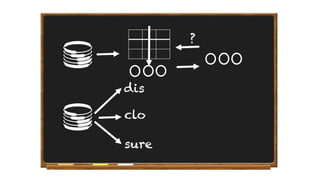
dis
clo
sure
?
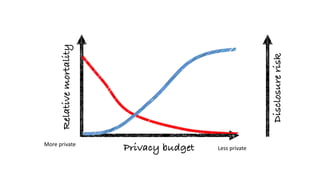
Relativemortality
Privacy budget
Disclosurerisk
More	
  private
Less	
  private
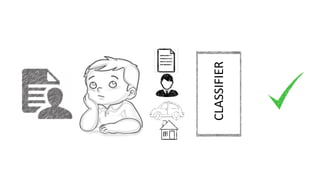
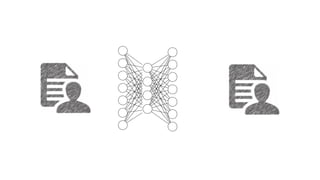
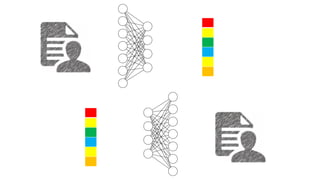
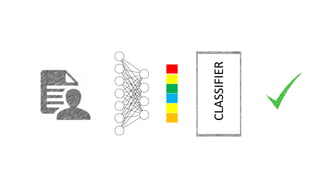
CLASSIFIER
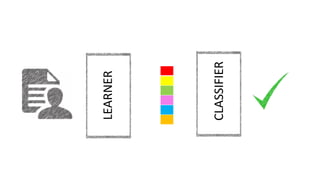
CLASSIFIER
LEARNER
CLASSIFIER
Research is based on reproducibility:
documentation, data, code, and details.
Machine learning methods can help in the
challenge for democratizing data.
CONCLUSIONS
@oriolpujolvila

About Data From A Machine Learning Perspective

  • 1.
    Oriol  Pujol ABOUT  DATA  FROM  A   MACHINE  LEARNING   PERSPECTIVE
  • 2.
    TWO  FLAVOURS  AND  ONE   PRESENTATION Share  experiences  in  openness  from  the  machine  learning   community To  propose  potential  solutions  to  the  problem  of  sharing   sensible  data
  • 3.
  • 4.
    THE  ROLE  OF  DATA  IN  MACHINE  LEARNING • Machine  learning  is  sometimes  called  learning  from  data.  Thus  we  are   talking  about  building/coding  algorithms  that  learn  from  data. • Data  is  the  key  component  in  most  research,  but  it  is  obviously  crucial   in  machine  learning.
  • 5.
    Automatic  captioning EXAMPLES  OF  TASKS  IN  MACHINE  LEARNING
  • 6.
    CURRENT  MACHINE  LEARNING  RESEARCH  FOCUS • Improving  results  in  terms  of  generalization,  robustness,  speed,  and   interpretability.   • Comparison  with  other  techniques  is  fundamental.   • Many  different  data  sets  are  needed  to  assess  each  property  we  are   tackling  in  the  research,  e.g.  we  need  large  datasets  for  speed  and  big   data. • Sometimes,  their  application  largely  depends  on  the  domain,  e.g.,   financial  products  forecasting,  targeted  gene  identification.
  • 7.
    AS  A  RESEARCHER DISEMINATION:  REPORTING  PROCESS,  CLAIMING  AUTHORSHIP QUALITY:  COMMUNITY  VALIDITY  ASSESSMENT,  PEER  REVIEW   (KPI  USED  BY  ORGANISATIONS  FOR  RESEARCH  QUALITY) We  pursue  to  contribute  to  advance  science:  reproducibility  of   experimentation  that  helps  to  eliminate individual  biases.  
  • 8.
    FOR  THIS  REASON  WE  USE  PUBLISHING DISSEMINATION QUALITY  ASSESSMENT
  • 9.
    FOR  THIS  REASON  WE  USE  PUBLISHING LONG  PROCESS  >  1  YEAR NOT  A  GOOD  DISEMINATION   SOURCE,  OR  ATTRIBUTION  PROC. PEER  QUALITY  ASSESSMENT   CRITICAL  FEEDBACK GUARD  AGAINST  ERRORS MAJOR  SOURCE  FOR  RANKING  RESEARCHERS NON-­‐PUBLISHED  RESEARCH  IS   NOT  RESEARCH
  • 10.
    FOR  THIS  REASON  WE  USE  PUBLISHING FAIRER  PROCESS >    3-­‐6  month QUALITY  ASSESSMENT RANKING  RESEARCHERS NON-­‐PUBLISHED  RESEARCH  IS   NOT  RESEARCH
  • 11.
    THE  NIPS  CASE:  WHEN  CONFERENCE  PAPERS   ARE  OLD  NEWS IN  MACHINE  LEARNING  3-­‐6  MONTHS  IS  TOO  LONG DECEMBER  5TH – 10TH ,  2016
  • 12.
    THE  NIPS  CASE:  WHEN  CONFERENCE  PAPERS  ARE   OLD  NEWS
  • 13.
    24/7  PUBLISHING  CYCLE IMMEDIACY,  24/7  PUBLISHING  CYCLE IMMEDIATE  ATTRIBUTION   NO  QUALITY  ASSESSMENT RANKING  RESEARCHERS HOW  TO  DISTINGUISH  GOOD  RESEARCH  FROM  FRAUD
  • 14.
  • 15.
  • 16.
    AN  EXAMPLE:  PLOS  ONE FOCUS  SHIFT: METHODOLOGICAL   CORRECTNESS   DATA
  • 17.
  • 18.
  • 19.
    Data  Sets -­‐Raw  data  as  a   collection  of  similarily structured   objects. Material  and  Methods -­‐ Descriptions  of  the  computational   pipeline. Learning  Tasks -­‐ Learning  tasks   defined  on  raw  data. Challenges -­‐ Collections  of  tasks   which  have  a  particular  theme. MACHINE  LEARNING  DATASET  REPOSITORIES
  • 20.
    • The  U.S.  Securities  and  Exchange   Commission  (SEC)  2010  proposal,   financial  products  must  include  Python code. WHEN  DESCRIPTION  AND  DATA  IS  NOT   ENOUGH
  • 21.
    WHEN  DESCRIPTION  AND  DATA  IS  NOT   ENOUGH
  • 22.
  • 23.
    BUT  …  DEVIL  IS  IN  THE  DETAILS
  • 24.
  • 25.
  • 26.
  • 28.
    BOTTOM  LINE 1. SCIENCE  IS  MORE  THAN  A  PUBLICATION 2. AT  ITS  CORE  LIES  REPRODUCIBILITY…THIS  INVOLVES  DATA 3. BUT  DATA  IS  NOT  EVEN  ENOUGH…  CODE  AND  PRECISE  EXPERIMENT   REPRODUCIBILITY 4. DATA  AND  PROGRAMMING  LITERACY  IS  NEEDED
  • 29.
    BUT  …  SOMETHING  ELSE  ABOUT  QUALITY   ASSESSMENT:  OPEN  REVIEW  CASE
  • 30.
    THE  RULES • Submissions  posted  on  arXiv before  being  submitted  to  the  conference • Program  committee  assigns  blind  reviewers  (as  always)  marked  as   designated  reviewers • Anyone  can  ask  the  program  chairs  for  permission  to  become  an   anonymous  designated  reviewer  (open  bidding). • Open  commenters  will  have  to  use  their  real  names,  linked  with  their   Google  Scholar  profiles. • Papers  that  are  presented  in  the  workshop  track  or  are  not  accepted  will  be   considered  non-­‐archival,  and  may  be  submitted  elsewhere  (modified  or   not),  although  the  ICLR  site  will  maintain  the  reviews,  the  comments,  and   the  links  to  the  arXiv versions
  • 31.
    SOME  POINTS  ABOUT  OPEN  REVIEW • Reading  the  answers  from  others  is  valuable   • Rejected  papers  have  influence • May  become  a  popularity  contest
  • 32.
    SHARING  DATA  IN  THE  AGE   OF  DEEP  LEARNING
  • 33.
  • 34.
  • 35.
  • 36.
  • 39.
  • 41.
    Research is basedon reproducibility: documentation, data, code, and details. Machine learning methods can help in the challenge for democratizing data. CONCLUSIONS
  • 42.